100 Results for "

Enterococcus faecalis

" in MedChemExpress (MCE) Product Catalog:
Products (100)

100 Results for "Enterococcus faecalis" in MCE Product Catalog:

Cat. No.: HY-W587957
CAS No.: 5143-05-5
Target:  

Bacterial Parasite

Research Areas:  

Infection

Gypsogenic acid is a triterpenoid acid that can be isolated from Miconia stenostachya and has antibacterial and trypanoidal activities. The MICs values of Gypsogenic acid for the oral bacterial pathogens Enterococcus faecalis, Streptococcus salivarius, Streptococcus haematococcus, Streptococcus mutans and sobrinus were 50-200 μg/mL. Gypsogenic acid can induce blood cortensite cleavage in isolated mice with IC50 56.6 μM .
loading...
    loading...
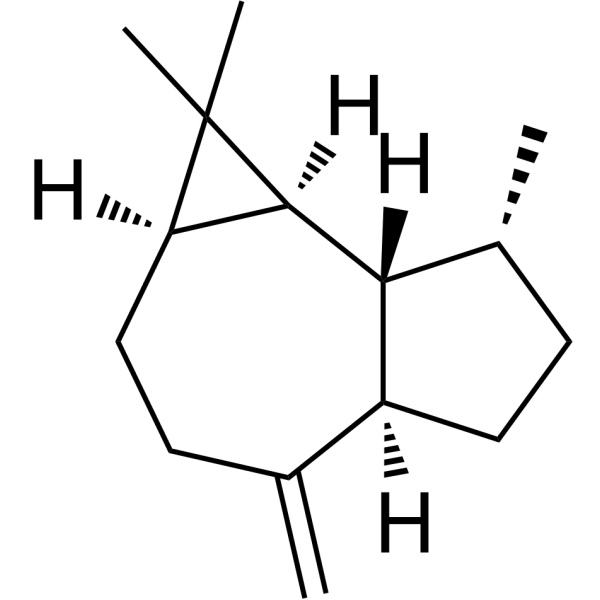
Cat. No.: HY-N8411
CAS No.: 489-39-4
Synonyms: (+)-Aromadendrene
Aromadendrene ((+)-Aromadendrene) is a potent antibacterial agent. Aromadendrene can be isolated from Eucalyptus globulus. Aromadendrene disrupts cellular biofilms via high lipophilicity and interferes with protein conformation through protein alkylation. Aromadendrene is applicable to research related to multidrug-resistant bacterial infections .
loading...
    loading...
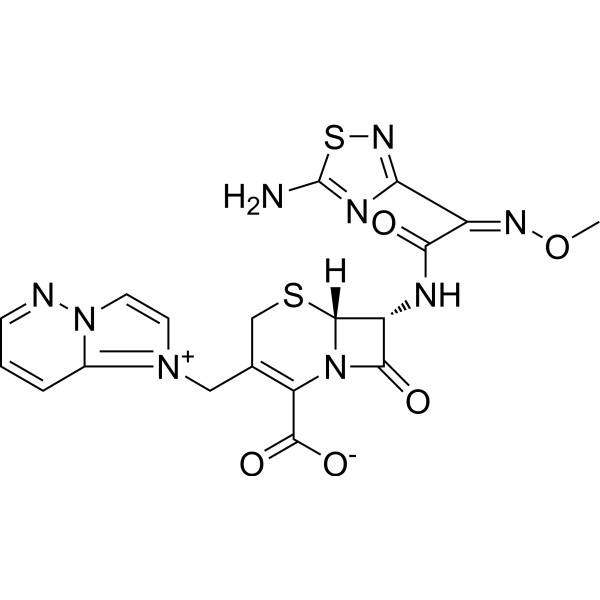
Cat. No.: HY-B0771
CAS No.: 113359-04-9
Synonyms: SCE-2787
Cefozopran (SCE-2787) is a potent antibiotic with broad-spectrum antibacterial activity. Cefozopran binds PBPs, induces cell wall destruction, cell elongation, filamentation, irregular septa formation, and bactericidal, bacteriolytic activity. Cefozopran reduces bacterial counts and eradicates bacteria in mouse respiratory, urinary, and thigh muscle infections. Cefozopran can be used for the research of bacterial infections .
loading...
    loading...
Cat. No.: HY-126461
CAS No.: 521-39-1
Salazinic acid has antibacterial activity against bacteria and fungi. Salazinic acid does not show antibacterial activity against Listeria monocytogenes, Pseudomonas aeruginosa, Yersinia enterocolitica, and Enterococcus faecalis, but it does have antibacterial activity against Pseudomonas aeruginosa and Salmonella typhimurium .
loading...
    loading...
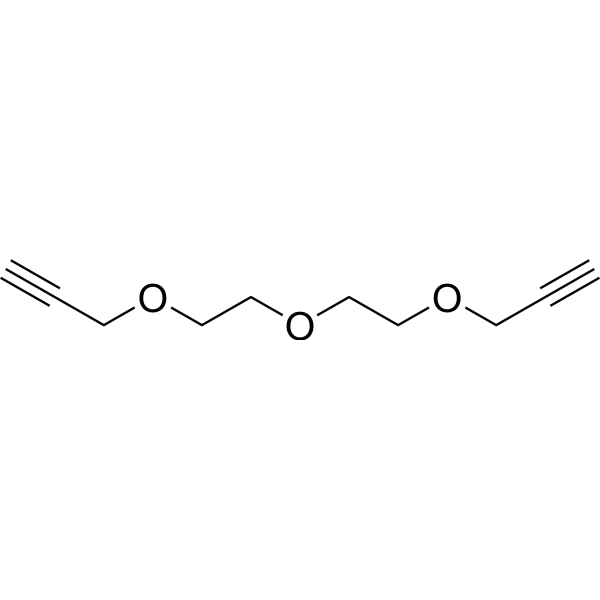
Cat. No.: HY-133191
CAS No.: 126422-57-9
Target:  

PROTAC Linkers

Research Areas:  

Infection Cancer

Bis-propargyl-PEG2 is a PEG-based PROTAC linker can be used in the synthesis of PROTACs. Bis-propargyl-PEG2 is used for the synthesis of demethylvancomycin dimers . Bis-propargyl-PEG2 is a click chemistry reagent, it contains an Alkyne group and can undergo copper-catalyzed azide-alkyne cycloaddition (CuAAc) with molecules containing Azide groups.
loading...
    loading...
Cat. No.: HY-143326
CAS No.: 2413865-92-4
Target:  

Bacterial

Research Areas:  

Infection

Antibacterial agent 83 (compound 17h) displays potent antibacterial activity against various vancomycin-resistant Enterococcus faecalis (VRE) and methicillin-resistant Staphylococcus aureus (MRSA). Antibacterial agent 83 can significantly reduce the biofilm formation of MRSA and exhibited promising selectivity. Antibacterial agent 83 is metabolically stable in human liver microsomes .
loading...
    loading...
Cat. No.: HY-W145053
CAS No.: 149358-73-6
Synonyms: Sodium chloro(4-methylbenzenesulfonyl)azanide hydrate
Target:  

Factor Xa Bacterial

Research Areas:  

Infection

ChloraMine-T hydrate (Sodium chloro(4-methylbenzenesulfonyl)azanide (hydrate)) is a common reagent in various synthetic processes. It has been used as a reagent in aminohydroxylation and allylic amination reactions, a nitrogen source in aziridination reactions of alkenes and alkenes, and deprotection of sulfur groups in sulfur-containing compounds. It has been used as a reagent in the synthesis of factor Xa inhibitors. ChloraMine-T hydrate (Sodium chloro(4-methylbenzenesulfonyl)azanide (hydrate)) (0.2% w/v) is also an antimicrobial agent that kills Staphylococcus epidermidis, Staphylococcus aureus, Enterococcus faecalis, Escherichia coli, Proteus mirabilis, and Enterococcus cloacae.
loading...
    loading...
Cat. No.: HY-178952
Target:  

Bacterial

Research Areas:  

Infection

Anti-infective agent 12 (Compound A09) is a competitive inhibitor of type I signal peptidease (SPase I), with an IC50 of 4.475 μM and a Kd of 16.3 μM. Anti-infective agent 12 has the ability to disrupt bacterial membranes and remove biofilms. Anti-infective agent 12 exhibits potent bactericidal activity against Gram-positive bacteria, with MIC values of 4, 4, 8, and 8 μg/mL for Staphylococcus aureus, Enterococcus faecalis, Enterococcus faecium, and Streptococcus suis, respectively. Anti-infective agent 12 remains effective against multi-drug resistant strains, but has weaker activity against Gram-negative bacteria (such as Escherichia coli and Salmonella), with MIC values > 64 μg/mL. Anti-infective agent 12 has low hemolytic activity and shows significant efficacy in mouse skin infection models .
loading...
    loading...
Cat. No.: HY-W923644
CAS No.: 21860-31-1
Synonyms: Aegelinol; (-)-Smyrinol
(-)-Decursinol (Aegelinol; (-)-Smyrinol) is a natural pyranocoumarin compound tant can be isolated from the roots of Apiaceae plants such as Ferulago campestris. (-)-Decursinol inhibits both Gram-positive bacteria (Staphylococcus aureus ATCC 13709, Enterococcus faecalis ATCC 14428) and Gram-negative bacteria (Salmonella typhii ATCC 19430, Enterobacter cloacae ATCC 10699, Enterobacter aerogenes ATCC 13048) with minimum inhibitory concentrations (MIC) ranging from 16 to 64 μg/mL. (-)-Decursinol possesses antioxidant activity. (-)-Decursinol can be used for the study of bacterial infections .
loading...
    loading...
Cat. No.: HY-E71010
Research Areas:  

Metabolic Disease

NADH Peroxidase, Enterococcus faecalis (EC 1.11.1.1) catalyzes the reversible conversion of NADH and hydrogen peroxide into NAD+ and water.
loading...
    loading...
Cat. No.: HY-168960
Research Areas:  

Infection

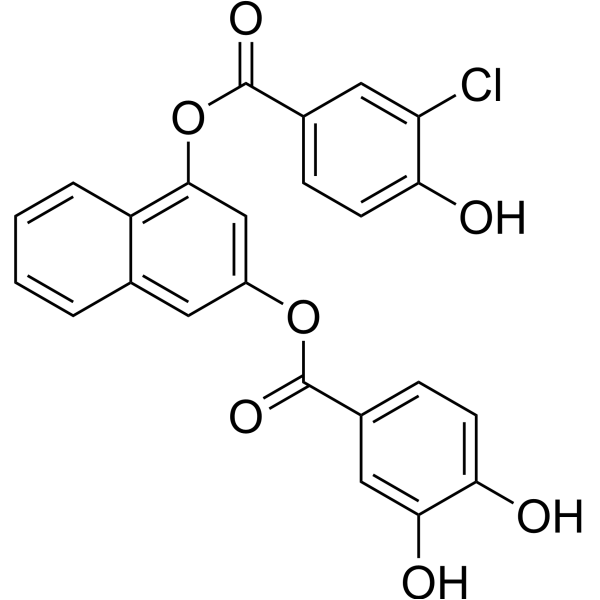
ROS inducer 8 (Compound 11g) is the inhibitor for glutathione (GSH), that induces the ROS accumulation in Enterococcus faecalis, thereby exhibiting antibacterial activity. ROS inducer 8 disrupts the biofilm, inhibits S. aureus and E. faecalis with MIC of 8 μg/mL and 2 μg/mL, exhibits post-antibiotic effect. ROS inducer 8 exhibits low hemolytic toxicity to sheep erythrocytes (HC50 > 1280 μg/mL) .
loading...
    loading...
Cat. No.: HY-P10159
CAS No.: 1809102-71-3
Target:  

Antibiotic Bacterial

Research Areas:  

Infection

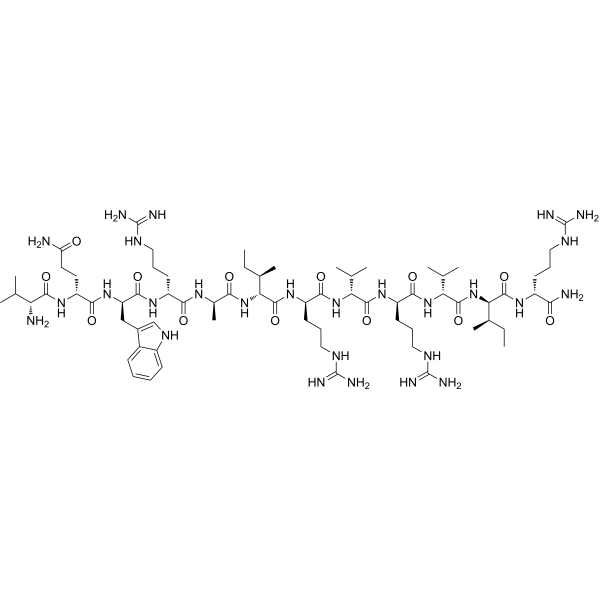
DJK-5 is an antimicrobial peptide that targets and degrades guanosine pentaphosphate and tetraphosphate (pppGpp and ppGpp). DJK-5 kills bacteria within dentinal tubules, dental plaque and preformed oral biofilms, delays biofilm recovery, reduces the abundance of extracellular polysaccharides and the structural integrity of biofilm matrices, and inhibits the formation and biomass accumulation of dental plaque biofilms. DJK-5 permeabilizes bacterial membranes, induces bacterial morphological changes, inhibits bacterial growth, and exerts a synergistic effect on bacterial biofilms when used in combination with traditional antibiotics and Colistin (HY-113678). DJK-5 exhibits protease resistance and broad-spectrum antibiofilm activity, though its activity decreases in fetal bovine serum. DJK-5 can be used in studies of pulpitis, mixed biofilm infections, skin abscesses, dental caries, infections associated with failed root canal therapy, and Pseudomonas aeruginosa biofilm-related respiratory tract infections .
loading...
    loading...
Cat. No.: HY-105213
CAS No.: 127521-69-1
Synonyms: MC-352
Target:  

Antibiotic Bacterial

Research Areas:  

Infection

YM-17K (MC-352) is a macrolide antibiotic. YM-17K exhibits antimicrobial activity against Gram-positive bacteria, Gram-negative bacteria, and anaerobic bacteria. YM-17K exhibits stable activity in serum and is less affected by pH values .
loading...
    loading...
Cat. No.: HY-130596
CAS No.: 94448-15-4
DC-86-M is an antibiotic, which can be isolated from Streptomyces luteogriseus. DC-86-M exhibits antibacterial activities against Bacillus subtilis, Staphylococcus aureus, Enterococcus faecalis, Vibrio anguillarum, and Proteus vulgaris, with MIC <1 μg/mL. DC-86-M exhibits antitumor activity against mouse sarcoma 180 with LD50 of 25 mg/kg .
loading...
    loading...
Cat. No.: HY-187666
CAS No.: 506429-34-1
Target:  

Bacterial

Research Areas:  

Infection

YycG-IN-1 is a selective YycG inhibitor, with an IC50 of 42.9 μM and a Kd of 86.4 μM against YycG from Enterococcus faecalis. YycG-IN-1 inhibits the kinase activity and autophosphorylation activity of YycG, suppresses biofilm formation of Enterococcus faecalis, inhibits the planktonic growth of Enterococcus faecalis, and exerts effects on multiple mutant strains of Enterococcus faecalis. YycG-IN-1 can be used in studies related to Enterococcus faecalis infection .
loading...
    loading...
Cat. No.: HY-P5554
CAS No.: 163193-68-8
Target:  

Bacterial

Research Areas:  

Infection

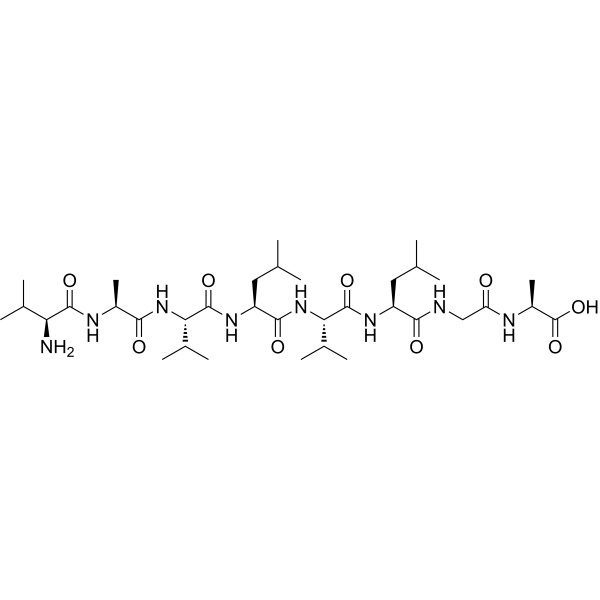
cOB1 phermone, a bacterial sex pheromone, effectively inhibits multidrug-resistant Enterococcus faecalis V583 .
loading...
    loading...
Cat. No.: HY-N14416
CAS No.: 110882-81-0
Parvodicin A is a glycopeptide antibiotic. Parvodicin A has inhibitory effect on Staphylococcus aureus, Staphylococcus furfur, Staphylococcus hemolyticus and Enterococcus faecalis .
loading...
    loading...
Cat. No.: HY-129166
CAS No.: 2468847-23-4
Target:  

Bacterial

Research Areas:  

Infection

UCM53, a FtsZ inhibitor, is an antibacterial agent. UCM53 can inhibit the growth of clinical isolates of antibiotic-resistant Staphylococcus aureus and Enterococcus faecalis
loading...
    loading...
Cat. No.: HY-N15040
CAS No.: 110882-87-6
Parvodicin C4 is a glycopeptide antibiotic. Parvodicin C4 has inhibitory effect on Staphylococcus aureus, Staphylococcus furfur, Staphylococcus hemolyticus and Enterococcus faecalis .
loading...
    loading...
Cat. No.: HY-N5181
CAS No.: 110882-86-5
Parvodicin C3 is a glycopeptide antibiotic. Parvodicin C3 has inhibitory effect on Staphylococcus aureus, Staphylococcus furfur, Staphylococcus hemolyticus and Enterococcus faecalis .
loading...
    loading...

