81 Results for "

normal fibroblasts

" in MedChemExpress (MCE) Product Catalog:
Products (81)

81 Results for "normal fibroblasts" in MCE Product Catalog:

Cat. No.: HY-N4308
CAS No.: 1251-84-9
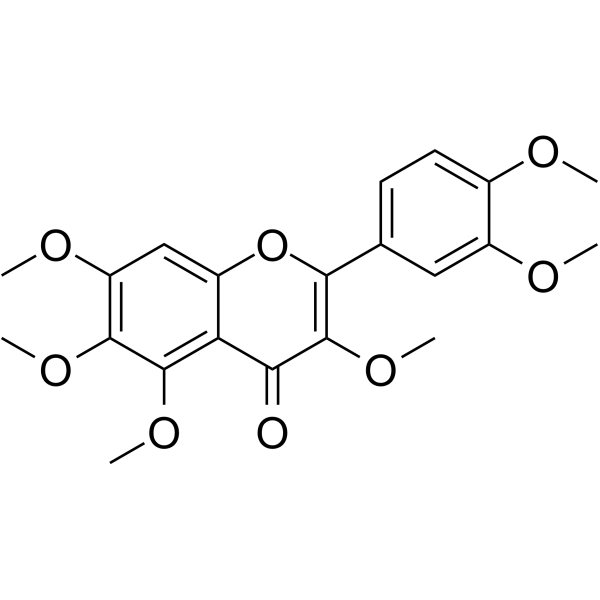
Synonyms: Hexa-O-methylquercetagetin; Quercetagetin hexamethyl ether; 3,5,6,7,3',4'-Hexamethoxyflavone
Hexamethylquercetagetin (Hexa-O-methylquercetagetin; Quercetagetin hexamethyl ether; 3,5,6,7,3',4'-Hexamethoxyflavone) is an orally active NF-κB inhibitor. Hexamethylquercetagetin inhibits NF-κB-derived luciferase activity, reduces phosphorylated p65 and IκBα, Cyclin D1, Bcl-2 and blocks TNFα-induced NF-κB activation. Hexamethylquercetagetin inhibits survival and proliferation of cervical carcinoma cells. Hexamethylquercetagetin suppresses tumor volume and weight in BALB/c nude mouse xenograft models of cervical carcinoma. Hexamethylquercetagetin can be used for the research of cancer, such as cervical carcinoma .
loading...
    loading...
Cat. No.: HY-174460
Target:  

Drug Intermediate

Research Areas:  

Cancer

pCR8 is a CR8 prodrug and anticancer agent responsive to H2O2. pCR8 achieves selective release of CR8 via boronate ester oxidation mediated by elevated hydrogen peroxide levels at tumor sites, self-assembles into nanoparticles, and degrades cell cycle-related proteins. A synergistic effect is produced when pCR8 is used in combination with immune checkpoint inhibitors. pCR8 can be used for the research of triple-negative breast cancer .
loading...
    loading...
Cat. No.: HY-116497
CAS No.: 1627843-95-1
Target:  

FAK

Research Areas:  

Cancer

PH11 is a novel focal adhesion kinase (FAK) inhibitor that rapidly induces apoptosis in TRAIL-resistant PANC-1 cells when combined with TRAIL, but has no effect on normal human fibroblasts. The study found that PH11 downregulates c-FLIP through inhibition of FAK and phosphatidylinositol-3-kinase (PI3K)/AKT pathways, thereby restoring the TRAIL apoptotic pathway, suggesting that this combination therapy may provide an attractive therapeutic strategy for the safe and effective treatment of pancreatic cancer. PH11 selectively inhibits c-FLIP expression by modulating upstream signaling pathways and may represent an innovative therapeutic strategy. Although further work is needed to fully elucidate the mechanism of PH11-induced TRAIL sensitization, we believe that our results will provide a new approach to target c-FLIP without the risk of interfering with caspase-8 processing, which could potentially lead to TRAIL resistance. This study also suggests a role for the FAK/AKT signaling pathway in regulating c-FLIP expression in TRAIL-induced apoptosis, and this understanding will provide important clues to control the resistance mechanism to optimize the potential of TRAIL-based pancreatic cancer treatment.
loading...
    loading...
Cat. No.: HY-P11642A
Sialorphin TFA is a neutral endopeptidase (NEP) and aminopeptidase N (APN) inhibitor that responds to androgen signals. Sialorphin TFA blocks the degradation of endogenous opioid peptides and interacts with μ-, δ-, κ-opioid receptors. Sialorphin TFA regulates the ERK/mTOR signaling pathway by inducing cell cycle arrest, enhancing ERK1/2 activity, and reducing the phosphorylation levels of mTOR, 4E-BP1, p70S6K; accordingly, Sialorphin TFA exhibits antiproliferative activity against colorectal cancer, glioma and prostate cancer cells without cytotoxicity. In addition, Sialorphin TFA also produces antinociceptive responses, regulates sexual behavior, relaxes corpus cavernosum smooth muscle, and alleviates experimental colitis. Sialorphin TFA is also a copper (II) ion-binding ligand. Sialorphin TFA has been used in mechanistic studies related to cancer, pain management and inflammatory bowel disease .
loading...
    loading...
Cat. No.: HY-174694
Target:  

mRNA

Research Areas:  

Cancer

Human FGF6 mRNA encodes the human fibroblast growth factor 6 (FGF6) protein, a member of the fibroblast growth factor (FGF) family. FGF6 may play an important role in the regulation of cell proliferation, cell differentiation, angiogenesis and myogenesis, and is also required for normal muscle regeneration.
loading...
    loading...
Cat. No.: HY-174704
Target:  

mRNA

Research Areas:  

Cancer

Human FGF18 mRNA encodes the human fibroblast growth factor 18 (FGF18) protein, a member of the fibroblast growth factor (FGF) family. FGF18 probably plays an important role in the regulation of cell proliferation, cell differentiation and cell migration. It is also required for normal ossification and bone development.
loading...
    loading...
Cat. No.: HY-174705
Target:  

mRNA

Research Areas:  

Cancer

Human FGF17 mRNA encodes the human fibroblast growth factor 17 (FGF17) protein, a member of the fibroblast growth factor (FGF) family. FGF17 probably plays an important role in the regulation of embryonic development and as signaling molecule in the induction and patterning of the embryonic brain. It is also required for normal brain development.
loading...
    loading...
Cat. No.: HY-174706
Target:  

mRNA

Research Areas:  

Cardiovascular Disease

Human FGF16 mRNA encodes the human fibroblast growth factor 16 (FGF16) protein, a member of the fibroblast growth factor (FGF) family. FGF16 probably plays an important role in the regulation of embryonic development, cell proliferation and cell differentiation. It is also required for normal cardiomyocyte proliferation and heart development.
loading...
    loading...
Cat. No.: HY-W773183
CAS No.: 4356-31-4
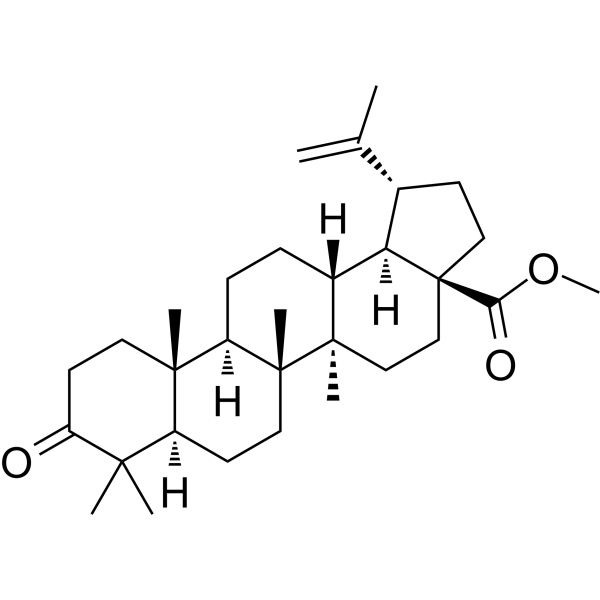
Synonyms: Betulonic acid methyl ester; Methyl 3-oxolup-20(29)-en-28-oate
Target:  

Drug Intermediate

Research Areas:  

Cancer

Methyl betulonate (Betulonic acid methyl ester) is a triterpenoid. Methyl betulonate inhibits cell growth of eight tumor (including resistant) and two normal fibroblast cell lines with the IC50s >50.0 μM .
loading...
    loading...
Cat. No.: HY-108999
CAS No.: 96389-69-4
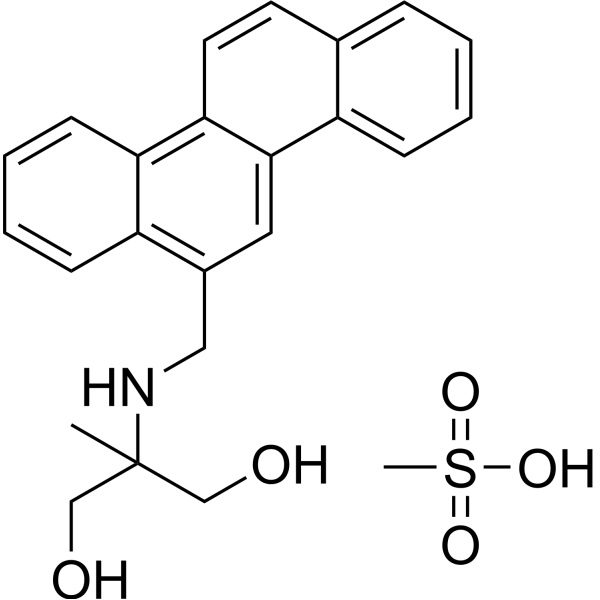
Synonyms: BWA770U mesylate
Target:  

DNA/RNA Synthesis

Research Areas:  

Cancer

Crisnatol (BWA770U) mesylate is an orally active and anticancer agent, and a member of the arylmethylaminopropanediol class of DNA intercalators. Crisnatol mesylate shows in vitro cytotoxicity against human breast cancer cells, but not normal human skin fibroblasts .
loading...
    loading...
Cat. No.: HY-120075
CAS No.: 1522415-97-9
Purity:  99.83%
Target:  

Apoptosis

Research Areas:  

Cancer

TJ191 is a potent and specific anti-cancer agent that targets low TβRIII-expressing malignant T-cell leukemia/lymphoma cells. TJ191 has no affects on the proliferation of other cancer cells or normal fibroblasts or immune cells. TJ191 can be used for cancer research .
loading...
    loading...
Cat. No.: HY-108999AR
CAS No.: 96389-68-3
Synonyms: BWA770U (Standard)
Research Areas:  

Cancer

Crisnatol (Standard) is the analytical standard of Crisnatol. This product is intended for research and analytical applications. Crisnatol (BWA770U) is an orally active and anticancer agent, and a member of the arylmethylaminopropanediol class of DNA intercalators. Crisnatol shows in vitro cytotoxicity against human breast cancer cells, but not normal human skin fibroblasts .
loading...
    loading...
Cat. No.: HY-146083
CAS No.: 54676-54-9
Target:  

Drug Derivative

Research Areas:  

Cancer

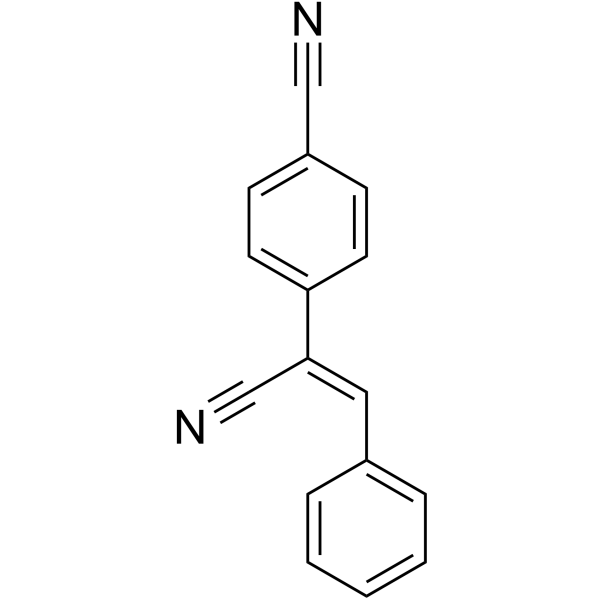
(Z)-p-cyano-α-Cyanostilbene (compound 11), a phenantrene derivative, has antiproliferative activity. (Z)-p-cyano-α-Cyanostilbene shows significant selectivity against HeLa (IC50=0.21 µM) and HepG2 (IC50=0.230 µM) cells without cytotoxic against normal skin fibroblasts (IC50>100 µM) .
loading...
    loading...
Cat. No.: HY-117560
CAS No.: 164025-33-6
Target:  

GABA Receptor

Research Areas:  

Neurological Disease

PWZ-029 is a selective inverse agonist for 5 GABAA receptors. PWZ-029 is a benzodiazepine site ligand. PWZ-029 shows a weak but significant partial agonistic effect at 1- and 3-containing receptors. PWZ-029 significantly increases retention session latency in mouse fibroblast cells. PWZ-029 can improve object recognition in normal and scopolamine-treated rat model .
loading...
    loading...
Cat. No.: HY-163005
CAS No.: 3018963-27-1
Target:  

Glycosidase

Research Areas:  

Metabolic Disease

α-Glucosidase-IN-43 (compound AS14) is an α-glucosidase inhibitor (IC50: 4.32 μM) with acute hypoglycemic activity. α-Glucosidase-IN-43 exhibits safety and in vivo efficacy, is nontoxic to normal mouse fibroblasts, and is able to rescue streptozotocin (HY-13753)-induced diabetic rats. α-Glucosidase-IN-43 can be used to study postprandial hyperglycemia in diabetic patients .
loading...
    loading...
Cat. No.: HY-N14903
CAS No.: 664365-72-4
Oximidine III is an anti-tumor antibiotic. Oximidine III can selectively inhibit the growth of 3Y1 in rat fibroblasts with degeneration of various tumor genes. Oximidine III inhibits v-H-ras-3Y1, v-src-3Y1 cells and the normal 3Y1 cells with IC50s (nM) of 14, 4.5 and 140, respectively. Oximidine III stops RAS-or SRC-denatured cells at G1 phase of the cell cycle and increases p21WAF1 expression .
loading...
    loading...
Cat. No.: HY-151872
CAS No.: 3031411-05-6
Target:  

HDAC Ferroptosis

Research Areas:  

Cancer

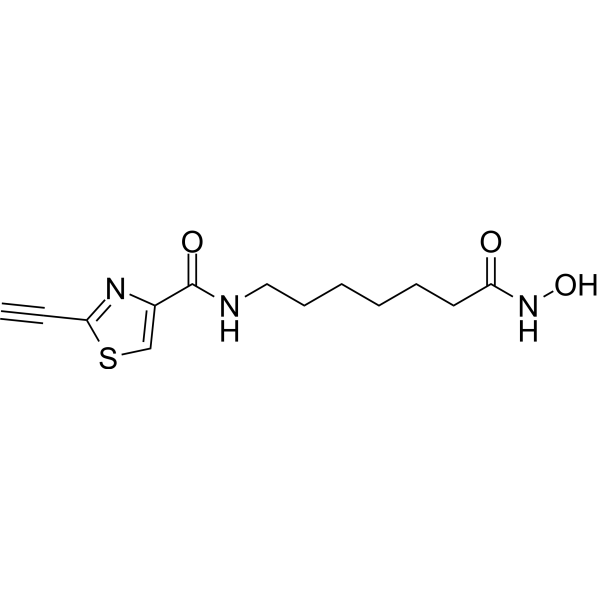
HDAC-IN-48 is a potent HDAC inhibitor. HDAC-IN-48 is a hybrid molecule with great cytotoxic profile (GI50~20 nM). HDAC-IN-48 consists of harmacophores of SAHA and CETZOLE molecules. HDAC-IN-48 induces ferroptosis and inhibits HDAC proteins . HDAC-IN-48 is a click chemistry reagent, it contains an Alkyne group and can undergo copper-catalyzed azide-alkyne cycloaddition (CuAAc) with molecules containing Azide groups.
loading...
    loading...
Cat. No.: HY-W010736R
CAS No.: 30334-71-5
1,2-Dipalmitoyl-sn-glycerol (Standard) is the analytical standard of 1,2-Dipalmitoyl-sn-glycerol (HY-W010736). This product is intended for research and analytical applications. 1,2-Dipalmitoyl-sn-glycerol is a diacylglycerol that activates PKC. 1,2-Dipalmitoyl-sn-glycerol promotes GLUT4 translocation to the cell surface and recruitment to the plasma membrane of adipocytes. 1,2-Dipalmitoyl-sn-glycerol can be used in research on type 2 diabetes .
loading...
    loading...
Cat. No.: HY-W010736S
CAS No.: 1872379-48-0
Research Areas:  

Metabolic Disease

1,2-Dipalmitoyl-sn-glycerol-d9 is the deuterated-labeled 1,2-Dipalmitoyl-sn-glycerol (HY-W010736). 1,2-Dipalmitoyl-sn-glycerol is a diacylglycerol that activates PKC. 1,2-Dipalmitoyl-sn-glycerol promotes GLUT4 translocation to the cell surface and recruitment to the plasma membrane of adipocytes. 1,2-Dipalmitoyl-sn-glycerol can be used in research on type 2 diabetes .
loading...
    loading...
Cat. No.: HY-181826
Target:  

Interleukin Related

Research Areas:  

Inflammation/Immunology

IL-17-IN-6 is a IL-17 inhibitor with a pIC50 of 7.6 against human targets. IL-17-IN-6 binds to IL-17A and blocks downstream pro-inflammatory signaling pathways. IL-17-IN-6 inhibits the release of IL-6 from normal human skin fibroblasts stimulated by IL-17A and TNF. IL-17-IN-6 can be used for research on inflammatory and autoimmune diseases .
loading...
    loading...

