
477 Results for "

memory,

" in MedChemExpress (MCE) Product Catalog:
Products (477)

477 Results for "memory," in MCE Product Catalog:

Cat. No.: HY-B0764R
CAS No.: 16980-89-5
Synonyms: Dibutyryl cAMP sodium (Standard); DBcAMP sodium (Standard)
Bucladesine (Dibutyryl cAMP; DBcAMP) sodium (Standard) is the analytical standard of Bucladesine sodiumn (HY-B0764). This product is intended for research and analytical applications. Bucladesine is a membrane-permeable 3′, 5′-cyclic adenosine monophosphate (cAMP) analog. Bucladesine selectively activates cAMP dependent protein kinase (PKA) by increasing the intracellular level of cAMP. Bucladesine significantly attenuates MDMA-induced increases in hippocampal mitochondrial ROS formation, mitochondrial outer membrane damage, cytochrome c release, and hippocampal ADP/ATP ratio, thereby improving spatial learning and memory impairments. Bucladesine exhibit anti-nociceptive and anti-inflammation effect. Bucladesine can inhibit cancer cells proliferation, induce apoptosis. Bucladesine can be used for the researches of neurological disease, cancer, inflammation .
loading...
    loading...
Cat. No.: HY-N2183R
CAS No.: 18609-17-1
Synonyms: Quercetin 3-O-sophoroside (Standard)
Baimaside (Standard) is the analytical standard of Baimaside. This product is intended for research and analytical applications. Baimaside (Quercetin 3-O-sophoroside) is a flavonoid cholinergic function modulator that binds to SARS-CoV-2-related targets. Baimaside regulates the expression of cholinergic system-related proteins and acetylcholine levels, improves scopolamine-induced learning and memory impairment, protects hippocampal neurons, inhibits pollen protein fluorescence, and protects pollen DNA. Its biosynthesis is regulated by multiple enzymes. Baimaside is completely absorbed in rats, undergoes phase Ⅱ metabolism and gut microbiota decomposition, and inhibits the invasion and proliferation of SARS-CoV-2 and its variants, making it suitable for research related to Alzheimer's disease and COVID-19 .
loading...
    loading...
Cat. No.: HY-N8210R
CAS No.: 446-71-9
Homoeriodictyol (Standard) is the analytical standard of Homoeriodictyol (HY-N8210). This product is intended for research and analytical applications. Homoeriodictyol is an orally active, bitter-tasting flavanone that can penetrate the blood-brain barrier. Homoeriodictyol enhances synaptic-related protein expression through NCOA4-mediated ferritin autophagy. Homoeriodictyol improves memory impairment in mice by inhibiting the NLRP3 inflammasome. Homoeriodictyol protects human endothelial cells from oxidative damage by activating Nrf2 and inhibiting mitochondrial dysfunction. Homoeriodictyol enhances ROS activity and induces apoptosis, exhibiting anticancer effects. Homoeriodictyol inhibits the survival and migration of androgen-resistant prostate cancer cells in vitro. Homoeriodictyol exerts antinociceptive activity in mice in vivo .
loading...
    loading...
Cat. No.: HY-NP0204
Synonyms: Mouse Serum Albumin
MSA Protein (Mouse Serum Albumin) is most abundant protein in plasma, which leaks into the brain parenchyma when the blood-brain barrier (BBB) is impaired. Mouse Serum Albumin induces astrocytes to A1 phenotype to remarkably increase levels of Elovl1. Mouse Serum Albumin promotes VLSFAs secretion and causes neuronal lippoapoptosis through endoplasmic reticulum stress response pathway. MSA-activated microglia triggeres remarkable tau phosphorylation at multiple sites (Ser202/Thr205) through NLRP3 inflammasome pathway. Mouse Serum Albumin decreases the spatial learning and memory abilities in mice. Mouse Serum Albumin can be used for the study of neurodegenerative diseases like Alzheimer’s disease (AD) and frontotemporal dementia (FTD) .
loading...
    loading...
Cat. No.: HY-P10638
Target:  

CaMK

TAT-CN21 is a potent CaMKII inhibitor with an IC50 of 77.2 nM. TAT-CN21 inhibits both calcium/calmodulin-dependent and autonomously activated CaMKII, blocks glutamate-induced translocation of CaMK IIα, and reverses the enhanced phosphorylation of CaMKII at Thr286 following excitotoxic injury. TAT-CN21 shows application potential in studies related to ischemic stroke by reducing neuronal excitotoxicity and exacerbating pre-existing long-term neuronal death prior to injury. TAT-CN21 improves definitive behaviors in rats with residual nerve injury without altering indicators such as mechanical/thermal hyperalgesia or spatial memory. TAT-CN21 can also be used in studies related to neuropathic pain .
loading...
    loading...
Cat. No.: HY-P5883
CAS No.: 2126166-03-6
Synonyms: tatM2NX
Target:  

TRP Channel

TAT-M2NX (tatM2NX) is a selective inhibitor targeting human TRPM2 channels and exerts inhibitory effects on ischemic stroke. TAT-M2NX reduces H2O2-induced calcium influx via TRPM2 channels. After traumatic brain injury in mice, TAT-M2NX preserves hippocampal long-term potentiation, improves memory function, and reduces infarct volume after middle cerebral artery occlusion, but it shows no effect on female mice. TAT-M2NX can be used in studies related to traumatic brain injury and ischemic stroke .
loading...
    loading...
Cat. No.: HY-P5917
CAS No.: 1373890-79-9
Synonyms: Vaejovis mexicanus peptide 24
Target:  

Potassium Channel

Research Areas:  

Inflammation/Immunology Cancer

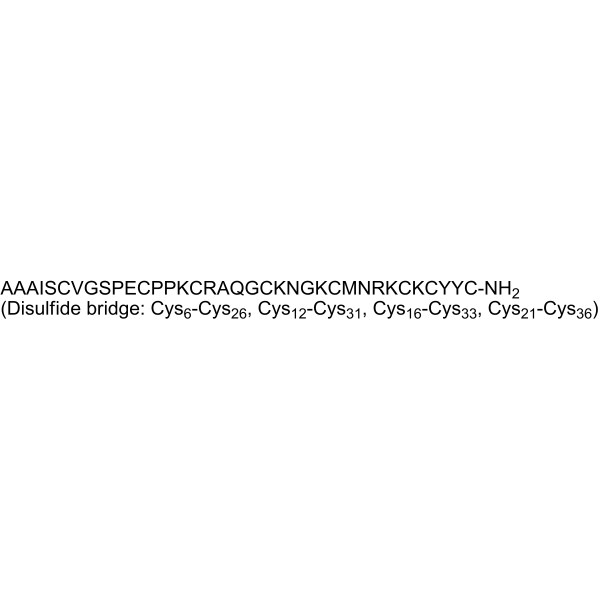
Vm24-toxin (Vaejovis mexicanus peptide 24), a 36-residue peptide, is a potent and selective Kv1.3 blocker with a Kd of ~3 pM in lymphocytes. Vm24-toxin shows >1500-fold affinity for Kv1.3 over other assayed potassium channels. Vm24-toxin folds into a distorted cystine-stabilized α/β motif consisting of a single-turn α-helix and a three-stranded antiparallel β-sheet, stabilized by four disulfide bridges. Vm24-toxin attenuates the CD4 + effector memory T cell response to T cell receptor (TCR) stimulation .
loading...
    loading...
Cat. No.: HY-P5917A
Synonyms: Vaejovis mexicanus peptide 24 TFA
Target:  

Potassium Channel

Research Areas:  

Inflammation/Immunology Cancer

Vm24-toxin (Vaejovis mexicanus peptide 24) TFA, a 36-residue peptide, is a potent and selective Kv1.3 blocker with a Kd of ~3 pM in lymphocytes. Vm24-toxin TFA shows >1500-fold affinity for Kv1.3 over other assayed potassium channels. Vm24-toxin TFA folds into a distorted cystine-stabilized α/β motif consisting of a single-turn α-helix and a three-stranded antiparallel β-sheet, stabilized by four disulfide bridges. Vm24-toxin TFA attenuates the CD4 + effector memory T cell response to T cell receptor (TCR) stimulation .
loading...
    loading...
Cat. No.: HY-107111R
CAS No.: 932373-87-0
Research Areas:  

Neurological Disease

GSK1034702 (Standard) is the analytical standard of GSK1034702 (HY-107111). This product is intended for research and analytical applications. GSK1034702 is an orally active and allosteric agonist of M1 mAChR (pEC50=8.1) that can cross the blood-brain barrier. GSK1034702 activates the Gq/11 protein-mediated signaling pathway, enhancing neuronal firing and long-term potentiation (LTP) in the CA1 region of the hippocampus. GSK1034702 can modulate hippocampal function, improve memory encoding in the nicotine withdrawal cognitive dysfunction model, and show pro-cognitive effects in rodents. GSK1034702 can be used for the study of the mechanisms of cognitive impairment diseases such as Alzheimer's disease, and has certain peripheral M receptor activation-related side effects (such as gastrointestinal reactions) .
loading...
    loading...
Cat. No.: HY-175548
CAS No.: 1912404-14-8
Research Areas:  

Neurological Disease

Nrf2 activator-21 is a Nrf2 activator with dual antioxidant and neuroprotective properties. Nrf2 activator-21 binds to Keap1 Kelch domain and disrupts Keap1-Nrf2 interactions and activate antioxidant defense mechanisms. Nrf2 activator-21 reduces apoptosis and decreases caspase-3 activity in the hippocampal neurons. Nrf2 activator-21 targets cerebral ischemia/reperfusion injury (CIRI) via Nrf2 pathway activation. Nrf2 activator-21 improves neurological function, alleviates anxiety-like behavior, enhances memory in rats with 2-vessel occlusion (2VO)-induced CIRI. Nrf2 activator-21 can be used for the study of cerebral ischemia/reperfusion injury .
loading...
    loading...
Cat. No.: HY-175841
CAS No.: 3075165-36-2
Tau Protein Phosphorylation-IN-1 is a tau protein phosphorylation inhibitor that potently protects PC12 cells against Aβ25–35-induced cytotoxicity (EC50 = 1.93 μM), and can penetrate the blood-brain barrier (BBB).Tau Protein Phosphorylation-IN-1 reverses the hyperphosphorylation of tau, significantly inhibits the expression of certain immune-related cytotoxic factors, suppresses the MAPK and NF-κB signaling pathways, and significantly inhibits the expression of RAGE and the apoptosis factors Bax/Bcl-2, both in vitro and in vivo. Tau Protein Phosphorylation-IN-1 relieves nerve damage, and improves learning and memory in an Alzheimer’s disease (AD) mouse model. Tau Protein Phosphorylation-IN-1 can be used for AD research .
loading...
    loading...
Cat. No.: HY-185978
CAS No.: 2133456-91-2
Target:  

GABA Receptor

Research Areas:  

Neurological Disease

GL-II-73 is a selective, orally active and blood-brain barrier permeable positive allosteric modulator of α5GABAA receptor, acting on the benzodiazepine-binding site of GABAA receptors. The binding selectivity of GL-II-73 for the α5 subtype is 6-, 11- and 12.5-fold higher than that for the α2, α1 and α3 subtypes, respectively . GL-II-73 reverses pilocarpine-induced hyperactivation of dopamine neurons in the ventral tegmental area, improves working memory and pyramidal neuron dendritic morphology in 5xFAD mice, but does not reduce β-amyloid load . GL-II-73 can be used in research related to Alzheimer's disease and temporal lobe epilepsy with comorbid psychosis .
loading...
    loading...
Cat. No.: HY-N18656
CAS No.: 90131-48-9
Category:  

Extract

Target:  

Bacterial

Terminalia chebula extract is an extract from the Terminalia chebula tree. Rich in bioactive compounds such as tannins, flavonoids, phenols, and organic acids like gallic acid and ellagic acid, this extract demonstrates a wide range of pharmacological activities. It acts as a natural laxative, supports digestive health, and exhibits potent antioxidant, anti-inflammatory, and antibacterial properties, effectively targeting various pathogenic bacteria, including Helicobacter pylori, Staphylococcus aureus, and Escherichia coli. Terminalia Chebula Extract also shows significant hepatoprotective effects, shielding the liver from damage through antioxidant and anti-inflammatory mechanisms. It has nephroprotective properties, alleviating renal dysfunction and enhancing kidney health by modulating inflammatory pathways. Additionally, the extract demonstrates neuroprotective activity, reducing neuronal damage and improving memory function. It has potential anti-diabetic effects, enhancing glucose uptake and reducing oxidative stress.
loading...
    loading...
Cat. No.: HY-N2125
CAS No.: 174972-80-6
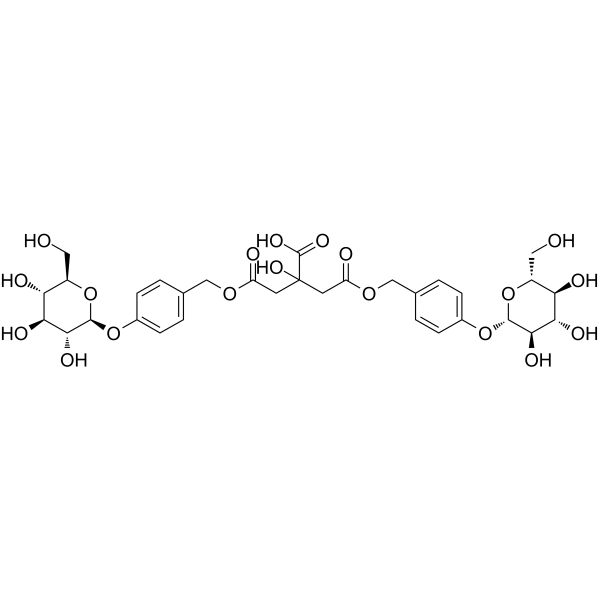
Parishin C is a brain-penetrant major bioactive component found in Gastrodia elata Blume. Parishin C is a 5-HT1A receptor agonist with an EC50 of 34 nM. Parishin C has antipsychotic and neuroprotective effects. Parishin C protects against Aβ-induced long-term potentiation damage and NMDA receptor current impairment. Parishin C reduces oxidative stress, pro-inflammatory cytokine levels, caspase activity, brain water content, and cerebral infarct volume; increases antioxidant enzyme activity and BDNF levels; improves nerve function and histopathological brain damage. Parishin C attenuates phencyclidine-induced immobility time increases, sociability deficits, and visual recognition memory impairment. Parishin C can be used for the research of ischemic stroke, Alzheimer's disease, and schizophrenia-like psychosis .
loading...
    loading...
Cat. No.: HY-N2332AR
CAS No.: 351344-10-0
Synonyms: MLA citrate (Standard)
Methyllycaconitine citrate (Standard) is the analytical standard of Methyllycaconitine citrate (HY-N2332A). This product is intended for research and analytical applications. Methyllycaconitine (MLA) citrate is a blood-brain barrier-permeable antagonist of α7 nicotinic acetylcholine receptor (α7nAChR) with an IC50 of 2 nM. Methyllycaconitine citrate inhibits Aβ25-35-induced autophagy by restoring the mTOR pathway, and prevents reactive oxygen species (ROS) production, microglial activation, reduced dopamine uptake, loss of dopaminergic terminals and catecholamine secretion. Methyllycaconitine citrate induces hippocampal glutamate efflux, enhances long-term potentiation, and improves memory acquisition. Methyllycaconitine citrate can be used in research related to Alzheimer's disease, cerebral palsy, ParKinson's disease and schizophrenia .
loading...
    loading...
Cat. No.: HY-P990127

Research Areas:  

Inflammation/Immunology

Anti-Mouse CD80/B7-1 Antibody (RM80) is an anti-mouse CD80/B7-1 IgG2a monoclonal antibody. Anti-Mouse CD80/B7-1 Antibody (RM80) can inhibit the number of tissue-resident memory (TRM) cells. Anti-Mouse CD80/B7-1 Antibody (RM80) can prolong the survival time of transplants combined with CD86 mAb. Anti-Mouse CD80/B7-1 Antibody (RM80) can be used for researches on inflammation conditions and immunology such as viral myocarditis and corneal transplant .
loading...
    loading...
Cat. No.: HY-W013579R
CAS No.: 2244-16-8
Synonyms: D-​Carvone (Standard)
(S)-(+)-Carvone (Standard) is the analytical standard of (S)-(+)-Carvone. This product is intended for research and analytical applications. (S)-(+)-Carvone is an orally active natural product. (S)-(+)-Carvone increases the activity of antioxidant enzymes (SOD, CAT) and ROS, reduces the levels of oxidative stress markers (MDA, AChE), reduces the secretion of proinflammatory cytokines (IL-1β, IL-4, IL-6, IL-10), and downregulates NLRP3. (S)-(+)-Carvone increases the activities of caspase-8, -9 and -3. (S)-(+)-Carvone induces apoptotic death. (S)-(+)-Carvone has antimanic-like effect, liver protection and anticancer activity against skin cancer. (S)-(+)-Carvone improves memory and arthritis .
loading...
    loading...
Cat. No.: HY-120657
CAS No.: 1481636-31-0
Purity:  99.88%
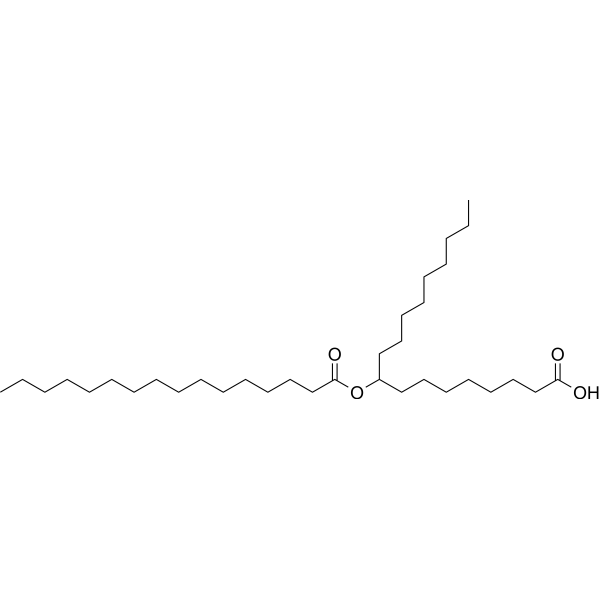
9-PAHSA is an orally active endogenous GPR120 agonist (EC50=18 μM). 9-PAHSA significantly inhibits LPS-induced inflammatory responses by blocking the NF-κB pathway. 9-PAHSA induces adipocyte browning, enhances glucose uptake and reduces lipid accumulation, while improving mitochondrial function and the survival rate of steatotic hepatocytes. In terms of neuroprotection, 9-PAHSA regulates the expression of REST and BDNF in the prefrontal cortex of diabetic mice, and effectively prevents spatial working memory deficits and abnormal social behaviors. 9-PAHSA does not directly regulate insulin secretion or improve systemic insulin sensitivity, and possesses specific anti-inflammatory, metabolic regulatory and neuroprotective properties. 9-PAHSA can be used in the research of diabetes-related cognitive impairment, obesity and non-alcoholic fatty liver disease .
loading...
    loading...
Cat. No.: HY-123320S
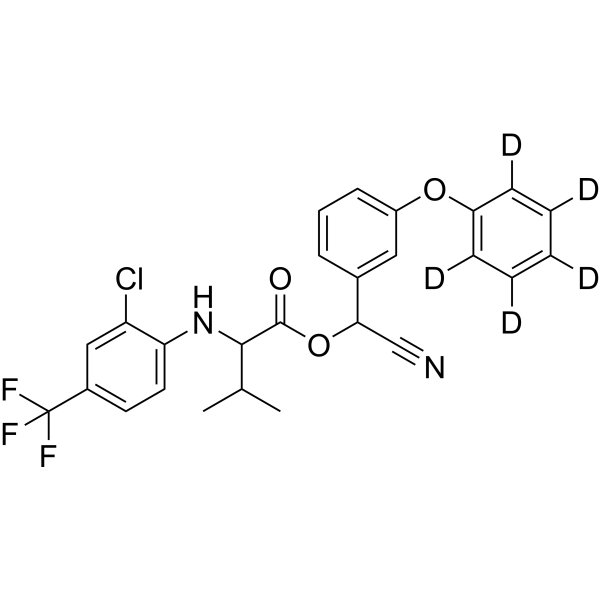
Fluvalinate-d5 is the deuterated-labeled Fluvalinate (HY-123320). Fluvalinate is an orally active acaricide classified as a sodium channel inhibitor. Fluvalinate delays sodium channel closure, prolongs cell membrane depolarization, inhibits the excitability of honeybee brain neurons, and exerts a central nervous system inhibitory effect. Fluvalinate negatively affects the learning ability, memory ability, sucrose responsiveness, and survival of honeybees. Fluvalinate potentiates pentobarbital-induced hypnosis, reduces spontaneous activity in mice, and decreases the total white blood cell count and absolute lymphocyte count in mice. Fluvalinate induces acute toxic symptoms in rats, acts as a cholinergic stimulant, and induces the production of hepatic enzymes in rats. Fluvalinate causes the death of Varroa jacobsoni sensitive to τ-Fluvalinate (HY-B2021). Fluvalinate can be used in studies related to mite pest control .
loading...
    loading...
Cat. No.: HY-169480
CAS No.: 3003022-09-8
Target:  

Liposome

Research Areas:  

Infection Cancer

Lipid C2 is an ionizable cationic lipid that has been used in the formation of lipid nanoparticles (LNP) for mRNA delivery in vivo. LNPs containing Lipid C2 and encapsulating an mRNA reporter selectively accumulate in the liver and spleen but not the heart, lungs, or kidneys in mice. LNP containing Lipid C2 and encapsulating mRNA encoding the Epstein-Barr virus (EBV) protein latent membrane protein 2 (LMP-2), in combination with an anti-programmed cell death protein 1 (PD-1) antibody, decrease tumor volume and reverse T cell exhaustion, as well as increase the percentage of CD3 +CD8 + central and CD3 +CD8 + effector memory T cells and decrease the percentage of CD3 + T cells expressing Pd-1, in the spleen in a CT26 murine EBV-infected colon cancer model .
loading...
    loading...

