6794 Results for "

Pathways

" in MedChemExpress (MCE) Product Catalog:
Products (6794)

6794 Results for "Pathways" in MCE Product Catalog:

Cat. No.: HY-172256
CAS No.: 3029506-23-5
Target:  

PI4K

Research Areas:  

Cancer

PI4KIII beta inhibitor 5 is a PI4KIIIβ inhibitor with an IC50 of 19 nM. PI4KIII beta inhibitor 5 can induce cancer cell apoptosis (Apoptosis), cell cycle arrest at the G2/M phase, and autophagy (Autophagy) by inhibiting the PI3K/AKT pathway. PI4KIII beta inhibitor 5 has also demonstrated significant antitumor activity in the H446 xenograft model of small cell lung cancer. PI4KIII beta inhibitor 5 can be used for research in the field of cancer therapy .
loading...
    loading...
Cat. No.: HY-17417AR
CAS No.: 465-65-6
Naloxone Standard is the analytical standard of Naloxone (HY-17417A). This product is intended for research and analytical applications. Naloxone is an opioid receptor antagonist. Naloxone attenuates spinal cord stimulation‑associated anti‑hyperalgesic effects, antagonizes physiologic effects of endogenous opioid peptides linked to central nervous system injury sequelae, functions as a pressor agent to induce modest elevations in mean arterial blood pressure, exerts neuroprotective effects to improve post‑traumatic neurologic motor function, blocks opioid receptor‑mediated amnesic pathways, enhances memory consolidation, reverses Adrenocorticotropic hormone (ACTH) (HY-106373)‑ and epinephrine‑induced amnesia, and potentiates the memory‑facilitatory effects of ACTH and epinephrine .
loading...
    loading...
Cat. No.: HY-17417AS
CAS No.: 1261079-38-2
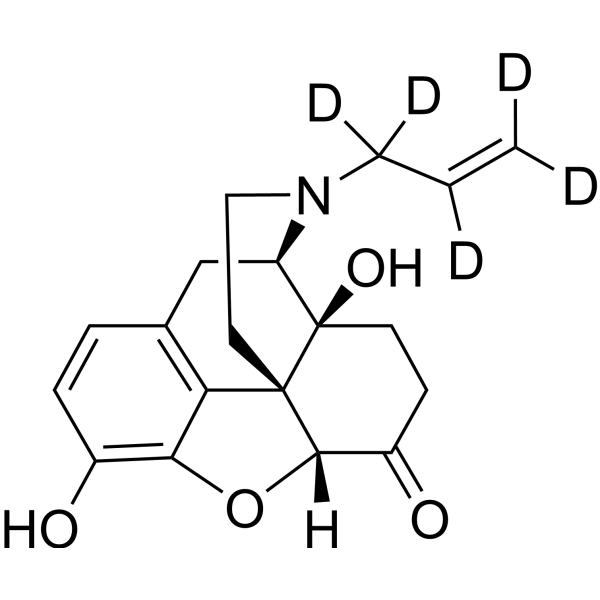
Naloxone-d5 is the deuterated-labeled Naloxone (HY-17417A). Naloxone is an orally active opioid receptor antagonist. Naloxone attenuates spinal cord stimulation‑associated anti‑hyperalgesic effects, antagonizes physiologic effects of endogenous opioid peptides linked to central nervous system injury sequelae, functions as a pressor agent to induce modest elevations in mean arterial blood pressure, exerts neuroprotective effects to improve post‑traumatic neurologic motor function, blocks opioid receptor‑mediated amnesic pathways, enhances memory consolidation, reverses Adrenocorticotropic hormone (ACTH) (HY-106373)‑ and epinephrine‑induced amnesia, and potentiates the memory‑facilitatory effects of ACTH and epinephrine .
loading...
    loading...
Cat. No.: HY-174306
Research Areas:  

Metabolic Disease

MARY1 is a selective 5-HT2BR antagonist with an IC50 of 380 nM and a Ki of 764 nM (human 5-HT2BR). MARY1 induces renal mitochondrial biogenesis (MB) and enhances renal mitochondrial function by increasing mitochondrial respiratory capacity, mitochondrial protein levels, and mitochondrial number in renal proximal tubular cells (RPTCs). MARY1 induces MB through 5-HT2BR and dual PI3K/AKT and RAS/MEK/ERK cell signaling pathways in RPTCs. MARY1 can be used to study renal diseases associated with metabolic and mitochondrial dysfunction .
loading...
    loading...
Cat. No.: HY-175026
CAS No.: 3036254-29-9
RIPK2-IN-8 is an orally active and highly selective RIPK2 inhibitor (IC50 = 11 nM). RIPK2-IN-8 is highly selective for RIPK2 over RIPK1 (IC50 > 30,000 nM) and has a moderate inhibitory effect on RIPK3 (IC50 = 44.61 nM). RIPK2-IN-8 inhibits the NOD2-RIPK2 signaling pathway and the expression of the inflammatory cytokines IL-6 and TNFα, thereby exerting anti-inflammatory effects. RIPK2-IN-8 has demonstrated anti-inflammatory and hepatoprotective effects in an acute liver injury (ALI) model and can be used in ALI research .
loading...
    loading...
Cat. No.: HY-175466
Research Areas:  

Cancer

BER-IN-1 is a base excision repair (BER) inhibtor, targeting DNA abasic sites. BER-IN-1 cleaves abasic sites via β- and β,δ-elimination mechanisms, disrupts the base excision repair (BER) pathway and leads to DNA double-strand breaks (DSBs). BER-IN-1 can enhance the effectiveness of the PARP inhibitor Olaparib (HY-10162) in homologous recombination (HR)-proficient cancer cells (MDA-MB-231, HeLa, and SKOV3). BER-IN-1 induces an S-phase arrest and apoptosis companied with Olaparib (HY-10162). BER-IN-1 can be used for the research of cancer, such as breast, cervical and ovarian cancer .
loading...
    loading...
Cat. No.: HY-175478
CAS No.: 3105103-33-8
Enpp-1-IN-27 is a selective ENPP1 inhibitor with an IC50 of 14.68 nM, exhibiting approximately 410-fold selectivity against ENPP2 and 10-fold selectivity against ENPP3. Enpp-1-IN-27 stabilizes cGAMP levels and activates the STING pathway, promoting cytokine release and enhancing innate immune responses. Enpp-1-IN-27 induces ISRE activation and amplified cGAMP-mediated immune responses and shows the desired antitumor efficacy in the 4T1 and CT26 syngeneic mouse models. Enpp-1-IN-27 can used for the studies of breast cancer and colon cancer .
loading...
    loading...
Cat. No.: HY-175531
EGFR-IN-169 is an epidermal growth factor (EGFR) (IC50 = 5.19 μM) inhibitor form panaxadiol. EGFR-IN-169 interferes with the migration and growth of colorectal cancer cells by inhibiting EGFR-mediated RalA/EMT pathway. EGFR-IN-169 shows an IC50 value of 4.46 μM and SI of 16.92 for HCT-116 cells. EGFR-IN-169 inhibits CDKs activity, induces G0/G1 cycle arrest and inhibits migration and invasion. EGFR-IN-169 reduces mitochondrial membrane potential and induces apoptosis and ROS production. EGFR-IN-169 can be used for the research of cancer, such as colorectal cancer .
loading...
    loading...
Cat. No.: HY-175814
NLRP3-IN-83 is a selective and orally active NLRP3 inflammasome activation inhibitor. NLRP3-IN-83 exhibits good inhibitory IL-1β activity with an IC50 of 1.4 μM by blocking NLRP3, independent of NF-κB signaling. NLRP3-IN-83 only slightly inhibits AIM2 inflammasome pathway, but has no effect on NLRC4 inflammasome. NLRP3-IN-83 prevent cell pyroptosis and exhibits significant anti-inflammatory efficacy in ulcerative colitis model. NLRP3-IN-83 can be used for the study of inflammatory bowel disease (IBD) .
loading...
    loading...
Cat. No.: HY-175874
CAS No.: 353258-94-3
Research Areas:  

Cancer

Tubulin-IN-55 is a tubulin inhibitor. Tubulin-IN-55 disrupts the PI3K/Akt signaling pathway in cancer cells. Tubulin-IN-55 exerts broad-spectrum anti-proliferative activity against multiple tumor cells (HeLa, HCT116, 4T1, A549, H1299, MDA-MB231). Tubulin-IN-55 induces G2/M phase arrest and apoptosis, and inhibits tumor cell migration/invasion in cancer cells. Tubulin-IN-55 demonstrates potent antitumor efficacy in orthotopic autologous transplantation mice. Tubulin-IN-55 can be used for the study of cancer .
loading...
    loading...
Cat. No.: HY-176271
CAS No.: 3069915-36-9
MAO-B-IN-45 is a dual inhibitor of ferroptosis and MAO-B. MAO-B-IN-45 shows selectivity towards MAO-B with an IC50 of 87.47 nM and selectivity exceeding 229-fold for MAO-B over MAO-A. MAO-B-IN-45 has excellent antiferroptosis activity through modulation of the iron metabolic pathway and GSH-GPX4 axis in vitro. MAO-B-IN-45 improves cognitive and behavioral impairments in 3×Tg (APP/Tau/Ps1) AD mouse and significantly reduced the levels of ferritin heavy chain 1 (FTH1), APP, and Tau phosphorylation (p-Tau) proteins in the brain.
loading...
    loading...
Cat. No.: HY-179381
CAS No.: 3053546-73-6
Target:  

FGFR

Research Areas:  

Cancer

FGFR4-IN-24 is a selective irreversible covalent FGFR4 inhibitor (IC50 = 1.2 nM). FGFR4-IN-24 shows much weaker activity against the other three FGFR family kinases (FGFR1-3). FGFR4-IN-24 inhibits the FGF19/FGFR4 signaling pathway, effectively suppressing the proliferation of the HuH-7 HCC cell line (GI50 = 17 nM). FGFR4-IN-24 exhibits significant antitumor activity in a HuH-7 mouse xenograft model. FGFR4-IN-24 can be used for the research of hepatocellular carcinoma .
loading...
    loading...
Cat. No.: HY-179387
CXCR2-IN-3 is a CXCR2 inhibitor with an IC50 of 11.37 μM. CXCR2-IN-3 mediates CXCR2-Ca 2+ signalling inhibition halted autophagic flux, subsequently facilitating ROS-mediated apoptotic cell death. CXCR2-IN-3 suppresses the CXCR2-NLRP3 canonical pathway, suppressing pre-tumorigenic markers. CXCR2-IN-3 causes autophagy-dependent cell death in polyploid giant cancer cells (PGCCs). CXCR2-IN-3 can be used for the research of oral squamous cell carcinoma (OSCC) .
loading...
    loading...
Cat. No.: HY-179392
Research Areas:  

Cancer

Sunitinib-platinum(IV) prodrug-1 (Complex A) is a Pt(IV) prodrug based on Cisplatin (HY-17394), and this design aims to enable Pt(IV) to be reduced to active Pt(II) under intracellular reducing conditions, while simultaneously releasing a derivative of Sunitinib (HY-10255A) with tyrosine kinase inhibitor (TKI) activity. Sunitinib-platinum(IV) prodrug-1 exhibits excellent cytotoxicity against renal cell carcinoma (RCC), causing DNA crosslinking and apoptosis. Sunitinib-platinum(IV) prodrug-1 inhibits the VEGFR/PDGFR signaling pathway, suppressing tumor growth and angiogenesis. Sunitinib-platinum(IV) prodrug-1 can be used for research on renal cell carcinoma .
loading...
    loading...
Cat. No.: HY-179571
CAS No.: 1048-17-5
Synonyms: PPTD
Research Areas:  

Cancer

ZIP 14-IN-1 (PPTD) is a selective and orally active ZIP14 inhibitor. ZIP 14-IN-1 inhibits ZIP14 while sparing ZIP8 (SLC39A8). ZIP 14-IN-1 efficiently blocks ZIP14-mediated uptake of multiple divalent metals (zinc, iron, manganese and cadmium). ZIP 14-IN-1 binds to a pocket formed at the dimer interface of ZIP14, obstructing the metal transport pathway. ZIP 14-IN-1 effectively reverses the consequent elevation of reactive oxygen species (ROS) and lipid peroxidation, attenuating metal-induced cytotoxicity. ZIP 14-IN-1 can be uses for cancer cachexia research .
loading...
    loading...
Cat. No.: HY-181557
CAS No.: 3077714-09-8
SY-589 is an orally active DNA polymerase Polθ helicase domain inhibitor (IC50=2.29 nM) and DNA damage inducer. SY-589 inhibits the ATPase activity of the Polθ helicase domain and blocks the Polθ-mediated microhomology-mediated end joining (MMEJ) DNA repair pathway (IC50=0.85 nM). SY-589 also induces the accumulation of DNA double-strand breaks by increasing γ-H2AX levels. SY-589 exerts antiproliferative effects on BRCA2-deficient cells and is used in the research of HR-deficient tumors .
loading...
    loading...
Cat. No.: HY-181878
Synonyms: Z7149
Z8779877149 (Z7149) is a blood-brain barrier-permeable multi-target ligand that targets SERT (Ki=198 nM), α2A adrenergic receptor (Ki=180 nM; EC50=440 nM) and 5-HT2A receptor (EC50=172 nM, Emax=76%). Z8779877149 inhibits 5-HT reuptake and activates Gi and Gq protein signaling pathways, respectively. Z8779877149 effectively alleviates pain responses as well as depression- and anxiety-like behaviors, while exhibiting favorable safety without inducing sedation or motor impairment. Z8779877149 is available for the research of pain, depression and anxiety disorders .
loading...
    loading...
Cat. No.: HY-182038
Research Areas:  

Metabolic Disease

TGF-β1/Smad3-IN-2 is an orally active antifibrotic agent. TGF-β1/Smad3-IN-2 has high affinity for VDR and can inhibit the TGFβ/SMAD3 signaling pathway. TGF-β1/Smad3-IN-2 inhibits hepatic stellate cell activation, reduces extracellular matrix deposition, and alleviates liver fibrosis in a bile duct ligation mouse model. TGF-β1/Smad3-IN-2 can be used for the research of liver fibrosis .
loading...
    loading...
Cat. No.: HY-182937
CAS No.: 3100242-36-9
Research Areas:  

Cancer

FLC-8 is an orally active FLT3 inhibitor with IC50 values of 10.2 nM, 11.6 nM and 24.10 nM against human FLT3-WT, FLT3-G697R and FLT3-N676D, respectively. FLC-8 inhibits FLT3 autophosphorylation and downstream STAT5, AKT and ERK signaling pathways, and induces apoptosis in acute myeloid leukemia (AML) cells. FLC-8 exhibits potent antitumor activity in the MV4-11 xenograft model. FLC-8 can be used for the research of acute myeloid leukemia .
loading...
    loading...
Cat. No.: HY-183105
CAS No.: 2133291-32-2
Research Areas:  

Cancer

DC551040 is an orally active and selective lysine demethylase 1 (LSD1) inhibitor with a human IC50 of 2.14 nM. DC551040 binds to LSD1 via π-π stacking with Trp552, polar interactions with Phe538, and covalent adduct formation with FAD, and disrupts the LSD1-GFI1B-CoREST complex. DC551040 induces H3K4me2 accumulation, apoptosis, and cell differentiation, activates STAT5, NF-κB, AKT, and IL6-STAT3 pathways, and upregulates IL6 expression. DC551040 can be used for the research of acute myeloid leukemia .
loading...
    loading...

