77 Results for "

Prefrontal Cortex

" in MedChemExpress (MCE) Product Catalog:
Products (77)

77 Results for "Prefrontal Cortex" in MCE Product Catalog:

Cat. No.: HY-10711
CAS No.: 571147-18-7
Synonyms: (R)-NFPS
Target:  

GlyT

Research Areas:  

Neurological Disease

ALX-5407 ((R)-NFPS) is a selective and orally active glycine transporter GlyT1 inhibitor with an IC50 value of 3 nM. ALX-5407 can be used the research of N-methyl-D-aspartate-receptor function and schizophrenia .
loading...
    loading...
Cat. No.: HY-17416AS
CAS No.: 1189924-28-4
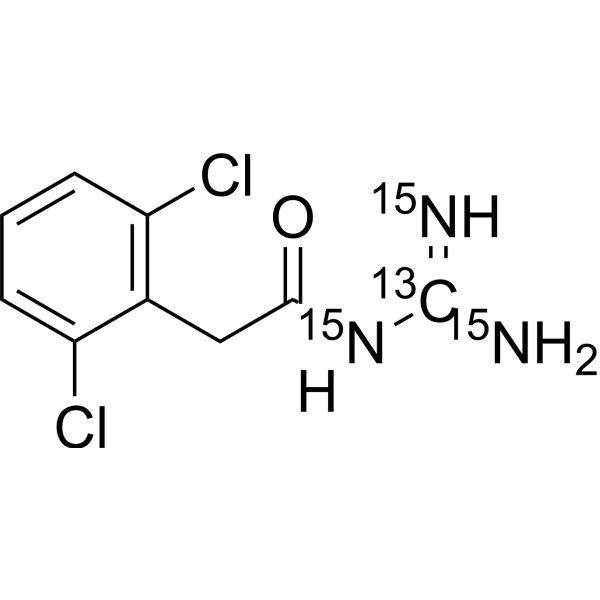
Guanfacine- 13C, 15N3 is the 13C and 15N labeled Guanfacine . Guanfacine is an orally active noradrenergic α2A agonist and has high selective for the α2A receptor subtype. Guanfacine has effects in producing hypotension and sedation. Guanfacine can be used for the research of a variety of prefrontal cortex (PFC) cognitive disorders, including tourette's syndrome and attention deficit hyperactivity disorder (ADHD) .
loading...
    loading...
Cat. No.: HY-18138
CAS No.: 1400811-63-3
Target:  

5-HT Receptor

Research Areas:  

Neurological Disease

PF-03382792 is a potent 5-HT4 partial agonist with a Ki of 2.7 nM and an EC50 of 0.9 nM for 5-HT4d. PF-03382792 can penetrate the brain. PF-03382792 produces moderate increases in cortical Ach in the rat prefrontal cortex .
loading...
    loading...
Cat. No.: HY-120155
CAS No.: 206862-30-8
Target:  

Sigma Receptor iGluR

Research Areas:  

Neurological Disease

MS-377 is a selective and orally active sigma-1 receptor ligand (Ki=73 nM) with weak affinity for sigma-2 receptor (Ki=6900 nM) and no affinity for any other receptors including dopamine, serotonin, PCP site, glutamate, γ-aminobutylic acid, adenosine, adrenergic receptors, etc. (Ki: >10 μM). MS-377 indirectly modulates the NMDA receptor ion-channel complex. MS-377 is a antipsychotic agent. MS-377 inhibits PCP-induced behaviors by inhibition of the increase in dopamine and serotonin release in the rat medial prefrontal cortex. MS-377 can be used for research of schizophrenia .
loading...
    loading...
Cat. No.: HY-120657S
CAS No.: 2704278-85-1
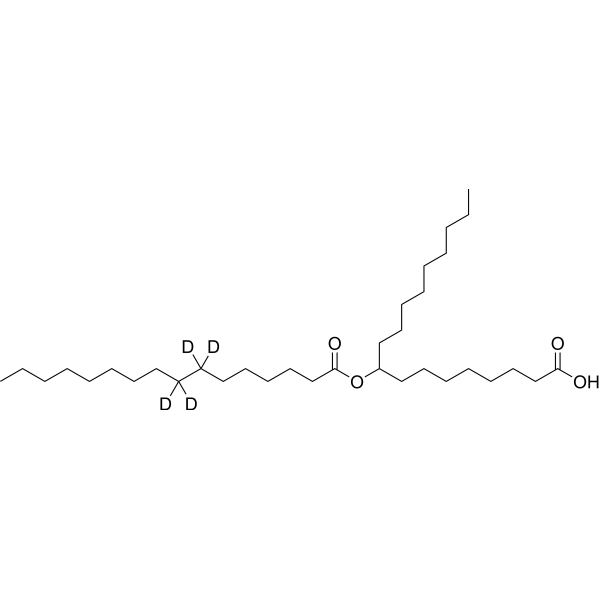
9-PAHSA-d4 is the deuterium labeled 9-PAHSA. 9-PAHSA is an orally active endogenous GPR120 agonist (EC50=18 μM). 9-PAHSA significantly inhibits LPS-induced inflammatory responses by blocking the NF-κB pathway. 9-PAHSA induces adipocyte browning, enhances glucose uptake and reduces lipid accumulation, while improving mitochondrial function and the survival rate of steatotic hepatocytes. In terms of neuroprotection, 9-PAHSA regulates the expression of REST and BDNF in the prefrontal cortex of diabetic mice, and effectively prevents spatial working memory deficits and abnormal social behaviors. 9-PAHSA does not directly regulate insulin secretion or improve systemic insulin sensitivity, and possesses specific anti-inflammatory, metabolic regulatory and neuroprotective properties. 9-PAHSA can be used in the research of diabetes-related cognitive impairment, obesity and non-alcoholic fatty liver disease .
loading...
    loading...
Cat. No.: HY-A0095B
CAS No.: 147359-76-0
Synonyms: BIMT-17 hydrochloride; BIMT-17BS hydrochloride
Flibanserin (BIMT-17) hydrochloride is an orally active serotonin 5-HT1A receptor agonist and 5-HT2A receptor antagonist with Ki values of 1 nM and 49 nM, respectively. Flibanserin hydrochloride binds to dopamine D4 receptors with an Ki value of 4-24 nM. Flibanserin hydrochloride shows anti-depression and anti-anxiety effect, can be used to hypoactive sexual desire disorder (HSDD) research - .
loading...
    loading...
Cat. No.: HY-17416S2
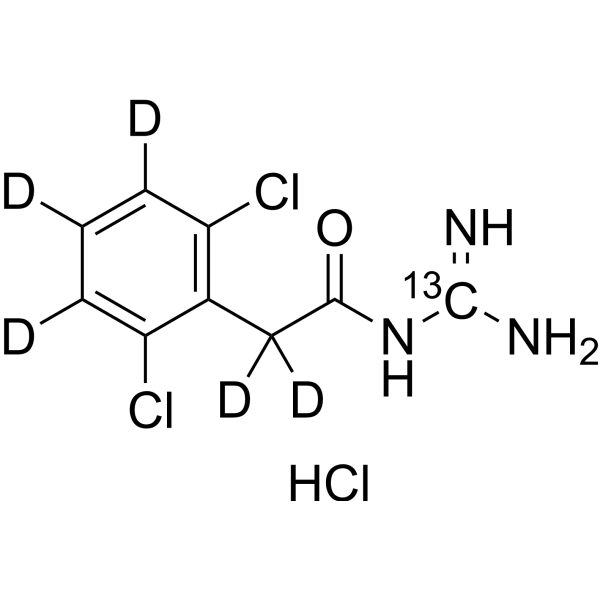
Guanfacine- 13C,d5 hydrochloride is the deuterium and 13C labeled Guanfacine hydrochloride (HY-17416). Guanfacine hydrochloride is an orally active noradrenergic α2A agonist and has high selective for the α2A receptor subtype. Guanfacine has effects in producing hypotension and sedation. Guanfacine can be used for the research of a variety of prefrontal cortex (PFC) cognitive disorders, including tourette's syndrome and attention deficit hyperactivity disorder (ADHD) .
loading...
    loading...
Cat. No.: HY-17416AS1
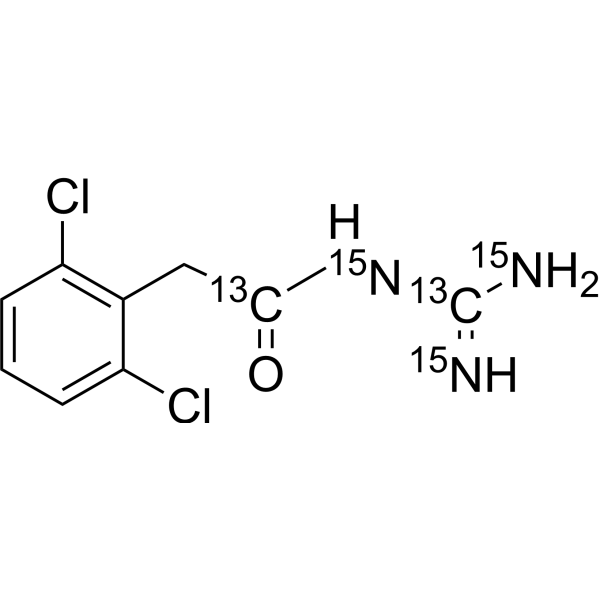
Guanfacine- 15N3, 13C2 is 15N and 13C labeled Guanfacine (HY-17416A). Guanfacine is an orally active noradrenergic α2A agonist and has high selective for the α2A receptor subtype. Guanfacine has effects in producing hypotension and sedation. Guanfacine can be used for the research of a variety of prefrontal cortex (PFC) cognitive disorders, including tourette's syndrome and attention deficit hyperactivity disorder (ADHD) .
loading...
    loading...
Cat. No.: HY-P10435
CAS No.: 1393589-51-9
Target:  

Dopamine Receptor

Research Areas:  

Neurological Disease

KEMPFPKYPVEP is a 12-amino acids neuropeptide, which upregulates levels of dopamine (DA) and norepinephrine (NE) in the prefrontal cortex, exhibits spatial and object recognition memory promoting ability in Scopolamine (HY-N0296)-induced amnesia mouse model .
loading...
    loading...
Cat. No.: HY-106437
CAS No.: 188116-08-7
Target:  

GABA Receptor

Research Areas:  

Neurological Disease

ELB-139 is a progesterone analogue. ELB-139 is a GABAA receptor partial agonist. ELB-139 has anxiolytic and anticonvulsant activity. ELB-139 induces increase of extracellular 5-HT in the striatum and the medial prefrontal cortex of rats .
loading...
    loading...
Cat. No.: HY-118928
CAS No.: 412044-92-9
Synonyms: Demethyl-CHF 2819
Target:  

Cholinesterase (ChE)

Research Areas:  

Neurological Disease

Demethyl-Ganstigmine hydrochloride (Demethyl-CHF 2819) is an orally active AChE inhibitor. Demethyl-Ganstigmine hydrochloride promotes the release of sAPPα from neuroblastoma cells. Demethyl-Ganstigmine hydrochloride increases the concentration of acetylcholine in the prefrontal cortex of rats. Demethyl-Ganstigmine hydrochloride is used in research on neurological diseases such as Alzheimer's disease .
loading...
    loading...
Cat. No.: HY-105161
CAS No.: 151227-58-6
Target:  

5-HT Receptor

Research Areas:  

Neurological Disease

AP-521 (free base) is a benzothienopyridine derivative that exhibits potent anxiolytic effects by acting as a postsynaptic 5-HT1A receptor agonist and by enhancing serotonergic neural transmission in the medial prefrontal cortex (mPFC). AP-521 (free base) is promising for research of anxiety disorders .
loading...
    loading...
Cat. No.: HY-106153B
CAS No.: 220120-14-9
Target:  

Sigma Receptor

Research Areas:  

Neurological Disease

E-5842 citrate is a σ receptor ligand (Ki: 4 nM for σ1 receptor). E-5842 citrate increases levels of Fos in the medial prefrontal cortex and the nucleus accumbens, without affecting the levels of the protein in the striatum. E-5842 citrate can be used in the research of psychiatric disorders .
loading...
    loading...
Cat. No.: HY-W061043
CAS No.: 86215-36-3
DOV-216,303 is an antidepressant compound. DOV-216,303 inhibits the reuptake of norepinephrine (NE), serotonin (5‐HT), and dopamine (DA), with IC50 values of 14 nM, 20 nM and 78 nM for hSERT, hNET and hDAT, respectively. DOV-216,303 increases monoamine release in the prefrontal cortex of olfactory bulbectomized (OBX) rats .
loading...
    loading...
Cat. No.: HY-103110A
CAS No.: 1782228-83-4
Research Areas:  

Neurological Disease

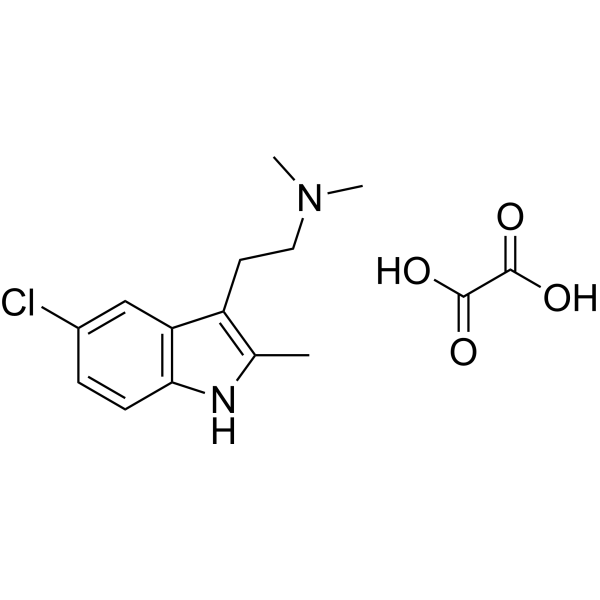
ST1936 oxalate is a selective, nanomolar affinity 5-HT6 receptor agonist with Ki values of 13 nM, 168 nM and 245 nM for human 5-HT6, 5-HT7 and 5-HT2B receptors, respectively. ST1936 oxalate also shows moderate affinity (Ki of 300 nM) for human and rat α2 adrenergic receptor .
loading...
    loading...
Cat. No.: HY-116268
CAS No.: 1133706-08-7
Target:  

Neurokinin Receptor

Research Areas:  

Neurological Disease

GSK256471 is a non-peptide tachykinin NK3 receptor antagonist with a pKi of 8.9 for the human recombinant NK3 receptor and 8.4 for the guinea pig native receptor. GSK256471 exhibits >100-fold selectivity for NK1 (pKi = 5.2) and NK2 (pKi = 7.3) receptors. GSK256471 noncompetitively inhibits neurokinin B (NKB) (HY-P0242)-induced inositol phosphate accumulation, and this inhibition is irreversible. GSK256471 inhibits wet dog shaking behavior and suppresses dopamine release. GSK256471 could be used to study schizophrenia .
loading...
    loading...
Cat. No.: HY-16728A
CAS No.: 491872-39-0
Synonyms: GLYX-13 acetate
Target:  

iGluR mTOR ERK

Research Areas:  

Neurological Disease

Rapastinel (GLYX-13) acetate is a potent NMDAR modulator capable of crossing the blood-brain barrier, and it exhibits extremely high affinity for human NMDAR (EC50=0.0017-9.9 nM). Rapastinel acetate enhances ERK signaling and activates the mTOR pathway, thereby upregulating the expression of BDNF and VGF, and inducing significant neuroplastic changes such as enhanced LTP and increased mature dendritic spine density in the hippocampus. Rapastinel acetate moderately elevates the efflux of dopamine, norepinephrine and 5-HT in the prefrontal cortex, and uniquely avoids side effects of traditional antidepressants such as dissociation, addiction or sedation. Rapastinel acetate is applicable to the research of major depressive disorder and hepatocellular carcinoma .
loading...
    loading...
Cat. No.: HY-119684S
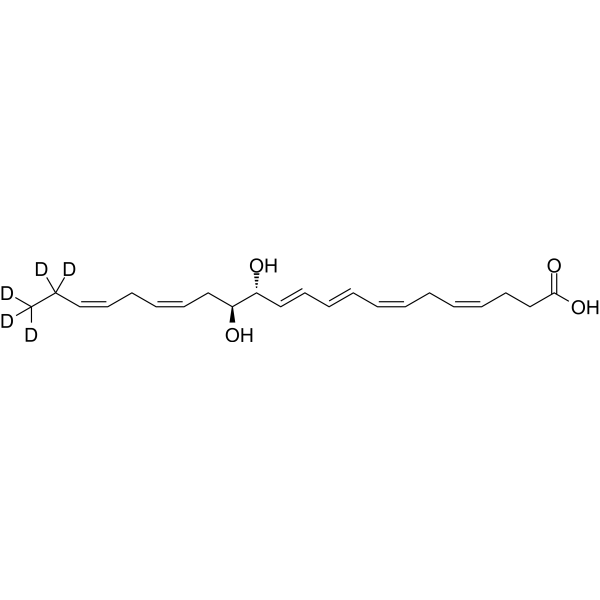
Maresin 2-d5 is the d5-labeled Maresin 2 (HY-119684). Maresin 2 is an anti-inflammatory and pro-resolving mediator. Maresin 2 drives intestinal epithelial cell migration by activating the focal cell-matrix adhesion signaling pathway in primary human intestinal epithelial cells, thereby promoting mucosal wound repair. Maresin 2 alleviates nociceptive and anxiety-like behaviors in rats with type 1 diabetes by inhibiting IL-1β in the spinal cord and prefrontal cortex. Maresin 2 attenuates allergic airway inflammation in mice by inhibiting the activation of the NLRP3 inflammasome, Th2-type immune responses, and oxidative stress. Maresin 2 inhibits inflammatory and neuropathic trigeminal neuralgia and reduces neuronal activation in the trigeminal ganglion. Maresin 2 promotes inflammation resolution and mucosal repair after DSS-induced colitis or biopsy-induced colonic mucosal injury .
loading...
    loading...
Cat. No.: HY-120657R
CAS No.: 1481636-31-0
Flumethrin (Standard) is the analytical standard of Flumethrin. This product is intended for research and analytical applications. 9-PAHSA is an orally active endogenous GPR120 agonist (EC50=18 μM). 9-PAHSA significantly inhibits LPS-induced inflammatory responses by blocking the NF-κB pathway. 9-PAHSA induces adipocyte browning, enhances glucose uptake and reduces lipid accumulation, while improving mitochondrial function and the survival rate of steatotic hepatocytes. In terms of neuroprotection, 9-PAHSA regulates the expression of REST and BDNF in the prefrontal cortex of diabetic mice, and effectively prevents spatial working memory deficits and abnormal social behaviors. 9-PAHSA does not directly regulate insulin secretion or improve systemic insulin sensitivity, and possesses specific anti-inflammatory, metabolic regulatory and neuroprotective properties. 9-PAHSA can be used in the research of diabetes-related cognitive impairment, obesity and non-alcoholic fatty liver disease .
loading...
    loading...
Cat. No.: HY-120657S1
CAS No.: 2748208-06-0
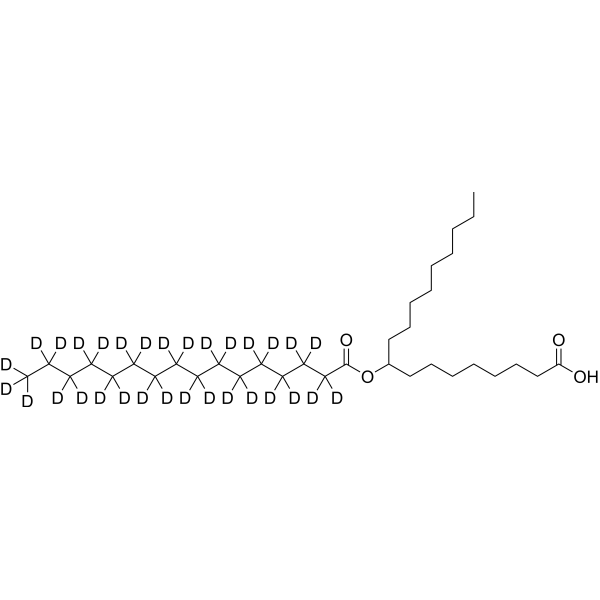
9-PAHSA-d31 is the deuterium labeled 9-PAHSA. 9-PAHSA is an orally active endogenous GPR120 agonist (EC50=18 μM). 9-PAHSA significantly inhibits LPS-induced inflammatory responses by blocking the NF-κB pathway. 9-PAHSA induces adipocyte browning, enhances glucose uptake and reduces lipid accumulation, while improving mitochondrial function and the survival rate of steatotic hepatocytes. In terms of neuroprotection, 9-PAHSA regulates the expression of REST and BDNF in the prefrontal cortex of diabetic mice, and effectively prevents spatial working memory deficits and abnormal social behaviors. 9-PAHSA does not directly regulate insulin secretion or improve systemic insulin sensitivity, and possesses specific anti-inflammatory, metabolic regulatory and neuroprotective properties. 9-PAHSA can be used in the research of diabetes-related cognitive impairment, obesity and non-alcoholic fatty liver disease .
loading...
    loading...

