

193 Results for "

conditioned

" in MedChemExpress (MCE) Product Catalog:
Products (193)

193 Results for "conditioned" in MCE Product Catalog:

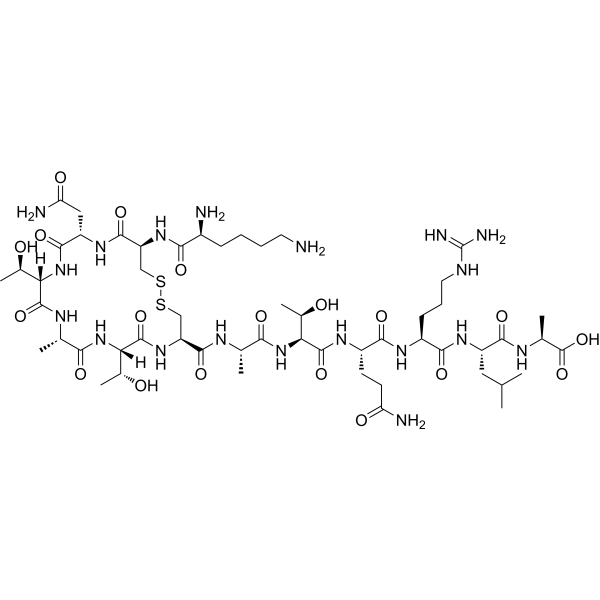
Cat. No.: HY-P4767
CAS No.: 198328-30-2
Target:  

Amylin Receptor

Research Areas:  

Metabolic Disease

Amylin (1-13) (human) is a fragment and a residues within amyloid cores of Amylin (human IAPP). Amylin is a glucose-regulating hormone, deposits as amyloid fibrils in condition of type II diabetes (T2D). Amylin (1-13) (human) has no effect on firbl formation, as it cannot form fibrils by itself .
loading...
    loading...
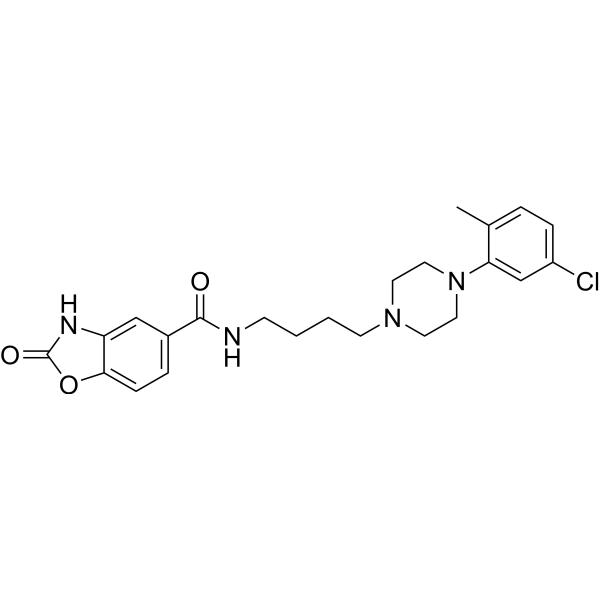
Cat. No.: HY-116181
CAS No.: 1221408-42-9
Purity:  98.62%
Target:  

Dopamine Receptor

Research Areas:  

Neurological Disease

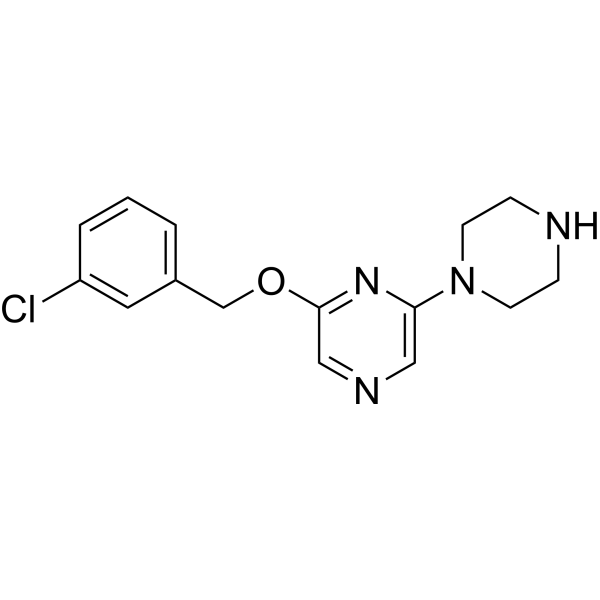
YQA14 is a high affinity dopamine D3 receptor antagonist. YQA14 is anti-opioid addiction agent. YQA14 inhibits Morphine/Cocaine-induced conditioned place preference (CPP) in animals .
loading...
    loading...
Cat. No.: HY-N2086R
CAS No.: 628-97-7
Synonyms: Ethyl hexadecanoate (Standard)
Ethyl palmitate (Standard) is the analytical standard of Ethyl palmitate. This product is intended for research and analytical applications. Ethyl palmitate, a fatty acid ethyl ester (FAEE), shows a marked preference for the synthesis of ethyl palmitate and ethyl oleate over other FAEEs in human subjects after ethanol consumption. Ethyl palmitate is used as a hair- and skin-conditioning agent .
loading...
    loading...
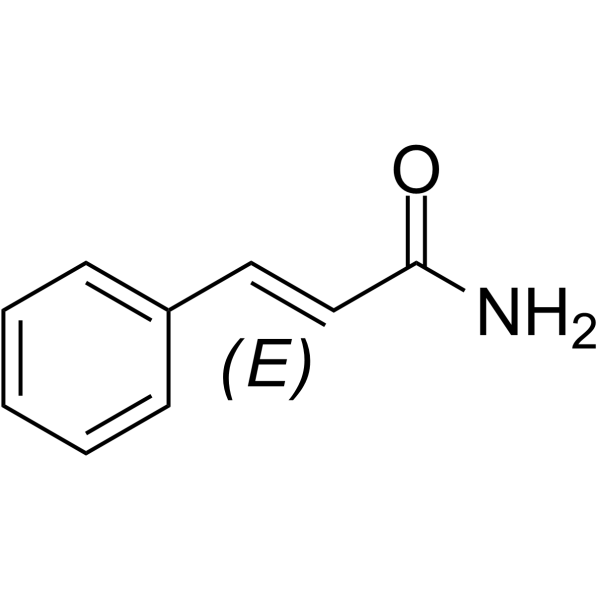
Cat. No.: HY-W067479
CAS No.: 22031-64-7
(E)-Cinnamamide is a non-lethal chemical repellent. (E)-Cinnamamide exists as a trans-cinnamic acid amide metabolite in the culture broth of an unidentified Streptomyces No. 902. (E)-Cinnamamide is used in studies of conditioned taste aversion and repellent activity .
loading...
    loading...
Cat. No.: HY-41324R
CAS No.: 911-40-0
7-keto-Deoxycholic acid (Standard) is the analytical standard of 7-keto-Deoxycholic acid. This product is intended for research and analytical applications. 7-keto-Deoxycholic acid is a metabolite of bile acids in Clostridium absonum. 7-keto-Deoxycholic acid is also converted from Lactobacillus and Bifidobacterium with specific condition[1][2].
loading...
    loading...
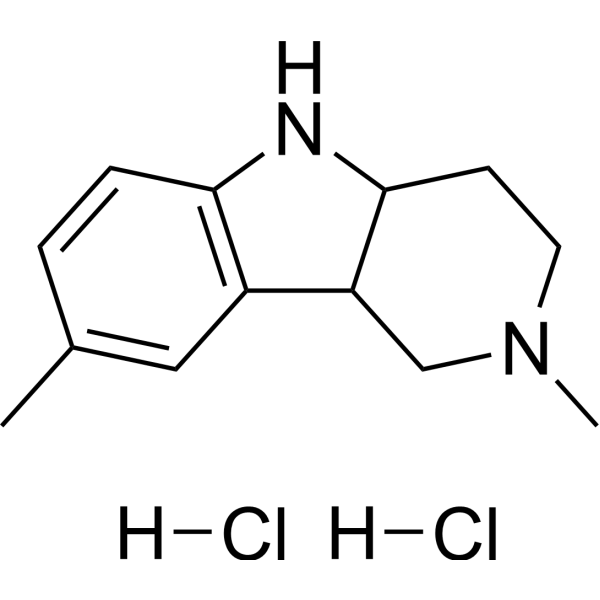
Cat. No.: HY-127086A
CAS No.: 33162-17-3
Purity:  98.93%
Target:  

Dopamine Receptor

Research Areas:  

Neurological Disease

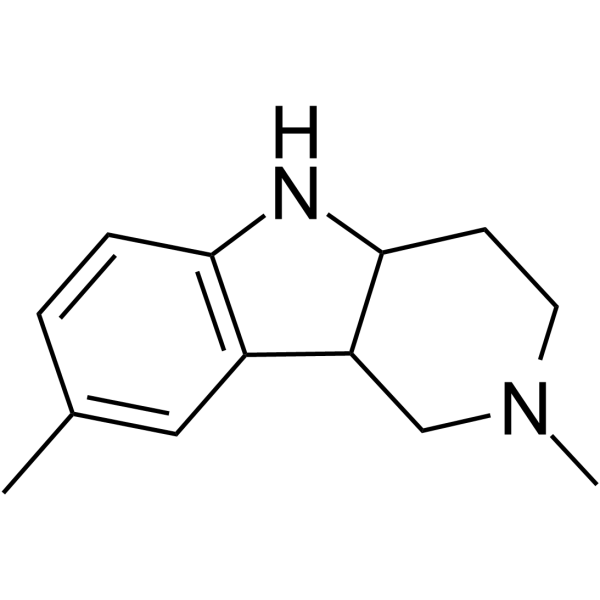
Dicarbine dihydrochloride blocks dopamine receptors in various brain parts and prevents the depression of the conditioned defence reflexes caused by stimulation of the mesencephalic portion of the reticular formation. Dicarbine dihydrochloride could be used in the schizophrenia and alcoholic psychosis studies .
loading...
    loading...
Cat. No.: HY-E70073
CAS No.: 2170331-76-5
Synonyms: Sialidase isoenzyme M2; AuSialidase M2
Research Areas:  

Others

Ganglioside sialidase (AuSialidase M2) from Arthrobacter ureafaciens. Ganglioside sialidase is a highly specific N-acetylneuraminidase. Ganglioside sialidase can hydrolyze the internal sialic acid of GM1 under optimal condition with sodium cholate .
loading...
    loading...
Cat. No.: HY-173323
CAS No.: 3070232-49-1
Target:  

Apolipoprotein

Research Areas:  

Cardiovascular Disease

Lp(a)-IN-7 (example 1) is a lipoprotein (a) (Lp(a)) formation inhibitor with an IC50 of 2.51 nM in conditioned media containing apolipoprotein B (apoB) and apolipoprotein(a). Lp(a)-IN-7 can be used for the study of cardiovascular disease .
loading...
    loading...
Cat. No.: HY-135738
CAS No.: 19286-37-4
Purity:  95.44%
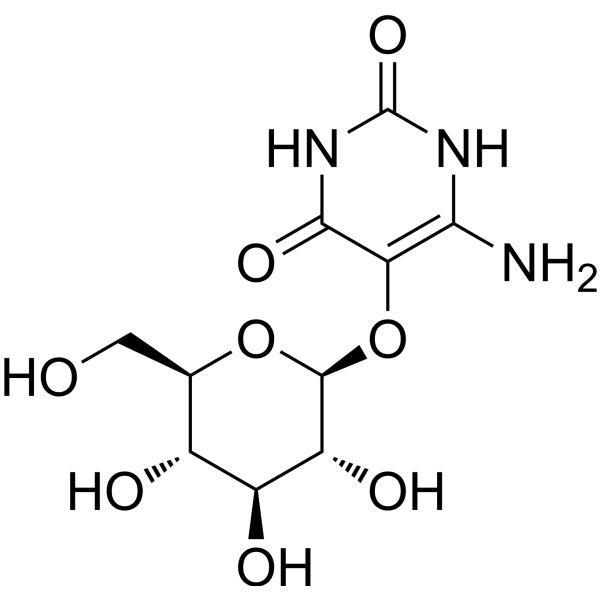
Convicine is a pyrimidine glycoside. Convicine, as well as Vicine, is the precursor of the aglycones Divicine and Isouramil. Convicine is the main factors of favism, which is a genetic condition leading to severe hemolysis after faba bean ingestion. Convicine can be isolated from the faba bean .
loading...
    loading...
Cat. No.: HY-137231B
CAS No.: 2934318-93-9
Purity:  98.10%
Target:  

nAChR

Research Areas:  

Neurological Disease

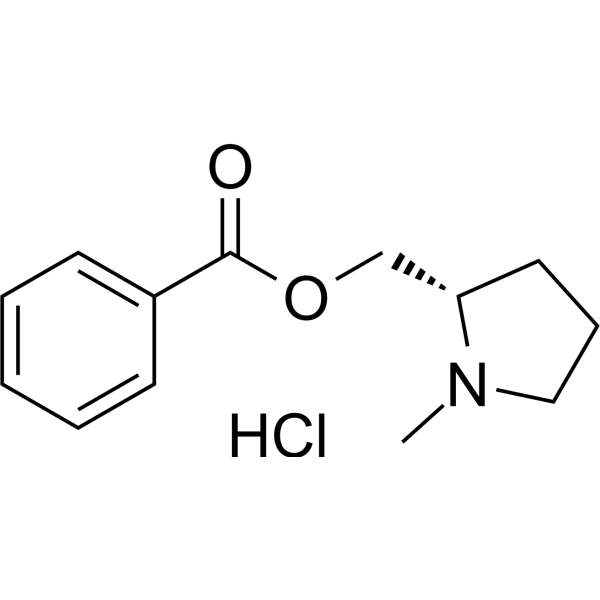
(S)-UFR2709 (hydrochloride) is a competitive nAChR antagonist?and displays higher affinity for α4β2 nAChRs than for α7 nAChRs. (S)-UFR2709 (hydrochloride) decreases anxiety and reduces ethanol consumption and ethanol preference in alcohol-preferring rats. (S)-UFR2709 (hydrochloride) acts as an anxiolytic agent and can be used for the study of nicotine addiction .
loading...
    loading...
Cat. No.: HY-N2086S
CAS No.: 1215721-57-5
Synonyms: Ethyl hexadecanoate-d31
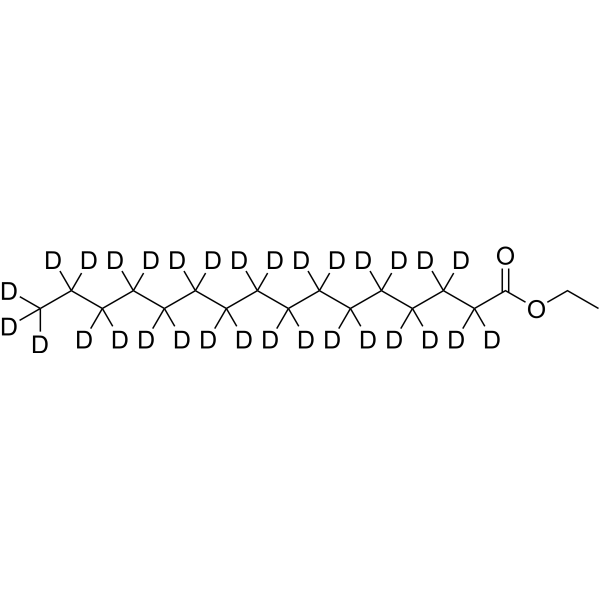
Ethyl palmitate-d31 is the deuterium labeled Ethyl palmitate. Ethyl palmitate, a fatty acid ethyl ester (FAEE), shows a marked preference for the synthesis of ethyl palmitate and ethyl oleate over other FAEEs in human subjects after ethanol consumption. Ethyl palmitate is used as a hair- and skin-conditioning agent .
loading...
    loading...
Cat. No.: HY-W127465
CAS No.: 36781-75-6
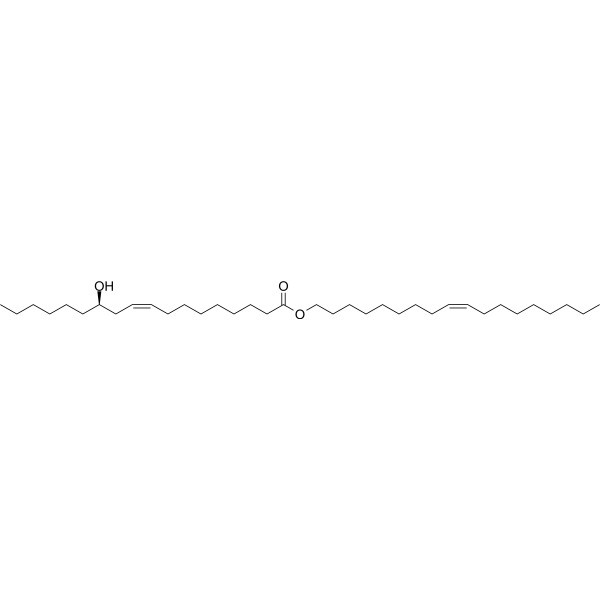
Oleyl RicinoleateIt is an organic compound belonging to esters. It is formed from the reaction between oleyl alcohol and ricinoleic acid and has a mild fatty odor. Oleyl RicinoleateIt has a variety of applications in the cosmetic and personal care industries, especially as an emollient and conditioning agent in skin and hair care products. Additionally, it is used as a lubricant and plasticizer in industrial settings.
loading...
    loading...
Cat. No.: HY-15543
CAS No.: 479683-64-2
Target:  

5-HT Receptor

Research Areas:  

Neurological Disease

CP-809101 is a potent and highly selective 5-HT2C receptor agonist, with pEC50s of 9.96, 7.19 and 6.81 M for human 5HT2C, 5HT2B and 5HT2A receptor. CP-809101 inhibits conditioned avoidance responding in rats and antagonizes both PCP (phencyclidine hydrochloride)- and d-amphetamine-induced hyperactivity. CP-809101 also reduces food and nicotine dependence in rats, can be used in studies of antipsychotic and nicotine dependence .
loading...
    loading...
Cat. No.: HY-D0009
CAS No.: 62625-32-5
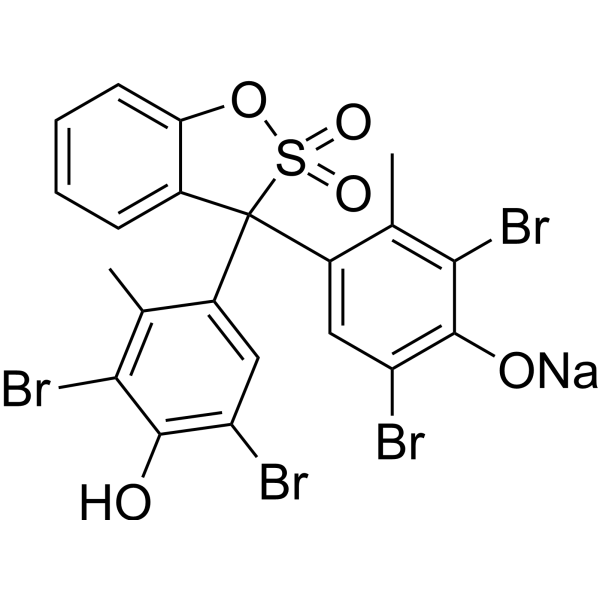
Bromocresol green sodium is an anionic dye. Bromocresol green sodium can be used for pH indication and DNA agarose gel electrophoresis. Bromocresol green sodium is also used in mammalian albumin measurement. Bromocresol green sodium deprotonates and produces the monoanionic form of yellow colour at lower pH (acidic condition), and produces dianionic blue colour at the basic condition .
loading...
    loading...
Cat. No.: HY-172143
CAS No.: 2088956-86-7
Target:  

Phosphatase

Research Areas:  

Neurological Disease Cancer

ATUX-8385 is a potent PP2A activator. ATUX-8385 binds to PR65 subunit. ATUX-8385 has the potential for the research of cancers and chronic conditions such as Alzheimer’s disease and chronic obstructive pulmonary disease .
loading...
    loading...
Cat. No.: HY-127086
CAS No.: 17411-19-7
Target:  

Dopamine Receptor

Research Areas:  

Neurological Disease

Dicarbine blocks dopamine receptors in various brain parts and prevents the depression of the conditioned defence reflexes caused by stimulation of the mesencephalic portion of the reticular formation. Dicarbine could be used in the schizophrenia and alcoholic psychosis studies .
loading...
    loading...
Cat. No.: HY-165190
CAS No.: 7775-50-0
Research Areas:  

Others

Tristearyl citrate is a triester of stearyl alcohol and citric acid that can function as a skin-conditioning agent-occlusive in cosmetic formulations, is assessed as safe in present practices of use and concentration in cosmetics, and is allowed as an indirect food additive.Tristearyl citrate can be used for the research of cosmetic formulation development .
loading...
    loading...
Cat. No.: HY-W127377
CAS No.: 142-77-8
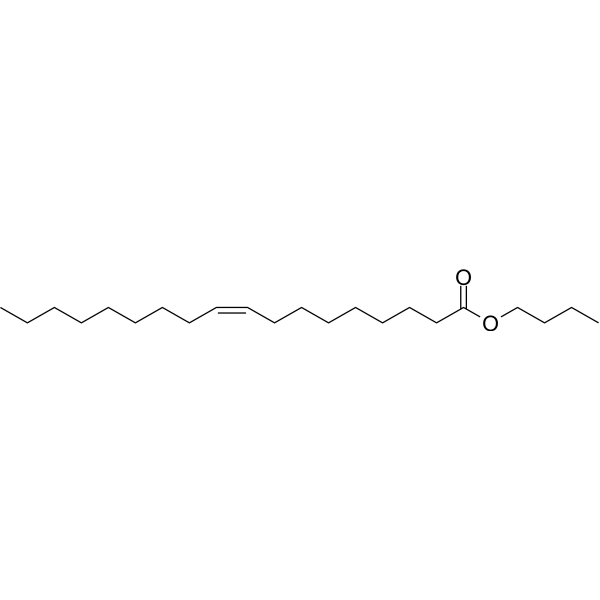
Butyl oleateIt is an organic compound belonging to esters. It is formed from the reaction of butanol and oleic acid and has a mild fruity smell. Butyl oleateIt has a variety of applications in the cosmetic and personal care industries, especially as an emollient and conditioning agent in skin and hair care products. Additionally, it is used as a lubricant and solvent in industrial settings.
loading...
    loading...
Cat. No.: HY-W127437
CAS No.: 2778-96-3
Synonyms: Octadecanoic acid, octadecyl ester
Stearyl StearateIt is an organic compound belonging to esters. It is formed from the reaction between stearyl alcohol and stearic acid and has a mild fatty odor. Stearyl stearate has several applications in the cosmetic and personal care industries, especially as an emollient and conditioning agent in skin and hair care products. Additionally, it is used as a lubricant and surfactant in industrial settings.
loading...
    loading...
Cat. No.: HY-W436428
CAS No.: 69570-95-2
Target:  

Na+/K+ ATPase Bacterial

Research Areas:  

Infection

V-161 is the orally active inhibitor for Na +-V-ATPase with an IC50 of 144 nM. V-161 inhibits Enterococcus hirae and Vancomycin-resistant Enterococcus faecium (VRE) under alkaline condition with MIC of 4 µg/mL and 4 µg/mL. V-161 inhibits colonization of VRE in mouse small intestine .
loading...
    loading...

