66 Results for "

myocardial function

" in MedChemExpress (MCE) Product Catalog:
Products (66)

66 Results for "myocardial function" in MCE Product Catalog:

Cat. No.: HY-123721
CAS No.: 78816-67-8
Synonyms: AWD-19-166; GS 015
Target:  

Endogenous Metabolite

Research Areas:  

Cardiovascular Disease

Tiracizine hydrochloride (AWD-19-166) is a Class I antiarrhythmic drug with activity that reduces myocardial contractile function. Tiracizine hydrochloride was studied in patients with ischemic heart disease, showing its effects on the myocardium. Tiracizine hydrochloride reduces myocardial contractility and may have potential use in the management of heart disease .
loading...
    loading...
Cat. No.: HY-106987
CAS No.: 139146-65-9
SP/W-5186 is a nitric oxide (NO) donor agent containing a cysteine structure. SP/W-5186 can improve cardiac function, reduce myocardial damage, protect vascular endothelial function and inhibit inflammation and oxidative stress. SP/W-5186 has the ability to inhibit oxidative damage induced by peroxynitrite (ONOO⁻). SP/W-5186 can be used in the research of myocardial ischemia-reperfusion injury .
loading...
    loading...
Cat. No.: HY-106045
CAS No.: 84243-58-3
Purity:  99.38%
Synonyms: CI 914 free base
Research Areas:  

Cardiovascular Disease

Imazodan is a selective inhibitor for phosphodiesterase III (PDE III), which increases myocardial contractility by blocking the cAMP degradation, and improves the contractile function of heart. Imazodan serves also as a peripheral vasodilator .
loading...
    loading...
Cat. No.: HY-B1409R
CAS No.: 87-33-2
Synonyms: ISDN (Standard)
Research Areas:  

Cardiovascular Disease

Isosorbide dinitrate (Standard) is the analytical standard of Isosorbide dinitrate. This product is intended for research and analytical applications. Isosorbide dinitrate (ISDN) is an NO donor that prevents LV remodeling and degradation of cardiac function following myocardial infarction (MI) .
loading...
    loading...
Cat. No.: HY-106045A
CAS No.: 89198-09-4
Synonyms: CI 914
Research Areas:  

Cardiovascular Disease

Imazodan hydrochloride is the hydrochloride form of Imazodan (HY-106045). Imazodan hydrochloride is a selective inhibitor for phosphodiesterase III (PDE III), which increases myocardial contractility by blocking the cAMP degradation, and improves the contractile function of heart. Imazodan hydrochloride serves also as a peripheral vasodilator .
loading...
    loading...
Cat. No.: HY-W803860
CAS No.: 86383-21-3
Research Areas:  

Cardiovascular Disease

N-Depropylpropafenone is an active metabolite of Propafenone (HY-B0432), generated through the CYP450 enzyme system (mainly CYP2D6). It functions by blocking sodium ion channels, slowing myocardial conduction and exhibiting certain antiarrhythmic effects .
loading...
    loading...
Cat. No.: HY-174673
Target:  

mRNA

Research Areas:  

Cancer

Human GATA4 mRNA encodes the human GATA binding protein 4 (GATA4) protein, a member of the GATA family of zinc-finger transcription factors. GATA4 is thought to regulate genes involved in embryogenesis and in myocardial differentiation and function. It is also necessary for normal testicular development.
loading...
    loading...
Cat. No.: HY-N6020BR
CAS No.: 21913-99-5
Butin is a major biologically active flavonoid isolated from the heartwood of Dalbergia odorifera with oral activity, with strong antioxidant, antiplatelet and anti-inflammatory activities. Butin significantly alleviates myocardial infarction and improves heart function, together with prevents diabetes-induced cardiac oxidative damage in rat .
loading...
    loading...
Cat. No.: HY-101390B
CAS No.: 102993-22-6
Target:  

Calcium Channel

Research Areas:  

Cardiovascular Disease

Niguldipine is a calcium channel blocker with activity in regulating cardiovascular function. Niguldipine can reduce systolic and diastolic blood pressure, thereby increasing heart rate and cardiac output. Niguldipine exhibits dose-dependent and sustained increases in coronary blood flow. Niguldipine also increases perfusion in the kidneys and femoral arteries, but the effect is temporary and to a lesser extent. The effect of Niguldipine on myocardial metabolism is not significant .
loading...
    loading...
Cat. No.: HY-17355AR
CAS No.: 104632-27-1
Synonyms: (R)-Pramipexole dihydrochloride (Standard); R-(+)-Pramipexole dihydrochloride (Standard); KNS-760704 dihydrochloride (Standard)
Dexpramipexole ((R)-Pramipexole) dihydrochloride (Standard) is the analytical standard of Dexpramipexole (dihydrochloride). This product is intended for research and analytical applications. Dexpramipexole dihydrochloride is an orally active, blood-brain barrier permeable mitochondrial protective agent. Dexpramipexole dihydrochloride upregulates the expression of Parkin, PINK1, GPX4 and FSP1; binds to mitochondrial F1/Fo-ATP synthase; blocks the Nav1.8 sodium channel; and inhibits the activation of the NLRP3 inflammasome. Dexpramipexole dihydrochloride induces mitophagy, inhibits ferroptosis, pyroptosis, apoptosis, neuroinflammation and eosinophilopoiesis; maintains mitochondrial function and redox homeostasis; reduces reactive oxygen species production; and decreases myocardial infarct size. Dexpramipexole dihydrochloride is applicable to studies on eosinophilic asthma, myocardial ischemia/reperfusion injury, sepsis-associated encephalopathy, analgesia, and more.
loading...
    loading...
Cat. No.: HY-121586
CAS No.: 59040-30-1
Synonyms: Bay g 6575
Target:  

Lipoxygenase

Research Areas:  

Cardiovascular Disease

Nafazatrom (Bay g 6575) is an orally active cardioprotective agent that protects against ischemic damage. Nafazatrom dose-dependently inhibits neutrophil aggregation, superoxide anion generation, arachidonic acid metabolism, and to a lesser extent the release of β-glucosidase, platelet aggregation or arachidonic acid in vitro. Acid metabolism has no significant effect. In a dog ischemia-reperfusion model, Nafazatrom (10 mg/kg; po) reduced infarct size and the occurrence of arrhythmias and rescued ischemic myocardial function without affecting any hemodynamic changes. The basis of Nafazatrom's cardioprotection may be inhibition of neutrophil function and cellular infiltration in vitro .
loading...
    loading...
Cat. No.: HY-E70759
Target:  

p38 MAPK

Research Areas:  

Cancer

The mitogen-activated protein kinase kinase 6 (MKK6) is one of the upstream activators of p38 MAPK. MKK6 activates myocardial cell NF-κB and inhibits apoptosis in a p38 MAPK-dependent manner. MKK6 SDTD is a mutant of MKK6. MKK6 SDTD Recombinant Human Active Protein Kinase is a recombinant MKK6 SDTD protein that can be used to study MKK6 SDTD-related functions .
loading...
    loading...
Cat. No.: HY-18100AR
CAS No.: 75136-54-8
PRE-084 (hydrochloride) (Standard) is the analytical standard of PRE-084 (hydrochloride). This product is intended for research and analytical applications. PRE-084 hydrochloride is a highly selective σ1 receptor (S1R) agonist, with an IC50 of 44 nM. PRE-084 hydrochloride exhibits good neuroprotective effects, can improve motor function and motor neuron survival in mice. PRE-084 hydrochloride also can ameliorate myocardial ischemia-reperfusion injury in rats by activating the Akt-eNOS pathway .
loading...
    loading...
Cat. No.: HY-P5762A
Synonyms: PNX-14 TFA
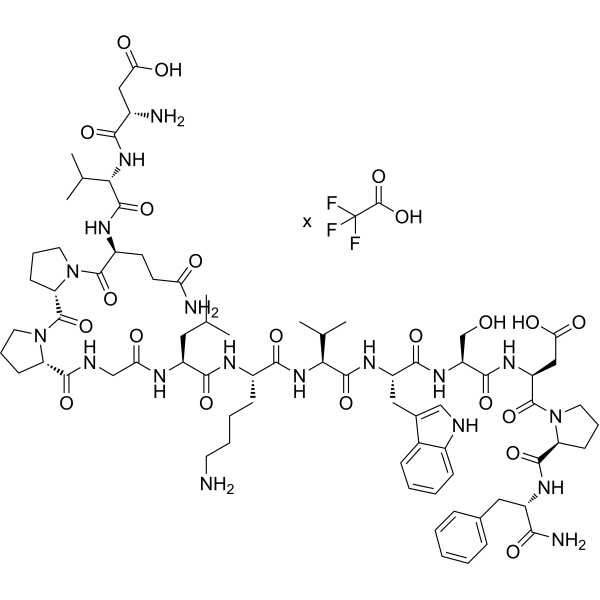
Phoenixin-14 (PNX-14) TFA is an endogenous neuropeptide with multiple biological activities, and serves as the endogenous ligand of GPR173. Phoenixin-14 TFA reduces ROS production by inhibiting the HMGB1/TLR4/MyD88/NF-κB signaling axis, thereby exerting antioxidant and mitochondrial protective effects. Phoenixin-14 TFA inhibits FOXO3 phosphorylation by upregulating SIRT3 expression, suppresses apoptosis, and improves myocardial systolic/diastolic function. Phoenixin-14 TFA resists ferroptosis by activating the ATF4/SLC7A11/GPX4 axis; it activates ERK1/2 phosphorylation via GPR173. Phoenixin-14 TFA can be used in researches on neuroprotection, diabetes, cardiomyopathy, reproductive protection and so on .
loading...
    loading...
Cat. No.: HY-FLB1409
CAS No.: 87-33-2
Synonyms: ISDN solution
Target:  

NO Synthase

Research Areas:  

Cardiovascular Disease

Isosorbide dinitrate solution is mainly composed of Isosorbide dinitrate (HY-B1409). Isosorbide dinitrate (ISDN) is an NO donor that prevents LV remodeling and degradation of cardiac function following myocardial infarction (MI) .
loading...
    loading...
Cat. No.: HY-183473
CAS No.: 34535-83-6
Target:  

Drug Derivative

Research Areas:  

Cardiovascular Disease

Fenalcomine hydrochloride is an orally active phenethylamine derivative with antianginal activity. Fenalcomine hydrochloride reduces myocardial oxygen consumption, and increases cardiac output and coronary blood flow. Fenalcomine hydrochloride is suitable for angina models complicated by hypertension, diabetes, and old myocardial infarction. Fenalcomine hydrochloride can be used in studies related to angina pectoris .
loading...
    loading...
Cat. No.: HY-183473A
CAS No.: 34616-39-2
Target:  

Drug Derivative

Research Areas:  

Cardiovascular Disease

Fenalcomine is an orally active phenethylamine derivative with antianginal activity. Fenalcomine reduces myocardial oxygen consumption, and increases cardiac output and coronary blood flow. Fenalcomine is suitable for angina models complicated by hypertension, diabetes, and old myocardial infarction. Fenalcomine can be used in studies related to angina pectoris .
loading...
    loading...
Cat. No.: HY-N8421
CAS No.: 83-94-3
Tabernanthine is a negative chronotropic and negative inotropic agent that selectively acts on sinoatrial node receptors, regulating heart rhythm and myocardial contractility. Tabernanthine exhibits atropine resistance and direct non-cholinergic binding properties, acting directly on the sinoatrial node rather than relying on vagal nerve or cholinergic pathways to exert its key activity of slowing heart rate and weakening myocardial contractility. Tabernanthine is useful in cardiovascular pharmacology research, particularly in the areas of sinoatrial node function regulation, mechanisms related to bradycardia, and studies of cardiac receptor subtype differences .
loading...
    loading...
Cat. No.: HY-N21583
CAS No.: 194794-47-3
Dracoflavan B2 is an allosteric activator of pyruvate carboxylase (PC) that enhances Oxaloacetic acid (HY-W010382) production by inducing conformational changes in the BCCP domain, restores mitochondrial function, and improves metabolism, while also exhibiting anti-inflammatory activity. Dracoflavan B2 can be used for research on myocardial infarction .
loading...
    loading...
Cat. No.: HY-188122
CAS No.: 113960-50-2
Meglumine cyclic adenylate is a cAMP analog. Meglumine cyclic adenylate promotes STAT3 phosphorylation at Ser727 and mitochondrial translocation. Meglumine cyclic adenylate inhibits cell apoptosis by reducing cytochrome c release and caspase-3 activation. Meglumine cyclic adenylate suppresses the expression of NF-κBp65, activates adenylate cyclase 3, and inhibits phosphodiesterase 4D. Meglumine cyclic adenylate enhances myocardial contractility, increases myocardial Ca 2+ influx, dilates peripheral blood vessels, improves hypotension and bradycardia, promotes spinal cord function recovery, and regulates fear extinction and anxiety-like behaviors. Meglumine cyclic adenylate can be used in research related to cerebral ischemia/reperfusion injury, systemic inflammatory response syndrome, acute T4 thoracic spinal cord injury, and post-traumatic stress disorder (PTSD) .
loading...
    loading...

