
94 Results for "

proliferation process

" in MedChemExpress (MCE) Product Catalog:
Products (94)

94 Results for "proliferation process" in MCE Product Catalog:

Cat. No.: HY-124588
CAS No.: 1535187-91-7
Target:  

DNA Methyltransferase

Research Areas:  

Cancer

MC3343, a DNMT inhibitor (EC50 of 5.7 μM) and a strong DNA binder, affects tumor proliferation by blocking OS cells in G1 or G2/M phases and induces osteoblastic differentiation through the specific re-expression of genes regulating this physiological process .
loading...
    loading...
Cat. No.: HY-113445
CAS No.: 71953-80-5
Purity:  ≥95.0%
Target:  

Endogenous Metabolite

Research Areas:  

Metabolic Disease Cancer

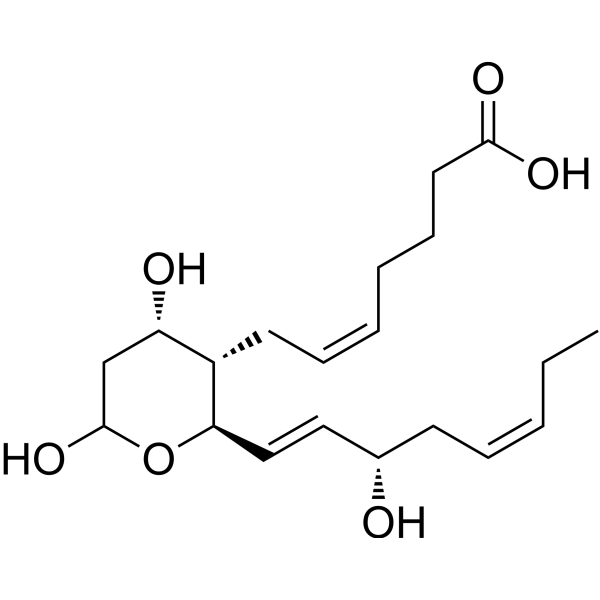
Thromboxane B3 is an eicosanoid and the stable hydrolysis product of thromboxane A3, which is synthesized from eicosapentaenoic acid by cyclooxygenase (COX) and thromboxane synthase. Thromboxane B3 participates in inflammatory cell regulation, tumorigenesis and cell proliferation processes. Elevated levels of Thromboxane B3 correlate with high-risk regions of esophageal cancer. Thromboxane B3 can be used in studies related to bladder cancer, renal cell carcinoma and esophageal squamous cell carcinoma .
loading...
    loading...
Cat. No.: HY-129046H
CAS No.: 9001-99-4
Research Areas:  

Endocrinology Cancer

RNase A (Bovine pancreatic RNase) is a widely used Endonuclease in DNA purification by specifically hydrolyzing cytosine or uracil residues of RNA. RNase A degrades the RNA in the RNA/DNA duplex. RNase A catalyses the breakdown of 3',5'-phosphodiester linkages of single stranded RNA. RNase A family members in organisms are tightly involved in various physiological and pathological processes including cell growth and development, proliferation, differentiation and migration. Dysregulation of RNase A activity or expression level is closely related to pancreatic, ovarian, bladder and thyroid cancer. RNase A has tumor cell-killing ability. RNase A, Recombinant (Protease & DNase free, animal free) is recombinant RNase A that does not contain protease and DNase and does not contain animal components .
loading...
    loading...
Cat. No.: HY-146397
CAS No.: 2760703-21-5
Research Areas:  

Cancer

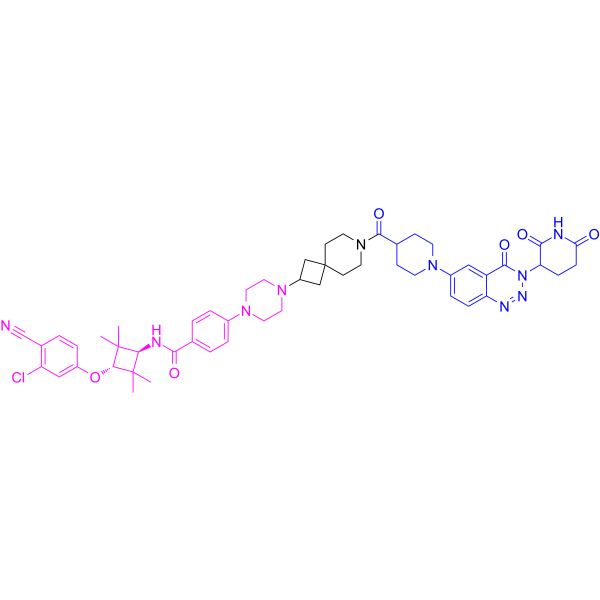
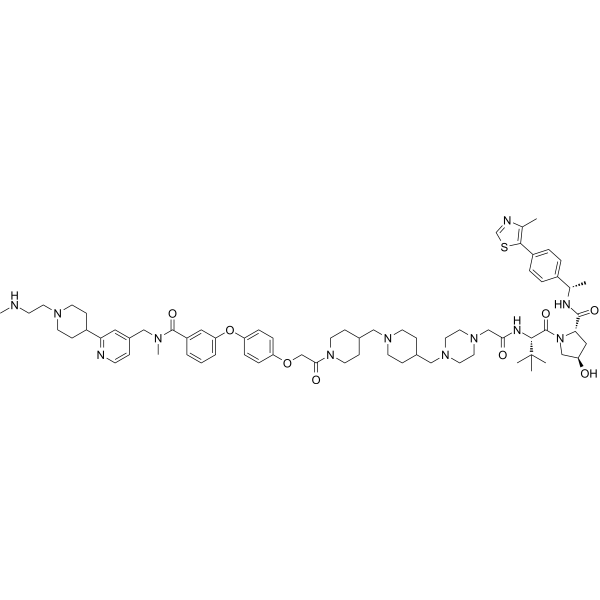
TD-802 is a CRBN-recruiting PROTAC androgen receptor (AR) degrader with liver microsomal stability and in vivo pharmacokinetic properties. TD-802 exhibits weak degrading activity against the AR-V7 splice variant, and its degradation process depends on the ubiquitin-proteasome system and Cullin-Ring ubiquitin ligase. TD-802 inhibits the proliferation of AR-dependent prostate cancer cells and the growth of AR-positive prostate cancer tumors in in vivo xenograft models .
loading...
    loading...
Cat. No.: HY-144605
CAS No.: 2768472-28-0
Purity:  97.39%
Target:  

EGFR PROTACs

Research Areas:  

Cancer

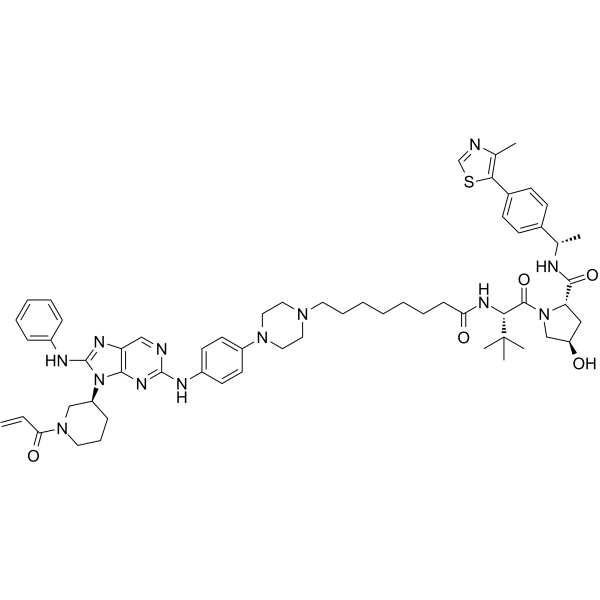
PROTAC EGFR degrader 3 is a selective EGFR mutant PROTAC degrader with activity against EGFR L858R/T790M and EGFR del19, with DC50 values of 1.56 nM and 0.49 nM, respectively. PROTAC EGFR degrader 3 induces degradation via formation of a ternary complex with VHL, ubiquitination, and lysosomal processing. PROTAC EGFR degrader 3 inhibits tumor cell proliferation. PROTAC EGFR degrader 3 can be used for the research of non-small cell lung cancer .
loading...
    loading...
Cat. No.: HY-N6739S
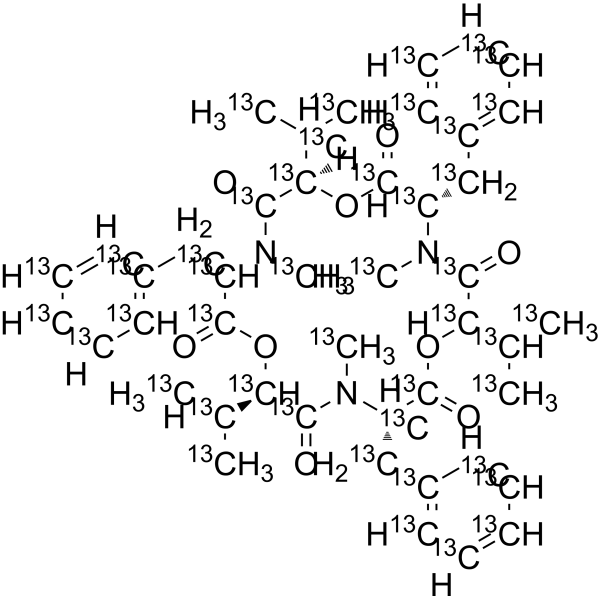
Beauvericin- 13C45 is 13C labeled Beauvericin (HY-N6739). Beauvericin is a cyclohexapeptide Fusarium toxin with insecticidal, antibacterial, anticancer, antiviral and cytotoxic activities. Beauvericin causes cellular genotoxicity by producing DNA breaks, chromosomal aberrations and micronuclei, and inhibits the PI3K/AKT pathway to induce apoptosis, thereby inhibiting the growth of HCC. In addition, Beauvericin affects immune function by inhibiting lymphocyte proliferation and interfering with the differentiation process of human monocytes into macrophages .
loading...
    loading...
Cat. No.: HY-156152
CAS No.: 3032785-00-2
Research Areas:  

Cancer

PROTAC CARM1 degrader-1 is a highly selective CARM1 PROTAC degrader, with a DC50 of 8.1 nM in MCF‑7 cells. PROTAC CARM1 degrader-1 recruits the VHL E3 ubiquitin ligase complex to act on CARM1, inducing a proteasome-dependent degradation process. PROTAC CARM1 degrader-1 downregulates the methylation level of CARM1 substrates in breast cancer cells, inhibits breast cancer cell migration, and exhibits no significant inhibitory effect on cell proliferation. PROTAC CARM1 degrader-1 is applicable for related research on breast cancer .
loading...
    loading...
Cat. No.: HY-E70852
Target:  

PKC

Research Areas:  

Cancer

PKC is a family of serine/threonine kinases involved in several processes including proliferation, differentiation, apoptosis, and migration. PKCα is a classical PKC isoform that contains a C1 domain that binds to diacylglycerol (DAG). PKCα Recombinant Human Active Protein Kinase is a recombinant PKCα protein that can be used to study PKCα-related functions .
loading...
    loading...
Cat. No.: HY-P11417
CAS No.: 106678-69-7
Target:  

DNA/RNA Synthesis

Research Areas:  

Cancer

Epidermal mitosis inhibiting pentapeptide is a five-peptide that acts as a physiological inhibitor of epidermal cell proliferation. This pentapeptide can significantly reduce the DNA synthesis rate and mitotic rate of epidermal keratinocytes. Epidermal mitosis inhibiting pentapeptide moderately enhances the occurrence of skin tumors in skin cancer models, but also shows a higher tendency to promote the regression of already formed tumors. Epidermal mitosis inhibiting pentapeptide can be hydrolyzed by angiotensin-converting enzyme (ACE). Epidermal mitosis inhibiting pentapeptide can be used in cancer process research .
loading...
    loading...
Cat. No.: HY-P10316
CAS No.: 205598-38-5
Synonyms: Calmodulin-Dependent Protein Kinase I (299-320) Binding Domain
Target:  

CaMK

Research Areas:  

Others

CaMKI (299-320) refers to a peptide consisting of residues 299-320 of Calcium/calmodulin-dependent protein kinase I (CaMKI). CaMKI (299-320), as a protein kinase, has a high affinity interaction with Ca 2+-CAM (Kd≤1 nM≤1 nM), which can phosphorylate specific substrate proteins, thereby regulating their activity. CaMKI (299-320) contains the CAM-binding domain and the self-inhibition domain, and CaMKI (299-320) can be used to study cell physiological processes, including cell proliferation, differentiation, and apoptosis .
loading...
    loading...
Cat. No.: HY-16658BG
CAS No.: 161401-82-7
Z-VAD-FMK is a pan-caspase inhibitor and also an ICE-like protease inhibitor, which inhibits apoptosis by preventing the processing of CPP32 to its active form. Z-VAD-FMK sensitivity varies primarily due to differential expression of receptor-interacting protein 1 (RIP1). Z-VAD-FMK limits the cryopreservation-induced apoptosis by reducing caspase-3 activity of in vitro produced bovine embryos. Z-VAD-FMK is immunosuppressive in vitro and inhibits T cell proliferation without blocking the processing of caspase-8 and caspase-3. Z-VAD-FMK leads to a decrease in intracellular glutathione (GSH) with a concomitant increase in reactive oxygen species (ROS) levels in activated T cells. Z-VAD-FMK is due to oxidative stress via the depletion of GSH. Z-VAD-FMK can be used for the study of acute pancreatitis .
loading...
    loading...
Cat. No.: HY-176702
CAS No.: 3078322-88-7
Research Areas:  

Cancer

PRMT5-MTA-IN-5 (Compound 7) is an orally active, irreversible PRMT5-MTA complex (PRMT5•MTA) inhibitor (IC50=1.15 nM). PRMT5-MTA-IN-5 blocks arginine methylation and inhibits ribosomal RNA processing and cell cycle-related protein expression. PRMT5-MTA-IN-5 potently inhibits proliferation in MTAP-deficient tumor cells. PRMT5-MTA-IN-5 is promising for research of MTAP-deficient solid tumors, such as liver, breast, and pancreatic cancers .
loading...
    loading...
Cat. No.: HY-77572R
CAS No.: 78454-17-8
Synonyms: 7-epi-10-deacetyltaxol (Standard); 10-Deacetyl-7-epipaclitaxel (Standard)
7-Epi 10-desacetyl paclitaxel (Standard) (7-epi-10-deacetyltaxol (Standard); 10-Deacetyl-7-epipaclitaxel (Standard)) is the analytical standard of 7-Epi 10-desacetyl paclitaxel (HY-77572). This product is intended for research and analytical applications. 7-Epi 10-desacetyl paclitaxel (7-epi-10-deacetyltaxol; 10-Deacetyl-7-epipaclitaxel) is a taxane diterpenoid that can be found in Taxus species and is also produced by the endophytic fungus Pestalotiopsis microspora. 7-Epi 10-desacetyl paclitaxel inhibits cancer cell proliferation and induces apoptosis and cell cycle arrest. 7-Epi 10-desacetyl paclitaxel induces apoptosis through the intrinsic mitochondrial pathway, a process associated with ROS generation, an increased Bax/Bcl-2 ratio, and PARP cleavage. 7-Epi 10-desacetyl paclitaxel can be used in research on hepatocellular carcinoma .
loading...
    loading...
Cat. No.: HY-N2259R
CAS No.: 19431-84-6
Synonyms: (+)-Curcumenol (Standard)
Curcumenol (Standard) ((+)-Curcumenol (Standard)) is the analytical standard of Curcumenol (HY-N2259). This product is intended for research and analytical applications. Curcumenol ((+)-Curcumenol) is a natural compound with oral efficacy, exhibiting an IC50 of 12.6 μM and a Ki of 10.8 μM against human CYP3A4. Curcumenol inhibits TNFα-induced phosphorylation/degradation of IκBα, phosphorylation/nuclear translocation of NF-κB p65, as well as the upregulation of MMP3, MMP9, MMP13, TRAF3, IL1RL1, TNFα and IL-1β. Curcumenol suppresses LPS-induced phosphorylation of Akt and p38 MAPK, as well as the production of pro-inflammatory mediators/proteins, and downregulates the SLC7A11/NF-κB/TGF-β pathway. Curcumenol binds to and inhibits the activation of Fyn and Lyn, blocks the function of downstream FcεRI signaling components, and reduces the release of allergic mediators/cytokines. Curcumenol upregulates the expression of KDM6B, and promotes chondrocyte proliferation and cartilage repair. Curcumenol induces ferroptosis and apoptosis, regulates the EMT process, and inhibits tumor growth and metastasis of triple-negative breast cancer. Curcumenol possesses anti-inflammatory, neuroprotective, antioxidant, antitumor, antiviral and hepatoprotective activities. Curcumenol can be used in research related to intervertebral disc degeneration, cancer, inflammation, central nervous system neurodegenerative diseases, allergic reactions and knee osteoarthritis .
loading...
    loading...
Cat. No.: HY-174716
Target:  

mRNA

Research Areas:  

Inflammation/Immunology

Human EREG mRNA encodes the human epiregulin (EREG) protein, a member of the epidermal growth factor family. EREG may be involved in a wide range of biological processes including inflammation, wound healing, oocyte maturation, and cell proliferation.
loading...
    loading...
Cat. No.: HY-162516
CAS No.: 2939087-00-8
Research Areas:  

Cancer

DBI-2 is an AMPK activator targeting mitochondrial complex I. DBI-2 disrupts the OXPHOS process, and reduces ATP generation in mitochondria. DBI-2 inhibits the proliferation of colorectal cancer (CRC) cells .
loading...
    loading...
Cat. No.: HY-133172
CAS No.: 130525-62-1
Zanamivir amine is a neuraminidase inhibitor with antiviral activity. Zanamivir amine can effectively inhibit the proliferation of influenza virus. Zanamivir amine is clinically used to inhibit influenza infection. Zanamivir amine reduces viral load by interfering with the viral replication process.
loading...
    loading...
Cat. No.: HY-P3766
CAS No.: 159939-84-1
Target:  

PKC

Research Areas:  

Others

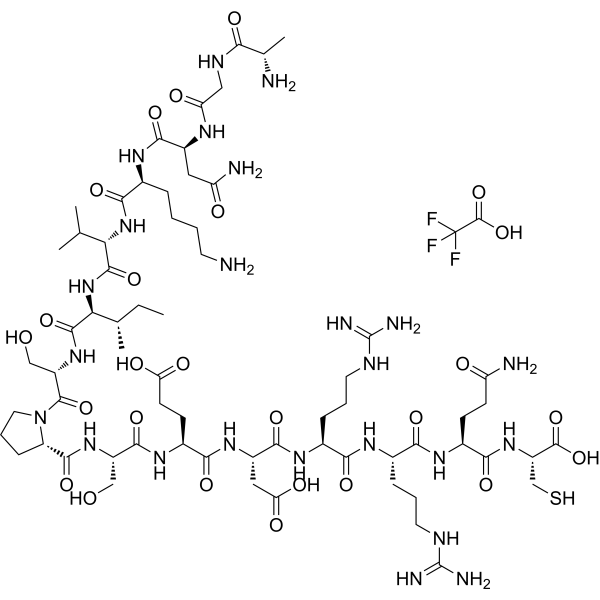
Protein kinase C α peptide (TFA) is a peptide of PKC-α. PKC-α acts as a lipid-dependent ser/thr protein kinase, can modulate various cellular processes, including cell survival, proliferation, differentiation, migration, adhesion and so on .
loading...
    loading...
Cat. No.: HY-174518
Target:  

mRNA

Research Areas:  

Cancer

Human TNF mRNA encodes the human tumor necrosis factor (TNF) protein, a multifunctional proinflammatory cytokine that belongs to the tumor necrosis factor (TNF) superfamily. TNF is involved in the regulation of a wide spectrum of biological processes including cell proliferation, differentiation, apoptosis, lipid metabolism, and coagulation.
loading...
    loading...
Cat. No.: HY-P3720
CAS No.: 321914-26-5
Target:  

Inhibitory Antibodies

Research Areas:  

Cancer

YEQLRNSRA is a MycC Peptide. MycC Peptide is encoded by c-myc proto-oncogene, the c-myc oncogene has been implicated in malignant progression in a variety of human tumors. MycC Peptide regulates fundamental cellular processes like growth control, metabolism, proliferation, differentiation, and apoptosis .
loading...
    loading...

