
94 Results for "

proliferation process

" in MedChemExpress (MCE) Product Catalog:
Products (94)

94 Results for "proliferation process" in MCE Product Catalog:

Cat. No.: HY-142032
CAS No.: 2407372-42-1
Target:  

LPL Receptor

Research Areas:  

Inflammation/Immunology

RBM10-8 is irreversible inhibitor of recombinant  human sphingosine-1-phosphate lyase (hS1PL) . Sphingosine-1-phosphate (S1P) is a sphingolipid (SL) that acts as a signaling molecule regulating diverse cellular processes such as cell proliferation and differentiation, angiogenesis, immune function, inflammation, and development .
loading...
    loading...
Cat. No.: HY-W040074
CAS No.: 23273-91-8
Synonyms: Diglycine hydrochloride hydrate; Gly-Gly (HCl H2O)
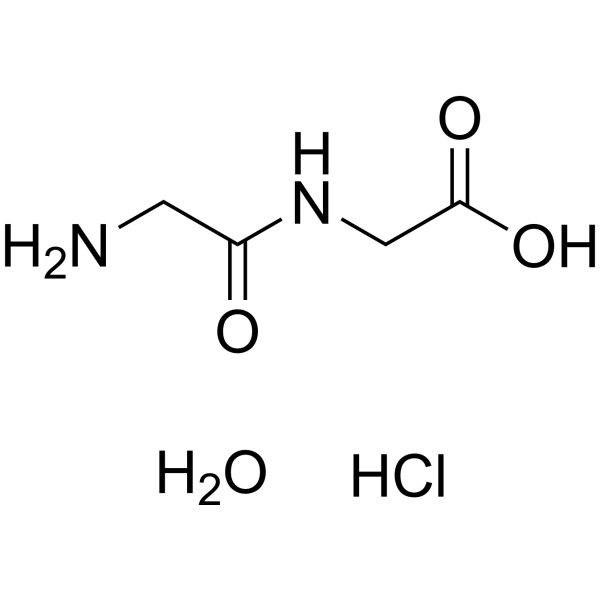
Glycylglycine hydrochloride hydrate is a non-selective Glycylglycine hydrochloride hydrate dipeptidase substrate and iNOS inhibitor. Glycylglycine hydrochloride hydrate can cross the cell membrane by passive diffusion and is hydrolyzed to glycine in the cell, participating in energy metabolism and antioxidant processes. Glycylglycine hydrochloride hydrate promotes spermatogonial stem cells (SSCs) proliferation, inhibits astrocyte overactivation and reduces nitric oxide (NO) release, while upregulating the expression of neurotrophic factors (such as PDGFA, FGF2, CNTF) to support nerve myelin repair. Glycylglycine hydrochloride hydrate can be used to study male reproductive biology (such as SSCs proliferation regulation) and neurodegenerative diseases (such as neuroprotective mechanisms in multiple sclerosis) .
loading...
    loading...
Cat. No.: HY-P2088
CAS No.: 63478-55-7
Synonyms: Des-N-tetramethyltriostin A
Target:  

Antibiotic

Research Areas:  

Cancer

TANDEM (Des-N-tetramethyltriostin A) is a synthetic antibiotic drug that has the activity of inhibiting the growth of tumor cells. TANDEM can be used in combination with chemotherapy to enhance the inhibitory effect. TANDEM has shown significant inhibitory effects on a variety of cancer cell lines in in vitro experiments. The structure of TANDEM allows it to effectively target tumor cells during the inhibition process. TANDEM's mechanism of action involves interfering with cell proliferation and survival pathways .
loading...
    loading...
Cat. No.: HY-B1221S1
CAS No.: 1325559-30-5
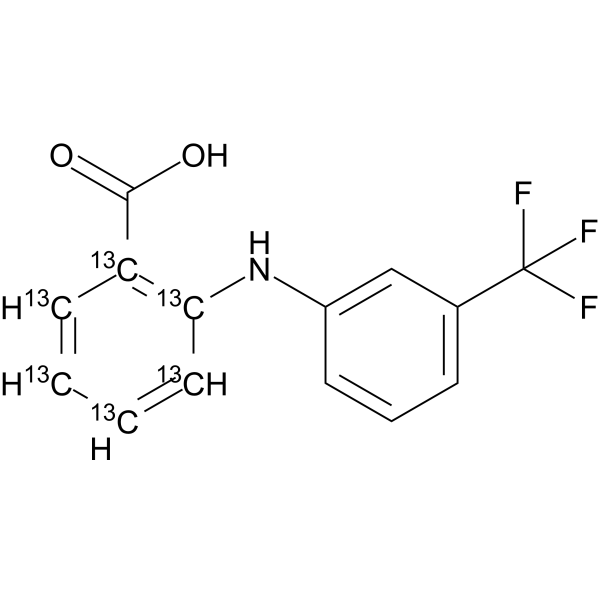
Flufenamic acid- 13C6 is the 13C6 labeled Flufenamic acid. Flufenamic acid is a non-steroidal anti-inflammatory agent, inhibits cyclooxygenase (COX), activates AMPK, and also modulates ion channels, blocking chloride channels and L-type Ca 2+ channels, modulating non-selective cation channels (NSC), activating K+ channels. Flufenamic acid binds to the central pocket of TEAD2 YBD and inhibits both TEAD function and TEAD-YAP-dependent processes, such as cell migration and proliferation.
loading...
    loading...
Cat. No.: HY-B1221R
CAS No.: 530-78-9
Flufenamic acid (Standard) is the analytical standard of Flufenamic acid. This product is intended for research and analytical applications. Flufenamic acid is a non-steroidal anti-inflammatory agent, inhibits cyclooxygenase (COX), activates AMPK, and also modulates ion channels, blocking chloride channels and L-type Ca 2+ channels, modulating non-selective cation channels (NSC), activating K + channels. Flufenamic acid binds to the central pocket of TEAD2 YBD and inhibits both TEAD function and TEAD-YAP-dependent processes, such as cell migration and proliferation.
loading...
    loading...
Cat. No.: HY-B1221S
CAS No.: 1185071-99-1
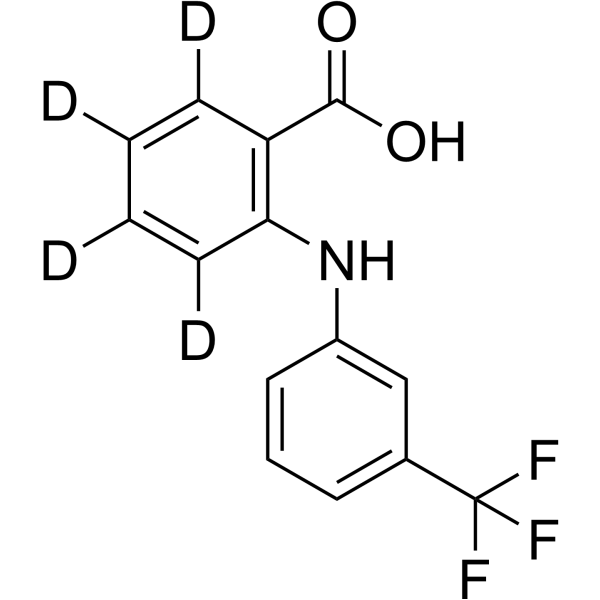
Flufenamic acid-d4 is deuterium labeled Flufenamic acid. Flufenamic acid is a non-steroidal anti-inflammatory agent, inhibits cyclooxygenase (COX), activates AMPK, and also modulates ion channels, blocking chloride channels and L-type Ca 2+ channels, modulating non-selective cation channels (NSC), activating K+ channels. Flufenamic acid binds to the central pocket of TEAD2 YBD and inhibits both TEAD function and TEAD-YAP-dependent processes, such as cell migration and proliferation.
loading...
    loading...
Cat. No.: HY-W339834
CAS No.: 325465-92-7
Research Areas:  

Others

1-Stearoyl-sn-glycerol 3-phosphate sodium is a bioactive phospholipid that plays a crucial role in modulating cellular processes such as motility, proliferation, invasion, survival, and growth factor production, primarily through its interaction with G protein-coupled receptors (GPCRs). Typically found at low concentrations in plasma (~100nM), this compound is synthesized during the formation of membrane phospholipids and is derived from various cell types, including activated platelets, epithelial cells, leukocytes, neuronal cells, and tumor cells. Its unique structure includes stearic acid at the sn-1 position alongside a hydroxyl group at the sn-2 position.
loading...
    loading...
Cat. No.: HY-13328R
CAS No.: 1224844-38-5
Synonyms: INK-128 (Standard); MLN0128 (Standard); TAK-228 (Standard)
Sapanisertib (INK-128; MLN0128; TAK-228) Standard is the analytical standard of Sapanisertib (HY-13328). This product is intended for research and analytical applications. Sapanisertib (INK-128; MLN0128; TAK-228) is an orally active dual mTORC1/mTORC2 inhibitor. Sapanisertib directly and simultaneously inhibits mTORC1/2 activity through competitive binding with ATP, thereby comprehensively blocking downstream processes such as protein and lipid synthesis and cytoskeletal reorganization, consequently suppressing tumor cell proliferation and promoting apoptosis. Sapanisertib is applicable to research on melanoma, ovarian cancer, pulmonary fibrosis, and hematological malignancies .
loading...
    loading...
Cat. No.: HY-L201
3,628 compounds

Cell proliferation, the increase in cell numbers resulting from cell division, is a complex and tightly regulated process. Cell proliferation is regulated by coordinated entry into the cell cycle, and changes in proliferation are closely linked to disease development. Evolutionary dynamics links tumor growth and progression with cell proliferation, cell death, and mutation rates. In addition, cell proliferation is central to degenerative diseases, the development of which is often accompanied by accelerated multiplication of cancer cells. Therefore, assays of cell proliferation levels are frequently used for laboratory research purposes and increasingly for clinical assessment of tumor aggressiveness and potentially to guide care. It has been shown that multiple key targets are collectively involved in regulating the process of cell proliferation, such as CDK, E2F, pRB, β-Catenin, and others.

MCE collects 3,628 compounds that target and regulate key targets of cell proliferation, which can be used in studies of cell proliferation mechanisms and drug discovery.

Cat. No.: HY-174581
Target:  

mRNA

Research Areas:  

Cancer

Human MET mRNA encodes the human MET proto-oncogene, receptor tyrosine kinase (MET) protein, a member of the receptor tyrosine kinase family. MET regulates many physiological processes including proliferation, scattering, morphogenesis and survival.
loading...
    loading...
Cat. No.: HY-182269
CAS No.: 2475078-38-5
Research Areas:  

Cancer

Cathepsin-IN-5 is a cathepsin inhibitor with IC50 values of 6.2 μM and 81 nM for cathepsin L and cathepsin S. Cathepsin-IN-5 inhibits cancer cells proliferation, induces apoptosis, reduces growth of hepatocellular tumors in mouse models, and modulates expression of genes linked to cell death, cell proliferation, and cellular processes. Cathepsin-IN-5 can be used for the research of hepatocellular carcinoma .
loading...
    loading...
Cat. No.: HY-125055A
CAS No.: 1417342-67-6
Target:  

Melanocortin Receptor

Research Areas:  

Metabolic Disease

CD08108 is a selective MC1R full agonist with an EC50 of 70 nM against hMC1R. CD08108 participates in the melanogenesis process. CD08108 promotes cell proliferation. CD08108 can be used in studies related to vitiligo, subcutaneous diseases and photosensitive diseases .
loading...
    loading...
Cat. No.: HY-P992460

Target:  

Tim3

Research Areas:  

Cancer

SHR-1702 is a monoclonal antibody targeting TIM-3, which specifically binds to and blocks the TIM-3 signaling pathway. SHR-1702 restores the function of immune cells and inhibits the proliferation process of malignant cells. SHR-1702 is mainly used in relevant research on acute myeloid leukemia and myelodysplastic syndromes .
loading...
    loading...
Cat. No.: HY-189241
Target:  

FGFR

Research Areas:  

Cancer

FGFR-IN-29 is an orally active pan-FGFR inhibitor that suppresses the kinase activities of FGFR1, FGFR2, FGFR3, and FGFR4. FGFR-IN-29 blocks the intracellular phosphorylation process of FGFR and arrests downstream tumor cell proliferation signaling. FGFR-IN-29 inhibits tumor growth in solid tumor xenograft mouse models. FGFR-IN-29 is applicable for cancer-related research .
loading...
    loading...
Cat. No.: HY-182542
CAS No.: 3056728-00-5
Target:  

OAT

Research Areas:  

Cancer

SOAT-IN-3 is a selective inhibitor of sodium-dependent organic anion transporter (SOAT/SLC10A6). SOAT-IN-3 reduces intracellular estradiol synthesis, the process of dehydroepiandrosterone (DHEA) production from DHEAS, and DHEAS-induced cancer cell proliferation. SOAT-IN-3 shows no cytotoxicity against breast cancer cells at the tested concentrations. SOAT-IN-3 can be used in the research of breast cancer .
loading...
    loading...
Cat. No.: HY-Z15805
CAS No.: 3796-67-6
Target:  

Drug Isomer HSP TrxR

Research Areas:  

Cancer

Teprenone Impurity 5 (5Z-GGA) is the cis-isomer of Teprenone (HY-B0779). Teprenone Impurity 5 has inhibitory activity on the proliferation of human ovarian cancer cells Caov-3, and can block the invasion process of cancer cells. Teprenone Impurity 5 can induce the expression of heat shock protein 70 (HSP70) and thioredoxin (Trx). Teprenone Impurity 5 can be used for the research of ovarian cancer .
loading...
    loading...
Cat. No.: HY-13328A
CAS No.: 1422006-47-0
Synonyms: INK-128 phosphate; MLN0128 phosphate; TAK-228 phosphate
Sapanisertib (INK-128; MLN0128; TAK-228) phosphate is an orally active dual mTORC1/mTORC2 inhibitor. Sapanisertib phosphate directly and simultaneously inhibits mTORC1/2 activity through competitive binding with ATP, thereby comprehensively blocking downstream processes such as protein and lipid synthesis and cytoskeletal reorganization, consequently suppressing tumor cell proliferation and promoting apoptosis. Sapanisertib phosphate is applicable to research on melanoma, ovarian cancer, pulmonary fibrosis, and hematological malignancies .
loading...
    loading...
Cat. No.: HY-182419
CAS No.: 904680-01-9
Target:  

MetAP

Research Areas:  

Cancer

A-849519 is a reversible methionine aminopeptidase-2 (MetAP-2) inhibitor with an IC50 of 19 nM. A-849519 binds to the active site of the Mn 2+ form of human MetAP-2, where the oxygen atom of one acidic functional group interacts with the manganese ion, and another heteroatom binds to the water molecule above the two manganese ions, thereby functionally inhibiting enzyme activity. A-849519 inhibits the methionine processing activity of MetAP-2 as well as the proliferation of fibrosarcoma cells. A-849519 can be used in studies related to fibrosarcoma .
loading...
    loading...
Cat. No.: HY-183376
CAS No.: 126103-94-4
Target:  

HIV Protease

Research Areas:  

Infection

U 81749 is a competitive, reversible HIV-1 protease inhibitor with a Ki value of 70 nM. U 81749 inhibits HIV-1 protease within HIV-like particles, blocks the processing of the HIV-1 gag polyprotein p55 into the mature structural proteins p24 and p17, and thereby prevents viral maturation. U 81749 reduces HIV p24 and HIV RNA levels in acutely infected human lymphocytes, and shows no toxicity to lymphocyte proliferation at effective concentrations. U 81749 can be used in studies related to HIV-1 infection .
loading...
    loading...
Cat. No.: HY-178276
CAS No.: 1394328-54-1
Target:  

α-synuclein

Research Areas:  

Neurological Disease

α-Synuclein-IN-18 (Compound Mol D) is an inhibitor of the autocatalytic proliferation of α-Synuclein aggregate. α-Synuclein-IN-18 can specifically bind to the conserved binding pocket on the surface of α-synuclein fibrils. α-Synuclein-IN-18 can delay the aggregation process of α-synuclein, extend the aggregation T1/2 by three times. α-Synuclein-IN-18 can reduce the generation flux of α-synuclein toxic oligomers, thereby alleviating the neurotoxicity. α-Synuclein-IN-18 can be used for research of Parkinson’sdisease .
loading...
    loading...

