
76 Results for "

replication cycle

" in MedChemExpress (MCE) Product Catalog:
Products (76)

76 Results for "replication cycle" in MCE Product Catalog:

Cat. No.: HY-121777
CAS No.: 1383607-61-1
Target:  

DNA/RNA Synthesis

Research Areas:  

Cancer

SFOM-0046 arrests cell cycle in S-phase and causes DNA replication stress leading to the phosphorylation of H2AX into γ-H2AX. SFOM-0046 induces DNA damages. SFOM-0046 is a potent anticancer agent .
loading...
    loading...
Cat. No.: HY-E70085
Target:  

DNA/RNA Synthesis

Research Areas:  

Infection

Moloney murine leukemia virus RT is a monomeric reverse transcriptase from Moloney murine leukemia virus (MMLV). Moloney murine leukemia virus RT is a replicative polymerase that play an essential role in the life cycle of the retrovirus .
loading...
    loading...
Cat. No.: HY-130515
CAS No.: 1402057-87-7
Target:  

CDK

Research Areas:  

Cancer

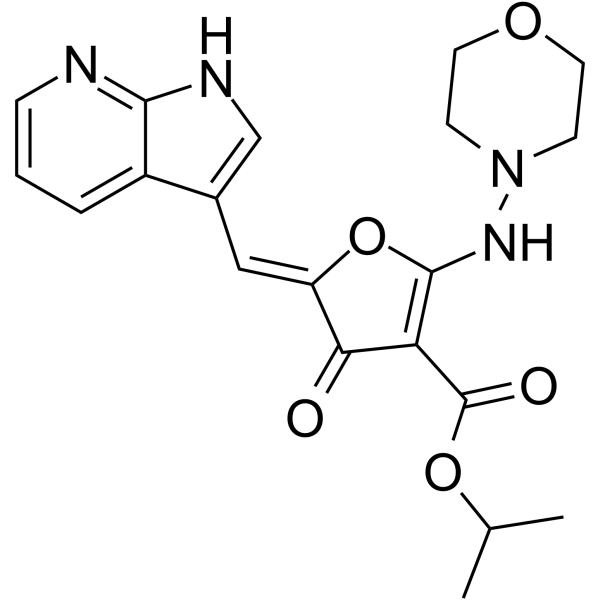
Cdc7-IN-3 (compound I-A) is a potent Cdc7 kinase inhibitor extracted from patent WO2019165473A1, compound I-B. Cdc7 is a serine-threonine protein kinase enzyme which is essential for the initiation of DNA replication in the cell cycle .
loading...
    loading...
Cat. No.: HY-P10509
CAS No.: 127902-44-7
Target:  

CMV

Research Areas:  

Infection

IE1 peptide refers to an antigenic peptide encoded by the immediate early (IE) gene of mouse cytomegalovirus (mCMV). IE1 peptide is one of the key antigenic peptides expressed during mCMV infection, plays a role in transcriptional activation in the life cycle of mCMV, and is one of the earliest genes expressed in the viral replication cycle. IE1 peptide is an important target for CD8+ T cell response and can be used to study the host immune response to mCMV infection .
loading...
    loading...
Cat. No.: HY-130517
CAS No.: 1402057-86-6
Purity:  96.73%
Target:  

CDK

Research Areas:  

Cancer

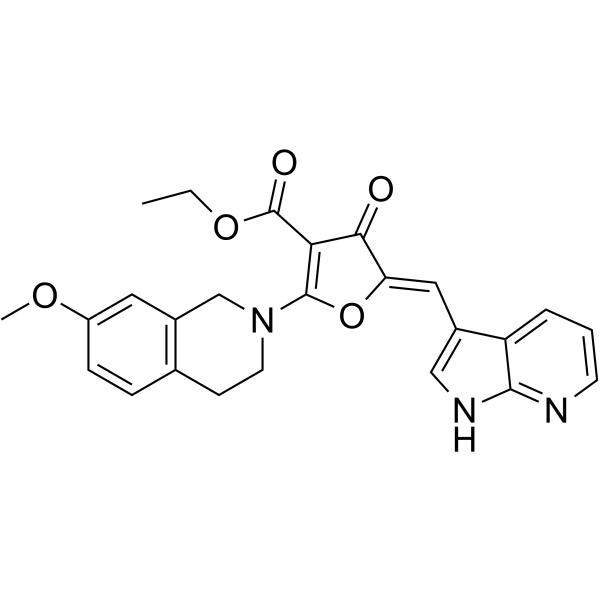
Cdc7-IN-5 (compound I-B) is a potent Cdc7 kinase inhibitor extracted from patent WO2019165473A1, compound I-B. Cdc7 is a serine-threonine protein kinase enzyme which is essential for the initiation of DNA replication in the cell cycle .
loading...
    loading...
Cat. No.: HY-130516
CAS No.: 1402059-21-5
Target:  

CDK

Research Areas:  

Cancer

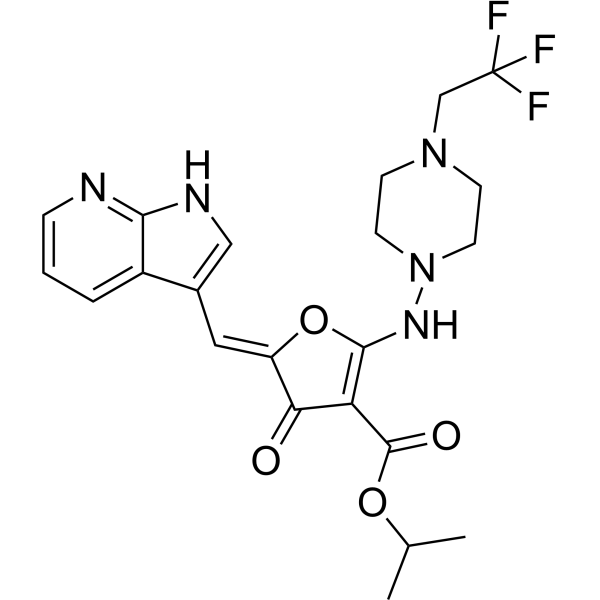
Cdc7-IN-4 (compound I-C) is a potent Cdc7 kinase inhibitor extracted from patent WO2019165473A1, compound I-C. Cdc7 is a serine-threonine protein kinase enzyme which is essential for the initiation of DNA replication in the cell cycle .
loading...
    loading...
Cat. No.: HY-13629S
Synonyms: VP-16-d3; VP-16-213-d3
Etoposide-d3 (VP-16-d3) is the deuterium labeled Etoposide (HY-13629). Etoposide (VP-16) is an anti-cancer chemotherapy agent. Etoposide inhibits topoisomerase II, thus stopping DNA replication. Etoposide induces cell cycle arrest, apoptosis and autophagy .
loading...
    loading...
Cat. No.: HY-13629S1
Synonyms: VP-16-13C,d3; VP-16-213-13C,d3
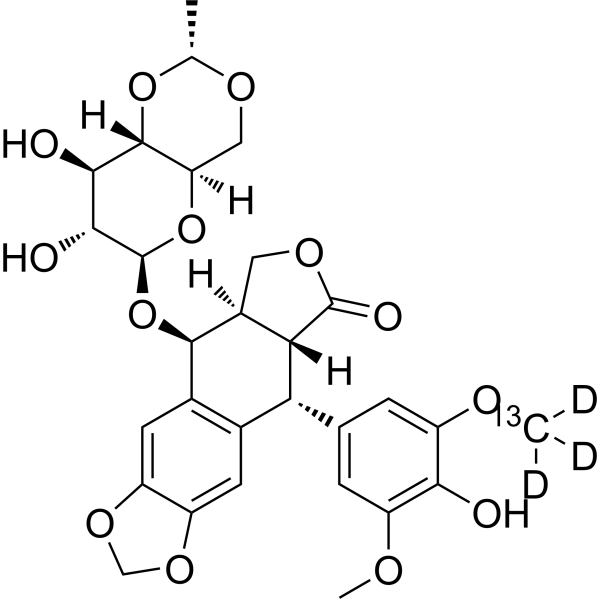
Etoposide- 13C,d3 is the 13C- and deuterium labeled Etoposide. Etoposide (VP-16; VP-16-213) is an anti-cancer chemotherapy agent. Etoposide inhibits topoisomerase II, thus stopping DNA replication. Etoposide induces cell cycle arrest, apoptosis and autophagy .
loading...
    loading...
Cat. No.: HY-168497
Research Areas:  

Cancer

C-MS023 is a photo-activatable MS023 (HY-19615) prodrug, achieving spatiotemporal inhibition of Histone Arginine Asymmetric Dimethylation. C-MS023 inhibits PRMT6 mediated asymmetric dimethylation of H3 arginine 2 (H3R2me2a), with an estimate IC50 of 0.2224 μM. The photolysis of C-MS023 could be triggered by visible light irradiation at 420 nm, thereby liberating MS023 for effective downregulation of histone arginine asymmetric dimethylation and DNA replication-related transcriptomic activities .
loading...
    loading...
Cat. No.: HY-169429
CAS No.: 2568903-91-1
Target:  

Flavivirus

Research Areas:  

Infection

CHIKV-IN-5 (Compound 26) is a CHIKV inhibitor (EC90 = 0.45 μM). CHIKV-IN-5 inhibits CHIKV replication at a late stage in the virus life cycle by blocking structural protein translation. CHIKV-IN-5 has great in vitro mouse microsomal stability. CHIKV-IN-5 reduces footpad swelling and decreases virus dissemination to other tissues in mice infected with CHIKV .
loading...
    loading...
Cat. No.: HY-173338
CAS No.: 1438403-50-9
Target:  

DNA/RNA Synthesis

Research Areas:  

Infection

MSRV-IN-1 (Compound M3) is an inhibitor targeting aquatic rhabdoviruses (such as MSRV, SVCV and IHNV). Its IC50 values for inhibiting MSRV, SVCV and IHNV are 0.92 μM, 2.92 μM and 2.78 μM respectively. MSRV-IN-1 does not act directly on the virions but rather inhibits viral replication by altering the cell cycle arrest state in the S phase induced by the virus and disrupting the viral replication environment. When administered intraperitoneally at a dose of 20 mg/kg, MSRV-IN-1 can significantly increase the survival rate of largemouth bass infected with MSRV by 35.98% and reduce the viral loads in the liver, spleen and kidney. MSRV-IN-1 can be used in the research of diseases related to rhabdoviruses in aquaculture .
loading...
    loading...
Cat. No.: HY-B1589
CAS No.: 486-16-8
Target:  

Histamine Receptor

Research Areas:  

Infection Inflammation/Immunology

(±)-Carbinoxamine is a blood-brain barrier-permeable histamine H1 receptor antagonist. (±)-Carbinoxamine blocks the action of histamine on H1 receptors, reducing symptoms such as sneezing, rhinitis, rhinorrhea, erythema, pruritus and urticaria. (±)-Carbinoxamine inhibits influenza virus entry into cells via endocytosis, targets the early stage of the viral life cycle, and simultaneously reduces viral replication levels in the lungs, alleviating pathological damage and inflammatory responses in lung tissues. (±)-Carbinoxamine can be used in research on allergic rhinitis, influenza, etc.
loading...
    loading...
Cat. No.: HY-162456
Research Areas:  

Cancer

Anticancer agent 205 (compound 9) is a potent anticancer agent. Anticancer agent 205 binds to G4-mtDNA target and inhibits the replication, transcription, and translation of mtDNA (mitochondrial genome). Anticancer agent 205 causes mitochondrial dysfunction, increases ROS production, induces DNA damage and cellular senescence. Anticancer agent 205 induces apoptosis and cell cycle arrests at G0/G1 phase. Anticancer agent 205 has the potential for the research of colorectal cancer .
loading...
    loading...
Cat. No.: HY-B1589AS
CAS No.: 2747914-08-3
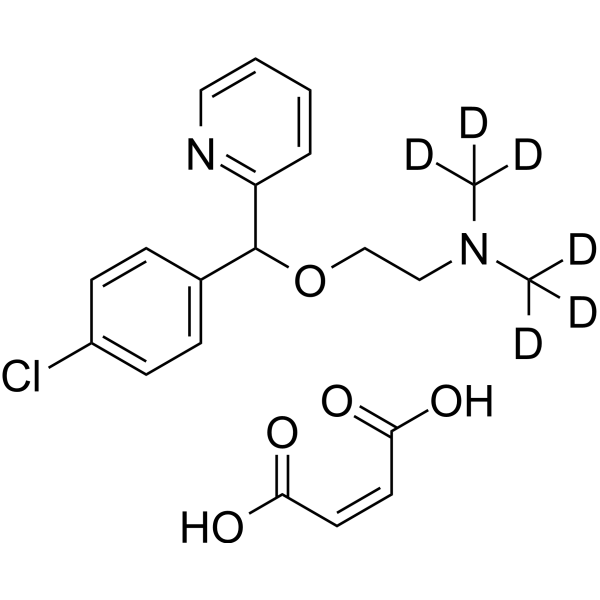
Carbinoxamine-d6 (maleate) is the deuterium labeled Carbinoxamine maleate salt. Carbinoxamine maleate salt is a blood-brain barrier-permeable histamine H1 receptor antagonist. Carbinoxamine maleate salt blocks the action of histamine on H1 receptors, reducing symptoms such as sneezing, rhinitis, rhinorrhea, erythema, pruritus and urticaria. Carbinoxamine maleate salt inhibits influenza virus entry into cells via endocytosis, targets the early stage of the viral life cycle, and simultaneously reduces viral replication levels in the lungs, alleviating pathological damage and inflammatory responses in lung tissues. Carbinoxamine maleate salt can be used in research on allergic rhinitis, influenza, etc.
loading...
    loading...
Cat. No.: HY-B0277AR
CAS No.: 29984-33-6
Synonyms: ara-AMP (Standard); ara-A 5'-monophosphate (Standard)
Vidarabine phosphate (ara-AMP; ara-A 5'-monophosphate) (Standard) is the analytical standard of Vidarabine phosphate. This product is intended for research and analytical applications. Vidarabine phosphate is a purine nucleoside antiviral agent and a prodrug of Vidarabine (HY-B0277). Vidarabine phosphate is rapidly converted into the antiviral active Vidarabine in vivo, which selectively inhibits viral DNA polymerase and cellular ribonucleotide reductase, thereby blocking viral replication. Vidarabine phosphate also exhibits antifungal activity, induces late-stage cellular apoptosis, and causes cell cycle arrest. Vidarabine phosphate can be used in research related to severe chronic active Epstein-Barr virus (EBV) infection, herpes infection, and candidiasis.
loading...
    loading...
Cat. No.: HY-B1589AR
CAS No.: 3505-38-2
Carbinoxamine maleate salt (Standard) is the analytical standard of Carbinoxamine maleate salt (HY-B1589A). This product is intended for research and analytical applications. Carbinoxamine maleate salt is a blood-brain barrier-permeable histamine H1 receptor antagonist. Carbinoxamine maleate salt blocks the action of histamine on H1 receptors, reducing symptoms such as sneezing, rhinitis, rhinorrhea, erythema, pruritus and urticaria. Carbinoxamine maleate salt inhibits influenza virus entry into cells via endocytosis, targets the early stage of the viral life cycle, and simultaneously reduces viral replication levels in the lungs, alleviating pathological damage and inflammatory responses in lung tissues. Carbinoxamine maleate salt can be used in research on allergic rhinitis, influenza, etc.
loading...
    loading...
Cat. No.: HY-W040129R
CAS No.: 7059-24-7
Chromomycin A3 (Standard) is the analytical standard of Chromomycin A3 (HY-W040129). This product is intended for research and analytical applications. Chromomycin A3 is an inhibitor that selectively binds to GC-rich DNA sequences. Chromomycin A3 targets the DNA minor groove after forming a dimer with Mg 2+. Chromomycin A3 inhibits DNA replication and transcription, blocks the binding of Sp1 transcription factor to target gene promoters, downregulates the expression of anti-apoptotic proteins such as FLIP, Mcl-1, and XIAP, and induces S-phase cycle arrest and caspase-dependent apoptosis in tumor cells. Chromomycin A3 can antagonize oxidative stress induced by glutathione depletion and neuronal apoptosis induced by Camptothecin (HY-15660). Chromomycin A3 can be used in basic research on malignant tumors such as cholangiocarcinoma, and is a potential chemosensitizer and GC-rich region probe .
loading...
    loading...
Cat. No.: HY-N1401R
CAS No.: 112246-15-8
20(R)-Ginsenoside Rh2 (Standard) is the analytical standard of 20(R)-Ginsenoside Rh2. This product is intended for research and analytical applications. 20(R)-Ginsenoside Rh2 is an orally active protopanaxadiol-type saponin with multiple biological activities. 20(R)-Ginsenoside Rh2 exerts a significant inhibitory effect on non-small cell lung cancer and liver cancer by inducing cell cycle arrest and promoting apoptosis. 20(R)-Ginsenoside Rh2 exerts anti-γ-herpesvirus effects by inhibiting viral DNA replication. 20(R)-Ginsenoside Rh2 inhibits inflammatory mediators by reducing the levels of NO, PGE2, and ROS; it can delay skin photoaging by reducing ROS and inhibiting MMP-9/2 activity. 20(R)-Ginsenoside Rh2 accelerates the recovery after muscle injury by activating the Akt1/PKB signaling pathway. 20(R)-Ginsenoside Rh2 can inhibit osteoclast formation and exert an anti-osteoporosis effect.
loading...
    loading...
Cat. No.: HY-183581
CAS No.: 3064481-29-1
Research Areas:  

Cancer

USP1-IN-18 is an orally active USP1 inhibitor with a human IC50 of 17.0 nM. USP1-IN-18 inhibits USP1-UAF1 deubiquitinase activity and drives ubiquitinated PCNA accumulation. USP1-IN-18 induces DNA damage, replication stress, and G2-M phase cell cycle arrest. USP1-IN-18 can be used for the research of triple-negative breast cancer .
loading...
    loading...
Cat. No.: HY-L004
3,522 compounds

DNA is prone to numerous forms of damage that can injure cells and impair fitness. Cells have developed an array of mechanisms to repair these injuries. Proliferating cells are especially vulnerable to DNA damage due to the added demands of cellular growth and division. Cell cycle checkpoints represent integral components of DNA repair that coordinate cooperation between the machinery of the cell cycle and several biochemical pathways that respond to damage and restore DNA structure. By delaying progression through the cell cycle, checkpoints provide more time for repair before the critical phases of DNA replication, when the genome is replicated, and of mitosis, when the genome is segregated. Loss or attenuation of checkpoint function may increase spontaneous and induced gene mutations and chromosomal aberrations by reducing the efficiency of DNA repair.

MCE owns a unique collection of 3,522 cell cycle/DNA damage-related compounds which can be used in the research of the same.

