6833 Results for "

Pathways

" in MedChemExpress (MCE) Product Catalog:
Products (6833)

6833 Results for "Pathways" in MCE Product Catalog:

Cat. No.: HY-149616
CAS No.: 3032388-42-1
Target:  

PROTACs ERK

Research Areas:  

Cancer

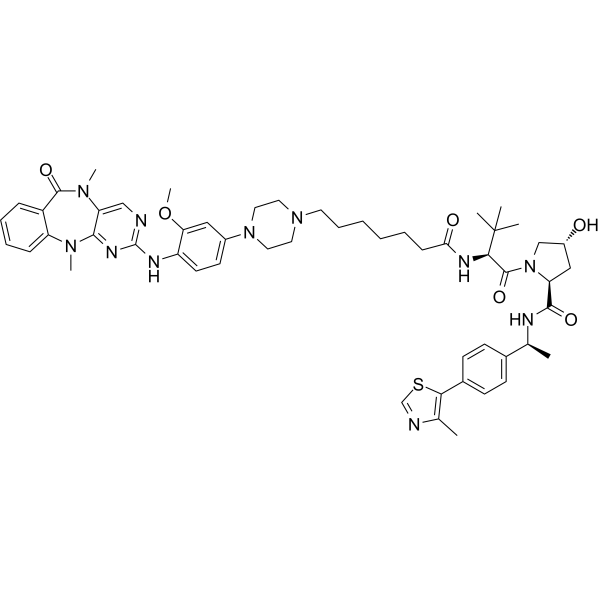
PPM-3 is a highly selective ERK5 PROTAC degrader that mediates the degradation of ERK5 protein by recruiting VHL. PPM-3 inhibits ERK5 kinase activity with an IC50 of 62.4 nM. PPM-3-mediated ERK5 degradation exhibits a hook effect. PPM-3 exerts no significant direct inhibitory effect on the proliferation and migration of cancer cells. PPM-3 can be used in studies related to macrophage polarization and tumor immunity .
loading...
    loading...
Cat. No.: HY-159536
CAS No.: 1299417-07-4
Synonyms: KN-002; VR-588
Target:  

JAK

Research Areas:  

Inflammation/Immunology

Frevecitinib (KN-002; VR-588) is a lung-selective pan-JAKs (i.e., JAK1, JAK2, JAK3, TYK2) inhibitor. Frevecitinib reduces sputum eosinophil levels. Frevecitinib reduces fractional exhaled nitric oxide (FeNO) levels. Frevecitinib is used for the research of moderate-to-severe asthma .
loading...
    loading...
Cat. No.: HY-165396
CAS No.: 312595-37-2
Target:  

Bacterial

Research Areas:  

Infection

HC103A is an Antibacterial agent and a DosS/DosT histidine sensor kinase inhibitor, with an IC50 of 0.5 μM against DosS and ~5 μM against DosT of *Mycobacterium tuberculosis*. HC103A inhibits the autophosphorylation of DosS/DosT. HC103A suppresses hypoxia-induced triacylglycerol synthesis and the viability of Mtb. HC103A can be used in the research of tuberculosis .
loading...
    loading...
Cat. No.: HY-165557
CAS No.: 1001389-31-6
GSK1370319A is a human P2X7 receptor inhibitor with an IC50 of 474 nM and a Ki of 176 nM. GSK1370319A inhibits the production of IL-1β, reduces the generation of reactive oxygen species (ROS), and increases the survival rate of macrophages. GSK1370319A can be used for the research of inflammatory bowel disease .
loading...
    loading...
Cat. No.: HY-170669
CAS No.: 3105680-00-7
Research Areas:  

Cancer

PROTAC XPO1 degrader-1 is a CRBN-recruiting PROTAC degrader of exportin 1 (XPO1), with a DC50 of 23.67 nM. It exerts anti-proliferative effects against acute myeloid leukemia cells by inducing XPO1 protein degradation, inhibiting NF-κB activity, inducing apoptosis, and causing G1 cell cycle arrest. PROTAC XPO1 degrader-1 can be used for research on acute myeloid leukemia .
loading...
    loading...
Cat. No.: HY-183277
CAS No.: 3088042-00-3
Target:  

EGFR p38 MAPK Akt Apoptosis

Research Areas:  

Cancer

EGFR-IN-209 (Compound 6g) is an orally active, selective EGFR Del19/T790M/C797S inhibitor with an IC50 of 0.056 μM. EGFR-IN-209 blocks the phosphorylation of EGFR and its downstream effector molecules (pMAPK, pAKT). EGFR-IN-209 induces Apoptosis. EGFR-IN-209 exhibits antitumor activity against Osimertinib (HY-15772)-resistant non-small cell lung cancer. EGFR-IN-209 can be used in research related to non-small cell lung cancer .
loading...
    loading...
Cat. No.: HY-187429
Target:  

PAK MDM-2/p53

Research Areas:  

Endocrinology

Anti-aging agent 2 is an anti-aging agent. Anti-aging agent 2 attenuates senescence-associated secretory phenotype (SASP), alleviates cell cycle arrest, reduces the levels of senescence markers in renal tissues, and downregulates the expression of p21, p16 and p53 in the kidney. Anti-aging agent 2 improves renal function and alleviates renal fibrosis. Anti-aging agent 2 extends the lifespan of Caenorhabditis elegans. Anti-aging agent 2 can be used in the research of chronic kidney disease .
loading...
    loading...
Cat. No.: HY-E70127
CAS No.: 37312-62-2
Synonyms: Brasan; Dasen
Serratiopeptidase (Brasan; Dasen) is an orally active zinc-containing metalloprotease belonging to the serralysin family. Serratiopeptidase reduces the release of inflammatory mediators such as prostaglandins, thromboxanes and interleukins by inhibiting COX, thereby relieving pain, swelling and redness. Serratiopeptidase exhibits antibiofilm, mucolytic and wound-healing activities. As a serine protease, Serratiopeptidase has the ability to dissolve blood clots, fibrin and atherosclerotic plaques. Serratiopeptidase degrades amyloid fibrils and has potential anti-Alzheimer's effects. Serratiopeptidase shows cytotoxicity against colon cancer cells .
loading...
    loading...
Cat. No.: HY-W012846
CAS No.: 2418-52-2
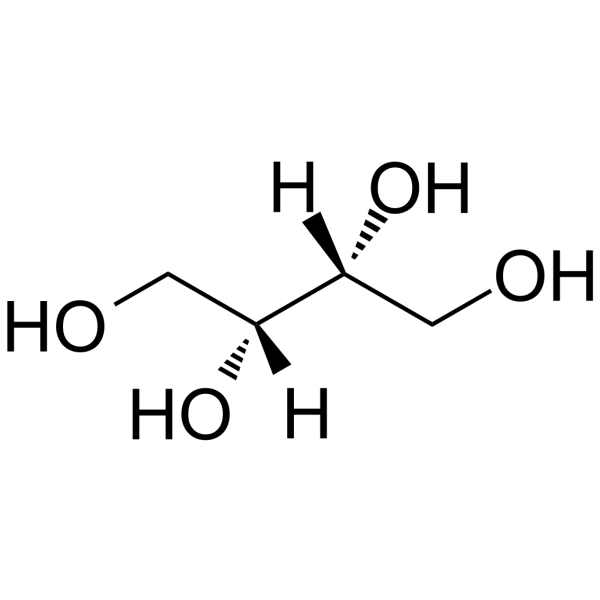
D-Threitol is a naturally occurring four-carbon sugar alcohol and an α-glucosidase (α‑glucosidase) inhibitor with an IC50 of 49 mM against yeast α-glucosidase, and it is orally active. D-Threitol modulates gut microbiota composition, increases microbial diversity, enriches beneficial bacterial genera, and restores fecal short-chain fatty acid levels. D-Threitol reduces body weight gain and fat accumulation, improves glucose tolerance and insulin sensitivity, and alleviates liver, kidney, and pancreatic tissue damage. D-Threitol inhibits hepatic accumulation of ceramides and diacylglycerols. D-Threitol preserves glomerular morphology and islet structure in diabetes models. D-Threitol is also a low-calorie sweetener. D-Threitol serves as a cryoprotective polyol that stabilizes protein structure at low temperatures. D-Threitol is used in research on type 2 diabetes and as an antifreeze agent for the Alaskan beetle .
loading...
    loading...
Cat. No.: HY-W012846R
CAS No.: 2418-52-2
D-Threitol (Standard) is the analytical standard of D-Threitol (HY-W012846). This product is intended for research and analytical applications. D-Threitol is a naturally occurring four-carbon sugar alcohol and an α-glucosidase (α‑glucosidase) inhibitor with an IC50 of 49 mM against yeast α-glucosidase, and it is orally active. D-Threitol modulates gut microbiota composition, increases microbial diversity, enriches beneficial bacterial genera, and restores fecal short-chain fatty acid levels. D-Threitol reduces body weight gain and fat accumulation, improves glucose tolerance and insulin sensitivity, and alleviates liver, kidney, and pancreatic tissue damage. D-Threitol inhibits hepatic accumulation of ceramides and diacylglycerols. D-Threitol preserves glomerular morphology and islet structure in diabetes models. D-Threitol is also a low-calorie sweetener. D-Threitol serves as a cryoprotective polyol that stabilizes protein structure at low temperatures. D-Threitol is used in research on type 2 diabetes and as an antifreeze agent for the Alaskan beetle .
loading...
    loading...
Cat. No.: HY-W720329
CAS No.: 950782-86-2
Research Areas:  

Others

Indaziflam is an alkyltriazine herbicide. Indaziflam targets the cellulose synthase complex and inhibits cellulose biosynthesis in plant cell walls. Indaziflam induces radial swelling of plants, ectopic lignification, inhibition of root and hypocotyl elongation, abnormal root and cell morphology, and also induces DNA strand breaks and micronucleus formation in HepG2 cells. Indaziflam can be used for research on monocot weed control .
loading...
    loading...
Cat. No.: HY-10357
CAS No.: 1032349-93-1
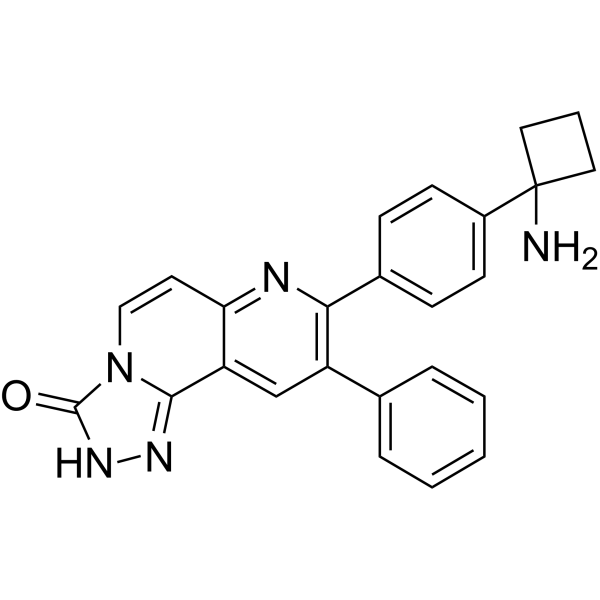
MK-2206 free base is an orally active pan-AKT inhibitor, with IC50 values of 8 nM, 12 nM and 65 nM against AKT1, AKT2 and AKT3, respectively. MK-2206 free base inhibits the Akt/mTOR signaling pathway and reduces the levels of downstream GSK3β and Mcl-1 via proteasomal degradation. MK-2206 free base induces G1-phase cell cycle arrest, apoptosis, epithelial-mesenchymal transition, fibroblast activation and extracellular matrix deposition. MK-2206 free base causes transient hyperglycemia and hyperinsulinemia in animals. MK-2206 free base can be used in research related to solid tumors, renal fibrosis and hypercholesterolemia .
loading...
    loading...
Cat. No.: HY-106980
CAS No.: 308123-60-6
Synonyms: (-)-18-Methoxycoronaridine
18-Methoxycoronaridine ((-)-18-Methoxycoronaridine) is an orally active and selective α3β4 nicotinic acetylcholine receptor (nAChR) antagonist. 18-Methoxycoronaridine is an inhibitor of serotonin transporter (SERT) and norepinephrine transporter (NET), with IC50 values of 51.6 μM and 121 μM for SERT and NET, respectively. 18-Methoxycoronaridine inhibits the function of SERT and NET, promotes 5-HT3A receptor desensitization, blocks α3β4 nAChR, and modulates receptor signaling pathways associated with reinforcement. 18-Methoxycoronaridine also exhibits potent antiparasitic activity. 18-Methoxycoronaridine can be used in research related to depression, obesity, alcoholism, smoking addiction, and cutaneous leishmaniasis .
loading...
    loading...
Cat. No.: HY-106980A
CAS No.: 266686-77-5
Synonyms: (-)-18-Methoxycoronaridine hydrochloride
18-Methoxycoronaridine ((-)-18-Methoxycoronaridine) hydrochloride is an orally active and selective α3β4 nicotinic acetylcholine receptor (nAChR) antagonist. 18-Methoxycoronaridine hydrochloride is an inhibitor of serotonin transporter (SERT) and norepinephrine transporter (NET), with IC50 values of 51.6 μM and 121 μM for SERT and NET, respectively. 18-Methoxycoronaridine hydrochloride inhibits the function of SERT and NET, promotes 5-HT3A receptor desensitization, blocks α3β4 nAChR, and modulates receptor signaling pathways associated with reinforcement. 18-Methoxycoronaridine hydrochloride also exhibits potent antiparasitic activity. 18-Methoxycoronaridine hydrochloride can be used in research related to depression, obesity, alcoholism, smoking addiction, and cutaneous leishmaniasis .
loading...
    loading...
Cat. No.: HY-107111R
CAS No.: 932373-87-0
Research Areas:  

Neurological Disease

GSK1034702 (Standard) is the analytical standard of GSK1034702 (HY-107111). This product is intended for research and analytical applications. GSK1034702 is an orally active and allosteric agonist of M1 mAChR (pEC50=8.1) that can cross the blood-brain barrier. GSK1034702 activates the Gq/11 protein-mediated signaling pathway, enhancing neuronal firing and long-term potentiation (LTP) in the CA1 region of the hippocampus. GSK1034702 can modulate hippocampal function, improve memory encoding in the nicotine withdrawal cognitive dysfunction model, and show pro-cognitive effects in rodents. GSK1034702 can be used for the study of the mechanisms of cognitive impairment diseases such as Alzheimer's disease, and has certain peripheral M receptor activation-related side effects (such as gastrointestinal reactions) .
loading...
    loading...
Cat. No.: HY-107207R
CAS No.: 32602-81-6
Synonyms: Kaempferol 3-O-neohesperidoside (Standard)
Kaempferol 3-neohesperidoside (Kaempferol 3-O-neohesperidoside) Standard is the analytical standard of Kaempferol 3-neohesperidoside (HY-107207). This product is intended for research and analytical applications. Kaempferol 3-neohesperidoside (Kaempferol 3-O-neohesperidoside) is a flavonoid. Kaempferol 3-neohesperidoside mimics insulin action via the PI3K/PKC pathway, significantly promoting glucose uptake and increasing muscle glycogen content in rat soleus muscles. Kaempferol 3-neohesperidoside also exhibits anti-glycation activity. Kaempferol 3-neohesperidoside binds to albumin through hydrogen bonding and hydrophobic interactions, and inhibits the formation of advanced glycation end products. Kaempferol 3-neohesperidoside can be used in studies of diabetes and its related complications .
loading...
    loading...
Cat. No.: HY-107574R
CAS No.: 17328-16-4
TC-E 5003 (Standard) is the analytical standard of TC-E 5003 (HY-107574). This product is intended for research and analytical applications. TC-E 5003 is a selective protein arginine methyltransferase 1 (PRMT1) inhibitor with an IC50 of 1.5 µM against hPRMT1. TC-E 5003 modulates the lipopolysaccharide (LPS) (HY-D1056)-induced AP-1 and NF-κB signaling pathways with anti-inflammatory properties. TC-E 5003 also upregulates the expression of Ucp1 and Fgf21, activates protein Kinase A signaling and lipolysis in primary subcutaneous adipocytes from both mouse and humans. TC-E 5003 is promising for research of obesity and associated metabolic disorders, oxidative stress, inflammation and cancers .
loading...
    loading...
Cat. No.: HY-108292R
CAS No.: 66532-86-3
Research Areas:  

Cancer

Propacetamol (hydrochloride) (Standard) is the analytical standard of Propacetamol (hydrochloride). This product is intended for research and analytical applications. Propacetamol hydrochloride is a potent, peptidic inhibitor targeting thrombin and granzyme GZMK. Propacetamol hydrochloride specifically blocks the activities of thrombin and GZMK, thereby inhibiting thrombin-mediated PAR-1 cleavage, as well as downstream inflammatory and procoagulant signaling pathways. Through stabilizing IκB proteins, blocking NF-κB activation and reducing systemic levels of proinflammatory/procoagulant biomarkers, Propacetamol hydrochloride exerts multiple effects including anti-inflammatory, antithrombotic, barrier repair, and inhibition of atherosclerotic plaque progression. Propacetamol hydrochloride binds to platelets without interference from kininogen, effectively limiting acute thrombus growth and reducing eosinophil infiltration and goblet cell hyperplasia in asthma models. Propacetamol hydrochloride is an important tool molecule for investigating the mechanisms of atherosclerosis, asthma and related thromboinflammatory diseases .
loading...
    loading...
Cat. No.: HY-108663
CAS No.: 1207530-98-0
Synonyms: 5-Methoxyuridine 5'-trihydrogen diphosphate
Target:  

P2Y Receptor

5-OMe-UDP (5-methoxyuridine 5'-trihydrogen diphosphate) is a P2Y6 receptor agonist (EC50=0.08 μM). 5-OMe-UDP activates the P2Y6 receptor by binding to it, which triggers signaling pathways within the cell. This activation can lead to an increase in intracellular calcium ion concentration, which in turn regulates cellular function. The methoxy groups of 5-OMe-UDP provide additional activity and selectivity, contributing to the binding of 5-OMe-UDP to the P2Y6 receptor. 5-OMe-UDP can be used to study diseases related to P2Y6 receptor function, such as diabetes, inflammatory bowel disease, Alzheimer's disease, etc .
loading...
    loading...
Cat. No.: HY-110038
CAS No.: 1217447-06-7
FTI-277 TFA is a farnesyltransferase (FTase) inhibitor. FTI-277 TFA inhibits Ras farnesylation, blocks the phosphorylation of downstream ERK1/2 and mTOR, and reduces membrane-bound active N-ras protein. FTI-277 TFA activates caspase 3, upregulates Bim expression, induces cell apoptosis, suppresses regulatory T cell expansion, enhances macrophage phagocytosis, and improves bacterial clearance. FTI-277 TFA activates the PI3K/Akt signaling pathway, inhibits osteoblast differentiation, and reduces the proliferation ability of neuroblastoma cells. FTI-277 TFA can be used in research related to head and neck squamous cell carcinoma, neuroblastoma, sepsis, and vascular calcification .
loading...
    loading...

