135 Results for "

Quorum-sensing

" in MedChemExpress (MCE) Product Catalog:
Products (135)

135 Results for "Quorum-sensing" in MCE Product Catalog:

Cat. No.: HY-158193
CAS No.: 540796-75-6
Synonyms: C10-CPA
Target:  

Bacterial

Research Areas:  

Infection

N-Decanoyl cyclopentylamide (C10-CPA) is a potent inhibitor of quorum sensing in Pseudomonas aeruginosa. N-Decanoyl cyclopentylamide interferes with expression of Pseudomonas aeruginosa virulence factors regulated by the las and rhl quorum-sensing systems. N-Decanoyl cyclopentylamide inhibits production of elastase, pyocyanin, and rhamnolipid and biofilm formation .
loading...
    loading...
Cat. No.: HY-114773
CAS No.: 216596-71-3
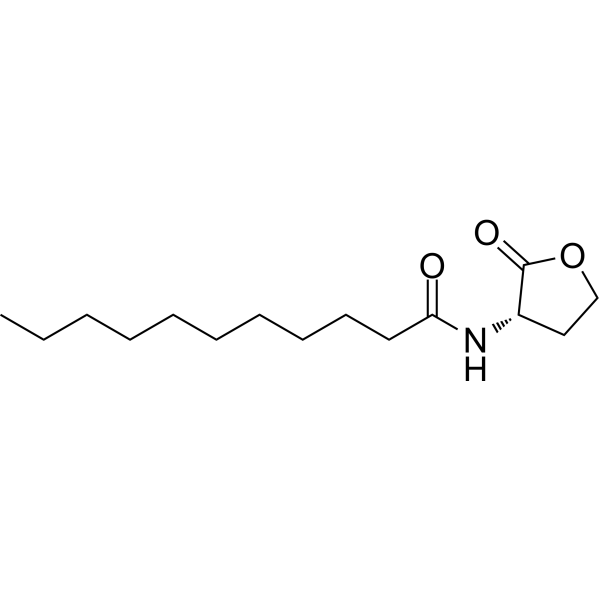
Quorum sensing is a regulatory system used by bacteria to control gene expression in response to increased cell density. This regulatory process manifests itself in a variety of phenotypes, including biofilm formation and virulence factor production. Coordinated gene expression is achieved through the production, release and detection of small diffusible signaling molecules called autoinducers. N-acylated homoserine lactones (AHLs) comprise a class of such autoinducers, each of which generally consists of a fatty acid coupled to a homoserine lactone (HSL). Modulation of bacterial quorum-sensing signaling systems to suppress pathogenesis represents a new approach to antimicrobial research for infectious diseases. AHLs differ in acyl length (C4-C18), C3 substitution (hydrogen, hydroxyl, or oxo group), and the presence or absence of one or more carbon-carbon double bonds in the fatty acid chain. These differences confer signaling specificity through the affinity of the LuxR family of transcriptional regulators. C11-HSL has a rare odd-numbered acyl carbon chain and may be a minor quorum-sensing signaling molecule in Pseudomonas aeruginosa strains.
loading...
    loading...
Cat. No.: HY-N2867
CAS No.: 82209-76-5
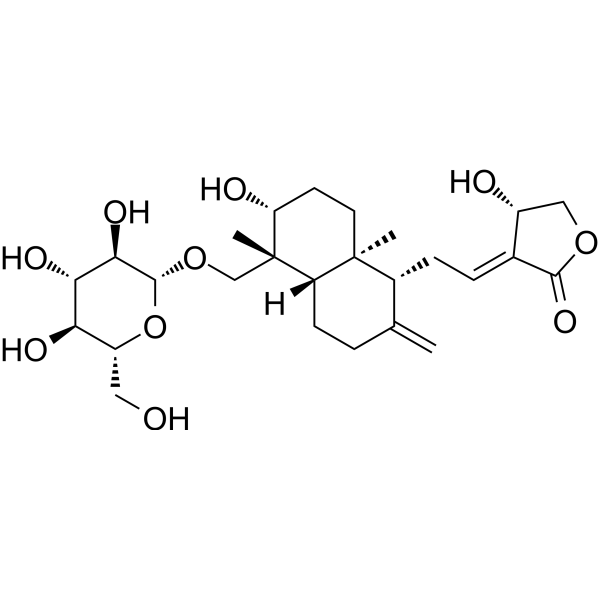
Andrographiside is a labdane diterpenoid glucoside that can be isolated from the leaves of Andrographis paniculata Nees. Andrographiside has antihepatotoxic and antioxidative effects. Andrographiside shows protective effects on mice with hepatotoxicity induced by carbon tetrachloride or tert-butylhydroperoxide (tBHP) . Andrographiside is a novel biofilm inhibitor of Pseudomonas aeruginosa PAO1 by modulating quorum-sensing proteins .
loading...
    loading...
Cat. No.: HY-Y0248R
CAS No.: 106-28-5
Synonyms: trans,trans-Farnesol (Standard); (2E,6E)-Farnesol (Standard)
(E,​E)​-​Farnesol (Standard) (trans,trans-Farnesol (Standard)) is the analytical standard of (E,​E)​-​Farnesol (HY-Y0248). This product is intended for research and analytical applications. (E,E)-Farnesol (trans,trans-Farnesol) is a quorum-sensing molecule of Candida species. (E,E)-Farnesol can inhibit the growth, metabolism and biofilm formation of various Candida species, and affect their morphology and invasiveness .
loading...
    loading...
Cat. No.: HY-163508
Target:  

Bacterial

Research Areas:  

Infection

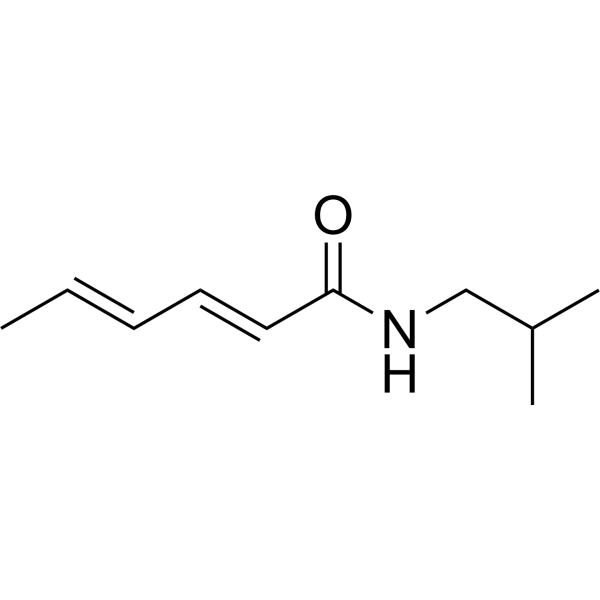
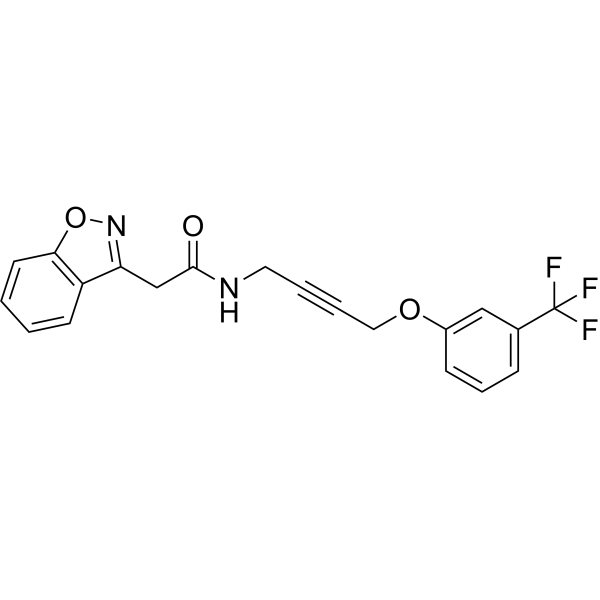
Antibacterial agent 210 (compound A9), an amide derivative, is a Pseudomonas aeruginosa quorum sensing inhibitor (QSI). Antibacterial agent 210 inhibits the quorum sensing systems by binding with LasR and PqsR, especially PqsR .
loading...
    loading...
Cat. No.: HY-145509
CAS No.: 273734-65-9
Target:  

Bacterial

N-(3-Hydroxy-7-cis tetradecenoyl)-L-Homoserine lactone is an N-acyl-homoserine lactone (AHL) signaling molecule primarily secreted by Gram-negative bacteria for quorum sensing. It can be used to study bacterial quorum sensing mechanisms and their behavioral characteristics in the environment .
loading...
    loading...
Cat. No.: HY-173586
Synonyms: N-Dodecanoyl-L-hsl-3-hydrazone-biotin
Target:  

Bacterial

Research Areas:  

Infection

N-Dodecanoyl-L-homoserine lactone-3-hydrazone-biotin (N-Dodecanoyl-L-hsl-3-hydrazone-biotin) is a biotin-tagged bacterial quorum sensing probe that links the quorum sensing signaling molecule AHL (acyl-homoserine lactone) to biotin via a hydrazone bond .
loading...
    loading...
Cat. No.: HY-P11323
Target:  

Bacterial

Research Areas:  

Infection

XIPSve peptide is a ComRSve receptor agonist. XIPSve peptide is promising for research of streptococcal quorum-sensing systems and antibiotic .
loading...
    loading...
Cat. No.: HY-115845
CAS No.: 851094-56-9
Research Areas:  

Infection

ML366 is an inhibitor of Vibrio cholerae Quorum Sensing, exhibiting activity by targeting the LuxO response regulator.
loading...
    loading...
Cat. No.: HY-W127487
CAS No.: 479050-96-9
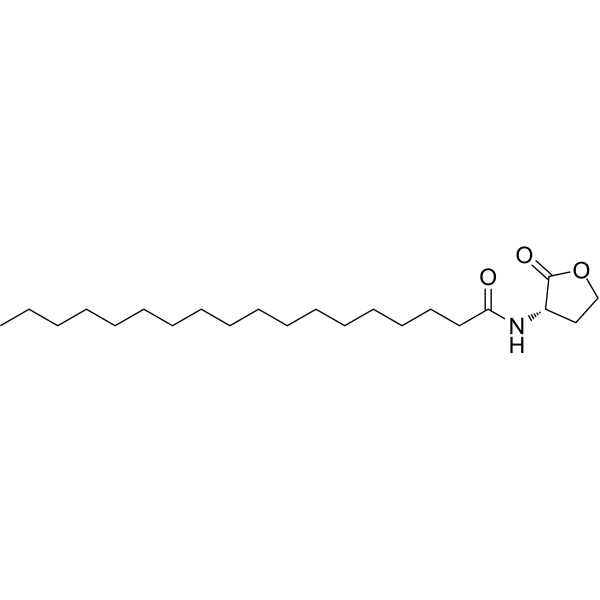
Quorum sensing is a regulatory system used by bacteria to control gene expression in response to increased cell density. This regulatory process manifests itself in a variety of phenotypes, including biofilm formation and virulence factor production. Coordinated gene expression is achieved through the production, release and detection of small diffusible signaling molecules called autoinducers. N-acylated homoserine lactones (AHLs) comprise a class of such autoinducers, each of which generally consists of a fatty acid coupled to a homoserine lactone (HSL). Modulation of bacterial quorum-sensing signaling systems to suppress pathogenesis represents a new approach to antimicrobial research for infectious diseases. AHLs differ in acyl length (C4-C18), C3 substitution (hydrogen, hydroxyl, or oxo group), and the presence or absence of one or more carbon-carbon double bonds in the fatty acid chain. These differences confer signaling specificity through the affinity of the LuxR family of transcriptional regulators. C18-HSL, one of four lipophilic long acyl side chain AHLs produced by the LuxI AHL synthase homolog SinI, is involved in quorum-sensing signaling in strains of Rhizobium meliloti (a nitrogen-fixing bacterial symbiont of the legume M. sativa) . C18-HSL and other hydrophobic AHLs tend to localize in the relatively lipophilic environment of bacterial cells and cannot diffuse freely across the cell membrane. Long-chain N-acyl homoserine lactones can be exported from cells by efflux pumps, or can be transported between communicating cells by extracellular outer membrane vesicles.
loading...
    loading...
Cat. No.: HY-116762
CAS No.: 202284-85-3
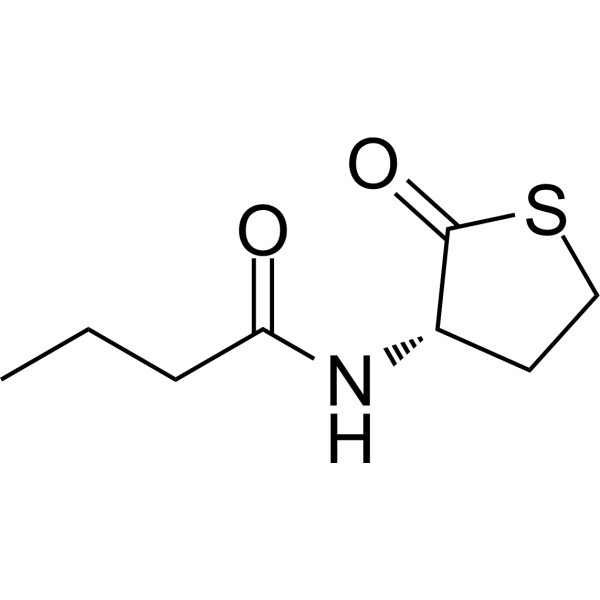
Quorum sensing is a regulatory system used by bacteria to control gene expression in response to increased cell density. The control of bacterial infection by quenching the quorum sensing system of bacteria is a promising research area. The expression of specific target genes, such as transcriptional regulators belonging to the LuxIR protein family, is coordinated by the synthesis of diffusible acyl homoserine lactone (AHL) molecules. N-butyryl-L-Homocysteine thio-lactone is an analog of N-butyryl-L-homoserine lactone, a small, diffusible signaling molecule involved in quorum sensing, thereby controlling gene expression and cellular metabolism . N-butyryl-L-homocysteine thiolactone induces violacein expression in Viola viola mutants that normally fail to produce AHL.
loading...
    loading...
Cat. No.: HY-W554514
CAS No.: 51744-82-2
Target:  

Bacterial

Research Areas:  

Infection

D-Homoserine lactone is a signaling molecule with the activity of regulating bacterial quorum sensing. The chemical structure of D-Homoserine lactone makes it a potential regulator of the AHL synthase RhlI. D-Homoserine lactone has been shown to inhibit the activity of RhlI, thereby affecting the bacterial quorum sensing signaling pathway. D-Homoserine lactone is also an enantiomer of L-homoserine lactone and is used as an inhibitor of serine hydroxymethyltransferase .
loading...
    loading...
Cat. No.: HY-137407
CAS No.: 55154-48-8
Purity:  99.60%
Target:  

Bacterial

Research Areas:  

Infection

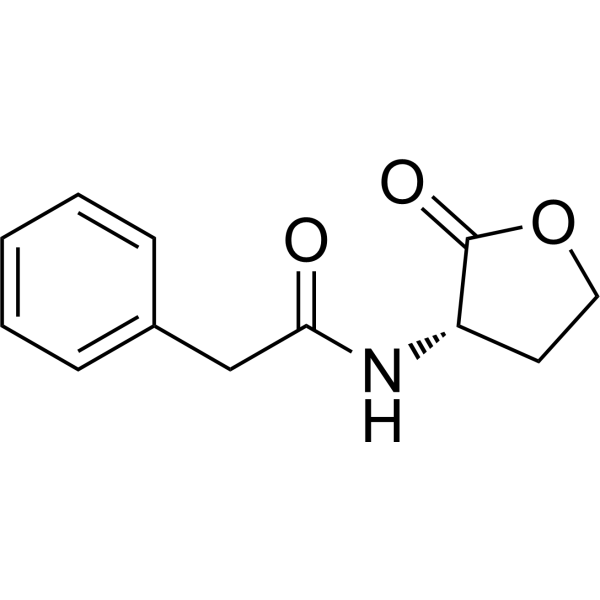
N-Phenylacetyl-L-homoserine lactone is a small diffusible signaling molecule that strongly antagonizes or super-activates the quorum sensing of Vibrio fischeri .
loading...
    loading...
Cat. No.: HY-W040220
CAS No.: 853799-77-6
Target:  

Bacterial

Research Areas:  

Infection

N-(3-Hydroxyoctanoyl)-DL-homoserine lactone (Compound 40) is a competitive inhibitor of the quorum sensing receptor LuxR with an IC50 value of 4 μM. N-(3-Hydroxyoctanoyl)-DL-homoserine lactone shows selective inhibition toward quorum sensing systems in Gram-negative bacteria like Pseudomonas aeruginosa. N-(3-Hydroxyoctanoyl)-DL-homoserine lactone is promising for research of bacterial infections .
loading...
    loading...
Cat. No.: HY-158124
CAS No.: 1421464-74-5
Target:  

Bacterial

Research Areas:  

Infection

LasR antagonist 1 (Compound 7) is an antagonist for LasR with an IC50 of 0.4 μM, that modulates the quorum sensing (QS) in the opportunistic pathogen Pseudomonas aeruginosa .
loading...
    loading...
Cat. No.: HY-W738271
CAS No.: 91384-88-2
Synonyms: 3,4-Dimethoxybenzyl alcohol-13C
Veratryl alcohol- 13C (3,4-Dimethoxybenzyl alcohol- 13C) is the 13C-labeled Veratryl alcohol (HY-107858). Veratryl alcohol (3,4-Dimethoxybenzyl alcohol) is a secondary metabolite of lignin-degrading fungi, commonly used as a substrate for lignin peroxidase (LiP) to measure lignin degradation activity. Veratryl alcohol protects LiP from inactivation by H2O2 and prevents the accumulation of LiP III compounds. Veratryl alcohol also acts as a stabilizer for manganese-dependent peroxidases (MnP). Veratryl alcohol is a quorum-sensing inhibitor (QSI) and exhibits antibacterial efficacy .
loading...
    loading...
Cat. No.: HY-N7788
CAS No.: 55928-65-9
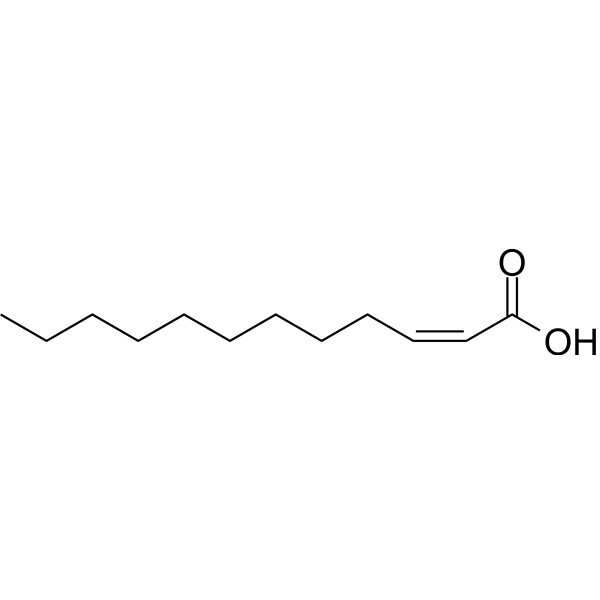
cis-2-Dodecenoic acid, originally discovered in Burkholderia cenocepacia, can interfere with the bacterial quorum sensing system and inhibit bacterial biofilm formation and virulence factor production .
loading...
    loading...
Cat. No.: HY-146705
CAS No.: 2982271-62-3
Target:  

Bacterial

Research Areas:  

Infection

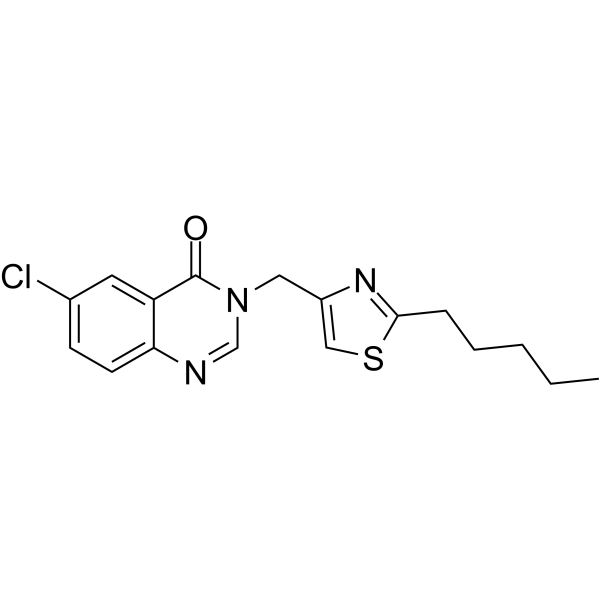
PqsR-IN-1 (Compound 18) is a potent PqsR (Pseudomonas aeruginosa quorum sensing transcriptional regulator) inhibitor. PqsR-IN-1 attenuates pyocyanin production and has very low cytotoxicity .
loading...
    loading...
Cat. No.: HY-146706
CAS No.: 2982271-63-4
Target:  

Bacterial

Research Areas:  

Infection

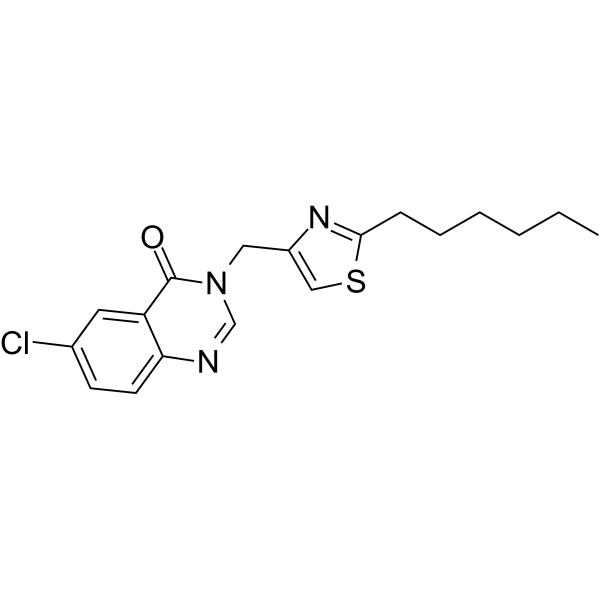
PqsR-IN-2 (Compound 19) is a potent PqsR (Pseudomonas aeruginosa quorum sensing transcriptional regulator) inhibitor. PqsR-IN-1 attenuates pyocyanin production and has very low cytotoxicity .
loading...
    loading...
Cat. No.: HY-122143
CAS No.: 299927-26-7
Target:  

Bacterial

Research Areas:  

Infection

V-06-018 is a potent LasR antagonist with an IC50 value of 5.2 µM. V-06-018 can be used as chemical probes of quorum sensing (QS) in Pseudomonas aeruginosa .
loading...
    loading...

