
135 Results for "

Quorum-sensing

" in MedChemExpress (MCE) Product Catalog:
Products (135)

135 Results for "Quorum-sensing" in MCE Product Catalog:

Cat. No.: HY-173270
Target:  

Bacterial

Research Areas:  

Infection

Antibacterial synergist 3 is a dual-acting inhibitor of biofilm (IC50 of PAO1: 0.40 μM and IC50 of PA14: 1.45 μM). Antibacterial synergist 3 reduces virulence production by inhibiting the quorum sensing (QS) system and induces iron deficiency in P. aeruginosa PAO1. Antibacterial synergist 3 enhances the efficacy of Tobramycin (HY-B0441) and Ciprofloxacin (HY-B0356) in a mouse wound infection model. Antibacterial synergist 3 can be used for the research of P. aeruginosa infections .
loading...
    loading...
Cat. No.: HY-B0914B
CAS No.: 35322-29-3
Synonyms: Undecylenic acid (copper)
10-Undecenoic acid copper (Undecylenic acid copper) is an antifungal agent. 10-Undecenoic acid copper inhibits oligomerization, scavenges ROS and inhibits μ-calpain activity. 10-Undecenoic acid copper has neuroprotective effects. 10-Undecenoic acid copper has anticancer effects on a variety of tumors. 10-Undecenoic acid copper inhibits C. albicans biofilm formation and MRSA infection. 10-Undecenoic acid copper inhibits quorum sensing signals of Bacillus subtilis and Pseudomonas aeruginosa .
loading...
    loading...
Cat. No.: HY-N6711
CAS No.: 57749-43-6
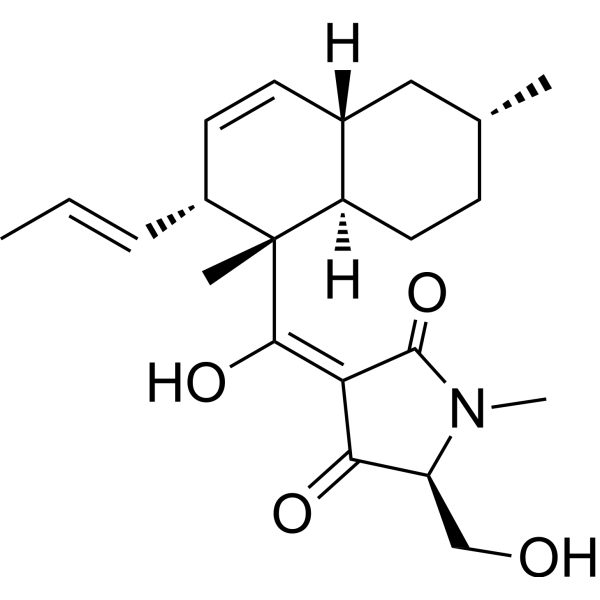
Equisetin is an N-methylserine-derived acyl tetramic acid, quorum sensing inhibitor (QSI), herbicides and antibiotics. Equisetin specifically inhibits the anionic carriers of substrates in the inner mitochondrial membrane. Equisetin inhibits the activity of HIV-1 integrase, 11β-HSD1, and 2,4-dinitrophenol (Dnp)-stimulated ATPase (IC50 = ~8 nmol per mg of protein). Equisetin exhibits growth inhibition of bacteria, anti-inflammatory, amelioration of lipid-associated disorders, and cytotoxic effects .
loading...
    loading...
Cat. No.: HY-W035904
CAS No.: 539-80-0
Synonyms: Cycloheptatrienone
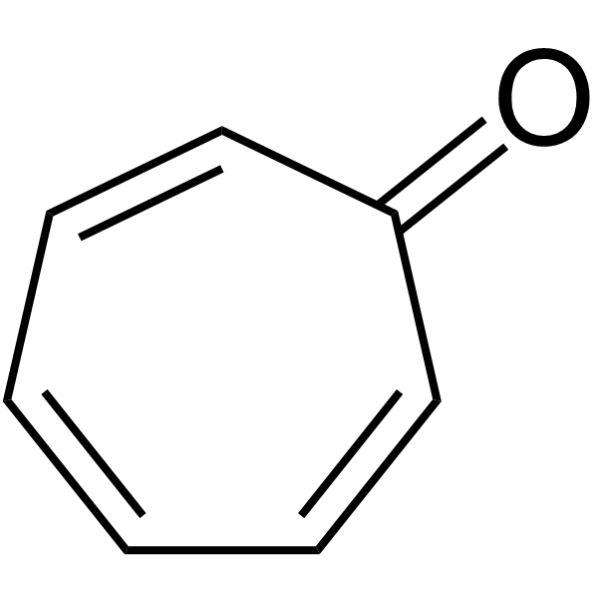
Tropone (Cycloheptatrienone) is a non-benzenoid aromatic natural product that acts as a membrane reverse transporter and metal chelator. Tropone disrupts the proton motive force by affecting the transmembrane proton gradient and functions as a quorum sensing signal through LuxR-type transcriptional regulators. Tropone exhibits broad-spectrum antibiotic, anticancer, algicidal, and probiotic activities. As a virulence factor toxic to rice seedlings, Tropone promotes biofilm formation in Burkholderia plantarii and induces neurotoxicity involving mitochondrial and cytoskeletal damage, increased Ca 2+ influx, and oxidative stress. Tropone is used in the study of bacterial infections .
loading...
    loading...
Cat. No.: HY-W104758
CAS No.: 15015-57-3
Target:  

Elastase Bacterial

Research Areas:  

Infection

LasR antagonist-2 is a LasR competitive antagonist and quorum sensing inhibitor, with a Kd value of 7.04 μM against LasR of Pseudomonas aeruginosa. LasR antagonist-2 reduces the production of virulence factors including elastase (elastase), pyocyanin (pyocyanin) and rhamnolipid (rhamnolipid). LasR antagonist-2 inhibits bacterial (bacterial) swarming and swimming motility, and moderately suppresses biofilm formation. LasR antagonist-2 inhibits Pseudomonas aeruginosa infection in the greater wax moth larva model. Elastase-IN-3 can be used in studies related to Pseudomonas aeruginosa infection .
loading...
    loading...
Cat. No.: HY-187556
CAS No.: 2581199-68-8
Target:  

Bacterial

Research Areas:  

Infection

Antibiofilm agent-23 is a PqsR-targeting agent, iron chelator, biofilm inhibitor, biofilm dispersant, and anti-virulence agent. Antibiofilm agent-23 selectively binds to PqsR, disrupts the pqs quorum sensing pathway, restricts bacterial iron acquisition, induces intracellular iron deficiency, reduces pyocyanin, elastase, and rhamnolipid production, impairs biofilm formation, and disperses mature biofilms. Antibiofilm agent-23 exhibits low cytotoxicity and shows antibacterial synergy with Ciprofloxacin (HY-B0356) in Caenorhabditis elegans infection models. Antibiofilm agent-23 can be used for the research of biofilm-associated Pseudomonas aeruginosa infections .
loading...
    loading...
Cat. No.: HY-B0914R
CAS No.: 112-38-9
Synonyms: Undecylenic acid (Standard)
10-Undecenoic acid (Standard) is the analytical standard of 10-Undecenoic acid. This product is intended for research and analytical applications. 10-Undecenoic acid (Undecylenic acid) is an antifungal agent. 10-Undecenoic acid inhibits oligomerization, scavenges ROS and inhibits μ-calpain activity. 10-Undecenoic acid has neuroprotective effects. 10-Undecenoic acid has anticancer effects on a variety of tumors. 10-Undecenoic acid inhibits C. albicans biofilm formation and MRSA infection. 10-Undecenoic acid inhibits quorum sensing signals of Bacillus subtilis and Pseudomonas aeruginosa .
loading...
    loading...
Cat. No.: HY-W017187
CAS No.: 3602-55-9
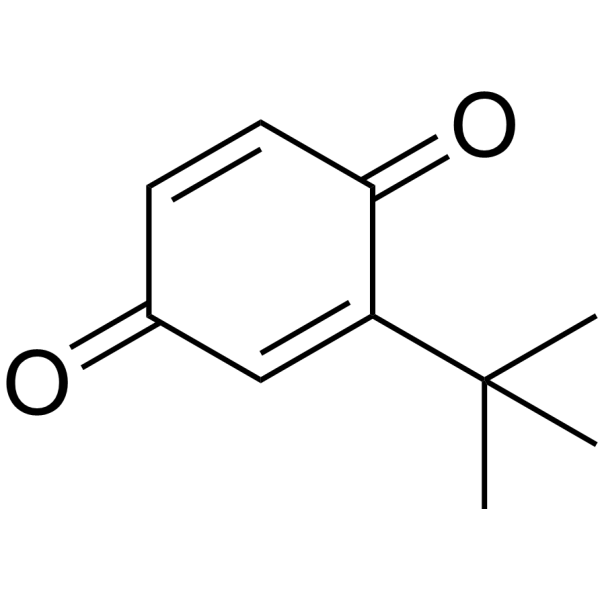
2-tert-Butyl-1,4-benzoquinone is a food additive oxidant, an electrophilic metabolite of Butylated hydroxyanisole (HY-B1066), and an antibacterial agent. 2-tert-Butyl-1,4-benzoquinone reduces virulence factors, activates Nrf2, and induces S-arylation of its negative regulator Keap1. 2-tert-Butyl-1,4-benzoquinone induces HO-1. 2-tert-Butyl-1,4-benzoquinone exhibits quorum sensing inhibitory activity against Chromobacterium violaceum .
loading...
    loading...
Cat. No.: HY-P2834
CAS No.: 9014-06-6
Synonyms: PGA
Research Areas:  

Others

Penicillin amidase, E. coli (Immobilized) (PGA) is an amidohydrolase commonly used in industrial biocatalysis. Penicillin amidase, E. coli (Immobilized) serves as a starting material in the synthesis of semi-synthetic penicillins. Penicillin amidase, E. coli (Immobilized) promotes the production of semi-synthetic β-lactam antibiotics, participates in peptide synthesis, and catalyzes the formation of chiral compounds. Penicillin amidase, E. coli (Immobilized) is regulated by temperature and phenylacetic acid in E. coli. In free E. coli, it participates in the assimilation of aromatic compounds as a carbon source. Penicillin amidase, E. coli (Immobilized) is hypothesized to act as a scavenging enzyme for phenylacetyl-containing compounds in microbial metabolism and is associated with bacterial quorum sensing .
loading...
    loading...
Cat. No.: HY-124352S
Synonyms: C9-PQS-d4
2-Nonyl-3-hydroxy-4-quinolone-d4 (C9-PQS-d4) is deuterium labeled 2-Nonyl-3-hydroxy-4-quinolone. 2-nonyl-3-hydroxy-4-Quinolone (C9-PQS) is a quinolone compound produced by P. aeruginosa and other related bacterias. 2-nonyl-3-hydroxy-4-Quinolone is a quorum sensing (QS) signal molecule that controls the expression of many virulence genes as a function of cell population density .
loading...
    loading...
Cat. No.: HY-B0914AR
CAS No.: 557-08-4
Synonyms: Zinc undecylenate (Standard)
10-Undecenoic acid (zinc salt) (Standard) is the analytical standard of 10-Undecenoic acid (zinc salt). This product is intended for research and analytical applications. 10-Undecenoic acid zinc salt (Undecylenic acid zinc salt) is an antifungal agent. 10-Undecenoic acid zinc salt inhibits oligomerization, scavenges ROS and inhibits μ-calpain activity. 10-Undecenoic acid zinc salt has neuroprotective effects. 10-Undecenoic acid zinc salt has anticancer effects on a variety of tumors. 10-Undecenoic acid zinc salt inhibits C. albicans biofilm formation and MRSA infection. 10-Undecenoic acid zinc salt inhibits quorum sensing signals of Bacillus subtilis and Pseudomonas aeruginosa .
loading...
    loading...
Cat. No.: HY-W035904R
CAS No.: 539-80-0
Synonyms: Cycloheptatrienone (Standard)
Tropone (Standard) (Cycloheptatrienone (Standard)) is the analytical standard of Tropone (HY-W035904). This product is intended for research and analytical applications. Tropone (Cycloheptatrienone) is a non-benzenoid aromatic natural product that acts as a membrane reverse transporter and metal chelator. Tropone disrupts the proton motive force by affecting the transmembrane proton gradient and functions as a quorum sensing signal through LuxR-type transcriptional regulators. Tropone exhibits broad-spectrum antibiotic, anticancer, algicidal, and probiotic activities. As a virulence factor toxic to rice seedlings, Tropone promotes biofilm formation in Burkholderia plantarii and induces neurotoxicity involving mitochondrial and cytoskeletal damage, increased Ca 2+ influx, and oxidative stress. Tropone is used in the study of bacterial infections .
loading...
    loading...
Cat. No.: HY-182942
CAS No.: 3112321-20-4
Target:  

Bacterial Elastase

Research Areas:  

Infection

PV-DPD-19 is an autoinducer-2 (AI-2) quorum sensing inhibitor. PV-DPD-19 reduces AI-2 production and inhibits the expression of multiple MSCRAMMs. In co-culture systems with Staphylococcus aureus, PV-DPD-19 decreases the production of pyocyanin and Elastase in Pseudomonas aeruginosa. PV-DPD-19 impairs the adhesion ability of Staphylococcus aureus to lung epithelial cells. PV-DPD-19 inhibits biofilm formation of Pseudomonas aeruginosa (MBIC50 = 27 μg/mL) and Staphylococcus aureus (MBIC50 = 35 μg/mL). PV-DPD-19 shows no cytotoxicity in both in vitro lung epithelial cell models and in vivo Galleria mellonella larva models .
loading...
    loading...
Cat. No.: HY-76705S
CAS No.: 2562378-12-3
Methyl N-methylanthranilate-d3 is the deuterated-labeled Methyl N-methylanthranilate (HY-76705). Methyl N-methylanthranilate is an N-alkylated anthranilate with a sweet citrus aroma, which is commonly used in perfume manufacturing. Methyl N-methylanthranilate is the dominant component in the defensive secretion of the millipede Typhloiulus orpheus. Methyl N-methylanthranilate exhibits quorum sensing inhibition and anti-biofilm activity against P. aeruginosa; it interferes with PQS synthesis via competitive inhibition of PqsA, but lacks bactericidal activity. Methyl N-methylanthranilate is sensitive to UVA/sunlight in human skin cells, and generates O2- through type I photodynamic reactions, leading to lysosomal/mitochondrial damage, double-strand DNA breaks and apoptosis, with potential phototoxicity .
loading...
    loading...
Cat. No.: HY-121362
CAS No.: 537-09-7
Purity:  99.71%
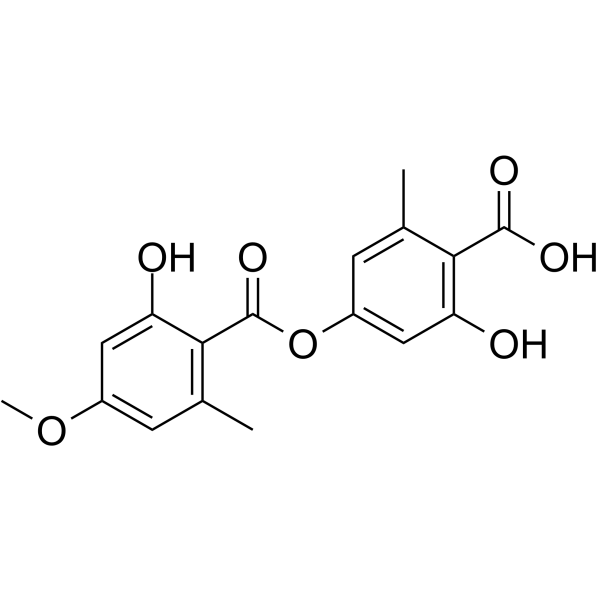
Evernic Acid is an orally active thioredoxin reductase 1 (TrxR1) inhibitor and antiproliferative agent. Evernic Acid inhibits the proliferation and migration of human breast cancer cells. Evernic Acid blocks the NF-κB pathway by inhibiting p65 nuclear translocation and IκBα phosphorylation, thereby suppressing downstream inflammatory mediators. Evernic Acid acts as an antioxidant, anti-inflammatory agent and neuroprotective agent, protects neurons from cell death, mitochondrial dysfunction and oxidative stress damage, reduces astrocyte activation, and ameliorates dopaminergic neuron loss and neuroinflammation. Evernic Acid inhibits enoyl reductases FabI and FabZ of Plasmodium falciparum. Evernic Acid downregulates the expression of lasB and rhlA genes in Pseudomonas aeruginosa, inhibits quorum sensing and biofilm formation, and exerts antibacterial activity against Gram-positive bacteria, Gram-negative bacteria and fungi. Evernic Acid is applicable to research related to breast cancer, Parkinson's disease, bacterial infections and fungal infections .
loading...
    loading...

