902 Results for "

Directly

" in MedChemExpress (MCE) Product Catalog:
Products (902)

902 Results for "Directly" in MCE Product Catalog:

Cat. No.: HY-W041308R
CAS No.: 64359-81-5
Synonyms: Kathon 930 (Standard)
DCOIT (Standard) (Kathon 930 (Standard)) is the analytical standard of DCOIT (HY-W041308). This product is intended for research and analytical applications. DCOIT (Kathon 930) is an isothiazolinone biocide and environmental pollutant that directly binds to G protein α subunits, with KD values of 0.92 mM and 0.4 mM for Gαs and Gαi, respectively. Binding of DCOIT to Gαi enhances the interaction between Gαi and mitochondrial calcium uniporter (MCU), alters the subcellular distribution of intracellular Ca 2+, and activates PKC/MEK/ERK signaling. DCOIT upregulates CYP19a transcription and aromatase activity, thereby disrupting steroid hormone homeostasis. DCOIT is used in studies of reproductive endocrine disruption and environmental toxicology .
loading...
    loading...
Cat. No.: HY-101810
CAS No.: 82989-25-1
Purity:  99.50%
Synonyms: TO 188; Tazalest; Tazanol
Target:  

Calcium Channel PKC

Research Areas:  

Inflammation/Immunology

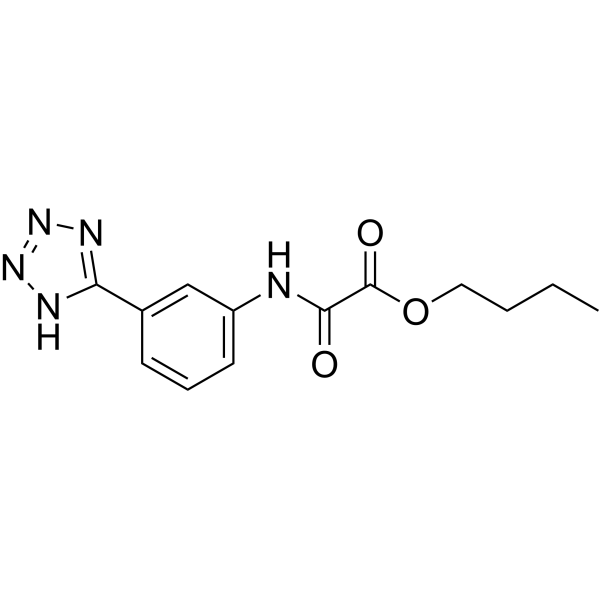
Tazanolast (TO 188) is an orally active selective mast cell stabilizer. Tazanolast prevents the elevation of intracellular calcium concentration, inhibits calcium uptake and Protein kinase C translocation, without directly inhibiting phospholipase C. Tazanolast inhibits ozone-induced airway hyperresponsiveness to Methacholine in guinea pigs, as well as passive cutaneous anaphylaxis, Schultz-Dale reaction, experimental asthma, passive cutaneous anaphylaxis in rats, and increased cutaneous vascular permeability in rats. Tazanolast does not alter airway responsiveness in sham-exposed guinea pigs, cell distribution in bronchoalveolar lavage fluid after ozone exposure, type II-IV allergic reactions, or histamine release from atopic leukocytes. Tazanolast can be used in research related to allergic diseases .
loading...
    loading...
Cat. No.: HY-116540
CAS No.: 110452-75-0
Synonyms: 7DMB-Forskolin free base
Target:  

Adenylate Cyclase

Research Areas:  

Cardiovascular Disease

L 858051 (7DMB-Forskolin free base), an analog of Forskolin (HY-15371), is an adenylyl cyclase stimulator. L 858051 directly activates adenylyl cyclase to increase intracellular, cellular, and ciliary cAMP levels. L 858051 activates recombinant cyclic nucleotide-gated (E583M CNGA2) channels to induce a non-selective, Mg 2+-sensitive current in adult rat ventricular myocytes. L 858051 maximally stimulates L-type Ca 2+ current in adult rat ventricular myocytes. L 858051 increases total PDE3 and PDE4 activities in adult rat ventricular myocytes, with effects insensitive to PKA inhibition. L 858051 serves as a tool to elevate intracellular cAMP for studying subsarcolemmal cAMP dynamics and compartmentation in adult rat ventricular myocytes .
loading...
    loading...
Cat. No.: HY-116540A
CAS No.: 115116-37-5
Synonyms: 7DMB-Forskolin
Target:  

Adenylate Cyclase

Research Areas:  

Cardiovascular Disease

L 858051 (7DMB-Forskolin) dihydrochloride, an analog of Forskolin (HY-15371), is an adenylyl cyclase stimulator. L 858051 dihydrochloride directly activates adenylyl cyclase to increase intracellular, cellular, and ciliary cAMP levels. L 858051 dihydrochloride activates recombinant cyclic nucleotide-gated (E583M CNGA2) channels to induce a non-selective, Mg 2+-sensitive current in adult rat ventricular myocytes. L 858051 dihydrochloride maximally stimulates L-type Ca 2+ current in adult rat ventricular myocytes. L 858051 dihydrochloride increases total PDE3 and PDE4 activities in adult rat ventricular myocytes, with effects insensitive to PKA inhibition. L 858051 dihydrochloride serves as a tool to elevate intracellular cAMP for studying subsarcolemmal cAMP dynamics and compartmentation in adult rat ventricular myocytes .
loading...
    loading...
Cat. No.: HY-118197
CAS No.: 130007-52-2
Target:  

FLAP

Research Areas:  

Inflammation/Immunology

L-669083 is a leukotriene biosynthesis inhibitor whose structure is based on a mixture of indole and quinoline. In this study, a potent radioiodinated photoaffinity analog of L-689,037, [125I] L-691,678, was developed and characterized for immunoprecipitation studies showing that the quindole series of leukotriene biosynthesis inhibitors directly interact with FLAP. In addition, the results showed that MK-886, L-674,573, and L-689,037 competed with [125I] L-691,678 and [125I] L-669083 for binding to FLAP in a concentration-dependent manner, indicating that these three leukotriene biosynthesis inhibitors share a binding site on FLAP, further demonstrating that FLAP is a suitable target for structurally diverse leukotriene biosynthesis inhibitors.
loading...
    loading...
Cat. No.: HY-118243
CAS No.: 1089681-42-4
Target:  

Amyloid-β

Research Areas:  

Others

KMS88009 is a potent small molecule that directly interferes with the formation of amyloid-β oligomers, thereby preserving cognitive behavior when used preventively and reversing cognitive behavior decline when used therapeutically. Oral administration of KMS88009 around the onset of Alzheimer's disease symptoms significantly reduced the assembly of amyloid-β oligomers and improved cognitive behavior in the APP/PS1 double transgenic mouse model. This unique dual mode of action suggests that KMS88009 may be a powerful therapeutic candidate for the treatment of Alzheimer's disease. In an evaluation, the physicochemical properties, pharmacokinetics and toxicity of this anti-amyloidogenic small molecule KMS88009 were studied, as well as post-mortem analysis of APP/PS1 TG mice after behavioral testing.
loading...
    loading...
Cat. No.: HY-119737R
CAS No.: 64902-72-3
Chlorsulfuron (Standard) is the analytical standard of Chlorsulfuron (HY-119737). This product is intended for research and analytical applications. Chlorsulfuron is an acetolactate synthase inhibitor and selective systemic herbicide. Chlorsulfuron blocks the synthesis of branched-chain amino acids (valine and isoleucine), thereby inhibiting protein synthesis, cell growth, and cell division. Chlorsulfuron blocks G1 and G2 phase cell cycle progression in plant root tip cells without directly interfering with mitosis or DNA synthesis. Chlorsulfuron completely inhibits germination of non-target terrestrial plants and is highly toxic to aquatic macrophytes. Chlorsulfuron has low toxicity to mammals, birds and bees, and moderate toxicity to fish and aquatic invertebrates. Chlorsulfuron can be used in studies related to herbicides, plant cell cycles and ecotoxicology .
loading...
    loading...
Cat. No.: HY-120105
CAS No.: 170747-33-8
NSC666715 is a DNA polymerase β (Pol-β) inhibitor. NSC666715 directly and specifically interacts with Pol-β, interferes with its binding to damaged DNA, blocks its dRP lyase activity, and inhibits Pol-β-mediated SN- and LP-BER. NSC666715 induces AP site accumulation and S-phase cell cycle arrest, and triggers senescence and apoptosis (apoptosis) via the p53/p21 pathway in colorectal cancer cells. NSC666715 enhances TMZ (HY-17364)-induced DNA damage, senescence and apoptosis, and potentiates the cytotoxicity of TMZ. NSC666715 inhibits tumor growth in colon cancer xenograft models. NSC666715 can be used in research related to colorectal cancer .
loading...
    loading...
Cat. No.: HY-131025
CAS No.: 1811539-88-4
Synonyms: JF585, SE; JF585, NHS
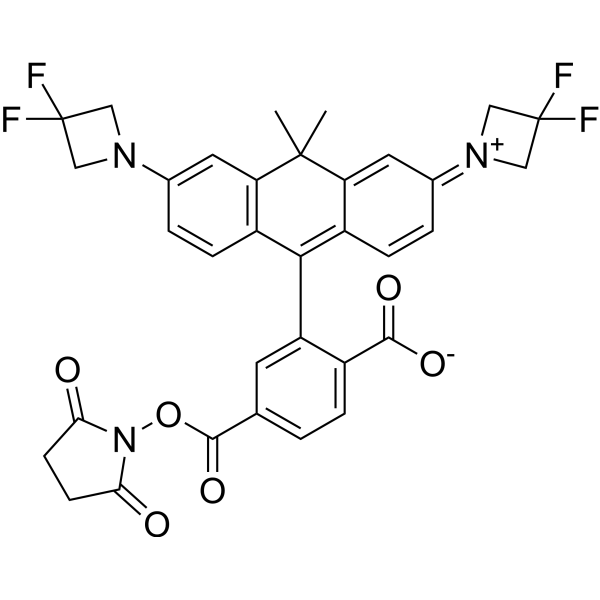
Janelia Fluor 585, SE (JF585, SE) is an orange fluorescent dye containing an NHS ester that can be conjugated with primary amine groups. Janelia Fluor 585, SE can be used immediately for structured illumination (SIM) and stimulated emission depletion (STED) imaging and could be converted to photoactivatable derivative for single-molecule localization microscopy (SMLM) experiments . Janelia Fluor fluorescent dyes can be chemically conjugated to the specific HaloTag substrate (a chloroalkane ligand) to form a fluorescent ligand, rather than binding directly to the HaloTag protein itself. Janelia Fluor products are licensed under U.S. Pat. Nos. 9,933,417, 10,018,624 and 10,161,932 and other patents from Howard Hughes Medical Institute (Ex/Em = 585/609 nm).
loading...
    loading...
Cat. No.: HY-136500
CAS No.: 42935-17-1
Purity:  ≥95.0%
Synonyms: PGH2
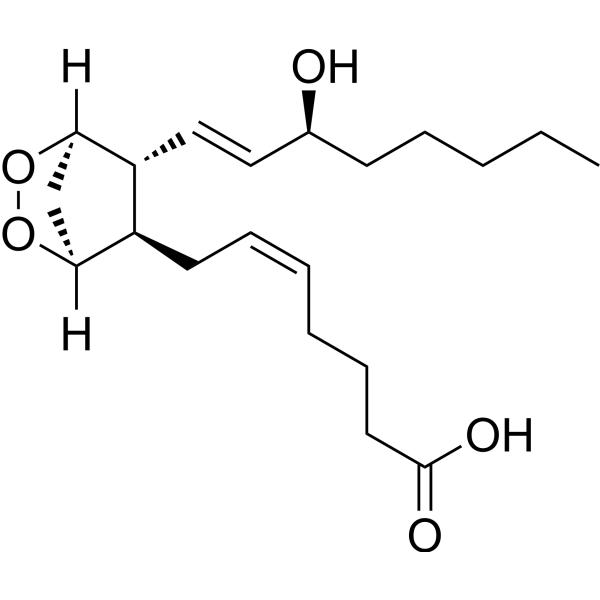
Prostaglandin H2 (PGH2) is an endothelium-derived contracting factor. Prostaglandin H2 can cause vasoconstriction. Prostaglandin H2 is the common precursor of all PGs and is produced by several cells that express cyclooxygen-ases. Prostaglandin H2 can activate PGD2 receptors CRTH2 and DP via interacting directly with the receptors and/or by giving rise to PGD2 after catalytic conversion by plasma proteins. Prostaglandin H2 can induce eosinophils migration and inhibit platelet aggregation. Prostaglandin H2 can accelerate the formation of dimers and higher oligomers of amyloid β1-42. Prostaglandin H2 can be used for the researches of inflammation and neurological disease, such as Alzheimer disease .
loading...
    loading...
Cat. No.: HY-13749E
CAS No.: 486459-71-6
Synonyms: MK-0431 hydrochloride
Sitagliptin (MK-0431) hydrochloride is an orally active and highly selective DPP4 inhibitor with an IC50 value of 19 nM. Sitagliptin hydrochloride blocks the degradation of glucagon-like peptide-1 (GLP-1) and glucose-dependent insulinotropic peptide (GIP) by competing inhibition mechanism (Kᵢ = 1 nM), thereby increasing the level of active incretin. Sitagliptin hydrochloride can also directly stimulate the secretion of GLP-1 by intestinal L cells by activating the cAMP/PKA and ERK1/2 pathways, and this effect is independent of DPP-4. Sitagliptin hydrochloride shows protective effects on pancreatic islet grafts in 1-type diabetes models. Sitagliptin hydrochloride can be used for the study of 1-type and 2-type diabetes .
loading...
    loading...
Cat. No.: HY-138659
CAS No.: 2042192-00-5
Purity:  95.29%
Synonyms: JF646, Tetrazine
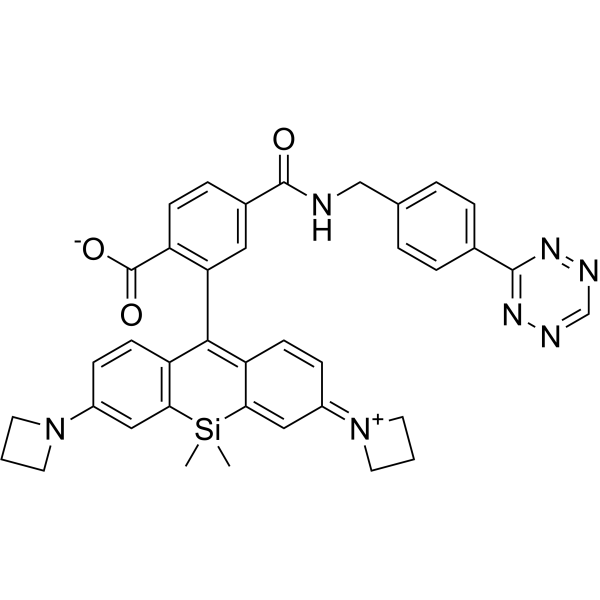
Janelia Fluor 646, Tetrazine (JF646, Tetrazine) a red fluorescent dye that contains a tetrazine group. JF646, Tetrazine can be used in cellular imaging . Janelia Fluor fluorescent dyes can be chemically conjugated to the specific HaloTag substrate (a chloroalkane ligand) to form a fluorescent ligand, rather than binding directly to the HaloTag protein itself. Janelia Fluor products are licensed under U.S. Pat. Nos. 9,933,417, 10,018,624 and 10,161,932 and other patents from Howard Hughes Medical Institute. Janelia Fluor 646, Tetrazine is a click chemistry reagent, it contains a Tetrazine group that can undergo an inverse electron demand Diels-Alder reaction (iEDDA) with molecules containing TCO groups (Ex/Em = 646/664 nm).
loading...
    loading...
Cat. No.: HY-162450
Research Areas:  

Cancer

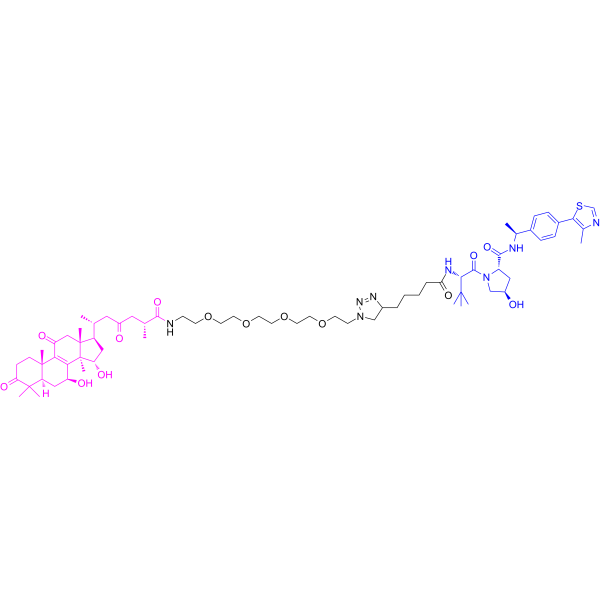
PROTAC MDM2 Degrader-8 is a PROTAC degrader that induces the degradation of the MDM2 protein by recruiting VHL. PROTAC MDM2 Degrader-8 directly binds to MDM2 with a KD of 38.2 μM; the proteasome inhibitor MG-132 (HY-13259) reverses this degradation effect, supporting that it induces MDM2 degradation via the ubiquitin-proteasome system. PROTAC MDM2 Degrader-8 also upregulates p21, induces apoptosis and cell cycle arrest, and inhibits the migration of MDA-MB-231 cells. PROTAC MDM2 Degrader-8 can be used in studies related to MDM2-targeted protein degradation and triple-negative breast cancer .
loading...
    loading...
Cat. No.: HY-163028
CAS No.: 459789-75-4
Target:  

Tim3

Research Areas:  

Cancer

ML-T7 is a potent Tim-3 inhibitor. ML-T7 blocks Tim-3 interactions with PtdSer and CEACAM1. ML-T7 not only enhances the antitumor activity of adoptive transfer therapy with cytotoxic T lymphocytes (CTLs) and CAR T cells but also increases the effector function of T cell. ML-T7 promotes NK cells’ killing activity against tumor cells and DC antigen-presenting capacity. ML-T7 directly exerts antitumor efficacy in preclinical tumor models either alone or in combination with Nivolumab (HY-P9903A). ML-T7 can be used for tumor immunotherapy research .
loading...
    loading...
Cat. No.: HY-165426
CAS No.: 3031522-14-9
Research Areas:  

Inflammation/Immunology

HB-230 is a Transglutaminase-2 (TG2) (human IC50 = 4.9 μM) inhibitor and a selective fluorescent imaging probe for active TG2 localization. HB-230 modifies TG2 Cys277 to sustain the enzyme open conformation. HB-230 forms a ternary complex with TG2 and α2-macroglobulin, undergoes receptor-mediated endocytosis, and trafficks directly to lysosomes without early/late endosome fusion. HB-230 exhibits TG2 activity-dependent and α2-macroglobulin-dependent uptake. HB-230 can be used for the research of celiac disease, (Ex/Em = 649/665 nm) .
loading...
    loading...
Cat. No.: HY-167673
CAS No.: 1807639-36-6
Target:  

E1/E2/E3 Enzyme

Research Areas:  

Inflammation/Immunology

RNF5-IN-1 is a selective small-molecule inhibitor and degrader of the E3 ubiquitin ligase RNF5. RNF5-IN-1 directly binds to the N-terminal cytosolic domain of RNF5 with a KD of 594 nM, inhibits the E3 ubiquitin ligase activity of RNF5, and exhibits selectivity over Hrd1 and Praja1. RNF5-IN-1 promotes the degradation of RNF5 via the p97/VCP-dependent endoplasmic reticulum-associated degradation (ERAD) and proteasome pathway. RNF5-IN-1 inhibits the retrotranslocation of misfolded proteins. RNF5-IN-1 is applicable for research on mechanisms related to cystic fibrosis .
loading...
    loading...
Cat. No.: HY-172262
Research Areas:  

Cancer

WEHI-3773 is a VDAC2 ligand and apoptosis modulator. WEHI-3773 directly binds to the β7-β10 region of VDAC2 and disrupts its interaction with BAX and BAK. WEHI-3773 regulates BAX-mediated apoptosis in BAK-deficient cells by modulating conformational activation of BAX, mitochondrial redistribution, and cytochrome c release. WEHI-3773 overcomes Venetoclax (HY-15531) resistance, resensitizes leukemia cells carrying BAX mutations to BH3 mimetics, and enables long-term clonogenic survival of BAK-deficient cells treated with BH3 mimetics. WEHI-3773 is applicable to research related to acute myeloid leukemia .
loading...
    loading...
Cat. No.: HY-173338
CAS No.: 1438403-50-9
Target:  

DNA/RNA Synthesis

Research Areas:  

Infection

MSRV-IN-1 (Compound M3) is an inhibitor targeting aquatic rhabdoviruses (such as MSRV, SVCV and IHNV). Its IC50 values for inhibiting MSRV, SVCV and IHNV are 0.92 μM, 2.92 μM and 2.78 μM respectively. MSRV-IN-1 does not act directly on the virions but rather inhibits viral replication by altering the cell cycle arrest state in the S phase induced by the virus and disrupting the viral replication environment. When administered intraperitoneally at a dose of 20 mg/kg, MSRV-IN-1 can significantly increase the survival rate of largemouth bass infected with MSRV by 35.98% and reduce the viral loads in the liver, spleen and kidney. MSRV-IN-1 can be used in the research of diseases related to rhabdoviruses in aquaculture .
loading...
    loading...
Cat. No.: HY-184048
CAS No.: 33580-97-1
Research Areas:  

Infection

JMX0207 is an orally active flavivirus NS2B-NS3 protease inhibitor. JMX0207 showed an IC50-SLC of 1.3 μM for blocking NS2B-NS3 protein interaction and an IC50-pro of 8.2 μM for inhibiting protease catalytic activity.. JMX0207 directly binds viral NS3 protease at the NS2B-NS3 interface with a Kd of 1.1 μM, blocks viral polyprotein precursor processing, suppresses viral RNA replication and viral protein production. JMX0207 can be used for the study of Zika virus infection and Dengue virus infection .
loading...
    loading...
Cat. No.: HY-184165
Target:  

HDAC Fungal

Research Areas:  

Infection

F2F-202 is a selective HDAC6 inhibitor with an IC50 of 7.1 nM, exhibiting high selectivity toward HDAC1. F2F-202 does not directly bind to or inhibit the Hda1 protease activity of Candida albicans itself, but reduces the mRNA transcription level of the Hda1 gene. When combined with Voriconazole (HY-76200), F2F-202 decreases the yeast-hypha transition rate of azole-resistant Candida albicans and impairs the antioxidant response of azole-resistant Candida albicans. F2F-202 can be used in studies related to azole-resistant Candida albicans infections .
loading...
    loading...

