935 Results for "

Normal

" in MedChemExpress (MCE) Product Catalog:
Products (935)

935 Results for "Normal" in MCE Product Catalog:

Cat. No.: HY-113277R
CAS No.: 3058-01-3
3-Methyladipic acid (Standard) is the analytical standard of 3-Methyladipic acid (HY-113277). This product is intended for research and analytical applications. 3-Methyladipic acid is the final metabolite produced by the degradation of phytanic acid via the ω-oxidation pathway when α-oxidation is impaired, and it is mainly excreted in urine. 3-Methyladipic acid is also present at low levels in healthy individuals, but is significantly elevated in Refsum disease, and can serve as a marker of ω-oxidation activity .
loading...
    loading...
Cat. No.: HY-167825
CAS No.: 24506-68-1
Barakol is an anticancer and anxiolytic agent identified in Cassia siamea. Barakol inhibits MMP-3 activity and enhances the cytotoxicity and antimetastatic effects of Doxorubicin (HY-15142) against cancer cells. Barakol induces apoptosis via reactive oxygen species (ROS) production, upregulation of the Bax/Bcl-2 protein ratio, and activation of caspase-9. Barakol exerts anxiolytic activity with diazepam-like effects, increases spontaneous longitudinal smooth muscle contraction of rat ileum in a concentration-dependent manner (EC50 = 0.3 mM), and inhibits norepinephrine-induced contraction suppression. Barakol can be used in research related to anxiety, intestinal motility, and neuroblastoma .
loading...
    loading...
Cat. No.: HY-174460
Target:  

Drug Intermediate

Research Areas:  

Cancer

pCR8 is a CR8 prodrug and anticancer agent responsive to H2O2. pCR8 achieves selective release of CR8 via boronate ester oxidation mediated by elevated hydrogen peroxide levels at tumor sites, self-assembles into nanoparticles, and degrades cell cycle-related proteins. A synergistic effect is produced when pCR8 is used in combination with immune checkpoint inhibitors. pCR8 can be used for the research of triple-negative breast cancer .
loading...
    loading...
Cat. No.: HY-183308
Target:  

Fungal

Research Areas:  

Infection

Antifungal agent-161 (Compound 7) is an Antifungal agent. Antifungal agent-161 potently inhibits Candida albicans ATCC 36082 (with a MIC of 1.32 μM) and Candida glabrata ATCC 2001 (with a MIC of 1.66 μM). Antifungal agent-161 reduces fungal loads in infected mice and eliminates Candida albicans and Candida glabrata infections. Antifungal agent-161 can be used for the research of candidiasis .
loading...
    loading...
Cat. No.: HY-D3188
CAS No.: 2730023-28-4
gGlu-2OMe SiR600 is a γ-glutamyl transpeptidase (GGT) responsive fluorescent probe. gGlu-2OMe SiR600 can be converted into a highly fluorescent molecule via reaction with GGT, and its initial fluorescence is quenched through a photoinduced electron transfer (PeT) mechanism. gGlu-2OMe SiR600 exhibits fluorescence activation in malignant breast cancer and benign breast fibroadenoma tissues, enabling lesion visualization. gGlu-2OMe SiR600 can be used for research related to breast cancer and fibroadenoma .
loading...
    loading...
Cat. No.: HY-P11590
Target:  

EGFR

Research Areas:  

Cancer

WGYRGFYC (WC8) is a selective HER2-targeting peptide that binds specifically to HER2 by mimicking the antigen-binding site of trastuzumab. The DOTA precursor of WGYRGFYC has a KD of 61.20 nM for HER2. WGYRGFYC enables specific and highly sensitive detection of HER2 expression in HER2-positive breast cancer cells and tumor tissues, and monitors the dynamic downregulation of HER2 expression. WGYRGFYC rapidly distributes to target tissues and is efficiently cleared from non-target tissues via the kidneys, generating an ideal tumor-to-background ratio in imaging; it is a component of the PET radiotracer Ga-DOTA-WC8. WGYRGFYC exhibits no significant cytotoxicity in breast cancer cells, and can be used for non-invasive imaging diagnosis and therapeutic efficacy evaluation of HER2-positive breast cancer .
loading...
    loading...
Cat. No.: HY-P11797
Research Areas:  

Cardiovascular Disease

EP9 is a peptide targeting CD63. EP9 binds specifically to the extracellular region of CD63, including a groove in the large extracellular loop (EC2) or the extracellular end of CD63’s central cavity, triggering endocytosis of decorated nanoemulsions/liposomes into cells. EP9 promotes cellular uptake of decorated nanoemulsions/liposomes into activated cardiac fibroblasts and epicardial stromal cells via caveolae and/or clathrin-coated pits. EP9 can be used for the research of myocardial infarction, cardiac fibrosis .
loading...
    loading...
Cat. No.: HY-161995
Research Areas:  

Cancer

FGFR1/VEGFR2-IN-2 (compound 6l) is a VEGFR2/FGFR1 dual inhibitor. The IC50 values for VEGFR2 and FGFR1 are 0.025 µM and 0.026 µM respectively, and for EGFR and PDGFR-β, the IC50 values are 0.106 µM and 0.077 µM. FGFR1/VEGFR2-IN-2 showes significant anti-cancer activity (GI=60.38%) on NCI-60 cell line, with an IC50 of 8.51 µM in T-47D cell line and anti-migration. FGFR1/VEGFR2-IN-2 acts to arrest cells in the G1 phase and promote apoptosis and necrosis; the IC50 for MCF-7 cell line exceeds 100 µM, and the IC50 for MDA-MB-231 is 69.17 µM, non-toxic to normal cells .
loading...
    loading...
Cat. No.: HY-178032
PARP1-IN-44, an Olaparib (HY-10162) derivative, is an orally active PARP1 inhibitor (IC50 = 0.6 nM), and also inhibits PARP2 (IC50 = 1.0 nM) and PARP7 (IC50 = 7.5 nM). PARP1-IN-44 has selective antiproliferative activity against BRCA-deficient cancer cells with minimal toxicity to normal cells. PARP1-IN-44 induces G2/M phase arrest, promotes apoptosis, elevates ROS levels, disrupts mitochondrial membrane potential. PARP1-IN-44 suppresses PARylation while increasing γH2AX accumulation. PARP1-IN-44 activates the cGAS-STING pathway, upregulating IFN-β and CXCL10 expression. PARP1-IN-44 enhancing CD8+ T cell infiltration in a CT26 tumor mouse model, demonstrating robust in vivo antitumor efficacy .
loading...
    loading...
Cat. No.: HY-182354
CAS No.: 861877-12-5
Research Areas:  

Cancer

VEGFR2-IN-84 is an orally active, multi-targeted tyrosine kinase inhibitor based on a naphthalene ring scaffold. VEGFR2-IN-84 inhibits VEGFR2 with sub-nanomolar affinity and broadly targets kinases including Kit, FGFR, PDGFR, and Ret. By competitively binding to the ATP-binding pocket, VEGFR2-IN-84 blocks the phosphorylation of VEGFR2 and its downstream AKT/ERK signaling pathway, thereby significantly inhibiting endothelial cell proliferation, migration, and tumor angiogenesis. VEGFR2-IN-84 exhibits broad-spectrum antiproliferative activity against various solid tumors such as liver cancer, lung cancer, and renal cancer, shows weak toxicity to normal cells, and has superior potency to Lenvatinib (HY-10981). VEGFR2-IN-84 possesses favorable pharmacokinetic properties and high safety (LD50>2000 mg/kg), and can be used in related studies of various malignant tumors .
loading...
    loading...
Cat. No.: HY-182745
Target:  

VEGFR Apoptosis

Research Areas:  

Cancer

VEGFR-2-IN-85 is a strong VEGFR-2 inhibitor, with an IC50 value of 0.23 μM. VEGFR-2-IN-85 exhibits potent cytotoxic activity against multiple cancer cell lines with minimal toxicity toward normal cells. VEGFR-2-IN-85 also impairs cancer cell migration, likely through modulation of the VEGFR-2/p-Akt pathway. VEGFR-2-IN-85 can induce apoptosis through modulation of Caspase-3, Bax and Bcl-2. VEGFR-2-IN-85 arrests cell cycle at the G2/M phase and has anti-angiogenic activity. VEGFR-2-IN-85 is a targeted radiosensitizer enhancing radiation-induced cytotoxicity. VEGFR-2-IN-85 can be used for research on cancers such as non-small cell lung cancer, breast cancer, and liver cancer .
loading...
    loading...
Cat. No.: HY-183355
KRAS G12D-IN-37 is a KRAS G12D inhibitor. KRAS G12D-IN-37 shows antiproliferative activity against KRAS G12D mutant tumor cells and minimal cytotoxicity toward normal cells. KRAS G12D-IN-37 binds stably to KRAS G12D via hydrogen bond interactions with residues His 95, Arg 68, and Asp 12, and inhibits downstream ERK/AKT signaling pathways. KRAS G12D-IN-37 elevates ROS levels, induces apoptosis, disrupts mitochondrial membrane potential. KRAS G12D-IN-37 downregulates the level of anti-apoptotic protein Bcl-2, and upregulates the levels of pro-apoptotic proteins Bax and caspase 3. KRAS G12D-IN-37 can be used for the research of cancer, such as gastric adenocarcinoma and colorectal cancer .
loading...
    loading...
Cat. No.: HY-B0366AR
CAS No.: 969-33-5
Synonyms: Cyproheptadine HCl (Standard)
Cyproheptadine hydrochloride (Standard) (Cyproheptadine HCl (Standard)) is the analytical standard of Cyproheptadine hydrochloride (HY-B0366A). This product is intended for research and analytical applications. Cyproheptadine hydrochloride (Cyproheptadine HCl) acts as a p38 MAP kinase activator, CHK2 activator, histamine H1 receptor inhibitor and serotonin receptor inhibitor. Cyproheptadine hydrochloride mediates cell cycle arrest via G1 phase arrest, G1/S transition arrest, G0/G1 phase arrest, reduced expression of cyclins D1/D2/D3, upregulated expression of HBP1, p16, p21, p27, and decreased phosphorylation of retinoblastoma protein. Cyproheptadine hydrochloride induces Apoptosis by increasing PARP and cleaved PARP, as well as activating the mitochondrial caspase pathway. Cyproheptadine hydrochloride inhibits tumor growth with extremely low toxicity to normal cells. Cyproheptadine hydrochloride can be used in research related to hepatocellular carcinoma, multiple myeloma and acute myeloid leukemia .
loading...
    loading...
Cat. No.: HY-B0377A
CAS No.: 125193-62-6
Synonyms: MK-208 hydrochloride
Famotidine hydrochloride (MK-208 hydrochloride) is an orally active and highly selective histamine H2 receptor antagonist. It inhibits gastric acid secretion by blocking the Gs signaling pathway, and regulates intracellular cAMP and ERK pathways. Famotidine hydrochloride inhibits TLR3-mediated inflammatory pathways, and reduces the expression of various inflammatory mediators and interferon-related genes. Famotidine hydrochloride scavenges DPPH and nitric oxide free radicals, alleviates oxidative stress damage in gastric tissue, inhibits proMMP-9, improves vascular endothelial permeability, and restores the normal physiological functions of neutrophils and eosinophils. Famotidine hydrochloride crosses intestinal epithelial cells via facilitated diffusion and passive diffusion, blocks paracellular cation transport, and increases intestinal transepithelial electrical resistance. Famotidine hydrochloride reduces serum levels of transaminases and alkaline phosphatase, exerts analgesic effects and gastric protective effects simultaneously. Famotidine hydrochloride can be used in studies related to COVID-19, liver injury and acute gastric ulcer .
loading...
    loading...
Cat. No.: HY-B1622R
CAS No.: 129-03-3
Cyproheptadine (Standard) is the analytical standard of Cyproheptadine (HY-B1622). This product is intended for research and analytical applications. Cyproheptadine acts as a p38 MAP kinase activator, CHK2 activator, histamine H1 receptor inhibitor and serotonin receptor inhibitor. Cyproheptadine mediates cell cycle arrest via G1 phase arrest, G1/S transition arrest, G0/G1 phase arrest, reduced expression of cyclins D1/D2/D3, upregulated expression of HBP1, p16, p21, p27, and decreased phosphorylation of retinoblastoma protein. Cyproheptadine induces Apoptosis by increasing PARP and cleaved PARP, as well as activating the mitochondrial caspase pathway. Cyproheptadine inhibits tumor growth with extremely low toxicity to normal cells. Cyproheptadine can be used in research related to hepatocellular carcinoma, multiple myeloma and acute myeloid leukemia .
loading...
    loading...
Cat. No.: HY-B1622S
CAS No.: 2712455-05-3
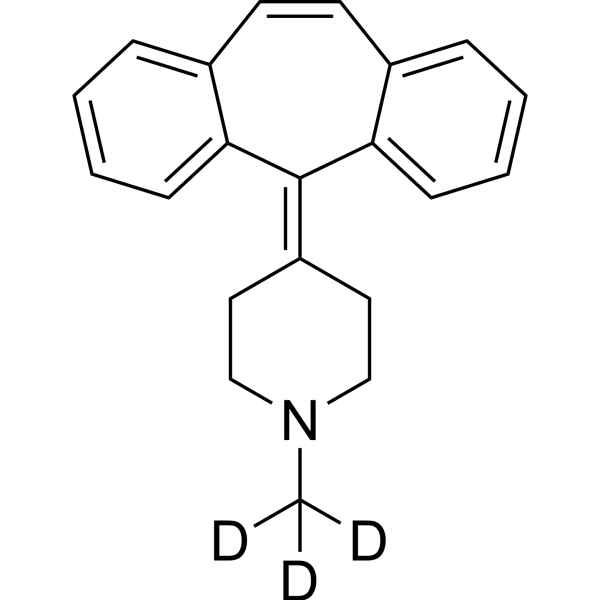
Cyproheptadine-d3 is the d3-labeled Cyproheptadine (HY-B1622). Cyproheptadine acts as a p38 MAP kinase activator, CHK2 activator, histamine H1 receptor inhibitor and serotonin receptor inhibitor. Cyproheptadine mediates cell cycle arrest via G1 phase arrest, G1/S transition arrest, G0/G1 phase arrest, reduced expression of cyclins D1/D2/D3, upregulated expression of HBP1, p16, p21, p27, and decreased phosphorylation of retinoblastoma protein. Cyproheptadine induces Apoptosis by increasing PARP and cleaved PARP, as well as activating the mitochondrial caspase pathway. Cyproheptadine inhibits tumor growth with extremely low toxicity to normal cells. Cyproheptadine can be used in research related to hepatocellular carcinoma, multiple myeloma and acute myeloid leukemia .
loading...
    loading...
Cat. No.: HY-P10862
Target:  

Exosomes Virus Protease

Research Areas:  

Infection Cancer

AH-D peptide is a brain-penetrant antiviral agent disrupting highly curved lipid membranes. AH-D peptide exhibits broad-spectrum antiviral activity against ZIKV, Dengue virus, Chikungunya virus, yellow fever virus and Japanese encephalitis virus, with
IC50
values of 11.9, 12.5, 35.7, 206 and 136 nM, respectively. AH-D peptide reduces the viral load in the brain, suppresses inflammation, protects neurons, and does not damage the blood brain barrier. AH-D peptide restores antitumor immunity by decreasing circulating PD-L1 + exosomes, reducing intratumoral immunosuppressive cells (regulatory T cells, myeloid-derived suppressor cells), and enhancing T cell function. AH-D peptide inhibits membrane-enveloped viruses and cancer cell metastasis in vivo. AH-D peptide exhibits no immunogenicity and has negligible effects on normal tissues. AH-D peptide can be used for research in Zika virus and other mosquito-borne viruses, cancer immunotherapy and metastasis .
loading...
    loading...
Cat. No.: HY-L079
4,333 compounds

Blood cancers, also called hematologic cancers, occur when abnormal blood cells start growing out of control, interrupting the function of normal blood cells, which fight off infection and produce new blood cells. Most blood cancers start in the bone marrow, which is where blood is produced. There are three main types of blood cancers: leukemia, lymphoma and myeloma, which afflict millions of children and adults every year, and are often deadly.

Some common blood cancer treatments include stem cell transplantation, chemotherapy, radiation therapy, targeted therapy, immunotherapy or a combination thereof. As we begin to understand the key signaling pathways and molecular drivers of malignant transformation in haematological disorders, new treatment strategies will continue to be developed.

MCE offers a unique collection of 4,333 compounds with identified and potential anti-blood cancer activity. These compounds target blood cancer’s major targets and signaling pathways. MCE anti-blood cancer compound library is a useful tool for anti-blood cancer drugs screening and other related research.

Cat. No.: HY-160952
CAS No.: 1256639-86-7
Synonyms: CPX 351; Cytarabine-daunorubicin
Research Areas:  

Cardiovascular Disease Cancer

Cytarabine-daunorubicin (CPX 351) is a Liposomal formulation prepared from Cytarabine (HY-13605) and Daunorubicin (HY-13062A) at a fixed synergistic molar ratio of 5:1. Cytarabine-daunorubicin improves secondary acute myeloid leukemia. Cytarabine-daunorubicin can be used in research related to secondary acute myeloid leukemia, high-risk myelodysplastic syndrome, and chronic myelomonocytic leukemia .
loading...
    loading...
Cat. No.: HY-172937
CAS No.: 3070968-56-5
ERα degrader 13 is an orally active, methylene blue-Raloxifene (HY-13738) conjugated photoactivatable ERα degrader with a Kd value of 27.1 nM. Upon irradiation at 660 nm, ERα degrader 13 generates ROS and heat near the ligand-binding domain of ERα, triggering oxidation, residue unfolding, and ERα degradation via the ubiquitin-proteasome system. ERα degrader 13 inhibits cancer cell proliferation and induces tumor regression in breast cancer xenograft models. ERα degrader 13 can be used in breast cancer-related research .
loading...
    loading...

