
10026 Results for "

Modification

" in MedChemExpress (MCE) Product Catalog:
Products (10026)

10026 Results for "Modification" in MCE Product Catalog:

Cat. No.: HY-157510
CAS No.: 2758432-00-5
Research Areas:  

Cancer

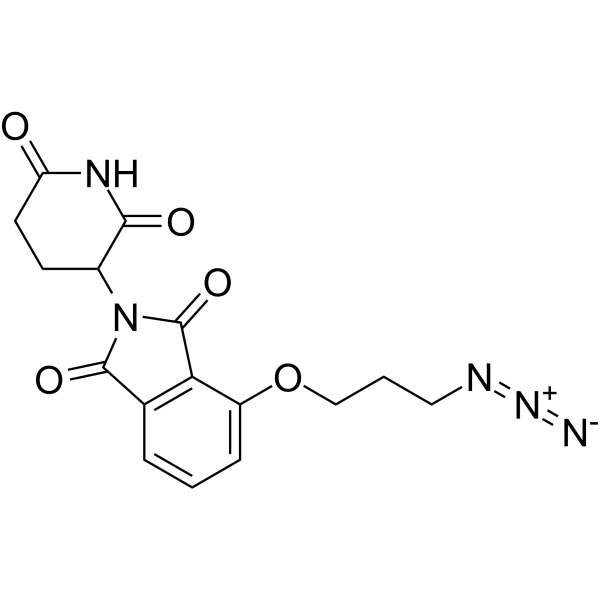
Thalidomide-O-C3-azide is a click chemistry modification of the cereblon (CRBN) inhibitor Thalidomide (HY-14658). Thalidomide-O-C3-azide contains an azide group and can undergo copper-catalyzed azide-alkyne cycloaddition reaction (CuAAc) with molecules containing alkyne groups. Thalidomide-O-C3-azide can be used as a ligand of E3 ubiquitin ligase and Linker conjugates (E3 Ligase Ligand-Linker Conjugates) for the synthesis of PROTACs .
loading...
    loading...
Cat. No.: HY-157511
CAS No.: 2411098-96-7
Research Areas:  

Cancer

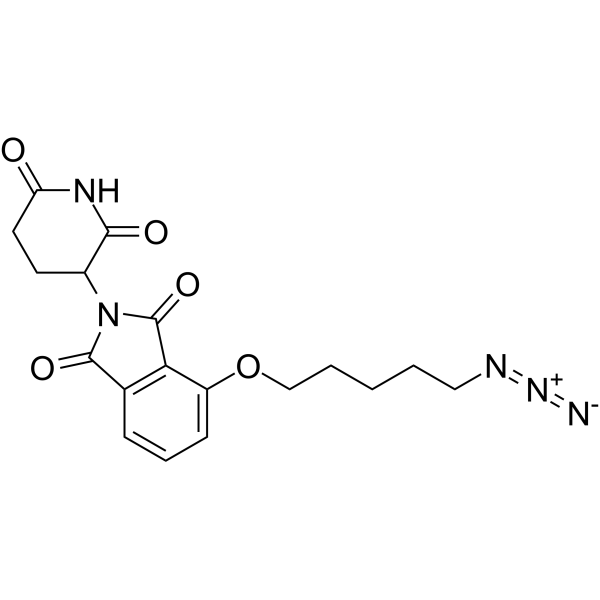
Thalidomide-O-C5-azide is a click chemistry modification of the cereblon (CRBN) inhibitor Thalidomide (HY-14658). Thalidomide-O-C5-azide contains an azide group and can undergo copper-catalyzed azide-alkyne cycloaddition reaction (CuAAc) with molecules containing alkyne groups. Thalidomide-O-C5-azide can be used as a ligand of E3 ubiquitin ligase and Linker conjugates (E3 Ligase Ligand-Linker Conjugates) for the synthesis of PROTACs .
loading...
    loading...
Cat. No.: HY-168770
CAS No.: 862377-51-3
Research Areas:  

Cardiovascular Disease

Cl-Necrostatin-1 is a RIPK1 inhibitor. Cl-Necrostatin-1 can also inhibit TNF-α-induced necroptosis in Jurkat cells deficient in Fas-associated death domain protein (FADD; EC50 = 180 nM), a modification that prevents caspase activation in response to death-domain receptor signaling. Cl-Necrostatin-1 can also reduce infarct size in a mouse model of middle cerebral artery occlusion (MCAO). Cl-Necrostatin-1 is used for research in cardiovascular and cerebrovascular diseases .
loading...
    loading...
Cat. No.: HY-171334A
Research Areas:  

Cancer

P1D-34 is a potent PIN1 PROTAC degrader with a DC50 of 177 nM. P1D-34 induces PIN1 degradation in a proteasome- and ubiquitination-like modification-dependent manner, thereby increasing intracellular ROS levels, downregulating the unfolded protein response pathway, and inducing DNA damage, cell cycle arrest and apoptosis. P1D-34 can be used in studies related to acute myeloid leukemia .
loading...
    loading...
Cat. No.: HY-184606
PEI stabilized gold nanoclusters (PEI-Au NCs) are nanomaterials combining gold nanoclusters and polyethyleneimine. They consist of a few to dozens of gold atoms forming the core of the gold nanoclusters, while polyethyleneimine (PEI), a positively charged hyperbranched polyamine, is selected as the end-capping agent, encapsulating the surface of the gold nanoclusters. PEI-Au NCs have gained widespread application due to their high luminescence properties and stability over a wide pH range. Furthermore, their good biocompatibility and ease of surface modification or functionalization make them attractive for many biomedical applications.
loading...
    loading...
Cat. No.: HY-185002
Target:  

mRNA

Research Areas:  

Cancer

BCMA CAR mRNA can express the CAR protein targeting human BCMA. BCMA CAR mRNA can trigger the transient expression of CAR, enabling T cells to be targeted without the need for permanent genetic modification. BCMA is a member of the tumor necrosis factor receptor superfamily 17 (TNFRSF17), also known as B-cell maturation antigen (CD269), which promotes B-cell survival and plays a role in regulating humoral immunity. BCMA is highly expressed in multiple myeloma and is a biomarker for the diagnosis of multiple myeloma.
loading...
    loading...
Cat. No.: HY-189074
Research Areas:  

Cancer

JN210 is a dual inhibitor of DCN1 and HDAC, with an IC50 of 94.26 nM against human DCN1. JN210 disrupts the UBE2M-DCN1 protein-protein interaction, blocks the neddylation modification of cullin-RING ligases, inhibits HDAC activity and induces histone hyperacetylation. JN210 impairs DNA damage repair function, induces cell apoptosis, exerts cytotoxicity and inhibits tumor growth. JN210 can be used for the research of non-small cell lung cancer .
loading...
    loading...
Cat. No.: HY-D2902
CAS No.: 2080332-70-1
SNOTRAP (SNO trapping by triaryl phosphine) is a chemical probe used for detecting S-nitrosylated (SNO) proteins. SNOTRAP selectively converts S-nitrosylated cysteines in proteins into stable disulfide-iminophosphorane intermediates, which are then enriched with streptavidin and detected by nanoLC-MS/MS. SNOTRAP enables global enrichment and label-free quantification of SNO proteins and their modification sites in complex biological samples such as mouse brain tissues. SNOTRAP can be applied to studies related to nitrosative stress-associated diseases, including neurodegenerative diseases, cancer, and multiple sclerosis .
loading...
    loading...
Cat. No.: HY-P10490
CAS No.: 1926163-27-0
Research Areas:  

Others Cancer

(D-His(Bzl)6)-LHRH (1-7) free acid is a synthetic peptide compound that is a derivative of luteinizing hormone-releasing hormone (LHRH). (D-His(Bzl)6)-LHRH (1-7) free acid enhances its stability and biological activity by introducing unnatural amino acid residues at specific positions of the LHRH molecule. This modification can improve the drug's performance in the body half-life, reducing the rate at which it is rapidly metabolized and cleared, thereby enhancing its efficacy in inhibiting cell proliferation .
loading...
    loading...
Cat. No.: HY-P3818
CAS No.: 813416-46-5
Target:  

PKC

Research Areas:  

Others

PKCδ Peptide Substrate is a highly selective peptide substrate targeting PKCδ. PKCδ Peptide Substrate can only be efficiently catalyzed for phosphorylation modification by PKCδ, and Thr431 is the sole phosphorylation site. PKCδ Peptide Substrate binds to the catalytic pocket of PKC in a competitive manner, but exhibits no PKC agonistic or inhibitory activity. PKCδ Peptide Substrate is a dedicated biochemical probe for the quantitative detection of PKCδ in vitro, and can be used for studies on PKCδ-related pathways .
loading...
    loading...
Cat. No.: HY-P3818A
Target:  

PKC

Research Areas:  

Others

PKCδ Peptide Substrate acetate is a highly selective peptide substrate targeting PKCδ. PKCδ Peptide Substrate acetate can only be efficiently catalyzed for phosphorylation modification by PKCδ, and Thr431 is the sole phosphorylation site. PKCδ Peptide Substrate acetate binds to the catalytic pocket of PKC in a competitive manner, but exhibits no PKC agonistic or inhibitory activity. PKCδ Peptide Substrate acetate is a dedicated biochemical probe for the quantitative detection of PKCδ in vitro, and can be used for studies on PKCδ-related pathways .
loading...
    loading...
Cat. No.: HY-W095635
CAS No.: 17787-40-5
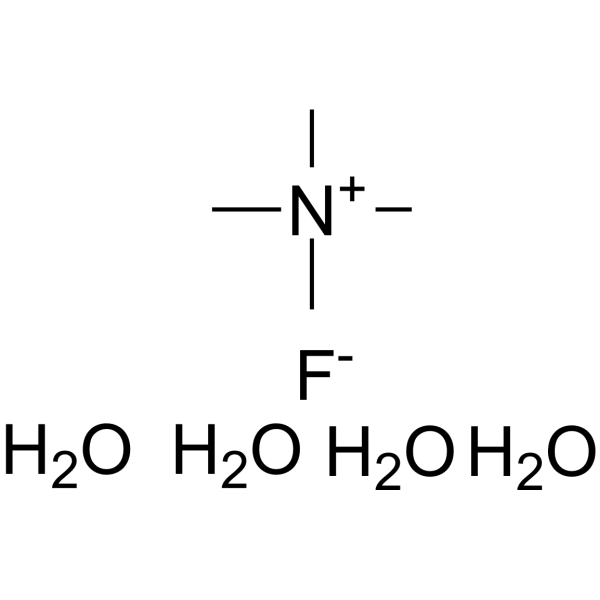
Tetramethylammonium fluoride tetrahydrate (TMAF) is a quaternary ammonium salt. TMAF is commonly used as a weak base and a source of fluoride ions in various organic reactions, including nucleophilic substitution, functional group deprotection, and ring-opening polymerization. Unlike other fluoride sources, TMAF is compatible with many functional groups, making it a versatile tool in synthetic chemistry. Functional reagents, In addition, TMAF has been used as a fluorinating agent in medicinal chemistry, for the preparation of radiotracers and protein modification in biochemistry, and the tetrahydrate form of TMAF is more stable and easier to handle than the anhydrous form.
loading...
    loading...
Cat. No.: HY-W1048914
3-Arm PEG2000-NH2 is a three-armed PEG derivative. The core structure of 3-Arm PEG2000-NH2 consists of three PEG chains, each terminal of which is modified with an amino (-NH2) group. The primary amino group in 3-Arm PEG2000-NH2 can be covalently linked to functional groups such as carboxylic acids, NHS esters, and isocyanates for targeted modification of liposomes/nanoparticles.
loading...
    loading...
Cat. No.: HY-W1048914A
3-Arm PEG5000-NH2 is a three-armed PEG derivative. The core structure of 3-Arm PEG5000-NH2 consists of three PEG chains, each terminal of which is modified with an amino (-NH2) group. The primary amino group in 3-Arm PEG5000-NH2 can be covalently linked to functional groups such as carboxylic acids, NHS esters, and isocyanates for targeted modification of liposomes/nanoparticles.
loading...
    loading...
Cat. No.: HY-W1048914B
3-Arm PEG10000-NH2 is a three-armed PEG derivative. The core structure of 3-Arm PEG10000-NH2 consists of three PEG chains, each terminal of which is modified with an amino (-NH2) group. The primary amino group in 3-Arm PEG10000-NH2 can be covalently linked to functional groups such as carboxylic acids, NHS esters, and isocyanates for targeted modification of liposomes/nanoparticles.
loading...
    loading...
Cat. No.: HY-W1048914C
3-Arm PEG20000-NH2 is a three-armed PEG derivative. The core structure of 3-Arm PEG20000-NH2 consists of three PEG chains, each terminal of which is modified with an amino (-NH2) group. The primary amino group in 3-Arm PEG20000-NH2 can be covalently linked to functional groups such as carboxylic acids, NHS esters, and isocyanates for targeted modification of liposomes/nanoparticles.
loading...
    loading...
Cat. No.: HY-W1048914D
3-Arm PEG40000-NH2 is a three-armed PEG derivative. The core structure of 3-Arm PEG40000-NH2 consists of three PEG chains, each terminal of which is modified with an amino (-NH2) group. The primary amino group in 3-Arm PEG40000-NH2 can be covalently linked to functional groups such as carboxylic acids, NHS esters, and isocyanates for targeted modification of liposomes/nanoparticles.
loading...
    loading...
Cat. No.: HY-W145552
CAS No.: 144985-19-3
Synonyms: 4-Methoxyphenyl 3-O-allyl-beta-D-galactopyranoside
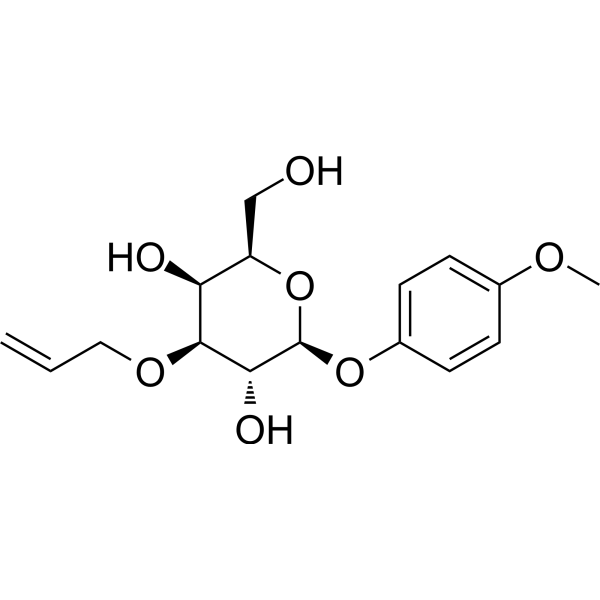
4-Methoxyphenyl 3-O-Allyl-β-D-galactopyranoside is an organic compound belonging to the family of galactopyranosides. It is often used as a building block for the synthesis of more complex glycosides and glycoconjugates. 4-Methoxyphenyl 3-O-Allyl-β-D-galactopyranoside has various applications in biochemical research, especially in the study of carbohydrate metabolism and protein-carbohydrate interactions. This compound contains an allyl protecting group that can be selectively removed using palladium-catalyzed conditions to reveal hydroxyl functionality for further chemical modification.
loading...
    loading...
Cat. No.: HY-L005
2,031 compounds

Epigenetics refers to changes in phenotype that are not rooted in DNA sequence. Many types of epigenetic processes have been identified, including DNA methylation, alteration in the structure of histone proteins and gene regulation by small noncoding microRNAs. Modification of DNA, protein, or RNA, resulting in changes to the function and/or regulation of these molecules, without altering their primary sequences, reveals the complexities of cellular differentiation, embryology, the regulation of gene expression, aging, cancer, and other diseases.

MCE provide a unique collection of 2,031 epigenetics-related compounds that can be used in the research of the related diseases.

Cat. No.: HY-112764GL
CAS No.: 160743-62-4
mPEG2000-DMG (GMP Like) is mPEG2000-DMG (HY-112764) produced by using GMP like guidelines. GMP Like small molecules works appropriately as an auxiliary reagent for cell therapy manufacture. mPEG2000-DMG is used for the preparation of liposome for siRNA delivery with improved transfection efficiency in vitro. mPEG2000-DMG is also used for the lipid nanoparticle for an oral plasmid DNA delivery approach in vivo through a facile surface modification to improve the mucus permeability and delivery efficiency of the nanoparticles .
loading...
    loading...

