119 Results for "

SERT

" in MedChemExpress (MCE) Product Catalog:
Products (119)

119 Results for "SERT" in MCE Product Catalog:

Cat. No.: HY-106980
CAS No.: 308123-60-6
Synonyms: (-)-18-Methoxycoronaridine
18-Methoxycoronaridine ((-)-18-Methoxycoronaridine) is an orally active and selective α3β4 nicotinic acetylcholine receptor (nAChR) antagonist. 18-Methoxycoronaridine is an inhibitor of serotonin transporter (SERT) and norepinephrine transporter (NET), with IC50 values of 51.6 μM and 121 μM for SERT and NET, respectively. 18-Methoxycoronaridine inhibits the function of SERT and NET, promotes 5-HT3A receptor desensitization, blocks α3β4 nAChR, and modulates receptor signaling pathways associated with reinforcement. 18-Methoxycoronaridine also exhibits potent antiparasitic activity. 18-Methoxycoronaridine can be used in research related to depression, obesity, alcoholism, smoking addiction, and cutaneous leishmaniasis .
loading...
    loading...
Cat. No.: HY-106980A
CAS No.: 266686-77-5
Synonyms: (-)-18-Methoxycoronaridine hydrochloride
18-Methoxycoronaridine ((-)-18-Methoxycoronaridine) hydrochloride is an orally active and selective α3β4 nicotinic acetylcholine receptor (nAChR) antagonist. 18-Methoxycoronaridine hydrochloride is an inhibitor of serotonin transporter (SERT) and norepinephrine transporter (NET), with IC50 values of 51.6 μM and 121 μM for SERT and NET, respectively. 18-Methoxycoronaridine hydrochloride inhibits the function of SERT and NET, promotes 5-HT3A receptor desensitization, blocks α3β4 nAChR, and modulates receptor signaling pathways associated with reinforcement. 18-Methoxycoronaridine hydrochloride also exhibits potent antiparasitic activity. 18-Methoxycoronaridine hydrochloride can be used in research related to depression, obesity, alcoholism, smoking addiction, and cutaneous leishmaniasis .
loading...
    loading...
Cat. No.: HY-W008719R
CAS No.: 36913-39-0
MPP+ iodide (Standard) is the analytical standard of MPP+ iodide (HY-W008719). This product is intended for research and analytical applications. MPP+ iodide, a toxic metabolite of the neurotoxin MPTP, causes symptom of ParKinson's disease in animal models by selectively destroying dopaminergic neurons in substantia nigra. MPP+ iodide is taken up by the dopamine transporter into dopaminergic neurons where it exerts its neurotoxic action on mitochondria by affecting complex I of the respiratory chain. MPP+ iodide is also a high affinity substrate for the serotonin transporter (SERT) .
loading...
    loading...
Cat. No.: HY-179568
CAS No.: 926493-93-8
Target:  

Monoamine Transporter

Research Areas:  

Neurological Disease

F3288-0031 is a brain-penetrant norepinephrine transporter (NET) allosteric inhibitor with inhibitory rates of 73.5% at 20 μM. F3288-0031 binds within the inner vestibule of NET, stabilizing the inward-open state and has a preferential NET/SERT inhibition with pIC50 = 5.9. F3288-0031 shows no detectable off-target functional activity in vitro. F3288-0031 demonstrates robust antidepressant-like efficacy in vivo without confounding locomotor effects, F3288-0031 can be used for depressive disorder and related neuropsychiatric conditions .
loading...
    loading...
Cat. No.: HY-14794AS
CAS No.: 2747914-23-2
Synonyms: (1S,2R)-Milnacipran-d10 hydrochloride; F2695-d10 hydrochloride
Levomilnacipran-d10 ((1S,2R)-Milnacipran-d10) hydrochloride is deuterium labeled Levomilnacipran hydrochloride (HY-B0168B). Levomilnacipran ((1S,2R)-Milnacipran) hydrochloride is the enantiomer of Milnacipran (HY-B0168) and a strong substrate of P-gp that can cross the blood-brain barrier. Levomilnacipran hydrochloride is a serotonin and norepinephrine reuptake inhibitor, with IC50 values of 10.5 nM and 19.0 nM, and Ki values of 92.2 nM and 1.2 nM for human norepinephrine transporter (NET) and serotonin transporter (SERT), respectively. Levomilnacipran hydrochloride has antidepressant and anxiolytic activities. Levomilnacipran hydrochloride can be used for the research of depression .
loading...
    loading...
Cat. No.: HY-B0168BS
Synonyms: (1S,2R)-Milnacipran-d5 hydrochloride; F-2695-d5 hydrochloride
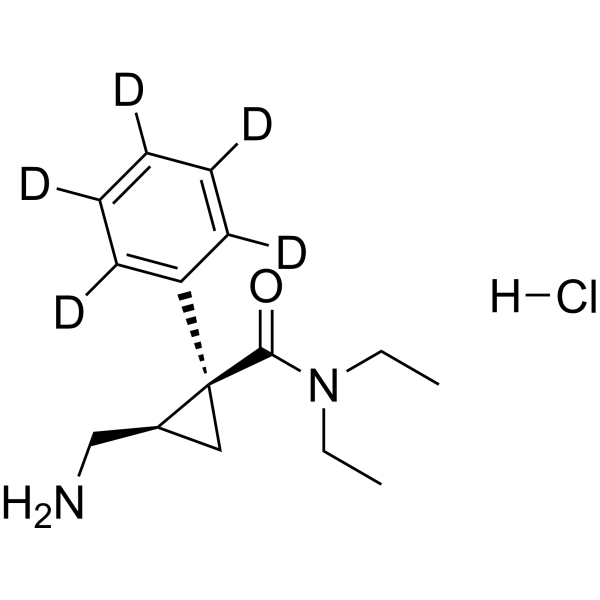
Levomilnacipran-d5 ((1S,2R)-Milnacipran-d5) hydrochloride is deuterium labeled Levomilnacipran hydrochloride (HY-B0168B). Levomilnacipran ((1S,2R)-Milnacipran) hydrochloride is the enantiomer of Milnacipran (HY-B0168) and a strong substrate of P-gp that can cross the blood-brain barrier. Levomilnacipran hydrochloride is a serotonin and norepinephrine reuptake inhibitor, with IC50 values of 10.5 nM and 19.0 nM, and Ki values of 92.2 nM and 1.2 nM for human norepinephrine transporter (NET) and serotonin transporter (SERT), respectively. Levomilnacipran hydrochloride has antidepressant and anxiolytic activities. Levomilnacipran hydrochloride can be used for the research of depression .
loading...
    loading...
Cat. No.: HY-10499R
CAS No.: 892546-37-1
Synonyms: BIM-46187 (Standard)
PH-064 (Standard) is the analytical standard of PH-064 (HY-10499). This product is intended for research and analytical applications. PH-064 (BIM-46187) is an orally active inhibitor of the heterotrimeric G-protein complex. PH-064 inhibits SERT activity and attenuates shear stress-induced Akt phosphorylation. PH-064 has potent anti-hyperalgesia activity. PH-064 inhibits G protein-coupled receptor-dependent tumorigenesis. PH-064 can be used in the study of pain (e.g., inflammatory pain, neuropathic pain), GPCR-dependent tumors, and inflammatory lung injury .
loading...
    loading...
Cat. No.: HY-107047
CAS No.: 444667-97-4
Synonyms: RS-1259
BGC-201259 (RS-1259) is an orally active inhibitor that simultaneously targets acetylcholinesterase (AChE) (IC50 = 101 nM) and serotonin transporter (SERT) (IC50 = 42 nM). BGC-201259 inhibits 5-HT receptor with an IC50 of 90 nM. BGC-201259 exhibits strong weak activity against the NA transporter (IC50 = 7.7 μM), L-type calcium channel (IC50 = 3.6 μM), σ receptor (IC50 = 2 μM), and sodium channel (IC50 = 5.1 μM). BGC-201259 demonstrates synergistic potential in improving cognitive and emotional symptoms by balancing the inhibition of these two targets. BGC-201259 can be used in research on Alzheimer's disease .
loading...
    loading...
Cat. No.: HY-181828
CAS No.: 3118902-53-4
Target:  

iGluR Dopamine Receptor

Research Areas:  

Neurological Disease

SePP is a blood-brain barrier-permeable NMDAR antagonist and dopamine/norepinephrine reuptake inhibitor, with a Ki of 28.7 nM for rat NMDAR. SePP exerts anticonvulsant effects. SePP can be used in research related to fragile X syndrome .
loading...
    loading...
Cat. No.: HY-156807
CAS No.: 210751-39-6
Research Areas:  

Neurological Disease

LY 367265 is a 5-hydroxytryptamine transporter (SERT) inhibitor (IC₅₀ = 3.1 nM) and a 5-HT₂A receptor antagonist (Kᵢ = 0.81 nM). LY 367265 has the inhibitory activity on the norepinephrine transporter (NET) of extremely weak (IC₅₀ > 1000 nM); it has low affinity for subtypes such as 5-HT₁B (Kᵢ = 490 nM) and 5-HT₁D (Kᵢ = 81 nM), showing high selectivity. LY 367265 concentration-dependently enhances of [³H]5-HT efflux (EC₅₀ = 250 nM). LY 367265 antagonizes the contraction response of Sumatriptan (HY-B0121B), indicating its functional antagonistic activity on 5-HT₁D-like receptors. LY 367265 can be used for the study of diseases such as anxiety disorders and post-traumatic stress disorder .
loading...
    loading...
Cat. No.: HY-179063
5-HT2A receptor agonist-13 (Compound 28c) is a partial agonist of the 5-HT2A receptor, with an EC50 value of 416.9 nM and a Ki value of 113.9 nM. 5-HT2A receptor agonist-13 exhibits very weak agonistic activity towards the 5-HT2B receptor (EC50 = 120.2 nM), D2 receptor (Ki = 1298 nM), and has no activity towards the 5-HT2C receptor. 5-HT2A receptor agonist-13 exhibits weak inhibitory activity on the serotonin transporter (SERT) (EC50 = 977.2 nM). 5-HT2A receptor agonist-13 has antidepressant activity in mouse models and does not induce hallucinogenic behavior. 5-HT2A receptor agonist-13 can be used for the study of major depressive disorder (MDD) and treatment-resistant depression (TRD) .
loading...
    loading...
Cat. No.: HY-B0527AR
CAS No.: 549-18-8
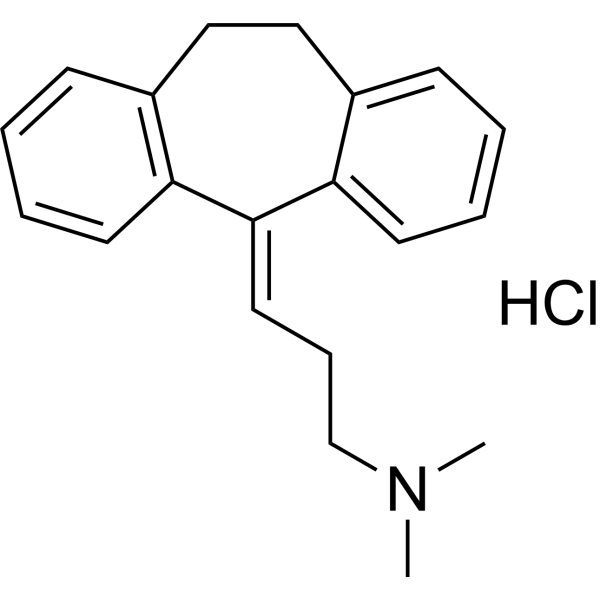
Amitriptyline hydrochloride (Standard) is the analytical standard of Amitriptyline hydrochloride (HY-B0527A). This product is intended for research and analytical applications. Amitriptyline hydrochloride is an orally active tricyclic antidepressant (TCA). Amitriptyline hydrochloride mainly exerts its antidepressant effect by blocking SERT (Ki = 3.45 nM) and NET (Ki = 13.3 nM), thereby increasing the concentrations of 5-hydroxytryptamine (5-HT) and norepinephrine (NE) in the synaptic cleft. Amitriptyline hydrochloride is also an agonist at α2A and TrkA/TrkB receptors, thereby exerting analgesic and neurotrophic activities (inhibiting cell apoptosis). Amitriptyline hydrochloride can reduce inflammation, angiogenesis and fibrosis. Amitriptyline hydrochloride binds to DAT (with Ki = 2.58 μM). Amitriptyline hydrochloride has high affinity for a series of receptors and can antagonize muscarinic cholinergic receptors (M1/M2/M3/M4/M5 receptors) (Ki = 11-24 nM), H1 receptors (Ki = 0.5-1.1 nM), adrenergic α1 receptors (Ki = 4.4 nM), etc., resulting in a series of side effects. Amitriptyline hydrochloride can block sodium channels and hERG potassium channel (IC50 = 4.78 μM) and it has cardiotoxicity.
loading...
    loading...
Cat. No.: HY-B0527AS
CAS No.: 203645-63-0
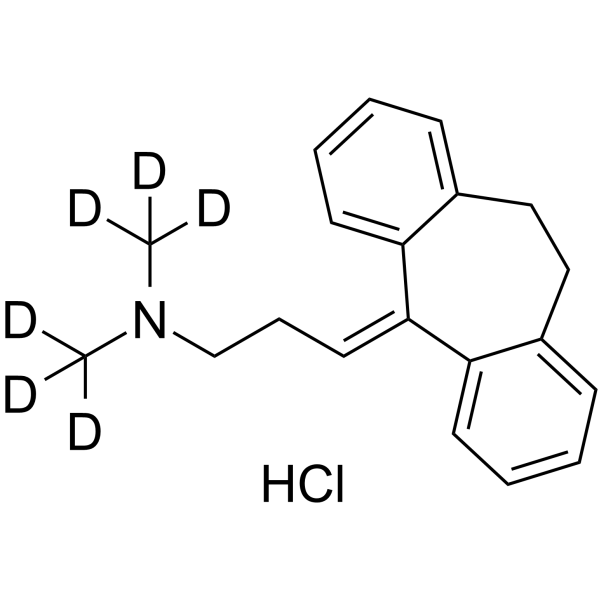
Amitriptyline-d6 hydrochloride is the deuterium labeled Amitriptyline hydrochloride (HY-B0527A). Amitriptyline hydrochloride is an orally active tricyclic antidepressant (TCA). Amitriptyline hydrochloride mainly exerts its antidepressant effect by blocking SERT (Ki = 3.45 nM) and NET (Ki = 13.3 nM), thereby increasing the concentrations of 5-hydroxytryptamine (5-HT) and norepinephrine (NE) in the synaptic cleft. Amitriptyline hydrochloride is also an agonist at α2A and TrkA/TrkB receptors, thereby exerting analgesic and neurotrophic activities (inhibiting cell apoptosis). Amitriptyline hydrochloride can reduce inflammation, angiogenesis and fibrosis. Amitriptyline hydrochloride binds to DAT (with Ki = 2.58 μM). Amitriptyline hydrochloride has high affinity for a series of receptors and can antagonize muscarinic cholinergic receptors (M1/M2/M3/M4/M5 receptors) (Ki = 11-24 nM), H1 receptors (Ki = 0.5-1.1 nM), adrenergic α1 receptors (Ki = 4.4 nM), etc., resulting in a series of side effects. Amitriptyline hydrochloride can block sodium channels and hERG potassium channel (IC50 = 4.78 μM) and it has cardiotoxicity.
loading...
    loading...
Cat. No.: HY-121562
CAS No.: 584555-10-2
Target:  

5-HT Receptor

Research Areas:  

Neurological Disease

SB 714786 is a potent and selective 5-hydroxytryptamine 1D (5-HT1D) receptor antagonist. It was developed from the previously reported series of dual 5-HT1 selective 5-hydroxytryptamine reuptake inhibitors (5HT1-SSRIs). SB 714786 is the first reported highly potent and selective 5-HT1D receptor antagonist, providing an extremely useful pharmacological tool for further understanding the role of 5-HT1 receptor subtypes. It has no or very low intrinsic activity against all three receptors. SB 714786 has pKi values of 6.5, 6.7, 9.1 and 6.5 for 5-HT1A, 5-HT1B, 5-HT1D and SerT receptors, respectively, showing high selectivity for 5-HT1D receptors. These properties make SB 714786 a potential tool compound for studying the function of 5-HT1D receptors and the treatment of related diseases.
loading...
    loading...
Cat. No.: HY-N0113BR
CAS No.: 6027-23-2
Synonyms: Ordenina hydrochloride (Standard); Peyocactine hydrochloride (Standard)
Hordenine hydrochloride (Standard) (Ordenina hydrochloride (Standard); Peyocactine hydrochloride (Standard)) is the analytical standard of Hordenine hydrochloride (HY-N0113B). This product is intended for research and analytical applications. Hordenine hydrochloride (Ordenina hydrochloride; Peyocactine hydrochloride) is a multifunctional alkaloid with oral activity and blood-brain barrier penetration. Hordenine hydrochloride inhibits LPS-induced phosphorylation of p38, JNK, ERK1/2, p65, IκB, and AKT, prevents p65 nuclear translocation, and suppresses inflammatory cytokines and mediators. Hordenine hydrochloride inhibits melanin synthesis in melanocytes and reconstructed epidermis. Hordenine hydrochloride activates the Wnt/β-catenin signaling pathway. Hordenine hydrochloride activates DRD2, acts as a D3R partial agonist, α2A-AR full agonist, and 5-HT2A-R antagonist, and inhibits SERT and DAT. Hordenine hydrochloride inhibits α-synuclein accumulation and ameliorates motor deficits in Parkinson's disease models. Hordenine hydrochloride limits alcohol intake, reduces relapse drinking behavior. Hordenine hydrochloride can be used for research on mastitis, skin pigmentation, acute lung injury, foodborne diseases, hair loss, Parkinson's disease, bacterial infections, and alcohol use disorder .
loading...
    loading...
Cat. No.: HY-N0113BS
Synonyms: Ordenina-d6 hydrochloride; Peyocactine-d6 hydrochloride
Hordenine-d6 hydrochloride (Ordenina-d6 hydrochloride; Peyocactine-d6 hydrochloride) is the deuterated-labeled Hordenine hydrochloride (HY-N0113B). Hordenine hydrochloride (Ordenina hydrochloride; Peyocactine hydrochloride) is a multifunctional alkaloid with oral activity and blood-brain barrier penetration. Hordenine hydrochloride inhibits LPS-induced phosphorylation of p38, JNK, ERK1/2, p65, IκB, and AKT, prevents p65 nuclear translocation, and suppresses inflammatory cytokines and mediators. Hordenine hydrochloride inhibits melanin synthesis in melanocytes and reconstructed epidermis. Hordenine hydrochloride activates the Wnt/β-catenin signaling pathway. Hordenine hydrochloride activates DRD2, acts as a D3R partial agonist, α2A-AR full agonist, and 5-HT2A-R antagonist, and inhibits SERT and DAT. Hordenine hydrochloride inhibits α-synuclein accumulation and ameliorates motor deficits in Parkinson's disease models. Hordenine hydrochloride limits alcohol intake, reduces relapse drinking behavior. Hordenine hydrochloride can be used for research on mastitis, skin pigmentation, acute lung injury, foodborne diseases, hair loss, Parkinson's disease, bacterial infections, and alcohol use disorder .
loading...
    loading...
Cat. No.: HY-N0113A
CAS No.: 62493-39-4
Synonyms: Ordenina sulfate; Peyocactine sulfate
Hordenine sulfate (Ordenina sulfate; Peyocactine sulfate) is a multifunctional alkaloid with oral activity and blood-brain barrier penetration. Hordenine sulfate inhibits LPS-induced phosphorylation of p38, JNK, ERK1/2, p65, IκB, and AKT, prevents p65 nuclear translocation, and suppresses inflammatory cytokines and mediators. Hordenine sulfate promotes M2 macrophage polarization, restores blood-milk barrier integrity, alleviates oxidative stress by reducing ROS and MDA, and attenuates LPS-induced lung injury and pulmonary edema. Hordenine sulfate inhibits cAMP production, CREB phosphorylation, and MITF expression, thereby suppressing melanin synthesis in melanocytes and reconstructed epidermis. Hordenine sulfate activates the Wnt/β-catenin signaling pathway, promotes dermal papilla cell proliferation and hair shaft elongation, and accelerates hair regeneration. Hordenine sulfate activates DRD2, acts as a D3R partial agonist, α2A-AR full agonist, and 5-HT2A-R antagonist, and inhibits SERT and DAT. Hordenine sulfate inhibits α-synuclein accumulation and ameliorates motor deficits in Parkinson's disease models. Hordenine sulfate limits alcohol intake, reduces relapse drinking behavior, and modulates alcohol-induced conditioned place preference. Hordenine sulfate can be used for research on mastitis, skin pigmentation, acute lung injury, foodborne diseases, hair loss, Parkinson's disease, bacterial infections, and alcohol use disorder .
loading...
    loading...
Cat. No.: HY-N0113R
CAS No.: 539-15-1
Synonyms: Ordenina (Standard); Peyocactine (Standard)
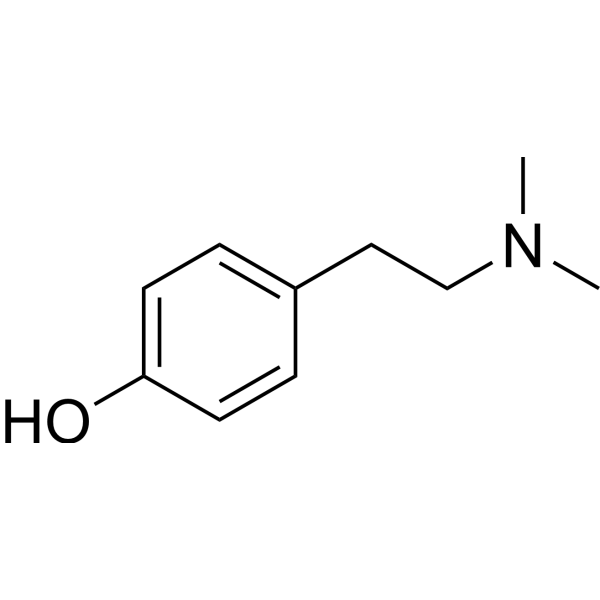
Hordenine (Standard) (Ordenina (Standard); Peyocactine (Standard)) is the analytical standard of Hordenine (HY-N0113). This product is intended for research and analytical applications. Hordenine (Ordenina; Peyocactine) is a multifunctional alkaloid with oral activity and blood-brain barrier penetration. Hordenine inhibits LPS-induced phosphorylation of p38, JNK, ERK1/2, p65, IκB, and AKT, prevents p65 nuclear translocation, and suppresses inflammatory cytokines and mediators. Hordenine promotes M2 macrophage polarization, restores blood-milk barrier integrity, alleviates oxidative stress by reducing ROS and MDA, and attenuates LPS-induced lung injury and pulmonary edema. Hordenine inhibits cAMP production, CREB phosphorylation, and MITF expression, thereby suppressing melanin synthesis in melanocytes and reconstructed epidermis. Hordenine activates the Wnt/β-catenin signaling pathway, promotes dermal papilla cell proliferation and hair shaft elongation, and accelerates hair regeneration. Hordenine activates DRD2, acts as a D3R partial agonist, α2A-AR full agonist, and 5-HT2A-R antagonist, and inhibits SERT and DAT. Hordenine inhibits α-synuclein accumulation and ameliorates motor deficits in Parkinson's disease models. Hordenine limits alcohol intake, reduces relapse drinking behavior, and modulates alcohol-induced conditioned place preference. Hordenine can be used for research on mastitis, skin pigmentation, acute lung injury, foodborne diseases, hair loss, Parkinson's disease, bacterial infections, and alcohol use disorder .
loading...
    loading...
Cat. No.: HY-N0113S
CAS No.: 1346598-66-0
Synonyms: Ordenina-d6; Peyocactine-d6
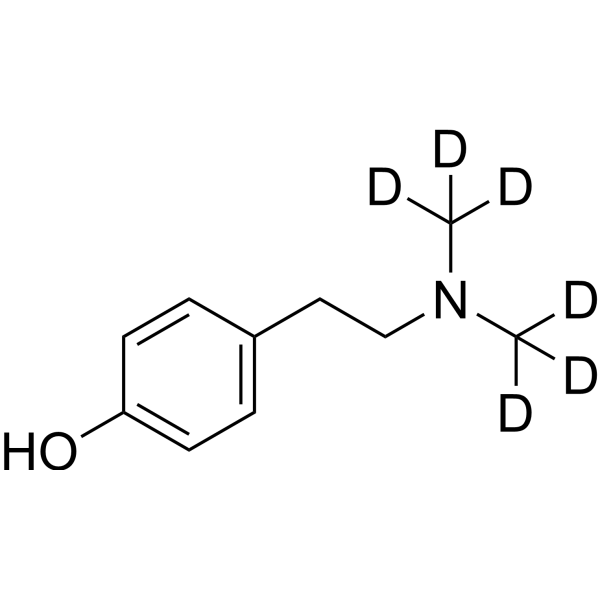
Hordenine-d6 (Ordenina-d6; Peyocactine-d6) is the deuterated-labeled Hordenine (HY-N0113). Hordenine (Ordenina; Peyocactine) is a multifunctional alkaloid with oral activity and blood-brain barrier penetration. Hordenine inhibits LPS-induced phosphorylation of p38, JNK, ERK1/2, p65, IκB, and AKT, prevents p65 nuclear translocation, and suppresses inflammatory cytokines and mediators. Hordenine promotes M2 macrophage polarization, restores blood-milk barrier integrity, alleviates oxidative stress by reducing ROS and MDA, and attenuates LPS-induced lung injury and pulmonary edema. Hordenine inhibits cAMP production, CREB phosphorylation, and MITF expression, thereby suppressing melanin synthesis in melanocytes and reconstructed epidermis. Hordenine activates the Wnt/β-catenin signaling pathway, promotes dermal papilla cell proliferation and hair shaft elongation, and accelerates hair regeneration. Hordenine activates DRD2, acts as a D3R partial agonist, α2A-AR full agonist, and 5-HT2A-R antagonist, and inhibits SERT and DAT. Hordenine inhibits α-synuclein accumulation and ameliorates motor deficits in Parkinson's disease models. Hordenine limits alcohol intake, reduces relapse drinking behavior, and modulates alcohol-induced conditioned place preference. Hordenine can be used for research on mastitis, skin pigmentation, acute lung injury, foodborne diseases, hair loss, Parkinson's disease, bacterial infections, and alcohol use disorder .
loading...
    loading...

