
119 Results for "

destabilizing

" in MedChemExpress (MCE) Product Catalog:
Products (119)

119 Results for "destabilizing" in MCE Product Catalog:

Cat. No.: HY-182098A
Target:  

Liposome

Research Areas:  

Cancer

DSPE-PEG2000-GALA is a PEG compound which composed of DSPE and a lung endothelium-targeting peptide GALA (HY-P5423). GALA is a pH-responsive amphipathic peptide consisting of 30 amino acids, which acts as a lung endothelium-targeting ligand. GALA undergoes a conformational transition from random coil to α-helix in an acidic environment at pH 5.0, thereby inducing endosomal membrane destabilization and fusion. GALA-modified liposomes traverse lung endothelial cells via clathrin-dependent endocytosis and transcytosis, and specifically accumulate in the lungs after intravenous injection. DSPE-PEG2000-GALA can be used for drug delivery .
loading...
    loading...
Cat. No.: HY-182098B
Target:  

Liposome

Research Areas:  

Cancer

DSPE-PEG3400-GALA is a PEG compound which composed of DSPE and a lung endothelium-targeting peptide GALA (HY-P5423). GALA is a pH-responsive amphipathic peptide consisting of 30 amino acids, which acts as a lung endothelium-targeting ligand. GALA undergoes a conformational transition from random coil to α-helix in an acidic environment at pH 5.0, thereby inducing endosomal membrane destabilization and fusion. GALA-modified liposomes traverse lung endothelial cells via clathrin-dependent endocytosis and transcytosis, and specifically accumulate in the lungs after intravenous injection. DSPE-PEG3400-GALA can be used for drug delivery .
loading...
    loading...
Cat. No.: HY-182098C
Target:  

Liposome

Research Areas:  

Cancer

DSPE-PEG5000-GALA is a PEG compound which composed of DSPE and a lung endothelium-targeting peptide GALA (HY-P5423). GALA is a pH-responsive amphipathic peptide consisting of 30 amino acids, which acts as a lung endothelium-targeting ligand. GALA undergoes a conformational transition from random coil to α-helix in an acidic environment at pH 5.0, thereby inducing endosomal membrane destabilization and fusion. GALA-modified liposomes traverse lung endothelial cells via clathrin-dependent endocytosis and transcytosis, and specifically accumulate in the lungs after intravenous injection. DSPE-PEG5000-GALA can be used for drug delivery .
loading...
    loading...
Cat. No.: HY-P11614
Target:  

Liposome

Research Areas:  

Cancer

LCA-H10 is a lithocholic acid-histidine decapeptide conjugate, a biocompatible lipid nanoparticle (LNP) additive that reduces ionizable lipid proportions, functions as an endosomal escape inducer, and enhances siRNA encapsulation. LCA-H10 increases hepatic accumulation of LNPs in mice after intravenous injection when incorporated into LiLNP-LH and reduces proinflammatory cytokines (IL-6, TNF, IL-1β) in mouse serum. LCA-H10 can be used for the research of prostate cancer .
loading...
    loading...
Cat. No.: HY-183073
Research Areas:  

Cancer

TZ1104 is a PROTAC-based CDK7 degrader, with a DC50 of 0.88 nM. TZ1104 forms a ternary complex with VHL E3 ligase and CDK7 to trigger proteasome-dependent CDK7 degradation, destabilizing the CDK7-cyclin H-MAT1 complex. TZ1104 suppresses phosphorylation of RNA polymerase II CTD Ser5, CDK1 Thr161, and CDK2 Thr160. TZ1104 activates the p53-p21 axis and suppresses oncogenic Myc signaling. TZ1104 induces cell cycle arrest, apoptosis, and differentiation of acute leukemia cells. TZ1104 can be used for the research of acute leukemia .

loading...
    loading...
Cat. No.: HY-N13009
CAS No.: 2744300-63-6
MO-2097 is a RAF-1/HIF-1α inhibitor. MO-2097 induces RAF-1 destabilization, leading to a reduction in EMT-associated transcription factors and mesenchymal markers. MO-2097 inhibits HIF-1a protein expression mediated by hnRNPA2B1 under hypoxic and mimetic hypoxia. MO-2097 induces mitochondrial ROS, which leads to apoptosis in cells. MO-2097 effectively suppresses colorectal cancer metastasis by inhibiting the RAF/MEK/ERK signaling pathway. MO-2097 attenuates tumor growth in a xenograft HCT116 cell mouse model. MO-2097 can be used for the study of colorectal cancer .
loading...
    loading...
Cat. No.: HY-P4119
CAS No.: 863608-35-9
Research Areas:  

Others

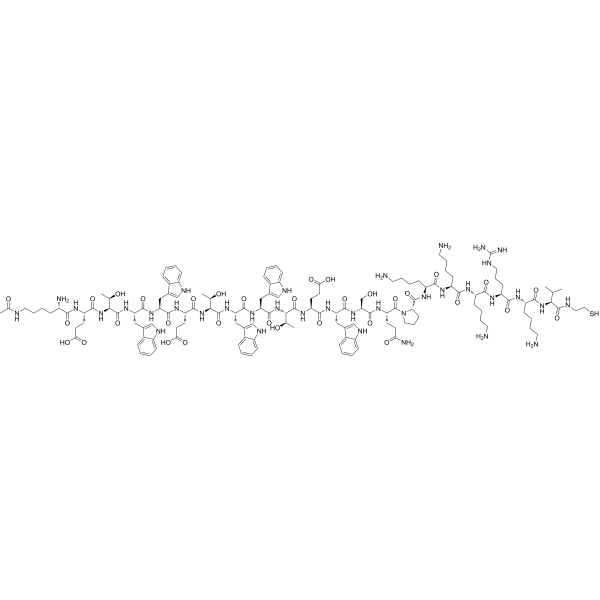
Pep-1-Cysteamine is an amphipathic chimeric cell-penetrating peptide. Pep-1-Cysteamine can penetrate biological membranes in an energy-independent manner without forming transmembrane pores, and efficiently deliver active proteins into cells, with its translocation dominated by electrostatic interactions and membrane perturbation .
loading...
    loading...
Cat. No.: HY-17663
CAS No.: 2992741-10-1
Target:  

PARP STAT STING IFNAR

Research Areas:  

Cancer

KMR-206 is a PARP7 inhibitor with an IC50 of 13.7 nM. KMR-206 relieves AHR-mediated transcriptional repression and enhances CYP1A1 expression in the presence of TCDD. KMR-206 induces the STING-dependent IFN-β signaling pathway and increases the levels of STAT1, pSTAT1 and nuclear PARP7 in cancer cells. KMR-206 reduces the viability of lung adenocarcinoma cells, enhances radiation-induced immunogenic signals, and induces the production of immunogenic signals in glioblastoma cancer stem cells. KMR-206 destabilizes FRA1 to increase IRF1 levels and promotes the IRF3-CBP/p300 interaction. KMR-206 can be used in studies related to lung adenocarcinoma and glioblastoma .
loading...
    loading...
Cat. No.: HY-179558
Research Areas:  

Cancer

MS1-96 is an orally active PD-L1 (programmed death-ligand 1) molecular glue degrader. MS1-96 effectively reduced PD-L1 protein levels across multiple colorectal cancer (CRC) cell lines. MS1-96 directly binds to PD-L1 (KD = 2.58 μM) and enhances the interaction between HIP1R and PD-L1, thereby altering the intracellular trafficking of PD-L1 within clathrin-coated vesicles. MS1-96 induces abnormal N-glycosylation of PD-L1, destabilizing the protein and hastening its lysosome-mediated degradation. MS1-96 can be used for the study of colorectal cancer .
loading...
    loading...
Cat. No.: HY-180576
CAS No.: 2231746-53-3
Nurr1/RXR dual agonist 1 is a dual activator of Nurr1 (EC50 = 2.6 µM) and RXR with K s of 0.6 and 1.1 µM, respectively. Nurr1/RXR dual agonist 1 exclusively activates the heterodimer response element DR5 by selectively destabilizing the Nurr1 homodimer and stabilizing the Nurr1:RXR heterodimer. Nurr1/RXR dual agonist 1 enhances expression of a specific subset of neuroprotective Nurr1 target genes while avoiding induction of genes associated with potential off-target effects in neuronal cells. Nurr1/RXR dual agonist 1 can be used for neurodegenerative diseases research .
loading...
    loading...
Cat. No.: HY-P5423
CAS No.: 107658-43-5
Target:  

Exosomes Liposome

Research Areas:  

Cancer

GALA is a pH-responsive amphipathic peptide consisting of 30 amino acids, which acts as a lung endothelium-targeting ligand. GALA undergoes a conformational transition from random coil to α-helix in an acidic environment at pH 5.0, thereby inducing endosomal membrane destabilization and fusion. GALA-modified liposomes traverse lung endothelial cells via clathrin-dependent endocytosis and transcytosis, and specifically accumulate in the lungs after intravenous injection. GALA significantly promotes the cytosolic release of cargos carried by exosomes, plasmids and liposomes, effectively enhances gene transfection efficiency, and drives gene knockdown of functional macromolecules (such as siRNA) in alveolar epithelial cells (with no significant cytotoxicity at effective concentrations). GALA serves as a critical tool for studies on lung cancer metastasis (e.g., melanoma lung metastasis) and lung-targeted drug delivery systems .
loading...
    loading...
Cat. No.: HY-W001974
CAS No.: 6960-42-5
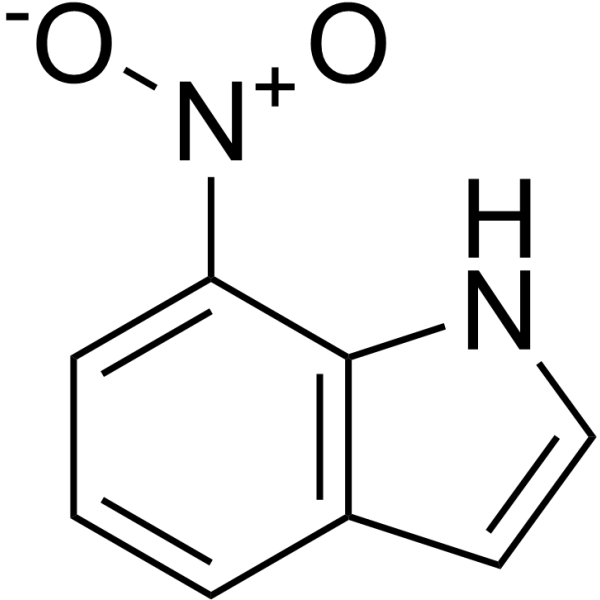
7-Nitroindole is a cleavable base analog and Antibacterial agent. 7-Nitroindole inhibits the growth of Lactobacillus arabinosus. 7-Nitroindole is used in studies of light-controlled DNA cleavage and Lactobacillus arabinosus infection .
loading...
    loading...
Cat. No.: HY-186321
CAS No.: 501124-40-9
Synonyms: KF25706
Target:  

HSP Raf Src CDK MDM-2/p53 Ras

Research Areas:  

Cancer

Radicicol 6-oxime (KF25706) is an Hsp90 inhibitor with an EC50 of 5.5 nM against human Hsp90. Radicicol 6-oxime binds to Hsp90 and disrupts its chaperone function, leading to destabilization and depletion of Hsp90-associated signaling molecules. Radicicol 6-oxime depletes Hsp90-associated signaling proteins such as Raf-1, v-src, p185erbB2, Cdk4, and mutant p53, thereby inhibiting K-ras and v-src signaling pathways. Radicicol 6-oxime exhibits antiproliferative activity against various tumor cells. Radicicol 6-oxime inhibits tumor growth in mouse tumor xenograft models. Radicicol 6-oxime can be used for research on breast cancer, colon cancer, and vulvar epidermoid carcinoma .
loading...
    loading...
Cat. No.: HY-112005G
CAS No.: 4004-05-1
Synonyms: Dioleoylphosphatidylethanolamine (GMP); 1,2-Dioleoyl-sn-glycero-3-phosphoethanolamine (GMP)
DOPE GMP is DOPE (HY-112005) produced by using GMP guidelines. GMP small molecules works appropriately as an auxiliary reagent for cell therapy manufacture. DOPE (Dioleoylphosphatidylethanolamine; 1,2-Dioleoyl-sn-glycero-3-phosphoethanolamine) is an orally active inhibitor of ferroptosis with anti-inflammatory and intestinal barrier maintenance activities. DOPE regulates the expression of ACSL4, SLC7A11 and GPX4 to restore the redox system balance, thereby reducing the levels of lipid peroxides, iron ions and intestinal inflammatory factors (IL-1β and IL-6). DOPE promotes the migration and proliferation of intestinal epithelial cells and increases the level of tight junction proteins; it also destabilizes endosomal membranes, mediates the conjugation of RVG peptides with mesenchymal stem cell-derived exosomes to enhance brain targeting. DOPE can be applied to research related to neonatal necrotizing enterocolitis and Alzheimer's disease .
loading...
    loading...
Cat. No.: HY-138794A
CAS No.: 2417089-73-5
Target:  

Deubiquitinase

Research Areas:  

Cancer

(Rac)-XL177A is the racemic isomer of XL177A (HY-138794). XL177A is a covalent USP7 inhibitor that blocks the deubiquitinase activity of USP7. XL177A destabilizes non-canonical PRC1 complexes or KDM6A and reduces chromatin deposition of H2AK119Ub, thereby relieving the repression of neuronal differentiation programs. Meanwhile, XL177A also regulates the ELOF1-UVSSA-USP7-nuclear β-catenin axis, decreasing the transcription levels of related proteins and the accumulation of nuclear β-catenin. XL177A exerts antiviral effects by reducing the expression levels of coronavirus receptors, and exhibits inhibitory activity against APC-mutated colorectal cancer cells, neuroblastoma, and coronaviruses including SARS-CoV-2 variants. XL177A is mainly used in studies related to colorectal cancer, neuroblastoma, and coronavirus infections .
loading...
    loading...
Cat. No.: HY-183583
CAS No.: 2709068-47-1
Research Areas:  

Cancer

HIF-2α-IN-18 is a selective HIF-2α inhibitor with a human IC50 of 8.1 nM. HIF-2α-IN-18 binds to the HIF-2α PAS-B domain, induces conformational perturbations at the HIF-2α/ARNT dimerization interface, destabilizes the HIF-2α/ARNT heterodimer, and blocks HIF-2α-mediated transcriptional activity. HIF-2α-IN-18 inhibits hypoxia-induced expression of HIF-2α target genes EPO and SERPINE1, without inhibiting HIF-1α target genes PGK1 and PDK1. HIF-2α-IN-18 can be used for the research of clear cell renal cell carcinoma, hepatocellular carcinoma[1].
loading...
    loading...
Cat. No.: HY-138794G
CAS No.: 2417089-74-6
XL177A GMP is XL177A (HY-138794) produced by using GMP guidelines. GMP small molecules works appropriately as an auxiliary reagent for cell therapy manufacture. XL177A is a covalent USP7 inhibitor that blocks the deubiquitinase activity of USP7. XL177A destabilizes non-canonical PRC1 complexes or KDM6A and reduces chromatin deposition of H2AK119Ub, thereby relieving the repression of neuronal differentiation programs. Meanwhile, XL177A also regulates the ELOF1-UVSSA-USP7-nuclear β-catenin axis, decreasing the transcription levels of related proteins and the accumulation of nuclear β-catenin. XL177A exerts antiviral effects by reducing the expression levels of coronavirus receptors, and exhibits inhibitory activity against APC-mutated colorectal cancer cells, neuroblastoma, and coronaviruses including SARS-CoV-2 variants. XL177A is mainly used in studies related to colorectal cancer, neuroblastoma, and coronavirus infections .
loading...
    loading...
Cat. No.: HY-P11353
CAS No.: 117138-19-9
Research Areas:  

Infection Cancer

HA2 peptide is a potent pH-responsive fusion peptide derived from hemagglutinin (HA), corresponding to the N-terminal fusion peptide domain consisting of 23 amino acid residues of HIV-1 gp41 envelope glycoprotein. HA2 peptide adopts a random coil structure under physiological pH conditions; in acidic endosomes, protonation of carboxyl groups reduces negative charge, inducing a transition to an α-helical conformation that can fuse with and destabilize the endosomal membrane. After binding to membranes, the N-terminal and middle regions of HA2 peptide mainly adopt a β-strand conformation, while the C-terminal region remains unstructured. HA2 peptide induces lipid mixing and promotes aqueous content leakage from large unilamellar vesicles whose lipid composition matches that of HIV-1 viruses and target T cells. HA2 peptide is anionic and can bind to cationic peptides to achieve siRNA condensation. HA2 peptide can be used in studies related to cancer and human immunodeficiency virus (HIV) infection .
loading...
    loading...
Cat. No.: HY-148369
CAS No.: 3094177-94-0
Purity:  99.68%
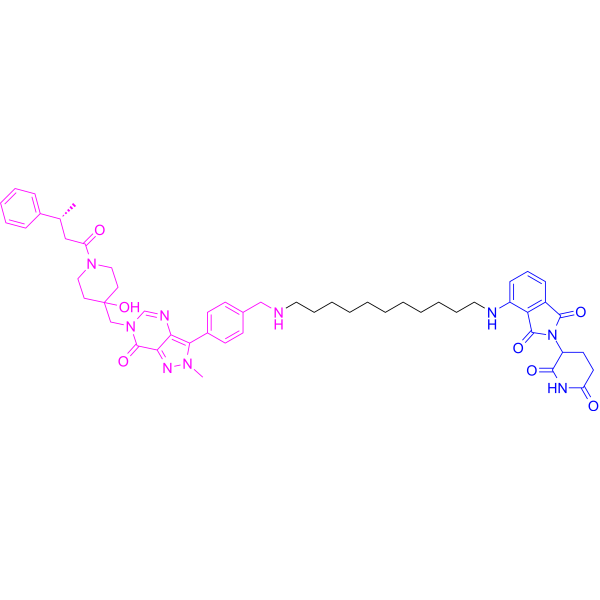
U7D-1 is a USP7 PROTAC degrader that induces selective proteasomal degradation of USP7. U7D-1 destabilizes and downregulates the expression of variant PRC1 complex subunits PCGF1, RING1A and PCGF6, and also slightly reduces the protein level of KDM2B. U7D-1 decreases cell viability, arrests neuroblastoma cells at the G0/G1 cell cycle phase, and downregulates the expression of target genes of PAX3::FOXO1 in FP-RMS cells. U7D-1 increases the level of cleaved PARP in FP-RMS cells, induces cell apoptosis, and upregulates the expression of muscle differentiation markers MYH1 and MYF5. U7D-1 inhibits the growth and proliferation of p53 wild-type and mutant cancer cells, and regulates the apoptosis pathway and E2F pathway. U7D-1 is applicable to studies on neuroblastoma, fusion-positive rhabdomyosarcoma, p53-mutant cancers and cancer-related research .
loading...
    loading...

