145 Results for "

inflammatory component

" in MedChemExpress (MCE) Product Catalog:
Products (145)

145 Results for "inflammatory component" in MCE Product Catalog:

Cat. No.: HY-N17727
CAS No.: 331433-08-0
Divaricatol is an orally ative chromone natural product and an active component in Saposhnikovia divaricata. Divaricatol reduces the release of pro-inflammatory cytokines and restores immune homeostasis by stably binding to 5KIR (a target of the TNF/IL-17 pathway). Divaricatol exerts analgesic effects in mouse models. Divaricatol can be used in the research of pain, diarrhea-predominant irritable bowel syndrome (IBS-D) and qi deficiency syndrome .
loading...
    loading...
Cat. No.: HY-W011849R
CAS No.: 1464-44-4
Phenyl β-D-glucopyranoside (Standard) is the analytical standard of Phenyl β-D-glucopyranoside (HY-W011849). This product is intended for research and analytical applications. Phenyl β-D-glucopyranoside is a component isolated from Phellodendron amurense, which has anti-inflammatory and anti-tumor activities. Phenyl β-D-glucopyranoside inhibits nitric oxide (NO) production, and the expression of iNOS and COX-2. Phenyl β-D-glucopyranoside also inhibits the nuclear translocation of NF-κB. Phenyl β-D-glucopyranoside inhibits the expression of pro-inflammatory cytokines and related genes .
loading...
    loading...
Cat. No.: HY-N2362R
CAS No.: 302-72-7
Synonyms: DL-2-Aminopropionic acid (Standard)
Cucurbitacin IIb (Standard) is the analytical standard of Cucurbitacin IIb. This product is intended for research and analytical applications. Cucurbitacin IIb is an active component isolated from Hemsleya amabilis, induces apoptosis with anti-inflammatory activity. Cucurbitacin IIb inhibits phosphorylation of STAT3, JNK and Erk1/2, enhances the phosphorylation of IκB and NF-κB (p65), blocks nuclear translocation of NF-κB (p65) and decreases mRNA levels of IκBα and TNF-α .
loading...
    loading...
Cat. No.: HY-184553A
Research Areas:  

Inflammation/Immunology

DPPE-PEG2000-WYRGRL is a functionalized PEGylated lipid conjugate composed of three modular components: dipalmitoylphosphatidylethanolamine (DPPE) as the lipid anchoring group, a polyethylene glycol (PEG) spacer arm with a molecular weight of 2000 Da, and WYRGRL peptide (HY-P10739)as the terminal targeting/functional ligand. DPPE-PEG2000-WYRGRL can be incorporated into liposomes, lipid nanoparticles (LNPs), or other nanocarriers to confer ligand-directed targeting capability against specific cell surface receptors in tumor and inflammatory microenvironments.
loading...
    loading...
Cat. No.: HY-184571
Research Areas:  

Inflammation/Immunology

DOPE-PEG1000-WYRGRL is a functionalized PEGylated lipid conjugate composed of three modular components: dioleoylphosphatidylethanolamine (DOPE) as the lipid anchoring group, a polyethylene glycol (PEG) spacer arm with a molecular weight of 1000 Da, and WYRGRL peptide (HY-P10739)as the terminal targeting/functional ligand. DOPE-PEG1000-WYRGRL can be incorporated into liposomes, lipid nanoparticles (LNPs), or other nanocarriers to confer ligand-directed targeting capability against specific cell surface receptors in tumor and inflammatory microenvironments.
loading...
    loading...
Cat. No.: HY-184571A
Research Areas:  

Inflammation/Immunology

DOPE-PEG2000-WYRGRL is a functionalized PEGylated lipid conjugate composed of three modular components: dioleoylphosphatidylethanolamine (DOPE) as the lipid anchoring group, a polyethylene glycol (PEG) spacer arm with a molecular weight of 2000 Da, and WYRGRL peptide (HY-P10739)as the terminal targeting/functional ligand. DOPE-PEG2000-WYRGRL can be incorporated into liposomes, lipid nanoparticles (LNPs), or other nanocarriers to confer ligand-directed targeting capability against specific cell surface receptors in tumor and inflammatory microenvironments.
loading...
    loading...
Cat. No.: HY-184571B
Research Areas:  

Inflammation/Immunology

DOPE-PEG3400-WYRGRL is a functionalized PEGylated lipid conjugate composed of three modular components: dioleoylphosphatidylethanolamine (DOPE) as the lipid anchoring group, a polyethylene glycol (PEG) spacer arm with a molecular weight of 3400 Da, and WYRGRL peptide (HY-P10739)as the terminal targeting/functional ligand. DOPE-PEG3400-WYRGRL can be incorporated into liposomes, lipid nanoparticles (LNPs), or other nanocarriers to confer ligand-directed targeting capability against specific cell surface receptors in tumor and inflammatory microenvironments.
loading...
    loading...
Cat. No.: HY-184571C
Research Areas:  

Inflammation/Immunology

DOPE-PEG5000-WYRGRL is a functionalized PEGylated lipid conjugate composed of three modular components: dioleoylphosphatidylethanolamine (DOPE) as the lipid anchoring group, a polyethylene glycol (PEG) spacer arm with a molecular weight of 5000 Da, and WYRGRL peptide (HY-P10739)as the terminal targeting/functional ligand. DOPE-PEG5000-WYRGRL can be incorporated into liposomes, lipid nanoparticles (LNPs), or other nanocarriers to confer ligand-directed targeting capability against specific cell surface receptors in tumor and inflammatory microenvironments.
loading...
    loading...
Cat. No.: HY-184572
Research Areas:  

Inflammation/Immunology

DMG-PEG1000-WYRGRL is a functionalized PEGylated lipid conjugate composed of three modular components: dimyristoylglycerol (DMG) as the lipid anchoring group, a polyethylene glycol (PEG) spacer arm with a molecular weight of 1000 Da, and WYRGRL peptide (HY-P10739)as the terminal targeting/functional ligand. DMG-PEG1000-WYRGRL can be incorporated into liposomes, lipid nanoparticles (LNPs), or other nanocarriers to confer ligand-directed targeting capability against specific cell surface receptors in tumor and inflammatory microenvironments.
loading...
    loading...
Cat. No.: HY-184572A
Research Areas:  

Inflammation/Immunology

DMG-PEG2000-WYRGRL is a functionalized PEGylated lipid conjugate composed of three modular components: dimyristoylglycerol (DMG) as the lipid anchoring group, a polyethylene glycol (PEG) spacer arm with a molecular weight of 2000 Da, and WYRGRL peptide (HY-P10739)as the terminal targeting/functional ligand. DMG-PEG2000-WYRGRL can be incorporated into liposomes, lipid nanoparticles (LNPs), or other nanocarriers to confer ligand-directed targeting capability against specific cell surface receptors in tumor and inflammatory microenvironments.
loading...
    loading...
Cat. No.: HY-184572B
Research Areas:  

Inflammation/Immunology

DMG-PEG3400-WYRGRL is a functionalized PEGylated lipid conjugate composed of three modular components: dimyristoylglycerol (DMG) as the lipid anchoring group, a polyethylene glycol (PEG) spacer arm with a molecular weight of 3400 Da, and WYRGRL peptide (HY-P10739)as the terminal targeting/functional ligand. DMG-PEG3400-WYRGRL can be incorporated into liposomes, lipid nanoparticles (LNPs), or other nanocarriers to confer ligand-directed targeting capability against specific cell surface receptors in tumor and inflammatory microenvironments.
loading...
    loading...
Cat. No.: HY-184572C
Research Areas:  

Inflammation/Immunology

DMG-PEG5000-WYRGRL is a functionalized PEGylated lipid conjugate composed of three modular components: dimyristoylglycerol (DMG) as the lipid anchoring group, a polyethylene glycol (PEG) spacer arm with a molecular weight of 5000 Da, and WYRGRL peptide (HY-P10739)as the terminal targeting/functional ligand. DMG-PEG5000-WYRGRL can be incorporated into liposomes, lipid nanoparticles (LNPs), or other nanocarriers to confer ligand-directed targeting capability against specific cell surface receptors in tumor and inflammatory microenvironments.
loading...
    loading...
Cat. No.: HY-187188A
Research Areas:  

Inflammation/Immunology

DSG-PEG2000-WYRGRL is a functionalized PEGylated lipid conjugate composed of three modular components: distearoylglycerol (DSG) as the lipid anchoring group, a polyethylene glycol (PEG) spacer arm with a molecular weight of 2000 Da, and WYRGRL peptide (HY-P10739)as the terminal targeting/functional ligand. DSG-PEG2000-WYRGRL can be incorporated into liposomes, lipid nanoparticles (LNPs), or other nanocarriers to confer ligand-directed targeting capability against specific cell surface receptors in tumor and inflammatory microenvironments.
loading...
    loading...
Cat. No.: HY-N1407R
CAS No.: 162857-78-5
Polygalaxanthone III (Standard) is the analytical standard of Polygalaxanthone III (HY-N1407). This product is intended for research and analytical applications. Polygalaxanthone III is a representative xanthone component of Polygala tenuifolia. Polygalaxanthone III inhibits chlorzoxazone 6-hydroxylation catalyzed by CYP2E1, with an IC50 of 50.56 μM. Polygalaxanthone III repairs skin damage induced by M. furfur via activating STAT3 phosphorylation and exerts anti-inflammatory effects. Polygalaxanthone III can be used for research on M. furfur-related skin damage .
loading...
    loading...
Cat. No.: HY-N2510R
CAS No.: 607-91-0
Synonyms: Myristicine (Standard)
Myristicin (Standard) is the analytical standard of Myristicin. This product is intended for research and analytical applications. Myristicine is an orally bioavailable serotonin receptor antagonist and weak monoamine oxidase (MAO) inhibitor. Myristicine also exerts anti-cancer effects on gastric cancer cells by inhibiting the EGFR/ERK signaling pathway. Myristicine is the main component of nutmeg essential oil and has anti-cancer, anti-proliferative, antibacterial, anti-inflammatory and apoptosis-inducing effects. Myristicine abuse can produce hallucinogenic effects, organ damage, etc .
loading...
    loading...
Cat. No.: HY-W010037
CAS No.: 121-00-6
2-tert-Butyl-4-methoxyphenol is a major component of Butylhydroxyanisole (BHA) (HY-B1066). 2-tert-Butyl-4-methoxyphenol is an antioxidant agent, that inhibits expression of Cox2 and Tnfa genes upon stimulation with Lipopolysaccharides (HY-D1056). 2-tert-Butyl-4-methoxyphenol exhibits anti-inflammatory activity, combined with 2,6-di-tert-butyl-4-methylphenol (BHT) .
loading...
    loading...
Cat. No.: HY-N20713
CAS No.: 118524-14-4
Licocoumarone is an active component derived from licorice. Licocoumarone has an IC50 of 12.56 μM and a Kd of 14.90 μM against human DYRK1A. Licocoumarone inhibits NF-κB activation by blocking IκBα degradation and p65 phosphorylation, interferes with MAPK activation via inhibiting phosphorylation, and downregulates the expression of iNOS. Licocoumarone inhibits LPS-induced expression of IL-1β, IL-6 and IL-10; it induces apoptosis of pancreatic cancer cells apoptosis and acts as a neuraminidase inhibitor (IC50 = 27.8 μM). Licocoumarone exhibits anti-inflammatory and antimicrobial activities, with antibacterial activity against Listeria and antifungal activity against Candida parapsilosis. Licocoumarone can be used in studies related to immune and inflammatory diseases, pancreatic cancer, and specific bacterial and fungal infections .
loading...
    loading...
Cat. No.: HY-N2126
CAS No.: 952068-57-4
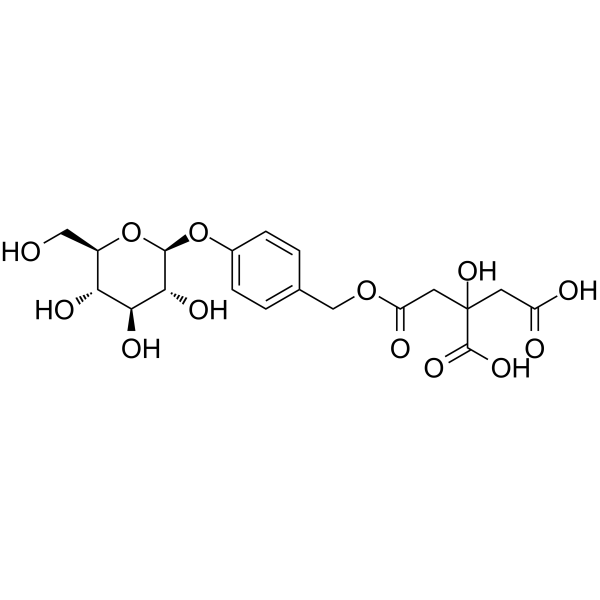
Parishin E is a modulator of hexokinase 2, lactate dehydrogenase A, and silent information regulator 6 (sirtuin 6), and is also a component present in Gastrodia elata Blume . Parishin E reduces the expression of hexokinase 2 and lactate dehydrogenase A, thereby regulating the process of cellular glycolysis . Parishin E regulates the deacetylation mediated by silent information regulator 6 (Sirtuin 6), and inhibits histone 3 lactylation modifications at the H3K18la and H3K27la sites . Parishin E inhibits macrophage polarization . Parishin E alleviates LPS-induced inflammatory responses and suppresses the expression of pro-inflammatory cytokines . Parishin E exerts ameliorating effects on rheumatoid arthritis . Parishin E can be used in studies related to rheumatoid arthritis .
loading...
    loading...
Cat. No.: HY-172832
(±)7(8)-DiHDTE is a metabolite of Docosapentaenoic acid (22n-3) (HY-113159). Docosapentaenoic acid (22n-3) is a component of phospholipids. Docosapentaenoic acid 22n-3 has inhibitory activity against α-amylase and α-glucosidase with IC50s of 17 and 22 μg/mL, respectively. Docosapentaenoic acid 22n-3 increases cell vitality. Docosapentaenoic acid 22n-3 has a weak anti-inflammatory effect .
loading...
    loading...
Cat. No.: HY-N5060
CAS No.: 140-67-0
Synonyms: 4-Allylanisole
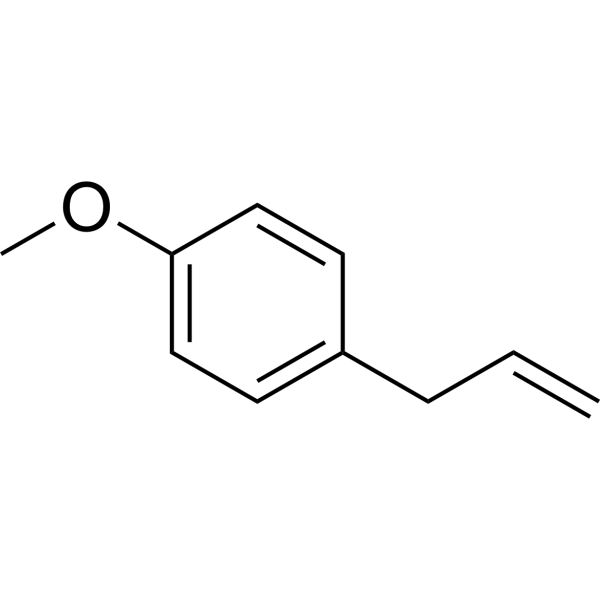
Estragole (4-Allylanisole) is a relatively nontoxic volatile terpenoid ether and major component of the essential oil from many plants. Estragole significantly triggers Apoptosis, suppresses LPS-induced intracellular ROS production. Estragole activats Nrf-2 and regulates NF-κB. Estragole has anti-toxoplasma, anti-inflammatory, anti-edema, antioxidant and immunomodulatory properties. Estragole blocks DRG neuron excitability. Estragole has improves gastric ulcer activity .
loading...
    loading...

