1347 Results for "

High Selectivity

" in MedChemExpress (MCE) Product Catalog:
Products (1347)

1347 Results for "High Selectivity" in MCE Product Catalog:

Cat. No.: HY-183309
Target:  

FXR 17β-HSD

Research Areas:  

Inflammation/Immunology

FXR/HSD17B13-modulator-2 is a dual FXR activator and HSD17B13 inhibitor with human FXR EC50 of 128 nM, human HSD17B13 IC50 of 0.18 μM, high selectivity over related nuclear receptors and HSD17B isoforms, and oral effectiveness.FXR/HSD17B13-modulator-2 alleviates fatty liver, regulates lipid metabolism, reduces inflammation, and attenuates hepatic fibrosis.FXR/HSD17B13-modulator-2 is the first non-carboxylic acid dual FXR/HSD17B13 modulator.FXR/HSD17B13-modulator-2 can be used for the research of metabolic dysfunction-associated steatohepatitis .
loading...
    loading...
Cat. No.: HY-P5142
CAS No.: 193981-10-1
Synonyms: ω-ACTX-Hv1; ω-Atracotoxin-HV1
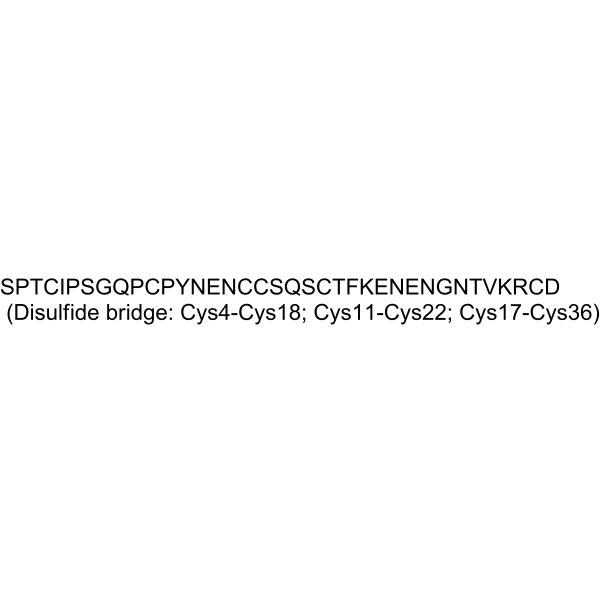
ω-Hexatoxin-Hv1a (ω-ACTX-Hv1; ω-Atracotoxin-HV1) is an orally active insecticidal neurotoxin containing an inhibitor cystine knot motif and a selective calcium channel inhibitor. ω-Hexatoxin-Hv1a blocks L-type voltage-dependent Ca 2+ channels and reduces intracellular calcium ion concentration, thereby decreasing apoptosis, necroptosis and oxidative stress, and promoting cell recovery and energy level elevation. ω-Hexatoxin-Hv1a causes larval paralysis and death by impairing neurotransmission in the central nervous system of insects. It shows high injectable toxicity against insects of multiple orders, but exhibits weak oral toxicity. ω-Hexatoxin-Hv1a is widely applicable to studies related to ischemia-reperfusion injury, atopic dermatitis, and ischemic injury of cardiomyocytes and neurons .
loading...
    loading...
Cat. No.: HY-P5142A
Synonyms: ω-ACTX-Hv1 TFA; ω-Atracotoxin-HV1 TFA
ω-Hexatoxin-Hv1a (ω-ACTX-Hv1; ω-Atracotoxin-HV1) TFA is an orally active insecticidal neurotoxin containing an inhibitor cystine knot motif and a selective calcium channel inhibitor. ω-Hexatoxin-Hv1a TFA blocks L-type voltage-dependent Ca 2+ channels and reduces intracellular calcium ion concentration, thereby decreasing apoptosis, necroptosis and oxidative stress, and promoting cell recovery and energy level elevation. ω-Hexatoxin-Hv1a TFA causes larval paralysis and death by impairing neurotransmission in the central nervous system of insects. It shows high injectable toxicity against insects of multiple orders, but exhibits weak oral toxicity. ω-Hexatoxin-Hv1a TFA is widely applicable to studies related to ischemia-reperfusion injury, atopic dermatitis, and ischemic injury of cardiomyocytes and neurons .
loading...
    loading...
Cat. No.: HY-P991525
CAS No.: 2923542-55-4

Target:  

Fc Receptor (FcR)

Research Areas:  

Cancer

2141-V11 is an Fc-engineered agonistic antibody against human CD40 with selectively enhanced binding affinity for human FcγRIIB. 2141-V11 drives CD40 multimerization and agonistic signal transduction, activates dendritic cells, promotes antigen cross-presentation and CD8 + T cell priming, induces tertiary lymphoid structure formation, increases leukocyte infiltration, and mediates local and abscopal anti-tumor effects, systemic immune activation and immune memory. 2141-V11 exhibits extremely low systemic toxicity upon intratumoral or intravesical administration, with no dose-limiting toxicity observed at the tested intratumoral doses, whereas high-dose systemic administration induces thrombocytopenia and elevated transaminases. 2141-V11 can be used in research related to breast cancer, melanoma, BCG-unresponsive non-muscle invasive bladder cancer, and recurrent malignant glioma .
loading...
    loading...
Cat. No.: HY-W680886
CAS No.: 152623-93-3
6-APDB is a class of monoamine neurotransmitter releaser and Monoamine Transporter modulator that exerts selective effects on human monoamine transporters and acts as a partial agonist at 5-HT2 family receptors. For NET, 6-APDB has an IC50 of 0.56 μM and a Ki of 18 μM; for SERT, it has an IC50 of 2.3 μM and a Ki of 23 μM; for DAT, it has an IC50 of 33 μM and a Ki of >30 μM, and affinity for rat and mouse TAAR1, with Ki values of 1.0 μM and 0.21 μM, respectively. 6-APDB inhibits norepinephrine and 5-HT reuptake, mediates the release of three types of monoamine neurotransmitters, shows a dose-dependent biphasic locomotor effect in mice, and fully substitutes the discriminative stimulus effect of MDMA. 6-APDB shows no significant cytotoxicity at high concentrations, and possesses empathogenic psychoactivity, potential hallucinogenic effects, and behavioral effects associated with intermittent abuse .
loading...
    loading...
Cat. No.: HY-13323R
CAS No.: 1138549-36-6
CX-5461 (Standard) is the analytical standard of CX-5461 (HY-13323). This product is intended for research and analytical applications. CX-5461 is a selective, orally active RNA polymerase I inhibitor. CX-5461 disrupts the formation of the SL1-rDNA complex, thereby blocking the transcription initiation of ribosomal RNA without altering the activity of RNA polymerase II, DNA replication, or protein translation processes. CX-5461 upregulates the expression of p21, MDM2, Sestrin1/2, and phosphorylated AMPKα, and reduces the level of phosphorylated Akt. CX-5461 induces G2/G2/M cell cycle arrest, Autophagy, Apoptosis, and cellular senescence, and activates CHK1, CHK2, and RPA. CX-5461 can be used in research related to osteosarcoma, cervical cancer, hematologic malignancies, high-grade serous ovarian cancer, and solid tumors .
loading...
    loading...
Cat. No.: HY-173496
CAS No.: 192876-13-4
Research Areas:  

Cancer

ST6GAL1-IN-1 is an orally active selective ST6GAL1 inhibitor (IC50 = 20 μM). ST6GAL1-IN-1 exhibits high antimetastatic potential, effectively inhibiting the migration of MDA-MB-231 cells at noncytotoxic concentrations. ST6GAL1-IN-1 can disrupt integrin sialylation in MDA-MB-231 cells. ST6GAL1-IN-1 inhibits tumor angiogenesis and cancer metastasis via the Integrin/VEGFR2-mediated signaling pathway. ST6GAL1-IN-1 effectively suppresses both tumor growth and cancer metastasis on the MDA-MB-231 xenograft model. ST6GAL1-IN-1 can be used for the study of Triple-negative breast cancer (TNBC) .
loading...
    loading...
Cat. No.: HY-179612
Research Areas:  

Infection

SARS-CoV-2 3CLpro-IN-34 (Compound 55) is a highly efficient non-covalent inhibitor of the SARS-CoV-2 3CL pro protease (b. SARS-CoV-2 3CL pro protease) with an IC50 of 1.9 μM. SARS-CoV-2 3CLpro-IN-34 can inhibit the 3CL pro protein of SARS-CoV-1, with its IC50 being 3.2 μM, and it shows high selectivity towards host cysteine proteases (such as cathepsins L/K and calpain). SARS-CoV-2 3CLpro-IN-34 exhibits antiviral activity in cells infected with SARS-CoV-2, with its EC50 being 25 μM, and it is not affected by P-gp inhibitors and shows no significant cytotoxicity. SARS-CoV-2 3CLpro-IN-34 can be used for research on SARS-CoV-2 infection .
loading...
    loading...
Cat. No.: HY-181193
Research Areas:  

Infection

PROTAC SARS-CoV-2 Mpro degrader-7 is a SARS-CoV-2 main protease (Mpro) PROTAC degrader with a DC50 of 0.985 μM. PROTAC SARS-CoV-2 Mpro degrader-7 promotes K48-linked polyubiquitination of SARS-CoV-2 Mpro, leading to proteasome-dependent degradation via the ubiquitin-proteasome system.PROTAC SARS-CoV-2 Mpro degrader-7 forms a ternary complex with SARS-CoV-2 Mpro and CRBN E3 ubiquitin ligase to enable viral protease ubiquitination.PROTAC SARS-CoV-2 Mpro degrader-7 exhibits a high selectivity index, and induces dose-dependent degradation of SARS-CoV-2 Mpro in stable cells expressing the viral protease.PROTAC SARS-CoV-2 Mpro degrader-7 can be used for the research of COVID-19 .
loading...
    loading...
Cat. No.: HY-183483
CAS No.: 75987-18-7
Research Areas:  

Cardiovascular Disease

OKY-1581 is a potent, orally active and selective thromboxane A2 synthase inhibitor. OKY-1581 inhibits TXA2 synthesis and reduces the generation of its stable metabolite TXB2. OKY-1581 shifts arachidonic acid (MCE HY-109590) metabolism toward the production of prostaglandin E, prostaglandin F and 6-keto-prostaglandin F. OKY-1581 modulates the TXA2 / PGI2-related eicosanoid balance and inhibits arachidonic acid-induced platelet aggregation without directly inhibiting the cyclooxygenase step. At high oral doses, OKY-1581 also enhances hepatic peroxisomal β-oxidation and reduces serum triglyceride and cholesterol levels. OKY-1581 attenuates cerebral vasospasm after experimental subarachnoid hemorrhage by reducing TXA2-related vasoconstrictive signaling. OKY-1581 can be used in studies of atherosclerosis, cerebral vasospasm after subarachnoid hemorrhage and cardiovascular diseases .
loading...
    loading...
Cat. No.: HY-W327027
CAS No.: 314742-00-2
Target:  

Fluorescent Dye

Research Areas:  

Others

7-(2,4-Dinitrophenoxy)-4-methyl-2H-chromen-2-one (Compound 1) is a fluorescent probe for the detection of hydrogen sulfide (H2S). 7-(2,4-Dinitrophenoxy)-4-methyl-2H-chromen-2-one has a low detection limit (4×10 -6 mol/L), good selectivity and high sensitivity. 7-(2,4-Dinitrophenoxy)-4-methyl-2H-chromen-2-one shows almost no cytotoxicity at concentrations of 150 µg/mL. 7-(2,4-Dinitrophenoxy)-4-methyl-2H-chromen-2-one has the excitation peak of 331 nm, and the emission peak about 385 nm in DMSO solvent. Upon the addition of increasing amounts of HS -, the fluorescence intensity increases obviously at about 392 nm .
loading...
    loading...
Cat. No.: HY-D3117
CAS No.: 2146114-18-1
Target:  

Fluorescent Dye

Research Areas:  

Others

MBCB is a two-photon Fluorescent probe for dual-detection of mitochondrial SO₂ derivatives and viscosity. For SO₂ derivatives detection, the probe utilizes a Michael addition mechanism: nucleophilic addition of SO₂ derivatives to the C=C bond between the carbazole skeleton and 3-methylbenzothiazolium moiety destroys the strong intramolecular charge transfer (ICT) system between these groups, while enhancing the weak ICT system between the benzothiazole group and carbazole framework; this causes the red emission at 600 nm to decrease and the blue emission at 434 nm to increase, creating a ratiometric response based on the I₄₃₄ₙₘ/I₆₀₀ₙₘ intensity ratio. For viscosity detection, in low-viscosity environments, steric hindrance creates a twisted ICT (TICT) system with weak fluorescence, while in high-viscosity environments, intramolecular rotation is blocked, the TICT state is disrupted, and the strong ICT system is recovered, leading to a strong red emission at 567 nm with negligible change to the short-wavelength emission at 415 nm, creating a ratiometric response based on the I₅₆₇ₙₘ/I₄₁₅ₙₘ intensity ratio that has a logarithmic linear relationship with viscosity. The probe has excitation/emission wavelengths of Ex/Em = 351/434, 600 nm for SO₂ derivatives detection and Ex/Em = 351/567 nm for viscosity detection, with two-photon excitation at 740 nm for bioimaging; it also exhibits good mitochondrial targeting ability with a Pearson's colocalization coefficient of 0.93 when paired with Mito-Tracker Green. The probe shows high sensitivity and selectivity for SO₂ derivatives, has low cell cytotoxicity, and can be applied to detect exogenous/endogenous HSO₃⁻ in living cells and in vivo, as well as visualize mitochondrial viscosity changes induced by nystatin[1].
loading...
    loading...
Cat. No.: HY-12733
CAS No.: 1254318-44-9
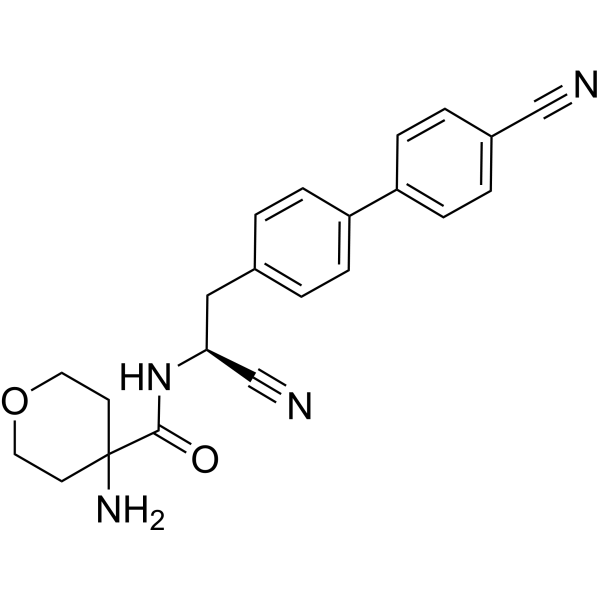
AZD5248 is an orally active, selective dipeptidyl peptidase 1 (cathepsin C) inhibitor, with IC50 values of 1 nM and 17 nM against human CatC, 44 nM against human DPP1, and 67 nM against rat DPP1. It exhibits low clearance and high bioavailability in animal models. AZD5248 forms an irreversible covalent bond with the catalytic Cys234 residue of CatC, exerts reversible inhibition via its nitrile moiety, blocks CatC-dependent amyloid formation, and reduces the activation levels of neutrophil serine proteases in bone marrow and blood. AZD5248 reacts with aortic elastin aldehydes to form stable 4-imidazolinones, induces ultrastructural changes in aortic tissue, and has an α-amino acid-based backbone. AZD5248 reduces the severity of acute pancreatitis in mouse models. AZD5248 can be used in research on chronic obstructive pulmonary disease, acute pancreatitis, neurodegenerative diseases, lysosomal storage disorders, acute lung injury, cystic fibrosis, and neutrophil-mediated inflammatory diseases .
loading...
    loading...
Cat. No.: HY-162677
CAS No.: 1610794-70-1
Research Areas:  

Cardiovascular Disease

MT-1207 is an orally active, selective adrenergic α1 and 5-HT2A receptor antagonist. The IC50 values of MT-1207 for α1A, α1B, α1D, and 5-HT2A are <0.1 nM, 0.15 nM, 1.40 nM, and 0.27 nM, respectively. MT-1207 induces vasodilation, improves baroreflex sensitivity, and reduces heart rate in isolated hearts. MT-1207 lowers blood pressure, protects the heart, brain, and kidneys, improves cognition, delays stroke, reduces mortality, and lowers uric acid without impairing renal function in SHR/2K1C/2K2C models. MT-1207 exhibits high plasma protein binding, resistance to plasma esterases, and NADPH-dependent hepatic metabolism. MT-1207 can be used for research related to hypertension .
loading...
    loading...
Cat. No.: HY-184397
Target:  

MDM-2/p53

Research Areas:  

Cancer

P53-Y220C stabilizer-1 as an indole-based p53-Y220C stabilizer (EC50 = 0.46 μM) that engages the mutation-induced cavity. P53-Y220C stabilizer-1 binds the p53-Y220C mutant with high affinity (KD = 56 nM) and acts as a selective indole-based p53-Y220C stabilizer that engages the mutation-induced cavity. P53-Y220C stabilizer-1 increases mutant protein thermal stability and restores p53 transcriptional activity, mainly triggering cell cycle arrest instead of acute apoptosis. P53-Y220C stabilizer-1 can be applied to cancers harboring the p53-Y220C mutation, such as gastric cancer .
loading...
    loading...
Cat. No.: HY-188129
CAS No.: 2889348-10-9
Target:  

GCGR

Research Areas:  

Metabolic Disease

GLP-1R modulator-2 is a GLP-1R positive allosteric modulator with an EC50 of 106 nM. GLP-1R modulator-2 simultaneously binds to the extracellular pocket of GLP-1R and the peptide ligand GLP-1 (9-36) through a molecular glue-like allosteric effect, and selectively enhances GLP-1 (9-36)-induced G protein-dependent cAMP signaling. When used in combination with GLP-1 (9-36) under high-glucose conditions, GLP-1R modulator-2 enhances glucose-dependent insulin secretion in wild-type rat pancreatic islets. GLP-1R modulator-2 exhibits strong probe dependence and significantly potentiates the activity of GLP-1 (9-36). GLP-1R modulator-2 can be used for research on type 2 diabetes and obesity .
loading...
    loading...
Cat. No.: HY-L166
1,751 compounds

Ion channel is a membrane-binding enzyme whose catalytic site is an ion conduction pore, which is opened and closed in response to specific environmental stimuli (voltage, ligand concentration, membrane tension, temperature, etc.). Ion channel provide pores for the passive diffusion of ions on the biofilm. Due to their high selectivity for ion, ion channel are generally classified as sodium (Na+ ), potassium (K+ ), calcium (Ca2+ ), chloride (Cl- ), and non-specific cation channel. Ion channel is an important contributor to cell signal transduction and homeostasis. In addition to electrical signal transduction, ion channel also have many functions: regulating vascular smooth muscle contraction, maintaining normal cell volume, regulating glandular secretion, protein kinase activation, etc. Therefore, dysfunction of ion channel can lead to many diseases, and its mechanism research is particularly important.

MCE designs a unique collection of 1,751 small molecules related to ion channel, mainly targeting Na+ channel, K+ channel, Ca2+ channel, GABA receptor, iGluR, etc. It is an essential tool for research of cardiovascular diseases, Nervous system diseases and other diseases.

Cat. No.: HY-L908
1,244 compounds

Small molecule covalent inhibitors, or irreversible inhibitors, are a type of inhibitors that exert their biological functions by irreversibly binding to target through covalent bonds. Compared with non-covalent inhibitors, covalent inhibitors have obvious advantages in bioactivity, such that covalent warheads can target rare residues of a particular target protein, thus leading to the development of highly selective inhibitors and achieving a more complete and continued target occupancy in living systems. In recent years, the distinct strengths of covalent inhibitors in overcoming drug resistance had been recognized. However, toxicity can be a real challenge related to this class of therapeutics due to their potential for off-target reactivity and has led to these drugs being disfavored as a drug class. The drug design and optimization of covalent inhibitors has become a hot spot in drug discovery.

MCE Lead-like Covalent Screening Library offers a valuable resource of 1,049 lead-like compounds with commonly used covalent warheads. These warheads, such as acrylamide, activated terminal alkyne, acyloxymethyl ketone, and boronic acid, are capable of reacting with specific amino acid residues, including cysteine, lysine, serine, and histidine. The inclusion of these reactive warheads in the library allows researchers to explore the potential of covalent inhibition, a powerful approach in drug discovery.

Cat. No.: HY-D3128
CAS No.: 2348351-60-8
Target:  

Fluorescent Dye

Research Areas:  

Others

Mito-RhFe is a Fluorescent probe for mitochondrial labile Fe³⁺ monitoring via imaging and flow cytometry. This probe is a rhodamine-based construct with a spirolactam fluorescence signaling group and an N2-hydroxyethyldiethylenetriamine chelator; its delocalized positive charge enables mitochondria-targeting ability in live cells, and it exhibits fine cell membrane permeability. In its native state, it exists in the non-fluorescent spirolactam form, but upon binding to Fe³⁺, it undergoes a ring-opening conversion to the fluorescent rhodamine form, triggering a turn-on fluorescent response; this process is reversible, as the addition of the metal chelator TPEN removes Fe³⁺ and converts the probe back to its non-fluorescent spirolactam form, and re-addition of Fe³⁺ restores fluorescence. The probe shows high selectivity for Fe³⁺ over most other metal cations present in living systems, with a ~90-fold fluorescence enhancement upon binding to 20 equiv of Fe³⁺. Mito-RhFe has excitation/emission wavelengths of Ex/Em = 540/578 nm, with an ~8 nm bathochromic shift in emission upon Fe³⁺ binding, and it can also be excited at 543 nm for confocal imaging with emission detected at 570-620 nm[1].
loading...
    loading...
Cat. No.: HY-164729
FZ-AD005 is a DLL3-targeting antibody-drug conjugate (ADC) with high selectivity, composed of the anti-DLL3 antibody FZ-A038 (HY-P990896), a dipeptide linker (Val-Ala), and DXd (HY-13631D). The Kd value of FZ-AD005 for human DLL3 ranges from 13.29 to 58.3 pmol/L. After binding to DLL3 on the cell surface, FZ-AD005 mediates endocytosis, and the payload DXd is released via cleavage by lysosomal cathepsins. DXd inhibits topoisomerase TopI to induce double-strand DNA breaks, cell cycle arrest and apoptosis, and FZ-AD005 exhibits bystander killing activity against adjacent DLL3-negative cells. FZ-AD005 shows stable circulation in vivo, has good tolerance and acceptable pharmacokinetic profiles in rats and cynomolgus monkeys, and effectively inhibits the growth of DLL3-expressing tumor cells. FZ-AD005 serves as a promising candidate molecule for research on small cell lung cancer and human neuroendocrine prostate cancer .
loading...
    loading...

