
163 Results for "

Emulsifier

" in MedChemExpress (MCE) Product Catalog:
Products (163)

163 Results for "Emulsifier" in MCE Product Catalog:

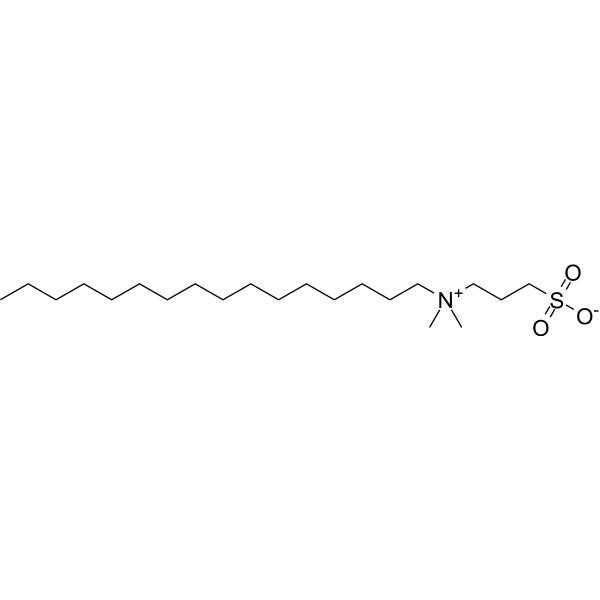
Cat. No.: HY-W099575
CAS No.: 2281-11-0
3-(Hexadecyldimethylammonio)propane-1-sulfonate is an organic compound belonging to the class of sulfonates. It is a quaternary ammonium surfactant commonly used in various industrial and laboratory applications such as the production of detergents, personal care products and pharmaceuticals. 3-(Hexadecyldimethylammonio)propane-1-sulfonate is surface active and can be used as an emulsifier, foaming agent and wetting agent. In addition, it is used as a solubilizer in protein purification and as a surfactant in chromatography.
loading...
    loading...
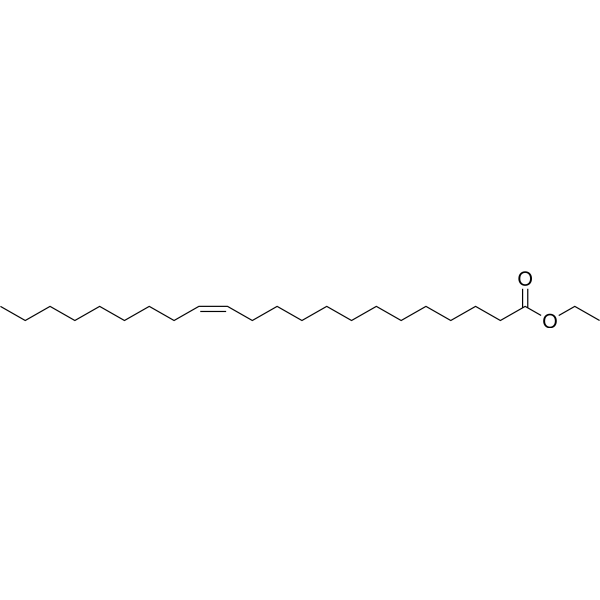
Cat. No.: HY-W099644
CAS No.: 37910-77-3
Synonyms: Ethyl erucate
Research Areas:  

Others

Ethyl docos-13-enoate is a colorless or pale yellow liquid with a sweet floral aroma, used as a flavoring agent in the food industry and as a flavor enhancer in perfumes and colognes. It is also found in some vegetable oils and is used as a surfactant and emulsifier in personal care products. Ethyl docos-13-enoate is a versatile compound used in various industries due to its pleasant odor and ability to mix ingredients together.
loading...
    loading...
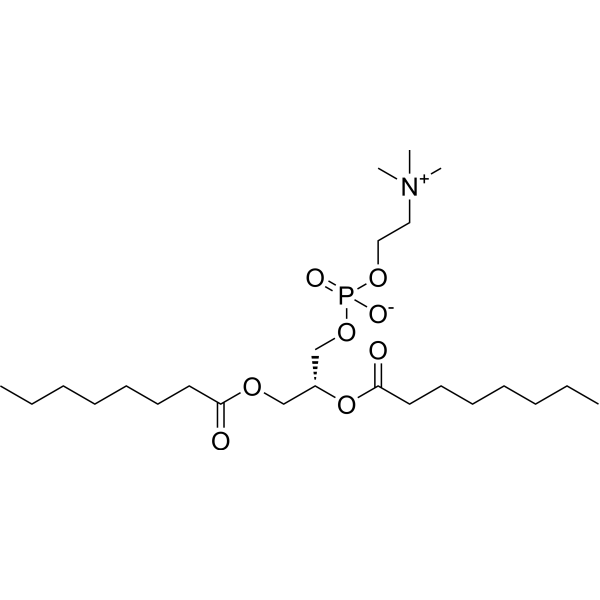
Cat. No.: HY-125619
CAS No.: 19191-91-4
Purity:  99.86%
Target:  

Liposome

Research Areas:  

Others

1,2-dioctanoyl-sn-glycero-3-phosphocholine, is a phospholipid commonly used as a component of liposome formulations and drug delivery systems. 1,2-dioctanoyl-sn-glycero-3-phosphocholine has unique chemical properties that allow it to form stable bilayers and vesicles, allowing drug encapsulation and delivery to specific targets in the body. It acts as a stabilizer and emulsifier, which can improve the solubility and bioavailability of drugs.
loading...
    loading...
Cat. No.: HY-W008606
CAS No.: 18996-35-5
Synonyms: Citric acid monosodium salt
Sodium citrate monobasic (Citric acid monosodium salt) is a natural preservative and food tartness enhancer. Sodium citrate monobasic induces apoptosis and cell cycle arrest at G2/M phase and S phase in HaCaT cells. Sodium citrate monobasic cause oxidative damage of the liver by means of the decrease of antioxidative enzyme activities. Sodium citrate monobasic is also an acidulant, emulsifier, sequestrant and buffering agent widely used across many industries .
loading...
    loading...
Cat. No.: HY-W008816R
CAS No.: 143-08-8
Synonyms: Octyl carbinol (Standard); Pelargonic alcohol (Standard)
Nonanol (Standard) is the analytical standard of Nonanol (HY-W008816). This product is intended for research and analytical applications. Nonan-1-ol is an organic compound commonly used in the manufacture of surfactants and lubricants, among others. It can be used as a detergent, emulsifier and stabilizer, and is widely used in some cosmetics, personal care products and printing inks. In addition, the compound has important applications in certain industrial fields, for example in the production of plastics and rubber.
loading...
    loading...
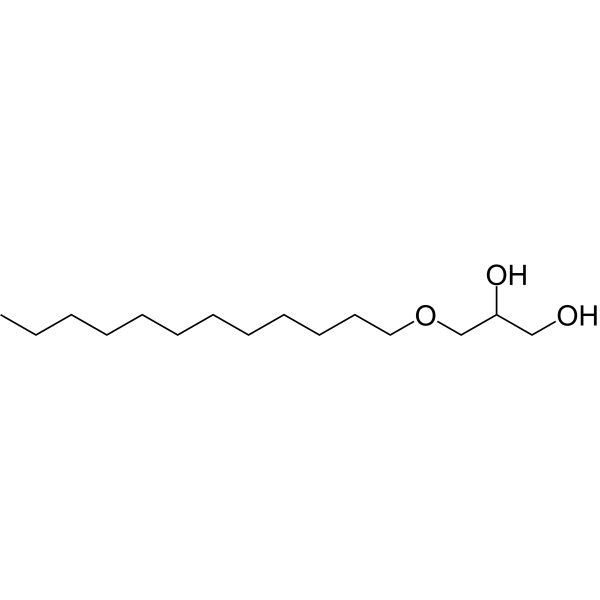
Cat. No.: HY-W127386
CAS No.: 1561-07-5
Synonyms: 3-Dodecyloxypropane-1,2-diol
1-O-Dodecyl-rac-glycerol is a class of organic compounds belonging to the class of racemic glycerol derivatives. It consists of a dodecyl chain attached to the sn-1 position of the racemic glycerol molecule. 1-O-Dodecyl-rac-glycerol has various applications in the pharmaceutical industry, especially as an intermediate in the synthesis of lipid drug delivery systems and membranes. Additionally, it has potential use as an emulsifier and surfactant in cosmetic and personal care products.
loading...
    loading...
Cat. No.: HY-D1005A4
CAS No.: 9003-11-6
Synonyms: PEG-PPG-PEG, 1630 (Average)
Poloxamer 122 L42 (PEG-PPG-PEG, 1630 (Average)) is a synthetic nonionic triblock copolymer composed of polyoxyethylene-polyoxypropylene, with emulsifying and wetting properties. Poloxamer 122 L42 forms large spherical aggregates in aqueous solutions near its cloud point,. Poloxamer 122 L42 can form thermoreversible hydrogels, and is also used in research related to serving as a drug delivery carrier in the fields of food additives, cosmetics, pharmaceutical preparations and tissue engineering .
loading...
    loading...
Cat. No.: HY-W008974
CAS No.: 13177-41-8
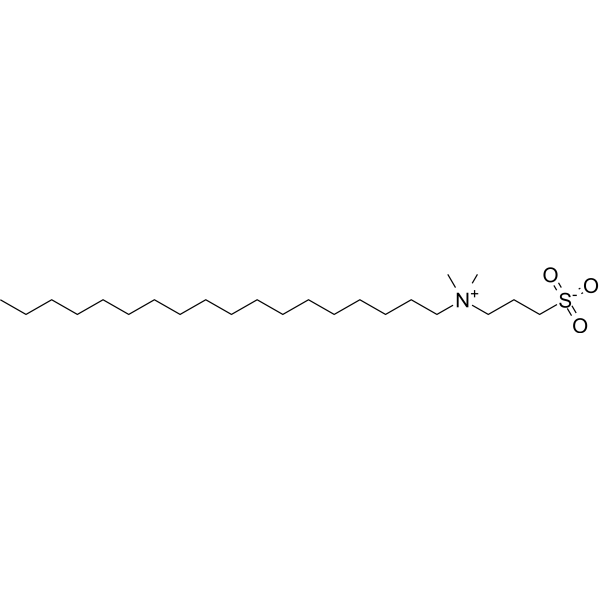
3-(Dimethyl(octadecyl)ammonio)propane-1-sulfonate is a class of quaternary ammonium compounds. It is a surfactant and cationic detergent with amphiphilic properties and therefore useful in various industrial and biomedical applications. 3-(Dimethyl(octadecyl)ammonium)propane-1-sulfonate is commonly used as an emulsifier, solubilizer and antimicrobial agent in personal care products, detergents, textiles and pharmaceutical formulations. It is also used as a reagent in analytical chemistry, especially in the analysis of proteins and DNA.
loading...
    loading...
Cat. No.: HY-W099547
CAS No.: 2197-63-9
Target:  

Liposome

Research Areas:  

Others

Dihexadecyl hydrogen phosphateIt is an organic compound belonging to phospholipids. It's often used as an emulsifier, which means it helps mix two substances together that don't usually mix well, such as oil and water. Dihexadecyl hydrogen phosphateIt has several applications in the food industry, especially in the production of processed foods where it improves texture and stability. Additionally, it has applications in the pharmaceutical industry where it can be used ain the generation of micelles, liposomes, and other types of artificial membranes.
loading...
    loading...
Cat. No.: HY-W250166
CAS No.: 78330-21-9
Poly(ethylene glycol) (12) tridecyl ether is a nonionic surfactant belonging to the family of ethoxylated fatty alcohols. It is commonly used as an emulsifier, solubilizer, and wetting agent in a variety of industrial and personal care products. Poly(ethylene glycol)(12) tridecyl ether has various properties that make it suitable for these applications, including its low toxicity, high solubility in water and organic solvents, and ability to stabilize emulsions. In addition, it can be used as a raw material for the production of other surfactants and specialty chemicals.
loading...
    loading...
Cat. No.: HY-Y1039R
CAS No.: 123-94-4
Synonyms: 1-Monostearin (Standard); 2,3-Dihydroxypropyl stearate (Standard)
1-Stearoyl-rac-glycerol (Standard) is the analytical standard of 1-Stearoyl-rac-glycerol. This product is intended for research and analytical applications. Stearic acid 1-monoglyceride is an ester composed of stearic acid and glycerin, commonly known as glyceryl monostearate. 1-Monoglyceride stearate has unique chemical properties that make it an important ingredient in a variety of industrial processes, including food production, cosmetics, and pharmaceuticals. It acts as an emulsifier, stabilizer and thickener in these products, enhancing their texture and shelf life.
loading...
    loading...
Cat. No.: HY-101530B
CAS No.: 9004-99-3
Synonyms: PEG 40 stearate
Research Areas:  

Others

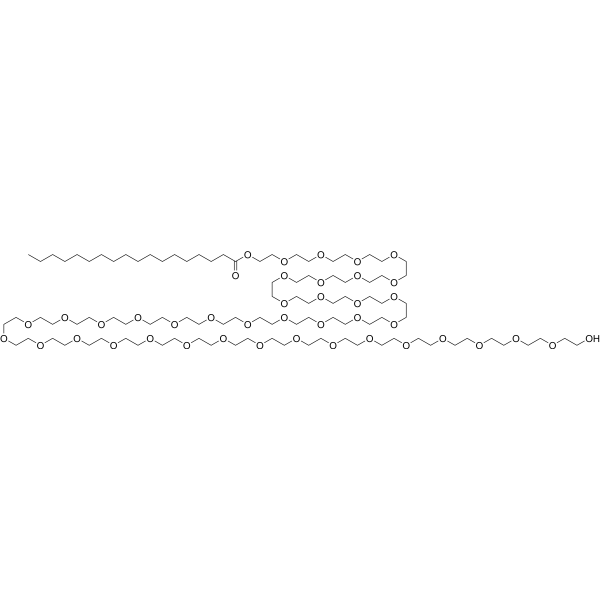
Polyoxyl 40 stearate (PEG 40 stearate) is a nonionic surfactant formed by the esterification of stearic acid with polyethylene glycol (PEG) containing approximately 40 ethoxy units, it is used in pharmaceutical preparations, nanodrug carriers, emulsification systems and biomedical materials. Polyoxyl 40 stearate can serve as a matrix component of solid lipid nanoparticles to achieve controlled release of encapsulated antifungal drugs; it can also act as a base material for solid lipid nanoparticles for vaginal administration, and polymerizable groups can be introduced via modification with acryloyl chloride .
loading...
    loading...
Cat. No.: HY-151234
CAS No.: 93-83-4
Synonyms: OADA
Research Areas:  

Infection

Oleic acid diethanolamide (OADA) is a non-ionic, biodegradable surfactant. Oleic acid diethanolamide reduces the surface tension of water, emulsifies free water in diesel fuel to form a stable emulsion, and can be loaded onto sulfonated polystyrene nanoparticles to enhance oil recovery. Oleic acid diethanolamide is one of the nematicidal secondary metabolites produced by Aspergillus flavus. Oleic acid diethanolamide can be used in studies related to biological control of root-knot nematodes, enhanced oil recovery, and diesel fuel emulsion stabilization .
loading...
    loading...
Cat. No.: HY-N1428AR
CAS No.: 5949-29-1
Citric acid monohydrate (Standard) is the analytical standard of Citric acid monohydrate (HY-N1428A). This product is intended for research and analytical applications. Citric acid monohydrate is a natural preservative and food tartness enhancer. Citric acid monohydrate induces apoptosis and cell cycle arrest at G2/M phase and S phase in HaCaT cells. Citric acid monohydrate cause oxidative damage of the liver by means of the decrease of antioxidative enzyme activities. Citric acid monohydrate is also an acidulant, emulsifier, sequestrant and buffering agent widely used across many industries .
loading...
    loading...
Cat. No.: HY-N1428R
CAS No.: 77-92-9
Citric acid (Standard) is the analytical standard of Citric acid (HY-N1428). This product is intended for research and analytical applications. Citric acid is a natural preservative and food tartness enhancer. Citric acid induces apoptosis and cell cycle arrest at G2/M phase and S phase in HaCaT cells. Citric acid cause oxidative damage of the liver by means of the decrease of antioxidative enzyme activities. Citric acid is also an acidulant, emulsifier, sequestrant and buffering agent widely used across many industries .
loading...
    loading...
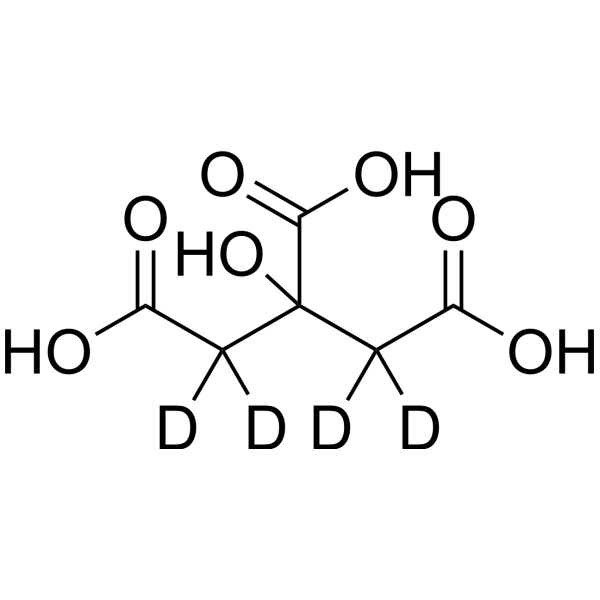
Cat. No.: HY-N1428S
CAS No.: 147664-83-3
Citric acid-d4 is the deuterium labeled Citric acid (HY-N1428). Citric acid is a natural preservative and food tartness enhancer. Citric acid induces apoptosis and cell cycle arrest at G2/M phase and S phase in HaCaT cells. Citric acid cause oxidative damage of the liver by means of the decrease of antioxidative enzyme activities. Citric acid is also an acidulant, emulsifier, sequestrant and buffering agent widely used across many industries .
loading...
    loading...
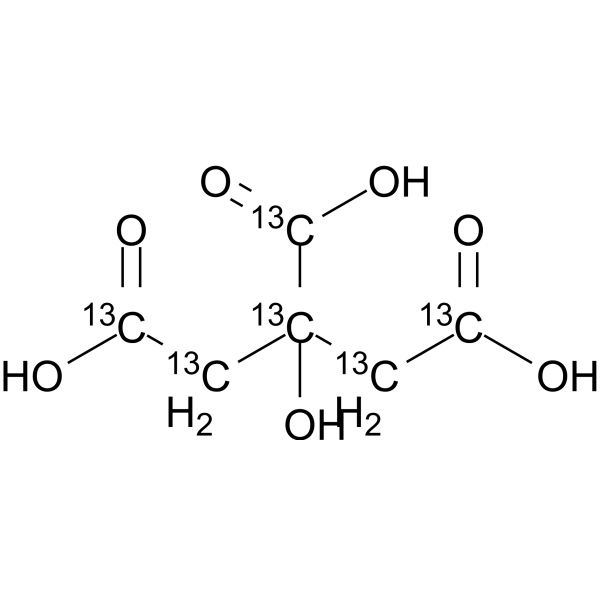
Cat. No.: HY-N1428S1
CAS No.: 287389-42-8
Citric acid- 13C6 is the 13C-labeled Citric acid (HY-N1428). Citric acid is a natural preservative and food tartness enhancer. Citric acid induces apoptosis and cell cycle arrest at G2/M phase and S phase in HaCaT cells. Citric acid cause oxidative damage of the liver by means of the decrease of antioxidative enzyme activities. Citric acid is also an acidulant, emulsifier, sequestrant and buffering agent widely used across many industries .
loading...
    loading...
Cat. No.: HY-N1428S2
CAS No.: 224054-26-6
Citric acid- 13C2 is the 13C-labeled Citric acid (HY-N1428). Citric acid is a natural preservative and food tartness enhancer. Citric acid induces apoptosis and cell cycle arrest at G2/M phase and S phase in HaCaT cells. Citric acid cause oxidative damage of the liver by means of the decrease of antioxidative enzyme activities. Citric acid is also an acidulant, emulsifier, sequestrant and buffering agent widely used across many industries .
loading...
    loading...
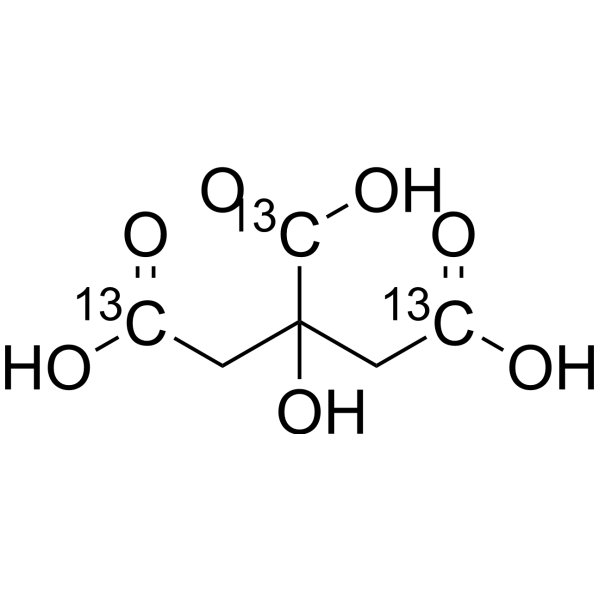
Cat. No.: HY-N1428S3
CAS No.: 302912-06-7
Citric acid- 13C3 is the 13C-labeled Citric acid (HY-N1428). Citric acid is a natural preservative and food tartness enhancer. Citric acid induces apoptosis and cell cycle arrest at G2/M phase and S phase in HaCaT cells. Citric acid cause oxidative damage of the liver by means of the decrease of antioxidative enzyme activities. Citric acid is also an acidulant, emulsifier, sequestrant and buffering agent widely used across many industries .
loading...
    loading...
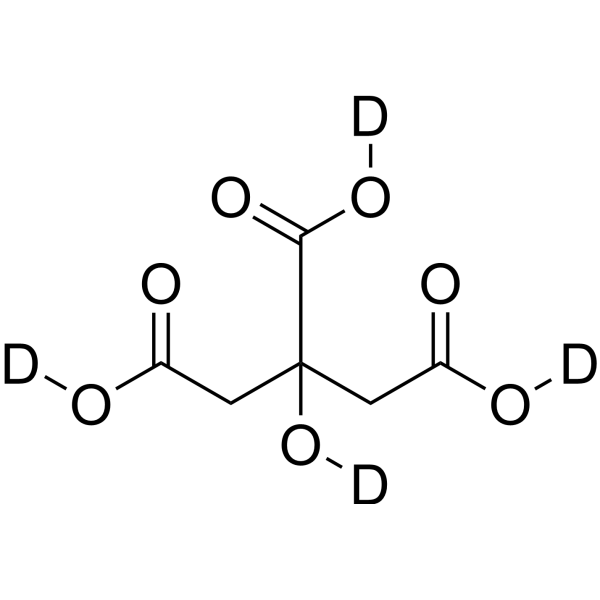
Cat. No.: HY-N1428S6
Citric acid-d4-1 is deuterated labeled Citric acid (HY-N1428). Citric acid is a natural preservative and food tartness enhancer. Citric acid induces apoptosis and cell cycle arrest at G2/M phase and S phase in HaCaT cells. Citric acid cause oxidative damage of the liver by means of the decrease of antioxidative enzyme activities. Citric acid is also an acidulant, emulsifier, sequestrant and buffering agent widely used across many industries .
loading...
    loading...

