
148 Results for "

non-ionic

" in MedChemExpress (MCE) Product Catalog:
Products (148)

148 Results for "non-ionic" in MCE Product Catalog:

Cat. No.: HY-B2106D
CAS No.: 9002-92-0
Synonyms: Decaethylene glycol monododecyl ether (C12E10); Polidocanol (10)
Polyoxyethylene (10) lauryl ether is a nonionic surfactant. Polyoxyethylene (10) lauryl ether exhibits unique properties in dissolving liposomes and exerts the minimal interference with endotoxin detection. Polyoxyethylene (10) lauryl ether forms hybrid liposomes with Dimyristoylphosphatidylcholine (DMPC) (HY-109541), which can inhibit the proliferation of human promyelocytic leukemia cells without the administration of any drugs .
loading...
    loading...
Cat. No.: HY-W040216
CAS No.: 85261-19-4
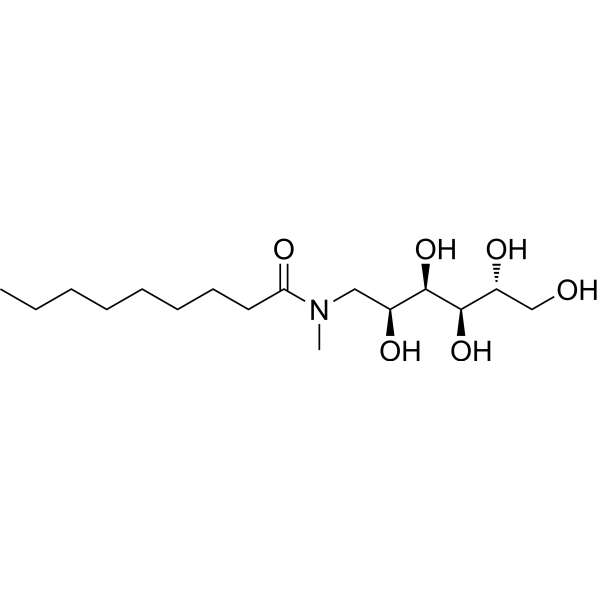
Synonyms: N-nonanoyl-N-methylglucamine
MEGA-9 (N-Nonanoyl-N-methylglucamine) is a green, biodegradable glycosyl nonionic surfactant and micelle-forming agent. MEGA-9 acts as a membrane solubilizer, forms vesicles, solubilizes milk fat, eliminates non-specific reactions of test strips, and restores antigen-antibody reactions in cheddar cheese homogenates for the detection of staphylococcal enterotoxin B (SEB) .
loading...
    loading...
Cat. No.: HY-W145516
CAS No.: 9000-30-0
Guar gum is an orally active nonionic galactomannan polysaccharide. It is present in the endosperm of Cyamopsis tetragonolobus seeds. Guar gum reduces cholesterol levels, regulates body weight, and acts as a thickener and viscosity modifier by forming hydrogen-bonded aqueous solutions. It serves as a rate-controlling excipient in compound delivery systems, and finds applications in the food, tissue engineering, nanosensing and industrial fields .
loading...
    loading...
Cat. No.: HY-W250168B
Synonyms: Polyethylene glycol oleyl ether, average Mn~357; Polyethylene glycol monooleyl ether, n~2
Polyoxyethylene(2) oleyl ether (Polyethylene glycol oleyl ether, average Mn~357; Polyethylene glycol monooleyl ether, n~2) is a nonionic surfactant. Polyoxyethylene(2) oleyl ether promoting the formation of spherical-shaped nanosystems with a narrow size distribution. Polyoxyethylene(2) oleyl ether can be used for the delivery of several active compounds .
loading...
    loading...
Cat. No.: HY-108294R
CAS No.: 3055-99-0
Synonyms: nonaoxyethylene monododecyl ether (Standard)
Research Areas:  

Others

Nonaethylene glycol monododecyl ether (Standard) is the analytical standard of Nonaethylene glycol monododecyl ether (HY-108294). This product is intended for research and analytical applications. Nonaethylene glycol monododecyl ether (Nonaoxyethylene monododecyl ether) is a nonionic surfactant and polyethylene glycol (PEG) detergent that can be used to form initial coalesced O/W emulsion droplets, as well as for protein separation and purification .
loading...
    loading...
Cat. No.: HY-144007
CAS No.: 27321-96-6
Target:  

Liposome

Research Areas:  

Others

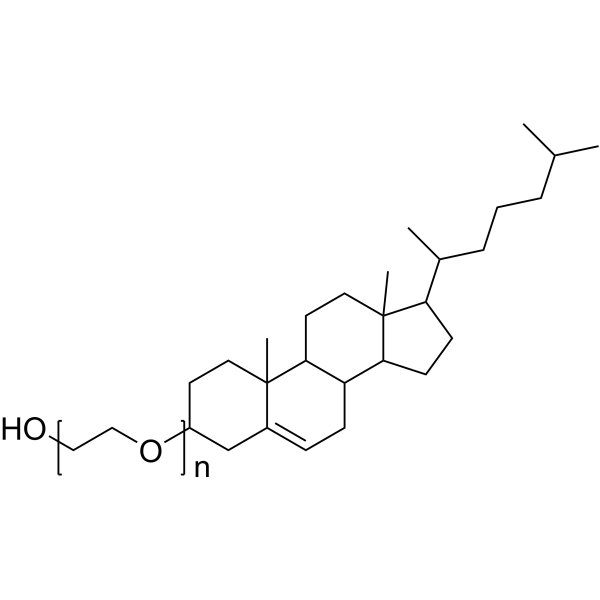
Chol-PEG is an amphiphilic cholesterol-polyethylene glycol conjugate and also a liposomelike surface modifier. After Chol-PEG is incorporated into liposomelike vesicles, it forms a hydrophilic barrier on their surface, increases the thickness of the bound water layer around the liposomelike vesicles, and enhances the release rate of encapsulated compounds. Chol-PEG can be used as a modifier to prepare nonionic surfactant vesicles (liposomelike vesicles) for drug delivery applications .
loading...
    loading...
Cat. No.: HY-W250183
CAS No.: 9005-00-9
Synonyms: Polyethylene glycol octadecyl ether (n~10, average Mn~711)
Research Areas:  

Others

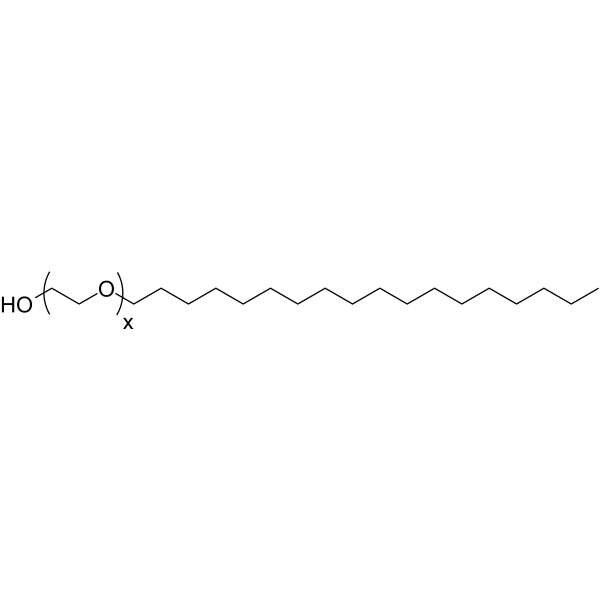
Polyoxyethylene (10) stearyl ether (Polyethylene glycol octadecyl ether (n~10, average Mn~711)) is a nonionic surfactant. Polyoxyethylene (10) stearyl ether reduces interfacial tension through its amphiphilic structure, stabilizes emulsions via steric hindrance, and forms micelles for solubilization. Polyoxyethylene (10) stearyl ether can serve as a biomaterial or organic compound for life science-related research.
loading...
    loading...
Cat. No.: HY-B0684S1
CAS No.: 1217831-76-9
Synonyms: B-15000-d3; SQ-13396-d3
Iopamidol-d3 (B-15000-d3; SQ-13396-d3) is the deuterium labeled Iopamidol (HY-B0684). Iopamidol is a nonionic, X-Ray iodinated contrast agent (CA) for a wide variety of diagnostic applications. Iopamidol contains amide and hydroxyl functionalities that can be exploited for the generation of the chemical exchange saturation transfer (CEST) contrast .
loading...
    loading...
Cat. No.: HY-185564
CAS No.: 118680-70-9
Research Areas:  

Others

F6OM, a nonionic fluorinated octyl maltoside derivative, is a surfactant. F6OM readily interacts with and completely solubilizes phospholipid vesicles via a heterogeneous solubilization mechanism, without compromising membrane order at subsolubilizing concentrations. F6OM promotes bilayer insertion of an integral membrane enzyme in the absence of micelles to support functional refolding of integral membrane proteins. F6OM can be used for membrane-protein applications .
loading...
    loading...
Cat. No.: HY-109513R
CAS No.: 107793-72-6
Research Areas:  

Others

Ioxilan (Standard) is the analytical standard of Ioxilan. This product is intended for research and analytical applications. Ioxilan is a low-osmolar, nonionic and tri-iodinated diagnostic contrast agent. Ioxilan is also an X-ray contrast agent for excretory urography and contrast enhanced computed tomographic (CECT) imaging of the head and body. Intravascular injection results in opacification of vessels in the path of flow of the contrast medium, permitting radiographic visualization of the internal structures of the human body until significant hemodilution occurs .
loading...
    loading...
Cat. No.: HY-B1937
CAS No.: 25155-30-0
Synonyms: Bio-Soft S 101 sodium
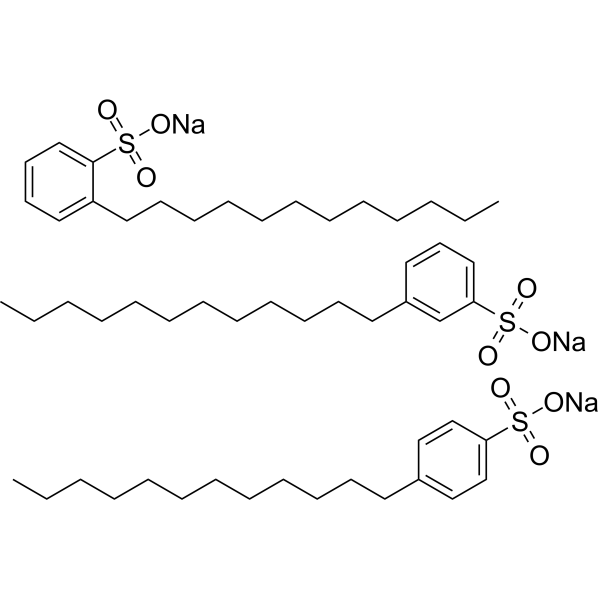
Sodium dodecylbenzenesulfonate (Bio-Soft S 101 sodium) is a nonionic surfactant commonly used in a variety of applications for cleaning and treating industrial equipment. It has good cleaning power and environmental compatibility, and can effectively remove oil, dirt and other forms of contamination. In addition, in textile, paper, leather and other industries, the compound can also be used for fixing and stabilizing dyes and colors. Although the compound has no direct application in the medical field, it plays an important role in industry and laboratory research.
loading...
    loading...
Cat. No.: HY-D1005A4
CAS No.: 9003-11-6
Synonyms: PEG-PPG-PEG, 1630 (Average)
Poloxamer 122 L42 (PEG-PPG-PEG, 1630 (Average)) is a synthetic nonionic triblock copolymer composed of polyoxyethylene-polyoxypropylene, with emulsifying and wetting properties. Poloxamer 122 L42 forms large spherical aggregates in aqueous solutions near its cloud point,. Poloxamer 122 L42 can form thermoreversible hydrogels, and is also used in research related to serving as a drug delivery carrier in the fields of food additives, cosmetics, pharmaceutical preparations and tissue engineering .
loading...
    loading...
Cat. No.: HY-W250166
CAS No.: 78330-21-9
Poly(ethylene glycol) (12) tridecyl ether is a nonionic surfactant belonging to the family of ethoxylated fatty alcohols. It is commonly used as an emulsifier, solubilizer, and wetting agent in a variety of industrial and personal care products. Poly(ethylene glycol)(12) tridecyl ether has various properties that make it suitable for these applications, including its low toxicity, high solubility in water and organic solvents, and ability to stabilize emulsions. In addition, it can be used as a raw material for the production of other surfactants and specialty chemicals.
loading...
    loading...
Cat. No.: HY-101530B
CAS No.: 9004-99-3
Synonyms: PEG 40 stearate
Research Areas:  

Others

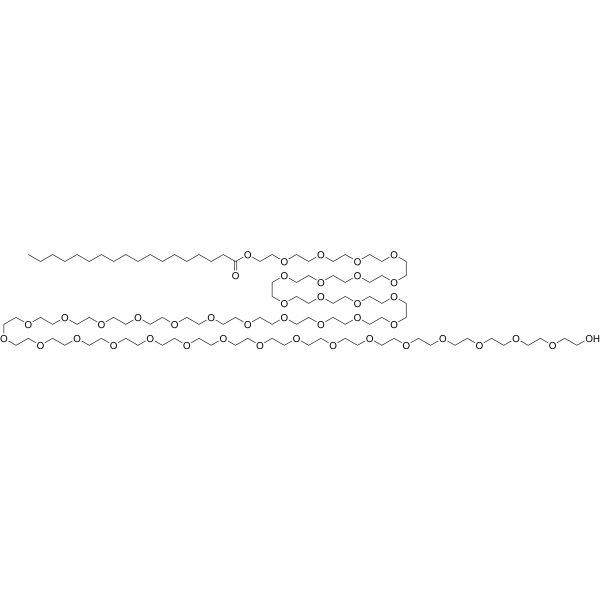
Polyoxyl 40 stearate (PEG 40 stearate) is a nonionic surfactant formed by the esterification of stearic acid with polyethylene glycol (PEG) containing approximately 40 ethoxy units, it is used in pharmaceutical preparations, nanodrug carriers, emulsification systems and biomedical materials. Polyoxyl 40 stearate can serve as a matrix component of solid lipid nanoparticles to achieve controlled release of encapsulated antifungal drugs; it can also act as a base material for solid lipid nanoparticles for vaginal administration, and polymerizable groups can be introduced via modification with acryloyl chloride .
loading...
    loading...
Cat. No.: HY-141720
CAS No.: 2315-63-1
Purity:  99.87%
Target:  

HCV

Research Areas:  

Others

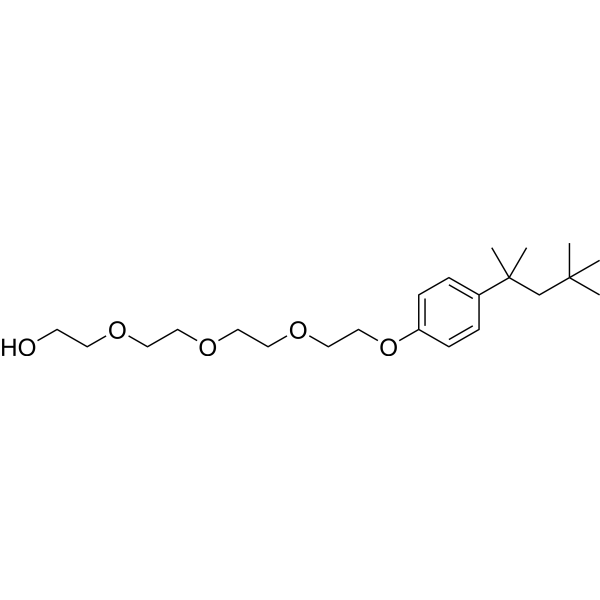
4-(2,4,4-Trimethylpentan-2-yl)benzene-PEG4-OH, a nonionic surfactant with a low hydrophile-lypophile balance (HLB) value and dispersible in aqueous solution at room temperature, has a Krafft point above the room temperature. 4-(2,4,4-Trimethylpentan-2-yl)benzene-PEG4-OH has the potential for the research of the hepatitis C virus (HCV) .
loading...
    loading...
Cat. No.: HY-W250181
CAS No.: 148616-91-5
Synonyms: Octyl β-D-thiomaltopyranoside
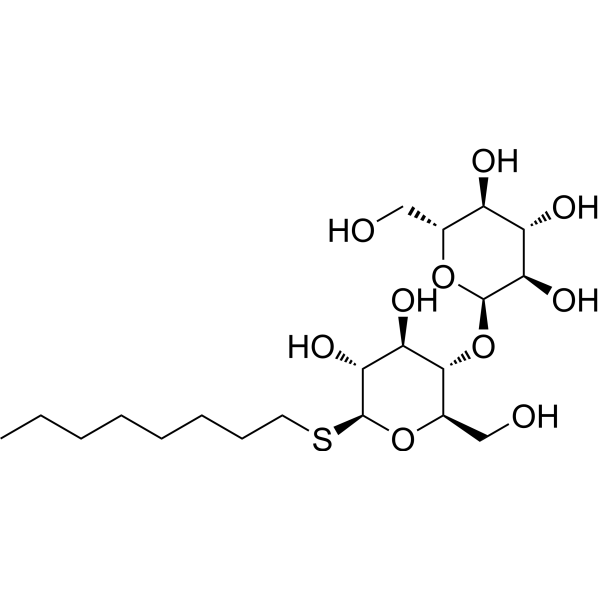
Octyl thiomaltoside (OTM) is a nonionic detergent commonly used in the purification and crystallization of membrane proteins. It belongs to the family of maltoside detergents and has a hydrophilic head group and a lipophilic tail group, enabling it to interact with water-soluble and membrane-bound proteins. OTMs are known for their ability to solubilize integral membrane proteins without disrupting their structure or function, making them an invaluable tool in biochemical and biophysical research. In addition to protein research, OTMs are used in a variety of other applications, including drug delivery systems, nanotechnology, and diagnostic analysis.
loading...
    loading...
Cat. No.: HY-B1937R
CAS No.: 25155-30-0
Synonyms: Bio-Soft S 101 sodium (Standard)
Sodium dodecylbenzenesulfonate (Standard) is the analytical standard of Sodium dodecylbenzenesulfonate. This product is intended for research and analytical applications. Sodium dodecylbenzenesulfonate (Bio-Soft S 101 sodium) is a nonionic surfactant commonly used in a variety of applications for cleaning and treating industrial equipment. It has good cleaning power and environmental compatibility, and can effectively remove oil, dirt and other forms of contamination. In addition, in textile, paper, leather and other industries, the compound can also be used for fixing and stabilizing dyes and colors. Although the compound has no direct application in the medical field, it plays an important role in industry and laboratory research.
loading...
    loading...
Cat. No.: HY-W250168
CAS No.: 9004-98-2
Synonyms: Polyethylene glycol oleyl ether, average Mn~709; Polyethylene glycol monooleyl ether, n~10
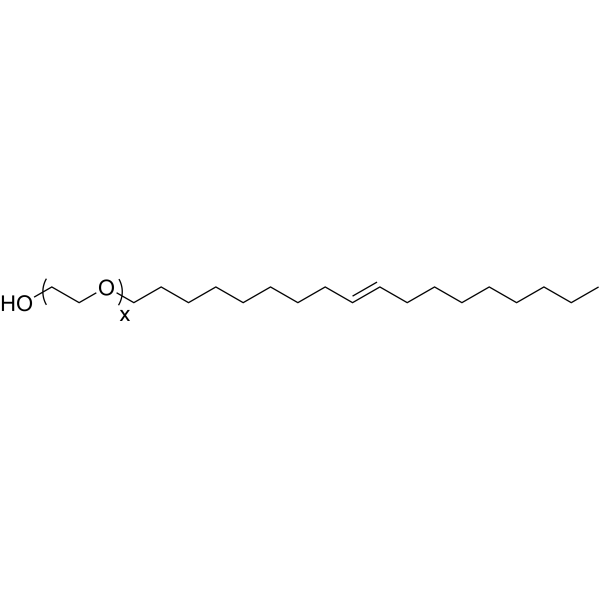
Polyoxyethylene(10) oleyl ether, also known as POE(10) monooleate, is a nonionic surfactant consisting of a polyethylene glycol chain with 10 ethylene oxide units and an oleic acid residue. It has excellent emulsifying, wetting and dispersing properties, making it suitable for a variety of applications including personal care products and pharmaceutical formulations. POE(10) monooleate is commonly used as a solubilizer to improve the solubility and bioavailability of poorly soluble drugs. Furthermore, it is biodegradable and has low toxicity, making it an environmentally friendly ingredient suitable for various industrial applications.
loading...
    loading...
Cat. No.: HY-W250176
CAS No.: 60828-78-6
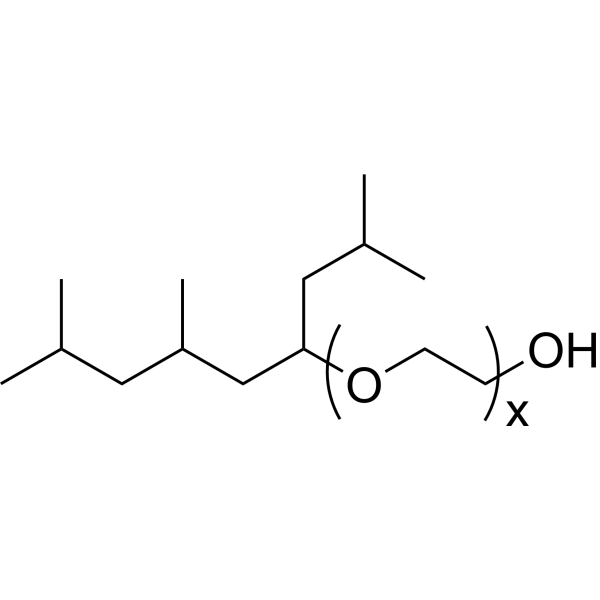
Polyethylene glycol trimethylnonyl ether, is a nonionic surfactant commonly used in various industrial and research applications. It belongs to the family of polyethylene glycol (PEG) ethers with a hydrophilic head and lipophilic tail and is suitable for use in lotions, detergents and solubilizers. Polyethylene glycol trimethylnonyl ether is particularly useful in protein chemistry, where it is used to solubilize and stabilize proteins, such as membrane proteins, for structural analysis techniques. In addition, Polyethylene glycol trimethylnonyl ether has potential applications in drug delivery and other medical fields due to its ability to interact with and penetrate cell membranes.
loading...
    loading...
Cat. No.: HY-W250178
CAS No.: 24233-81-6
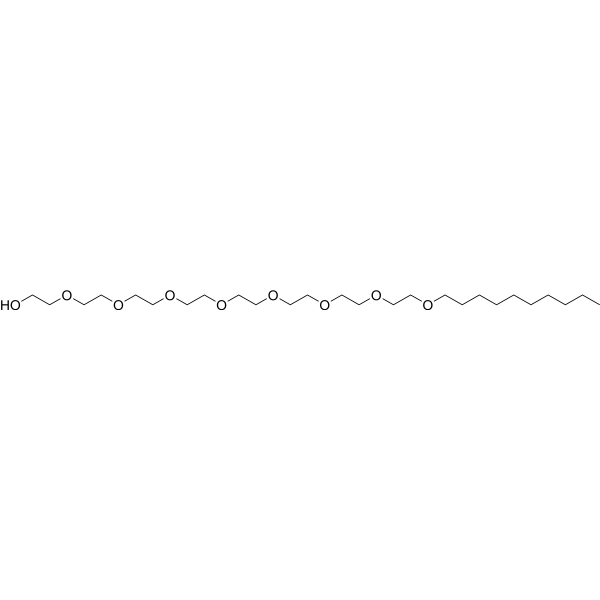
Octaethylene glycol monodecyl ether, is a nonionic surfactant commonly used in various industrial and research applications. It belongs to the family of polyethylene glycol (PEG) ethers with a hydrophilic head and lipophilic tail and is suitable for use in lotions, detergents and solubilizers. Octaethylene glycol monodecyl ether is particularly useful in the study of membrane proteins, where it is used to solubilize and stabilize proteins for structural analysis techniques. In addition, Octaethylene glycol monodecyl ether has the ability to interact with and penetrate cell membranes, so it has potential applications in drug delivery and other medical fields.
loading...
    loading...

