182 Results for "

Targeted therapy

" in MedChemExpress (MCE) Product Catalog:
Products (182)

182 Results for "Targeted therapy" in MCE Product Catalog:

Cat. No.: HY-100138R
CAS No.: 173308-19-5
2-Aminoethyl-mono-amide-DOTA-tris(tBu ester) (Standard) is the analytical standard of 2-Aminoethyl-mono-amide-DOTA-tris(tBu ester) (HY-100138). This product is intended for research and analytical applications. 2-Aminoethyl-mono-amide-DOTA-tris(tBu ester) is a metal chelator precursor containing a DOTA macrocyclic structure. DOTA can form highly stable complexes with metal ions (such as 68Ga, 177Lu) through four nitrogen atoms and four carboxylic acid groups to mediate targeted delivery of radionuclides. The tert-butyl ester group (tBu ester) of 2-Aminoethyl-mono-amide-DOTA-tris(tBu ester) also protects the carboxylic acid group during synthesis, and forms a free carboxyl group after deprotection reaction for coupling with targeting molecules (such as antibodies, peptides). 2-Aminoethyl-mono-amide-DOTA-tris(tBu ester) may be combined with tumor pre-targeting systems through bioorthogonal reactions (such as reverse electron demand Diels-Alder reaction) to study radioactive imaging or therapy of tumor tissues, and is mainly used in tumor pre-targeting research in the field of nuclear medicine .
loading...
    loading...
Cat. No.: HY-P11591
CAS No.: 3110124-60-9
Synonyms: PSMA-DOTA-PEI2
Research Areas:  

Cancer

PDI2 (PSMA-DOTA-PEI2) is a prostate-specific membrane antigen (PSMA) ligand that acts as a tumor retention agent, renal uptake reducer, imaging agent and antitumor agent, applicable in SPECT diagnostic imaging and radiotheranostics. PDI2 specifically binds to PSMA on prostate cancer cells, enters cells via clathrin-dependent endocytosis, and exhibits higher tumor retention rate and lower renal uptake level. PDI2 is applicable in research related to prostate cancer and castration-resistant metastatic prostate cancer .
loading...
    loading...
Cat. No.: HY-159921
CAS No.: 3033099-32-7
Target:  

Microtubule/Tubulin

Research Areas:  

Cancer

Tubulin Polymerization-IN-1 prodrug (Compound 2b) is a palladium (Pd)-mediated tubulin polymerization inhibitor prodrug. Developed based on colchicine binding site inhibitors (CBSIs), it reduces toxicity and enhances targeted release properties. Compared to the parent compound, Tubulin Polymerization-IN-1 prodrug exhibited 68.3-fold lower cytotoxicity, which can be restored in situ in the presence of Pd resin. Mechanistic studies showed that its anticancer activity is consistent with CBSIs. In vivo, Tubulin Polymerization-IN-1 prodrug significantly inhibited tumor growth (63.2%) when activated by Pd resin. It holds promise for research in the field of anticancer therapy .
loading...
    loading...
Cat. No.: HY-172930
CAS No.: 2991021-08-8
PVTX-405 is a selective and oral active IKZF2 molecular glue degrader with a DC50  of  0.7 nM and a Dmax of 91%. PVTX-405 enhances degradation efficiency, significantly reduces off-target degradation, and alleviates hERG inhibition with IC50 of 48 µM. PVTX-405 significantly inhibits the growth of MC38 tumors, with greater synergistic anti-cancer efficacy in combination with immune checkpoint therapies (ICTs) (anti-PD1 or anti-LAG3) in the MC38 mouse tumor xenograft model using Crbn 391V C57BL/6 mice .
loading...
    loading...
Cat. No.: HY-10321G
CAS No.: 219580-11-7
PD173074 GMP is PD173074 (HY-10321) produced by using GMP guidelines. GMP small molecules works appropriately as an auxiliary reagent for cell therapy manufacture. PD173074 is an orally active FGFR inhibitor that targets the transphosphorylation of FGFR1 and FGFR2 and blocks the FGF signaling pathway. By reducing the phosphorylation level of SMAD2 and altering the expression of Nodal/Activin target genes, PD173074 eliminates endothelial differentiation potential, thereby inhibiting the formation of capillary-like structures. PD173074 blocks the proliferation and colony formation of tumor cells and increases intratumoral cell apoptosis. PD173074 successfully reverses FGF-2-induced chemoresistance to enhance the effect of cisplatin (HY-17394) in small cell lung cancer models. PD173074 can be applied to research related to critical limb ischemia and small cell lung cancer .
loading...
    loading...
Cat. No.: HY-173364
CAS No.: 3114073-95-6
Synonyms: BAK-04-212
Target:  

BCL6

Research Areas:  

Cancer

EB-TCIP (BAK-04-212) is a proof-of-concept tool specifically designed for Ewing sarcoma research, serving as an EWSR1::FLI1 binder tagged with BCL6 and FKBP12 F36V. EB-TCIP forms a ternary complex with the tagged fusion protein, specifically recruits EWSR1::FLI1 to BCL6-bound DNA loci, and induces rapid chromatin remodeling and relocalization. By mediating relocalization, EB-TCIP remodels the transcriptional machinery and activates the expression of BCL6 target genes that are originally repressed. EB-TCIP is used in studies related to novel epigenetic therapies for Ewing sarcoma .
loading...
    loading...
Cat. No.: HY-181869
CAS No.: 2409674-38-8
Research Areas:  

Cancer

PROTAC BET Degrader-17 is a potent BET protein PROTAC degrader. By recruiting the VHL E3 ligase, PROTAC BET Degrader-17 specifically degrades BRD2, BRD3 (DC50=0.09 nM) and BRD4 (IC50=4.3 nM). PROTAC BET Degrader-17 exhibits strong anti-tumor activity in acute myeloid leukemia (AML) studies; it not only inhibits cancer cell proliferation, induces cell cycle arrest and apoptosis, but also effectively suppresses tumor growth in xenograft mouse models. PROTAC BET Degrader-17 can be used to explore targeted therapies for acute myeloid leukemia .
loading...
    loading...
Cat. No.: HY-179617
Research Areas:  

Cancer

Cbl-b-IN-30 is an orally active Casitas B-lineage lymphoma-b (CBLB) inhibitor. Cbl-b-IN-30 specifically binds to CBLB and inhibits its E3 ubiquitin ligase activity with an IC50 of 9.1 nM. Cbl-b-IN-30 can promote IL-2 secretion (EC50 = 187.5 nM) and enhance T cell activation. Cbl-b-IN-30 exerts antitumor activity and can induce immune memory. Cbl-b-IN-30 can be used for the research of colon cancer .
loading...
    loading...
Cat. No.: HY-158118
CAS No.: 2088426-96-2
Purity:  97.19%
Target:  

DNA-PK

Research Areas:  

Cancer

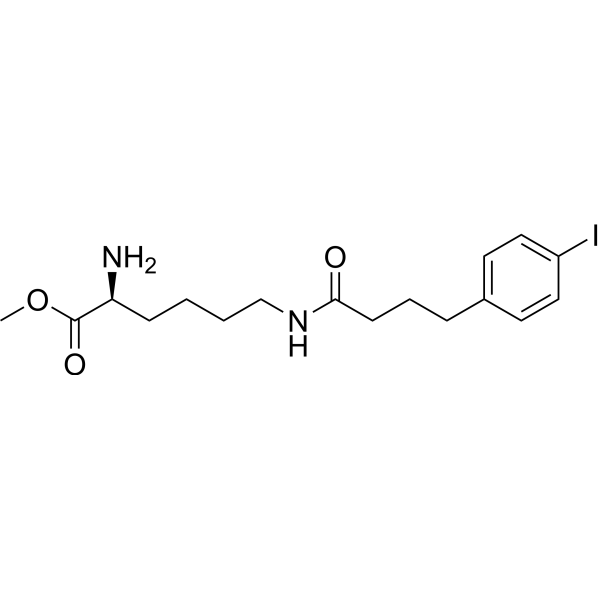
Lys(CO-C3-p-I-Ph)-OMe is a pharmacokinetic modifier (PK modifier) that can improve the PK properties of PSMA ligand molecules (such as Ac-PSMA-trillium). Lys(CO-C3-p-I-Ph)-OMe can increase the residence time of Ac-PSMA-trillium in plasma by increasing its binding capacity to albumin. Lys(CO-C3-p-I-Ph)-OMe also reduces salivary gland absorption of Ac-PSMA-trillium, potentially extending its half-life. Ac-PSMA-trillium is a suitable PSMA-targeting compound that has different biological applications after modification with different radioactive isotopes. If labeled with 111In, it can be used as DOTA chelating agent and imaging agent. Or labeled with 225Ac as a Macropa chelator for targeted radionuclide therapy (TRT) in the study of metastatic castration-resistant prostate cancer (mCRPC) .
loading...
    loading...
Cat. No.: HY-L184
1,203 compounds

Gastric Cancer (GC) is one of the most common malignant tumors in the world, ranking fourth in mortality rate globally. Because the early symptoms of stomach neoplasm are usually not obvious, are diagnosed with gastric cancer at terminal stage, and the relative survival rate within 5 years is very low. With the further understanding of the molecular characteristics of stomach neoplasm, many therapeutic targets for gastric cancer have been identified, and molecular targeted therapies such as CTLA-4, HER2 and immune checkpoint inhibitors have made rapid progress. Although survival rates for patients with gastric neoplasm have improved over the past few decades, the prognosis is still worrying. Therefore, there is an urgent need for new drugs to treat gastric cancer.

MCE designs a unique collection of 1,203 small molecules with definite or potential anti-gastric cancer activity, which is an important tool for studying the pathological mechanism of stomach neoplasm and developing drugs for stomach neoplasm.

Cat. No.: HY-111772A
CAS No.: 2229860-99-3
Purity:  99.44%
Synonyms: (R)-VX-445
Target:  

Drug Isomer CFTR

Research Areas:  

Inflammation/Immunology

(R)-Elexacaftor ((R)-VX-445) is the enantiomer of Elexacaftor (HY-111772). Elexacaftor is an orally active CFTR modulator that targets nucleotide-binding domain 1. Elexacaftor stabilizes misfolded F508del-CFTR protein, enhances its trafficking to the plasma membrane, and significantly improves metabolic stability, thermal stability and ion conductivity. Elexacaftor not only restores chloride transport function in nasal epithelial cells and rescues multiple CFTR mutation subtypes, but also exerts multiplicative synergistic effects with Ivacaftor (HY-13017), and is often used in a triple combination therapy with Tezacaftor (HY-15448). Elexacaftor is widely used in basic and clinical translational research on cystic fibrosis .
loading...
    loading...
Cat. No.: HY-132844
CAS No.: 1801756-06-8
Purity:  98.25%
Synonyms: HL-085
Target:  

MEK

Research Areas:  

Cancer

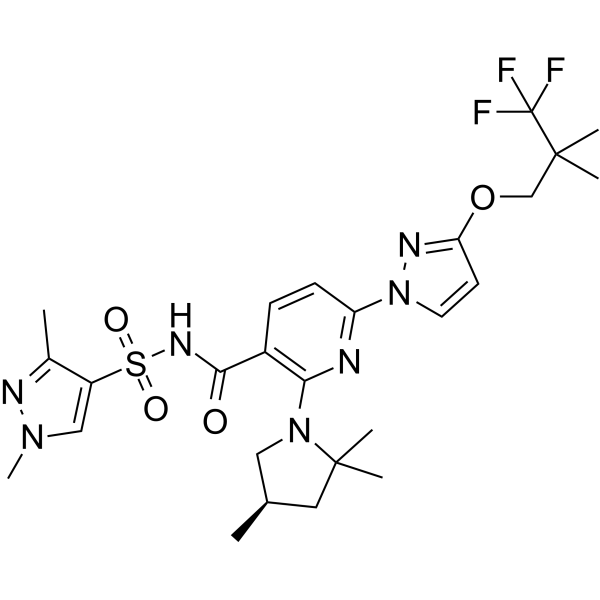
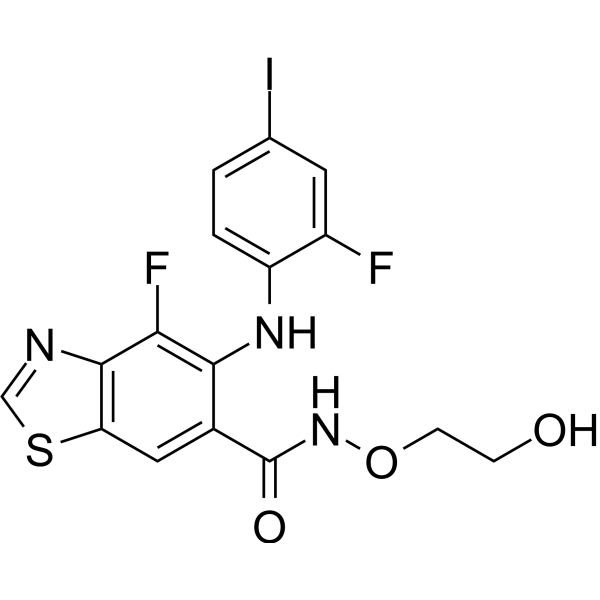
Tunlametinib is a highly selective, orally active MEK1/2 inhibitor (IC50=1.9 nM, MEK1). Tunlametinib blocks the RAS-RAF-MEK-ERK signaling pathway, arrests tumor cell cycle and promotes apoptosis. Tunlametinib potently inhibits the proliferation of RAS/RAF mutant cancer cells (such as BRAF V600E, KRAS G12C mutant cells). Tunlametinib shows synergistic anti-tumor effects with BRAF/KRASG12C/SHP2 inhibitors, Docetaxel (HY-B0011). Tunlametinib can be used to study targeted therapy for RAS/RAF mutation-driven malignancies (such as melanoma, colorectal cancer, and non-small cell lung cancer) .
loading...
    loading...
Cat. No.: HY-16561G
CAS No.: 501-36-0
Synonyms: trans-Resveratrol (GMP); SRT501 (GMP)
Resveratrol (GMP) is Resveratrol (HY-16561) produced by using GMP guidelines. GMP small molecules work appropriately as an auxiliary reagent for cell therapy manufacture. Resveratrol (trans-Resveratrol; SRT501), a natural polyphenolic phytoalexin that possesses anti-oxidant, anti-inflammatory, cardioprotective, and anti-cancer properties. Resveratrol (SRT 501) has a wide spectrum of targets including mTOR, JAK, β-amyloid, Adenylyl cyclase, IKKβ, DNA polymerase. Resveratrol also is a specific SIRT1 activator . Resveratrol is a potent pregnane X receptor (PXR) inhibitor . Resveratrol is an Nrf2 activator, ameliorates aging-related progressive renal injury in mice model . Resveratrol increases production of NO in endothelial cells .
loading...
    loading...
Cat. No.: HY-P11280A
Target:  

Melanocortin Receptor

Research Areas:  

Cancer

PRAME peptide (425-433) acetate is a proteasome-degraded peptide derived from the cancer-testis antigen PRAME (Preferentially Expressed Antigen in Melanoma). PRAME peptide (425-433) acetate is restricted by HLA-A*02:01 and can serve as a target for bispecific T cell engager therapy in the context of major histocompatibility complex I presentation. PRAME peptide (425-433) acetate shows application potential in various malignant tumors and is widely suitable for research related to solid tumors, melanoma, ovarian cancer, endometrial cancer, and lung cancer (including lung adenocarcinoma and lung squamous cell carcinoma). PRAME peptide (425-433) acetate can be used to explore disease of triple-negative breast cancer, diffuse large B-cell lymphoma, and head and neck squamous cell carcinoma .
loading...
    loading...
Cat. No.: HY-P990716
CAS No.: 2648346-74-9
Synonyms: AZD7789

Target:  

PD-1/PD-L1 Tim3

Research Areas:  

Inflammation/Immunology

Sabestomig (AZD7789) is a monovalent bispecific antibody targeting PD-1 and TIM-3. Sabestomig binds to PD-1 and an epitope in the TIM-3 IgV domain outside the phosphatidylserine-binding cleft, thereby precisely regulating immune responses. Sabestomig promotes IL-2 production, efferocytosis and cross-presentation of tumor antigens, and enhances the release of anti-tumor T cell cytokines, cytotoxicity, and secretion of IFN-γ. Sabestomig inhibits the growth of solid tumors, prolongs the duration of tumor suppression, and significantly enhances anti-tumor responses following anti-PD-1 therapy. Sabestomig has been used in studies related to non-small cell lung cancer and classical Hodgkin lymphoma .
loading...
    loading...
Cat. No.: HY-L261
167 compounds

MCE Classic FDA-Approved Drug Library features a curated selection of marketed drugs that have achieved the highest prescription volumes and greatest clinical impact in global practice since 2006. The collection covers eight major therapeutic areas, including cardiovascular diseases, oncology, metabolic disorders, infectious diseases, central nervous system disorders, respiratory diseases, digestive system diseases, and immunological conditions. All compounds have been validated through long‑term clinical use and possess well‑defined molecular targets, well‑established pharmacokinetic properties, quantifiable efficacy endpoints, and comprehensive toxicological safety profiles.

The library currently contains 167 representative drugs and is designed to serve as an efficient tool for drug repurposing, phenotypic screening, mechanism‑of‑action studies, and combination therapy strategy development.

Cat. No.: HY-L062
2,593 compounds

Neurotransmitter (NT) receptors, also known as neuroreceptors, are a broadly diverse group of membrane proteins that bind neurotransmitters for neuronal signaling. There are two major types of neurotransmitter receptors: ionotropic and metabotropic. Ionotropic receptors are ligand-gated ion channels, meaning that the receptor protein includes both a neurotransmitter binding site and an ion channel. The binding of a neurotransmitter molecule (the ligand) to the binding site induces a conformational change in the receptor structure, which opens, or gates, the ion channel. The term “metabotropic receptors” is typically used to refer to transmembrane G-protein-coupled receptors. Metabotropic receptors trigger second messenger-mediated effects within cells after neurotransmitter binding.

In some neurological diseases, the neurotransmitter receptor itself appears to be the target of the disease process. Many neuroactive drugs act by modifying neurotransmitter receptors. A better understanding of neurotransmitter receptor changes in disease may lead to improvements in therapy.

MCE designs a unique collection of 2,593 compounds targeting a variety of neurotransmitter receptors. MCE Neurotransmitter Receptor Compound Library is a useful tool for neurological diseases drug discovery.

Cat. No.: HY-L941
4,236 compounds

Orthosteric sites are highly conserved, leading to poor subtype selectivity, off-target toxicity and drug resistance in traditional drugs. By contrast, allosteric sites show low conservation, high hydrophobicity, weak polarity, confined geometry and dynamic cryptic properties, granting modulators high selectivity, functional tunability and safety. Thus, allosteric therapy has become a major focus in drug discovery.

MCE curated nearly 1,000 clinical-stage allosteric modulators, analyzed PDB complex structures to identify key pharmacophores and privileged scaffolds, then designed and filtered compounds using rational “scaffold derivation + physicochemical screening” with strict property criteria. The resulting compounds show high rigidity and shape complementarity to shallow, dynamic, hydrophobic allosteric pockets.

This library comprises 4,315 diverse, lead-like compounds ideal for allosteric drug discovery and target screening, covering kinases, GPCRs and more. All are analogs of clinical-stage molecules with similarity > 0.6, combining high druggability and allosteric binding potential to support efficient early-stage R&D.

Cat. No.: HY-100966S
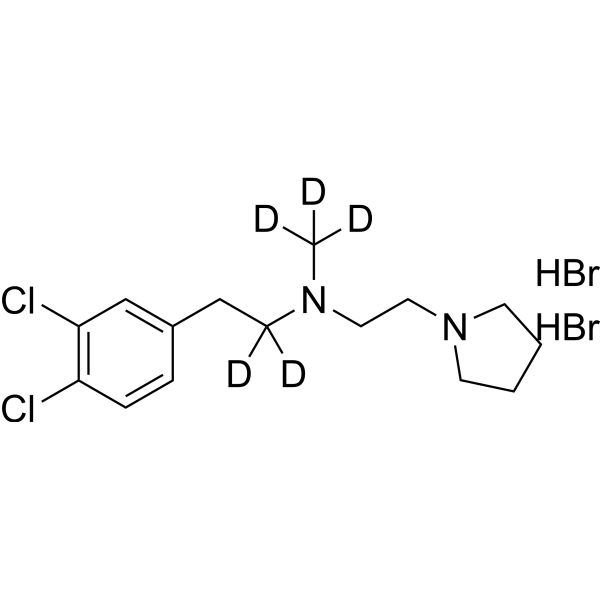
BD-1008-d5 dihydrobromide is the deuterium labeled BD-1008 dihydrobromide (HY-100966). BD-1008 dihydrobromide is a nonselective σ receptor antagonist with Kis against σ1 receptor and σ2 receptor of 2 nM and 8 nM. The BD-1008 dihydrobromide has an extremely low affinity for the D2 receptor (Ki = 1112 nM) and dopamine transporter (DAT) (Ki > 10,000 nM). BD-1008 dihydrobromide significantly antagonizes dopamine release in the shell region of the nucleus accumbens via the σ₂ receptor. BD-1008 dihydrobromide blocks the self-administration behavior of σ agonists.BD-1008 dihydrobromide can be used for the study of addiction therapy that target the σ receptor .
loading...
    loading...
Cat. No.: HY-P992519
Synonyms: ADWA-11

Research Areas:  

Cancer

PF-06940434 (ADWA-11) is a monoclonal antibody targeting integrin αvβ8. PF-06940434 inhibits αvβ8-mediated TGF-β activation. PF-06940434 increases the accumulation of tumor-infiltrating CD8 + T cells and upregulates the expression of granzyme B and TNF-γ. PF-06940434 blocks the inhibitory effect of CD4 +CD25 + T cells on the cytotoxic activity of tumor CD8 + T cells. PF-06940434 enhances the anti-tumor efficacy of combination therapies with other immunomodulators or radiotherapy and induces long-term anti-tumor immunity. PF-06940434 can be used in the research of squamous cell carcinoma, breast cancer, colon cancer, and prostate adenocarcinoma .
loading...
    loading...

