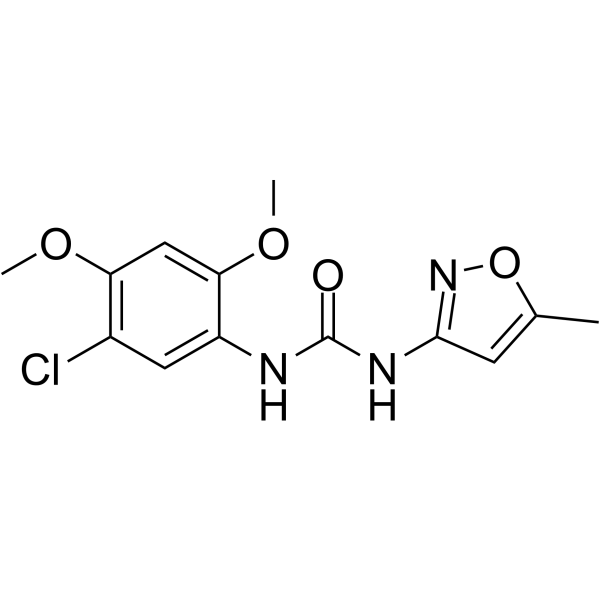
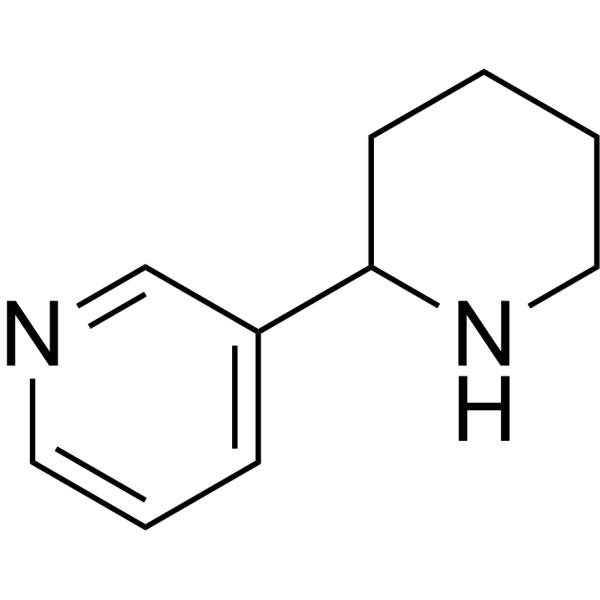
1. Search Result
Search Result
Results for "

α7

" in MedChemExpress (MCE) Product Catalog:

194

Inhibitors & Agonists

7

Peptides

43

Natural
Products

3

Recombinant Proteins

18

Isotope-Labeled Compounds

3

Antibodies

1

Click Chemistry

Cat. No. Product Name Target Research Areas Chemical Structure
  • HY-100806
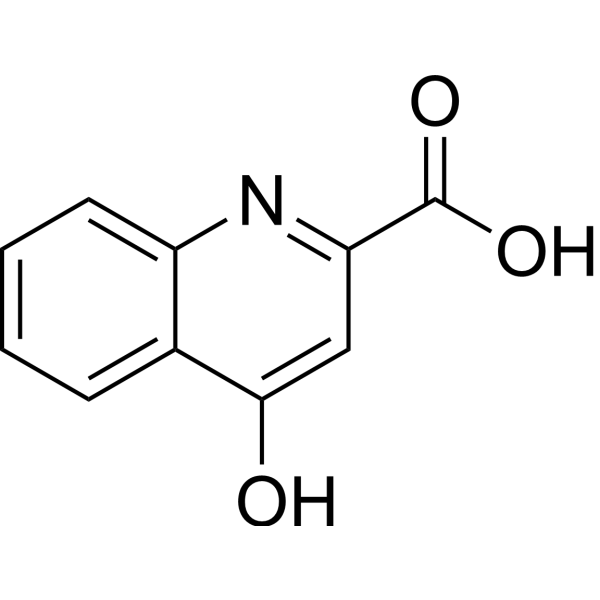
    Kynurenic acid
    5+ Cited Publications

    Quinurenic acid

    iGluR Endogenous Metabolite Apoptosis CXCR GPR35 Neurological Disease Inflammation/Immunology Endocrinology
    Kynurenic acid, an endogenous tryptophan metabolite, is a broad-spectrum antagonist targeting NMDA, glutamate, α7 nicotinic acetylcholine receptor. Kynurenic acid is also an agonist of GPR35/CXCR8.
    Kynurenic acid
  • HY-P1264
    α-Bungarotoxin
    Maximum Cited Publications
    7 Publications Verification

    nAChR Neurological Disease
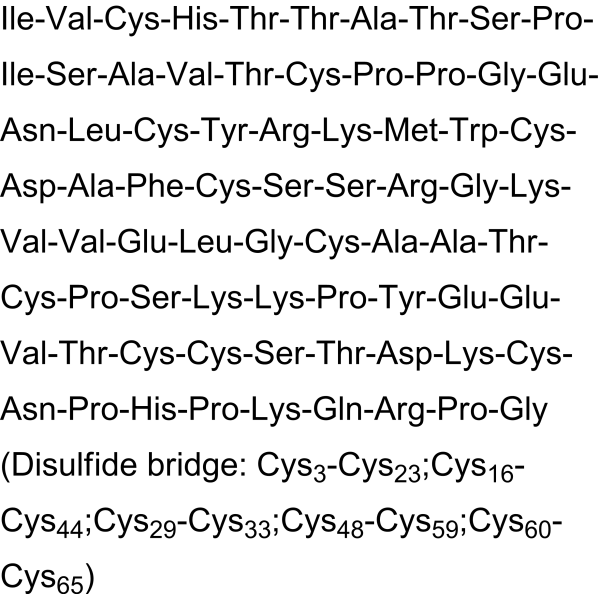
    α-Bungarotoxin is a competitive antagonist at nicotinic acetylcholine receptors (nAChRs). α-Bungarotoxin, a selective α7 receptor blocker, blocks α7 currents with an IC50 of 1.6 nM and has no effects on α3β4 currents at concentrations up to 3 μM .
    α-Bungarotoxin
  • HY-12560A
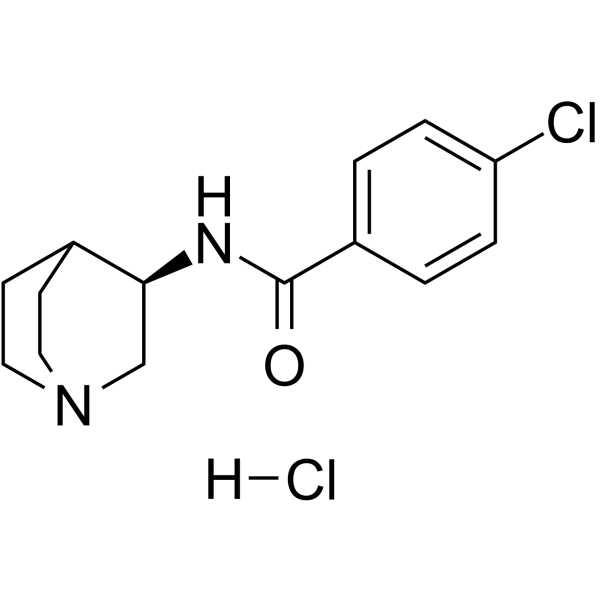
    PNU-282987
    10+ Cited Publications

    nAChR 5-HT Receptor Neurological Disease
    PNU-282987 is a potent α7 nicotinic acetylcholine receptor (nAChR) agonist with an EC50 of 154 nM. PNU-282987 is also a functional antagonist of the 5-HT3 receptor with an IC50 of 4541 nM. PNU-282987 can be used for the research of central and peripheral nervous systems .
    PNU-282987
  • HY-N0175
    Cytisinicline
    1 Publications Verification

    Cytisine; Sophorine; Baptitoxine

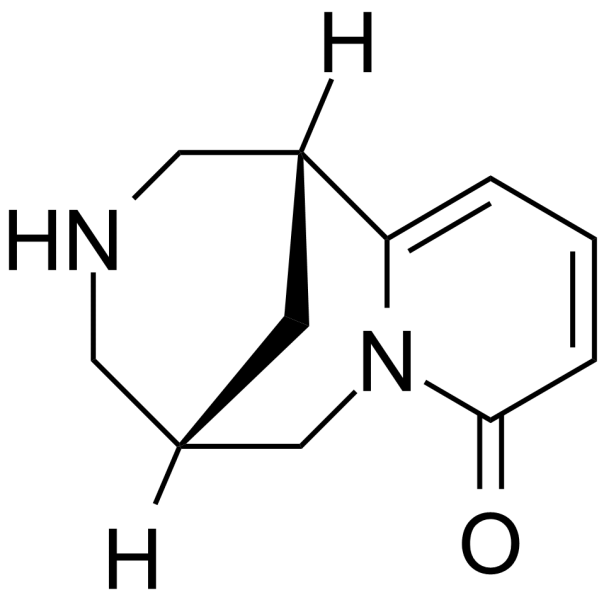
    nAChR Metabolic Disease Cancer
    Cytisinicline (Cytisine) is an alkaloid. Cytisinicline (Cytisine) is a partial agonist of α4β2 nAChRs , and partial to full agonist at β4 containing receptors and α7 receptors . Has been used medically to help with smoking cessation .
    Cytisinicline
  • HY-B0942
    Benzethonium chloride
    1 Publications Verification

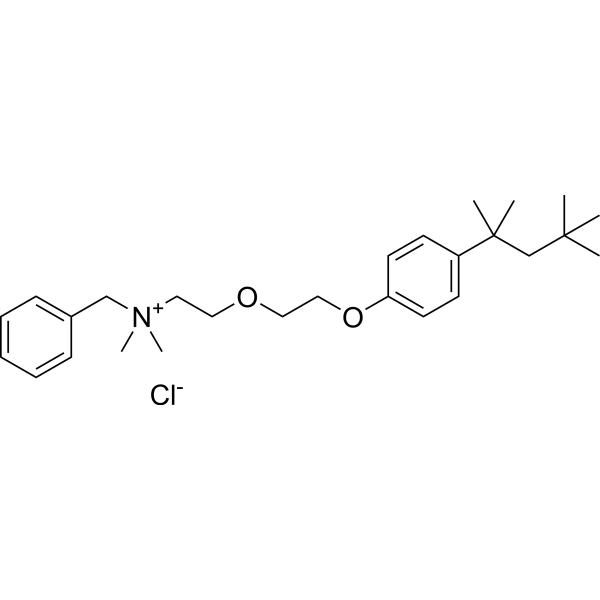
    Environmental Pollutants nAChR Bacterial Apoptosis Caspase Infection Neurological Disease Cancer
    Benzethonium chloride inhibits nicotinic acetylcholine receptors in human recombinant α7 and α4β2 neurons in Xenopus laevis oocytes, which has antibacterial, anticancer, antisepsis and disinfection activity. Benzethonium chloride induced Apoptosis and activated caspases in cancer cell lines. Benzethonium chloride ablates the tumor-forming ability of FaDu cells, delays the growth of xenograft tumors in vivo .
    Benzethonium chloride
  • HY-100806S
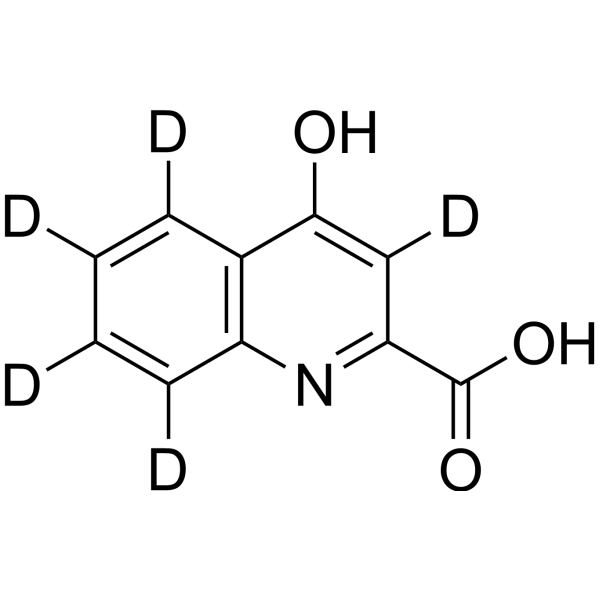
    Kynurenic acid-d5
    1 Publications Verification

    Quinurenic acid-d5

    Isotope-Labeled Compounds iGluR Endogenous Metabolite Apoptosis CXCR GPR35 Neurological Disease Metabolic Disease Inflammation/Immunology
    Kynurenic acid-d5 is the deuterium labeled Kynurenic acid. Kynurenic acid, an endogenous tryptophan metabolite, is a broad-spectrum antagonist targeting NMDA, glutamate, α7 nicotinic acetylcholine receptor. Kynurenic acid is also an agonist of GPR35/CXCR8 .
    Kynurenic acid-d5
  • HY-B0567

    Potassium Channel nAChR Apoptosis Bacterial Parasite Infection Cancer
    Dequalinium chloride is an Apamin (HY-P0256)-sensitive potassium channel selective blocker. Dequalinium chloride is a cationic, lipophilic mitochondrial poison. Dequalinium chloride is also an antagonist pf α7 nAChR, and an anti-microbial antiseptic agent with a broad bactericidal and fungicidal activity .
    Dequalinium Chloride
  • HY-14564A
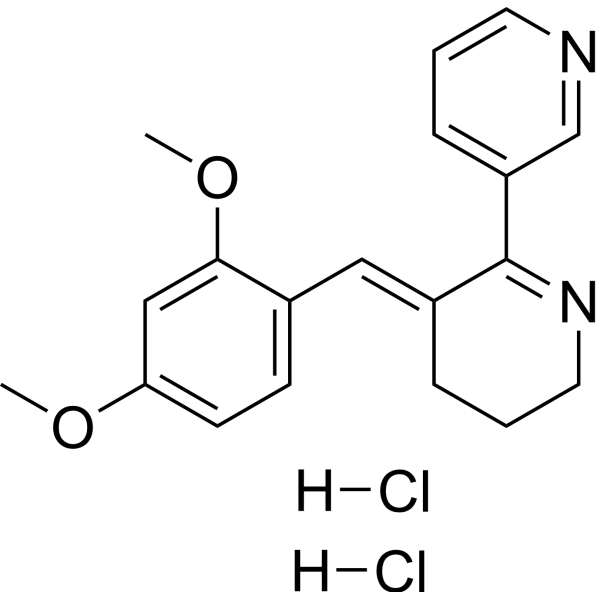
    GTS-21 dihydrochloride
    10+ Cited Publications

    DMXB-A; DMBX-anabaseine

    nAChR 5-HT Receptor Inflammation/Immunology
    GTS-21 dihydrochloride is a selective alpha7 nicotinic acetylcholine receptor (α7-nAChR) agonist with anti inflammatory and cognition enhancing activities. GTS-21 dihydrochloride is also a α4β2 (Ki=20 nM for humanα4β2) and 5-HT3A receptor (IC50=3.1 μM) antagonist .
    GTS-21 dihydrochloride
  • HY-107512
    Kynurenic acid sodium
    5+ Cited Publications

    iGluR Apoptosis Endogenous Metabolite CXCR GPR35 Neurological Disease Inflammation/Immunology Endocrinology
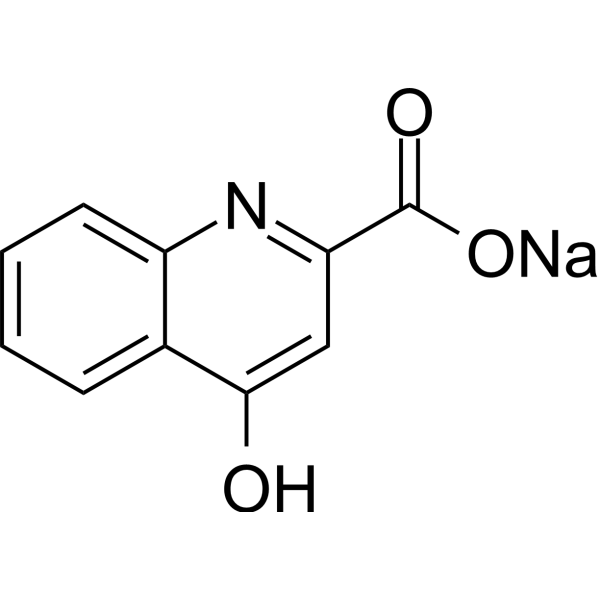
    Kynurenic acid sodium, an endogenous tryptophan metabolite, is a broad-spectrum antagonist targeting NMDA, glutamate, α7 nicotinic acetylcholine receptor. Kynurenic acid sodium is also an agonist of GPR35/CXCR8.
    Kynurenic acid sodium
  • HY-146066

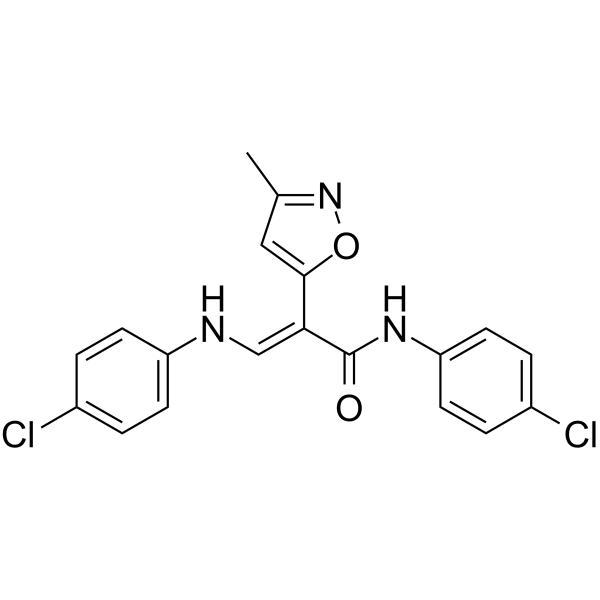
    nAChR JAK STAT NO Synthase Interleukin Related Inflammation/Immunology
    α7 nAchR-JAK2-STAT3 agonist 1 is a potent α7 nAchR-JAK2-STAT3 agonist, with an IC50 value of 0.32 μM for nitric oxide (NO). α7 nAchR-JAK2-STAT3 agonist 1 effectively suppresses the expression of iNOS, IL-1β, and IL-6 in murine RAW264.7 macrophages. α7 nAchR-JAK2-STAT3 agonist 1 can inhibit LPS-induced NO release, NF-κB activation and cytokine production. α7 nAchR-JAK2-STAT3 can be used for researching sepsis .
    α7 nAchR-JAK2-STAT3 agonist 1
  • HY-172236

    BNC210; IW-2143

    nAChR Neurological Disease
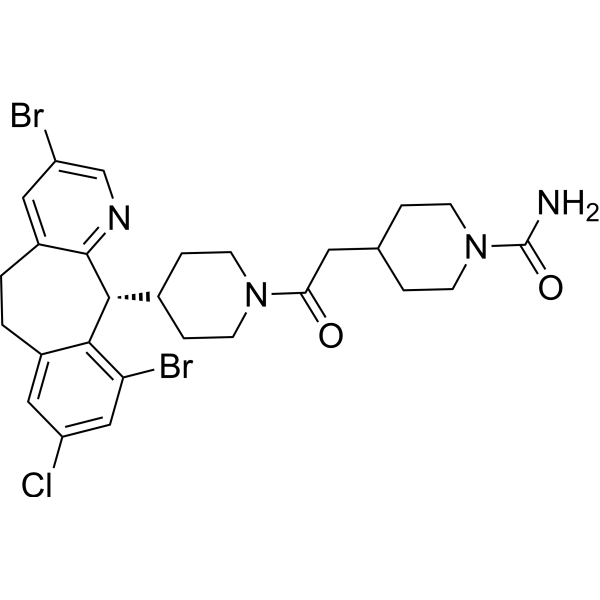
    Soclenicant (BNC210) is an orally active α7 nAChR negative alteration modulator (NAM) with no apparent side effects. Soclenicant exhibits acute anxiolytic activity in rodent models of anxiety. Soclenicant inhibits rat and human α7 nAChR currents (in stably transfected cell lines) induced by acetylcholine, nicotine, choline, and the a7-specific agonist PNU-282987 (HY-12560A) with IC50 values in the range of 1.2 to 3 μM. Soclenicant can be used in studies of anxiety, trauma, and stressor-related disorders .
    Soclenicant
  • HY-12150
    CCMI
    1 Publications Verification

    AVL-3288; UCI-4083

    nAChR Neurological Disease
    CCMI (AVL-3288) is a potent and selective α7 nAChR-positive allosteric modulator, does not bind to or activate α7 nAChRs via the orthosteric site, and causes significant positive modulation of agonist-induced currents at α7 nAChRs. CCMI has potential in CNS diseases with cognitive dysfunction .
    CCMI
  • HY-15430A
    Encenicline hydrochloride
    5 Publications Verification

    EVP-6124 hydrochloride

    nAChR Neurological Disease
    Encenicline hydrochloride (EVP-6124 hydrochloride) is a novel partial agonist of α7 neuronal nicotinic acetylcholine receptors (nAChRs).
    Encenicline hydrochloride
  • HY-P5623
    RVG
    1 Publications Verification

    RVG29; RDP; Rabies Virus Glycoprotein-29

    nAChR Interleukin Related Neurological Disease Inflammation/Immunology
    RVG (RVG29) is a blood-brain barrier-permeable peptide derived from rabies virus glycoprotein, which binds to the α-7 subunit of neuronal nicotinic acetylcholine receptor (AchR). RVG efficiently delivers drugs to nerve cells and antigen-presenting cells in a targeted manner, and enhances the efficiency of antigen presentation and drug delivery .
    RVG
  • HY-100806R
    Kynurenic acid (Standard)
    5+ Cited Publications

    Quinurenic acid (Standard)

    Reference Standards iGluR Endogenous Metabolite Apoptosis CXCR GPR35 Neurological Disease Inflammation/Immunology Endocrinology
    Kynurenic acid (Standard) is the analytical standard of Kynurenic acid. This product is intended for research and analytical applications. Kynurenic acid, an endogenous tryptophan metabolite, is a broad-spectrum antagonist targeting NMDA, glutamate, α7 nicotinic acetylcholine receptor. Kynurenic acid is also an agonist of GPR35/CXCR8.
    Kynurenic acid (Standard)
  • HY-18060

    TC-5619

    nAChR Neurological Disease
    Bradanicline (TC-5619) is an orally active agonist of α7 nAChR with moderate blood-brain barrier penetration. Bradanicline exhibits high affinity and subtype selectivity for human α7 nAChR. Bradanicline possesses antitussive activity that depends on sustained receptor binding and activation. Bradanicline requires systemic administration to dose-dependently inhibit cough induced by citric acid, bradykinin and inhaled nicotine. Bradanicline is well tolerated in preclinical studies and is widely used in research related to chronic refractory cough .
    Bradanicline
  • HY-12151

    NSC 213859

    nAChR Neurological Disease
    NS 1738 (NSC 213859) is a novel positive allosteric modulator of the α7 nAChR, with respect to positive modulation of α7 nAChR (EC50=3.4 μM in oocyte experiments).
    NS 1738
  • HY-19490

    AQW-051

    nAChR Neurological Disease
    VQW-765 (AQW-051) is a selective and orally active alpha-7 nicotinic acetylcholine receptor (α7-nAChR) agonist with a pKD value of 7.56 to recombinantly expressed human α7-nAChR. VQW-765 shows anxiolytic-like effect in vivo. VQW-765 can be used for the research of anxiety disorder and acute performance anxiety .
    VQW-765
  • HY-105670

    nAChR Neurological Disease
    PHA-543613 is a potent, orally active, brain-penetrant and selective α7 nAChR agonist with a Ki of 8.8 nM. PHA-543613 displays selectivity for α7-nAChR over α3β4, α1β1γδ, α4β2 and 5-HT3 receptors . PHA-543613 can be used for the cognitive deficits of Alzheimer's disease and schizophrenia research .
    PHA-543613
  • HY-101955

    (2S,6S)-HNK hydrochloride

    mTOR nAChR Neurological Disease
    (2S,6S)-Hydroxynorketamine hydrochloride is a neurorelaxant with potential antidepressant and analgesic effects. (2S,6S)-Hydroxynorketamine hydrochloride can activate the mTOR pathway, increase the phosphorylation level of downstream targets, and antagonize α7-nicotinic acetylcholine receptor (nAChR) to exert neuroactive properties .
    (2S,6S)-Hydroxynorketamine hydrochloride
  • HY-114269

    nAChR Neurological Disease Inflammation/Immunology
    (-)-(S)-B-973B is an allosteric activator of α7 nicotinic acetylcholine receptor (α7 nAChR). (-)-(S)-B-973B alleviates pain behaviors. (-)-(S)-B-973B can be used for the research of inflammatory pain .
    (-)-(S)-B-973B
  • HY-107682

    nAChR Neurological Disease Inflammation/Immunology
    TQS is a α7 nicotinic acetylcholine receptor (nAChR) positive allosteric modulator. TQS can be used for the research of neuroinflammatory pain .
    TQS
  • HY-148325

    nAChR Neurological Disease
    α7 Nicotinic receptor agonist-1 (Preparation 5) is an α7 nAChR agonist. α7 Nicotinic receptor agonist-1 can be used in studies of psychiatric disorders (such as schizophrenia, manic or hypomanic depression and anxiety disorders) and intellectual disorders (such as alzheimer's disease, learning deficits, cognitive deficits, attention deficits, memory loss, lewy body dementia and attention deficit hyperactivity disorder) .
    α7 Nicotinic receptor agonist-1
  • HY-108057A

    RG3487 hydrochloride

    nAChR 5-HT Receptor Neurological Disease
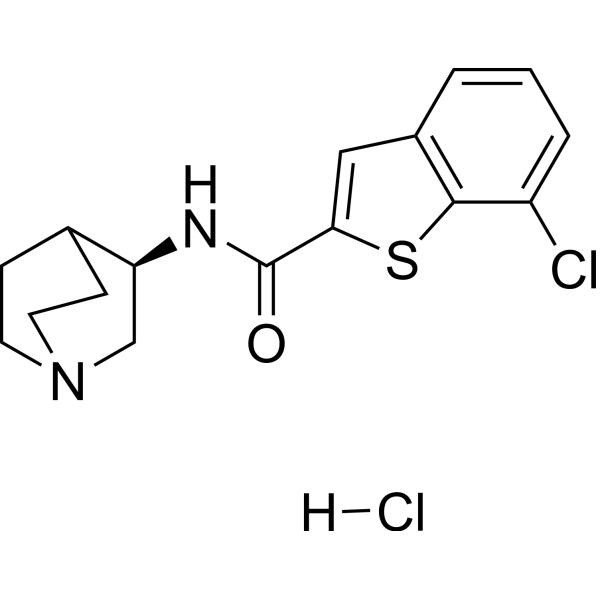
    Facinicline hydrochloride (RG3487 hydrochloride) is an orally active nicotinic α7 receptor partial agonist, with a Ki of 6 nM for α7 human nAChR. Facinicline hydrochloride (RG3487 hydrochloride) improves cognition and sensorimotor gating in rodents. Facinicline hydrochloride (RG3487 hydrochloride) shows high affinity (antagonist) to 5-HT3Rs with a Ki value of 1.2 nM .
    Facinicline hydrochloride
  • HY-19411

    nAChR Neurological Disease
    SSR180711 hydrochloride is an orally active, selective and reversible α7 acetylcholine nicotinic receptor (n-AChRs) partial agonist. SSR180711 hydrochloride can act on rat α7 n-AChR (Ki=22 nM; IC50=30 nM) and human α7 n-AChR (Ki=14 nM; IC50=18 nM). SSR180711 hydrochloride increases glutamatergic neurotransmission, ACh release and long-term potentiation (LTP) in the hippocampus .
    SSR180711 hydrochloride
  • HY-128575

    nAChR Neurological Disease
    BNC375 is a potent, selective, and orally available type I positive allosteric modulator of α7 nAChRs with an EC50 of 1.9 μM. BNC375 exhibits good CNS-agent like properties and clinical candidate potential. .
    BNC375
  • HY-107672

    Stilonium iodide

    nAChR Neurological Disease
    MG624 is a potent and selective neuronal α7 nAChR antagonist with a Ki of 106 nM .
    MG624
  • HY-161671

    nAChR Neurological Disease Inflammation/Immunology
    GAT2711 is a full agonist of α9 nAChR with an EC50 of 230 nM. GAT2711 shows 340-fold selective for α9 over α7 nAChRs. GAT2711 inhibits ATP-induced IL-1β release in THP-1 cells. GAT2711 retains full analgesic activity in α7 nAChR knockout mice .
    GAT2711
  • HY-P1259A

    Proteasome Bacterial Inflammation/Immunology
    PR-39 TFA, a natural proline- and arginine-rich antibacterial peptide, is a noncompetitive, reversible and allosteric proteasome inhibitor. PR-39 TFAreversibly binds to the α7 subunit of the proteasome and blocks degradation of NF-κB inhibitor IκBα by the ubiquitin-proteasome pathway. PR-39 TFA stimulates angiogenesis, inhibits inflammatory responses and significant reduces myocardial infarct size in mice .
    PR-39 TFA
  • HY-108038

    nAChR Neurological Disease
    ABT-107 is a selective α7 neuronal nicotinic receptor agonist. ABT-107 protects against nigrostriatal damage in rats with unilateral 6-hydroxydopamine lesions .
    ABT-107
  • HY-B0942R

    Reference Standards nAChR Bacterial Neurological Disease
    Benzethonium (chloride) (Standard) is the analytical standard of Benzethonium (chloride). This product is intended for research and analytical applications. Benzethonium chloride inhibits nicotinic acetylcholine receptors in human recombinant α7 and α4β2 neurons in Xenopus laevis oocytes.
    Benzethonium chloride (Standard)
  • HY-110087

    nAChR Neurological Disease
    4BP-TQS is a potent allosteric agonist of α7 nAChR. 4BP-TQS activates nAChRs via an allosteric transmembrane site .
    4BP-TQS
  • HY-16748

    ABT-126

    nAChR Neurological Disease
    Nelonicline (ABT-126) is an orally active and selective α7 nicotinic receptor agonist with high affinity to α7 nAChRs in human brain (Ki=12.3 nM). Nelonicline is used for the research of shizophrenia and Alzheimer's disease .
    Nelonicline
  • HY-129674
    PHA 568487 free base
    1 Publications Verification

    nAChR Neurological Disease
    PHA 568487 free base is a selective alpha 7 nicotinic acetylcholine receptor (α-7 nAchR) agonist. PHA 568487 free base reduces neuroinflammation .
    PHA 568487 free base
  • HY-15430

    EVP-6124

    nAChR Neurological Disease
    Encenicline (EVP-6124) is a novel partial agonist of α7 neuronal nicotinic acetylcholine receptors (nAChRs).
    Encenicline
  • HY-135483A

    nAChR Neurological Disease
    AR-R17779 hydrochloride is a potent and selective full agonist of nAChR, with Kis of 92 and 16000 nM for α7 and α4β2 subtype, respectively. AR-R17779 hydrochloride can improve learning and memory in rats. AR-R17779 hydrochloride also has anxiolytic activity. AR-R17779 hydrochloride can reduce inflammation by activating antiinflammatory cholinergic (vagal) pathways .
    AR-R17779 hydrochloride
  • HY-P5623B
    RVG TFA
    1 Publications Verification

    RVG29 TFA; RDP TFA; Rabies Virus Glycoprotein-29 TFA

    Bacterial Infection
    RVG TFA is a peptide derived from Rabies Virus Glycoprotein that binds to the α-7 subunit of nicotinic acetylcholine receptors (AchR) of neuronal cells. RVG enhances delivery of Mycobacterium tuberculosis antigens to antigen-presenting cells .
    RVG TFA
  • HY-146066A

    nAChR JAK STAT NO Synthase Others
    (R)-α7 nAchR-JAK2-STAT3 agonist 1 is the R-enantiomer of α7 nAchR-JAK2-STAT3 agonist 1 (HY-146066). α7 nAchR-JAK2-STAT3 agonist 1 is a potent α7 nAchR-JAK2-STAT3 agonist, with an IC50 value of 0.32 μM for nitric oxide (NO). α7 nAchR-JAK2-STAT3 agonist 1 effectively suppresses the expression of iNOS, IL-1β, and IL-6 in murine RAW264.7 macrophages. α7 nAchR-JAK2-STAT3 agonist 1 can inhibit LPS-induced NO release, NF-κB activation and cytokine production. α7 nAchR-JAK2-STAT3 can be used for researching sepsis .
    (R)-α7 nAchR-JAK2-STAT3 agonist 1
  • HY-160529

    nAChR Neurological Disease
    α7 nAChR Modulator-2 (Compound 7b) is a α7 nAChR positive allosteric modulator (PAM) with an EC50 of 2.1 μM. α7 nAChR Modulator-2 can be used for the research of cognitive disorders .
    α7 nAChR Modulator-2
  • HY-157958

    nAChR Neurological Disease
    α7 nAChR modulator-3 (Compound 6p) is a α7 nAChR positive allosteric Modulator with a IC50 value of 1.3 μM. α7 nAChR Modulator-3 can be used to inhibit auditory gating defects in a mouse schizophrenic model .
    α7 nAChR Modulator-3
  • HY-12560D

    nAChR Others
    PNU-282987 S enantiomer free base is the S-enantiomer of PNU-282987 free base. PNU-282987 is an α7 nicotinic acetylcholine receptor (α7 nAChR) agonist.
    PNU-282987 S enantiomer free base
  • HY-133011

    nAChR Neurological Disease
    nAChR agonist 1 is a potent, blood-brain-barrier-permeable, and orally active allosteric modulator of α7 nicotinic acetylcholine receptor (α7 nAChR). nAChR agonist 1 has the EC50 of 0.32 μM in a Ca 2+ mobilization assay (PNU-282987-induced, FLIPR based) in human IMR-32 neuroblastoma cells that endogenously express α7 nAChR. nAChR agonist 1 can be develpoped for the treatment of Alzheimer’s disease .
    nAChR agonist 1
  • HY-12560

    nAChR 5-HT Receptor Neurological Disease
    PNU-282987 (free base) is a potent α7 nicotinic acetylcholine receptor (nAChR) agonist with an EC50 of 154 nM. PNU-282987 (free base) is also a functional antagonist of the 5-HT3 receptor with an IC50 of 4541 nM. PNU-282987 (free base) can be used for the research of central and peripheral nervous systems .
    PNU-282987 free base
  • HY-11053

    nAChR Neurological Disease
    S 24795 is a partial agonist of α7 nAChR and improves mnemonic function in aged mice for the research of aging-related memory disturbances .
    S 24795
  • HY-107678

    WAY-317538

    nAChR Neurological Disease
    SEN 12333 (WAY-317538) is a potent, selective and orally active α7 nAChR agonist. SEN12333 displays high affinity for the rat α7 nAChRs expressed in GH4C1 cells (K>i=260 nM) and acts as full agonist in functional Ca 2+ flux studies (EC50=1.6 μM). SEN 12333 is used for AD and schizophrenia research .
    SEN12333
  • HY-105670B

    nAChR Neurological Disease
    PHA-543613 dihydrochloride is a potent, orally active, brain-penetrant and selective α7 nAChR agonist with a Ki value of 8.8 nM. PHA-543613 dihydrochloride displays selectivity for α7-nAChR over α3β4, α1β1γδ, α4β2 and 5-HT3 receptors . PHA-543613 dihydrochloride can be used for the cognitive deficits of Alzheimer's disease and schizophrenia research .
    PHA-543613 dihydrochloride
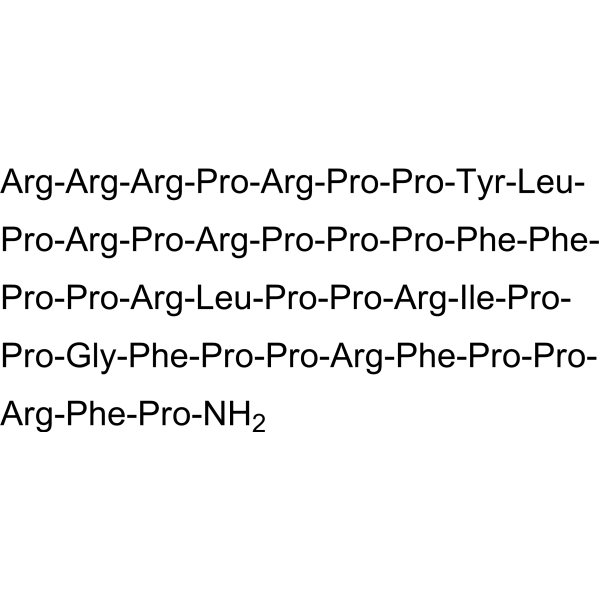
  • HY-P1259

    Proteasome Bacterial Inflammation/Immunology
    PR-39, a natural proline- and arginine-rich antibacterial peptide, is a noncompetitive, reversible and allosteric proteasome inhibitor. PR-39 reversibly binds to the α7 subunit of the proteasome and blocks degradation of NF-κB inhibitor IκBα by the ubiquitin-proteasome pathway. PR-39 stimulates angiogenesis, inhibits inflammatory responses and significant reduces myocardial infarct size in mice .
    PR-39
  • HY-19490A

    (S)-AQW-051

    nAChR Neurological Disease
    (S)-VQW-765 ((S)-AQW-051) is an orally active, selective and effective α7 nicotinic ACh receptor (nAChR) partial agonist. (S)-VQW-765 has potential applications in cognitive disorders related to neurological diseases, such as Alzheimer's disease or schizophrenia .
    (S)-VQW-765
  • HY-123858

    nAChR Neurological Disease
    VU6001221 is a blood-brain barrier permeable Choline Transporter (CHT) inhibitor (IC50 = 270 nM). VU6001221 increases the likelihood of extracellular choline elevation activating synaptic α7 nicotine ACh receptors. VU6001221 attenuates potassium-induced ACh levels in the prefrontal cortex .
    VU6001221
  • HY-P5823

    nAChR Neurological Disease
    Azemiopsin is a potent nicotinic acetylcholine receptor (nAChR) inhibitor with IC50s of 0.18 μM and 22 μM against T. californica nAChR and human α7 nAChR, respectively. Azemiopsin blocks acetylcholine-induced currents in Xenopus oocytes heterologously expressing human muscle-type nAChR .
    Azemiopsin

Inquiry Online

Your information is safe with us. * Required Fields.

Salutation


Country or Region *

Applicant Name *


Organization Name *

Department *


Email Address *


Product Name *

Cat. No.


Requested quantity *

Phone Number *


Remarks

Inquiry Online

Inquiry Information

Product Name:
Cat. No.:
Quantity:
MCE Japan Authorized Agent:

