













1. Search Result
Search Result
Results for "

Alkaline phosphatase

" in MedChemExpress (MCE) Product Catalog:

132

Inhibitors & Agonists

11

Fluorescent Dyes

20

Biochemical Assay Reagents

7

Peptides

3

MCE Kits

1

Inhibitory Antibodies

29

Natural
Products

21

Recombinant Proteins

4

Isotope-Labeled Compounds

21

Antibodies

1

Click Chemistry

3

Oligonucleotides

Cat. No. Product Name Target Research Areas Chemical Structure
  • HY-15925
    Nitro blue tetrazolium chloride
    Maximum Cited Publications
    6 Publications Verification

    NBT

    Fluorescent Dye Others
    Nitro blue tetrazolium chloride (NBT) is a substrate for dehydrogenases; is used with the alkaline phosphatase substrate 5-Bromo-4-Chloro-3-Indolyl Phosphate (BCIP) in western blotting and immunohistological staining procedures .
    Nitro blue tetrazolium chloride
  • HY-D0852
    Sodium orthovanadate
    Maximum Cited Publications
    13 Publications Verification

    Phosphatase Cancer
    Sodium orthovanadate is an inhibitor of protein tyrosine phosphatases, alkaline phosphatases and a number of ATPases, most likely acting as a phosphate analogue.
    Sodium orthovanadate
  • HY-13632
    Exemestane
    5+ Cited Publications

    FCE 24304; EXE

    Cytochrome P450 Endocrinology Cancer
    Exemestane (FCE 24304) is a selective, irreversible and orally active steroidal aromatase inhibitor with IC50s of 30 nM and 40 nM for human placental and rat ovarian aromatase, respectively. Exemestane can be used for hormone-dependent breast cancer research .
    Exemestane
  • HY-P2818
    Alkaline phosphatase, Bovine intestine
    1 Publications Verification

    Apase

    Endogenous Metabolite Phosphatase Glutathione Peroxidase Bacterial Infection Inflammation/Immunology
    Alkaline phosphatase, Bovine intestine (Apase) is an orally active membrane-bound glycoprotein that catalyzes the hydrolysis of phosphate monoesters at alkaline pH. Alkaline phosphatase, Bovine intestine reduces myeloperoxidase activity and bacterial translocation. Alkaline phosphatase, Bovine intestine improves survival rate of mice infected with E. coli. Alkaline phosphatase, Bovine intestine improves TNBS-induced colon inflammation .
    Alkaline phosphatase, Bovine intestine
  • HY-P2818E
    Alkaline Phosphatase, Calf intestinal
    1 Publications Verification

    Apase, Calf intestinal

    Endogenous Metabolite Phosphatase Glutathione Peroxidase Bacterial Infection Inflammation/Immunology
    Alkaline Phosphatase (Apase), Calf intestinal is an alkaline phosphatase from Calf intestinal, and is one of the most active alkaline phosphatases. Alkaline Phosphatase, Calf intestinal is an orally active membrane-bound glycoprotein that catalyzes the hydrolysis of phosphate monoesters at alkaline pH. Alkaline Phosphatase, Calf intestinal reduces myeloperoxidase activity and bacterial translocation. Alkaline Phosphatase, Calf intestinal improves survival rate of mice infected with E. coli. Alkaline Phosphatase, Calf intestinal improves TNBS-induced colon inflammation .
    Alkaline Phosphatase, Calf intestinal
  • HY-D0994
    4-Methylumbelliferyl phosphate
    1 Publications Verification

    4-MUP; MUP

    Phosphatase Others
    4-Methylumbelliferyl phosphate (4-MUP), an anionic organophosphate, is a acid and alkaline phosphatase fluorogenic substrate. 4-Methylumbelliferyl phosphate is also a nerve agent simulant .
    4-Methylumbelliferyl phosphate
  • HY-15928
    4-Nitrophenyl phosphate disodium
    1 Publications Verification

    p-Nitrophenyl phosphate disodium

    Fluorescent Dye Others
    4-Nitrophenyl phosphate (p-Nitrophenyl phosphate) disodium is a non-proteinaceous chromogenic substrate for alkaline and acid phosphatases used in ELISA and conventional spectrophotometric assays.
    4-Nitrophenyl phosphate disodium
  • HY-116022A

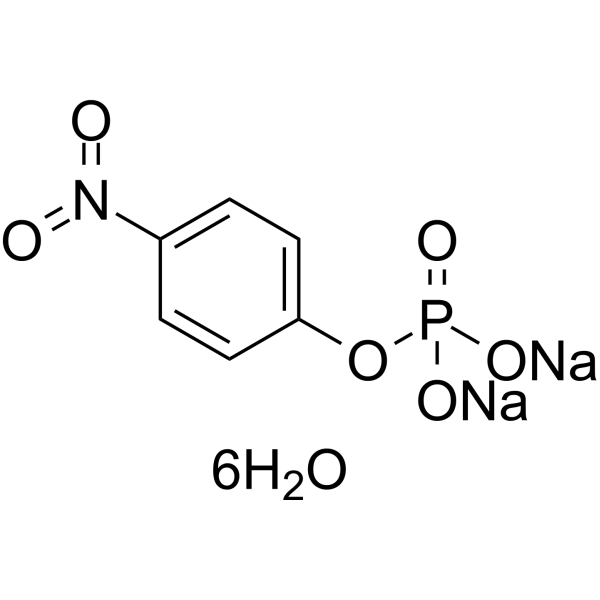
    p-Nitrophenyl phosphate disodium hexahydrate

    Biochemical Assay Reagents Others
    4-Nitrophenyl phosphate (p-nitrophenyl phosphate) disodium hexahydrate is widely used as a small molecule phosphotyrosine-like substrate in activity assays for protein tyrosine phosphatases. 4-Nitrophenyl phosphate disodium hexahydrate is a colorless substrate that upon hydrolysis is converted to a yellow 4-nitrophenolate ion that can be monitored by absorbance at 405 nm .
    4-Nitrophenyl phosphate disodium hexahydrate
  • HY-W007599

    Drug Derivative Cancer
    (S)-2,6-Bis((tert-butoxycarbonyl)amino)hexanoic acid is a polypeptide derivative, can be used to synthesis multifunctional amphiphilic peptide dendrimer for non-viral gene delivery in cancer research. (S)-2,6-Bis((tert-butoxycarbonyl)amino)hexanoic acid can be used in the preparation of organic substances that enhance the luminescence intensity of alkaline phosphatase substrates .
    (S)-2,6-Bis((tert-butoxycarbonyl)amino)hexanoic acid
  • HY-15909

    BCIP p-toluidine salt; X-phosphate p-toluidine salt

    Fluorescent Dye Others
    BCIP(BCIP p-toluidine salt; X-phosphate p-toluidine salt) is an artificial chromogenic substrate used for the sensitive colorimetric detection of alkaline phosphatase activity .
    BCIP
  • HY-19695
    (-)-p-Bromotetramisole oxalate
    1 Publications Verification

    L-p-Bromotetramisole oxalate; 6-Bromolevamisole oxalate

    Phosphatase Cancer
    (-)-p-Bromotetramisole oxalate (L-p-Bromotetramisole oxalate) is an alkaline phosphatase inhibitor. (-)-p-Bromotetramisole (oxalate) is applicable to research related to erythroleukemia .
    (-)-p-Bromotetramisole oxalate
  • HY-P2818C
    Alkaline phosphatase, microorganism
    1 Publications Verification

    Apase, microorganism

    Endogenous Metabolite Phosphatase Glutathione Peroxidase Bacterial Infection Inflammation/Immunology
    Alkaline Phosphatase (Apase), microorganism is an alkaline phosphatase from microorganism, and is one of the most active alkaline phosphatases. Alkaline phosphatase, microorganism is an orally active membrane-bound glycoprotein that catalyzes the hydrolysis of phosphate monoesters at alkaline pH. Alkaline phosphatase, microorganism reduces myeloperoxidase activity and bacterial translocation. Alkaline phosphatase, microorganism improves survival rate of mice infected with E. coli. Alkaline phosphatase, microorganism improves TNBS-induced colon inflammation .
    Alkaline phosphatase, microorganism
  • HY-P2818A
    Alkaline phosphatase, Escherichia coli
    1 Publications Verification

    Apase, Escherichia coli

    Endogenous Metabolite Phosphatase Glutathione Peroxidase Bacterial Infection Inflammation/Immunology
    Alkaline Phosphatase (Apase), Escherichia coli is an alkaline phosphatase from Escherichia coli, and is one of the most active alkaline phosphatases. Alkaline phosphatase, Escherichia coli is an orally active membrane-bound glycoprotein that catalyzes the hydrolysis of phosphate monoesters at alkaline pH. Alkaline phosphatase, Escherichia coli reduces myeloperoxidase activity and bacterial translocation. Alkaline phosphatase, Escherichia coli improves survival rate of mice infected with E. coli. Alkaline phosphatase, Escherichia coli improves TNBS-induced colon inflammation .
    Alkaline phosphatase, Escherichia coli
  • HY-124756
    SBI-425
    3 Publications Verification

    Phosphatase Cardiovascular Disease
    SBI-425 is an orally active and potent TNAP (tissue-nonspecific alkaline phosphatase) inhibitor (IC50=16 nM). SBI-425 inhibits TNAP in the vasculature, improving cardiovascular parameters and survival .
    SBI-425
  • HY-116022
    4-Nitrophenyl phosphate
    3 Publications Verification

    p-Nitrophenyl phosphate

    Biochemical Assay Reagents Others
    4-Nitrophenyl phosphate (p-Nitrophenyl phosphate) is widely used as a small molecule phosphotyrosine-like substrate in activity assays for protein tyrosine phosphatases.4-Nitrophenyl phosphate is a colorless substrate that upon hydrolysis is converted to a yellow 4-nitrophenolate ion that can be monitored by absorbance at 405 nm .
    4-Nitrophenyl phosphate
  • HY-18312
    PF-4618433
    5 Publications Verification

    Pyk2 Metabolic Disease
    PF-4618433 is a potent and selective PYK2 inhibitor, with an IC50 of 637 nM. PF-4618433 may be suitable for the research of osteoporosis, craniofacial and appendicular skeletal defects and for targeted bone regeneration .
    PF-4618433
  • HY-D1208

    Biochemical Assay Reagents Phosphatase Others
    Alkaline phosphatase substrate is a chemiluminescent substrate for alkaline phosphatase. Alkaline phosphatase substrate can be used for enzyme-linked immunoassays .
    Alkaline phosphatase substrate
  • HY-12834A
    MK2-IN-1 hydrochloride
    5 Publications Verification

    MAPKAPK2 (MK2) HSP Cancer
    MK2-IN-1 hydrochloride (compound 1) is a potent and selecitve MAPKAPK2 (MK2) inhibitor with an IC50 of 0.11 uM for MK2 and an EC50 of 0.35 uM for pHSP27. MK2-IN-1 hydrochloride impaires the phosphorylation level of serine residues in the Tfcp2l1 protein .
    MK2-IN-1 hydrochloride
  • HY-119443

    Phosphatase Metabolic Disease
    Neridronate is an aminobisphosphonate. Neridronate induces osteoblast differentiation, enhances alkaline phosphatase activity and mineralized nodule formation. Neridronate inhibits endothelial cell proliferation, fibroblast growth factor-2-induced capillary-like tube formation, and angiogenesis. Neridronate can be used for osteogenesis imperfecta and Paget’s disease of bone .
    Neridronate
  • HY-D1491A

    Fluorescent Dye Others
    Fast Red Violet LB Zinc chloride is a stain that stains tartrate-resistant acid phosphatase (TRAP) and Fast Red Violet LB Zinc chloride can be used to stain alkaline phosphatase (ALP) activity .
    Fast Red Violet LB Zinc chloride
  • HY-21196A

    Phosphatase Metabolic Disease
    Potassium perfluorohexanesulfonate is an orally active surfactant found in sera of the general population. Potassium perfluorohexanesulfonate induces adaptive hepatocellular hypertrophy, decreases serum cholesterol and increases alkaline phosphatase in male mice .
    Potassium perfluorohexanesulfonate
  • HY-W013755
    Dioctyl phthalate
    2 Publications Verification

    DNOP; Di-n-octyl phthalate; Phthalic acid dioctyl ester

    Biochemical Assay Reagents Aminotransferases (Transaminases) Phosphatase Bacterial Inflammation/Immunology
    Dioctyl phthalate (DNOP) is a plasticizer. Dioctyl phthalate increases the activities of alanine aminotransferase (ALT) and alkaline phosphatase (ALP) in the liver, as well as the levels of creatinine and urea in the kidney. Exposure to Dioctyl phthalate disrupts the homeostasis of the intestinal microbial community, increases the abundance of pathogenic bacteria, and reduces the abundance of beneficial bacteria such as Lactobacillus. Dioctyl phthalate induces significant and dose-dependent inflammatory responses in the liver, spleen and kidney of mice .
    Dioctyl phthalate
  • HY-P5832

    TGF-beta/Smad RUNX Metabolic Disease
    BMP2-derived peptide is an osteogenic inducer and BMP receptor ligand. BMP2-derived peptide binds to BMP receptors on the cell surface to form a complex, activates the downstream Smad signaling pathway, and regulates the expression of osteogenic transcription factors. BMP2-derived peptide effectively promotes the adhesion, proliferation, osteogenic differentiation and mineralization of bone marrow mesenchymal stem cells, significantly up-regulates the mRNA levels of OCN, Runx2 and type I collagen, and increases alkaline phosphatase activity and calcium deposition. BMP2-derived peptide induces osteoblast differentiation and ectopic bone regeneration, and improves cranial bone defect repair. Meanwhile, BMP2-derived peptide enhances the cytocompatibility of mesoporous silica nanoparticles, synergistically increases osteogenic activity with Dexamethasone (HY-14648), serving as an important tool for bone defect repair research .
    BMP2-derived peptide
  • HY-14210

    Phosphatase Inflammation/Immunology
    TNAP-IN-1 (Compound 1) is a selective tissue-nonspecific alkaline phosphatase (TNAP) inhibitor, with an IC50 of 0.19 μM. TNAP-IN-1 can be used for the research of soft tissue calcification .
    TNAP-IN-1
  • HY-12834
    MK2-IN-1
    5 Publications Verification

    MAPKAPK2 (MK2) HSP Cancer
    MK2-IN-1 (compound 1) is a potent and selecitve MAPKAPK2 (MK2) inhibitor with an IC50 of 0.11 uM for MK2 and an EC50 of 0.35 uM for pHSP27. MK2-IN-1 impaires the phosphorylation level of serine residues in the Tfcp2l1 protein .
    MK2-IN-1
  • HY-133108

    EBV Parasite Phosphatase Influenza Virus Infection Metabolic Disease Inflammation/Immunology Cancer
    Azadirachtin B is an limonoid isolated from seed kernels of Azadirachta indica. Azadirachtin B increases alkaline phosphatase (ALP) activity and stimulates osteoblast differentiation. Azadirachtin B is active against the Epstein-Barr virus early antigen (EBV-EA). Azadirachtin B has insecticidal, nematocidal, anticancer, anti-inflammatory, antiviral and osteogenic properties .
    Azadirachtin B
  • HY-P4823

    Thyroid Hormone Receptor Metabolic Disease
    pTH (1-37) (human) is a fragment of parathyroid hormone (PTH). pTH (1-37) (human) induces the cAMP formation and increases alkaline phosphatase activity. pTH (1-37) (human) increases growth, bone calcium content, and bone mineral density (BMD) in uremic animals. pTH (1-37) (human) has the potential for the research of osteoporosis .
    pTH (1-37) (human)
  • HY-78144

    Drug Derivative Drug Intermediate Inflammation/Immunology
    4-Methylsalicylic acid is a methyl derivative of Salicylic acid (HY-B0167). 4-Methylsalicylic acid derivatives inhibit the activity of alkaline phosphatases such as TNAP and IAP. 4-Methylsalicylic acid derivatives exhibit immunosuppressive activity .
    4-Methylsalicylic acid
  • HY-108531

    RAR/RXR Metabolic Disease
    ER 50891 is a RARα antagonist. ER 50891 can significantly antagonize the inhibitory effect of all-trans retinoic acid (ATRA) on the total cell metabolic activity and proliferation of MC3T3-E1 preosteoblasts. ER 50891 rescues ATRA-inhibited osteocalcin (OCN) expression and extracellular matrix mineralization, and suppresses alkaline phosphatase (ALP) activity synergistically. ER 50891 can be used for the study of osteoporosis related to ATRA-induced inhibition of osteoblastogenesis .
    ER 50891
  • HY-112832

    Phosphatase Infection
    Lumigen APS-5 is a substrate of alkaline phosphatase (ALP). Lumigen APS-5 can be used to assess the activity of alkaline phosphatase (ALP) .
    Lumigen APS-5
  • HY-P2818B
    Alkaline phosphatase, Chicken Intestine
    1 Publications Verification

    Apase, Chicken Intestine

    Endogenous Metabolite Phosphatase Glutathione Peroxidase Bacterial Infection Inflammation/Immunology
    Alkaline Phosphatase (Apase), Chicken Intestine is an alkaline phosphatase from Chicken Intestine, and is one of the most active alkaline phosphatases. Alkaline phosphatase, Chicken Intestine is an orally active membrane-bound glycoprotein that catalyzes the hydrolysis of phosphate monoesters at alkaline pH. Alkaline phosphatase, Chicken Intestine reduces myeloperoxidase activity and bacterial translocation. Alkaline phosphatase, Chicken Intestine improves survival rate of mice infected with E. coli. Alkaline phosphatase, Chicken Intestine improves TNBS-induced colon inflammation .
    Alkaline phosphatase, Chicken Intestine
  • HY-W008385

    Endogenous Metabolite Metabolic Disease
    H-HoArg-OH, a homologue arginine, is a strong inhibitor of human bone and liver alkaline phosphatase.
    H-HoArg-OH
  • HY-131475

    Biochemical Assay Reagents Others
    Naphthol AS-BI phosphate is a substrate for acid and alkaline phosphatase and can be used in fluorescence assays. Naphthol AS-BI phosphate is a kind of biological materials or organic compounds that are widely used in life science research .
    Naphthol AS-BI phosphate
  • HY-128591
    DIPQUO
    2 Publications Verification

    Phosphatase Metabolic Disease
    DIPQUO is an activator of the bone marker alkaline phosphatase (ALP), with an EC50 of 6.27 μM in C2C12 cells. DIPQUO promotes mouse and human osteoblast differentiation via activation of p38 MAPK-β .
    DIPQUO
  • HY-N6663

    Environmental Pollutants COX Inflammation/Immunology
    3-Carene is a bicyclic monoterpene in essential oils extracted from pine trees. 3-Carene inhibits nociceptive stimulus-induced inflammatory infiltrates and COX-2 overexpression, and with antinociceptive effect. 3-Carene stimulates the activity and expression of alkaline phosphatase that is an early phase marker of osteoblastic differentiation .
    3-Carene
  • HY-B2203

    Phosphatase Metabolic Disease
    Monocalcium glycerophosphate is an inhibitor of intestinal alkaline phosphatase F3, and it has anti-cavity properties. Monocalcium glycerophosphate is a source of calcium and phosphorus in total parenteral nutrition solutions, helps prevent the mineralization and development of bones from intravenous nutrition, and maintains the integrity of the intestinal epithelium .
    Monocalcium glycerophosphate
  • HY-13636A

    ICI 182780 (S enantiomer); ZD 9238 (S enantiomer); ZM 182780 (S enantiomer)

    Drug Isomer Estrogen Receptor/ERR p38 MAPK Apoptosis Cancer
    Fulvestrant (ICI 182780; ZD 9238) S enantiomer is the S-enantiomer of Fulvestrant (HY-13636), a potent estrogen receptor inhibitor. Fulvestrant binds to and blocks the estrogen receptor, promotes its degradation, and thereby inhibits receptor dimerization, nucleocytoplasmic shuttling and transcriptional activity. Fulvestrant effectively blocks estrogen signaling, MAPK pathway activation and ER-regulated protein expression. Fulvestrant induces apoptosis, inhibits the proliferation of breast cancer and prolactinoma cells, and reduces the mineralization level, alkaline phosphatase activity and osteocalcin expression of preosteoblasts. Prenatal exposure to Fulvestrant impairs ovarian follicular development and causes ovarian structural damage. Fulvestrant has been widely used in studies related to breast cancer, prolactinoma and other conditions .
    Fulvestrant (S enantiomer)
  • HY-124478

    Ethyl 2,5-dihydroxybenzoate

    Phosphatase Metabolic Disease
    Ethyl gentisate (Ethyl 2,5-dihydroxybenzoate) is a dual modulator for cell differentiation, that enhances the osteogenic differentiation of human mesenchymal stem cells (hMSCs) and alkaline phosphatase activity, inhibits RANKL-activated osteoclastogenesis in RAW264.7 cells, and balances the bone remodeling process .
    Ethyl gentisate
  • HY-W328317

    Azoic diazo No. 4, 90%

    Biochemical Assay Reagents Others
    Fast garnet GBC sulfate salt, 90% is a chromogenic substrate for alkaline phosphatase.
    Fast garnet GBC sulfate salt, 90%
  • HY-130767A

    Biochemical Assay Reagents Cancer
    Naphthol AS-TR Phosphate disodium is a water-soluble dye commonly used as an enzymatic substrate in various biochemical assays to detect alkaline phosphatase activity. Naphthol AS-TR Phosphate disodium has unique chemical properties that allow it to be hydrolyzed by alkaline phosphatase, forming a colored product that can be detected spectrophotometrically. This makes it a useful tool for monitoring enzyme activity in biological samples such as serum or urine.
    Naphthol AS-TR phosphate disodium
  • HY-N2247

    Phosphatase Metabolic Disease
    Guaiacin is a arylnaphthalene type lignin isolated from the barks of Machilus thunbergii SIEB. et ZUCC (Lauraceae). Guaiacin significantly increases alkaline phosphatase activity and osteoblast differentiation .
    Guaiacin
  • HY-W661499

    Phosphatase Apoptosis Reactive Oxygen Species (ROS) Caspase Cancer
    Orellanine, a nephrotoxic alkaloid found in Cortinarius orellanus, is an orally active and selective non-competitive inhibitor of alkaline phosphatase. Orellanine chelates iron, generates reactive oxygen species (ROS), induces DNA scission, forms ortho-semiquinone radicals, downregulates antioxidant defenses, and inhibits mitochondrial function. Orellanine induces caspase 8/9-mediated apoptosis. Orellanine inhibits synthesis of proteins, RNA, DNA, and mitochondrial protein synthesis, with metabolic activation required for cell-free protein synthesis inhibition. Orellanine can be used for the research of metastatic clear cell renal cell carcinoma, acute renal failure, chronic renal insufficiency, and kidney damage .
    Orellanine
  • HY-D0911

    Magenta phosphate

    Biochemical Assay Reagents Others
    5-Bromo-6-chloro-3-indolyl phosphate p-toluidine (Magenta phosphate) can be used to visualize alkaline phosphatase activity by producing an insoluble magenta end product.
    5-Bromo-6-chloro-3-indolyl phosphate p-toluidine
  • HY-W591838

    PFPeS

    Biochemical Assay Reagents Phosphatase Metabolic Disease
    Perfluoropentanesulfonic acid (PFPeS) is a per- and polyfluoroalkyl substance. Perfluoropentanesulfonic acid increases alkaline phosphatase (ALKP). Perfluoropentanesulfonic acid induces systemic toxicity in mouse models and alters the expression of genes related to fatty acid metabolism, inflammation and skin integrity in the liver and skin .
    Perfluoropentanesulfonic acid
  • HY-170462

    Biochemical Assay Reagents Others
    CSPD substrate is a chemiluminescent substrate of alkaline phosphatase. CSPD substrate provides the enhanced alkaline phosphatase sensitivity and a more simplified assay .
    CSPD substrate
  • HY-D1491

    Fluorescent Dye Others
    Fast Red Violet LB is a dye for staining tartrate resistant acid phosphatase (TRAP). Fast Red Violet LB can be used for alkaline phosphatase (ALP) activity staining .
    Fast Red Violet LB
  • HY-W008385R

    Reference Standards Endogenous Metabolite Metabolic Disease
    H-HoArg-OH, a homologue arginine, is a strong inhibitor of human bone and liver alkaline phosphatase.
    H-HoArg-OH (Standard)
  • HY-W040295

    Phosphatase Others
    Fast Red ITR is a nonlinear optical material . Fast Red ITR can be used in alkaline phosphatase histochemistry .
    Fast Red ITR
  • HY-D1520

    Phosphatase Others
    Naphthol AS-GR phosphate disodium is substrates for acid and alkaline phosphatases. Naphthol AS-GR phosphate disodium has an intense green fluorescence used in histochemical studies .
    Naphthol AS-GR phosphate disodium
  • HY-N15220

    Endogenous Metabolite Phosphatase Cancer
    Dipsacus saponin X (compound 7) is a triterpenoid saponin that stimulates the proliferation of UMR106 cells and increases alkaline phosphatase activity in UMR106 cells (4 μM) .
    Dipsacus saponin X

Inquiry Online

Your information is safe with us. * Required Fields.

Salutation


Country or Region *

Applicant Name *


Organization Name *

Department *


Email Address *


Product Name *

Cat. No.


Requested quantity *

Phone Number *


Remarks

Inquiry Online

Inquiry Information

Product Name:
Cat. No.:
Quantity:
MCE Japan Authorized Agent:

