1. Search Result
Search Result
Results for "

Anticancer agents

" in MedChemExpress (MCE) Product Catalog:

1085

Inhibitors & Agonists

7

Screening Libraries

7

Fluorescent Dye

34

Biochemical Assay Reagents

19

Peptides

3

Inhibitory Antibodies

200

Natural
Products

46

Isotope-Labeled Compounds

6

Click Chemistry

13

Oligonucleotides

2

GMP Molecules

Cat. No. Product Name Target Research Areas Chemical Structure
  • HY-125924
    DSPE-PEG-Amine, MW 2000 ammonium
    1 Publications Verification

    DSPE-PEG-NH2, MW 2000 ammonium; DSPE-PEG(2000) Amine ammonium

    Liposome Others
    DSPE-PEG-Amine, MW 2000 (ammonium), an amine derivative of phospholipid poly ethylene glycol, is used in the synthesis of solid lipid and thermosensitive liposomal nanoparticles for the delivery of anticancer agents .
    DSPE-PEG-Amine, MW 2000 ammonium
  • HY-N0421
    Cinobufagin
    5+ Cited Publications

    Cinobufagine

    Apoptosis Neurological Disease Cancer
    Cinobufagin is an anticancer agent that can be secreted by the Asiatic toad Bufo gargarizans. Cinobufagin induces the cell cycle arrests in the G1 phase or G2/M phase, leading to apoptosis in cancer cells. Cinobufagin inhibits tumor growth in melanoma and glioblastoma multiforme xenograft mouse models .
    Cinobufagin
  • HY-13767
    Tirapazamine
    10+ Cited Publications

    SR259075; SR4233; Win59075; SML 0552; SR 259075; Tirazone

    DNA/RNA Synthesis Cancer
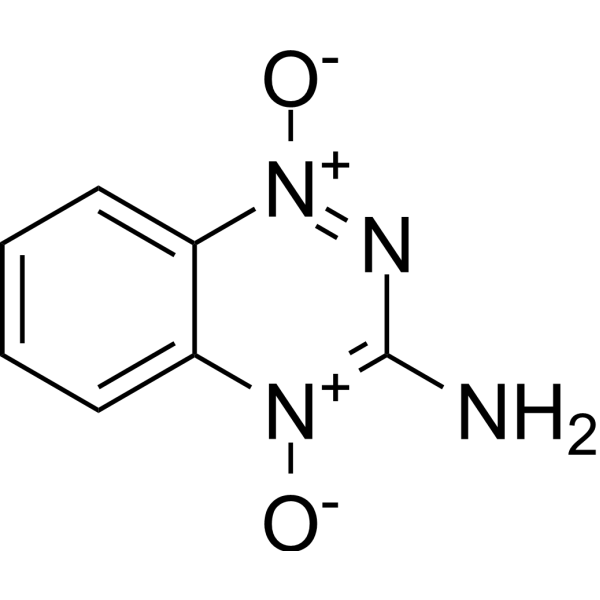
    Tirapazamine (SR259075) is an anticancer agent that shows selective cytotoxicity for hypoxic cells in solid tumors, thereby inducing single-and double-strand breaks in DNA, base damage, and cell death. Tirapazamine is an anticancer and bioreductive agent.Tirapazamine (SR259075) can enhance the cytotoxic effects of ionizing radiation in hypoxic cells .
    Tirapazamine
  • HY-N6017

    HDAC TNF Receptor Interleukin Related TGF-β Receptor IFNAR PI3K PKC Akt GSK-3 Caspase Apoptosis Cancer
    Bakkenolide A is an anticancer agent. Bakkenolide A reduces the viability of leukemia cells, inhibits cell colony formation and invasion, and downregulates the expression of HDAC3 in cells. Bakkenolide A downregulates the expression of pro-inflammatory cytokines including TNF-α, interleukins such as IL-1β, TGF-β1 and IFN-γ, as well as the expression of PI3K, PDK and PKC in leukemia cells. Bakkenolide A downregulates activated Akt, GSK and Bad, while upregulates Cyto-c, cleaved Caspase3 and cleaved Caspase7, induces apoptosis (apoptosis) in leukemia cells and thereby inhibits inflammatory responses in leukemia cells. Bakkenolide A significantly slows the growth of subcutaneous leukemia tumors in nude mice. Bakkenolide A is applicable to leukemia-related research .
    Bakkenolide A
  • HY-139324
    Cu(II)GTSM
    1 Publications Verification

    GSK-3 Amyloid-β Neurological Disease Cancer
    Cu(II)GTSM, a cell-permeable Cu-complex, significantly inhibits GSK3β. Cu(II)GTSM inhibits Amyloid-β oligomers (AβOs) and decreases tau phosphorylation. Cu(II)GTSM also decreases the abundance of Amyloid-β trimers. Cu(II)GTSM is a potential anticancer and antimicrobial agent .
    Cu(II)GTSM
  • HY-13540

    GPI 21016

    PARP Cancer
    E7016 (GPI 21016) is an orally available PARP inhibitor. E7016 can enhance tumor cell radiosensitivity in vitro and in vivo through the inhibition of DNA repair. E7016 acts as a potential anticancer agent .
    E7016
  • HY-105270A

    FCE 24517 hydrochloride

    Drug Derivative Cancer
    Tallimustine hydrochloride, a distamycin-A derivative, is an anticancer agent .
    Tallimustine hydrochloride
  • HY-N3831

    Bacterial Apoptosis Infection Inflammation/Immunology Cancer
    Epimedokoreanin B is a natural flavonoid with anticancer, anti-inflammatory and antibacterial effects. Epimedokoreanin B inhibits the growth of lung cancer cells through endoplasmic reticulum stress-mediated apoptosis accompanied by autophagosome accumulation. Epimedokoreanin B is an anti-periodontitis agent that inhibits gingipains and Porphyromonas gingivalis growth and biofilm formation .
    Epimedokoreanin B
  • HY-76665

    Drug Derivative Cancer
    Anticancer agent 209 (compound 1) is an anticancer agent. Anticancer agent 209 exhibits cytotoxic activity against colon cancer in vitro .
    Anticancer agent 209
  • HY-146396

    MetAP Cancer
    Anticancer agent 51 (compound 3d) is a potent anticancer agent with an Ki of 731.62 nM. Anticancer agent 51 shows anticancer activity. Anticancer agent 51 has the potential for the research of prostate cancer .
    Anticancer agent 51
  • HY-156675

    Microtubule/Tubulin Cancer
    Plecstatin-1 is a potent organoruthenium anti-cancer agent . Plecstatin-1 selectively targets plectin (a scaffold protein and cytolinker) in tumour spheroids .
    Plecstatin-1
  • HY-N8491

    Others Cancer
    Dihydrocarveol is an anticancer agent. Dihydrocarveol shows inhibitory activity against human colon adenocarcinoma cells (HCT-116, HT-29, COLO320DM) with an IC50 value of 28.31 μM in HCT-116 cells. Dihydrocarveol is promising for research of colon cancer .
    Dihydrocarveol
  • HY-I0834

    Microtubule/Tubulin Cancer
    (S)-3-(4-(2-Chloro-5-iodobenzyl)phenoxy)tetrahydrofuran (compound 2d), a halogenated Phenstatin analog, is a microtubule destabilizing agent. (S)-3-(4-(2-Chloro-5-iodobenzyl)phenoxy)tetrahydrofuran shows anticancer activities .
    (S)-3-(4-(2-Chloro-5-iodobenzyl)phenoxy)tetrahydrofuran
  • HY-146548

    Apoptosis Bcl-2 Family Caspase PARP Cancer
    Anticancer Agent 43 is a potent anticancer agent. Anticancer Agent 43 induces apoptosis by caspase 3, PARP1, and Bax dependent mechanisms. Anticancer Agent 43 induces DNA damage .
    Anticancer agent 43
  • HY-W278944

    Drug Derivative Cancer
    Antiproliferative agent-15 is an thienopyrimidine derivated anticancer agent. Antiproliferative agent-15 shows antiproliferative activity against human colon (HCT116 and HCT15) and brain (LN-229 and GBM-10) cancer cell lines .
    Antiproliferative agent-15
  • HY-150970

    Pyroptosis Cancer
    ICy-OH, an iodinated photosensitizer, is an effective anticancer agent. ICy-OH can be used not only for deep tissue imaging (λex=640 nm,λem=690-740 nm) but also to selectively induce cell death in pancreatic cancer cells via cell pyroptosis pathway .
    ICy-OH
  • HY-W007977

    Drug Intermediate Cancer
    4-Chloro-6,7-bis(2-methoxyethoxy)quinazoline (Compound 11 and 15) is a building block and synthetic intermediate, which can be used as a precursor in the synthesis of receptor tyrosine kinase (RTK) inhibitors, dual RTK and histone deacetylase (HDAC) inhibitors, and anticancer agents. 4-Chloro-6,7-bis(2-methoxyethoxy)quinazoline can also be used to synthesize EGFR inhibitors, including Erlotinib (HY-50896), with antiproliferative activity .
    4-Chloro-6,7-bis(2-methoxyethoxy)quinazoline
  • HY-146433

    Apoptosis Cancer
    Anticancer agent 55 is a potent anticancer agent. Anticancer agent 55 shows anticancer activity via reducing the cell viability and cell migration in a dose-dependent manner. Anticancer agent 55 induces apoptosis. Anticancer agent 55 has the potential for the research of prostate cancer and breast cancer .
    Anticancer agent 55
  • HY-163515

    Ras Cancer
    Anticancer agent 207 (compound 10b) is a potent anticancer agent. Anticancer agent 207 bounds to the NRAS rG4 with a KD value of 2.31 µM. Anticancer agent 207 shows cytotoxicity and decreases the expression of NRAS protein. Anticancer agent 207 shows antitumor activity .
    Anticancer agent 207
  • HY-N15600

    (-)-Merulidial

    Antibiotic Fungal Bacterial DNA/RNA Synthesis Infection Cancer
    Merulidial (Compound 1) is an antibiotic and cytotoxic agent with a sesquiterpene dialdehyde structure. Merulidial significantly inhibits the germination of spores and the hyphal growth of the wood-roting basidiomycete Heterobasidion annosum (H. annosum) and the saprophytic mould Cladosporium cucumerinum (C.cucumerinum). Merulidial also inhibits a variety of bacteria, algae and DNA synthesis of ECA cells. Merulidial shows a strong anticancer activity with IC50 s of 20 and 10 μg/mL for ECA and L1210 cells, respectively .
    Merulidial
  • HY-147971

    Parasite Topoisomerase Infection Cancer
    Anticancer agent 75 is a potent anticancer agent. Anticancer agent 75 shows cytotoxicity and selectivity in cancer cell lines. Anticancer agent 75 shows cytotoxicity to normal human kidney cell lines is at least 35 times lower than that of the Doxorubicin standard. Anticancer agent 75 shows good activity of antiplasmodial .
    Anticancer agent 75
  • HY-179298

    Drug Derivative Cancer
    Anticancer agent 283 (Compound 25) is a Forsyshiyanine A derivative. Anticancer agent 283 shows anticancer activity against pancreatic cancer .
    Anticancer agent 283
  • HY-163089

    Biochemical Assay Reagents Cancer
    Anticancer agent 176 (Compoint 10α) is an anticancer agent. Anticancer agent 176 exhibits excellent in vitro cytotoxic activity against neuroblastoma with an IC50 value of 6.3 μM .
    Anticancer agent 176
  • HY-122250

    Drug Derivative Cancer
    LY 288601 is a potent anticancer agent .
    LY 288601
  • HY-156253

    COX Cancer
    Anticancer agent 166 (compound 3) is an anticancer agent with an excellent inhibition activity against Caco-2 (IC50 = 9.6 nM) .
    Anticancer agent 166
  • HY-179062

    Apoptosis Cancer
    Anticancer agent 280 (Compound 65) is an anti-cancer agent targeting triple-negative breast cancer (TNBC). Anticancer agent 280 exhibits IC50 values of Anticancer agent 280 for MDA-MB-231, MDA-MB-231/LM2-4, Jurkat, and MCF-7 of 7.1, 11.65, 6.99, and 21.51 μM respectively. Anticancer agent 280 can cause significant arrest of cells in the S phase and induce cell apoptosis. Anticancer agent 280 can be used for the study of TNBC .
    Anticancer agent 280
  • HY-162670

    CDK Cancer
    Anticancer agent 238 (compound 5) is an anticancer agent with a notably strong binding affinity towards the CDK-5 enzyme. Anticancer agent 238 shows a strong efficacy agains HCT116 and MCF7 cells, with IC50 values of 13.46 µM and 16.43 µM, respectively .
    Anticancer agent 238
  • HY-179070

    Apoptosis Cancer
    Anticancer agent 280 TFA (Compound 65) is an anti-cancer agent targeting triple-negative breast cancer (TNBC). Anticancer agent 280 TFA exhibits IC50 values of Anticancer agent 280 TFA for MDA-MB-231, MDA-MB-231/LM2-4, Jurkat, and MCF-7 of 7.1, 11.65, 6.99, and 21.51 μM respectively. Anticancer agent 280 TFA can cause significant arrest of cells in the S phase and induce cell apoptosis. Anticancer agent 280 TFA can be used for the study of TNBC .
    Anticancer agent 281 TFA
  • HY-163619

    Apoptosis Mitophagy Cancer
    Anticancer agent 227 (compound YNU-1c) is a potent anticancer agent. Anticancer agent 227 shows antiproliferative activity. Anticancer agent 227 induces apoptosis and mitophagy .
    Anticancer agent 227
  • HY-155278

    Others Cancer
    Anticancer agent 162 (compound 1d) is an effective anticancer agent. Anticancer agent 162 induces oncosis of Hela cells with lipophilicity and cytotoxicity selectivity .
    Anticancer agent 162
  • HY-172784

    PI3K Akt Apoptosis Cancer
    Anticancer agent 273 (Compound 9q) is a potent anticancer agent found in matrine. Anticancer agent 273 inhibits the proliferation of cancer cells (e.g., HeLa cells with an IC50 value of 4.48 μM). Anticancer agent 273 exerts anticancer effects by modulating the expression of PI3K/AKT and activating transcription factor 4 (ATF4), which promotes endoplasmic reticulum stress and induces apoptosis. Anticancer agent 273 is promising for research of cancers, such as cervical cancer .
    Anticancer agent 273
  • HY-156777

    Drug Derivative Cancer
    Antiproliferative agent-36 (compound 8i) is a benzothiazolyl hydrazones derived compound with antiproliferative activity. Antiproliferative agent-36 has a broad-spectrum anticancer activity .
    Antiproliferative agent-36
  • HY-162046

    Necroptosis Ferroptosis Cancer
    Anticancer agent 178 (compound C2) is a potent anticancer agent. Anticancer agent 178 inhibits MDA-MB 231 cells proliferation and metabolic activity with IC50s of 1.1 and 4.2 μM. Anticancer agent 178 induces ferroptosis and necroptosis in cells .
    Anticancer agent 178
  • HY-168886

    c-Myc Cancer
    Anticancer agent 263 (compound 7) is a potent anticancer agent. Anticancer agent 263 binds to the G-quadruplex DNA (G4) sequence 22-mer Pu22, a mimic of c-Myc DNA. Anticancer agent 263 is a structure modulator, showcasing a significant enhancement in protein α-helix formation and the capability to form supramolecular network. Anticancer agent 263 shows no cytotoxicity .
    Anticancer agent 263
  • HY-163076

    Apoptosis Others
    Anticancer agent 174 (BA-3) is an anticancer agent. Anticancer agent 174 induces tumor cell apoptosis through the mitochondrial pathway. Anticancer agent 174 inhibits cancer cell proliferation in melanoma mouse xenograft model .
    Anticancer agent 174
  • HY-168721

    Microtubule/Tubulin Cancer
    Tubulin inhibitor 48 (compound 16) is an anti-cancer agent targeting tubulin. Tubulin inhibitor 48 has an IC50 of 0.1 and 0.07 μM for LN-229 and Capan-1 cell, respectively .
    Tubulin inhibitor 48
  • HY-179486

    Haspin Kinase Cancer
    Anticancer agent 285 is an orally active anticancer agent with highly effective and selective haspin-inhibiting IC50 = 18 nM) activity. Anticancer agent 285 can be used for the study of colorectal cancer[1].
    Anticancer agent 285
  • HY-175598

    Others Cancer
    Anticancer agent 278 (Compound 5e) is an anticancer agent. Anticancer agent 278 has potent toxicity and inhibitory activities against cancer cells with IC50s of 4.02  μM, 6.02  μM and 6.11 μM for A549, HeLa and HCT116, respectively. Anticancer agent 278 can be used for cancers like human lung, cervical and colorectal cancer research .
    Anticancer agent 278
  • HY-151953

    Microtubule/Tubulin Cancer
    Antitubulin agents-1 is an antitubulin agent that induces disruption of the microtubules (Microtubule/Tubulin) and increases α-tubulin acetylation. Antitubulin agents-1 has anticancer effects . Antitubulin agent 1 is a click chemistry reagent, it contains an Alkyne group and can undergo copper-catalyzed azide-alkyne cycloaddition (CuAAc) with molecules containing Azide groups.
    Antitubulin agent 1
  • HY-113722

    Microtubule/Tubulin Cancer
    DAT1 is a potent antimitotic agent with anticancer effects. In HeLa cells, DAT1 blocks the spindle function by disturbing spindle microtubule and chromosome organization .
    DAT1
  • HY-123568

    BCH-1393

    TNF Receptor Cancer
    PBI-1393 (BCH-1393) is an anticancer agent that enhances Th1 type cytokine production and primary T cell activation .
    PBI-1393
  • HY-121247

    5-Bromotetrandrine; BrTet; W198

    P-glycoprotein Drug Derivative Cancer
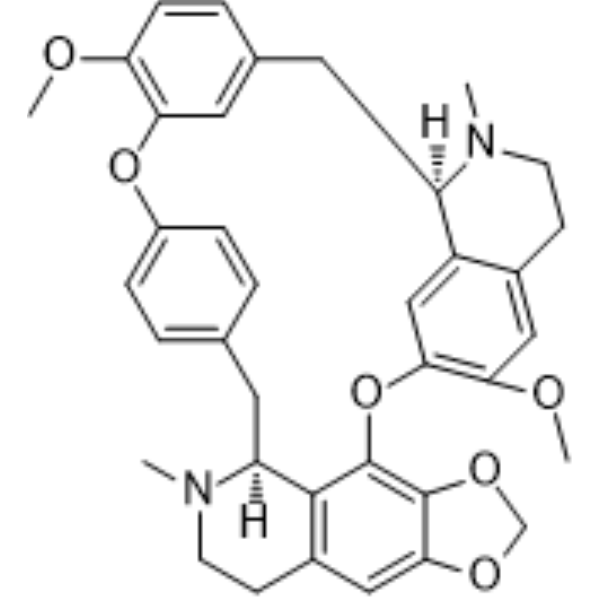
    Bromotetrandrine is a potent inhibitor of P-glycoprotein (P-gp)-mediated multidrug resistance (MDR). Bromotetrandrine shows significant MDR reversal activity in vitro and in vivo, which may be related to the inhibition of P-gp overexpression and the increase in intracellular accumulation of anticancer agents. Bromotetrandrine is a brominated derivative of tetrandrine, which is promising for MDR modulator for tumor assessment .
    Bromotetrandrine
  • HY-157292

    Apoptosis Reactive Oxygen Species (ROS) Cancer
    2E-3-F16 is a anticancer agent. 2E-3-F16 exhibits tumor cell selectivity between NCI-H446 cancer cells and HBE cells. 2E-3-F16 enhances the sensitivity of A549 cells to Cisplatin (HY-17394) .
    2E-3-F16
  • HY-N0421R

    Cinobufagine (Standard)

    Reference Standards Apoptosis Neurological Disease Cancer
    Cinobufagin (Standard) is the analytical standard of Cinobufagin. This product is intended for research and analytical applications. Cinobufagin is an anticancer agent that can be secreted by the Asiatic toad Bufo gargarizans. Cinobufagin induces the cell cycle arrests in the G1 phase or G2/M phase, leading to apoptosis in cancer cells. Cinobufagin inhibits tumor growth in melanoma and glioblastoma multiforme xenograft mouse models .
    Cinobufagin (Standard)
  • HY-169078

    Histone Methyltransferase Cancer
    ML234 is a dual inhibitor against EZH2/LSD1 with IC50 values of 0.09 and 0.12 μM, respectively. ML234 displays an excellent antiproliferative capacity against prostate cancer cell lines LNCAP, PC3 and 22RV1. ML234 suppresses the tumor growth in the 22RV1 xenograft mouse model. ML234 is promising for research of anticancer agents in prostate cancer .
    ML234
  • HY-146406

    Apoptosis Cancer
    Anticancer agent 52 is a potent anticancer agent. Anticancer agent 52 shows in vitro cytotoxicity. Anticancer agent 52 induces apoptosis. Anticancer agent 52 shows antitumor effect. Anticancer agent 52 has the potential for the research of bladder cancer .
    Anticancer agent 52
  • HY-146357

    Microtubule/Tubulin Cancer
    Anticancer agent 48 (compound 48) is a broad spectrum anticancer agent. Anticancer agent 48 inhibits tubulin polymerization. Anticancer agent 48 shows antiproliferative activity. Anticancer agent 48 shows antitumor activity in vivo. Anticancer agent 48 has the potential for the research of solid and hematological tumors .
    Anticancer agent 48
  • HY-146358

    Microtubule/Tubulin Cancer
    Anticancer agent 49 (compound 69) is a broad spectrum anticancer agent. Anticancer agent 49 inhibits tubulin polymerization. Anticancer agent 49 shows antiproliferative activity. Anticancer agent 49 has the potential for the research of solid and hematological tumors .
    Anticancer agent 49
  • HY-149062

    Apoptosis Cancer
    Anticancer agent 102 is a derivative of tetracaine. Anticancer agent 102 has anti-cancer activity. Anticancer agent 102 induces apoptosis .
    Anticancer agent 102
  • HY-151119

    Cytochrome P450 Cancer
    Anticancer agent 78 is a potent anticancer agent. Anticancer agent 78 shows cytotoxicity. Anticancer agent 78 exhibits anti-aromatase activity with an IC50 value of 0.9 µM. Anticancer agent 78 has the potential for the research of breast cancer .
    Anticancer agent 78

Inquiry Online

Your information is safe with us. * Required Fields.

Salutation


Country or Region *

Applicant Name *


Organization Name *

Department *


Email Address *


Product Name *

Cat. No.


Requested quantity *

Phone Number *


Remarks

Inquiry Online

Inquiry Information

Product Name:
Cat. No.:
Quantity:
MCE Japan Authorized Agent:

