



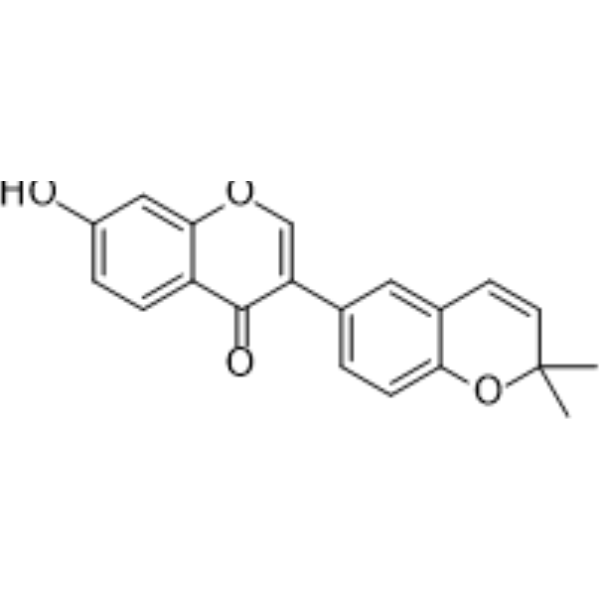
Corylin
Based on 12 publication(s) in Google Scholar
Corylin is an orally active flavonoid anti-inflammatory and osteogenic agent that inhibits IL-6-induced STAT3 promoter activity and STAT3 phosphorylation. Corylin also has anticancer, antiatherosclerotic, and ameliorating activity in hyperlipidemia and insulin resistance, inducing adipocyte browning and lipolysis through SIRT1 or β3-AR-dependent pathways.
For research use only. We do not sell to patients.
- Purity : 99.97%
- CAS No.: 53947-92-5
- Formula: C20H16O4
- Molecular Weight:320.34
-
Storage:
4°C, protect from light
* In solvent : -80°C, 6 months; -20°C, 1 month (protect from light)

To place orders, for customer services and technical support, please contact: MedChemExpress USA
Tel: 609-228-6898 E-mail: [email protected] [email protected]


-
 Biological Activity
-
Chemical Information
-
Solvent & Solubility
- Protocols
- Purity & Documentation
- References
-
 Help & FAQs


-
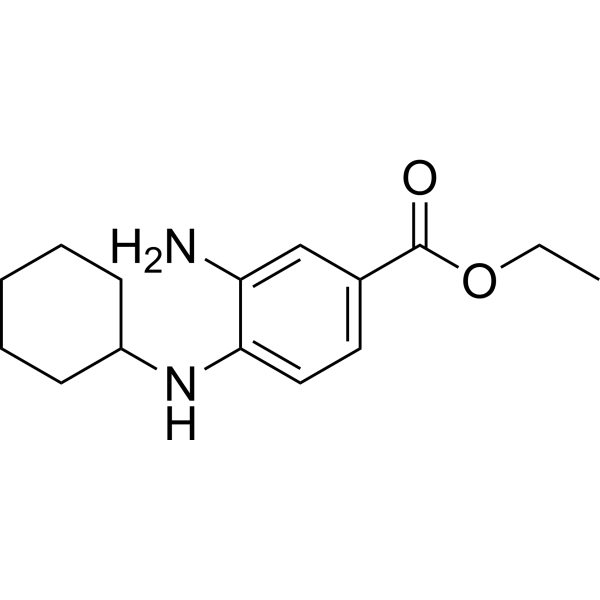
HY-100579
Ferrostatin-1Ferroptosis Inhibitor -
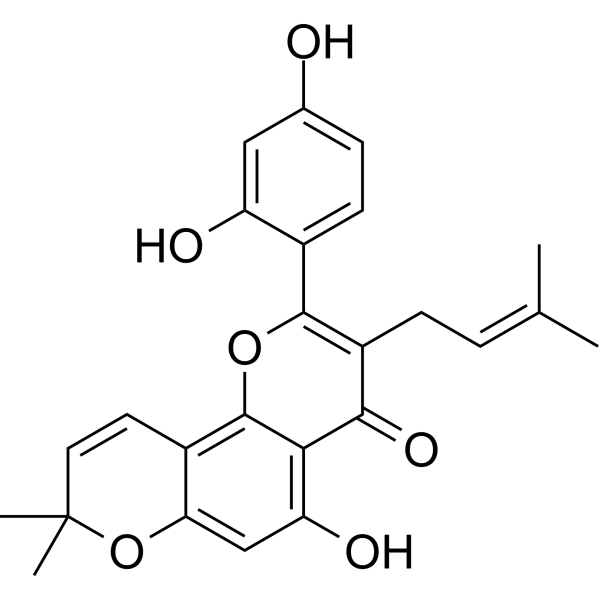
HY-N0622
MorusinBacterial Inhibitor -
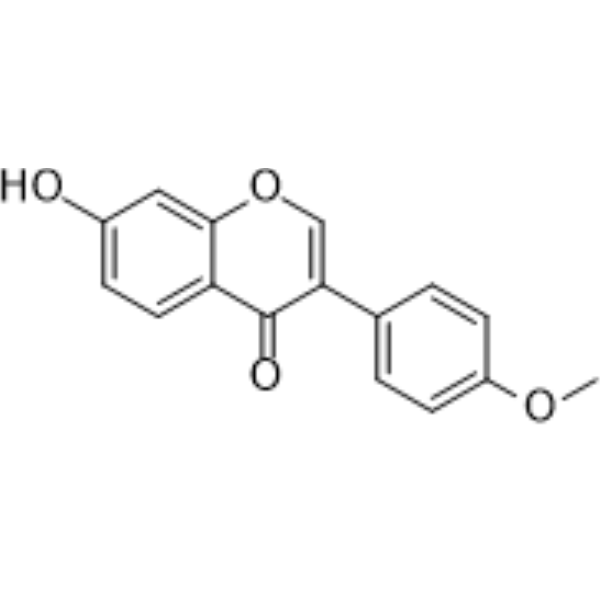
HY-N0183
FormononetinFGFR2 Inhibitor -
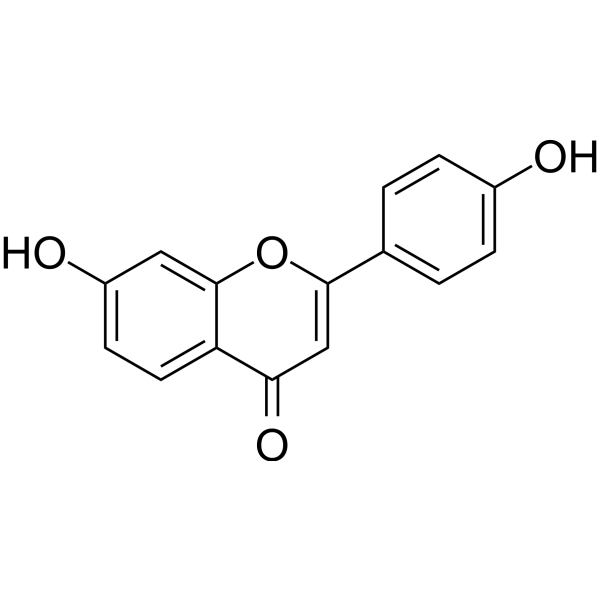
HY-N2609
7,4'-DihydroxyflavoneCCL11/CBR1 Inhibitor -
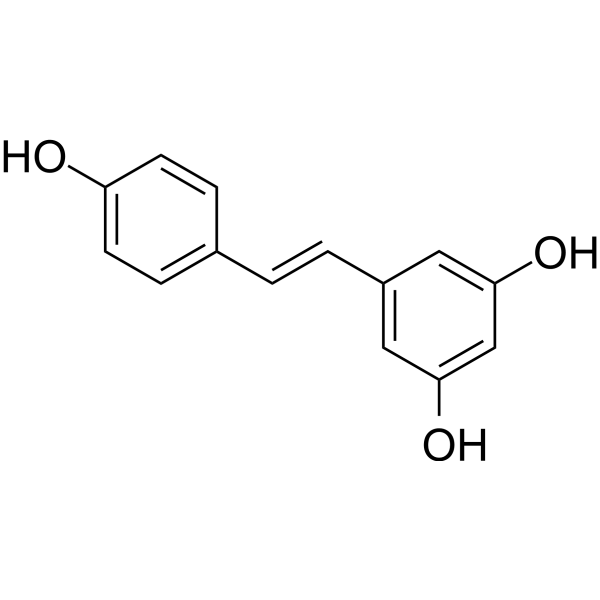
HY-16561
ResveratrolPolyphenolic Phytoalexin -
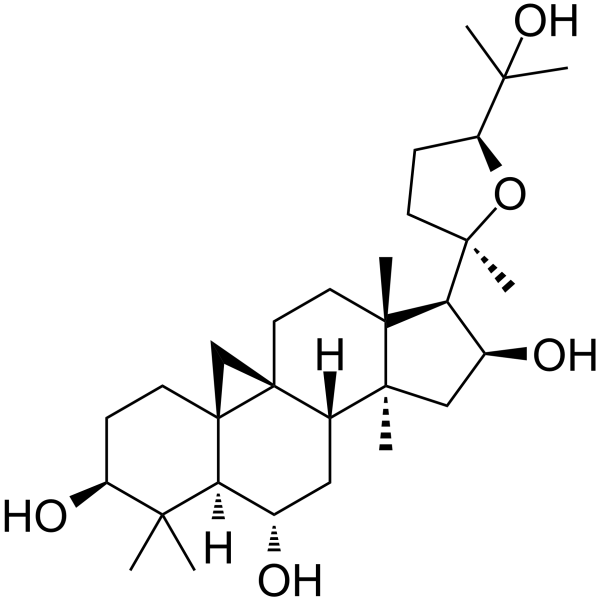
HY-N1485
CycloastragenolNatural Compound -
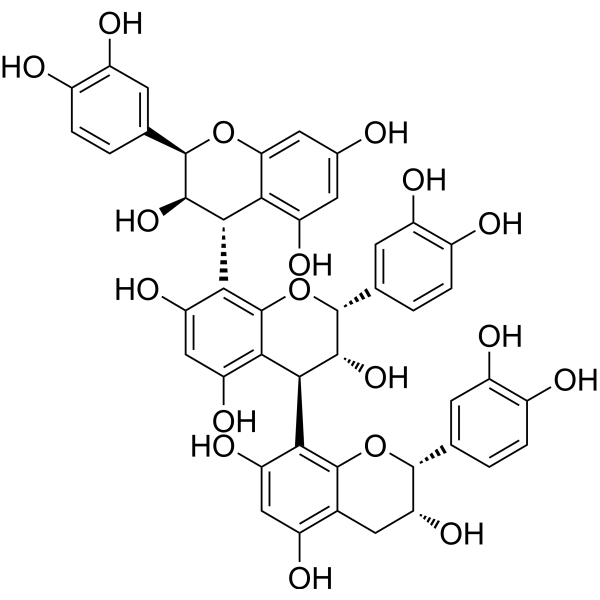
HY-N2342
Procyanidin C1Apoptosis Inducer -
HY-N0847
MicheliolideNF-κB Inhibitor -

HY-N0236R
Corylin (Standard)Anti-inflammatory Agent
Publications Citing Use of MedChemExpress (MCE) Corylin
More- Acta Pharm Sin B. 2021 Jan;11(1):143-155. [Abstract]
- Cell Rep Med. 2022 May 17;3(5):100608. [Abstract]
- Phytomedicine. 2026 May:154:158029. [Abstract]
- Phytomedicine. 2023 Feb:110:154627. [Abstract]
- Food Chem. 2025 Dec 30:497:146992. [Abstract]
- Food Chem. 2025 Oct 15:489:144992. [Abstract]
- J Ethnopharmacol. 2022 Nov 15:298:115593. [Abstract]
- Commun Biol. 2026 Apr 3;9(1):547. [Abstract]
- Chem Biol Interact. 2024 Sep 1:400:111133. [Abstract]
- Naunyn Schmiedebergs Arch Pharmacol. 2026 May 29. [Abstract]
- Transl Cancer Res. 2026 Mar 31;15(3):190. [Abstract]
- Preprints. 2026 Mar 23.
 Customer Validation & Images

-
Cell Proliferation/Viability Assay
-
Bio/Physico-chemical Assay
-
RT-PCR
-
Cell Proliferation/Viability Assay
-
Bio/Physico-chemical Assay
All Antibiotic Isoforms
More

Biological Activity
Description
In Vitro
Corylin (3-300 µM, 0-72 h) inhibits the proliferation of HepG2 and Huh7 cells[2].
Corylin (3-30 µM, 0-48 h) inhibits the migration and invasiveness of HepG2 and Huh7 cells by suppressing EMT[2].
Corylin (5-200 µM, 24 h) reduces the viability of 3T3-L1 preadipocytes at the doses of 100-200 µM[3].
Corylin (10 µM, 24 h) induces browning via the SIRT1 and β3-AR pathways in 3T3-L1 adipocytes[3].
MedChemExpress (MCE) has not independently confirmed the accuracy of these methods. They are for reference only.
-
Cell Line:HepG2 and Huh7 cells
-
Concentration:3-30 µM
-
Incubation Time:24-48 h
-
Result:Reduced the expression of EMT-promoting proteins such as N-cadherin, vimentin, slug, and twist.
In Vivo
Corylin (50-100 mg/kg, p.o., daily, 9 weeks) improves the high-fat diet (HFD)-induced obesity in HFD- and DIO-treated mice[3].
MedChemExpress (MCE) has not independently confirmed the accuracy of these methods. They are for reference only.
-
Animal Model:HFD- and DIO-treated mice[3]
-
Dosage:50-100 mg/kg
-
Administration:Oral gavage (p.o.), daily, 9 weeks
-
Result:Reduced the weight of subcutaneous, visceral WAT, and body.
Decreased the size of WAT adipocyte.
Increased insulin sensitivity, mitochondrial biogenesis, and β-oxidation.
Reduced serum levels of insulin and leptin and improved HOMA-IR.
- Kinase activity and phosphorylation assays
- Dual Luciferin reporter gene assay
- Western Blot
- Research Protocol for Endocrine Diseases
- Large-size fat particle sorting
- Research Protocol for Inflammation-related Diseases
- Protocol for Kinase activity and phosphorylation assays
- Research Protocol for Metabolic Diseases


Chemical Information
-
CAS No. 53947-92-5
-
Appearance Solid
-
Molecular Weight 320.34
-
Formula C20H16O4
-
Color White to light yellow
-
SMILES
O=C1C(C2=CC=C3C(C=CC(C)(C)O3)=C2)=COC4=CC(O)=CC=C14
-
Structure Classification
-
Initial Source
-
Shipping
Room temperature in continental US; may vary elsewhere.
-
Storage
4°C, protect from light
* In solvent : -80°C, 6 months; -20°C, 1 month (protect from light)


Publications (12)
-
Journal Impact Factor
-
Most Recent
-
Acta Pharm Sin B
Chrysin serves as a novel inhibitor of DGK α/FAK interaction to suppress the malignancy of esophageal squamous cell carcinoma (ESCC). [Abstract]2021 Jan;11(1):143-155. PMID: 33532186 -
Cell Rep Med
Management of prostate cancer by targeting 3βHSD1 after enzalutamide and abiraterone treatment. [Abstract]2022 May 17;3(5):100608. PMID: 35584629
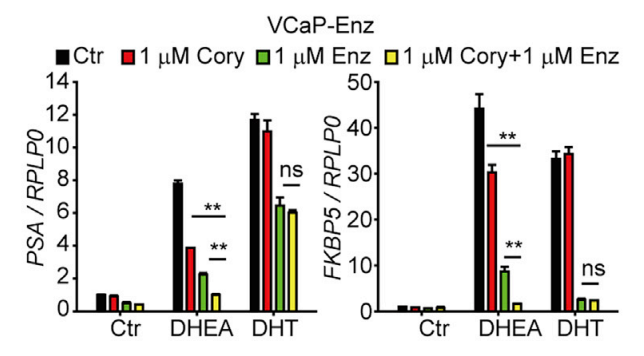
Corylin purchased from MedChemExpress. Usage Cited in: Cell Rep Med. 2022 May 17;3(5):100608. [Abstract]
Corylin (1 μM) and enzalutamide synergistically inhibited DHEA- but not DHT-induced gene expression in VCaP-Enz cells. DHEA, 100 nM; DHT, 1 nM.
Corylin purchased from MedChemExpress. Usage Cited in: Cell Rep Med. 2022 May 17;3(5):100608. [Abstract]
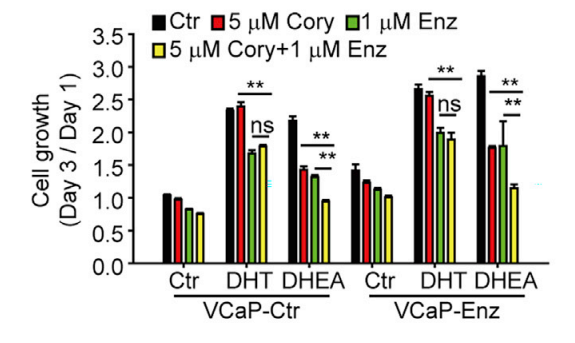
Corylin (5 μM) and enzalutamide synergistically inhibited DHEA- but not DHT-induced cell growth in VCaP-Enz cells. DHEA, 200 nM; DHT, 1 nM.
Corylin purchased from MedChemExpress. Usage Cited in: Cell Rep Med. 2022 May 17;3(5):100608. [Abstract]
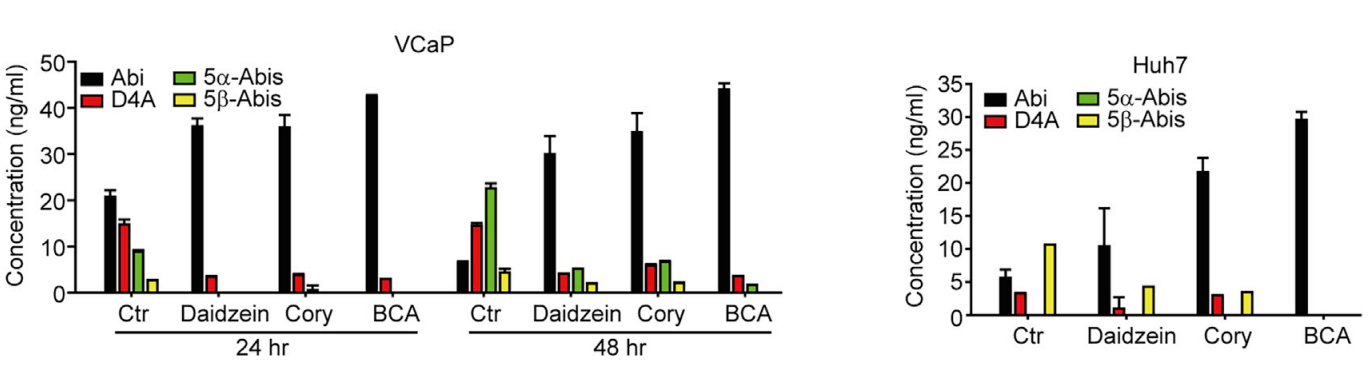
Daidzein inhibited abiraterone metabolism in VCaP and Huh7 cells, although not as potently as corylin and BCA.
-
Phytomedicine
Huaier-derived arnicolide D induces ferroptosis in gastric cancer via SRC/TNF-mediated GPX4 inactivation. [Abstract]2026 May:154:158029. PMID: 41818944
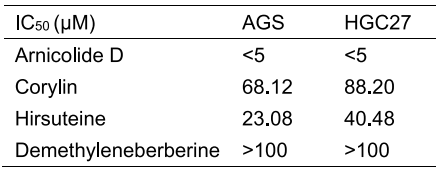
Corylin purchased from MedChemExpress. Usage Cited in: Phytomedicine. 2026 May:154:158029. [Abstract]
Cell viability of Arnicolide D, Corylin, Demethyleneberberine and Hirsuteine against GC cells, as evaluated by the CCK8 assays.
-
Phytomedicine
Corylin inhibits the progression of Non-small cell lung cancer cells by regulating NF-κB signaling pathway via targeting p65. [Abstract]2023 Feb:110:154627. PMID: 36610351
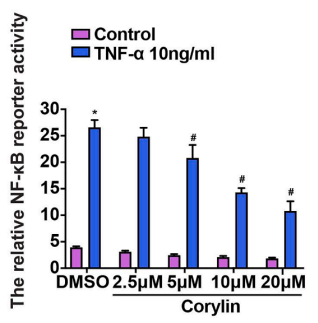
Corylin purchased from MedChemExpress. Usage Cited in: Phytomedicine. 2023 Feb:110:154627. [Abstract]
Effects of different doses of Corylin (0-20 μM) on NF-κB luciferase reporter stimulated by TNF-α.
-
Food Chem
Effects of sun drying combined with baking processes on the flavor quality of Chongqing Tuocha raw tea. [Abstract]2025 Dec 30:497:146992. PMID: 41285060 -
Food Chem
Flavonoid-mediated metabolic underpinning quality variation in red bud-sport pear mutants. [Abstract]2025 Oct 15:489:144992. PMID: 40466530 -
J Ethnopharmacol
2022 Nov 15:298:115593. PMID: 35973629 -
Commun Biol
Exosome-mediated cholesterol flow drives scoliosis progression via promoting the spinal cartilage-bone positive feedback. [Abstract]2026 Apr 3;9(1):547. PMID: 41933055 -
Chem Biol Interact
Bavachinin, a main compound of Psoraleae Fructus, facilitates GSDMD-mediated pyroptosis and causes hepatotoxicity in mice. [Abstract]2024 Sep 1:400:111133. PMID: 38969277 -
Naunyn Schmiedebergs Arch Pharmacol
Label-free cell phenotypic profiling of sphingosine-1-phosphate receptor 1 and discovery of its agonist from natural products. [Abstract]2026 May 29. PMID: 42209736 -
Transl Cancer Res
Corylin inhibits liver cancer cell growth through the endogenous apoptosis and mitophagy. [Abstract]2026 Mar 31;15(3):190. PMID: 41969474 -


Solvent & Solubility
In Vitro:
DMSO : ≥ 100 mg/mL (312.17 mM; Hygroscopic DMSO has a significant impact on the solubility of product, please use newly opened DMSO)
* "≥" means soluble, but saturation unknown.
Please refer to the solubility information to select the appropriate solvent. Once prepared, please aliquot and store the solution to prevent product inactivation from repeated freeze-thaw cycles.
Storage method and period of stock solution: -80°C, 6 months; -20°C, 1 month (protect from light). When stored at -80°C, please use it within 6 months. When stored at -20°C, please use it within 1 month.
Please refer to the solubility information to select the appropriate solvent. Once prepared, please aliquot and store the solution to prevent product inactivation from repeated freeze-thaw cycles.
Storage method and period of stock solution: -80°C, 6 months; -20°C, 1 month (protect from light). When stored at -80°C, please use it within 6 months. When stored at -20°C, please use it within 1 month.
Concentration (start) × Volume (start) = Concentration (final) × Volume (final)
In Vivo:
Select the appropriate dissolution method based on your experimental animal and administration route.
- For the following dissolution methods, please ensure to first prepare a clear stock solution using an In Vitro approach and then sequentially add co-solvents:
- To ensure reliable experimental results, the clarified stock solution can be appropriately stored based on storage conditions. As for the working solution for In Vivo experiments, it is recommended to prepare freshly and use it on the same day.
- The percentages shown for the solvents indicate their volumetric ratio in the final prepared solution. If precipitation or phase separation occurs during preparation, heat and/or sonication can be used to aid dissolution.
For the following dissolution methods, please prepare the working solution directly:
It is recommended to prepare fresh solutions and use them promptly within a short period of time.
The percentages shown for the solvents indicate their volumetric ratio in the final prepared solution. If precipitation or phase separation occurs during preparation, heat and/or sonication can be used to aid dissolution.
Add each solvent one by one: 0.5% CMC-Na/saline water
Solubility: 25 mg/mL (78.04 mM); Suspended solution; Need ultrasonic
Add each solvent one by one: 15% Cremophor EL 85% Saline
Solubility: 50 mg/mL (156.08 mM); Suspended solution; Need ultrasonic
In Vivo Dissolution Calculator
Please enter the basic information of animal experiments:
-
-
-
-
Recommended: Prepare an additional quantity of animals to account for potential losses during experiments.
Please enter your animal formula composition:
-
%DMSO +
Recommended: Keep the proportion of DMSO in working solution below 2% if your animal is weak.
-
%+
-
+%Tween-80 + +
-
%Saline +
The co-solvents required include: DMSO, . All of co-solvents are available by MedChemExpress (MCE). , Tween 80. All of co-solvents are available by MedChemExpress (MCE).
Working solution concentration: 0.22 mg/mL
Method for preparing stock solution: mg drug dissolved in μL DMSO. Stock solution concentration: mg/mL. * In solvent : -80°C, 6 months; -20°C, 1 month (protect from light)
1. Take μL DMSO stock solution;
2. Add μL .
μL , mix evenly;
3. Then add μL Tween 80, mix evenly;
4. Then add μL
Please ensure that the stock solution in the first step is dissolved to a clear state, and add co-solvents in sequence. You can use ultrasonic heating (ultrasonic cleaner, recommended frequency 20-40 kHz), vortexing, etc. to assist dissolution.


Purity & Documentation
-
Data Sheet (277 KB)
-
SDS (394 KB)
- English - EN (394 KB)
- Français - FR (394 KB)
- Deutsch - DE (394 KB)
- Norwegian - NO (394 KB)
- Español - ES (394 KB)
- Swedish - SV (394 KB)
- Italian - IT (394 KB)
- Korean - KR (394 KB)
- Portuguese - PT (394 KB)
-
Handling Instructions (2659 KB)
References
[1]. Lee SW, et al. Phenolic compounds isolated from Psoralea corylifolia inhibit IL-6-induced STAT3 activation. Planta Med. 2012 Jun;78(9):903-6. [Content Brief]
[2]. Chen CY, et al. Corylin Suppresses Hepatocellular Carcinoma Progression via the Inhibition of Epithelial-Mesenchymal Transition, Mediated by Long Noncoding RNA GAS5. Int J Mol Sci. 2018 Jan 27;19(2):380. [Content Brief]
[3]. Chen CC, et al. Corylin reduces obesity and insulin resistance and promotes adipose tissue browning through SIRT-1 and β3-AR activation. Pharmacol Res. 2021 Feb;164:105291. [Content Brief]


Complete Stock Solution Preparation Table
Please refer to the solubility information to select the appropriate solvent. Once prepared, please aliquot and store the solution to prevent product inactivation from repeated freeze-thaw cycles.
Storage method and period of stock solution: -80°C, 6 months; -20°C, 1 month (protect from light). When stored at -80°C, please use it within 6 months. When stored at -20°C, please use it within 1 month.
| Optional Solvent | Concentration Solvent Mass | 1 mg | 5 mg | 10 mg | 25 mg |
|---|---|---|---|---|---|
| DMSO | 1 mM | 3.1217 mL | 15.6084 mL | 31.2168 mL | 78.0421 mL |
| 5 mM | 0.6243 mL | 3.1217 mL | 6.2434 mL | 15.6084 mL | |
| 10 mM | 0.3122 mL | 1.5608 mL | 3.1217 mL | 7.8042 mL | |
| 15 mM | 0.2081 mL | 1.0406 mL | 2.0811 mL | 5.2028 mL | |
| 20 mM | 0.1561 mL | 0.7804 mL | 1.5608 mL | 3.9021 mL | |
| 25 mM | 0.1249 mL | 0.6243 mL | 1.2487 mL | 3.1217 mL | |
| 30 mM | 0.1041 mL | 0.5203 mL | 1.0406 mL | 2.6014 mL | |
| 40 mM | 0.0780 mL | 0.3902 mL | 0.7804 mL | 1.9511 mL | |
| 50 mM | 0.0624 mL | 0.3122 mL | 0.6243 mL | 1.5608 mL | |
| 60 mM | 0.0520 mL | 0.2601 mL | 0.5203 mL | 1.3007 mL | |
| 80 mM | 0.0390 mL | 0.1951 mL | 0.3902 mL | 0.9755 mL | |
| 100 mM | 0.0312 mL | 0.1561 mL | 0.3122 mL | 0.7804 mL |


Corylin Related Classifications
HY-N0236 Related Classifications
 Powered by Bioz