
Search Result
Results for "
Antimycobacterials
" in MedChemExpress (MCE) Product Catalog:
1
Biochemical Assay Reagents
11
Isotope-Labeled Compounds
| Cat. No. |
Product Name |
Target |
Research Areas |
Chemical Structure |
-
- HY-B1046
-
-
-
- HY-17025
-
-
-
- HY-B0535A
-
|
Emb dihydrochloride
|
Bacterial
Antibiotic
|
Infection
|
|
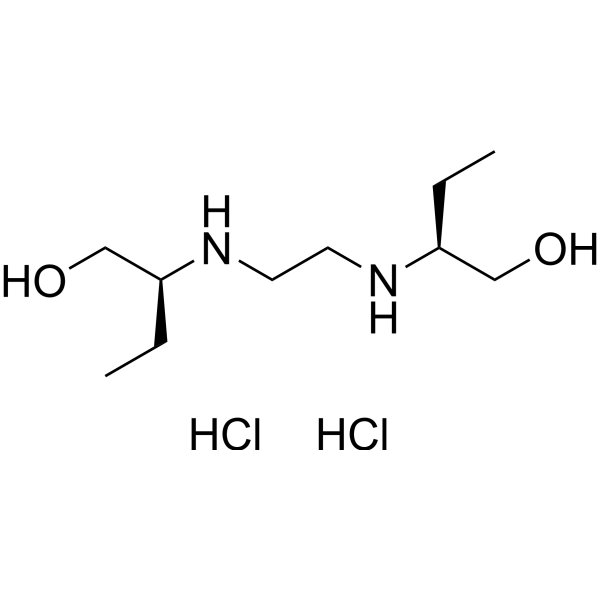
Ethambutol dihydrochloride is an antimycobacterial compound that prevents cell wall formation by inhibiting arabinosyltransferase activity. Ethambutol dihydrochloride can be used to establish animal models of hyperuricemia and optic neuropathy.
|
-
-
- HY-W012875
-
|
β-Nitropropionic acid; Bovinocidin
|
Bacterial
Apoptosis
Autophagy
|
Infection
Metabolic Disease
Inflammation/Immunology
|
|
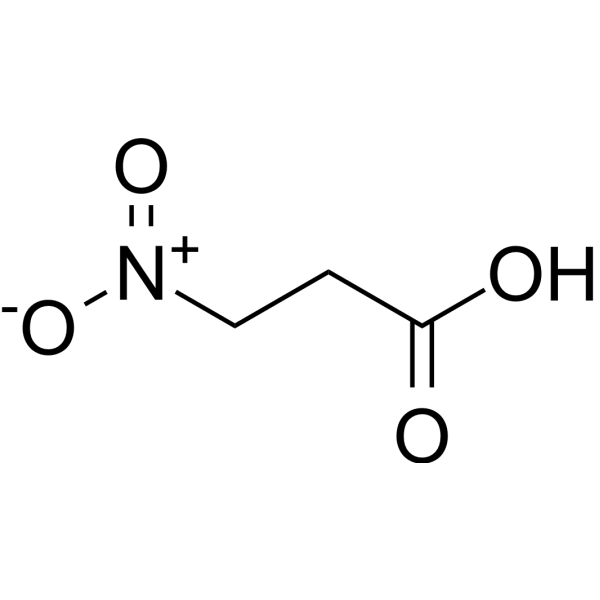
3-Nitropropanoic acid (β-Nitropropionic acid) is an irreversible and orally active inhibitor of succinate dehydrogenase. 3-Nitropropanoic acid exhibits potent antimycobacterial activity with a MIC value of 3.3 μM. 3-Nitropropanoic acid can induce cell apoptosis .
|
-
-
- HY-B0688
-
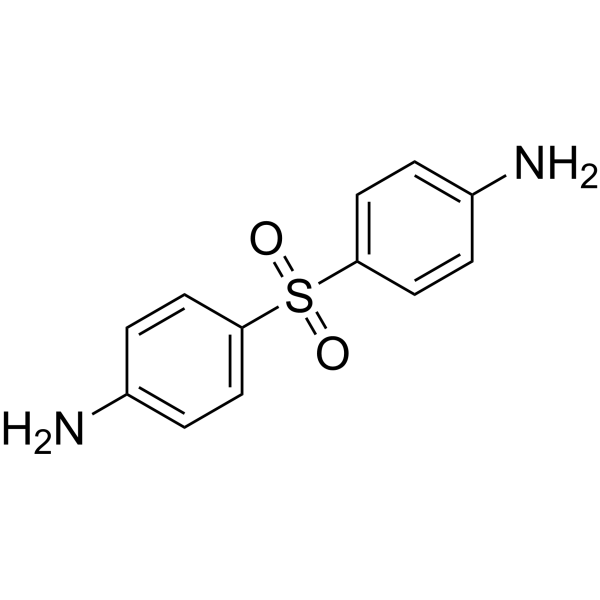
Dapsone
4 Publications Verification
4,4′-Diaminodiphenyl sulfone; DDS
|
Antibiotic
Parasite
Bacterial
Reactive Oxygen Species (ROS)
|
Infection
Inflammation/Immunology
|
|
Dapsone (4,4′-Diaminodiphenyl sulfone) is an orally active and blood-brain penetrant sulfonamide antibiotic with bacteriostatic, antimycobacterial and antiprotozoal activities . Dapsone?exerts effective antileprosy activity?and inhibits folate synthesis in cell extracts of?M. leprae. Dapsone is used for dermatologic disorder research, including leprosy, dermatitis herpetiformis, acne vulgaris et al .
|
-
-
- HY-B0535
-
|
|
Bacterial
Antibiotic
|
Infection
|
|
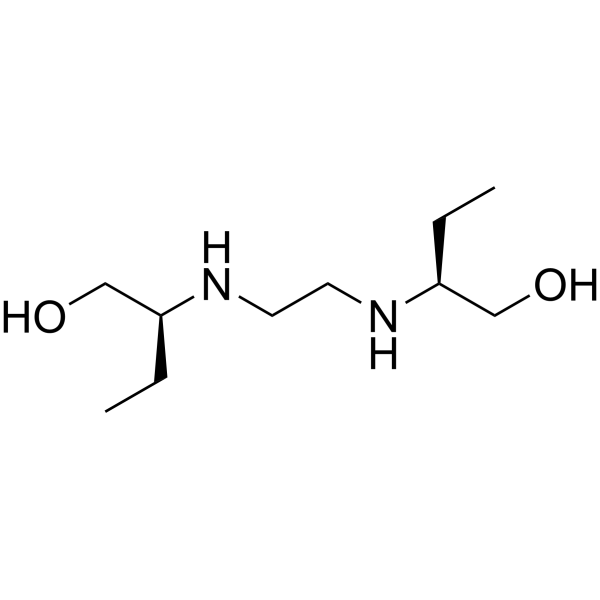
Ethambutol is an antimycobacterial compound that prevents cell wall formation by inhibiting arabinosyltransferase activity. Ethambutol can be used to establish animal models of hyperuricemia and optic neuropathy.
|
-
-
- HY-P2970
-
|
|
Apoptosis
PARP
Caspase
Bcl-2 Family
Bacterial
Interleukin Related
|
Infection
Inflammation/Immunology
Cancer
|
|
Stem bromelain (EC 3.4.22.32) is a cysteine protease and antibacterial agent. Stem bromelain can be isolated from the stem of the pineapple (Ananas comosus). Stem bromelain induces dose-dependent secretion of IL-12p70, and IL-6, induces Apoptosis, causes cleavage of full-length PARP protein, Caspase 3, and Caspase 9, increases Bax, and decreases Bcl-2. Stem bromelain possesses various fibrinolytic, antiedema, antithrombotic, and anti-inflammatory activities. Stem bromelain also exhibits in vivo antitumor and antileukemic activities, as well as antimetastatic effects. Stem bromelain has antimycobacterial activity. Stem bromelain provides protection against lead poisoning .
|
-
-
- HY-W013040
-
|
1,4-Diazine
|
MOFs
Drug Intermediate
|
Cardiovascular Disease
Infection
Inflammation/Immunology
Cancer
|
|
Pyrazine is an aromatic nitrogen-containing heterocyclic compound with two nitrogen atoms, and is well known for its electron-deficient property. Pyrazine serves as a key pharmacophore in a variety of drugs, and also acts as the core skeleton of derivatives with anticancer, antimycobacterial, antithrombotic and anti-inflammatory activities .
|
-
-
- HY-N1976
-
|
(3R,8S)-Falcarindiol; 3(R),8(S),9(Z)-Falcarindiol
|
|
Infection
Cancer
|
|
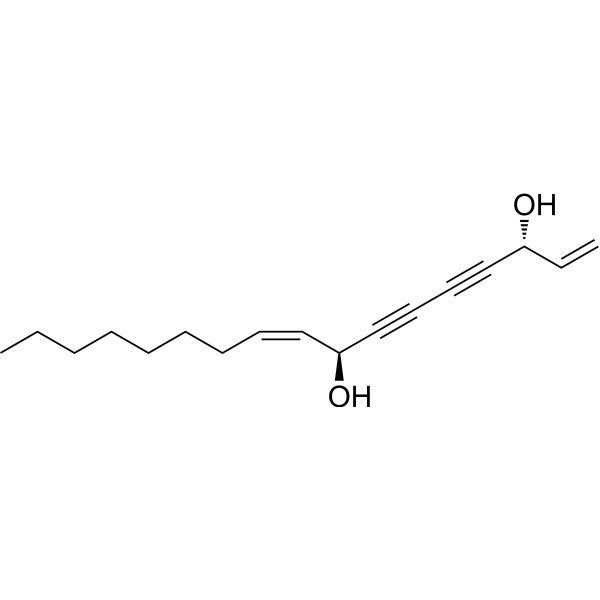
(+)-(3R,8S)-Falcarindiol ((3R,8S)-Falcarindiol; 3 (R),8 (S),9 (Z)-Falcarindiol) is an orally active polyacetylene anti-mycobacterial agent. (+)-(3R,8S)-Falcarindiol exhibits antibacterial activity against Gram-positive bacteria, Gram-negative bacteria and mycobacteria. Co-administration of (+)-(3R,8S)-Falcarindiol with (3R)-falcarinol alters the composition of gut microbiota, reduces colonic tumor lesions and slows down polyp growth. (+)-(3R,8S)-Falcarindiol can be used in research related to tuberculosis and colorectal cancer .
|
-
-
- HY-17025S
-
|
Ansamycin-d7; LM-427-d7
|
Isotope-Labeled Compounds
Bacterial
Antibiotic
|
Infection
|
|
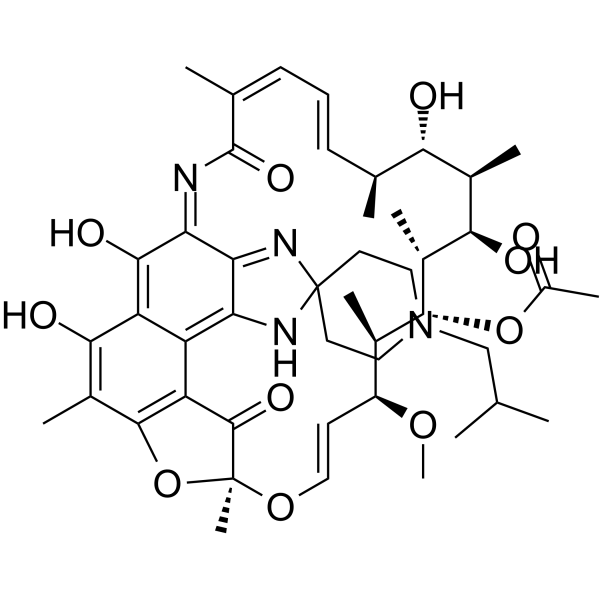
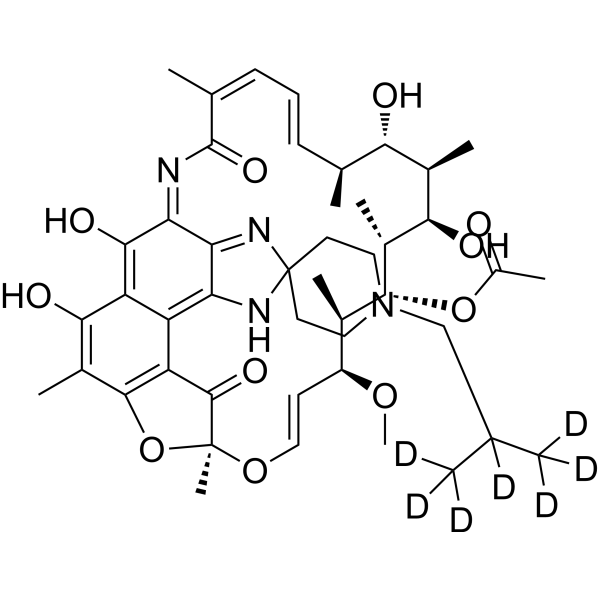
Rifabutin-d7 is the deuterium labeled Rifabutin. Rifabutin (Ansamycin) is a semisynthetic ansamycin antibiotic with potent antimycobacterial properties. Rifabutin inhibits DNA-dependent RNA polymerase.
|
-
-
- HY-N1205
-
|
|
Others
|
Cancer
|
|
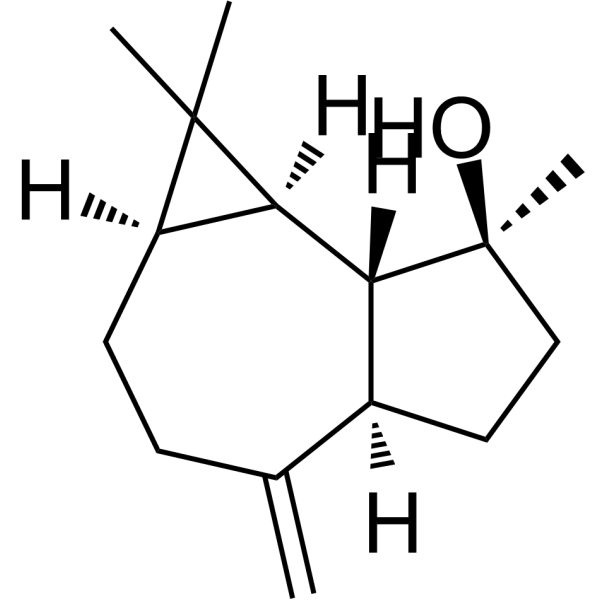
Spathulenol is isolated from Aristolochia yunnanensis, and has antioxidant, anti-inflammatory, antiproliferative and antimycobacterial activities. Spathulenol shows a high antioxidant activity with an IC50 of 85.60 μg/mL in the DPPH system [1].
|
-
-
- HY-N3845
-
|
|
Bacterial
|
Inflammation/Immunology
Cancer
|
|
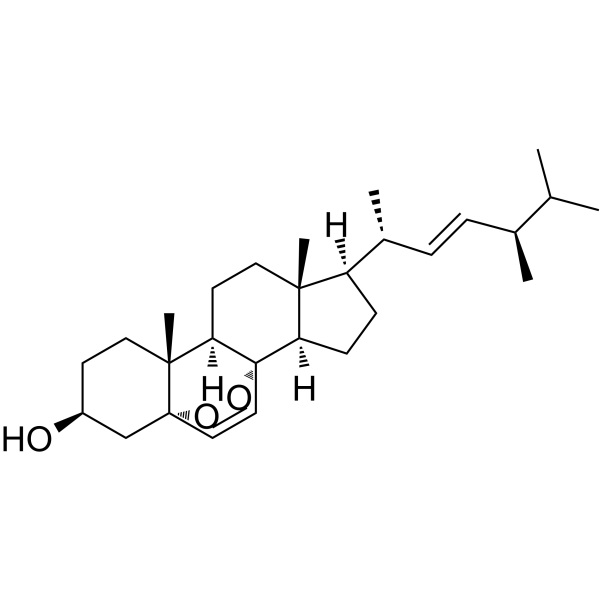
Ergosterol peroxide is a steroid derivative and can be isolated from a variety of fungi, yeast, lichens or sponges. Ergosterol peroxide has anti-tumour, proapoptotic, anti-inflammatory, anti-mycobacterial, and anti-proliferative activities .
|
-
-
- HY-109588
-
|
|
Bacterial
|
Infection
|
|
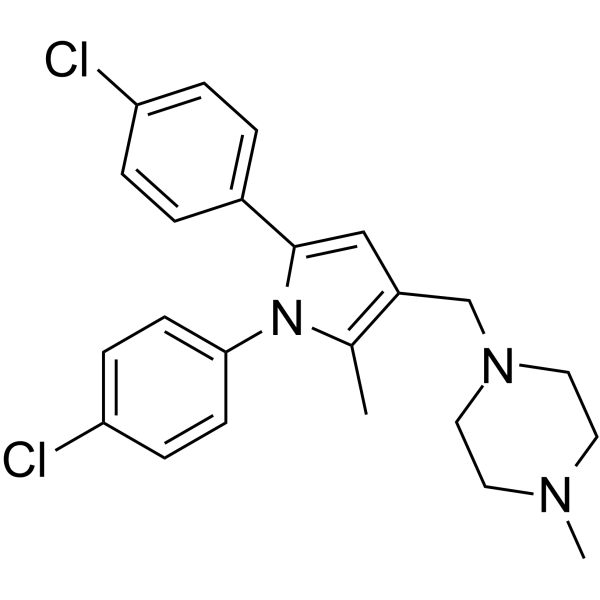
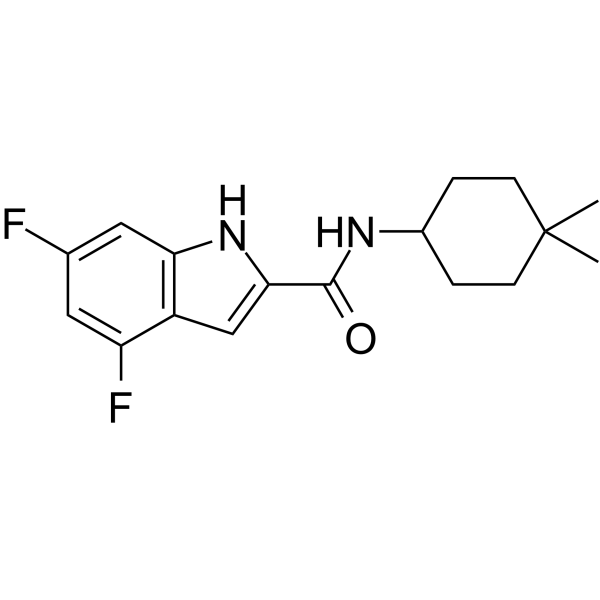
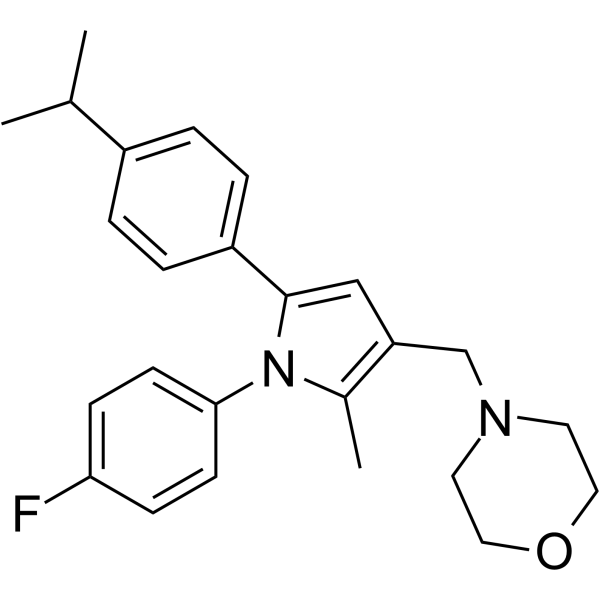
NITD-349 is an MmpL3 inhibitor that shows highly potent anti-mycobacterial activity with MIC50 of 23 nM against virulent Mycobacterium tuberculosis H37Rv.
|
-
-
- HY-N2060
-
-
-
- HY-141715
-
|
|
Antibiotic
|
Infection
|
|
BRD-8000.3, as a specific EfpA inhibitor, is a narrow-spectrum, bactericidal antimycobacterial agent with good wild-type activity. BRD-8000.3 can be used for the research of tuberculosis .
|
-
-
- HY-129605
-
-
-
- HY-W001663
-
|
|
Bacterial
|
Infection
|
|
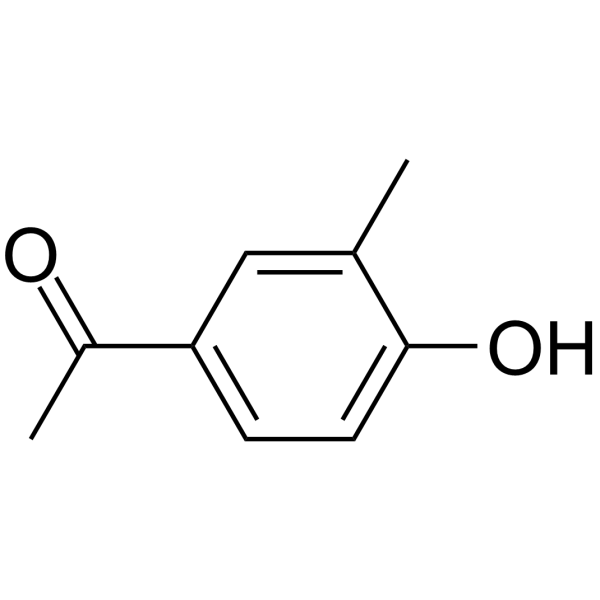
4'-Hydroxy-3'-methylacetophenone is a phenolic volatile compound. 4'-Hydroxy-3'-methylacetophenone can be isolated from Hawaiian green coffee beans (Coffea Arabica L.). 4'-Hydroxy-3'-methylacetophenone is believed to possess potent antioxidant activity similar to that of other phenolic volatile compounds, Thymol (HY-N6810) and Eugenol (HY-N0337). 4'-Hydroxy-3'-methylacetophenone also can be used to synthesize heterocyclic compounds which have antimycobacterial activity .
|
-
-
- HY-109587
-
|
|
Bacterial
|
Infection
|
|
BM635 is a MmpL3 inhibitor with outstanding anti-mycobacterial activity. BM635 has an MIC50 of 0.12 μM against M. tuberculosis H37Rv.
|
-
-
- HY-17025R
-
|
Ansamycin (Standard); LM-427 (Standard)
|
Reference Standards
Bacterial
Antibiotic
|
Infection
|
|
Rifabutin (Standard) is the analytical standard of Rifabutin. This product is intended for research and analytical applications. Rifabutin (Ansamycin) is a semisynthetic ansamycin antibiotic with potent antimycobacterial properties. Rifabutin inhibits DNA-dependent RNA polymerase.
|
-
-
- HY-153351
-
|
|
Bacterial
|
Infection
|
|
IpOHA is a potent plant KARI inhibitor. IpOHA also is an antimycobacterial agent with a Ki value of 97.7 nM for Mycobacterium tuberculosis (Mt) .
|
-
-
- HY-B0535S
-
-
-
- HY-B1046S
-
|
|
Bacterial
Antibiotic
|
Inflammation/Immunology
|
|
Clofazimine-d7 is deuterium labeled Clofazimine. Clofazimine is an iminophenazine dye, has a marked anti-inflammatory effect, has been used in combination with other antimycobacterial agents to treat AIDS and Crohn's disease.
|
-
-
- HY-G0016
-
|
MADDS; Monoacetyldapsone
|
Drug Metabolite
|
Others
|
|
N-Acetyl dapsone (MADDS) is the major metabolite of Dapsone (HY-B0688). Dapsone is an orally active and blood-brain penetrant sulfonamide antibiotic with bacteriostatic, antimycobacterial and antiprotozoal activities .
|
-
-
- HY-133671S
-
|
Mono-n-octyl phthalate-d4
|
Isotope-Labeled Compounds
Bacterial
|
Infection
|
|
Monooctyl phthalate-d4 (Mono-n-octyl phthalate-d4) is a deuterium labeled Monooctyl phthalate (HY-133671). Monooctyl phthalate (Mono-n-octyl phthalate) exhibits antimycobacterial activity with a MIC of 20 μg/mL .
|
-
-
- HY-N9531
-
|
|
Bacterial
|
Infection
|
|
3'-Hydroxyxanthyletin is a coumarin compound with antimycobacterial activities .
|
-
-
- HY-N9615
-
-
-
- HY-179127
-
|
|
Carbonic Anhydrase
Bacterial
|
Infection
|
|
Carbonic anhydrase-IN-36 (Compound 5p) is a MtCA 3 inhibitor with a Ki of 0.07 µM against MtCA 3. Carbonic anhydrase-IN-36 inhibits the β-class enzyme MtCA 3. Carbonic anhydrase-IN-36 demonstrates potent antimycobacterial activity, with an MIC of 8 µg/mL against Mtb. Carbonic anhydrase-IN-36 retains activity against Rifampicin (HY-B0272)-resistant M. tuberculosis .
|
-
-
- HY-N1190
-
|
(±)-Syringaresinol
|
p38 MAPK
AP-1
Bacterial
|
Infection
|
|
DL-Syringaresinol ((±)-Syringaresinol), a lignin, inhibits UVA-induced upregulation of MMP-1 by suppressing MAPK/AP-1 signaling in human HaCaT keratinocytes and dermal fibroblasts (HDFs). DL-Syringaresinol has antiphotoaging properties against UVA-induced skin aging. DL-Syringaresinol exhibits weak antimycobacterial activity against Mycobacterium tuberculosis H37Rv .
|
-
-
- HY-N11048
-
|
|
Bacterial
|
Infection
Cancer
|
|
Amycolatopsin A is a 20-membered macrolide, that can be isolated from a strain of the rare actinomycete Amycolatopsis sp. MST‐108494. Amycolatopsin A shows antimycobacterial activity against Mycobacterium bovis (BCG) and M. tuberculosis (H37Rv) with IC50 values of 0.4 µM and 4.4 µM, respectively .
|
-
-
- HY-144727
-
|
|
Bacterial
TNF Receptor
|
Infection
Inflammation/Immunology
|
|
Anti-inflammatory agent 11 (compound 16) is a potent antimycobacterial and anti-inflammatory agent. Anti-inflammatory agent 11 inhibits Mtb H37Rv and M299 growth, with MIC50 (minimum inhibitory concentration 50%) of 1.3 and 6.9 μM, respectively. Anti-inflammatory agent 11 inhibits NO through the suppression of iNOS expression, and also inhibited the production of TNF-α and IL-1β. Anti-inflammatory agent 11 can be used for tuberculosis (TB) research .
|
-
-
- HY-76293
-
I2906
1 Publications Verification
|
Bacterial
|
Infection
|
|
I2906 showed antimycobacterial and cytotoxic activity against mycobacterium tuberculosis.
|
-
-
- HY-N8131
-
|
|
Bacterial
|
Infection
Cancer
|
|
Pangelin is a coumarin that can be found in Ducrosia anethifolia. Pangelin exhibits anti-mycobacterial and anti-tumor activities .
|
-
-
- HY-P2064
-
|
|
Bacterial
|
Infection
|
|
Lariatins is a novel anti-mycobacterial peptides with a lasso structure produced by Rhodococcus jostii K01-B0171 .
|
-
-
- HY-15993
-
|
AZD2563; AZD5847
|
Antibiotic
|
Infection
|
|
Posizolid (AZD2563), an oxazolidinone antibiotic, is developed by AstraZeneca for the study of bacterial infections. Posizolid shows very good anti-mycobacterial activity .
|
-
-
- HY-B1046R
-
|
|
Reference Standards
Bacterial
Antibiotic
DNA/RNA Synthesis
Interleukin Related
Apoptosis
|
Infection
Inflammation/Immunology
Cancer
|
|
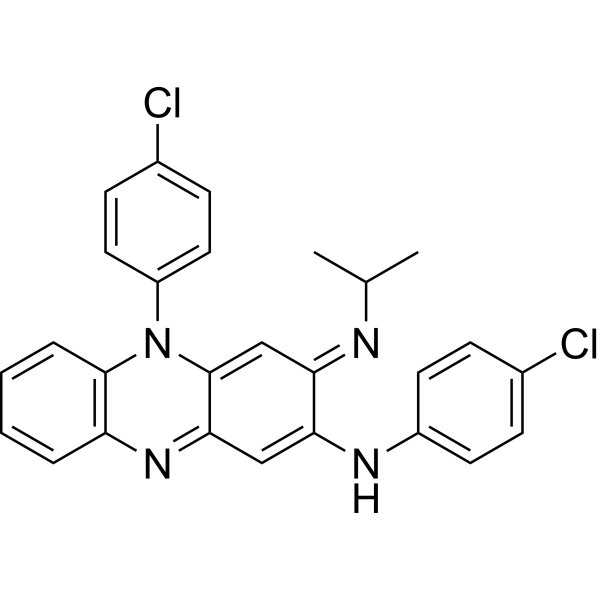
Clofazimine (Standard) is the analytical standard of Clofazimine. This product is intended for research and analytical applications. Clofazimine is an orally-active anti-mycobacterial agent with a wide range of anti-mycobacterial activity including leprosy and tuberculosis. Clofazimine exerts anti-inflammatory activities and anti-tumor activities by interfering DNA replication and inhibiting IL2 (IC50 = 1.10 ± 0.26 μM, Jurkat T) production. Clofazimine can be used in mycobacterial and cancer research .
|
-
-
- HY-W660701
-
-
-
- HY-N9947
-
|
|
Bacterial
Antibiotic
|
Infection
|
|
Methyl-6-gingerol is an antimicrobial agent derived from Aframomum melegueta that exhibits anti-mycobacterial activity by inhibiting the efflux of toxins within Mycobacterium species .
|
-
-
- HY-112702
-
|
|
Bacterial
|
Infection
|
|
CRS400393 is a potent antimycobacterial agent, with MIC of 0.03, 2, and ≤ 0.12 µg/mL
against M. abs., M. avium, M. intracellulare, and M. tuberculosis, respectively .
|
-
-
- HY-W018811
-
|
|
Bacterial
|
Infection
|
|
Antibacterial agent 268 (Compound 10e) is an antibacterial agent with antimycobacterial properties. Antibacterial agent 268 shows high anti-bacterial properties at sub-micromolar values (MIC=0.44-0.07 μM) .
|
-
-
- HY-N13075
-
|
|
Antibiotic
Bacterial
|
Infection
|
|
Mycoplanecin A is a cyclic peptide antibiotic. Mycoplanecin A has strong anti-mycobacterial, luteus, and Hypococcus activity. Mycoplanecin A also has moderate anti-Xanthomonas oryzae activity. Mycoplanecin A also has antibacterial effect on some strains of Actinomycetes .
|
-
-
- HY-156361
-
|
|
Bacterial
|
Infection
|
|
Tuberculosis inhibitor 11 (Compound 14) can sensitize the antimycobacterial activity of the antitubercular agent .
|
-
-
- HY-147871
-
|
|
Bacterial
|
Infection
|
|
Antimycobacterial agent-3 (Compound 1h) is an antimycobacterial agent against both agent-sensitive MTB strain H37Rv and drug-resistant clinical isolates (MIC: < 0.029–0.110 μM). Antimycobacterial agent-3 shows low cell cytotoxicity .
|
-
-
- HY-146104
-
|
|
Bacterial
|
Infection
|
|
Antimycobacterial agent-1 (compound 33) has selectively antimycobacterial activity against Mycobacterium tuberculosis (M. tuberculosis) H37Ra with a MIC value of 1 μg/ml. Antimycobacterial agent-1 has relatively low cytotoxicity in normal cells (Vero cells IC50 = 143.2 μg/ml) .
|
-
-
- HY-161890
-
|
|
DNA/RNA Synthesis
Bacterial
|
Infection
|
|
Antimycobacterial agent-8 (Compound 49) is an inhibitor for DNA gyrase. Antimycobacterial agent-8 exhibits antibacterial activity against Mycobacterium tuberculosis and M. abscessus with MIC90 of 2.5 μM and 0.63 μM. Antimycobacterial agent-8 exhibits good plasma protein binding ability in mice .
|
-
-
- HY-155332
-
|
|
Bacterial
|
Infection
|
|
AB131 is a MSMEG 6649 and Rv2172c inhibitor (Kd: 0.16 and 0.02 μM respectively). AB131 can sensitize the antimycobacterial activity of the antitubercular agent .
|
-
-
- HY-148180
-
|
|
Bacterial
Parasite
|
Infection
|
|
Antimycobacterial agent-4 is a 2-amino-4-(2-pyridyl) thiazole derivative, with antimycobacterial activity, antiplasmodial activity, and cytotoxicity on a mammalian cell line .
|
-
-
- HY-N1160
-
|
|
Bacterial
|
Infection
|
|
Tetrahydroxysqualene is a triterpene, possessing antimycobacterial activity against Mycobacterium tuberculosis with an MIC of 10.0 μg/mL. Tetrahydroxysqualene can be isolated from the methanolic extracts of Rhus taitensis Guill .
|
-
-
- HY-146003
-
|
|
Bacterial
|
Infection
|
|
FAAL-IN-1 (compound 32) is a selective inhibitor of fatty acyl-AMP ligase (FAAL), with a Ki of 0.7 μM for FAAL28. FAAL-IN-1 shows antimycobacterial activity .
|
-
-
- HY-147883
-
|
|
Bacterial
|
Infection
|
|
Antitubercular agent-27 (compound 1) is a potent antitubercular agent with an IC50 value of 3.2 µM, an MIC value of 7.8 µM, an IC90 value of 7.0 µM. Antitubercular agent-27 shows antimycobacterial activity for resistant isolates of Mycobacterium tuberculosis H37Rv. Antitubercular agent-27 shows effective intracellular antimycobacterial activity and low cytotoxicity .
|
-
-
- HY-147884
-
|
|
Bacterial
|
Infection
|
|
Antitubercular agent-28 (compound 2) is a potent antitubercular agent with an IC50 value of 1.5 µM, an MIC value of 4.5 µM, an IC90 value of 2.5 µM. Antitubercular agent-28 shows antimycobacterial activity for resistant isolates of Mycobacterium tuberculosis H37Rv. Antitubercular agent-28 shows effective intracellular antimycobacterial activity and low cytotoxicity .
|
-
- HY-168004
-
|
|
Bacterial
|
Infection
|
|
FolB-IN-1 (Compound 3e) is an inhibitor of FolB that can suppress the activity of FolB enzyme from Mycobacterium tuberculosis (MtFolB). FolB-IN-1 exhibits antimycobacterial activity with an MIC value of 40 µg/mL (108 µM) .
|
-
- HY-155510
-
|
|
Bacterial
|
Infection
|
|
DprE1-IN-5 (Compound 10) is a DprE1 inhibitor. DprE1-IN-5 has anti-TB activity against Mtb H37Rv strain (MIC: 4 μM). DprE1-IN-5 also has antimycobacterial activity against drug-resistant strains. DprE1-IN-5 has high microsomal stability .
|
-
- HY-155511
-
|
|
Bacterial
|
Infection
|
|
DprE1-IN-6 (Compound 56) is a DprE1 inhibitor. DprE1-IN-6 has anti-TB activity against Mtb H37Rv strain (MIC: 1 μM). DprE1-IN-6 also has antimycobacterial activity against drug-resistant strains. DprE1-IN-6 has high microsomal stability and medium clearance .
|
-
- HY-155512
-
|
|
Bacterial
|
Infection
|
|
DprE1-IN-7 (Compound 64) is a DprE1 inhibitor. DprE1-IN-7 has anti-TB activity against Mtb H37Rv strain (MIC: 1 μM). DprE1-IN-7 also has antimycobacterial activity against drug-resistant strains. DprE1-IN-7 has high microsomal stability and medium clearance .
|
-
- HY-115900
-
|
|
Bacterial
|
Infection
|
|
Tuberculosis inhibitor 4 (compound 16), a mandelic acid-based spirothiazolidinone, has potent antimycobacterial activity against Mycobacterium tuberculosis strain H37Rv with the high inhibition value 98% at lower than 6.25 µg/mL concentration .
|
-
- HY-143249
-
|
|
Bacterial
|
Infection
|
|
MtMetAP1-IN-1 is an inhibitor of Mycobacterium tuberculosis (Mtb), targeting methionine aminopeptidase 1 (MetAP1). MtMetAP1-IN-1 exerts antimycobacterial activity .
|
-
- HY-B0688R
-
|
4,4′-Diaminodiphenyl sulfone (Standard); DDS (Standard)
|
Reference Standards
Antibiotic
Parasite
Bacterial
Reactive Oxygen Species (ROS)
|
Infection
Inflammation/Immunology
|
|
Dapsone (Standard) is the analytical standard of Dapsone. This product is intended for research and analytical applications. Dapsone (4,4′-Diaminodiphenyl sulfone) is an orally active and blood-brain penetrant sulfonamide antibiotic with bacteriostatic, antimycobacterial and antiprotozoal activities . Dapsone exerts effective antileprosy activity and inhibits folate synthesis in cell extracts of M. leprae. Dapsone is used for dermatologic disorder research, including leprosy, dermatitis herpetiformis, acne vulgaris et al .
|
-
- HY-149581
-
|
|
Bacterial
|
Infection
|
|
DprE1-IN-9 (compound B18) is an effective reversible DprE1 inhibitor and can bind to the receptor cavity of DprE1. DprE1-IN-9 shows strong antimycobacterial activity not only against non-pathogenic strain H37Ra (MIC=0.18 µg/mL) but also against pathogenic H37Rv and the clinical MDR and XDR isolates .
|
-
- HY-147704
-
|
|
Bacterial
|
Infection
|
|
Antimycobacterial agent-2 (compound 58) is a potent antimycobacterial agent. Antimycobacterial agent-2 shows anti-mycobacterial activities with an MIC99 of 0.8 µM for Mycobacterium tuberculosis (M.tb) H37Rv. Antimycobacterial agent-2 shows cytotoxic activities with an IC50 of48.1 µM for CHO cells .
|
-
- HY-175183
-
|
|
Bacterial
|
Infection
|
|
Antituberculosis agent-15 (Compound 18c) is a selective antimycobacterial agent with MICs of 0.45 and 0.28 μM for M. tuberculosis H37Rv (ATCC 27294) and its wild-type H37Rv-LP (ATCC 25618), respectively. Antituberculosis agent-15 has potent intracellular inhibitory activities in macrophage infection models with IC50s of 0.16 μM. Antituberculosis agent-15 can be used for tuberculosis research .
|
-
- HY-W001663R
-
|
|
Reference Standards
Bacterial
|
Infection
|
|
4'-Hydroxy-3'-methylacetophenone (Standard) is an analytical standard of 4'-Hydroxy-3'-methylacetophenone (HY-W001663). This product is intended for research and analytical applications. 4'-Hydroxy-3'-methylacetophenone is a phenolic volatile compound. 4'-Hydroxy-3'-methylacetophenone can be isolated from Hawaiian green coffee beans (Coffea Arabica L.). 4'-Hydroxy-3'-methylacetophenone is believed to possess potent antioxidant activity similar to that of other phenolic volatile compounds, Thymol (HY-N6810) and Eugenol (HY-N0337). 4'-Hydroxy-3'-methylacetophenone also can be used to synthesize heterocyclic compounds which have antimycobacterial activity .
|
-
- HY-144737
-
|
|
Bacterial
TNF Receptor
|
Infection
Inflammation/Immunology
|
|
Anti-inflammatory agent 15 (compound 29) is a potent antimycobacterial and anti-inflammatory agent. Anti-inflammatory agent 15 inhibits Mtb H37Rv and M299 growth, with MIC50 (minimum inhibitory concentration 50%) of 2.3 and 7.8 μM, respectively. Anti-inflammatory agent 15 inhibits NO through the suppression of iNOS expression, and also inhibited the production of TNF-α and IL-1β. Anti-inflammatory agent 15 can be used for tuberculosis (TB) research .
|
-
- HY-165483
-
-
- HY-N29777
-
|
|
Parasite
|
Infection
|
|
Cabraleahydroxylactone is a dammarane triterpenoid with antimycobacterial activity against Mycobacterium tuberculosis .
|
-
- HY-149998
-
|
|
Bacterial
Reactive Oxygen Species (ROS)
Apoptosis
|
Infection
|
|
Antimycobacterial agent-5 (compound 27) is an imidazopyridine amide targeting mycobacterial electron transport chain (ETC) airway CIII2CIV2 supercomplexes. The IC50 value of Antimycobacterial agent-5 against Mycobacterium smegmatisCIII2CIV2 is 441 nM .
|
-
- HY-146555
-
|
|
Bacterial
|
Infection
|
|
Antitubercular agent-14 (Compound 1) is an antitubercular agent with an MIC of 0.3 µg/mL against M. tuberculosis .
|
-
- HY-146487
-
|
|
Bacterial
Parasite
|
Infection
|
|
Anti-infective agent 1 (compound 3a) is a potent and selective antiprotozoal and antimycobacterial agent. Anti-infective agent 1 shows antiparasitic activity against P. falciparum and T. brucei rhodesiense, with IC50 values of 10.95 and 0.06 μM, respectively. Anti-infective agent 1 shows antimycobacterial activity against Mycobacterium smegmatis with a MIC of 8 μg/mL .
|
-
- HY-N3301
-
|
|
Parasite
Bacterial
|
Infection
|
|
Melilotigenin C can be isolated from genus Erythrina. Melilotigenin C can be used for research on antiplasmodial activity, antimycobacterial activity and cytotoxicity .
|
-
- HY-B0535S1
-
|
Emb-d10
|
Bacterial
Antibiotic
|
Infection
|
|
Ethambutol-d10 is the deuterium labeled Ethambutol. Ethambutol is a bacteriostatic antimycobacterial agent, which obstructs the formation of cell wall by inhibiting arabinosyl transferases.
|
-
- HY-169384
-
|
|
Bacterial
|
Infection
|
|
Antimycobacterial agent-10 (compound 5) is a DNA gyrase inhibitor with anti-bacterial actiity (IC50=96 nM, M. tuberculosis gyrase).
|
-
- HY-146348
-
|
|
Bacterial
|
Infection
|
|
Tuberculosis inhibitor 5 (Compound 11i) is a potent antimycobacterial biphenyl analogue without noticeable cytotoxicity. Tuberculosis inhibitor 5 is an anti-tuberculosis agent .
|
-
- HY-B0535AS
-
|
Emb-d4 dihydrochloride
|
Antibiotic
Bacterial
Isotope-Labeled Compounds
|
Infection
|
|
Ethambutol-d4 dihydrochloride is deuterated labeled Ethambutol dihydrochloride (HY-B0535A). Ethambutol dihydrochloride is an antimycobacterial compound that prevents cell wall formation by inhibiting arabinosyltransferase activity.
|
-
- HY-151356
-
|
|
Bacterial
|
Infection
|
|
Antibacterial agent 122 (compound 15) is a thiourea derivative with anti-mycobacterial activity and low cytotoxicity. Antibacterial agent 122 can be used for tuberculosis-related studies .
|
-
- HY-151354
-
|
|
Bacterial
|
Infection
|
|
Antibacterial agent 121 (Compound 10) is an antibacterial agent. Antibacterial agent 121 shows anti-mycobacterial and anti-inflammatory activities and can be used in Tuberculosis (TB) research .
|
-
- HY-155059
-
|
|
Bacterial
|
Infection
|
|
Antimycobacterial agent-6 (compound 25) is a potent inhibitor of Mycobacterium tuberculosis (Mtb),targeting to both wild-type and fluoroquinolone-resistant Mtb strains. Antimycobacterial agent-6 inhibits Mtb DprE1-C387S mutant with MIC90s of 0.9 μM (H37Rv),0.9 μM (MoxR),0.5 μM (DprE1-P116S),respectively .
|
-
- HY-162028
-
|
|
Bacterial
|
Infection
|
|
GaMF1.39 is an antimycobacterial compound, targeting the F-ATP synthase subunit γ. GaMF1.39 displays enhanced anti-tuberculosis activity in combination with ETC inhibitors .
|
-
- HY-17025S1
-
|
Ansamycin-d6; LM-427-d6
|
Isotope-Labeled Compounds
Antibiotic
Bacterial
|
Infection
|
|
Rifabutin-d6 (Ansamycin-d6) is deuterium labeled Rifabutin. Rifabutin (Ansamycin) is a semisynthetic ansamycin antibiotic with potent antimycobacterial properties. Rifabutin inhibits DNA-dependent RNA polymerase.
|
-
- HY-P2087
-
|
|
Insecticide
Parasite
Bacterial
|
Infection
|
|
Bassianolide is a cyclooligomer depsipeptide secondary metabolite. Bassianolide is an insecticidal virulence factor of Beauveria bassiana. Bassianolide inhibits acetylcholine-induced smooth muscle contraction, and shows moderate antiplasmodial and anti-mycobacterial activities .
|
-
- HY-125628
-
|
|
Endogenous Metabolite
|
Infection
|
|
Kahalalide A is an anti-mycobacterial compound with antimicrobial activity. Kahalalide A is derived from the marine mollusk Elysia rufescens. Kahalalide A has attracted extensive attention in natural product research due to its potential medicinal value .
|
-
- HY-149857
-
|
|
Bacterial
|
Infection
|
|
Antitubercular agent-37 is an antibacterial agent. Antitubercular agent-37 has antimycobacterial activity with an MIC values of 0.16 μg/mL. Antitubercular agent-37 can be used for the research of tuberculosis .
|
-
- HY-146557
-
|
|
Bacterial
|
Infection
|
|
Antitubercular agent-16 (Compound 5q) is an antitubercular agent with MIC90 values of 0.40, 20.11, 23.51, 19.62, 10.93 and 13.62 μg/mL against M. tuberculosis H37Rv, CF16, CF61, CF76, CF152 and CF161, respectively. Antitubercular agent-16 shows low cytotoxicity against macrophages and pulmonary fibroblasts .
|
-
- HY-161065
-
|
|
Bacterial
|
Infection
|
|
HKI12134085 (compound 3) is an orally available antibacterial nitrobenzothiazinone (BTZ) derivative with activity against Mycobacterium tuberculosis. HKI12134085 has in vivo inhibitory potency in a BALB/c mouse model of Mycobacterium tuberculosis infection .
|
-
- HY-146556
-
|
|
Bacterial
|
Infection
|
|
Antitubercular agent-15 (Compound 5n) is an antitubercular agent with MIC90 values of 0.73, 7.69, 9.38, 18.80, 7.53 and 7.31 μg/mL against M. tuberculosis H37Rv, CF16, CF61, CF76, CF152 and CF161, respectively. Antitubercular agent-15 shows low cytotoxicity against macrophages and pulmonary fibroblasts .
|
-
- HY-N12823
-
|
|
Bacterial
|
Metabolic Disease
|
|
Caprazene is an antimycobacterial compound and precursor molecule for semi-synthetic antibacterial antibiotics, used for studies on tuberculosis and Mycobacterium avium complex infections, which can be isolated from the acid-treated caprazamycin (CPZ) A-G mixture .
|
-
- HY-N11646
-
|
|
Bacterial
|
Infection
|
|
Ganorbiformin B is a lanostane triterpenoid. Ganorbiformin B shares the same lanostane skeleton with known ganoderic acids. The C-3 epimer of ganoderic acid T exhibits potent antimycobacterial activity against Mycobacterium tuberculosis H37Ra .
|
-
- HY-151205
-
|
|
Bacterial
|
Infection
Inflammation/Immunology
|
|
Antituberculosis agent-3 (Compound 2) is an antituberculosis agent. Antituberculosis agent-3 shows anti-mycobacterial activity, and can inhibit M. tuberculosis H37Rv strain growth (MIC=12.5 μg/mL) .
|
-
- HY-163625
-
|
|
Monoamine Oxidase
Bacterial
|
Infection
|
|
Mtb-IN-7 (compoun R7) is a MAO-A/MAO-B inhibitor with the IC50 values over 40 μM. Mtb-IN-7 shows antimycobacterial activity against M. tuberculosis H37Rv with the MIC of 2.01 μM .
|
-
- HY-149347
-
|
|
Bacterial
|
Infection
|
|
Mtb-IN-3 (compound 10c) is an inhibitor of Mycobacterium tuberculosis (Mtb). Mtb-IN-3 shows selective, potent in vitro antimycobacterial activity without cytotoxicity. Mtb-IN-3 inhibits colony-forming in spleen in the murine tuberculosis model .
|
-
- HY-109587B
-
|
|
Bacterial
|
Infection
|
|
BM635 mesylate is a MmpL3 inhibitor with outstanding anti-mycobacterial activity. BM635 mesylate has a MIC50 of 0.6 μM against M. tuberculosis H37Rv. BM635 mesylate significantly improves the bioavailability compared to free-base BM635 .
|
-
- HY-109587A
-
|
|
Bacterial
|
Infection
|
|
BM635 hydrochloride is a MmpL3 inhibitor with outstanding anti-mycobacterial activity. BM635 hydrochloride has an MIC50 of 0.08 μM against M.tuberculosis H37Rv. BM635 hydrochloride doubles the in vivo exposure with respect to the free base BM635 .
|
-
- HY-175987
-
|
|
Bacterial
|
Infection
|
|
Antimycobacterial agent-12 (Compound Ec42), a derivative of Platensimycin (HY-127146), is a dual-functional inhibitor KasA and KasB. Antimycobacterial agent-12 has antibacterial activity with a MICs of 2, 2 and 4 μg/mL against Staphylococcus aureus ATCC 29213, Mycobacterium smegmatis and its Isoniazid (HY-B0329)-resistant strain, respectively. Antimycobacterial agent-12 has a superior antimycobacterial activity in M. smegmatis-infected mouse models. Antimycobacterial agent-12 can be used for tuberculosis research .
|
-
- HY-181419
-
|
|
Bacterial
|
Infection
|
|
Antimycobacterial agent-16 is a pyrazinamide derivative and antimycobacterial agent with a selectivity index >25 against HepG2 cells.Antimycobacterial agent-16 does not undergo hydrolysis by mycobacterial pyrazinamidase.Antimycobacterial agent-16 exerts activity against Mycobacterium tuberculosis H37Rv, multidrug-resistant Mycobacterium tuberculosis strains, and Mycobacterium kansasii.Antimycobacterial agent-16 shows no inhibitory activity against mycobacterial enoyl-ACP reductase (InhA).Antimycobacterial agent-16 has low cytotoxicity against HepG2 cells.Antimycobacterial agent-16 can be used for the research of tuberculosis .
|
-
- HY-179532
-
|
|
Bacterial
|
Inflammation/Immunology
|
|
Antimycobacterial agent-14 (compound 20s) is an antimycobacterial agent with potent activity against Mycobacterium tuberculosis (M.tb) H37Ra strain with a MIC of 11.37 μM. Antimycobacterial agent-14 can be used for tuberculosis (TB) research .
|
-
- HY-178971
-
|
|
Bacterial
|
Infection
|
|
Antimycobacterial agent-13 (Compound 3) is an anti tuberculosis agent. Antimycobacterial agent-13 has good antibacterial activity against Mycobacterium tuberculosis (MIC = 3.125 µg/mL) in vitro. Antimycobacterial agent-13 can be used in the research of tuberculosis .
|
-
- HY-181008
-
|
|
Bacterial
|
Infection
Inflammation/Immunology
|
|
Antitubercular agent-56, a Questiomycin A (HY-N8439) derivative, is a potent and orally active antitubercular agent. Antitubercular agent-56 disrupts mycobacterial envelope integrity by inhibiting FabD (Kd = 9.39 μM; IC50 = 49.60 μM). Antitubercular agent-56 exhibits good intracellular antimycobacterial activity against Mycobacterium tuberculosis (MTB) and drug-resistant MTB both in vitro and in vivo. Antitubercular agent-56 can be used for research on tuberculosis (TB) .
|
-
- HY-180790
-
|
|
Bacterial
|
Infection
|
|
Antimycobacterial agent-15 (Compound 55) is a highly selective anti-mycobacterial agent that has an MIC99 of 8 μM against Mycobacterium tuberculosis H37Rv. Antimycobacterial agent-15 exhibits significant efficacy against multidrug-resistant and extensively drug-resistant isolates. This agent can be used in the research of tuberculosis .
|
-
- HY-173205
-
|
|
Bacterial
|
Infection
|
|
Antimycobacterial agent - 11 (Compound QM7) is a bacteriostatic agent with anti-tuberculosis activity. Its minimum inhibitory concentration (MIC) against Mycobacterium tuberculosis (Mtb) is 5.58 μg/mL. Antimycobacterial agent - 11 can be used in the research of the anti - infection field, especially in the field of tuberculosis .
|
-
- HY-163107
-
|
|
Bacterial
|
Infection
|
|
Antimycobacterial agent-7 (compound 4) is a 1,2,4-triazole anti-tuberculosis agent (MIC: 2 μg/mL). Antimycobacterial agent-7 inhibits Mtb KatG and causes the accumulation of ROS in Mtb cells. ROS produces oxidative damage, leading to the death of Mtb .
|
-
- HY-183687
-
|
|
Bacterial
|
Infection
|
|
(rel)-Bedaquinoline impurity 12 is a substituted quinoline derivative and anti-mycobacterial inhibitor. (rel)-Bedaquinoline impurity 12 can be used for the research of tuberculosis .
|
-
- HY-181512
-
|
|
Bacterial
|
Infection
|
|
Antimicrobial agent-47 is an anti-mycobacterial agent. Antimicrobial agent-47 exhibits inhibitory activity against Mycobacterium tuberculosis H37Rv, with a MIC50 of 0.78 μg/mL. Antimicrobial agent-47 can be used in the research of tuberculosis .
|
-
- HY-N2277
-
-
- HY-146489
-
|
|
Bacterial
Parasite
|
Infection
|
|
Anti-infective agent 3 (compound 3l) shows antiparasitic activity against P. falciparum and T. brucei rhodesiense, with IC50 values of 0.47 and 0.13 μM, respectively. Anti-infective agent 3 shows antimycobacterial activity against Mycobacterium smegmatis with a MIC of 4 μg/mL .
|
-
- HY-146051
-
|
|
Bacterial
|
Infection
|
|
Antitubercular agent-18 (Compound 9a) is an antitubercular agent with MIC values of 2, 2, 2 and 128 µg/ml against M. tuberculosis H37Rv, Spec. 192, Spec 210 and Spec. 800, respectively. Antitubercular agent-18 shows highly selective antimycobacterial effects .
|
-
- HY-151204
-
|
|
Bacterial
|
Infection
Inflammation/Immunology
|
|
PknB-IN-1 (Compound 2) is a protein kinase B (PknB) inhibitor (IC50=14.4 μM). PknB-IN-1 shows anti-mycobacterial activity, can inhibit M. tuberculosis H37Rv strain growth (MIC=6.2 μg/mL) .
|
-
- HY-146050
-
|
|
Bacterial
|
Infection
|
|
Antitubercular agent-17 (Compound 8a) is an antitubercular agent with MIC values of 2, 2, 2 and 128 µg/ml against M. tuberculosis H37Rv, Spec. 192, Spec 210 and Spec. 800, respectively. Antitubercular agent-17 shows highly selective antimycobacterial effects .
|
-
- HY-146488
-
|
|
Parasite
Bacterial
|
Infection
|
|
Anti-infective agent 2 (compound 3k) shows antiparasitic activity against P. falciparum and T. brucei rhodesiense, with IC50 values of 0.07 and 2.20 μM, respectively. Anti-infective agent 2 shows antimycobacterial activity against Mycobacterium smegmatis with a MIC of 32 μg/mL .
|
-
- HY-W506116
-
|
Ostruthine
|
Bacterial
DNA/RNA Synthesis
|
Cardiovascular Disease
Infection
|
|
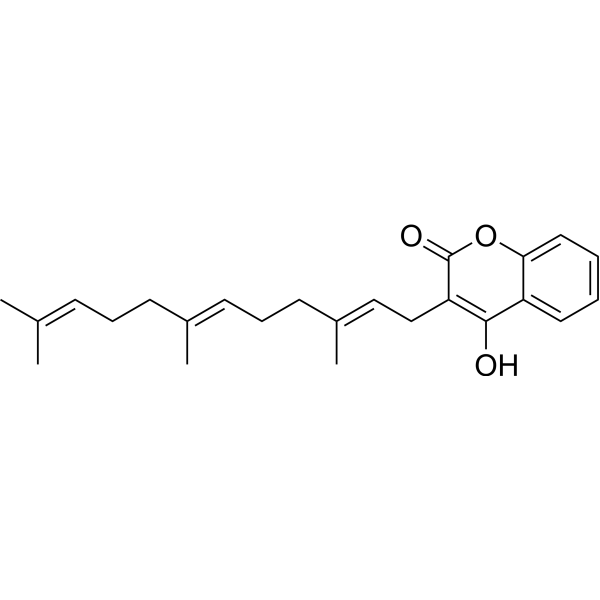
Ostruthin is a natural coumarin compound with bacterial and antimycobacterial activities . Ostruthin inhibits the growth of mycobacteria and Staphylococcus aureus. Ostruthin suppresses vascular smooth muscle cell proliferation as well as de novo cellular DNA synthesis. Ostruthin is applicable to research related to mycobacterial infections and cardiovascular and cerebrovascular diseases .
|
-
- HY-146496
-
|
|
Bacterial
|
Infection
|
|
Antitubercular agent-20 (Compound 2d) is an orally active antitubercular agent. Antitubercular agent-20 shows excellent activity against MTB H37Rv and MDR-MTB strains (MIC: <0.016 µg/ml). Antitubercular agent-20 has low cytotoxicity and good tolerance in BALB/c mice .
|
-
- HY-146495
-
|
|
Bacterial
|
Infection
|
|
Antitubercular agent-19 (Compound 1c) is an antitubercular agent. Antitubercular agent-19 shows excellent activity against MTB H37Rv and MDR-MTB strains (MIC: <0.016 µg/ml). Antitubercular agent-19 shows low cytotoxicity and relatively high acute lethal toxicity in BALB/c mice .
|
-
- HY-100725
-
BM212
4 Publications Verification
|
Bacterial
|
Infection
|
|
BM212 is a potent Mycobacterial membrane protein Large 3 (MmpL3) inhibitor. BM212 has strong bactericidal activity against both M. tuberculosis and some nontuberculosis mycobacteria. BM212 exhibits antimycobacterial activity against M. tuberculosis H37Rv with an MIC of 5 µM .
|
-
- HY-162836
-
|
4-O-(Carboxymethyl)-Rifamycin
|
Antibiotic
Bacterial
|
Infection
|
|
Rifamycin B (4-O-(Carboxymethyl)-Rifamycin) is a member of ansamycin antibiotics family with an anti-mycobacterial activity against tuberculosis, leprosy and AIDS-related mycobacterial infections. Rifamycin B is a metabolic product of Nocardia inediterranei, which can yield Rifamycin O and Rifamycin S (HY-125365) by microbial transformation .
|
-
- HY-120733
-
|
FKI-4905
|
Bacterial
Endogenous Metabolite
|
Infection
Inflammation/Immunology
|
|
Calpinactam (FKI-4905), a fungal metabolite, is a new anti-mycobacterial agent.Calpinactam is active only against Mycobacteria among various microorganisms, including Gram-positive and Gram-negative bacteria, fungi and yeasts. Calpinactam inhibits the growth of Mycobacterium smegmatis and Mycobacterium tuberculosis with MIC values of 0.78 and 12.5 μg/ml, respectively .
|
-
- HY-152035
-
|
|
Bacterial
|
Infection
Inflammation/Immunology
|
|
Mycobacterial Zmp1-IN-1 is a mycobacterial zinc metalloprotease-1 (Zmp1) inhibitor. Mycobacterial Zmp1-IN-1 has anti-mycobacterial activity for Mtb H37Ra in dose-dependent inhibition. Mycobacterial Zmp1-IN-1 can be used for the research of tuberculosis (TB) .
|
-
- HY-N7030
-
|
|
Fungal
Parasite
Bacterial
|
Infection
|
|
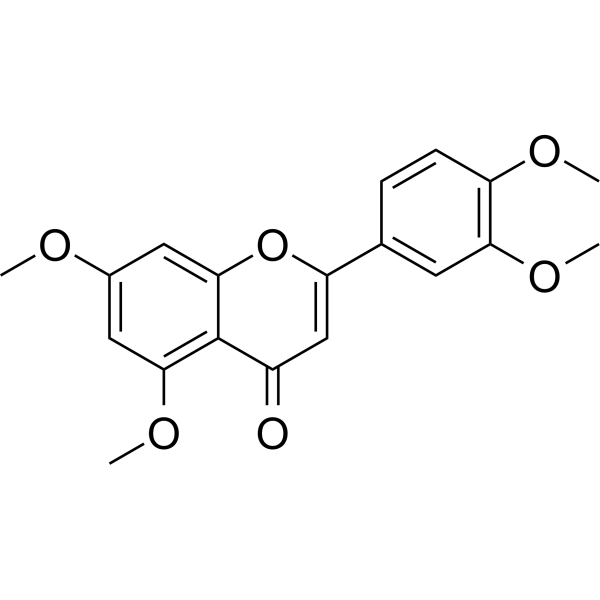
5,7,3',4'-Tetramethoxyflavone, an orally active polymethoxyflavones (PMFs) that can be isolated from M. exotica, possesses various bioactivities, including anti-fungal, anti-malarial, anti-mycobacterial, and anti-inflammatory activities. 5,7,3',4'-Tetramethoxyflavone exhibits chondroprotective activity by targeting β-catenin signaling .
|
-
- HY-N15678
-
|
1,3,6,8-THAQ
|
Bacterial
|
Infection
Cancer
|
|
Rheoemodin is an anthraquinone and antibacterial agent. Rheoemodin can be isolated from Cordyceps morakotii BCC 56811. Rheoemodin exhibits antibacterial activity against Acinetobacter baumannii (MIC: 12.5 μg/mL). Rheoemodin also exhibits weak to moderate antimycobacterial and antifungal activity. Rheoemodin also exhibits anticancer activity against breast cancer and small cell lung cancer .
|
-
- HY-N9947A
-
|
|
Antibiotic
Bacterial
|
Infection
|
|
(rac)-Methyl-6-gingerol (Compound 14) is the racemate of Methyl-6-gingerol (HY-N9947). Methyl-6-gingerol is an antibiotic that can be isolated from Aframomum melegueta. Methyl-6-gingerol exhibits anti-mycobacterial activity by inhibiting the efflux of toxins within Mycobacterium species .
|
-
- HY-181779
-
|
|
Bacterial
|
Infection
|
|
Pyridomycin-4-F, Pyridomycin (HY-111402) derivative, is an antimycobacterial agent targeting fatty acid synthesis enzyme InhA (enoyl ACP reductase). Pyridomycin-4-F binds to the pyridomycin binding pocket of InhA, forms hydrogen bond interactions with Lys-165. Pyridomycin-4-F can be used for the research of tuberculosis .
|
-
- HY-116783
-
|
|
Bacterial
DNA/RNA Synthesis
|
Infection
|
|
GyrB-IN-1 is a DNA gyrase (GyrB) inhibitor. GyrB-IN-1 shows an IC50 of 19.1 μM against Mycobacterium smegmatis GyrB ATPase activity and 21.9 μM against Mycobacterium tuberculosis GyrB DNA supercoiling activity. GyrB-IN-1 exerts antimycobacterial activity and has cytotoxicity. GyrB-IN-1 can be used for the research of tuberculosis .
|
-
- HY-Y0030R
-
|
|
Reference Standards
Biochemical Assay Reagents
Drug Intermediate
|
Infection
|
|
3-Hydroxypicolinic acid is a matrix. 3-Hydroxypicolinic acid coordinates with metal ions such as copper to form complexes with cytotoxic and antimycobacterial activity. 3-Hydroxypicolinic acid is used for the analysis of oligodeoxynucleotides in matrix-assisted laser desorption ionization time-of-flight mass spectrometry (MALDI-TOF MS). 3-Hydroxypicolinic acid is useful for nucleic acid analysis and anti-tuberculosis compound development .
|
-
- HY-W012875R
-
|
β-Nitropropionic acid (Standard); Bovinocidin (Standard)
|
Reference Standards
Bacterial
Apoptosis
Autophagy
|
Infection
Metabolic Disease
|
|
3-Nitropropanoic acid (Standard) is the analytical standard of 3-Nitropropanoic acid. This product is intended for research and analytical applications. 3-Nitropropanoic acid (β-Nitropropionic acid) is an irreversible and orally active inhibitor of succinate dehydrogenase. 3-Nitropropanoic acid exhibits potent antimycobacterial activity with a MIC value of 3.3 μM. 3-Nitropropanoic acid can induce cell apoptosis[1][2].
|
-
- HY-146158
-
|
WX-081
|
Bacterial
Potassium Channel
Antibiotic
|
Infection
|
|
Fudapirine, an anti-tuberculosis agent, displays excellent anti-mycobacterial activity against M. tuberculosis H37Rv and low cytotoxicity. Fudapirine exhibits potent activity with MIC50s of 0.083 and 0.11 μg/mL for agent susceptible tuberculosis (DS-TB) and multidrug resistant tuberculosis (MDR-TB) strains. Fudapirine also inhibits hERG channel with the IC50 of 1.89 μM.
|
-
- HY-152136
-
|
|
Bacterial
Fungal
|
Infection
|
|
Antituberculosis agent-6 (compound 9g) is a potent antimycobacterial agent. Antituberculosis agent-6 shows significant activity against M. tuberculosis, with a MIC of 3.49 μM. Antituberculosis agent-6 also shows good antifungal activity against A. niger, with a MIC of 62.50 μM. Antituberculosis agent-6 shows high GI absorption .
|
-
- HY-143290
-
|
|
Bacterial
|
Infection
|
|
Antibacterial agent 118 (compound 20) is an antimycobacterial agent. Antibacterial agent 118 shows antibacterial activity against Mtb H37Ra, M. aurum, M. smegmatis, Mtb H37Rv and M. avium with MIC values of 40.7, 10.2, 163.0, 62.5 and 62.5 μM, respectively. Antibacterial agent 118 can be used for the research of tuberculosis .
|
-
- HY-152137
-
|
|
Bacterial
Fungal
Antibiotic
|
Infection
Inflammation/Immunology
|
|
Antituberculosis agent-7, an oxetanyl-quinoline derivative, has shown good antibacterial activity against P. mirabilis with a MIC of 31.25 μM. Antituberculosis agent-7 shows good antifungal activity against A. niger with a MIC of 62.5 μM. Antituberculosis agent-7 shows excellent antimycobacterial activity with MIC 3.41 μM for M. tuberculosis H37Rv .
|
-
- HY-178105
-
|
|
Bacterial
|
Infection
|
|
LQFM326 is an antimycobacterial agent. LQFM326 shows MIC of 15.6 μg/mL against Mycobacterium tuberculosis H37Ra and 12.5 μg/mL against clinical strains. LQFM326 can cause depressions and pores to appear on the surface of the mycobacterium causing abscesses, shortening the bacterial length, increasing its thickness, and damaging the integrity of the cell wall. LQFM326 can be used for the research of tuberculosis .
|
-
- HY-181866
-
|
|
Bacterial
|
Infection
|
|
Antibacterial agent 328 is a enoyl-ACP reductase (InhA) inhibitor and antimycobacterial agent. Antibacterial agent 328 blocks mycolic acid biosynthesis in Mycobacterium tuberculosis. Antibacterial agent 328 acts on both drug-resistant and drug-susceptible Mycobacterium tuberculosis strains. Antibacterial agent 328 exhibits favorable pharmacokinetic properties, drug-likeness, and a safety-related selectivity index. Antibacterial agent 328 can be used for research on tuberculosis .
|
-
- HY-100725R
-
|
|
Reference Standards
Bacterial
|
Infection
|
|
BM212 (Standard) is the analytical standard of BM212. This product is intended for research and analytical applications. BM212 is a potent Mycobacterial membrane protein Large 3 (MmpL3) inhibitor. BM212 has strong bactericidal activity against both M. tuberculosis and some nontuberculosis mycobacteria. BM212 exhibits antimycobacterial activity against M. tuberculosis H37Rv with an MIC of 5 µM .
|
-
- HY-B0688S1
-
|
4,4′-Diaminodiphenyl sulfone-d4; DDS-d4
|
Isotope-Labeled Compounds
Antibiotic
Parasite
Bacterial
Reactive Oxygen Species (ROS)
|
Infection
Inflammation/Immunology
|
|
Dapsone-d4 is the deuterium labeled Dapsone. Dapsone (4,4′-Diaminodiphenyl sulfone) is an orally active and blood-brain penetrant sulfonamide antibiotic with bacteriostatic, antimycobacterial and antiprotozoal activities . Dapsone?exerts effective antileprosy activity?and inhibits folate synthesis in cell extracts of?M. leprae. Dapsone is used for dermatologic disorder research, including leprosy, dermatitis herpetiformis, acne vulgaris et al .
|
-
- HY-152139
-
|
|
Bacterial
Fungal
Antibiotic
|
Infection
Inflammation/Immunology
|
|
Antibacterial agent 129, an oxetanyl-quinoline derivative, has shown good antibacterial activity against P. mirabilis and B. subtilis with MICs of 31.25 μM and 31.5 μM and . Antibacterial agent 129 shows good antifungal activity against A. niger with a MIC of 31.25 μM. Antibacterial agent 129 shows excellent antimycobacterial activity with MIC 57.73 μM for M. tuberculosis H37Rv .
|
-
- HY-144341
-
|
|
Bacterial
|
Infection
|
|
DprE1-IN-1 is a potent, orally active DprE1 inhibitor with favorable hepatocyte stability, low cytotoxicity and low hERG channel inhibition. DprE1-IN-1 displays potent activity against both agent-susceptible and clinically isolated drug-resistant Tuberculosis strains with MICs10 CFU reduction in macrophages.
|
-
- HY-182711
-
|
|
Bacterial
Parasite
|
Infection
|
|
SCR0911 is an inhibitor of mycobacterial cytochrome bcc oxidase and Plasmodium falciparum cytochrome bc1. SCR0911 disrupts oxidative phosphorylation by binding to mycobacterial cytochrome bcc, binds to the Qi site of Plasmodium falciparum cytochrome bc1, inhibits mycobacterial cell growth and ATP synthesis, and exhibits broad-spectrum anti-mycobacterial and anti-malarial activities. SCR0911 can be used in research related to tuberculosis, malaria, and isolated persistent hypermethioninemia (iph) .
|
-
- HY-N0941
-
|
β-Mangostin
|
Bacterial
Parasite
Apoptosis
|
Infection
Cancer
|
|
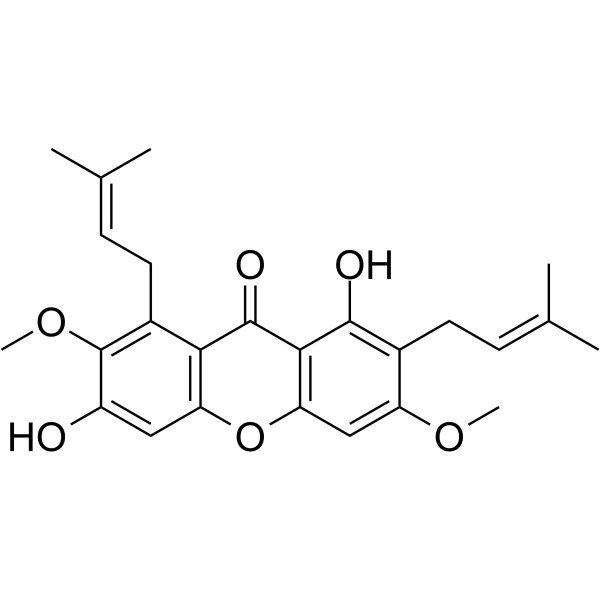
beta-Mangostin (β-Mangostin) is a xanthone compound present in Cratoxylum arborescens, with antibacterial and antimalarial activities. beta-Mangostin exhibits antimycobacterial activity against Mycobacterium tuberculosis with an MIC of 6.25 μg/mL. beta-Mangostin possesses in vitro antimalarial activity against Plasmodium falciparum, with an IC50 of 3.00 μg/mL. beta-Mangostin has potent anticancer activity against various cancers (such as hepatocellular carcinoma, leukaemic) .
|
-
- HY-Y0030A
-
|
3-HPA
|
Biochemical Assay Reagents
Drug Intermediate
|
Infection
|
|
3-Hydroxypicolinic acid, matrix substance for MALDI-MS is a matrix. 3-Hydroxypicolinic acid, matrix substance for MALDI-MS coordinates with metal ions such as copper to form complexes with cytotoxic and antimycobacterial activity. 3-Hydroxypicolinic acid, matrix substance for MALDI-MS is used for the analysis of oligodeoxynucleotides in matrix-assisted laser desorption ionization time-of-flight mass spectrometry (MALDI-TOF MS). 3-Hydroxypicolinic acid, matrix substance for MALDI-MS is useful for nucleic acid analysis and anti-tuberculosis compound development .
|
-
- HY-B0688S2
-
|
4,4′-Diaminodiphenyl sulfone-13C12; DDS-13C12
|
Isotope-Labeled Compounds
Antibiotic
Parasite
Bacterial
Reactive Oxygen Species (ROS)
|
Infection
Inflammation/Immunology
|
|
Dapsone- 13C12 is the 13C12 labeled Dapsone (HY-B0688). Dapsone (4,4′-Diaminodiphenyl sulfone) is an orally active and blood-brain penetrant sulfonamide antibiotic with bacteriostatic, antimycobacterial and antiprotozoal activities. Dapsone exerts effective antileprosy activity and inhibits folate synthesis in cell extracts of M. leprae. Dapsone is used for dermatologic disorder research, including leprosy, dermatitis herpetiformis, acne vulgaris et al .
|
-
- HY-B0688S3
-
|
4,4′-Diaminodiphenyl sulfone-15N2; DDS-15N2
|
Isotope-Labeled Compounds
Antibiotic
Reactive Oxygen Species (ROS)
Bacterial
Parasite
|
Infection
Inflammation/Immunology
|
|
Dapsone- 15N2 (4,4′-Diaminodiphenyl sulfone- 15N2) is 15N labeled Dapsone. Dapsone (4,4′-Diaminodiphenyl sulfone) is an orally active and blood-brain penetrant sulfonamide antibiotic with bacteriostatic, antimycobacterial and antiprotozoal activities . Dapsone?exerts effective antileprosy activity?and inhibits folate synthesis in cell extracts of?M. leprae. Dapsone is used for dermatologic disorder research, including leprosy, dermatitis herpetiformis, acne vulgaris et al .
|
-
- HY-151340
-
|
|
Bacterial
|
Infection
|
|
Antitubercular agent-32 is a derivate of Benzothiazinone (HY-13579A), inhibits M. tuberculosis, and shows improved metabolic stability and enhanced water solubility. Antitubercular agent-32 exerts antitubercular effect by targeting decaprenylphosphoryl-β-D-ribose 2’-oxidase (DprE1, IC50=3.9 μM) .
|
-
- HY-180407
-
|
|
Bacterial
|
Infection
|
|
UGM-IN-1 (compound 107) is a selective competitive inhibitor of Mycobacterium tuberculosis UDP-Galp mutase (UGM), encoded by Rv3809c. UGM-IN-1 inhibits the conversion of UDP-galactopyranose (UDP-Galp) to UDP-galactofuranose (UDP-Galf), thereby blocking the synthesis of key components of the mycobacterial cell wall, including mycolic acid-arabinogalactan (mAG) and liparabinomannan (LAM), leading to anti-mycobacterial activity against Mycobacterium tuberculosis. UGM-IN-1 is useful for research on tuberculosis, including drug-resistant tuberculosis .
|
-
- HY-152138
-
|
|
Bacterial
Fungal
|
Infection
|
|
Antituberculosis agent-8 (Compound 9i) is an antitubercular agent with an MIC of 3.53 μM (1.6 μg/mL) against M. tuberculosis H37Rv. Antituberculosis agent-8 also shows good antifungal activity against A. niger with an MIC of 62.50 μM .
|
-
- HY-N3700
-
|
Rutaceline
|
Bacterial
HIV
TNF Receptor
Interleukin Related
|
Infection
Inflammation/Immunology
|
|
Decarine (Rutaceline) is a benzophenanthridine alkaloid found in Zanthoxylum species. Decarinewith shows anti-inflammatory, antimycobacterial, and anti-HIV activity. Decarine inhibits NO, TNF-α, IL-1β, IL-6, and IL-8 production in inflammatory cell models. Decarine inhibits growth of Mycobacterium tuberculosis strains, reduces intracellular Mycobacterium tuberculosis survival, and shows low cytotoxicity toward human macrophages. Decarine inhibits HIV replication in acutely infected lymphocytes. Decarine can be used for the researches of inflammation, tuberculosis, and HIV infection .
|
-
- HY-124195
-
|
|
Bacterial
|
Infection
|
|
Antitubercular agent-57 is a selective antimycobacterial agent with low in vitro toxicity against mammalian cell lines including hepatocyte cell lines. Antitubercular agent-57 exhibits activity against drug-sensitive, multidrug-resistant and extensively drug-resistant Mycobacterium tuberculosis strains, and shows no cross-resistance with first-line or second-line antitubercular agents. Antitubercular agent-57 has no activity against Gram-positive bacteria, Gram-negative bacteria and fungal strains. Antitubercular agent-57 can be used in the research of tuberculosis and multidrug-resistant tuberculosis .
|
-
- HY-W748468
-
|
|
Drug Derivative
Bacterial
|
Infection
|
|
6-Isopentenyloxyisobergapten is a furanocoumarin found in the aerial parts of Semenovia transiliensis and the roots of Heracleum maximum. 6-Isopentenyloxyisobergapten has both selective phytotoxicity and antimycobacterial activity. 6-Isopentenyloxyisobergapten shows a minimum inhibitory concentration (MIC) of 166.5 μM and an IC50 of 27.4 μM against Mycobacterium tuberculosis H37Ra. 6-Isopentenyloxyisobergapten has an IC50 of 29 μM for the growth inhibition of Lemna paucicostata. 6-Isopentenyloxyisobergapten exhibits higher activity against Agrostis stolonifera than Lactuca sativa at a concentration of 1000 μM .
|
-
- HY-N0941R
-
|
β-Mangostin (Standard)
|
Reference Standards
Bacterial
Parasite
Apoptosis
|
Infection
Cancer
|
|
beta-Mangostin (Standard) is the analytical standard of beta-Mangostin. This product is intended for research and analytical applications. beta-Mangostin (β-Mangostin) is a xanthone compound present in Cratoxylum arborescens, with antibacterial and antimalarial activities. beta-Mangostin exhibits antimycobacterial activity against Mycobacterium tuberculosis with an MIC of 6.25 μg/mL. beta-Mangostin possesses in vitro antimalarial activity against Plasmodium falciparum, with an IC50 of 3.00 μg/mL. beta-Mangostin has potent anticancer activity against various cancers (such as hepatocellular carcinoma, leukaemic) .
|
-
- HY-129262
-
|
|
Antibiotic
Bacterial
|
Infection
|
|
Deoxypheganomycin D is a specific antimycobacterial inhibitor with no cross-resistance to other antibiotics such as Paromomycin (HY-B0956), Capreomycin (HY-P3270), Viomycin (HY-A0155), Streptothricin (HY-129065), Kanamycin (HY-16566), and Streptomycin (HY-B1906). Deoxypheganomycin D (28 μM) partially inhibits the growth of Mycobacterium 607, with no significant inhibitory effects on DNA, RNA, or protein synthesis. Deoxypheganomycin D (7 μM) affects leucine influx, not thymidine, and has the opposite effect on efflux. The effects of Deoxypheganomycin D may be related to cell membrane and specific mycobacterial lipid components.
|
-
- HY-W099725
-
|
|
Herbicide
Photosystem II
|
Cardiovascular Disease
Infection
|
|
Sarmentine is a broad-spectrum contact herbicide and PSII inhibitor, with an IC50 of 3.0 μM and a Ki of 1.5 μM against spinach, an IC50 of 1.72 μM against wild-type Amaranthus retroflexus, and an IC50 of 0.97 μM against triazine-resistant Amaranthus retroflexus. Sarmentine competitively binds to the QB binding site of plastoquinone on PSII, thereby blocking photosynthetic electron transport. Sarmentine inhibits enoyl-ACP reductase in Arabidopsis thaliana by targeting the early fatty acid synthesis process, with an IC50 of 18.3 μM. Sarmentine induces light-independent loss of plasma membrane integrity and electrolyte leakage. Sarmentine also exhibits antiplasmodial, antimycobacterial, antituberculous, and antiplatelet aggregation activities .
|
-
- HY-W128705
-
|
3-Phenyl-1H-indole
|
Bacterial
|
Infection
|
|
3-Phenylindole (3-phenyl-1H-indole) is an indole compound. 3-Phenylindole exhibits weak anti-tuberculosis activity with an MIC of 129.4 μM. 3-Phenylindole can be utilized in anti-tuberculosis research .
|
-
- HY-W778649
-
|
|
Isotope-Labeled Compounds
Herbicide
Photosystem II
|
Others
|
|
Sarmentine-d8 is the deuterium labeled Sarmentine. Sarmentine is a broad-spectrum contact herbicide and PSII inhibitor, with an IC50 of 3.0 μM and a Ki of 1.5 μM against spinach, an IC50 of 1.72 μM against wild-type Amaranthus retroflexus, and an IC50 of 0.97 μM against triazine-resistant Amaranthus retroflexus. Sarmentine competitively binds to the QB binding site of plastoquinone on PSII, thereby blocking photosynthetic electron transport. Sarmentine inhibits enoyl-ACP reductase in Arabidopsis thaliana by targeting the early fatty acid synthesis process, with an IC50 of 18.3 μM. Sarmentine induces light-independent loss of plasma membrane integrity and electrolyte leakage. Sarmentine also exhibits antiplasmodial, antimycobacterial, antituberculous, and antiplatelet aggregation activities .
|
-
| Cat. No. |
Product Name |
Type |
-
- HY-B1046
-
|
|
Fluorescent Dye
|
|
Clofazimine is an orally-active anti-mycobacterial agent with a wide range of anti-mycobacterial activity including leprosy and tuberculosis. Clofazimine exerts anti-inflammatory activities and anti-tumor activities by interfering DNA replication and inhibiting IL2 (IC50 = 1.10 ± 0.26 μM, Jurkat T) production. Clofazimine can be used in mycobacterial and cancer research .
|
-
- HY-B1046R
-
|
|
Fluorescent Dye
|
|
Clofazimine (Standard) is the analytical standard of Clofazimine. This product is intended for research and analytical applications. Clofazimine is an orally-active anti-mycobacterial agent with a wide range of anti-mycobacterial activity including leprosy and tuberculosis. Clofazimine exerts anti-inflammatory activities and anti-tumor activities by interfering DNA replication and inhibiting IL2 (IC50 = 1.10 ± 0.26 μM, Jurkat T) production. Clofazimine can be used in mycobacterial and cancer research .
|
| Cat. No. |
Product Name |
Type |
-
- HY-Y0030A
-
|
3-HPA
|
Biochemical Assay Reagents
|
|
3-Hydroxypicolinic acid, matrix substance for MALDI-MS is a matrix. 3-Hydroxypicolinic acid, matrix substance for MALDI-MS coordinates with metal ions such as copper to form complexes with cytotoxic and antimycobacterial activity. 3-Hydroxypicolinic acid, matrix substance for MALDI-MS is used for the analysis of oligodeoxynucleotides in matrix-assisted laser desorption ionization time-of-flight mass spectrometry (MALDI-TOF MS). 3-Hydroxypicolinic acid, matrix substance for MALDI-MS is useful for nucleic acid analysis and anti-tuberculosis compound development .
|
| Cat. No. |
Product Name |
Target |
Research Area |
-
- HY-P2064
-
|
|
Bacterial
|
Infection
|
|
Lariatins is a novel anti-mycobacterial peptides with a lasso structure produced by Rhodococcus jostii K01-B0171 .
|
-
- HY-P2087
-
|
|
Insecticide
Parasite
Bacterial
|
Infection
|
|
Bassianolide is a cyclooligomer depsipeptide secondary metabolite. Bassianolide is an insecticidal virulence factor of Beauveria bassiana. Bassianolide inhibits acetylcholine-induced smooth muscle contraction, and shows moderate antiplasmodial and anti-mycobacterial activities .
|
-
- HY-125628
-
|
|
Endogenous Metabolite
|
Infection
|
|
Kahalalide A is an anti-mycobacterial compound with antimicrobial activity. Kahalalide A is derived from the marine mollusk Elysia rufescens. Kahalalide A has attracted extensive attention in natural product research due to its potential medicinal value .
|
| Cat. No. |
Product Name |
Category |
Target |
Chemical Structure |
-
- HY-B0535A
-
-
-
- HY-W012875
-
-
-
- HY-P2970
-
|
|
Ananas comosus(L.) Merr.
Structural Classification
Natural Products
Classification of Application Fields
Bromeliaceae
Plants
Inflammation/Immunology
Disease Research Fields
Cancer
|
Apoptosis
PARP
Caspase
Bcl-2 Family
Bacterial
Interleukin Related
|
|
Stem bromelain (EC 3.4.22.32) is a cysteine protease and antibacterial agent. Stem bromelain can be isolated from the stem of the pineapple (Ananas comosus). Stem bromelain induces dose-dependent secretion of IL-12p70, and IL-6, induces Apoptosis, causes cleavage of full-length PARP protein, Caspase 3, and Caspase 9, increases Bax, and decreases Bcl-2. Stem bromelain possesses various fibrinolytic, antiedema, antithrombotic, and anti-inflammatory activities. Stem bromelain also exhibits in vivo antitumor and antileukemic activities, as well as antimetastatic effects. Stem bromelain has antimycobacterial activity. Stem bromelain provides protection against lead poisoning .
|
-
-
- HY-N7030
-
|
|
Infection
Flavonoids
Classification of Application Fields
Flavones
Rutaceae
Plants
Disease Research Fields
Murraya exotica L. Mant.
Source Classification
|
Fungal
Parasite
Bacterial
|
|
5,7,3',4'-Tetramethoxyflavone, an orally active polymethoxyflavones (PMFs) that can be isolated from M. exotica, possesses various bioactivities, including anti-fungal, anti-malarial, anti-mycobacterial, and anti-inflammatory activities. 5,7,3',4'-Tetramethoxyflavone exhibits chondroprotective activity by targeting β-catenin signaling .
|
-
-
- HY-N0941
-
-
-
- HY-N1976
-
|
(3R,8S)-Falcarindiol; 3(R),8(S),9(Z)-Falcarindiol
|
Infection
Structural Classification
Natural Products
Classification of Application Fields
Decachaeta ovatifolia (DC.) R.M.King & H.Rob.
Umbelliferae
Plants
Inflammation/Immunology
Disease Research Fields
Source Classification
|
|
|
(+)-(3R,8S)-Falcarindiol ((3R,8S)-Falcarindiol; 3 (R),8 (S),9 (Z)-Falcarindiol) is an orally active polyacetylene anti-mycobacterial agent. (+)-(3R,8S)-Falcarindiol exhibits antibacterial activity against Gram-positive bacteria, Gram-negative bacteria and mycobacteria. Co-administration of (+)-(3R,8S)-Falcarindiol with (3R)-falcarinol alters the composition of gut microbiota, reduces colonic tumor lesions and slows down polyp growth. (+)-(3R,8S)-Falcarindiol can be used in research related to tuberculosis and colorectal cancer .
|
-
-
- HY-N1205
-
-
-
- HY-N3845
-
-
-
- HY-N2060
-
-
-
- HY-129605
-
-
-
- HY-W001663
-
-
-
- HY-N2277
-
-
-
- HY-N9531
-
-
-
- HY-N9615
-
-
-
- HY-N1190
-
-
-
- HY-N11048
-
-
-
- HY-N8131
-
-
-
- HY-N9947
-
-
-
- HY-N13075
-
-
-
- HY-Y0030R
-
-
-
- HY-N3700
-
|
Rutaceline
|
Structural Classification
Alkaloids
Rutaceae
Plants
Isoquinoline Alkaloids
Zanthoxylum simulans Hance
Source Classification
|
Bacterial
HIV
TNF Receptor
Interleukin Related
|
|
Decarine (Rutaceline) is a benzophenanthridine alkaloid found in Zanthoxylum species. Decarinewith shows anti-inflammatory, antimycobacterial, and anti-HIV activity. Decarine inhibits NO, TNF-α, IL-1β, IL-6, and IL-8 production in inflammatory cell models. Decarine inhibits growth of Mycobacterium tuberculosis strains, reduces intracellular Mycobacterium tuberculosis survival, and shows low cytotoxicity toward human macrophages. Decarine inhibits HIV replication in acutely infected lymphocytes. Decarine can be used for the researches of inflammation, tuberculosis, and HIV infection .
|
-
-
- HY-N1160
-
-
-
- HY-W001663R
-
|
|
Structural Classification
Monophenols
Ketones, Aldehydes, Acids
Rubiaceae
Phenols
Plants
Coffea arabica L.
Source Classification
|
Reference Standards
Bacterial
|
|
4'-Hydroxy-3'-methylacetophenone (Standard) is an analytical standard of 4'-Hydroxy-3'-methylacetophenone (HY-W001663). This product is intended for research and analytical applications. 4'-Hydroxy-3'-methylacetophenone is a phenolic volatile compound. 4'-Hydroxy-3'-methylacetophenone can be isolated from Hawaiian green coffee beans (Coffea Arabica L.). 4'-Hydroxy-3'-methylacetophenone is believed to possess potent antioxidant activity similar to that of other phenolic volatile compounds, Thymol (HY-N6810) and Eugenol (HY-N0337). 4'-Hydroxy-3'-methylacetophenone also can be used to synthesize heterocyclic compounds which have antimycobacterial activity .
|
-
-
- HY-165483
-
-
-
- HY-N29777
-
-
-
- HY-N3301
-
-
-
- HY-P2087
-
-
-
- HY-N12823
-
|
|
Microorganisms
Antibiotics
Source Classification
|
Bacterial
|
|
Caprazene is an antimycobacterial compound and precursor molecule for semi-synthetic antibacterial antibiotics, used for studies on tuberculosis and Mycobacterium avium complex infections, which can be isolated from the acid-treated caprazamycin (CPZ) A-G mixture .
|
-
-
- HY-N11646
-
-
-
- HY-120733
-
-
-
- HY-N15678
-
|
1,3,6,8-THAQ
|
Quinones
Microorganisms
Antibiotics
Anthraquinones
Other Antibiotics
Source Classification
|
Bacterial
|
|
Rheoemodin is an anthraquinone and antibacterial agent. Rheoemodin can be isolated from Cordyceps morakotii BCC 56811. Rheoemodin exhibits antibacterial activity against Acinetobacter baumannii (MIC: 12.5 μg/mL). Rheoemodin also exhibits weak to moderate antimycobacterial and antifungal activity. Rheoemodin also exhibits anticancer activity against breast cancer and small cell lung cancer .
|
-
-
- HY-N9947A
-
-
-
- HY-W012875R
-
-
-
- HY-N0941R
-
|
β-Mangostin (Standard)
|
Structural Classification
Xanthones
Guttiferae
Phenols
Polyphenols
Garcinia mangostana Linn.
Plants
Source Classification
|
Reference Standards
Bacterial
Parasite
Apoptosis
|
|
beta-Mangostin (Standard) is the analytical standard of beta-Mangostin. This product is intended for research and analytical applications. beta-Mangostin (β-Mangostin) is a xanthone compound present in Cratoxylum arborescens, with antibacterial and antimalarial activities. beta-Mangostin exhibits antimycobacterial activity against Mycobacterium tuberculosis with an MIC of 6.25 μg/mL. beta-Mangostin possesses in vitro antimalarial activity against Plasmodium falciparum, with an IC50 of 3.00 μg/mL. beta-Mangostin has potent anticancer activity against various cancers (such as hepatocellular carcinoma, leukaemic) .
|
-
-
- HY-W748468
-
|
|
Structural Classification
Semenovia transiliensis Regel & Herder
Apiaceae
Coumarins
Phenylpropanoids
Plants
Source Classification
|
Drug Derivative
Bacterial
|
|
6-Isopentenyloxyisobergapten is a furanocoumarin found in the aerial parts of Semenovia transiliensis and the roots of Heracleum maximum. 6-Isopentenyloxyisobergapten has both selective phytotoxicity and antimycobacterial activity. 6-Isopentenyloxyisobergapten shows a minimum inhibitory concentration (MIC) of 166.5 μM and an IC50 of 27.4 μM against Mycobacterium tuberculosis H37Ra. 6-Isopentenyloxyisobergapten has an IC50 of 29 μM for the growth inhibition of Lemna paucicostata. 6-Isopentenyloxyisobergapten exhibits higher activity against Agrostis stolonifera than Lactuca sativa at a concentration of 1000 μM .
|
-
-
- HY-W099725
-
|
|
Piper longum Linn.
Structural Classification
Alkaloids
Pyrrole Alkaloids
Piperaceae
Plants
Source Classification
|
Herbicide
Photosystem II
|
|
Sarmentine is a broad-spectrum contact herbicide and PSII inhibitor, with an IC50 of 3.0 μM and a Ki of 1.5 μM against spinach, an IC50 of 1.72 μM against wild-type Amaranthus retroflexus, and an IC50 of 0.97 μM against triazine-resistant Amaranthus retroflexus. Sarmentine competitively binds to the QB binding site of plastoquinone on PSII, thereby blocking photosynthetic electron transport. Sarmentine inhibits enoyl-ACP reductase in Arabidopsis thaliana by targeting the early fatty acid synthesis process, with an IC50 of 18.3 μM. Sarmentine induces light-independent loss of plasma membrane integrity and electrolyte leakage. Sarmentine also exhibits antiplasmodial, antimycobacterial, antituberculous, and antiplatelet aggregation activities .
|
-
| Cat. No. |
Product Name |
Chemical Structure |
-
- HY-17025S
-
|
|
|
Rifabutin-d7 is the deuterium labeled Rifabutin. Rifabutin (Ansamycin) is a semisynthetic ansamycin antibiotic with potent antimycobacterial properties. Rifabutin inhibits DNA-dependent RNA polymerase.
|
-
-
- HY-B0535S
-
|
|
|
Ethambutol-d4 is the deuterium labeled Ethambutol. Ethambutol is a bacteriostatic antimycobacterial agent, which obstructs the formation of cell wall by inhibiting arabinosyl transferases.
|
-
-
- HY-B1046S
-
|
|
|
Clofazimine-d7 is deuterium labeled Clofazimine. Clofazimine is an iminophenazine dye, has a marked anti-inflammatory effect, has been used in combination with other antimycobacterial agents to treat AIDS and Crohn's disease.
|
-
-
- HY-B0688S2
-
|
|
|
Dapsone- 13C12 is the 13C12 labeled Dapsone (HY-B0688). Dapsone (4,4′-Diaminodiphenyl sulfone) is an orally active and blood-brain penetrant sulfonamide antibiotic with bacteriostatic, antimycobacterial and antiprotozoal activities. Dapsone exerts effective antileprosy activity and inhibits folate synthesis in cell extracts of M. leprae. Dapsone is used for dermatologic disorder research, including leprosy, dermatitis herpetiformis, acne vulgaris et al .
|
-
-
- HY-133671S
-
|
|
|
Monooctyl phthalate-d4 (Mono-n-octyl phthalate-d4) is a deuterium labeled Monooctyl phthalate (HY-133671). Monooctyl phthalate (Mono-n-octyl phthalate) exhibits antimycobacterial activity with a MIC of 20 μg/mL .
|
-
-
- HY-B0688S1
-
|
|
|
Dapsone-d4 is the deuterium labeled Dapsone. Dapsone (4,4′-Diaminodiphenyl sulfone) is an orally active and blood-brain penetrant sulfonamide antibiotic with bacteriostatic, antimycobacterial and antiprotozoal activities . Dapsone?exerts effective antileprosy activity?and inhibits folate synthesis in cell extracts of?M. leprae. Dapsone is used for dermatologic disorder research, including leprosy, dermatitis herpetiformis, acne vulgaris et al .
|
-
-
- HY-B0535S1
-
|
|
|
Ethambutol-d10 is the deuterium labeled Ethambutol. Ethambutol is a bacteriostatic antimycobacterial agent, which obstructs the formation of cell wall by inhibiting arabinosyl transferases.
|
-
-
- HY-B0535AS
-
|
|
|
Ethambutol-d4 dihydrochloride is deuterated labeled Ethambutol dihydrochloride (HY-B0535A). Ethambutol dihydrochloride is an antimycobacterial compound that prevents cell wall formation by inhibiting arabinosyltransferase activity.
|
-
-
- HY-17025S1
-
|
|
|
Rifabutin-d6 (Ansamycin-d6) is deuterium labeled Rifabutin. Rifabutin (Ansamycin) is a semisynthetic ansamycin antibiotic with potent antimycobacterial properties. Rifabutin inhibits DNA-dependent RNA polymerase.
|
-
-
- HY-B0688S3
-
|
|
|
Dapsone- 15N2 (4,4′-Diaminodiphenyl sulfone- 15N2) is 15N labeled Dapsone. Dapsone (4,4′-Diaminodiphenyl sulfone) is an orally active and blood-brain penetrant sulfonamide antibiotic with bacteriostatic, antimycobacterial and antiprotozoal activities . Dapsone?exerts effective antileprosy activity?and inhibits folate synthesis in cell extracts of?M. leprae. Dapsone is used for dermatologic disorder research, including leprosy, dermatitis herpetiformis, acne vulgaris et al .
|
-
-
- HY-W778649
-
|
|
|
Sarmentine-d8 is the deuterium labeled Sarmentine. Sarmentine is a broad-spectrum contact herbicide and PSII inhibitor, with an IC50 of 3.0 μM and a Ki of 1.5 μM against spinach, an IC50 of 1.72 μM against wild-type Amaranthus retroflexus, and an IC50 of 0.97 μM against triazine-resistant Amaranthus retroflexus. Sarmentine competitively binds to the QB binding site of plastoquinone on PSII, thereby blocking photosynthetic electron transport. Sarmentine inhibits enoyl-ACP reductase in Arabidopsis thaliana by targeting the early fatty acid synthesis process, with an IC50 of 18.3 μM. Sarmentine induces light-independent loss of plasma membrane integrity and electrolyte leakage. Sarmentine also exhibits antiplasmodial, antimycobacterial, antituberculous, and antiplatelet aggregation activities .
|
-
Your information is safe with us. * Required Fields.
Inquiry Information
- Product Name:
- Cat. No.:
- Quantity:
- MCE Japan Authorized Agent:

