



1. Search Result
Search Result
Results for "

Cleavage

" in MedChemExpress (MCE) Product Catalog:

515

Inhibitors & Agonists

16

Fluorescent Dyes

11

Biochemical Assay Reagents

94

Peptides

11

Inhibitory Antibodies

73

Natural
Products

6

Recombinant Proteins

5

Isotope-Labeled Compounds

12

Antibodies

3

Click Chemistry

12

Oligonucleotides

1

GMP Molecules

Cat. No. Product Name Target Research Areas Chemical Structure
  • HY-108882
    DNase I, Bovine pancreas
    25+ Cited Publications

    DNase

    Others Inflammation/Immunology Cancer
    DNase I (EC 3.1.21.1) is an enzyme that degrade DNA, it plays a key role in the cleavage of extracellular DNA is crucial for limiting the inflammatory response and maintaining homeostasis. Exogenous deoxyribonuclease shows beneficial effects in inflammatory diseases and cancer .
    DNase I, Bovine pancreas
  • HY-13434
    Ionomycin
    Maximum Cited Publications
    120 Publications Verification

    SQ23377

    Calcium Channel PKC Bacterial Apoptosis Antibiotic Infection Cancer
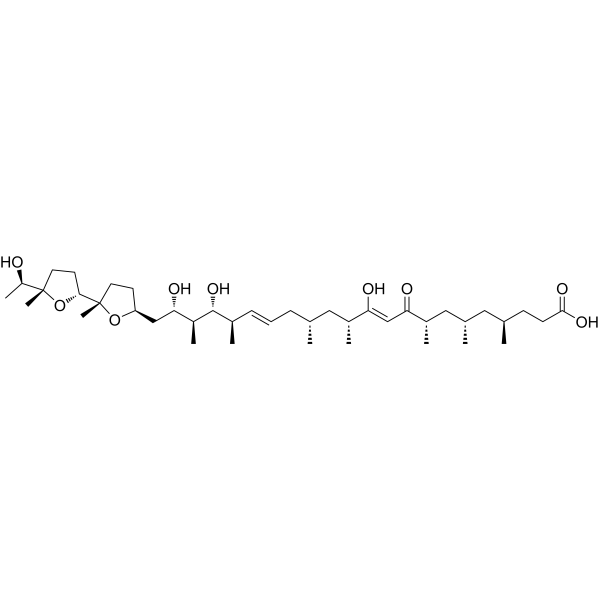
    Ionomycin (SQ23377) is a potent, selective calcium ionophore and an antibiotic produced by Streptomyces conglobatus. Ionomycin (SQ23377) is highly specific for divalent cations (Ca>Mg>Sr=Ba). Ionomycin (SQ23377) promotes apoptosis. Ionomycin also induces the activation of protein kinase C (PKC) .
    Ionomycin
  • HY-13434A
    Ionomycin calcium
    Maximum Cited Publications
    120 Publications Verification

    SQ23377 calcium

    Calcium Channel PKC Bacterial Apoptosis Antibiotic Infection Cancer
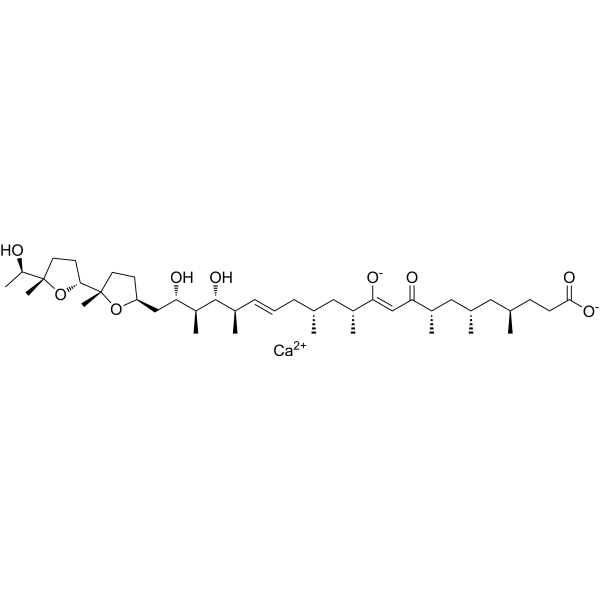
    Ionomycin calcium (SQ23377 calcium) is a potent, selective calcium ionophore and an antibiotic produced by Streptomyces conglobatus. Ionomycin calcium (SQ23377 calcium) is highly specific for divalent cations (Ca>Mg>Sr=Ba). Ionomycin (SQ23377) promotes apoptosis. Ionomycin calcium (SQ23377 calcium) also induces the activation of protein kinase C (PKC) .
    Ionomycin calcium
  • HY-13526
    YO-01027
    5+ Cited Publications

    Dibenzazepine; DBZ

    Notch γ-secretase Cancer
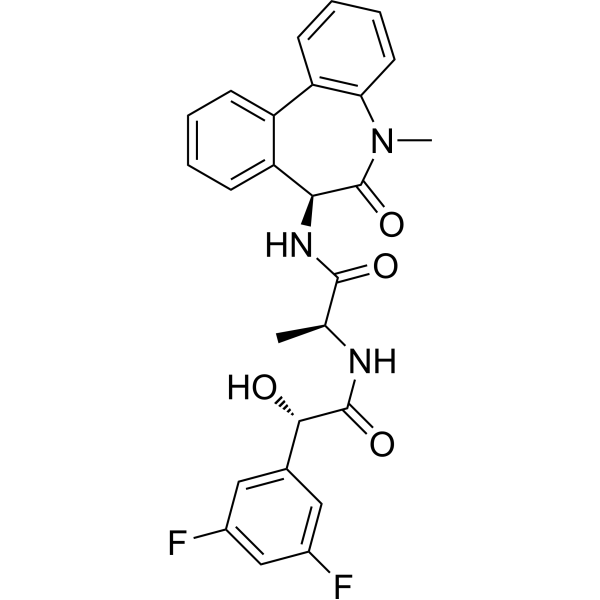
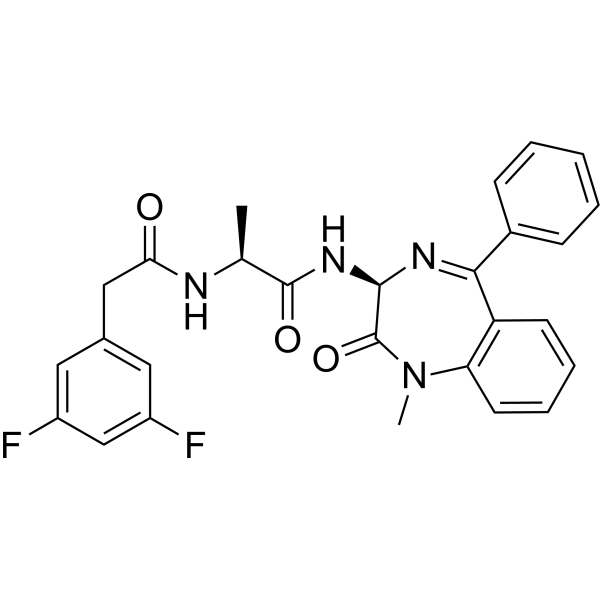
    YO-01027 (Dibenzazepine;DBZ) is a potent γ-secretase inhibitor with IC50 values of 2.92 and 2.64 nM for Notch and APPL cleavage, respectively.
    YO-01027
  • HY-103248
    Toyocamycin
    5+ Cited Publications

    Vengicide

    IRE1 Fungal Antibiotic Apoptosis CDK Infection Cancer
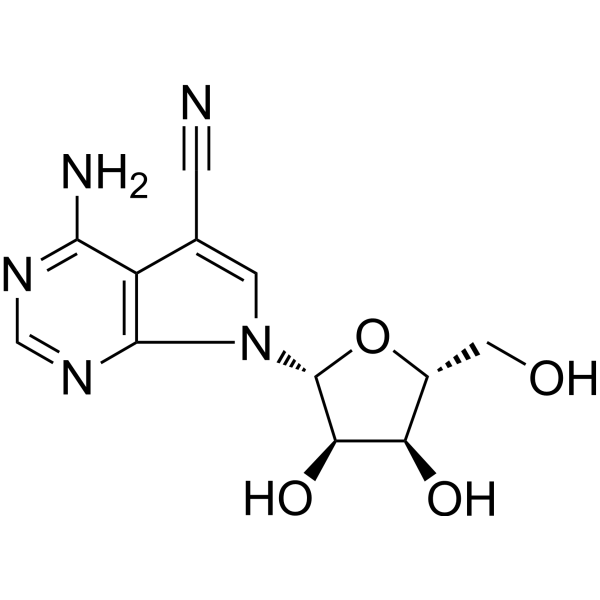
    Toyocamycin (Vengicide) is an adenosine analog produced by Streptomyces diastatochromogenes, acts as an XBP1 inhibitor. Toyocamycin blocks RNA synthesis and ribosome function, and induces apoptosis. Toyocamycin affects IRE1α-XBP1 pathway, and inhibits XBP1 mRNA cleavage with an IC50 value of 80 nM with affecting IRE1α auto-phosphorylation. Toyocamycin specifically inhibits CDK9 with an IC50 value of 79 nM .
    Toyocamycin
  • HY-138188
    KRA-533
    1 Publications Verification

    Ras Cancer
    KRA-533 is a potent KRAS agonist. KRA-533 binds to the GTP/GDP binding pocket in the KRAS protein to prevent GTP cleavage, resulting in the accumulation of constitutively active GTP-bound KRAS that triggers both apoptotic and autophagic cell death pathways in cancer cells.
    KRA-533
  • HY-W007926
    2-Oxobutanoic acid
    1 Publications Verification

    2-Ketobutyrate

    Endogenous Metabolite Others
    2-Oxobutanoic acid is a product in the enzymatic cleavage of cystathionine.
    2-Oxobutanoic acid
  • HY-17624
    Framycetin
    1 Publications Verification

    Neomycin B; Fradiomycin B

    Bacterial Antibiotic Infection
    Framycetin (Neomycin B), an aminoglycoside antibiotic, is a potent RNase P cleavage activity inhibitor with a Ki of 35 μM. Framycetin competes for specific divalent metal ion binding sites in RNase P RNA. Framycetin inhibits hammerhead ribozyme with a Ki of 13.5 μM. Framycetin, a 5″-azido neomycin B precursor, binds the Drosha site in miR-525 and is used for hepatic encephalopathy and enteropathogenic E. coli infections .
    Framycetin
  • HY-B1302

    P-glycoprotein PARP Caspase Apoptosis Potassium Channel Cardiovascular Disease Neurological Disease
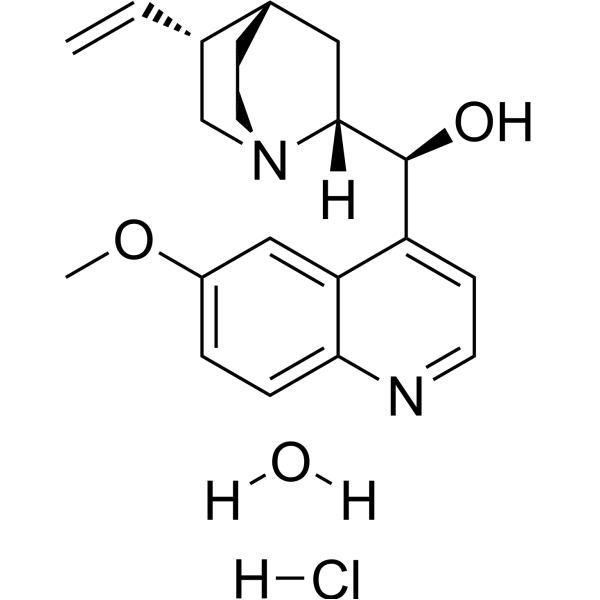
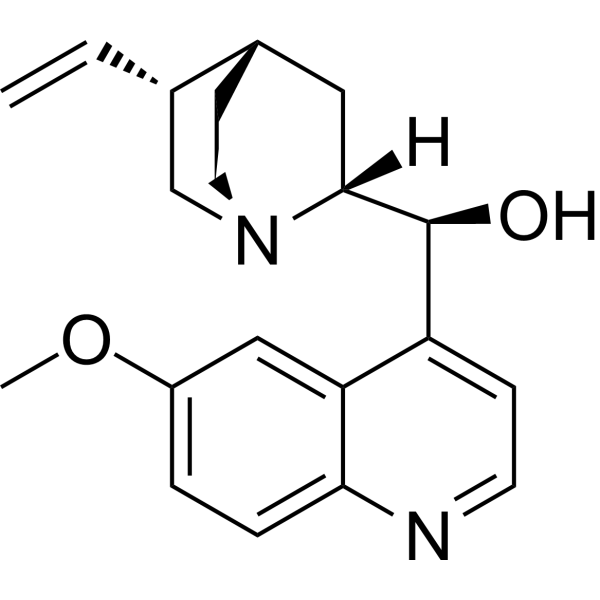
    Quinidine hydrochloride monohydrate is an orally active antiarrhythmic agent. Quinidine hydrochloride monohydrate reduces the expression level of P-gp, inhibits P-gp-mediated efflux, increases the intracellular accumulation of P-gp substrates, induces PARP cleavage and Caspase-3 activation, and elevates the proportion of Apoptotic cells at the sub-G1 phase. Quinidine hydrochloride monohydrate exerts sustained block and open-channel block effects on IK(f). Quinidine hydrochloride monohydrate alters the urinary metabolic ratio of Amphetamine, modulates the Pentylenetetrazol-induced seizure threshold, and regulates the anticonvulsant effect of Dextromethorphan. Quinidine hydrochloride monohydrate can be used in studies related to uterine sarcoma and seizures .
    Quinidine hydrochloride monohydrate
  • HY-17624A
    Framycetin sulfate
    1 Publications Verification

    Neomycin B sulfate; Fradiomycin B sulfate

    Antibiotic Bacterial Infection
    Framycetin sulfate (Neomycin B sulfate), an aminoglycoside antibiotic, is a potent RNase P cleavage activity inhibitor with a Ki of 35 μM. Framycetin sulfate competes for specific divalent metal ion binding sites in RNase P RNA. Framycetin sulfate inhibits hammerhead ribozyme with a Ki of 13.5 μM. Framycetin sulfate, a 5″-azido neomycin B precursor, binds the Drosha site in miR-525 and is used for hepatic encephalopathy and enteropathogenic E. coli infections .
    Framycetin sulfate
  • HY-B0237

    DL-Aminoglutethimide

    Cytochrome P450 Neurological Disease Endocrinology Cancer
    Aminoglutethimide (DL-Aminoglutethimide) is an orally active anticonvulsant with various endocrine-related side effects. Aminoglutethimide blocks multiple steroid hormone synthesis pathways by inhibiting several cytochrome P-450-dependent hydroxylases, such as aromatase, cholesterol side-chain cleavage enzyme, 11-hydroxylase, and 18-hydroxylase, with IC50 values of 0.3, 3.5, 120, and 20 μM, respectively. Aminoglutethimide reduces cortisol levels. Aminoglutethimide can be used in research on Cushing's syndrome, breast cancer, and other conditions .
    Aminoglutethimide
  • HY-P1883A

    Fluorescent Dye Infection
    Bacterial Sortase Substrate III, Abz/DNP TFA is a fluorescent peptide substrate. Bacterial Sortase Substrate III, Abz/DNP TFA undergoes cleavage catalyzed by Staphylococcus aureus sortase A (SrtAΔN24) and Streptococcus pyogenes sortase A (SrtAΔN81), and catalyzes the formation of an amide bond between the carboxyl group of threonine and the amino group of the cell wall cross-bridge. Cleavage of this substrate can be detected at Ex/Em=320 nm/420 nm .
    Bacterial Sortase Substrate III, Abz/DNP TFA
  • HY-155583

    DNA/RNA Synthesis Others
    RNase L-IN-1 is a RNase L inhibitor with an IC50 of 15.9 μM. RNase L-IN-1 binds to the ATP-binding pocket of RNase L, and inhibits ribosomal RNA cleavage. RNase L-IN-1 can be used for the research of RNase L-associated cellular processes .
    RNase L-IN-1
  • HY-P2929A
    PNGase F-Fast
    1 Publications Verification

    Glycosidase Cancer
    PNGase F-Fast is a glycosidase that catalyzes the cleavage of internal glycosidic bonds in oligosaccharides. PNGase F-Fast removes almost all N-linked oligosaccharides from glycoproteins. PNGase F-Fast can release N-glycans from glycoproteins in the sugar analysis workflow. The cleavage site is: the glycosidic bond between the innermost N-acetylglucosamine and asparagine. PNGase F-Fast is an improved reagent that allows for rapid deglycosylation of antibodies and antibody fusions within minutes .
    PNGase F-Fast
  • HY-N2993

    Apoptosis Caspase PARP Akt PTEN MDM-2/p53 JNK Cancer
    Polyporenic acid C is a lanostane-type triterpenoid. Polyporenic acid C can be isolated from Poria cocos. Polyporenic acid C causes the cleavage of caspase-8 and caspase-3, as well as the cleavage of PARP. Polyporenic acid C reduces the phosphorylation level of Akt (Ser473), increases the phosphorylation of PTEN and p53 (Ser15), and activates JNK. Polyporenic acid C induces Apoptosis. Polyporenic acid C shows anticancer activity against non-small cell lung cancer .
    Polyporenic acid C
  • HY-N8245

    Guanosine 2',3'-cyclic monophosphate sodium salt

    Drug Intermediate Others
    2',3'-cGMP sodium, a cGMP analogue, is an intermediate of RNA catalytic cleavage by binase .
    2',3'-cGMP sodium
  • HY-19024

    NSC 336628

    Topoisomerase Cancer
    Merbarone (NSC 336628) is an orally active inhibitor of topoisomerase II. Merbarone acts primarily by blocking topoisomerase II-mediated DNA cleavage without stabilizing topo II-DNA covalent complexes. Merbarone is an anticancer agent .
    Merbarone
  • HY-107639

    MMP Inflammation/Immunology
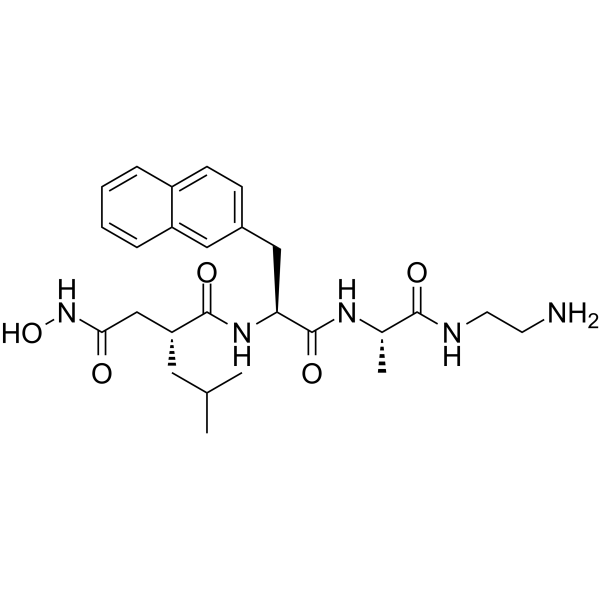
    UK-370106 is a potent and highly selective MMP-3 (IC50 of 23 nM) and MMP-12 (IC50 of 42 nM) inhibitor with >1200-fold higher potency than MMP-1, MMP-2, MMP-9, and MMP-14, and about 100-fold than MMP-13 and MMP-8. UK-370106 potently inhibits cleavage of [ 3H]-fibronectin by MMP-3 (IC50 of 320 nM) and has little effect on keratinocyte migration in vitro .
    UK-370106
  • HY-100951
    Beaucage reagent
    1 Publications Verification

    DNA/RNA Synthesis Cancer
    Beaucage reagent is found to be potent in causing DNA cleavage .
    Beaucage reagent
  • HY-136251

    Bacterial Infection
    BRD0539 is a Streptococcus pyogenes Cas9 (SpCas9) inhibitor with an IC50 of 22 μM in an in vitro DNA cleavage assay .
    BRD0539
  • HY-128153
    Thienopyridone
    1 Publications Verification

    Phosphatase Apoptosis Cancer
    Thienopyridone is a potent and selective phosphatase of regenerating liver (PRL) phosphatase inhibitor with IC50s of 173 nM, 277 nM and 128 nM for PRL-1, PRL-2, and PRL-3, respectively. Thienopyridone shows minimal effects on other phosphatases. Thienopyridone induces p130Cas cleavage and apoptosis and has anticancer effects .
    Thienopyridone
  • HY-111329
    JGB1741
    1 Publications Verification

    ILS-JGB-1741

    Sirtuin Apoptosis Cancer
    JGB1741 (ILS-JGB-1741) is a potent and specific SIRT1 activity inhibitor with an IC50 of ∼15 μM. JGB1741 is a weak SIRT2 and SIRT3 inhibitor with an all IC50>100 μM. JGB1741 increases the acetylated p53 levels leading to p53-mediated apoptosis with modulation of Bax/Bcl2 ratio, cytochrome c release and PARP cleavage. JGB1741 has the potential for breast cancer research .
    JGB1741
  • HY-18350

    LMP776

    Topoisomerase Cancer
    Indimitecan (LMP776) is a topoisomerase I (Top1) inhibitor with anticancer activities .
    Indimitecan
  • HY-P1878

    Insulin Receptor Metabolic Disease
    Proinsulin C-Peptide (55-89), human is a peptide fragment of the cleavage product of proinsulin .
    Proinsulin C-Peptide (55-89), human
  • HY-13618

    J 107088; PF 804950

    Topoisomerase Cancer
    Edotecarin is a potent inhibitor of topoisomerase I that can induces single-strand DNA cleavage, with IC50 of 50 nM.
    Edotecarin
  • HY-E70115

    Others Others
    Feruloyl esterase plays a major role in the degradation of plant biomass. Feruloyl esterase catalyzes the cleavage and formation of ester bonds between plant cell wall polysaccharide and phenolic acid .
    Feruloyl esterase
  • HY-W012017

    Enterovirus Infection
    2-Hydroxytetradecanoic acid is a hydroxy fatty acid that inhibits cleavage between the enterovirus capsid proteins VP4 and VP2. 2-Hydroxytetradecanoic Acid has anti-virus activity .
    2-Hydroxytetradecanoic acid
  • HY-N8245R

    Guanosine 2',3'-cyclic monophosphate sodium salt (Standard)

    Drug Intermediate Reference Standards Others
    2',3'-cGMP sodium, a cGMP analogue, is an intermediate of RNA catalytic cleavage by binase .
    2',3'-cGMP sodium (Standard)
  • HY-126488

    Endogenous Metabolite Metabolic Disease
    H-Ser-His-OH is a short peptide with hydrolysis cleavage activity, an endogenous metabolite .
    H-Ser-His-OH
  • HY-D1685

    Fluorescent Dye Others
    BZiPAR is a fluorescent probe. BZiPAR also is a substrate of trypsin that becomes fluorescent after cleavage by the protease .
    BZiPAR
  • HY-E70042

    Endogenous Metabolite Metabolic Disease
    Nucleoside hydrolase (IAGNH) is a glycosidase. Nucleoside hydrolase (IAGNH) catalyzes the cleavage of the N-glycosidic bond in nucleosides to enable the recycling of the nucleobases and Rib .
    Nucleoside hydrolase (IAGNH)
  • HY-W007926R

    2-Ketobutyrate (Standard)

    Reference Standards Endogenous Metabolite Others
    2-Oxobutanoic acid (Standard) is the analytical standard of 2-Oxobutanoic acid. This product is intended for research and analytical applications. 2-Oxobutanoic acid is a product in the enzymatic cleavage of cystathionine.
    2-Oxobutanoic acid (Standard)
  • HY-P3934

    HIV Protease Infection
    HIV Protease Substrate I is a chromogenic substrate of HIV-1 protease. HIV Protease Substrate I has the cleavage site of HIV protease .
    HIV Protease Substrate I
  • HY-W341421

    Biochemical Assay Reagents Others
    3-Indoxyl butyrate is a chromogenic substrate for CES (carboxylesterase), producing a blue precipitate upon cleavage.
    3-Indoxyl butyrate
  • HY-P2874

    Aminopeptidase Others
    Prolidase is a metallo-dependent hydrolase. Prolidase is a metal-dependent peptidase specialized in the cleavage of dipeptides containing proline or hydroxyproline on their C-termini .
    Prolidase
  • HY-19296

    2-Bromo-5,6-dichloro-1-β-D-ribofuranosyl benzimidazole

    CMV Infection
    BDCRB is a selective Human cytomegalovirus (HCMV) inhibitor through blocking the maturational cleavage of high-molecular-weight DNA. BDCRB shows a mean IC50 of 0.03 μM for viral yield at 72 h postinfection .
    BDCRB
  • HY-P3733

    Endothelin Receptor Cardiovascular Disease
    Big Endothelin-1 (22-38), human is derived from human, is the 22-38 fragment of Big Endothelin-1 (ET-1) (1-38). Big ET-1 (1-38) is a propeptide of ET-1, which has potent and long-lasting vasoconstrictor effects, equips a specific enzymatic cleavage of the 38 amino acid chain to form ET-1 (1-21) and the C-terminal fragment Big ET-1 (22-38) .
    Big Endothelin-1 (22-38), human
  • HY-101597

    Apoptosis Cancer
    NVX-207, a Betulinic acid-derived anti-cancer compound, shows anti-tumor activity (mean IC50=3.5 μM) against various human and canine cell lines. NVX-207-induced apoptosis is associated with activation of the intrinsic apoptotic pathway via cleavage of caspases -9, -3, -7 and of PARP .
    NVX-207
  • HY-W001974

    DNA/RNA Synthesis Bacterial Others
    7-Nitroindole is a cleavable base analog and Antibacterial agent. 7-Nitroindole inhibits the growth of Lactobacillus arabinosus. 7-Nitroindole is used in studies of light-controlled DNA cleavage and Lactobacillus arabinosus infection .
    7-Nitroindole
  • HY-P4724

    Drug Derivative Metabolic Disease
    (β-Asp28)-Exenatide is a potential degradation product of exenatide produced by the formation and cleavage of asparagine.
    (β-Asp28)-Exenatide
  • HY-P3632

    DADAD

    Opioid Receptor Neurological Disease Metabolic Disease
    [DAla2, DArg6] Dynorphin A, (1-13) (porcine) (DADAD) is an opioid peptide (dynorphinl-13, DYN) derivative found in porcine pituitary extracts. DYN is highly potent at the peripheral opioid receptors GPI and MVD, but is readily and rapidly degraded in vivo. [DAla2, DArg6] Dynorphin A, (1-13) (porcine) has some resistance to enzymatic cleavage and prevents peptide cleavage by enzymes .
    [DAla2, DArg6] Dynorphin A, (1-13) (porcine)
  • HY-P1883

    Fluorescent Dye Infection
    Bacterial Sortase Substrate III, Abz/DNP is a fluorescent peptide substrate. Bacterial Sortase Substrate III, Abz/DNP undergoes cleavage catalyzed by Staphylococcus aureus sortase A (SrtAΔN24) and Streptococcus pyogenes sortase A (SrtAΔN81), and catalyzes the formation of an amide bond between the carboxyl group of threonine and the amino group of the cell wall cross-bridge. Cleavage of this substrate can be detected at Ex/Em=320 nm/420 nm .
    Bacterial Sortase Substrate III, Abz/DNP
  • HY-P2842

    Biochemical Assay Reagents Others Cancer
    Aminopeptidase catalyzes the cleavage of amino acids from the amino terminus of protein or peptide substrates .
    Aminopeptidase
  • HY-N7569

    Apoptosis Caspase PPAR Cancer
    Demethoxyfumitremorgin C is a secondary metabolite of the marine fungus, Aspergillus fumigatus. Demethoxyfumitremorgin C induces prostate cancer cell apoptosis. Demethoxyfumitremorgin C activates caspase-3, -8, and -9, leading to PARP/ cleavage .
    Demethoxyfumitremorgin C
  • HY-163738

    Furin SARS-CoV Infection
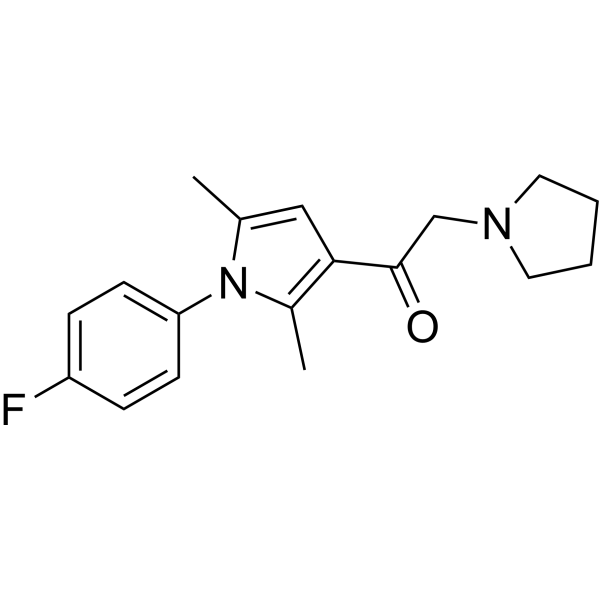
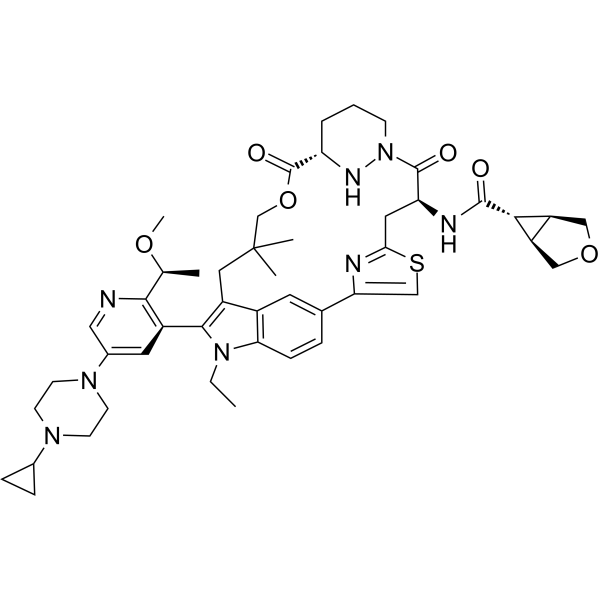
    Furin-IN-2 (compound P3) is a potent inhibitor of furin, with the IC50 of 35 μM. Furin-IN-2 shows antiviral activity .
    Furin-IN-2
  • HY-103538

    Amyloid-β Neurological Disease
    JLK-6 markedly reduce the production of amyloid β-peptide (Aβ) by amyloid-β Precursor protein (APP) expressing HEK293 cells by affecting the γ-secretase cleavage of APP, with no effect on the cleavage of the Notch receptor .
    JLK-6
  • HY-16244

    Fatty Acid Synthase (FASN) Metabolic Disease Endocrinology
    GW-300 is a SREBP cleavage-activating protein (SCAP) ligand that can be used for the study of endocrinology and metabolic disease.
    GW-300
  • HY-P5830

    Caspase Others
    Biotin-DEVD-CHO can be used for affinity labeling of Caspase-8 following in vitro caspase cleavage .
    Biotin-DEVD-CHO
  • HY-178099

    Apoptosis Caspase PARP Bcl-2 Family Cancer
    Apoptosis inducer 45 is an apoptosis inducer. Apoptosis inducer 45 is cytotoxically active against the MCF-7 cell line. Apoptosis inducer 45 elicits MCF-7 cell apoptosis via the mitochondrial pathway (increases the Bax/Bcl-2 ratio) by activating cleavage of caspase-9, thereby inducing the fragmentation of DNA repair protein PARP. Apoptosis inducer 45 also can induce caspase-8 cleavage, subsequently initiating cleavage of caspase-3 and its downstream protein PARP to culminate in the extrinsic apoptosis. Apoptosis inducer 45 can be used in the research of breast cancer .
    Apoptosis inducer 45
  • HY-P11325

    Cathepsin Fluorescent Dye Others
    Ac-RR-AFC TFA is a Cathepsin B fluorogenic substrate (Ex=400 nm, Em=505 nm). Cathepsin B activity in cells lysates is determined by measuring cleavage of Ac-RR-AFC TFA and its cleavage occurs at the RR-AFC amide bond. Ac-RR-AFC TFA can be used for activity assays and mechanistic studies on cathepsin B .
    Ac-RR-AFC TFA

Inquiry Online

Your information is safe with us. * Required Fields.

Salutation


Country or Region *

Applicant Name *


Organization Name *

Department *


Email Address *


Product Name *

Cat. No.


Requested quantity *

Phone Number *


Remarks

Inquiry Online

Inquiry Information

Product Name:
Cat. No.:
Quantity:
MCE Japan Authorized Agent:

