

1. Search Result
Search Result
Pathways Recommended: GPCR/G Protein
Results for "

Gαi

" in MedChemExpress (MCE) Product Catalog:

20

Inhibitors & Agonists

7

Peptides

1

Inhibitory Antibodies

1

Natural
Products

1

Isotope-Labeled Compounds

1

Oligonucleotides

Art. -Nr. Produktname Target Forschungsgebiete Chemical Structure
  • HY-P0172
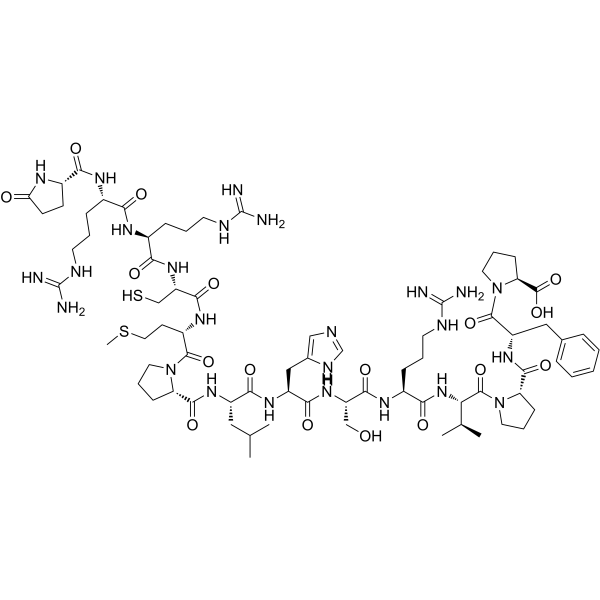
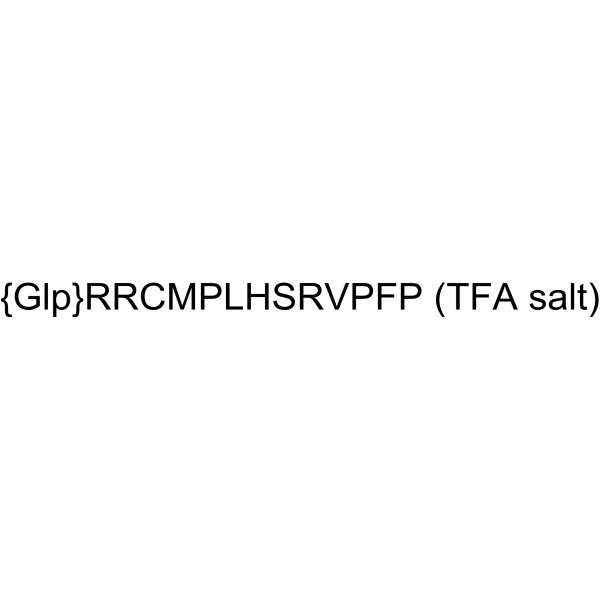
    ATI-2341
    4 Publications Verification

    CXCR Inflammation/Immunology Endocrinology Cancer
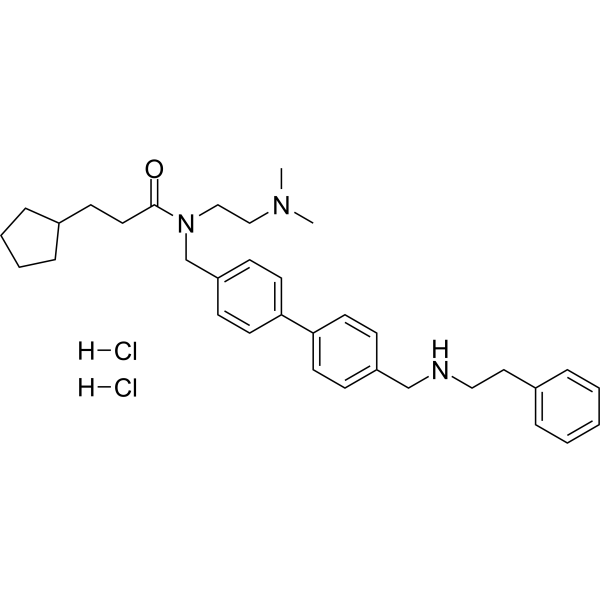
    ATI-2341 is a potent and functionally selective allosteric agonist of C-X-C chemokine receptor type 4 (CXCR4), which functions as a biased ligand, favoring Gαi activation over Gα13. ATI-2341 activates the inhibitory heterotrimeric G protein (Gi) to promote inhibition of cAMP production and induce calcium mobilization. ATI-2341 is a potent and efficacious mobilizer of bone marrow polymorphonuclear neutrophils (PMNs) and hematopoietic stem and progenitor cells (HSPCs) .
    ATI-2341
  • HY-W140439

    18:1 Lyso PC

    Endogenous Metabolite Inflammation/Immunology
    1-Oleoyl-sn-glycero-3-phosphocholine (18:1 Lyso PC), a lysophospholipid, is a GPR82 inhibitor. 1-Oleoyl-sn-glycero-3-phosphocholine abrogates constitutive Gi-coupled GPR82 activity, shifts active/inactive equilibrium to inactive, suppresses Gi protein activation, increases cAMP production, and decreases GTPγS binding to Gαi proteins. 1-Oleoyl-sn-glycero-3-phosphocholine contributes to adipocyte lipolysis regulation.1-Oleoyl-sn-glycero-3-phosphocholine exhibits reduced serum levels in mouse models of steatohepatitis, linked to hepatic Lpcat 1-4 up-regulation .
    1-Oleoyl-sn-glycero-3-phosphocholine
  • HY-P0172A
    ATI-2341 TFA
    4 Publications Verification

    CXCR Inflammation/Immunology Endocrinology Cancer
    ATI-2341 is a potent and functionally selective allosteric agonist of C-X-C chemokine receptor type 4 (CXCR4), which functions as a biased ligand, favoring Gαi activation over Gα13. ATI-2341 activates the inhibitory heterotrimeric G protein (Gi) to promote inhibition of cAMP production and induce calcium mobilization. ATI-2341 is a potent and efficacious mobilizer of bone marrow polymorphonuclear neutrophils (PMNs) and hematopoietic stem and progenitor cells (HSPCs) .
    ATI-2341 TFA
  • HY-P2106
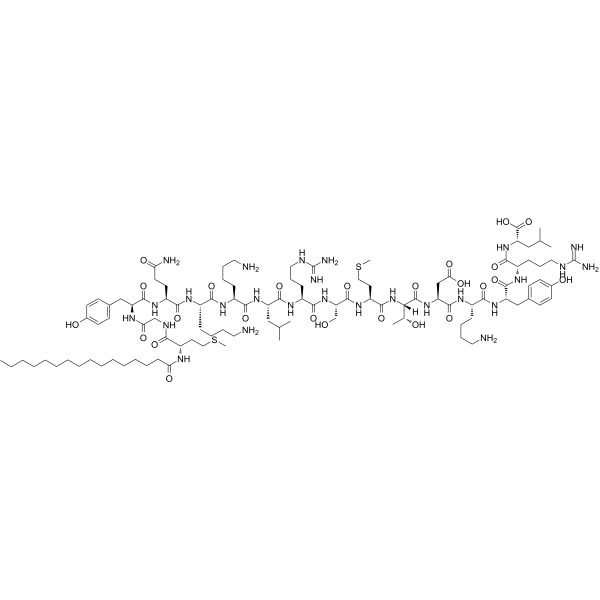
    Elabela(19-32)
    Maximum Cited Publications
    6 Publications Verification

    Arrestin Apelin Receptor (APJ) Cardiovascular Disease
    Elabela(19-32) is an active fragment of ELABELA (ELA) that binds to apelin receptor (APJ). Elabela(19-32) activates the Gαi1 and β-arrestin-2 signaling pathways with EC50s of 8.6 nM and 166 nM. Elabela(19-32) induces receptor internalization and reduces arterial pressure, exerts positive inotropic effects on the heart .
    Elabela(19-32)
  • HY-103100
    SB-699551
    1 Publications Verification

    5-HT Receptor Epigenetic Reader Domain Akt Ribosomal S6 Kinase (RSK) FOXO Neurological Disease Metabolic Disease Inflammation/Immunology Cancer
    SB-699551 is a selective and brain penetrant 5-HT5A receptor antagonist with a pKi of 8.2 nM. SB-699551 shows high selectivity over most other 5-HT receptor subtypes, dopamine receptors, and α1B adrenoceptor. SB-699551 disrupts Gαi/o-coupled and PI3K/AKT/mTOR signaling pathways, alters CREB, ATF1, AKT, PRAS40, S6K, and FOXO1 phosphorylation in breast tumor cells. SB-699551 can be used for the research of anxiety, breast cancer, and Alzheimer's disease .
    SB-699551
  • HY-171978A

    Adrenergic Receptor Cardiovascular Disease
    LM-189 free base, a G protein alpha subunit I (Gαi)-biased agonist, is a Gαi-biased ligand of β2-adrenergic receptor (β2AR). LM-189 free base stabilizes a distinct conformation in TM6 and increases the dynamics of ICL2. LM-189 free base can be used to develop the Gαi-biased β2AR agonists .
    LM-189 free base
  • HY-171978

    Adrenergic Receptor Cardiovascular Disease
    LM-189 is a β2-adrenergic receptor (β2AR) ligand and G protein-biased modulator with a human β2AR Ki of 0.063 nM.LM-189 promotes β2AR coupling to Gαs and Gαi heterotrimers, stabilizes distinct β2AR conformations including a TM6 outward state, and increases β2AR ICL2 dynamics.LM-189 restricts β2AR ligand-binding pocket conformational heterogeneity, stabilizes polar ligand-receptor interaction networks, and exhibits bias toward Gαi signaling over Gαs signaling.LM-189 enabled cryo-EM structural characterization of the β2AR-Gi complex.LM-189 can be used for the research of congestive heart failure .
    LM-189
  • HY-153830

    C16 Lactosylceramide (d18:1/16:0)

    Endogenous Metabolite Neurological Disease Metabolic Disease
    LacCer (d18:1/16:0) (C16 Lactosylceramide (d18:1/16:0)) is an endogenous bioactive sphingolipid that can form membrane microdomains with Lyn kinase and the αi subunits of inhibitory G protein-coupled receptors (GPCRs). The levels of LacCer (d18:1/16:0) are elevated in the plasma of insulin-resistant cattle. In a mouse model of Niemann-Pick type C1 disease (a neurodegenerative cholesterol-sphingolipid lysosomal storage disorder), the expression of LacCer (d18:1/16:0) is also upregulated. LacCer (d18:1/16:0) can be used in research on metabolic diseases and neurodegenerative diseases .
    LacCer (d18:1/16:0)
  • HY-P2106A
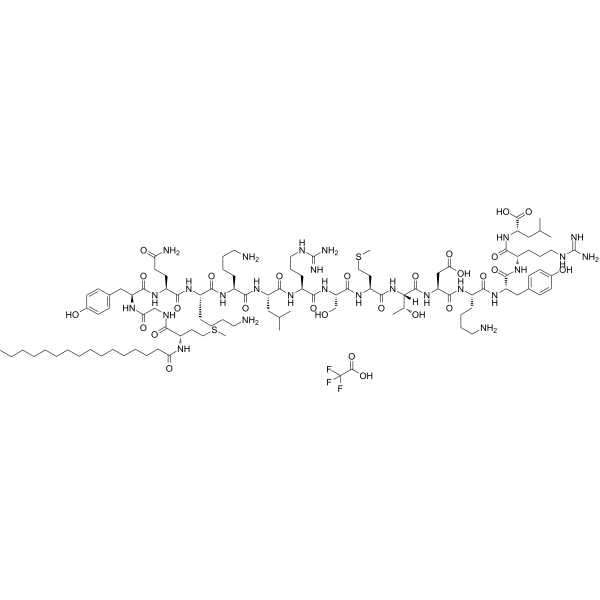
    Elabela(19-32) TFA
    Maximum Cited Publications
    6 Publications Verification

    Apelin Receptor (APJ) Arrestin Cardiovascular Disease
    Elabela(19-32) TFA is an active fragment of ELABELA (ELA) that binds to apelin receptor (APJ). Elabela(19-32) TFA activates the Gαi1 and β-arrestin-2 signaling pathways with EC50s of 8.6 nM and 166 nM. Elabela(19-32) TFA induces receptor internalization and reduces arterial pressure, exerts positive inotropic effects on the heart .
    Elabela(19-32) TFA
  • HY-102076

    Adrenergic Receptor Others
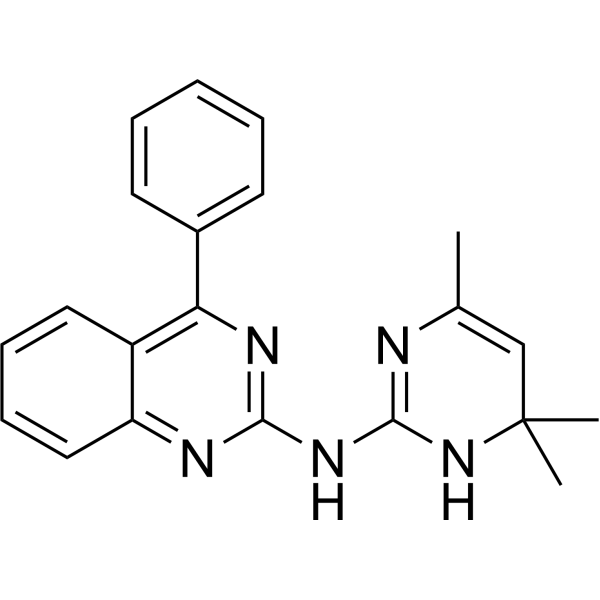
    0990CL is a specific heterotrimeric Gαi subunit inhibitor by direct interaction with Gαi. 0990CL is able to block α2AR mediated regulation of cAMP .
    0990CL
  • HY-176780

    Others Cancer
    Gαi2-IN-1 (Compound 14) is a Gαi2 inhibitor. Gαi2-IN-1 significantly inhibits cancer cells migration induced by the chemotherapeutic drug, such as Vorinostat (HY-10221) and Docetaxel (HY-B0011). Gαi2-IN-1 can be used for cancers like prostate, breast and ovarian cancer research .
    Gαi2-IN-1
  • HY-P3346

    Apelin Receptor (APJ) Cardiovascular Disease
    NH2-c[X-R-L-S-X]-K-G-P-(D-1Nal) (compound 39) is a potent APJ agonist, with a Ki of 0.6 nM. NH2-c[X-R-L-S-X]-K-G-P-(D-1Nal) can activate Gαi1 (EC50=0.8 nM) and recruit β-arrestin2 (EC50=31 nM). NH2-c[X-R-L-S-X]-K-G-P-(D-1Nal) exhibits prolonged cardiac effects .
    NH2-c[X-R-L-S-X]-K-G-P-(D-1Nal)
  • HY-153830S

    C16 Lactosylceramide (d18:1/16:0)-d3

    Isotope-Labeled Compounds Endogenous Metabolite Neurological Disease Metabolic Disease
    LacCer (d18:1/16:0) (C16 Lactosylceramide (d18:1/16:0))-d3 is the deuterium labeled LacCer (d18:1/16:0) (HY-153830). LacCer (d18:1/16:0) is an endogenous bioactive sphingolipid that can form membrane microdomains with Lyn kinase and the αi subunits of inhibitory G protein-coupled receptors (GPCRs). LacCer (d18:1/16:0) are elevated in the plasma of insulin-resistant cattle. LacCer (d18:1/16:0) is also upregulated in a mouse model of Niemann-Pick type C1 disease (a neurodegenerative cholesterol-sphingolipid lysosomal storage disorder). LacCer (d18:1/16:0) can be used in research on metabolic diseases and neurodegenerative diseases .
    LacCer (d18:1/16:0)-d3
  • HY-P11140

    Bacterial Reactive Oxygen Species (ROS) Infection Inflammation/Immunology
    KSL-W is a multifunctional antibacterial peptide with immune regulatory function. KSL-W has a chemotactic effect on neutrophils. KSL-W can induce neutrophil F-actin polymerization dependent on the Gαi protein signaling pathway. KSL-W can inhibit the production of reactive oxygen species (ROS) in neutrophils. KSL-W can be used for research on infection control and inflammation regulation .
    KSL-W
  • HY-153162A

    Dopamine Receptor Neurological Disease
    (-)-IHCH7041 (Compound (-)-(S)-I-10) is a selective and orally active dopamine D2 receptor agonist with a Ki of 22.44 nM. (-)-IHCH7041 can activate Gαi1 protein and β-arrestin2 signaling pathway with EC50 values of 1.38 and 2.75 nM. (-)-IHCH7041 can improve cognitive impairment and memory capacity. (-)-IHCH7041 can be used for the research of neurological disease, such as Alzheimer's disease .
    (-)-IHCH7041
  • HY-102076R

    Adrenergic Receptor Reference Standards Others
    0990CL (Standard) is the analytical standard of 0990CL (HY-102076). This product is intended for research and analytical applications. 0990CL is a specific heterotrimeric Gαi subunit inhibitor by direct interaction with Gαi. 0990CL is able to block α2AR mediated regulation of cAMP .
    0990CL (Standard)
  • HY-182774

    CXCR Cancer
    YU241279 is an orally active CXCR5 inhibitor. YU241279 inhibits CXCL13-mediated Gαq-dependent calcium influx and Gαi2-dependent cAMP reduction in CXCR5-expressing cells. YU241279 inhibits the proliferation of CXCR5-expressing lymphoma cells. YU241279 reduces tumor burden in the peripheral blood and bone marrow of mice implanted with lymphoma tissues. YU241279 is well tolerated during oral administration in mice, maintains stable plasma drug concentrations, and shows no metabolic changes. YU241279 can be used in the research of angioimmunoblastic T-cell lymphoma and Burkitt B-cell lymphoma .
    YU241279
  • HY-P991964

    Rendomab-B49

    Endothelin Receptor Cancer
    Rendomab B4 (Rendomab-B49) is a monoclonal antibody targeting ETB. Rendomab B4 preferentially binds to ETB in the active conformational state and exhibits selectivity for ETB on melanoma cells. Rendomab B4 inhibits the G protein-dependent phospholipase C (PLC) pathway, blocks ET-3-induced Gαi/o-mediated inhibition of adenylate cyclase, and does not affect the activation of the ERK1/2 pathway. Rendomab B4 is applicable to melanoma-related research .
    Rendomab B4
  • HY-181822

    Formyl Peptide Receptor (FPR) Arrestin PKA Interleukin Related Cardiovascular Disease
    BMS-986331 is an orally active selective N-Formyl Peptide Receptor 2 (FPR2) agonist with an EC50 of 0.5 nM in humans and 1 nM in rats. BMS-986331 activates Gαi2, GαoA, Gα12, Gα13 signaling pathways, recruits β-arrestin1 and β-arrestin2, and inhibits downstream cAMP. BMS-986331 induces the expression and release of the pro-resolution cytokine IL-10. BMS-986331 improves cardiac structure and function in a rat model of heart failure induced by permanent coronary artery occlusion. BMS-986331 can be used for the research of heart failure .
    BMS-986331
  • HY-136700

    5-HT Receptor Akt Neurological Disease Cancer
    SB-699551 free base is a selective and brain penetrant 5-HT5A receptor antagonist with a pKi of 8.2 nM. SB-699551 free base shows high selectivity over most other 5-HT receptor subtypes, dopamine receptors, and α1B adrenoceptor. SB-699551 free base disrupts Gαi/o-coupled and PI3K/AKT/mTOR signaling pathways, alters CREB, ATF1, AKT, PRAS40, S6K, and FOXO1 phosphorylation in breast tumor cells. SB-699551 free base can be used for the research of anxiety, breast cancer, and Alzheimer's disease .
    SB-699551 free base

Online-Anfrage

Your information is safe with us. * Required Fields.

Anrede


Country or Region *

Name des Antragstellers *


Name der Organisation *

Department *


E-Mail-Addresse *


Produktname *

Art. -Nr.


Requested quantity *

Telefonnummer *


Bemerkungen

Online-Anfrage

Inquiry Information

Produktname:
Art. -Nr.:
Menge:
MCE Japan Authorized Agent:

