1. Search Result
Search Result
Results for "

HEI-OC1

" in MedChemExpress (MCE) Product Catalog:

7

Inhibitors & Agonists

2

Biochemical Assay Reagents

4

Natural
Products

Cat. No. Product Name Target Research Areas Chemical Structure
  • HY-131553
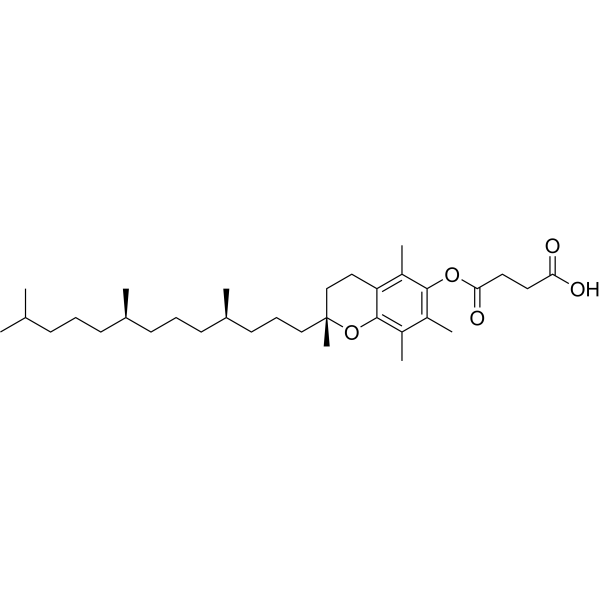
    D-α-Tocopherol Succinate
    3 Publications Verification

    Vitamin E succinate

    Apoptosis Cancer
    D-α-Tocopherol Succinate (Vitamin E succinate) is an antioxidant tocopherol and a salt form of vitamin E. D-α-Tocopherol Succinate inhibits Cisplatin (HY-17394)-induced cytotoxicity. D-α-Tocopherol Succinate can be used for the research of cancer [1] .
    D-α-Tocopherol Succinate
  • HY-N0657
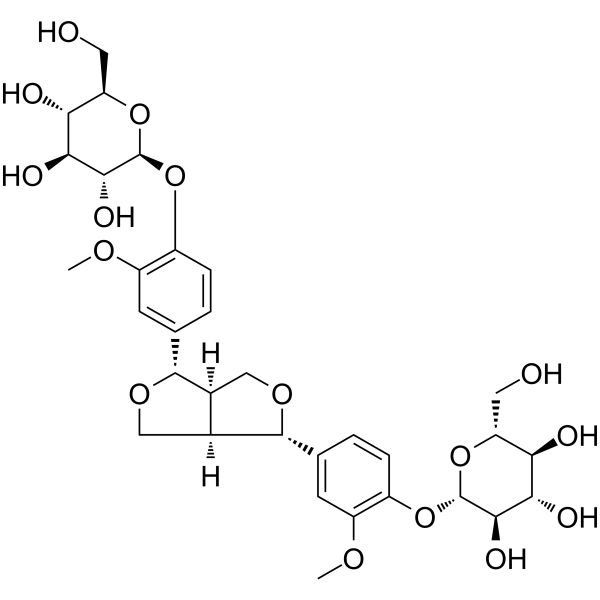
    Pinoresinol Diglucoside
    1 Publications Verification

    NF-κB Keap1-Nrf2 Heme Oxygenase (HO) TGF-beta/Smad Akt mTOR PI3K Cardiovascular Disease Neurological Disease Metabolic Disease Inflammation/Immunology
    Pinoresinol Diglucoside is an orally active lignan with multifunctional bioactivity. Pinoresinol Diglucoside interacts with targets including ALB, HIF1A, GSK3B, BCL2, MARK3, IL6, NF-κB p65, Nrf2, HO-1, and TLR4, and modulates pathways including PI3K-Akt, estrogen, MAPK, Rap1, AKT/mTOR/NF-κB, and TGF-β1/Smads. Pinoresinol Diglucoside regulates osteogenesis, bone resorption, oxidative stress, inflammation, apoptosis, ferroptosis, ferritinophagy, cardiac fibrosis, and vasorelaxation. Pinoresinol Diglucoside can be used for the research of osteoporosis, ischemia/reperfusion-induced brain injury, Alzheimer’s disease, myocardial ischemia-reperfusion injury, chondrodysplasia, diabetic cardiomyopathy, cardiac hypertrophy, hypertension, cisplatin-induced hearing loss, atherosclerotic cardiovascular diseases, and disuse osteoporosis [1] .
    Pinoresinol Diglucoside
  • HY-N4102

    Apoptosis JNK FOXO Reactive Oxygen Species (ROS) Caspase Neurological Disease
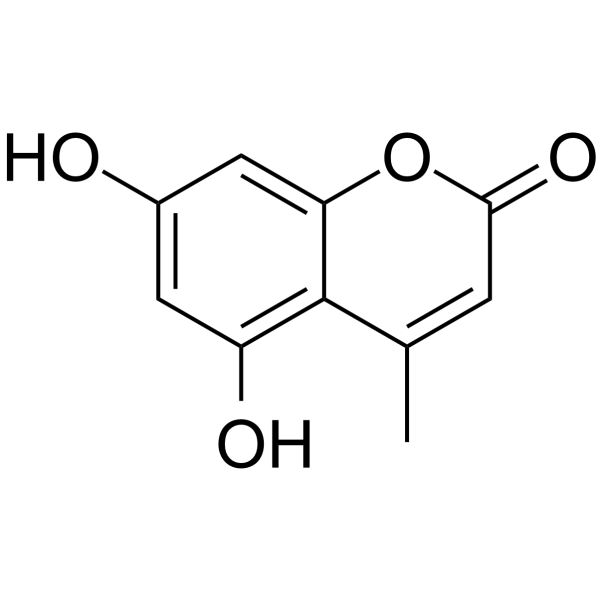
    5,7-Dihydroxy-4-methylcoumarin is an antioxidant. 5,7-Dihydroxy-4-methylcoumarin protects mouse cochlear hair cells from Cisplatin-induced damage, enhances cell viability and inhibits apoptosis. 5,7-Dihydroxy-4-methylcoumarin downregulates phosphorylated JNK levels, increases the ratio of phosphorylated FoxO1 to total FoxO1, scavenges free radicals, reduces ROS accumulation, maintains mitochondrial membrane potential and alleviates mitochondrial dysfunction. 5,7-Dihydroxy-4-methylcoumarin downregulates the expression of caspase-3 and improves cell viability. 5,7-Dihydroxy-4-methylcoumarin can be used in studies related to ototoxicity [1] .
    5,7-Dihydroxy-4-methylcoumarin
  • HY-N3138

    Bacterial Apoptosis Reactive Oxygen Species (ROS) ERK JNK Caspase SOD Fungal Infection Neurological Disease
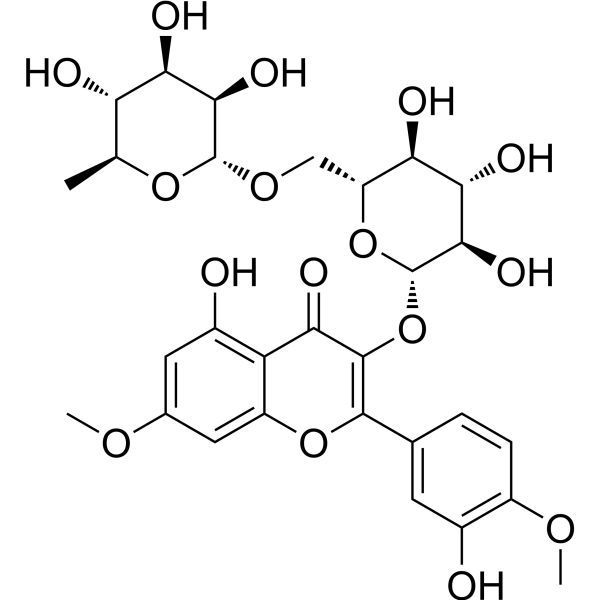
    Ombuoside has antioxidant properties, inhibiting ROS production and apoptosis. Ombuoside exerts neuroprotective effects through the ERK-JNK-caspase-3 system. Ombuoside promotes Dopamine biosynthesis through TH and CREB activation. Ombuoside exhibits antimicrobial activity against several Gram-positive and Gram-negative bacteria, as well as Candida albicans [1]
    Ombuoside
  • HY-142088

    Endogenous Metabolite Metabolic Disease
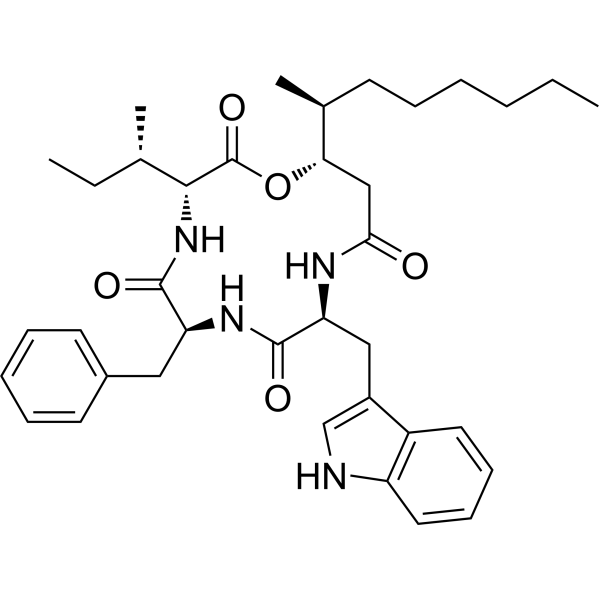
    Beauverolide Ka, a cyclotetradepsipeptide, is a metabolite of Beauveria bassiana fungus. Beauverolide Ka stimulates glucose uptake in cultured rat L6 myoblasts at 50 μM. Beauverolide Ka exhibits protecting effects on HEI-OC1 cells at 10 μM and shows dose-dependent activity in both L6 myoblasts and myotubes [1] .
    Beauverolide Ka
  • HY-W721480

    TRP Channel Neurological Disease
    HC-067047 hydrochloride is a potent and selective TRPV4 antagonist and reversibly inhibits currents through the human, rat, and mouse TRPV4 orthologs with IC50 values of 48 nM, 133 nM, and 17 nM, respectively [1].
    HC-067047 hydrochloride
  • HY-131553R

    Vitamin E succinate (Standard)

    Reference Standards Apoptosis Cancer
    D-α-Tocopherol Succinate (Standard) is the analytical standard of D-α-Tocopherol Succinate. This product is intended for research and analytical applications. D-α-Tocopherol Succinate (Vitamin E succinate) is an antioxidant tocopherol and a salt form of vitamin E. D-α-Tocopherol Succinate inhibits Cisplatin (HY-17394)-induced cytotoxicity. D-α-Tocopherol Succinate can be used for the research of cancer [1] .
    D-α-Tocopherol Succinate (Standard)

Inquiry Online

Your information is safe with us. * Required Fields.

Salutation


Country or Region *

Applicant Name *


Organization Name *

Department *


Email Address *


Product Name *

Cat. No.


Requested quantity *

Phone Number *


Remarks

Inquiry Online

Inquiry Information

Product Name:
Cat. No.:
Quantity:
MCE Japan Authorized Agent:

