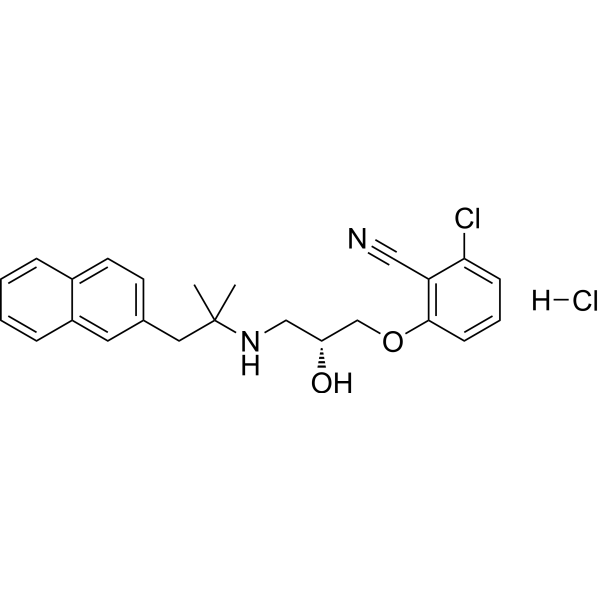
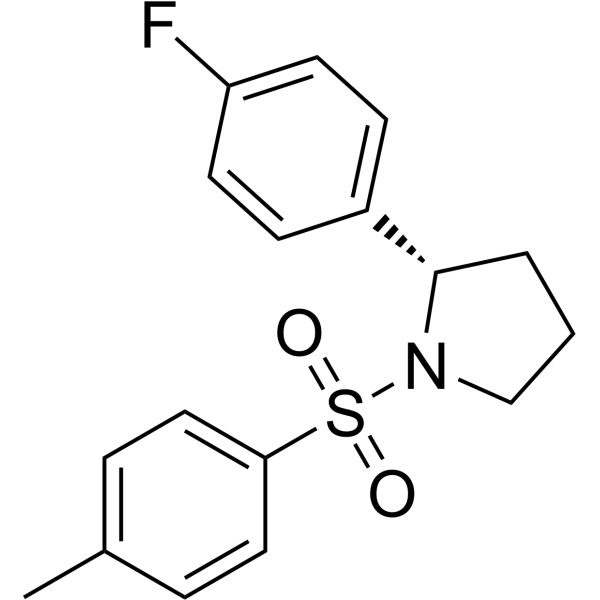
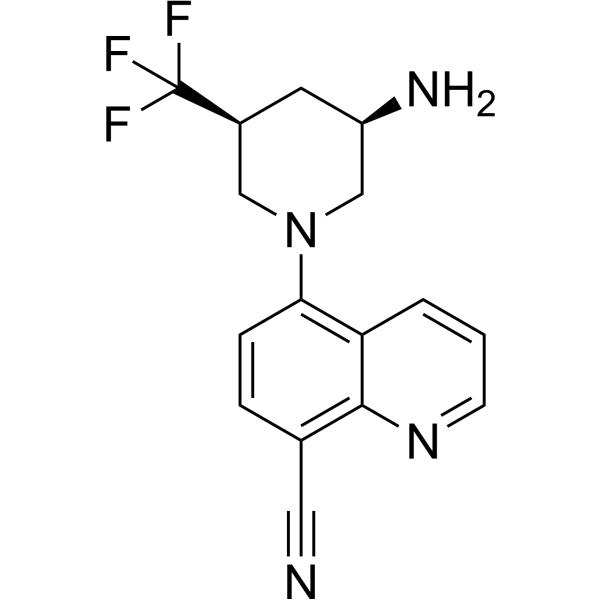
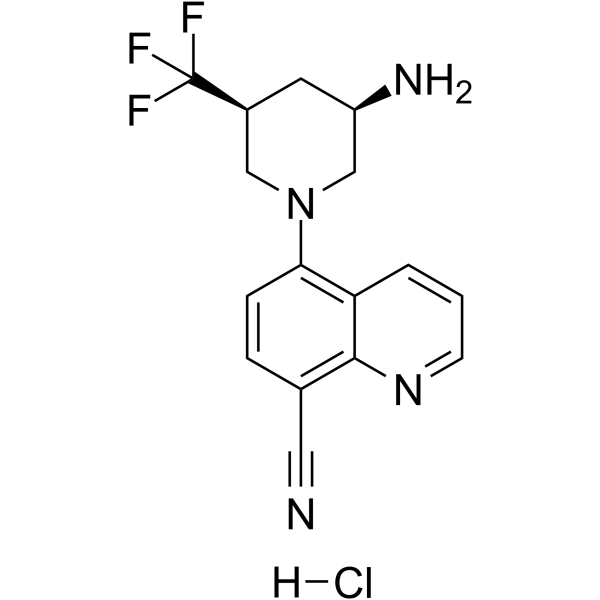
From 11:00 pm to 12:00 pm EST ( 8:00 pm to 9:00 pm PST ) on January 6th, the website will be under maintenance. We are sorry for the inconvenience. Please arrange your schedule properly.
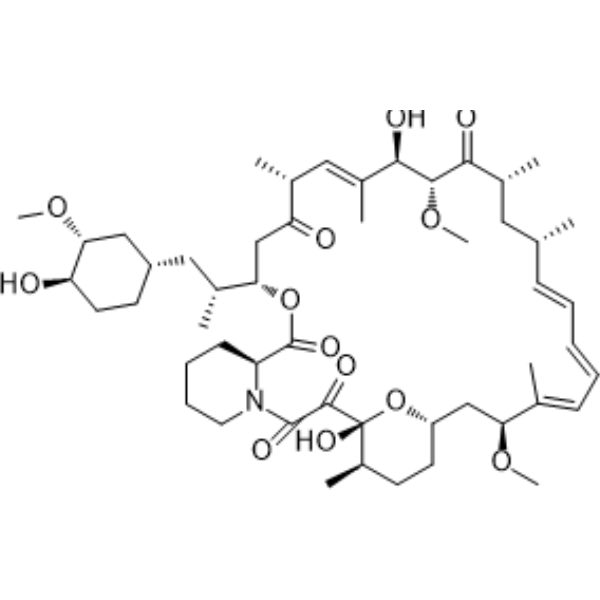
Rapamycin (Sirolimus; AY 22989) is a potent and specific blood-brain barrier-transmissible mTOR inhibitor with an IC50 of 0.1 nM in HEK293cells. Rapamycin binds to FKBP12 and specifically acts as an allosteric inhibitor of mTORC1 . Rapamycin is an autophagy activator, an immunosuppressant .
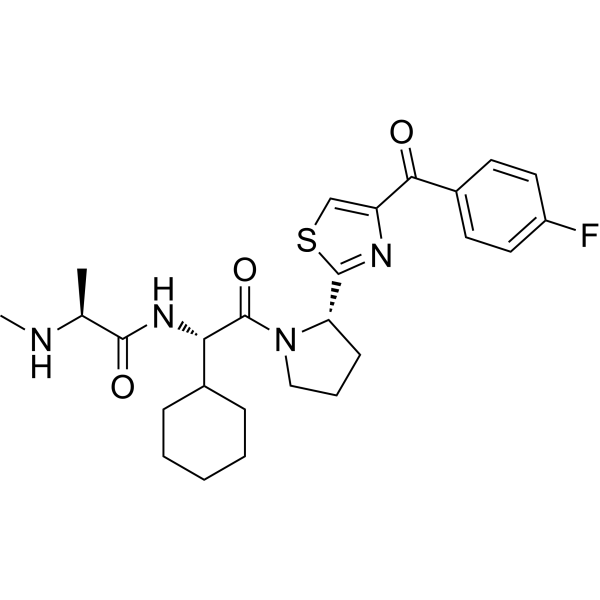
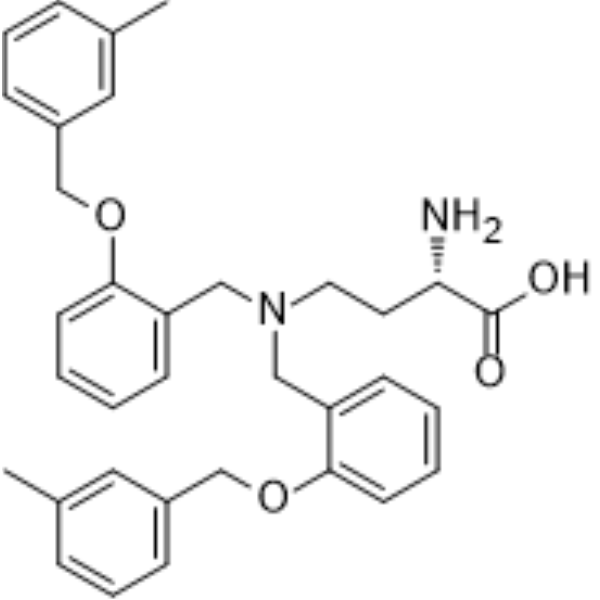
V-9302 is a competitive antagonist of transmembrane glutamine flux. V-9302 selectively and potently targets the amino acid transporter ASCT2 (SLC1A5) not ASCT1. V-9302 inhibits ASCT2-mediated glutamine uptake (IC50=9.6 μM) in HEK-293cells .
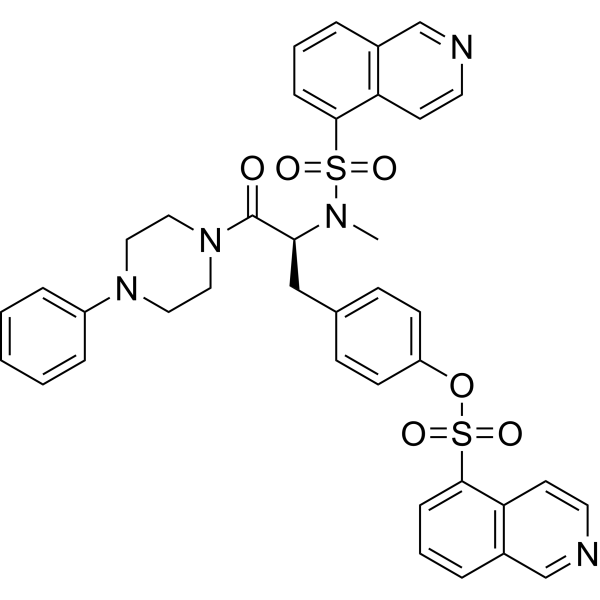
KN-62 is a selective and reversible inhibitor of calmodulin-dependent protein kinase II (CaMK-II) with a Ki of 0.9 μM for rat brain CaMK-II. KN-62 directly binds to the calmodulin binding site of CaMK-II. KN-62 displays noncompetitive antagonism at P2X7 receptors in HEK293cells, with an IC50 value of approximately 15 nM.
Linrodostat (BMS-986205) is a selective and irreversible indoleamine 2,3-dioxygenase 1 (IDO1) inhibitor with an IC50 value of 1.1 nM in IDO1-HEK293 cells. Linrodostat is well tolerated with potent pharmacodynamic activity in advanced cancers .
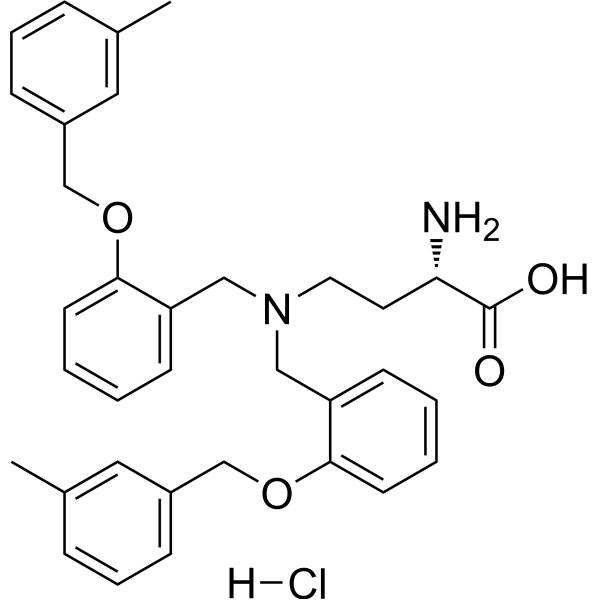
V-9302 hydrochloride is a competitive antagonist of transmembrane glutamine flux. V-9302 hydrochloride selectively and potently targets the amino acid transporter ASCT2 (SLC1A5) not ASCT1. V-9302 hydrochloride inhibits ASCT2-mediated glutamine uptake (IC50=9.6 µM) in HEK-293cells .
GSK717 is a potent, selective NOD2 (nucleotide-binding oligomerization domain 2) inhibitor. GSK717 inhibits muramyl dipeptide (MDP)-induced NOD2-mediated signaling, with an IC50 of 400 nM for MDP-stimulated IL-8 secretion in HEK293/hNOD2cells .
Simvastatin acid (Tenivastatin), a hydrolysate of Simvastatin (HY-17502), is a HMG-CoA reductase (HMGCR) inhibitor. Simvastatin acid reduces Indoxyl sulfate-mediated reactive oxygen species (ROS) production in human cardiomyocytes. Simvastatin acid can also modulates OATP3A1 expression in cardiomyocytes and HEK293cells transfected with the OATP3A1 gene .
Simvastatin hydroxy acid (Tenivastatin) sodium is a potent HMG-CoA reductase (HMGCR) inhibitor. Simvastatin hydroxy acid sodium reduces Indoxyl sulfate-mediated reactive oxygen species (ROS) production in human cardiomyocytes. Simvastatin hydroxy acid sodium can also modulates OATP3A1 expression in cardiomyocytes and HEK293cells transfected with the OATP3A1 gene .
PACAP (1-38) free acid is a desamido-PACAP (1-38), human, ovine, rat (HY-P0221). PACAP (1-38) free acid can activate the human PAC1 receptor. PACAP (1-38) free acid induces cyclic AMP (cAMP) generation in both NS-1 neuroendocrine cells and non-neuroendocrine HEK293cells .
JHU37160 is a potent and brain-penetrant DREADD agonist, with EC50s of 18.5 nM and 0.2 nM for hM3Dq and hM4Di DREADDs in HEK-293cells, respectively. JHU37160 exhibits selective [ 3H]Clozapine displacement from DREADDs and not from other Clozapine-binding sites in mice brain tissue .
Simvastatin acid (Tenivastatin) ammonium is a potent HMG-CoA reductase (HMGCR) inhibitor. Simvastatin acid ammonium reduces Indoxyl sulfate-mediated reactive oxygen species (ROS) production in human cardiomyocytes. Simvastatin acid ammonium can also modulates OATP3A1 expression in cardiomyocytes and HEK293cells transfected with the OATP3A1 gene .
BMS 299897 is a sulfonamide γ-secretase inhibitor with an IC50 of 7 nM for Aβ production inhibition in HEK293cells stably overexpressing amyloid precursor protein (APP).
Rapamycin-d3 is the deuterium labeled Rapamycin. Rapamycin is a potent and specific mTOR inhibitor with an IC50 of 0.1 nM in HEK293cells. Rapamycin binds to FKBP12 and specifically acts as an allosteric inhibitor of mTORC1. Rapamycin is an autophagy activator, an immunosuppressant .
Galegine hydrochloride, a guanidine derivative, contributes to weight loss in mice. Guanidine hydrochloride is the compound derived from G. officinalis, which gave rise to the biguanides, metformin and phenformin. Galegine hydrochloride activates AMPK in 3T3-L1 adipocytes and L6 myotubes, as well as in the H4IIE rat hepatoma and HEK293 human kidney cell lines. Galegine hydrochloride has antibacterial activity, with minimum inhibitory concentration of 4 mg/L against Staphylococcus aureus strains .
Rapamycin (Standard) is the analytical standard of Rapamycin (HY-10219). This product is intended for research and analytical applications. Rapamycin (Sirolimus; AY 22989) is a potent and specific mTOR inhibitor with an IC50 of 0.1 nM in HEK293cells. Rapamycin binds to FKBP12 and specifically acts as an allosteric inhibitor of mTORC1 . Rapamycin is an autophagy activator, an immunosuppressant .
MS049, a chemical probe, is a potent, selective, and cell-active dual inhibitor of PRMT4 and PRMT6 with IC50s of 34 nM and 43 nM, respectively. MS049 reduces levels of Med12me2a and H3R2me2a in HEK293cells. MS049 is not toxic and does not affect the growth of HEK293cells .
Gamma-Glu-Abu TFA is the TFA salt form of Gamma-Glu-Abu (HY-P4376). Gamma-Glu-Abu TFA is an agonist for calcium sensing receptor (CaSR), that activates the CaSR with an EC50 of 0.21 μM in HEK-293cell .
KY1220 is a compound that destabilizes both β-catenin and Ras, via targeting the Wnt/β-catenin pathway, with an IC50 of 2.1 μM in HEK293 reporter cells .
Galegine hemisulfate, a guanidine derivative, contributes to weight loss in mice. Galegine hemisulfate activates AMPK in 3T3-L1 adipocytes and L6 myotubes, as well as in the H4IIE rat hepatoma and HEK293 human kidney cell lines. Galegine hemisulfate has antibacterial activity, with minimum inhibitory concentration of 4 mg/L against Staphylococcus aureus strains .
JNJ-18038683 is a 5-Hydroxytryptamine Type 7 (5-HT7) receptor antagonist, with pKis of 8.19, 8.20 for rat and human 5-HT7 in HEK293cells, respectively.
GNE-6468 is a highly potent and selective RORγ (RORc) inverse agonist with an EC50 value of 13 nM for HEK-293cell. GNE-6468 exhibits an EC50 of 30 nM for IL-17 PBMC .
Octyl-α-ketoglutarate (1-Octyl 2-oxopentanedioate) is a stable, cell-permeable form of α-ketoglutarate which accumulates rapidly in HEK293cells with a dysfunctional tricarboxylic acid (TCA) cycle, stimulating prolyl hydroxylase (PHD) activity. In addition, Octyl-α-ketoglutarate competitively blocks succinate- or fumarate-mediated inhibition of PHD .
MI-1851 is a potent furin inhibitor. MI-1851 prevents the proteolytic processing of the S protein of SARS-CoV-2 by endogenous flavoprotease in HEK293cells. MI-185 has antiviral activity .
BayCysLT2, an isophthalic acid derivative, is a selective and potent cysteinyl leukotriene 2 (CysLT2) receptor antagonist with an IC50 value of 53 nM. BayCysLT2 inhibits calcium mobilization induced by leukotriene D4 in HEK293cells expressing human CysLT2 receptors. BayCysLT2 reverses LTC4-induced increases in coronary artery perfusion pressure and decreases in contractility in isolated perfused guinea pig hearts .
VU0514009 is a competitive chemokine-like receptor 1 (CMKLR1) antagonist (EC50=2 nM). VU0514009 prevents chemerin-9-induced arrestin recruitment and receptor internalization, significantly reducing Ca 2+ flux response in HEK293cells. VU0514009 is promising for research of inflammatory diseases and metabolic syndrome .
ML352 is a noncompetitive inhibitor of the presynaptic choline transporter (CHT) with Ki
values of 92 and 166 nM for HEK293cells expressing human CHT and mouse forebrain synaptosomes, respectively .
WS-898 is a highly effective ABCB1 inhibitor capable of reversing paclitaxel (PTX) resistance in drug-resistant SW620/Ad300, KB-C2, and HEK293/ABCB1cells (IC50 = 5.0, 3.67, and 3.68 nM, respectively).
VU625 is an inhibitor for potassium channel, that selectively inhibits mosquito Aedes aegypti inward rectifier potassium channel 1 (AeKir), with IC50 of 96.8 nM in HEK293cell. VU625 can be used in development of insecticide .
JHU37152 is a potent and brain-penetrant DREADD agonist, with EC50s of 5 nM and 0.5 nM for hM3Dq and hM4Di DREADDs in HEK-293cells, respectively. JHU37152 exhibits selective [ 3H]Clozapine displacement from DREADDs and not from other Clozapine-binding sites in mice brain tissue .
VU0546110 is a selective inhibitor of the sperm-specific potassium channel SLO3, with IC50s of 1.287 μM (SLO3) and 59.80 μM (SLO1) in HEK293cells, respectively. VU0546110 blocks heterologous SLO3 currents and endogenous K + currents in human sperm. VU0546110 halts sperm hyperpolarization, induced acrosome reaction, and hyper-activated motility. VU0546110 has contraceptive potential .
ASCT2-IN-1 (compound 20k) is an ASCT2 inhibitor with IC50 values of 5.6 μM and 3.5 μM in cells A549 and HEK293, respectively. ASCT2-IN-1 induces cellapoptosis. ASCT2-IN-1 inhibits tumor growth .
hVEGF-IN-3 (compound 9) is a potent hVEGF inhibitor. hVEGF-IN-3 inhibits HT-29, MCF-7, and HEK-293cells proliferation with IC50s of 61, 142, and 114 μM .
STX-100 (Biotinylated) is a biotin-labeled STX-100 (HY-P990667). STX-100 is a humanized antibody expressed in HEK293cells, targeting Integrin aVb6 (ITGAV & ITGB6) .
PROTAC STAT6 degrader-2 is a highly efficient PROTAC degrader targeting STAT6. PROTAC STAT6 degrader-2 has a DC50 value of 1-10 nM for STAT6 in human PBMC cells and a DC50 value of less than 100 nM for STAT6 in HEK293-HIBiT-STAT6cells. PROTAC STAT6 degrader-2 can be used for STAT6-mediated diseases .
Simvastatin acid (Tenivastatin) calcium hydrate is a potent HMG-CoA reductase (HMGCR) inhibitor. Simvastatin acid calcium hydrate reduces Indoxyl sulfate-mediated reactive oxygen species (ROS) production in human cardiomyocytes. Simvastatin acid calcium hydrate can also modulates OATP3A1 expression in cardiomyocytes and HEK293cells transfected with the OATP3A1 gene .
MS049 dihydrochloride is a potent, selective, and cell-active dual inhibitor of PRMT4 and PRMT6 with IC50s of 34 nM and 43 nM, respectively. MS049 dihydrochloride reduces levels of Med12me2a and H3R2me2a in HEK293cells. MS049 dihydrochloride is not toxic and does not affect the growth of HEK293cells .
RXFP1 receptor agonist-1 (Example 2 peak2) is a RXFP1 receptor agonist. RXFP1 receptor agonist-1 stimulates cAMP production in HEK293cells stably expressing human RXFP1, with an EC50 value of 300 nM .
MPCI is a cell-permeant MC4R-selective ligand with pharmacological chaperone activity. MPCI is a MC4R antagonist with a Ki value of 0.218 μM on HEK293cells expressing hMC4R. MPCI can be used for the research of MC4R-deficient obesity .
Linrodostat (BMS-986205) mesylate is a selective irreversible inhibitor of indoleamine 2,3-dioxygenase 1 (IDO1), which effectively inhibits IDO1-HEK293 mesylate cells with an IC50 value of 1.1 nM. Linrodostat mesylate demonstrates good pharmacological activity in advanced cancer .
U-101958 (PNU-101958) maleate is a highly selective ligand and antagonist for dopamine D4 receptor, with an IC50 of 2.7 nM. U-101958 maleate behaves as an agonist in HEK-293cells expressing the human recombinant D4.4 receptor. U-101958 maleate is an antipsychotic .
JLK-6 markedly reduce the production of amyloid β-peptide (Aβ) by amyloid-β Precursor protein (APP) expressing HEK293cells by affecting the γ-secretase cleavage of APP, with no effect on the cleavage of the Notch receptor .
AZ513 is a reversible FAAH inhibitor with an IC50s of 551 nM and 27 nM for human FAAH and rat FAAH, respectively. AZ513 inhibits Anandamide (HY-10863) hydrolysis in human FAAH-transfected HEK293cells (IC50 of 360 nM) .
SIK1-IN-1 (Compound 27) is a selective Salt-inducible kinase 1 (SIK1) inhibitor with an IC50 of 0.7 nM for SIK1 over SIK2 and SIK3. SIK1-IN-1 has no cytotoxicity against HEK293cells and PBMCs (maximum concentration of 30 μM). SIK1-IN-1 also has potent inhibitory activities for 392 kinases, in particular tyrosine kinases, such as FGR, HCK and LYN) .
NY0116 is a neuromedin U receptor 2 (NMUR2) agonist with EC50 values of 27.76 μM for hNMUR1 and 13.61 μM for hNMUR2. NY0116 decreases cAMP while stimulating calcium signaling in stably expressing NMUR2 HEK293cells .
AB3067 is a PROTAC degrader for BET protein, that recruits two different E3 ligase Cereblon and VHL with good affinity (IC50=559 nM for VHL in live HEK293; IC50=190 nM for CRBN in live HEK293), and degrades BRD2, BRD3, BRD4 and CRBN with DC50 of 2.1~2.3, 1.6, 15 and 75 nM, respectively. AB3067 inhibits the proliferation of RKO cell with an EC50 of 111 nM . (Pink: ligand for target protein (HY-131633A); Black: linker (HY-170391); Blue: ligand for E3 ligase VHL (HY-112078) and CRBN(HY-W998346))
TNP-ATP is an antagonist of purinergic P2Y1, P2X3, and P2X2/3 receptors (IC50 = 6, 0.9, and 7 nM, respectively, in HEK293cells expressing human receptors). TNP-ATP reduces acetate-induced calcium flux in 1321N1 cells expressing P2X3 and P2X2/3 receptors (IC50 = 100 and 62 nM, respectively). TNP-ATP dose-dependently attenuates acetate-induced abdominal contractions in a mouse visceral pain model (ED50 = 6.35 µmol/kg) [1][2].
E197 is the inhibitor for DOCK5 that destroys the podosome belt structure of osteoclasts, thereby inhibiting the bone resorption (IC50=3.44 μM in human osteoclast). E197 inhibits the Rac in DOCK5 expressing HEK293cell with an IC50 of 36 μM. E197 prevents the bone loss in mouse ovariectomized models .
RXFP1 receptor agonist-6 (Example 7) is a RXFP1 receptor agonist. RXFP1 receptor agonist-6 stimulates cAMP production in HEK293cells stably expressing human RXFP1, with an EC50 value of 12 nM .
RXFP1 receptor agonist-3 (Example 223) is a RXFP1 receptor agonist. RXFP1 receptor agonist-3 stimulates cAMP production in HEK293cells stably expressing human RXFP1, with an EC50 value of 2 nM .
RXFP1 receptor agonist-2 (Example 124) is a RXFP1 receptor agonist. RXFP1 receptor agonist-2 stimulates cAMP production in HEK293cells stably expressing human RXFP1, with an EC50 value of 1 nM .
RXFP1 receptor agonist-8 (Example 2) is a RXFP1 receptor agonist. RXFP1 receptor agonist-8 stimulates cAMP production in HEK293cells stably expressing human RXFP1, with an EC50 value of 1.8 nM .
RXFP1 receptor agonist-4 (Example 268) is a RXFP1 receptor agonist. RXFP1 receptor agonist-4 stimulates cAMP production in HEK293cells stably expressing human RXFP1, with an EC50 value of 4.9 nM .
RXFP1 receptor agonist-5 (Example 98) is a RXFP1 receptor agonist. RXFP1 receptor agonist-5 stimulates cAMP production in HEK293cells stably expressing human RXFP1, with an EC50 value of 1.3 nM .
RXFP1 receptor agonist-7 (Example 2) is a RXFP1 receptor agonist. RXFP1 receptor agonist-7 stimulates cAMP production in HEK293cells stably expressing human RXFP1, with an EC50 value of 4.2 nM .
Linopirdine dihydrochloride is a agonist of capsaicin receptor TRPV1. Linopirdine increases the intracellular calcium concentration in HEK293cells. Linopirdine dihydrochloride exerts an excitatory action on mammalian nociceptors .
17β-HSD10-IN-3 (compound 23) is a 17β-HSD10 inhibitor with the IC50 of 5.59 μM. 17β-HSD10-IN-3 shows no cell cytotoxicity toward the HEK-293cell line up to 20 μM .
AGH-107 is a high selective and brain-penetrant agonist of 5-HT7 receptor, with a Ki of 6 nM and EC50 of 19 nM. AGH-107 exhibits high selectivity over related CNS targets, high metabolic stability and low toxicity in HEK-293 and HepG2 cell cultures .
Antitrypanosomal agent 5 (Compound 25)is a selective anti-trypanosomal agent with IC50s of 1 nM and 483.3 µM against T. bruceicell growth and HEK293cells growth , respectively .
Muscarinic M4 modulator-1 is a Muscarinic M4 receptor positive allosteric modulator. Muscarinic M4 modulator-1 activates the muscarinic M4 receptor with allosteric potency EC50 s of 14 and 3 Nm in CHO-K1 cells and HEK293cells. Muscarinic M4 modulator-1 has an antipsychotic-like activity, promising for psychiatric and/or neurological disorders research .
JNJ-18038683 free base is a 5-Hydroxytryptamine Type 7 (5-HT7) receptor antagonist, with pKis of 8.19, 8.20 for rat and human 5-HT7 in HEK293cells, respectively.
Anti-MRSA agent 4 (compound 7a) is a potent and selective growth inhibitor of Gram-positive Methicillin-resistant Staphylococcus aureus (MRSA), with MIC ≤ 0.26 µM. Anti-MRSA agent 4 exhibits no cytotoxic and no hemolytic activity in HEK293cells .
Tembetarine chloride is a alkaloid that can be isolated from Tinospora cordifolia that exhibits antibacterial activity. Tembetarine chloride exhibits weak cytotoxicity against mouse fibroblasts (L929) and human embryonic kidney cells (HEK293) with IC50 of 1245.33 μg/mL and 1642.81 μg/mL, respectively .
Analgesic agent-2 is a selective and orally active NaV1.8 Channel inhibitor, with an IC50 of 50.18 nM in HEK293cells stably expressing human NaV1.8 channel. Analgesic agent-2 has analgesic activity .
KPC-2-IN-1, boronic acid derivative, is a potent KPC-2 inhibitor with Ki of 0.032 μM. KPC-2-IN-1 enhances the activity of cefotaxime in KPC-2 expressing E. coli. KPC-2-IN-1 exhibits well tolerated in human HEK-293cells, which can be used for the study of E. coli resistance to β-lactam antibiotics .
(1S,2S)-2-PCCA hydrochloride is a less active diastereomer of 2-PCCA. 2-PCCA is a GPR88 receptor agonist, and inhibits GPR88-mediated cAMP production, with an EC50 of 116 nM in HEK293cells.
BRL-32872 is a potent human ether-a-go-go-related gene (hERG) potassium channel blocker (IC50=241 nM in isolated cardiomyocytes; 19.8 nM in HEK293cells). BRL-32872 is promising for research of cardiac arrhythmias (e.g., atrial/ventricular rhythms) .
JN122, a spiroindoline-containing molecule, is a MDM2 inhibitor. JN122 Inhibits MDM2/p53 protein–protein interaction and exerts robust in vivo antitumor efficacy. JN122 has antiproliferative activity in HCT-116 cells and HEK-293cells with IC50 values of 39.6 nM and 4.28μM, respectively. JN122 can promote activation of p53 and its target genes, inhibited cell cycle progression, and induced cell apoptosis .
11β-HSD1-IN-14 (Compound 17) is a selective inhibitor for 11β-Hydroxysteroid Dehydrogenase Type 1 (11β-HSD1), with IC50 of 74 nM for human HSD1, and 603 nM for HSD1 expressed HEK293cell .
Antimalarial agent 12 (compound R-3b) is a potent antimalarial agent. Antimalarial agent 12 shows growth inhibition on P. falciparum Dd2 Strain (EC50=155 nM), 3D7 strain (EC50=136 nM). Antimalarial agent 12 has CC50 values of 10,000 to 50,000 nM for HEK-293 and hPHep cell lines. Antimalarial agent 12 has a MIC of >250,000 nM for Escherichia coli .
PROTAC IRAK4 degrader-10 (compound 10) is an oral active PROTAC based on Cereblon ligand, and induces the degradation of IRAK4 with maximum degradation of 95.94% and the DC50 of 7.68 nM in HEK293cells (Sturcture Note:(Blue: Cereblon ligand, Black: linker;Pink: IRAK4 ligand) .
PROTAC IRAK4 degrader-11 (compound 15) is PROTAC based on Cereblon ligand, and induces the degradation of IRAK4 with maximum degradation of 96.25% and the DC50 of 2.29 nM in HEK293cells(Sturcture Note:(Blue: Cereblon ligand (HY-14658), Black: linker;Pink: IRAK4 inhibitor) .
ERK5-IN-4 (compound 34b) is a potent and selective inhibitor of extracellular signal-related kinase 5 (ERK5). ERK5-IN-4 inhibits ERK5 (full-length) and truncated ERK5 (ERK5 ΔTAD) kinase activity in HEK293cells with an IC50 of 77 nM and 300 nM, respectively .
CD73-IN-19 (Compound 4ab) is a CD73 inhibitor (with a 44% inhibition rate of CD73 enzymatic activity at 100 μM). CD73-IN-19 (at 10 μM and 100 μM) can completely antagonize the blockade of T cell proliferation induced by TCR (T cell receptor) triggering (which is induced by CD73 activity), and it can also inhibit the hA2A receptor activity in HEK-293cells (Ki is 3.31 μM). CD73-IN-19 holds promise for research in the field of immune diseases .
(E/Z)-DMU2105 (Compound 7k) is a potent and highly selective CYP1B1 inhibitor. (E/Z)-DMU2105 inhibits human CYP1B1 enzyme bound to yeast-derived microsomes with an IC50 value of 10 nM. (E/Z)-DMU2105 also potently inhibits CYP1B1 expressed within ‘live’ recombinant yeast and human HEK293 kidney cells with an IC50 value of 63.65 nM. (E/Z)-DMU2105 can be used for the research of cancer, glaucoma, ischemia and obesity .
RAD51-IN-9 (Compound 3a) is a RAD51 inhibitor that can inhibit the binding of RAD51 to ssDNA with an IC50 of 17.85 μM. RAD51-IN-9 has a LD50 against HEK293cells of 40.21 μM. RAD51-IN-9 can sensitize cells to Mitomycin C (HY-13316) .
MS049 (Standard) is the analytical standard of MS049 (HY-100360). This product is intended for research and analytical applications. MS049, a chemical probe, is a potent, selective, and cell-active dual inhibitor of PRMT4 and PRMT6 with IC50s of 34 nM and 43 nM, respectively. MS049 reduces levels of Med12me2a and H3R2me2a in HEK293cells. MS049 is not toxic and does not affect the growth of HEK293cells .
γ-glutamyltransferase, Human (HEK293) is a γ-glutamyltransferase expressed in HEK293cells. γ-glutamyltransferase participates in glutathione metabolism. Serum γ-glutamyltransferase activity is identified as a predictor of atherosclerotic complications, and has prognostic value for cardiovascular diseases and stroke. γ-glutamyltransferase also serves as a biomarker for carcinogenesis and tumor progression .
HBC-12551 is an orally active BTK inhibitor (IC50 in HEK293cells: 1.31 nM for BTK; 2.18 nM for BTK C481S). HBC-12551 has antitumor activity against diffuse large B-cell lymphoma .
Val-CDCA is a chenodeoxycholate (CDCA) and C-24 L-Valine (HY-N0717) conjugate. Val-CDCA inhibits taurocholate uptake in human NTCP-stably transfected HEK293cells. Val-CDCA can be used for HBV infection .
2'-Deoxyadenosine-5'-O-diphosphoribose sodium is a TRPM2 agonist. 2'-Deoxyadenosine-5'-O-diphosphoribose sodium enhances calcium-induced currents in inside-out patch-clamp experiments using HEK293cells expressing human TRPM2. 2'-Deoxyadenosine-5'-O-diphosphoribose sodium is a substrate for Nucleoside Triphosphate Diphosphatase 9 (NUDT9) .
PROTAC hCAII degrader-1 is a potent PROTAC human carbonic anhydrase II (hCAII) degrader with an DC50 of 0.5 nM in HEK293cells. PROTAC hCAII degrader-1 recruits cereblon (CRBN) E3 ubiquitin ligase to form a ternary complex. PROTAC hCAII degrader-1 enables ubiquitination and subsequent proteasomal degradation of hCAII .
Linrodostat (Standard) is the analytical standard of Linrodostat (HY-101560). This product is intended for research and analytical applications. Linrodostat (BMS-986205) is a selective and irreversible indoleamine 2,3-dioxygenase 1 (IDO1) inhibitor with an IC50 value of 1.1 nM in IDO1-HEK293cells. Linrodostat is well tolerated with potent pharmacodynamic activity in advanced cancers .
PROTAC SARS-CoV-2 Mpro degrader-6 is a PROTACs degrader targeting the SARS-CoV-2 main protease (M pro). PROTAC SARS-CoV-2 Mpro degrader-6 effectively induces the degradation of M pro and increases K48-linked polyubiquitination of M pro in HEK293cells. PROTAC SARS-CoV-2 Mpro degrader-6 can be used in studies related to coronavirus disease 2019 (COVID-19) .
URAT1-IN-14 is a potent and orally active Urate transporter 1 (URAT1) inhibitor. URAT1-IN-14 inhibits the human URAT1 in HEK293cells with an IC50 of 0.72 μM. URAT1-IN-14 exhibits low cytotoxic in Hep-G2 cells. URAT1-IN-14 shows urate-lowering effect in hyperuricemia mouse models. URAT1-IN-14 can be used for the study of hyperuricemia and gout .
KY1220 (Standard) is the analytical standard of KY1220 (HY-102028). This product is intended for research and analytical applications. KY1220 is a compound that destabilizes both β-catenin and Ras, via targeting the Wnt/β-catenin pathway, with an IC50 of 2.1 μM in HEK293 reporter cells .
THX6 is an hClpP activator with an EC50 of 1.18 μM. THX6 improves off-target profile with no affinity for hD2R and only weak affinity for hD3R (Ki = 51.1 µM) in HEK293cells. THX6 shows good cytotoxicity in ONC201-resistant cells with an IC50 of 0.13 μM. THX6 changes the levels of fatty acids (PUFAs, MUFAs, and SFAs) in DIPG cells. THX6 decreases the level of proteins involved in oxidative phosphorylation, biogenesis, and mitophagy proteins, thereby resulting in a global collapse of mitochondrial integrity and function. THX6 can be used for diffuse intrinsic pontine glioma research .
Blixeprodil (GM-1020) is the orally active antagonist for NMDA receptor with an affinity of Ki=3.25 µM in rat cortical tissue. Blixeprodil inhibits NR1/2A-NMDAR-mediated currents in HEK293cell with IC50 of 1.192 µM. Blixeprodil exhibits antidepressant in rats models. Blixeprodil can cross blood-brain barrier .
DETQ is a selective, allosteric and orally active dopamine D1 receptor (Dopamine Receptor) potentiator. In HEK293cells expressing the human D1 receptor, DETQ increases cAMP with an EC50 of 5.8 nM and a Kb of 26 nM. DETQ shows ~30-fold less potent at rat and mouse D1 receptors and is inactive at the human D5 receptor .
PF-915275 is a potent, selective and orally active human 11β-hydroxysteroid dehydrogenase type 1 (11βHSD1) inhibitor with a Ki of 2.3 nM and an EC50 of 15 nM (in HEK293cells). The dose-dependent effect of PF-915275 on conversion of cortisone to cortisol in primary human and monkey hepatocytes, with an EC50 of 20 and 100 nM, respectively .
BCFTP is a potent, orally active and selective human Mas-related G protein-coupled receptor X1 (MrgprX1)-positive allosteric modulator. BCFTP selectively potentiates MrgprX1 signaling in HEK293cells. BCFTP alleviates specific neuropathic pain-related behaviors in a humanized MrgprX1 mouse model of chronic constrictive injury (CCI) in a MrgprX1-dependent manner. BCFTP synergistically enhances psychoactive substances analgesia in CCI MrgprX1 mice. BCFTP can be used for neuropathic pain research .
Rapamycin (Sirolimus) (GMP) is Rapamycin (HY-10219) produced by using GMP guidelines. GMP small molecules works appropriately as an auxiliary reagent for cell therapy manufacture. Rapamycin (Sirolimus; AY 22989) is a potent and specific mTOR inhibitor with an IC50 of 0.1 nM in HEK293cells. Rapamycin binds to FKBP12 and specifically acts as an allosteric inhibitor of mTORC1 . Rapamycin is an autophagy activator, an immunosuppressant .
PU02, a derivative of 6-MP (HY-13677), is a negative allosteric modulator (NAM) of 5-HT3 receptor, with IC50 values of 0.36 and 0.73 μM in HEK293cells transfected with human 5-HT3A and 5-HT3AB receptors respectively .
TREM2 agonist-5 is the microglial lipid-sensing receptor (TREM2) agonist with a Kd of 71.36 μM. TREM2 agonist-5 is a racemic structural analog of the TREM2 agonist VG-3927 and exhibits superior microglial phagocytosis and activates TREM2 signaling in HEK293-hTREM2/DAP12cells. TREM2 agonist-5 displays a superior in vitro pharmacokinetic profile to VG-3927. TREM2 agonist-5 can used for the study of Alzheimer’s disease .
(S)-CE-123 is a potent, selective, and novel atypical dopamine transporter (DAT) inhibitor with an EC50 of 2.76 μM in uptake inhibition assays conducted in HEK293cells stably expressing human isoforms of DAT. (S)-CE-123, a Modafinil analogue, is able to penetrate the blood–brain barrier. (S)-CE-123 improves cognitive and motivational processes in experimental animals .
Rapamycin- 13C,d3 (Sirolimus- 13C,d3) is the 13C and deuterium labeled Rapamycin (HY-10219) . Rapamycin is a potent and specific mTOR inhibitor with an IC50 of 0.1 nM in HEK293cells. Rapamycin binds to FKBP12 and specifically acts as an allosteric inhibitor of mTORC1. Rapamycin is an autophagy activator, an immunosuppressant .
Kv2.1-IN-1 is an orally active and blood-brain barrier penetrant Kv2.1 inhibitor with an IC50 of 0.07 μM. Kv2.1-IN-1 exhibits a selectivity >130 fold over other K +, Na +, and Ca 2+ ion channels. Kv2.1-IN-1 decreases the apoptosis of HEK293cells induced by H2O2. Kv2.1-IN-1 produces significant neuroprotection efficacy in middle cerebral artery occlusion (MCAO) rat. Kv2.1-IN-1 can be used for the study of ischemic stroke .
Rapamycin (Sirolimus) GMP Like is Rapamycin (HY-10219) produced by using GMP like guidelines. GMP Like small molecules works appropriately as an auxiliary reagent for cell therapy manufacture. Rapamycin (Sirolimus; AY 22989) is a potent and specific mTOR inhibitor with an IC50 of 0.1 nM in HEK293cells. Rapamycin binds to FKBP12 and specifically acts as an allosteric inhibitor of mTORC1 . Rapamycin is an autophagy activator, an immunosuppressant .
MDI-117740 is a dual LIMK1/2 inhibitor. MDI-117740 shows effective cellular target engagement with LIMK1 (pIC50 = 6.73) and LIMK2 (pIC50 = 7.18) in HEK293cells. MDI-117740 exerts significant anti-migratory activity in MDA-MB-231 cells. MDI-117740 can be used for the study of cancers and neurodegenerative disorders .
Ro 67-7476 is a potent positive allosteric modulator of mGluR1 and potentiates glutamate-induced calcium release in HEK293cells expressing rat mGluR1a with an EC50 of 60.1 nM . Ro 67-7476 is a potent P-ERK1/2 agonist and activates ERK1/2 phosphorylation in the absence of exogenously added glutamate (EC50=163.3 nM) .
Simvastatin acid (ammonium) (Standard) is the analytical standard of Simvastatin acid (ammonium). This product is intended for research and analytical applications. Simvastatin acid (Tenivastatin) ammonium is a potent HMG-CoA reductase (HMGCR) inhibitor. Simvastatin acid ammonium reduces Indoxyl sulfate-mediated reactive oxygen species (ROS) production in human cardiomyocytes. Simvastatin acid ammonium can also modulates OATP3A1 expression in cardiomyocytes and HEK293cells transfected with the OATP3A1 gene .
BL-1005 (BS2463), thiophen-2-yl pyrimidine (TTP), is a potent paralytic of Schistosoma mansoni with an EC50 of 37 nM. BL-1005 shows low cytotoxicity for HEK293, HeLa and HepG2 cell with CC50 >20 μM. BL-1005 can induce paralysis in both adult and juvenile S. mansoni. BL-1005 can be used for the research of infection .
HIV-1 inhibitor-35 (compound 74) is a potent HIV-1 inhibitor with EC50s of 80 nM and 70 nM for LTR and CMV in HEK293cells, respectively. HIV-1 inhibitor-35 has inhibitory activity against liver cancer cell HepG2 with a CC50 of 40 nM. HIV-1 inhibitor-35 can be used as HIV-1 latency reversing agent .
Antiproliferative agent-60 (compound 8c) is a 11-Azaartemisinin derivative with superior anticancer activities. Antiproliferative agent-60 shows IC50 values of 7.7 μM, 42.5 μM, and 15.5 μM for epidermoid carcinoma (KB), HepG2, and A549 cells, respectively. Antiproliferative agent-60 exhibits significant tumor selectivity, up to 32-fold higher compared to Hek293 normal cells .
Anticancer agent 258 is an imidazo [1,2-B][1,2,4] triazol derivative. Anticancer agent 258 regulates the activity of nuclear receptors. Anticancer agent 258 has an EC50 of 63 nM against Nurr in N2A cells. Anticancer agent 258 has IC50 of 0.1 pM for Nur77 in HEK293cells. Anticancer agent 258 can be used in the study of cancer, metabolic diseases and neurological disorders .
Simvastatin acid-d6 (Tenivastatin-d6) is deuterium labeled Simvastatin acid. Simvastatin acid (Tenivastatin), a hydrolysate of Simvastatin (HY-17502), is a HMG-CoA reductase (HMGCR) inhibitor. Simvastatin acid reduces Indoxyl sulfate-mediated reactive oxygen species (ROS) production in human cardiomyocytes. Simvastatin acid can also modulates OATP3A1 expression in cardiomyocytes and HEK293cells transfected with the OATP3A1 gene .
Simvastatin acid-d6 (ammonium)mis the deuterium labeled Simvastatin acid ammonium. Simvastatin ammonium is an active metabolite of simvastatin lactone mediated by CYP3A4/5 in the intestinal wall and liver (pKa=5.5). Simvastatin ammonium reduces indoxyl sulfate-mediated reactive oxygen species and modulates OATP3A1 expression in cardiomyocytes and HEK293cells transfected with the OATP3A1 gene .
Simvastatin acid-d9 ammonium is deuterated labeled Simvastatin acid ammonium (HY-119695A). Simvastatin acid (Tenivastatin) ammonium is a potent HMG-CoA reductase (HMGCR) inhibitor. Simvastatin acid ammonium reduces Indoxyl sulfate-mediated reactive oxygen species (ROS) production in human cardiomyocytes. Simvastatin acid ammonium can also modulates OATP3A1 expression in cardiomyocytes and HEK293cells transfected with the OATP3A1 gene .
IKE16 is a fungi-selective eukaryotic topoisomerase II inhibitor, with an IC50 value of 13.68 μM. IKE16 suppresses both the DNA relaxation activity and the decatenation activity of yTOPOII selectively. IKE16 shows moderate activity against standard fungal strains (Candida albicans ATCC 10231, Saccharomyces cerevisiae ATCC 89763) with a minimum inhibitory concentration (MIC) of 2 μg/mL against S. cerevisiae ATCC 89763. IKE16 exhibits high cytotoxicity against human cells, with an EC50 of 0.07 μM in HepG2 and 0.045 μM in HEK-293. IKE16 can be used for the study of antifungal infection .
SB 206553 is a 5-HT2C inverse agonist. SB 206553 can attenuate methamphetamine-seeking in rats. SB 206553 has activity for 5-HT2 receptor ligands in HEK-293 or CHO-K1 cells expressing human recombinant 5-HT2 receptors with pKi values of 5.6 nM (5-HT2A), 7.7 nM (5-HT2B) and 7.8 nM (5-HT2C), respectively. SB 206553 can be used for the research of psychostimulant abuse disorders .
SNC80 (NIH 10815) is a potent, highly selective and non-peptide δ-opioid receptor agonist with a Ki of 1.78 nM and an IC50 of 2.73 nM. SNC80 also selectively activates μ-δ heteromer in HEK293cells with an EC50 of 52.8 nM. SNC80 shows antinociceptive, antihyperalgesic and antidepressant‐like effects. SNC80 has the potential for multiple headache disorders treatment .
Flindokalner (BMS-204352) is a potassium channel modulator. Flindokalner is a positive modulator of all neuronal Kv7 channel subtypes expressed in HEK293cells. Flindokalner is also a large conductance calcium-activated K channel (BKca) positive modulator. Flindokalner shows a negative modulatory activity at Kv7.1 channels (Ki=3.7 μM), and acts as a negative modulator of GABAA receptors. Flindokalner shows anxiolytic efficacy in vivo .
Enpatoran (M5049) hydrochloride is a potent, orally active and dual TLR7/8 inhibitor with IC50s of 11.1 nM and 24.1 nM in HEK293cells, respectively. Enpatoran hydrochloride is inactive against TLR3, TLR4 and TLR9. Enpatoran hydrochloride can block molecule synthetic ligands and natural endogenous RNA ligands. Enpatoran hydrochloride exhibits excellent pharmacokinetic properties in vivo. Enpatoran hydrochloride can be used for both innate and adaptive autoimmunity blocking research .
(1R,2R)-Calhex 231 hydrochloride is the isomer of Calhex 231 hydrochloride (HY-103320A), and can be used as an experimental control. Calhex 231 hydrochloride is a CaSR inhibitor via negative allosteric modulation. Calhex 231 hydrochloride blocks Ca 2+-induced accumulation of [ 3H]inositol phosphate with an IC50 of 0.39 μM in HEK293cells. Calhex 231 hydrochloride has the potential for diabetic cardiomyopathy (DCM) treatment .
RO5323441 (TB-403) is a human IgG1 monoclonal antibody (mAb) targeting PlGF. RO5323441 inhibits the binding of human PlGF-1 or PlGF-2 to VEGFR-1 (IC50 values are 0.1 and 0.2 nM, respectively). RO5323441 blocks PlGF-induced VEGFR-1 phosphorylation in Flt-1-transfected HEK293cells. RO5323441 has antitumor activity .
Alniditan (Alnitidan) dihydrochloride is a potent 5-HT1B and 5-HT1D receptors agonist, with IC50s of 1.7 nM and 1.3 nM for h5-HT1B and h5-HT1D receptors in HEK293cells, respectively. Alniditan dihydrochloride has migraine-preventive effects .
Alniditan (Alnitidan) is a potent 5-HT1B and 5-HT1D receptors agonist, with IC50s of 1.7 nM and 1.3 nM for h5-HT1B and h5-HT1D receptors in HEK293cells, respectively. Alniditan has migraine-preventive effects .
Enpatoran (M5049) is a potent, orally active and dual TLR7/8 inhibitor with IC50s of 11.1 nM and 24.1 nM in HEK293cells, respectively. Enpatoran is inactive against TLR3, TLR4 and TLR9. Enpatoran can block molecule synthetic ligands and natural endogenous RNA ligands. Enpatoran exhibits excellent pharmacokinetic properties in vivo. Enpatoran can be used for both innate and adaptive autoimmunity blocking research .
Tolazamide (U-17835) is an orally active sulfonylurea agent that inhibits sulfonylurea receptor 1 (SUR1) linked to the inwardly rectifying potassium channel (IC50 = 4.2 µM in HEK293cells transfected with the human receptor). Tolazamide has anti-diabetic properties. Tolazamide can lower blood glucose in sulfonylurea class. Tolazamide decreases insulin dose while continuing to maintain adequate metabolic control. Tolazamide is able to improve or normalize hyperglycemia and HbA .
Rapamycin- 13C,d3-1 (Sirolimus- 13C,d3-1) is the deuterium labeled and 13C-labeled Rapamycin (HY-10219). Rapamycin (Sirolimus; AY 22989) is a potent and specific mTOR inhibitor with an IC50 of 0.1 nM in HEK293cells. Rapamycin binds to FKBP12 and specifically acts as an allosteric inhibitor of mTORC1 . Rapamycin is an autophagy activator, an immunosuppressant .
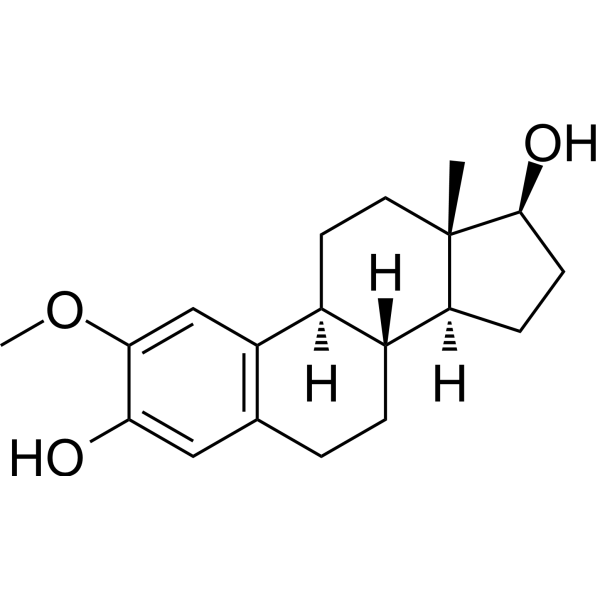
2-Methoxyestradiol (2-ME2), an orally active endogenous metabolite of 17β-estradiol (E2), is an apoptosis inducer and an angiogenesis inhibitor with potent antineoplastic activity. 2-Methoxyestradiol also destablize microtubules. 2-Methoxyestradio, also a potent superoxide dismutase (SOD) inhibitor and a ROS-generating agent, induces autophagy in the transformed cell line HEK293 and the cancer cell lines U87 and HeLa .
PF-915275 (Standard) is the analytical standard of PF-915275. This product is intended for research and analytical applications. PF-915275 is a potent, selective and orally active human 11β-hydroxysteroid dehydrogenase type 1 (11βHSD1) inhibitor with a Ki of 2.3 nM and an EC50 of 15 nM (in HEK293cells). The dose-dependent effect of PF-915275 on conversion of cortisone to cortisol in primary human and monkey hepatocytes, with an EC50 of 20 and 100 nM, respectively .
6,8-Diprenylnaringenin (Lonchocarpol A; Senegalensin), a hop prenylflavonoid, is a inhibitor of breast cancer resistance protein (BCRP/ABCG2). 6,8-Diprenylnaringenin inhibits ABCG2-mediated efflux of Mitoxantrone, and 3H-Methotrexate transport (IC50=0.41 μM) in HEK293cells. 6,8-Diprenylnaringenin exhibits some estrogenicity, but its potency is less than 1% of that of 8-Prenylnaringenin .
(E/Z)-CLH304a (GABAB receptor antagonist 1) is a mixture of (E)-CLH304a and (Z)-CLH304a. (E)-CLH304a (CLH304a; HY-129636) is a specific and noncompetitive GABAB receptor negative allosteric modulator (NAM). CLH304a inhibits Baclofen (HY-B0007)-induced ERK1/2 phosphorylation in HEK293cells overexpressing GABAB receptors .
LY-466195 is a selective and competitive GLUK5 receptor antagonist. LY-466195 antagonizes Kainate-induced currents with an IC50 value of 0.045 μM in rat dorsal root ganglion neurons. In HEK293cells transfected with GLUK5, GLUK2/GLUK5, or GLUK5/GLUK66 receptors, LY466195 produces IC50 values of 0.08 μM, 0.34 μM, and 0.07 μM, respectively .
(R,R)-Birelentinib ((R,R)-DZD8586) (Compound 14) is a potent BTK inhibitor with IC50 values for BTK WT and BTK C481S of 0.7 and 0.86 nM, respectively. (R,R)-Birelentinib inhibits the self-phosphorylation of BTK and its IC50 is 24.3 nM. (R,R)-Birelentinib exhibits significant anti-proliferative activity against wild-type and C481S mutant HEK293cells. (R,R)-Birelentinib can be used for the study of drug-resistant B-cell malignancies .
AS1269574 is a potent, orally available GPR119 agonist, with an EC50 of 2.5 μM in HEK293cells expressing human GPR119. AS1269574 activates TRPA1 cation channels to stimulate glucagon-like peptide-1 (GLP-1) secretion. AS1269574 specifically induces glucose-dependent insulin secretion from pancreatic β-cells only under high-glucose conditions. AS1269574 has the potential for the research of type 2 diabetes .
ADX68692 is an orally active negative allosteric modulators of follicle-stimulating hormone receptor with a log IC50 of -5.71. ADX68692 can inhibit hCG-induced cAMP production and s ß-arrestin 2 recruitment in HEK293cells. ADX68692 exhibits a partial effect in both mLTC-1 and primary rat Leydig cells. ADX68692 inhibits FSHR-promoted cAMP, progesterone and estradiol production. ADX68692 can reduce the number of oocytes recovered from the ampullae .
Melicopine is an alkaloid found in Z. simulans with antimalarial and anticancer activities. It exhibits inhibitory activity against chloroquine-sensitive 3D7 and chloroquine-resistant Dd2 strains of P. falciparum, with IC50 values of 29.7 and 33.7 µg/mL, respectively. Melicopine is cytotoxic to prostate cancer cells PC-3M and LNCaP (IC50 values of 47.9 and 37.8 µg/mL), but has no effect on non-cancerous HEK293cells (IC50 greater than 100 µg/mL). Melicopine holds promise for research in anticancer and anti-infection fields .
Hypidone hydrochloride (YL0919) is an orally active antidepressant agent with dual activity as a highly seletive 5-HT uptake blocker and an effective 5-HT1A receptor agonist (Ki=0.19 nM). Hypidone hydrochloride inhibits the uptake of [ 3H]-5-HT into rat cerebral cortical synaptosomes and HEK293cells with IC50s of 1.78 nM and 1.93 nM, respectively. Hypidone hydrochloride shows remarkable antidepressant effects in animal models and has the poential for the investigation of depressive disorder .
TLR7 agonist 18 (Compound 21a) is a selective Toll-like receptor 7 (TLR7) agonist with an EC50 of 7.8 μM. TLR7 agonist 18 is not cytotoxic to hTLR7 cotransfected HEK293cell lines and can induce the secretion of several cytokines, including IL-1β, IL-12p70, IL-8, and TNF-α. TLR7 agonist 18 can be used in vaccine, asthma, allergy and anti-cancer research .
Flindokalner (Standard) is the analytical standard of Flindokalner. This product is intended for research and analytical applications. Flindokalner (BMS-204352) is a potassium channel modulator. Flindokalner is a positive modulator of all neuronal Kv7 channel subtypes expressed in HEK293cells. Flindokalner is also a large conductance calcium-activated K channel (BKca) positive modulator. Flindokalner shows a negative modulatory activity at Kv7.1 channels (Ki=3.7 μM), and acts as a negative modulator of GABAA receptors. Flindokalner shows anxiolytic efficacy in vivo .
EP4 receptor antagonist 7 (Compound 14) is an antagonist of the prostaglandin E2 (PGE2) receptor subtype EP4 with an IC50 value of 1.1 nM. EP4 receptor antagonist 7 inhibits PGE2-induced β-arrestin recruitment in HEK293cells with an IC50 value of 0.9 nM. EP4 receptor antagonist 7 decreases PGE2-induced expression of mRNA encoding IL-4, macrophage mannose receptor 1 (Mrc1), chitinase-like protein 3 (Chil3), chemokine (C-X-C) motif ligand 1 (Cxcl1), triggering receptor expressed on myeloid cells 2 (Trem2), and arginase-1 (Arg1), in RAW 264.7 macrophages. EP4 receptor antagonist 7 combined with an anti-PD-1 antibody inhibits tumor growth and increases infiltration of CD 8+ T cells into tumors in a CT26 murine colon cancer model .
2-Methoxyestradiol-d5 is the deuterium labeled 2-Methoxyestradiol. 2-Methoxyestradiol (2-ME2), an orally active endogenous metabolite of 17β-estradiol (E2), is an apoptosis inducer and an angiogenesis inhibitor with potent antineoplastic activity. 2-Methoxyestradiol also destablize microtubules. 2-Methoxyestradio, also a potent superoxide dismutase (SOD) inhibitor and a ROS-generating agent, induces autophagy in the transformed cell line HEK293 and the cancer cell lines U87 and HeLa .
Pyr10 is a pyrazole derivative and a selective TRP cation 3 (TRPC3) inhibitor. Pyr10 inhibits Ca 2+ influx in carbachol-stimulated TRPC3-transfected HEK293cells with an IC50 of 0.72 μM (IC50 of 13.08 μM for store operated Ca 2+ entry in BRL-2H3 cells). Pyr10 has the ability to distinguish between receptor-operated TRPC3 and native stromal interaction molecule 1 (STIM1)/Orai1 channels .
Ketodarolutamide (ORM-15341) is a potent, high-affinity nonsteroidal competitive full antagonist of androgen receptor (AR). Ketodarolutamide displays a Ki value of 8 nM for rat wild-type AR and an IC50 value of 38 nM in AR-HEK293cells . Ketodarolutamide inhibits testosterone-induced nuclear translocation of the AR and antagonizes both overexpressed and mutant ARs . Ketodarolutamide specifically suppresses the proliferation of AR-dependent prostate cancer cells and exhibits antitumor activity in models of castration-resistant prostate cancer (CRPC) . Ketodarolutamide is suitable for the mechanistic and therapeutic research of prostate cancer .
2-Methoxyestradiol- 13C6 is the 13C-labeled 2-Methoxyestradiol. 2-Methoxyestradiol (2-ME2), an orally active endogenous metabolite of 17β-estradiol (E2), is an apoptosis inducer and an angiogenesis inhibitor with potent antineoplastic activity. 2-Methoxyestradiol also destablize microtubules. 2-Methoxyestradio, also a potent superoxide dismutase (SOD) inhibitor and a ROS-generating agent, induces autophagy in the transformed cell line HEK293 and the cancer cell lines U87 and HeLa .
Cetrelimab (JNJ 63723283; JNJ 3283) is a human IgG4κ mAb targeting PD-1. Cetrelimab binds PD-1 (Kd=1.72 nM, HEK293) to block the interaction of PD-1 with PD-L1 and PD-L2 (IC50s=111.7 ng/mL and 138.6 ng/mL, respectively). Cetrelimab stimulates peripheral T cells, increases IFN-γ, IL-2, TNF-α level and inhibits tumor growth in vivo .
Tolazamide (U-17835) (Standard) is the analytical standard of Tolazamide. This product is intended for research and analytical applications. Tolazamide is an orally active sulfonylurea agent that inhibits sulfonylurea receptor 1 (SUR1) linked to the inwardly rectifying potassium channel (IC50 = 4.2 µM in HEK293cells transfected with the human receptor). Tolazamide has anti-diabetic properties. Tolazamide can lower blood glucose in sulfonylurea class. Tolazamide decreases insulin dose while continuing to maintain adequate metabolic control. Tolazamide is able to improve or normalize hyperglycemia and HbA .
APOL1-IN-2 (Compound 467) is the inhibitor for Apolipoprotein 1 (APOL1). APOL1-IN-2 reduces the APOL1 G2/G1 induced cell death in HEK293 with EC50 of 4.74 nM and 14.3 nM. APOL1-IN-2 reduces the APOL1 G2/G1/G0 induced death of trypanosomes with EC50 of 2.24, 6.03 and 3.72 nM, respectively .
Ro 67-7476 (Standard) is the analytical standard of Ro 67-7476 (HY-100403). This product is intended for research and analytical applications. Ro 67-7476 is a potent positive allosteric modulator of mGluR1 and potentiates glutamate-induced calcium release in HEK293cells expressing rat mGluR1a with an EC50 of 60.1 nM . Ro 67-7476 is a potent P-ERK1/2 agonist and activates ERK1/2 phosphorylation in the absence of exogenously added glutamate (EC50=163.3 nM) .
SNC80 (Standard) is the analytical standard of SNC80 (HY-101202). This product is intended for research and analytical applications. SNC80 (NIH 10815) is a potent, highly selective and non-peptide δ-opioid receptor agonist with a Ki of 1.78 nM and an IC50 of 2.73 nM. SNC80 also selectively activates μ-δ heteromer in HEK293cells with an EC50 of 52.8 nM. SNC80 shows antinociceptive, antihyperalgesic and antidepressant‐like effects. SNC80 has the potential for multiple headache disorders treatment .
URAT1&XO inhibitor 2 (Compound BDEO) is a dual inhibitor of xanthine oxidase and URAT1, with IC50 of 3.3 μM for xanthine oxidase. URAT1&XO inhibitor 2 blocks uptake of uric acid in HEK293cells expressing URAT1, with a Ki value of 0.145 μM. URAT1&XO inhibitor 2 decreases serum urate level and uric acid excretion in hyperuricemic mice. URAT1&XO inhibitor 2 can be used for research of hyperuricemia .
HUP-55 is a prolyl endopeptidase inhibitor (IC50 = 5 nM). HUP-55 reduces the dimerization of α-synuclein in Neuro2a cells and induces autophagy (Autophagy) in HEK293cells. It also decreases the increase in reactive oxygen species (ROS) production induced by hydrogen peroxide in SH-SY5Y cells at a concentration of 10 μM. In a mouse Parkinson’s disease model, HUP-55 (10 mg/kg) improves motor function (reduces the use frequency of the impaired paw) and decreases the levels of harmful oligomers of α-synuclein in the striatum caused by overexpression of α-synuclein .
Perenostobart (SRF617) is a human IgG4 antibody with inhibitory activity against CD39 ATPase. Perenostobart inhibits CD39-mediated hydrolysis of extracellular ATP to AMP, with IC50 values of 1.9 nM (HEK293 OE cells), 0.7 nM (MOLP-8 cells), and 1.2 nM (RBC-lysed whole blood). Perenostobart enhances CD4 + T-cell proliferation, promotes dendritic cell maturation, and boosts inflammasome activation in macrophages in the presence of ATP. Perenostobart demonstrates significant single-agent anti-tumor efficacy in MOLP-8 and H520 xenograft models. Perenostobart can be used for the study of cancer .
2-Methoxyestradiol (Standard) is the analytical standard of 2-Methoxyestradiol. This product is intended for research and analytical applications. 2-Methoxyestradiol (2-ME2), an orally active endogenous metabolite of 17β-estradiol (E2), is an apoptosis inducer and an angiogenesis inhibitor with potent antineoplastic activity. 2-Methoxyestradiol also destablize microtubules. 2-Methoxyestradio, also a potent superoxide dismutase (SOD) inhibitor and a ROS-generating agent, induces autophagy in the transformed cell line HEK293 and the cancer cell lines U87 and HeLa .
AS1269574 (Standard) is the analytical standard of AS1269574 (HY-107535). This product is intended for research and analytical applications. AS1269574 is a potent, orally available GPR119 agonist, with an EC50 of 2.5 μM in HEK293cells expressing human GPR119. AS1269574 activates TRPA1 cation channels to stimulate glucagon-like peptide-1 (GLP-1) secretion. AS1269574 specifically induces glucose-dependent insulin secretion from pancreatic β-cells only under high-glucose conditions. AS1269574 has the potential for the research of type 2 diabetes .
2-Methoxyestradiol- 13C,d3 is the 13C- and deuterium labeled 2-Methoxyestradiol. 2-Methoxyestradiol (2-ME2), an orally active endogenous metabolite of 17β-estradiol (E2), is an apoptosis inducer and an angiogenesis inhibitor with potent antineoplastic activity. 2-Methoxyestradiol also destablize microtubules. 2-Methoxyestradio, also a potent superoxide dismutase (SOD) inhibitor and a ROS-generating agent, induces autophagy in the transformed cell line HEK293 and the cancer cell lines U87 and HeLa .
Tyrosinase-IN-49 (Compound 12) is a potent and mixed-type chalcone-based tyrosinase inhibitor with an IC50 of 0.19 μM. Tyrosinase-IN-49 has potent antioxidant potential with significant DPPH and ABTS radical scavenging capacity. Tyrosinase-IN-49 can chelate the binuclear copper ions in the active center of tyrosinase and reduce Cu 2+ to Cu +, thereby reducing the catalytic activity of the enzyme. Tyrosinase-IN-49 has low cytotoxicity for HEK293cells and zebrafish embryo. Tyrosinase-IN-49 shows antibrowning effects to improve food quality and can be used for research of food preservation .
(1S,2S)-2-PCCA (hydrochloride) (Standard) is the analytical standard of (1S,2S)-2-PCCA (hydrochloride) (HY-100013B1). This product is intended for research and analytical applications. (1S,2S)-2-PCCA hydrochloride is a less active diastereomer of 2-PCCA. 2-PCCA is a GPR88 receptor agonist, and inhibits GPR88-mediated cAMP production, with an EC50 of 116 nM in HEK293cells.
S1PL-IN-2 (Compound 28) is a potent sphingosine-1-phosphate lyase (S1PL) inhibitor with an IC50 of 120 nM. S1PL-IN-2 shows an IC50 of 230 nM on HEK293cells. S1PL-IN-2 block the conversion of Vitamin B6 into the active pyridoxal-4-phosphate cofactor required for S1P lyase activity. S1PL-IN-2 can be used for the researches of inflammation and immunology, such as rheumatoid arthritis .
Tyrosinase-IN-48 (Compound 3) is a potent and competitive chalcone-based tyrosinase inhibitor with an IC50 of 0.49 μM. Tyrosinase-IN-48 has potent antioxidant potential with significant DPPH and ABTS radical scavenging capacity. Tyrosinase-IN-48 can chelate the binuclear copper ions in the active center of tyrosinase and reduce Cu 2+ to Cu +, thereby reducing the catalytic activity of the enzyme. Tyrosinase-IN-48 has low cytotoxicity for HEK293cells and zebrafish embryo. Tyrosinase-IN-48 shows antibrowning effects to improve food quality and can be used for research of food preservation .
Adenosine receptor antagonist 7 is an orally active triple A1/A2A/A2B adenosine receptor antagonist with Ki values of 1.5, 0.6 and 21 nM. Adenosine receptor antagonist 7 shows potent inhibitory activity (IC50 = 0.8 nM) of cAMP production in A2AR-HEK293cells. Adenosine receptor antagonist 7 can enhance infiltration of effector T cells and increase the CD8+/Treg ratio companied with Avelumab (HY-108730). Adenosine receptor antagonist 7can be used for the research of cancer, such as colon cancer .
KOR agonist 6 is a KOR agonist (Ki = 0.25 pM). KOR agonist 6 shows agonistic activity at MOR and DOR in CHO cells and inhibits Forskolin (HY-15371)-stimulated cAMP accumulation. KOR agonist 6 stimulates KOR-mediated [ 35S]GTPγS binding and inhibits cAMP accumulation in KOR-expressing HEK293cells with potent agonistic activity, while showing lower β-arrestin recruitment potency. KOR agonist 6 demonstrates anti-nociceptive efficacy in mice. KOR agonist 6 can be used for the study of analgesics with reduced central nervous system (CNS) side effects .
O-Desmethylcarvedilol (Desmethylcarvedilol) is an active metabolite of the non-selective β-adrenergic receptor (β-AR) antagonist Carvedilol (HY-B0006). O-Desmethylcarvedilol inhibits store-overload-induced calcium release in HEK293cells expressing the ryanodine receptor 2 (RyR2) R4496C (RyR2 R4496C) mutation (IC50 = 7.62 µM). O-Desmethylcarvedilol reduces increases in heart rate and prevents decreases in diastolic blood pressure induced by Isoproterenol (HY-B0468) in conscious rabbits (ED50s = 32 and 5 µg/kg, respectively) .
CLH304a (compound 14) is a specific and noncompetitive GABAB receptor negative allosteric modulator (NAM). CLH304a decreases GABA-induced IP3 production with an IC50 of 37.9 μM. CLH304a has no effect on other GPCR Class C members such as mGluR1, mGluR2, and mGluR5. CLH304a acts on the heptahelical domain of GB2 subunits and non-competitively inhibits the effect of agonists with inverse agonist properties. CLH304a inhibits Baclofen (HY-B0007)-induced ERK1/2 phosphorylation in HEK293cells overexpressing GABAB receptor .
Akuammine is an indole alkaloid that has been found in Picralima nitida and has analgesic activity. It selectively binds to the μ- and κ-opioid receptors over the δ-opioid receptor (Kis=0.3, 1.68, and 10.4 μM for the human receptors, respectively). Akuammine inhibits forskolin-induced cAMP production in HEK293cells expressing human μ- or κ-opioid receptors (IC50s=2.6 and 0.073 μM, respectively). It increases the latency to withdrawal in the tail-flick or hot plate test in mice when administered at a dose of 60 mg/kg.
Ketodarolutamide-d6 (BAY 1896953-d6) is the deuterium labeled Ketodarolutamide (HY-19337). Ketodarolutamide (ORM-15341) is a potent, high-affinity nonsteroidal competitive full antagonist of androgen receptor (AR). Ketodarolutamide displays a Ki value of 8 nM for rat wild-type AR and an IC50 value of 38 nM in AR-HEK293cells . Ketodarolutamide inhibits testosterone-induced nuclear translocation of the AR and antagonizes both overexpressed and mutant ARs . Ketodarolutamide specifically suppresses the proliferation of AR-dependent prostate cancer cells and exhibits antitumor activity in models of castration-resistant prostate cancer (CRPC) . Ketodarolutamide is suitable for the mechanistic and therapeutic research of prostate cancer .
Antiproliferative agent-53-d3 (Compound C1) is an inhibitor for theta-mediated end joining (TMEJ) in HEK293cell with an IC50 of 0.14 µM. Antiproliferative agent-53-d3 is the inhibitor for CYP2C19 and CYP2C9 with IC50 of 0.77 and 3.1 µM. Antiproliferative agent-53-d3 inhibits the proliferation of DNA repair-compromised cells, with IC50 of 8.1 µM for BRCA2 -/- DLD-1. Antiproliferative agent-53-d3 exhibits good pharmacokinetic characteristics in CD-1 mice .
Ketodarolutamide-d3 (BAY 1896953-d3) is the deuterium labeled Ketodarolutamide (HY-19337). Ketodarolutamide (ORM-15341) is a potent, high-affinity nonsteroidal competitive full antagonist of androgen receptor (AR). Ketodarolutamide displays a Ki value of 8 nM for rat wild-type AR and an IC50 value of 38 nM in AR-HEK293cells . Ketodarolutamide inhibits testosterone-induced nuclear translocation of the AR and antagonizes both overexpressed and mutant ARs . Ketodarolutamide specifically suppresses the proliferation of AR-dependent prostate cancer cells and exhibits antitumor activity in models of castration-resistant prostate cancer (CRPC) . Ketodarolutamide is suitable for the mechanistic and therapeutic research of prostate cancer .
TRPC6-PAM-C20 is a selective positive allosteric modulator (PAM) of TRPC6 channels. TRPC6-PAM-C20 is a potent enhancer of channel activation, enabling low basal concentrations of DAG to induce activation of the ion channel. TRPC6-PAM-C20 induces increases in intracellular Ca 2+ concentrations ([Ca 2+]i) in TRPC6-expressing HEK293cells with an EC50 of 2.37 μM. TRPC6-PAM-C20 can be used as a valuable tool to selectively exaggerate TRPC6-dependent signals .
RQ-00311651 is a T-type calcium channel blocker that specifically targets the Cav3.2 isoform with a role in neuropathic and visceral pain. RQ-00311651 significantly inhibits T currents in HEK293cells expressing human Cav3.1 or Cav3.2. RQ-00311651 also inhibited high potassium-induced calcium signaling. RQ-00311651 also inhibits antiallergic properties in rats and mice with neuropathic pain induced by spinal nerve injury or Paclitaxel (HY-B0015). Oral and intraperitoneal injection (10-20 mg/kg) inhibits Cerulein (HY-A0190)-induced acute pancreatitis and cyclophosphamide-induced cystitis in mice .
8(9)-EET is one of the main metabolites produced by the metabolism of arachidonic acid (HY-109590) through the cytochrome P450 epoxide pathway. 8(9)-EET is an effective substrate for COX-1 and COX-2. 8(9)-EET activates PPARα in HEK293cells and inhibits the activity of NF-κB induced by IL-1β in a PPARα-dependent and -independent manner. The (8S,9R)-isomer of 8(9)-EET ([(8S,9R)-EET]) causes vasoconstriction, thereby reducing renal plasma flow and glomerular filtration rate .
(±)8(9)-EET is one of the main metabolites produced by the metabolism of arachidonic acid (HY-109590) through the cytochrome P450 epoxide pathway. (±)8(9)-EET is an effective substrate for COX-1 and COX-2. (±)8(9)-EET activates PPARα in HEK293cells and inhibits the activity of NF-κB induced by IL-1β in a PPARα-dependent and -independent manner. The (8S,9R)-isomer of (±)8(9)-EET ([(8S,9R)-EET]) causes vasoconstriction, thereby reducing renal plasma flow and glomerular filtration rate .
H2-005 is a compound that selectively inhibits diacylglycerol acyltransferase 2 (DGAT2) and has the activity to inhibit triacylglycerol synthesis in hepatocytes and preadipocytes. H2-005 significantly reduces triacylglycerol biosynthesis in HepG2 hepatocytes and 3T3-L1 preadipocytes. H2-005 exhibits specific inhibitory activity in DGAT2-overexpressing HEK293cells. H2-005 almost completely inhibits lipid droplet formation in 3T3-L1 cells when co-treated with a DGAT1 inhibitor. H2-005 will contribute to DGAT2-related lipid metabolism research and the development of drugs to inhibit metabolic diseases .
2-Chloro-ATP sodium (2-Chloro ATP) is an adenine nucleotide and an analog of ATP. It is an antagonist of the purinergic P2Y1 receptor and inhibits intracellular calcium mobilization induced by ADP (HY-W010918) in Jurkat cells expressing the human receptor (Ki=2.3 μM). 2-Chloro-ATP sodium is an agonist of the purinergic P2X receptor and induces inward currents in HEK293cells expressing human bladder smooth muscle or rat PC12 forms of the receptor (EC50=0.5 and 2.5 μM). 2-Chloro-ATP sodium induces relaxation of precontracted guinea pig cecal strips in a concentration-dependent manner. 2-Chloro-ATP sodium has been used to study the substrate specificity of cyclic nucleotide-dependent protein kinases such as protein kinase A (PKA) and PKG.
S 32212 hydrochloride is an inverse agonist of 5-HT receptors5-HT2(CINI) and 5-HT2(CVSV) (Kis=6.6, 8.9 nM) and an antagonist of 5-HT2A and α2β-adrenergic receptors (Ki=5.8, 5.8 nM). S 32212 hydrochloride can reduce the binding of GTPγS to Gαq, and reduce the activity of phospholipase C (PLC) in HEK293cells expressing 5-HT2(CINI) receptor and CHO cells expressing 5-HT2(CVSV) receptor (EC50=38 and 18.6 nM, respectively). S 32212 hydrochloride (2.5 mg/kg) reduces 5-HT receptor agonist-induced head twitches and penile erections in mice and rats. S 32212 hydrochloride (10, 40 mg/kg) reduces immobility time in the forced swim test and marble burying behavior in mice and rats, exerting antidepressant and anxiolytic activities.
5-HT1AR/5-HT6R ligand-1 (Compound PP13) is the ligand for 5-HT receptor that exhibits good affinity to 5-HT1AR, 5-HT6R and 5-HT7R (Ki of 19, 69 and 198 nM, respectively), thereby inhibiting the cAMP production in HEK293cell with EC50 of 1535, 488 and 53 nM, respectively. 5-HT1AR/5-HT6R ligand-1 exhibits anti-proliferative activity against a variety of cancer cells (IC50 for 1321N1, U87MG, MCF7, and AsPC-1 is 9.6, 13.6, 19.3 and 14.6 μM, respectively). 5-HT1AR/5-HT6R ligand-1 also exhibits antagonist activity for dopamine receptor D2R with Ki of 1903 nM .
4″-C18 EGCG is a potent inhibitor of α-amylase and α-glucosidase with IC50 values of 3.74 and 0.81 μM, respectively. 4″-C18 EGCG inhibits carbohydrate hydrolases, reduces oxidative stress and inflammation, and exhibits antidiabetic activity. 4″-C18 EGCG also downregulates proinflammatory cytokines and is cytotoxic to primary human peripheral blood mononuclear cells (PBMCs), non-cancer cell lines 3T3-L1, and HEK 293 at 50 μM .
Asuptegravir (Compound 1) is an inhibitor of HIV integrase activity. Asuptegravir inhibits HIV in HEK293T cells (EC50 = 1.08 nM). Asuptegravir can be studied in anti-AIDs/HIV research .
Chenodeoxycholic acid 3-glucuronide is a metabolite of Chenodeoxycholic acid that can activate the key nuclear receptor (FXR), with an EC50 of 8 μM, and in HEK293T cells, the EC50 for activating FXR is 11 μM .
Amitifadine (DOV-21947; EB-1010) hydrochloride is a serotonin-norepinephrine-dopamine reuptake inhibitor (SNDRI), with IC50s of 12, 23, 96 nM for serotonin, norepinephrine and dopamine in HEK 293cells , respectively.
Amitifadine (DOV-21947; EB-1010) is a serotonin-norepinephrine-dopamine reuptake inhibitor (SNDRI), with IC50s of 12, 23, 96 nM for serotonin, norepinephrine and dopamine in HEK 293cells , respectively.
ABL127 is a selective and covalent inhibitor of protein methylesterase 1 (PME-1) with IC50s of 6.4 nM and 4.2 nM in HEK293T and MDA-MB-231 cells, respectively.
YS-370 (compound 44) is a potent, high selective, and orally active inhibitor of P-glycoprotein (P-gp). YS-370 stimulates the P-gp ATPase activity and has moderate inhibition against CYP3A4. YS-370 effectively reverses multidrug resistance (MDR) to paclitaxel and colchicine in SW620/AD300 and HEK293T-ABCB1cells. YS-370 in combination with paclitaxel achieves much stronger antitumor activity .
Dopamine D4 receptor ligand 3 (Compound 16) is a dopamine D4 receptor (D4R) antagonist (pKi: 8.86). Dopamine D4 receptor ligand 3 has pIC50 values of 5.78, 5.55, and 6.17 for Go, Gi, and βArr2 sensors in HEK-293Tcells, respectively. Dopamine D4 receptor ligand 3 inhibits the viability of three human glioma cell lines, U87 MG, T98G, and U251 MG. Dopamine D4 receptor ligand 3 induces ROS production and mitochondrial dysfunction in glioma cells .
SARS-CoV-2 3CLpro-IN-33 (Compound 16) is an orally active SARS-CoV-2 3CL protease inhibitor, with an IC50 value of 1.5 nM. SARS-CoV-2 3CLpro-IN-33 shows excellent anti-SARS-CoV-2 viral activity in the HEK293T-ATcell model with an EC50 of 0.017 μM. SARS-CoV-2 3CLpro-IN-33 can be used for the study of COVID-19 infetction .
JJH260 is AIG1inhibitor, and inhibit the fluorophosphonate reactivity and fatty acid esters of hydroxy fatty acid (FAHFA) hydrolysis activity of AIG1in HEK293T cells, with IC50 values of 0.50 μM and 0.57 μM, respectively .
PTC-209 is a specific BMI-1 inhibitor with an IC50 of 0.5 μM in HEK293T cell line. PTC-209 irreversibly impairs colorectal cancer-initiating cells (CICs). PTC-209 shows potent anti-myeloma activity and impairs the tumor microenvironment .
VPC12249 is a competitive dual LPA1/LPA3 antagonist with Ki values of 137nM and 428 nM, respectively. VPC12249 inhibits calcium mobilization in HEK293T cells with a Ki value of ~130 nM. VPC12249 is promising for research of ovarian cancer and hypertensive diseases .
PTC-209 hydrobromide is a specific BMI-1 inhibitor with an IC50 of 0.5 μM in HEK293T cell line. PTC-209 hydrobromide irreversibly impairs colorectal cancer-initiating cells (CICs). PTC-209 hydrobromide shows potent anti-myeloma activity and impairs the tumor microenvironment .
KP-2067 is a form of the CaSR agonist peptide. KP-2067 can result in dose-dependent activation of CaSR in HEK293T overexpressing hCaSR cell line, with an EC50 of 18.4 μM. KP-2067 significantly reduces plasma parathyroid hormone in rat model .
WYJ-2 is a selective agonist for toll-like receptor 2/1 (TLR2/1) with EC50 of 18.57 nM in human TLR2 and TLR1 transient-cotransfected HEK 293T cells. WYJ-2 induces pyroptosis and exhibits anticancer activity against non-small cell lung cancer (NSCLC) .
SRI-37240 is a potent premature termination codons (PTCs) inhibitor. SRI-37240 suppresses CFTR nonsense mutations. SRI-37240 alters cellular translation termination at PTCs in HEK293T cells. SRI-37240 can also restore CFTR function in primary bronchial epithelial cells when combination with G418 .
PTGR2-IN-1 is a potent PTGR2 inhibitor with an IC50 of ~0.7 μM. PTGR2-IN-1 increases 15-keto-PGE2-dependent PPARγ transcriptional activity in PTGR2-transfected HEK293T cells .
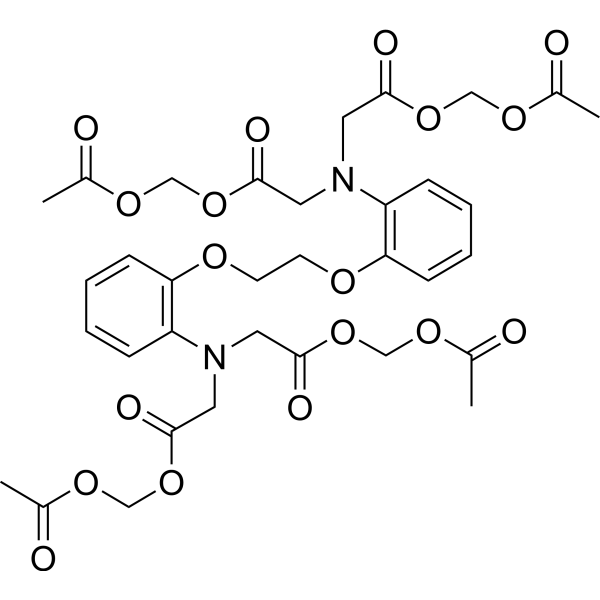
BAPTA-AM is a well-known membrane permeable Ca 2+ chelator. BAPTA-AM inhibits hERG channels, hKv1.3 and hKv1.5 channels in HEK 293cells with IC50s of 1.3 μM, 1.45 μM and 1.23 μM, respectively .
C24:1 Ganglioside GM2 (d18:1/24:1) (ammonium) is an endogenous monosialylated ganglioside. C24:1 Ganglioside GM2 (d18:1/24:1) (ammonium) is a self-lipid that can bind to CD1d in HEK293T cells .
Fenoprofen (LILLY-53858) is a nonsteroidal anti-inflammatory agent (NSAID) and inhibits cyclooxygenase (COX). Fenoprofen is a melanocortin receptors (MCRs) positive allosteric modulator (PAM). Fenoprofen also increases ERK1/2 activation in HEK293T cells. Fenoprofen has anti-arthritic activities and can be used for the study of rheumatoid arthritis and osteoarthritis .
Chloroguanabenz (acetate) is an antiprion agent and a derivative of the α2-adrenergic receptor agonist guanabenz. Chloroguanabenz (acetate) can inhibit the formation of prion in yeast and mammalian in vitro assays. Chloroguanabenz (acetate) can reduce the levels of truncated Huntingtin derivative Htt48 in HEK293T cells. Chloroguanabenz (acetate) can be studied in research on Huntington’s disease .
M04 is an agonist of STING. It induces the expression of the IFN reporter gene in HEK293T cells expressing wild-type human STING, but does not induce this expression in HEK293T cells expressing the R71H-G230A-R293Q (HAQ) STING variant or in mouse RAW 264.7 cells, indicating that its activity is dependent on allelic and species variations. M04 induces the production of TNF-α, IL-10, IL-1β, and IL-12p70 in human peripheral blood mononuclear cells (PBMCs). At a concentration of 50 µM, M04 stimulates dendritic cells isolated from PBMCs to express the MHC class II cell surface receptor HLA-DR and co-stimulatory molecules CD40, CD80, and CD86, and also enhances their ability to activate T cells in an ex vivo assay. M04 can be used in research on inflammatory immune diseases .
(±)-ML 209 (compound 4n), a diphenylpropanamide, is a retinoic acid-related orphan receptor RORγ antagonist with an IC50 of 1.1 μM. (±)-ML 209 inhibits RORγt transcriptional activity with an IC50 of 300 nM in HEK293t cells. (±)-ML 209 inhibits the transcriptional activity of RORγt, but not RORα in cells. (±)-ML 209 selectively inhibits murine Th17 cell differentiation without affecting the differentiation of naïve CD4 + T cells into other lineages, including Th1 and regulatory T cells .
HIF-1α-IN-4 is a HIF-1α inhibitor with an IC50 value of 24 nM (in HEK293T cell). HIF-1α-IN-4 downregulates VEGF and PDK1 mRNA expressions under hypoxia. HIF-1α-IN-4 can be used in the research of cancer .
LN6023 (hydrochloride) (Compound 27) is a CXCR7 agonist. LN6023 (hydrochloride) induces the recruitment of β-arrestin in HEK293T cells expressing human CXCR7 (EC50 = 3.5 µM). LN6023 (hydrochloride) reduces the surface level of P-selectin in isolated and washed human platelets. LN6023 (hydrochloride) can be used to study platelet-mediated thrombosis .
BmP02 is a selective Kv1.3 channel blocker and a highly-selective Kv4.2 modulator, which can be isolated from Chinese scorpion (Buthus martensi Karsch) venom. BmP02 also delays the inactivation of Kv4.2 in HEK293T cells, with an EC50 value of ~850 nM. BmP02 inhibits the transient outward potassium currents (Ito) in ventricular muscle cells .
MePT-S-N-Pme is an inhibitor of SARS-CoV-2 RdRp activity. MePT-S-N-Pme demonstrates a significant reduced reporter activity with an IC50 of 7 μM in HEK 293cells. MePT-S-N-Pme has a slight inhibitory effect on nucleotidyltransferase activity. MePT-S-N-Pme significantly inhibits SARS-CoV-2 replication in vitro .
Fenoprofen (LILLY-53858) Calcium is a nonsteroidal anti-inflammatory agent (NSAID) and inhibits cyclooxygenase (COX). Fenoprofen Calcium is a melanocortin receptors (MCRs) positive allosteric modulator (PAM). Fenoprofen Calcium also increases ERK1/2 activation in HEK293T cells. Fenoprofen Calcium has anti-arthritic activities and can be used for the study of rheumatoid arthritis and osteoarthritis .
Fenoprofen (LILLY-53858) Calcium hydrate is a nonsteroidal anti-inflammatory agent (NSAID) and inhibits cyclooxygenase (COX). Fenoprofen Calcium hydrate is a melanocortin receptors (MCRs) positive allosteric modulator (PAM). Fenoprofen Calcium hydrate also increases ERK1/2 activation in HEK293T cells. Fenoprofen Calcium hydrate has anti-arthritic activities and can be used for the study of rheumatoid arthritis and osteoarthritis .
STAT3-IN-25 (Compound 2p) is a potent STAT3 inhibitor with a p-trifluoroethoxy benzyl substituent. STAT3-IN-25 shows STAT3 luciferase inhibition activity using HEK293T cells with an IC50 of 22.3 nM and ATP production inhibition activity using BxPC-3 cells with an IC50 of 32.5 nM. STAT3-IN-25 has the potential for pancreatic cancer research .
Hi 76-0079 (NNC0076-0079; 76-0079) is a lipase inhibitor that specifically targets hormone-sensitive lipase (HSL). Hi 76-0079 inhibits PNPB Hydrolysis in cell lysates of HEK293A cells
overexpressing Lipe with an IC50 value of 0.1 μM. Hi 76-0079 synergizes with the ATGL inhibitor Atglistatin (HY-15859) to block lipolysis in vitro. Hi 76-0079 can be used for the study of lipid metabolism .
Rapaglutin E (RgE) is a glucose transporter (GLUT) inhibitor. Rapaglutin E exhibits dose-dependent inhibition of [ 3H]-2DG uptake in A549, Jurkat T, PANC10.05, and RBC, with IC50 values 8.9 nM, 3.1 nM, 35.5 nM, 74.2 nM. Rapaglutin E inhibits cell proliferation in A549, PANC10.05, HeLa, Jurkat T, and HEK293T cells .
NPS-2143 hydrochloride (SB-262470A hydrochloride), an orally active calcilytic agent, is a selective and potent calcium ion-sensing receptor (CaSR) antagonist. NPS-2143 hydrochloride (SB-262470A hydrochloride) blocks increases in cytoplasmic Ca 2+ concentrations (IC50=43 nM) elicited by activating the Ca 2+ receptor in HEK 293cells expressing the human Ca 2+ receptor .
NPS-2143 (SB-262470A), an orally active calcilytic agent, is a selective and potent calcium ion-sensing receptor (CaSR) antagonist. NPS-2143 (SB-262470A) blocks increases in cytoplasmic Ca 2+ concentrations (IC50=43 nM) elicited by activating the Ca 2+ receptor in HEK 293cells expressing the human Ca 2+ receptor .
K-(D-1-Nal)-FwLL-NH2 TFA is a high affinity and potent ghrelin receptor inverse agonist (Ki values are 4.9 and 31 nM in COS7 and HEK293T cells, respectively). K-(D-1-Nal)-FwLL-NH2 blocks ghrelin receptor-mediated Gq- and G13-dependent signaling pathways.
BAPTA-AM (Standard) is the analytical standard of BAPTA-AM. This product is intended for research and analytical applications. BAPTA-AM is a well-known membrane permeable Ca2+ chelator. BAPTA-AM inhibits hERG channels, hKv1.3 and hKv1.5 channels in HEK 293cells with IC50s of 1.3 μM, 1.45 μM and 1.23 μM, respectively .
PHTPP-1304 is a PHTPP-based autophagy targeting chimera (AUTOTAC). PHTPP-1304 induces the degradation of estrogen receptor ERβ through the autophagy pathway, rather than ubiquitination (DC50 ≈ 2 nM, in HEK293T cells; < 100 nM in ACHN renal carcinoma and MCF-7 breast cancer cells). PHTPP-1304 can induce the self-oligomerization of p62. PHTPP-1304 can be used to study various cancers mediated by ERβ .
Nav1.8-IN-2 (compound 35A) is a Nav1.8 voltage-gated sodium ion inhibitor with an IC50 of 0.4 nM (HEK 293cells). Nav1.8-IN-2 inhibits the activity of Nav1.8 voltage-gated sodium ion channels, mediates sodium ion influx in excitable cells, and is associated with the initiation and conduction of action potentials. Nav1.8-IN-2 can be used for research related to pain, cough, itching, etc .
Apelin-17(human, bovine) is an endogenous orphan G protein-coupled receptor APJ agonist. Apelin-17(human, bovine) binds to human APJ receptors expressed in HEK 293cells (pIC50=9.02). Apelin-17(human, bovine) inhibits the entry of some HIV-1 and HIV-2 into the NP2/CD4 cells expressing APJ .
YSY01A is a proteasome inhibitor that can suppress cancer cell survival by inducing apoptosis (Apoptosis). Its IC50 values are 51.0 nM for HEK293T, 9.2 nM for A549, 5.2 nM for MCF-7, 8.9 nM for MGC-803, and 35.4 nM for PC-3M cells. Additionally, YSY01A eliminates constitutive STAT3 signaling by downregulating gp130 and JAK2 in human A549 lung cancer cells. YSY01A holds promise for research in the field of cancer therapy .
Fenoprofen (Standard) (LILLY-53858 (Standard)) is the analytical standard of Fenoprofen (HY-B1456A). This product is intended for research and analytical applications. Fenoprofenc is a nonsteroidal anti-inflammatory agent (NSAID) and inhibits cyclooxygenase (COX). Fenoprofen is a melanocortin receptors (MCRs) positive allosteric modulator (PAM). Fenoprofen also increases ERK1/2 activation in HEK293T cells. Fenoprofen has anti-arthritic activities and can be used for the study of rheumatoid arthritis and osteoarthritis.
HIF-1α-IN-5 is a HIF-1α inhibitor with an IC50 value of 24 nM (in HEK293T cell). HIF-1α-IN-5 also inhibits MAO-A activity. HIF-1α-IN-5 downregulates VEGF and PDK1 mRNA expressions under hypoxia. HIF-1α-IN-5 can be used in the research of cancer .
Dooku1 is a reversibly Yoda1 antagonist with IC50 value of 1.3 μM and 1.5 μM for 2 μM Yoda1-induced Ca 2+ entry HEK 293cells and HUVECs, respectively. Dooku1 can disrupt Yoda1-induced Piezo1 channel activity and inhibit Yoda1-induced relaxation of aorta. Dooku1 can be used for vascular physiology and disease research .
Ki16425 (Debio 0719) is a subtype-selective, competitive antagonist of the EDG-family receptors, LPA1 and LPA3 with Kis of 0.34 μM and 0.93 μM, respectively. Ki16425 (Debio 0719) reduces the LPA-induced activation of p42/p44 MAPK . Ki16425 can also inhibit LPA-induced dephosphorylation of Yes-associated protein (YAP)/TAZ in HEK293A cells .
Apelin-17(human, bovine) TFA is an endogenous orphan G protein-coupled receptor APJ agonist. Apelin-17(human, bovine) TFA binds to human APJ receptors expressed in HEK 293cells (pIC50=9.02). Apelin-17(human, bovine) TFA inhibits the entry of some HIV-1 and HIV-2 into the NP2/CD4 cells expressing APJ .
AMZ30 is selective protein phosphatase methylesterase-1(PME-1) inhibitor with IC50s of 600 nM and 3.5 µM in human cell lysates and in HEK 293T cells, respectively. AMZ30 shows >100-fold selectivity relative to other serine hydrolases. AMZ30 reduces the demethylated form of PP2A in living cells. AMZ30 attenuates muscle cell differentiation. AMZ30 increases the resistance of U87MG and U251MG glioblastoma cells to t-BHP-induced oxidative stress. AMZ30can be used for the study of glioblastoma .
Fenoprofen (LILLY-53858 (Standard)) (Standard) Calcium hydrate is the analytical standard of Fenoprofen Calcium hydrate (HY-B0288B). This product is intended for research and analytical applications. Fenoprofen is a nonsteroidal anti-inflammatory agent (NSAID) and inhibits cyclooxygenase (COX). Fenoprofen is a melanocortin receptors (MCRs) positive allosteric modulator (PAM). Fenoprofen also increases ERK1/2 activation in HEK293T cells. Fenoprofen has anti-arthritic activities and can be used for the study of rheumatoid arthritis and osteoarthritis.
Tetromycin B is a cysteine protease inhibitor with Ki values of 0.62, 1.42, 32.5, and 1.59 μM for rhodesain, falcipain-2, cathepsin L, and cathepsin B, respectively. It inhibits the growth of T. brucei in vitro (IC50=30.87 μM). Tetromycin B is also cytotoxic to HEK293T kidney cells and J774.1 macrophages (IC50s=71.77 and 20.2 μM, respectively).
ADAMTS-5-IN-4 (Compound 4b) is a selective ADAMTS5 inhibitor with an IC₅₀ of 9.4 μM. ADAMTS-5-IN-4 significantly inhibits the degradation of Aggrecan in the implants of the osteoarthritis model. ADAMTS-5-IN-4 effectively inhibits the pseudopod elongation and directional migration of ovarian cancer cells. ADAMTS-5-IN-4 shows significant cytotoxicity to HEK293T cells, human chondrocytes, and porcine chondrocyte implants. ADAMTS-5-IN-4 can be used for the study of osteoarthritis and ovarian cancer .
Fenoprofen- 13C6 (LILLY-53858- 13C6) sodium hydrate is the 13C labeled Fenoprofen (HY-B1456A).Fenoprofen (LILLY-53858) is a nonsteroidal anti-inflammatory agent (NSAID) and inhibits cyclooxygenase (COX). Fenoprofen is a melanocortin receptors (MCRs) positive allosteric modulator (PAM). Fenoprofen also increases ERK1/2 activation in HEK293T cells. Fenoprofen has anti-arthritic activities and can be used for the study of rheumatoid arthritis and osteoarthritis .
Cyano-myracrylamide is an inhibitor of zinc finger DHHC domain-containing palmitoyltransferase 20 (zDHHC20) with an IC50 value of 1.35 µM. Cyano-myracrylamide also inhibits the S-Acylation of EGFR and CD36. Cyano-myracrylamide also inhibits S-acylation of Legionella E3 ligase GobX, MyD88, and Ras, which are substrates of zDHHC20, zDHHC9, and zDHHC6, respectively, in HEK293T cells expressing recombinant Legionella GobX, recombinant human MyD88, or endogenous Ras .
C3N-Dbn-Trp2 is an inhibitor for ATP-binding cassette transporter ABCB1. C3N-Dbn-Trp2 inhibits the ABCB1-mediated Rhodamine 123 (HY-D0816) efflux in cellsHEK293T and HCT-15 with IC50 of 5.9 µM and 2.2 µM. C3N-Dbn-Trp2 inhibits the Doxorubicin (HY-15142A) efflux, enhances the cytotoxicity of Doxorubicin in ABCB1-expressing cells .
Apelin-36(human) is an endogenous orphan G protein-coupled receptor APJ agonist, with an EC50 of 20 nM. Apelin-36(human) shows high affinity to human APJ receptors expressed in HEK 293cells (pIC50=8.61). Apelin-36 has been linked to two major types of biological activities: cardiovascular and metabolic. Apelin-36(human) inhibits the entry of some HIV-1 and HIV-2 into the NP2/CD4 cells expressing APJ .
NPS-2143 (Standard) is the analytical standard of NPS-2143 (HY-10007). This product is intended for research and analytical applications. NPS-2143 (SB-262470A), an orally active calcilytic agent, is a selective and potent calcium ion-sensing receptor (CaSR) antagonist. NPS-2143 (SB-262470A) blocks increases in cytoplasmic Ca2+ concentrations (IC50=43 nM) elicited by activating the Ca2+ receptor in HEK 293cells expressing the human Ca2+ receptor .
Ki16425 (Standard) is the analytical standard of Ki16425. This product is intended for research and analytical applications. Ki16425 (Debio 0719) is a subtype-selective, competitive antagonist of the EDG-family receptors, LPA1 and LPA3 with Kis of 0.34 μM and 0.93 μM, respectively. Ki16425 (Debio 0719) reduces the LPA-induced activation of p42/p44 MAPK . Ki16425 can also inhibit LPA-induced dephosphorylation of Yes-associated protein (YAP)/TAZ in HEK293A cells .
Apelin-36(human) TFA is an endogenous orphan G protein-coupled receptor APJ agonist, with an EC50 of 20 nM. Apelin-36(human) TFA shows high affinity to human APJ receptors expressed in HEK 293cells (pIC550=8.61). Apelin-36(human) TFA has been linked to two major types of biological activities: cardiovascular and metabolic. Apelin-36(human) TFA inhibits the entry of some HIV-1 and HIV-2 into the NP2/CD4 cells expressing APJ .
FIP22 is a potent and selective IRAK4 PROTAC degrader (HEK293T cells: DC50 = 3.2 nM; THP-1 cells: DC50 = 10.6 nM). FIP22 induces the ubiquitin-proteasome system by forming an IRAK4-FIP22-CRBN ternary complex (EC50 = 12.63 nM), thereby potently blocking IRAK4-mediated NF-κB and MAPK signaling pathways. FIP22 can be used for the study of atopic dermatitis (Pink: IRAK4 ligand (HY-175765); Blue: CRBN ligand (HY-W087383); Black: Linker (HY-46871)) .
Breceptin (B 9870) is an antagonist of the bradykinin B1/B2 receptor (B1/B2R). Breceptin exhibits an irreversible antagonist effect on B2R, inhibiting the vasodilation induced by Bradykinin (HY-P0206) in the rabbit carotid vein contraction experiment. B-9870 shows partial agonist properties in HEK 293cells with high expression of B2R, and can activate ERK1/2 phosphorylation, calcium ion mobilization, arachidonic acid release, and receptor internalization. Breceptin can be used in research to inhibit breast cancer and non-small cell lung cancer .
BRD9 c-1 (Compound 13-7) is a PROTACBRD9 degrader . BRD9 Degrader-1 has a micromolar binding affinity for BRD9 and a nanomolar affinity for the BRD9-VCB ternary complex. BRD9 Degrader-1 induces BRD9 proteasome degradation in HEK293T cells, which can be reversed by MLN4924 (HY-70062). (Blue: VH032-cyclopropane-F (HY-125905); Black: linker (HY-W763939); Pink: HY-168695) .
Triptolide-6-succinate-β-D-glucose (Compound 2) is a glucose-conjugated derivative of Triptolide (HY-32735). Triptolide-6-succinate-β-D-glucose is a tumor-selective prodrug targeting glucose transporters ( GLUT). Triptolide-6-succinate-β-D-glucose can induce the degradation of the RPB subunit of RNA polymerase II. Triptolide-6-succinate-β-D-glucose inhibits the proliferation of HEK293T cells with an IC50 value of 268 nM. Triptolide-6-succinate-β-D-glucose can be used for the research of cancer, such as prostatic cancer .
KB130015 (KB015) is an orally active and potent ThRα and ThRβ (thyroid hormone receptor) inhibitor, with IC50 values of 4.5 and 5.1 μM, respectively. KB130015 markedly slows the kinetics of inactivation of Na + channels. KB130015 activates hERG1 channels (EC50 = 12.2 μM) and large-conductance Ca 2+-activated K + (BKCa) channels formed by hSlo1 (α) subunits in HEK 293cells. KB130015 has antiarrhythmic properties. KB130015 can be used for the study of cardiovascular disease .
SARS-CoV-2 Mpro-IN-43 (Compound 1) is a coronavirus main protease (Mpro) inhibitor (IC50: 72 μM). SARS-CoV-2 Mpro-IN-43 interacts with key residues in the active site of Mpro via non-covalent binding, exerting its anti-coronavirus effect. SARS-CoV-2 Mpro-IN-43 exhibits moderate to low cytotoxicity, with CC50 values of 13.24, 41.02, and 42.26 µM in HaCaT, HEK293T, and HepG2 cells, respectively. SARS-CoV-2 Mpro-IN-43 can be used in anti-SARS-CoV-2 research .
STAT3-IN-32 (compound 2p) is an orally active, potent STAT3 dual phosphorylation inhibitor with an indole-containing tetra-aromatic heterocycle scaffold. STAT3-IN-32 exhibits STAT3 luciferase inhibition activity using HEK293T cells with an IC50 of 5.3 nM and ATP production inhibition activity using BxPC-3 cells with an IC50 of 4.2 nM. STAT3-IN-32 significantly blocks p-Tyr705 and p-Ser727 and causes the abrogation of the corresponding nuclear transcription and mitochondrial oxidative phosphorylation functions of STAT3 by targeting the STAT3 SH2 domain (KD=21.3 nM). STAT3-IN-32 exhibits significant suppressive effects in a pancreatic cancer xenograft model .
Imidazolidinyl urea is a commonly used antibacterial preservative in cosmetics and pharmaceuticals that releases formaldehyde through decomposition. Imidazolidinyl urea can also be used in the preparation of multifunctional hydrogels for the care of infectious wounds. Imidazolidinyl urea has broad-spectrum antibacterial activity, which mainly inhibits the reproduction of gram-negative bacteria and gram-positive bacteria, and restricts the growth of yeast and mold to a certain extent. Imidazolidinyl urea can induce non-histaminergic allergy by MRGPRX2 activation of mast cells .
PIKfyve-IN-4 (Compound 40) is an orally active and selective inhibitor of phosphatidylinositol-3-phosphate 5-kinase (PIKfyve), with an IC50 of 0.60 nM. PIKfyve-IN-4 exhibits good systemic tolerance .
UBP296 is a potent and selective antagonist of GLUK5-containing kainate receptor in the spinal cord. UBP296 reversibly blocks ATPA-induced depressions of synaptic transmission, and affects AMPA receptor-mediated synaptic transmission directly in rat hippocampal slices .
DA-302168S is an orally active and selective agonist targeting the GLP-1R, with EC50 value of 1.32 nM. DA-302168S stimulates insulin secretion and shows hypoglycemic effects. DA-302168S decreases food intake. DA-302168S mainly activates GLP-1R of monkeys and humans, and exhibits little excitatory effect on GLP-1R of rats, mice, and dogs. DA-302168S can be used for type 2 diabetes and obesity study .
NF764 is a potent β-catenin (CTNNB1) degrader. NF764 reduces CTNNB1 protein levels in a proteasome-dependent manner. NF764 can be used in the study of cancer .
IBG1 is a molecular glue degrader targeting BRD2 and BRD4 (DC50: 0.15 nM). IBG1 has no significant degradation effect on its paralogue BRD3. IBG1 can inhibit the growth of cancer cells and can be used in tumor research. (Pink: BRD2/BRD4 Ligand (HY-111139); Black: Linker; Blue: DCAF15 ligand-1 (HY-W037495)) .
COX-2-IN-49 (compound 6c) is a potent cyclooxygenase-2 (COX-2) inhibitor with an IC50 value of 2.671 µM. COX-2-IN-49 shows antiproliferative activity. COX-2-IN-49 has the potential for the research of cancer .
EP4 receptor antagonist 1 is a highly potent and selective competitive prostanoid EP4 receptor antagonist for cancer immunotherapy. EP4 receptor antagonist 1 inhibits human and mouse EP4 receptor with IC50s of 6.1 nM and 16.2 nM, respectively. IC50s >10 μM for human EP1, EP2,and EP3 receptors .
MEY-003 is an Autotaxin(ATX) inhibitor with EC50s of 460 nM and 1.09 μM for hATX-β and hATX-ɣ (analysis with LPC18:1). MEY-003 behaves as a non-competitive inhibitor with K iof 432 nM. MEY-003 can be used for targeted ATX-related disease research .
γ-L-Glutamyl-L-alanine (Standard) is the analytical standard of γ-L-Glutamyl-L-alanine. This product is intended for research and analytical applications. γ-L-Glutamyl-L-alanine, composed of gamma-glutamate and alanine, is a proteolytic breakdown product of larger proteins. γ-L-Glutamyl-L-alanine is a natural substrate of the γ-Glutamylcyclotransferase. γ-L-Glutamyl-L-alanine is a positive modulator of calcium-sensing receptor (CaR) function .
γ-L-Glutamyl-L-alanine (γ-Glu-Ala), composed of gamma-glutamate and alanine, is a proteolytic breakdown product of larger proteins. γ-L-Glutamyl-L-alanine is a natural substrate of the γ-Glutamylcyclotransferase. γ-L-Glutamyl-L-alanine is a positive modulator of calcium-sensing receptor (CaR) function .
RJW103 TFA is an acid-stable SF-1 (NR5A1) and LRH-1 agonist with pEC50 values of 6.5 and 5.9, respectively. RJW103 TFA activates SF-1- and LRH-1-mediated transcription of endogenous target genes. RJW103 TFA can be used in research on cancer, endocrinology and metabolic diseases, such as adrenocortical tumors .
PKN3-IN-1 (compound 16) inhibits PKN3 (serine/threonine protein kinase 3) and GAK (cyclin G-associated kinase) with IC50 of 0.014 μM and Ki of 0.0044 μM respectively. PKN3-IN-1 is a potential tool compound to study the cell biology of PKN3 and its role in pancreatic and prostate cancer and T-cell acute lymphoblastic leukemia .
GABAA receptor agent 5 (compound 018) is a potent γ-GABAAR antagonist with an Ki of 0.020 µM. GABAA receptor agent 5 shows γ-GABAAR antagonist activity with low cellular membrane permeability .
SLU-PP-332 is a pan-Estrogen Receptor/ERR agonist with EC50 values of 98, 230 and 430 nM for ERRα, ERRβ and ERRγ, respectively. SLUPP-332 enhances mitochondrial function and cellular respiration in skeletal muscle cell lines. SLU-PP-332 has the potential to study metabolic diseases as well as improve muscle function .
Taprenepag (CP-544326) is a potent and selective prostaglandin EP(2) agonist with IC50s of 10 and 15 nM for human and rat EP2, respectively. Taprenepag shows selectivity for EP2 over other EP receptors (IC50s>3200 nM for EP1, EP3, and EP4) and a panel of 37 G protein-coupled receptors .
GAPDH-IN-1 (Compound F8) is a GAPDH inhibitor (IC50 of 39.31 μM for GAPDH enzymatic activity). GAPDH-IN-1 forms a covalent adduct with an aspartic acid in the active site to displace NAD +, a cofactor of the enzyme, with concomitant enhancement of the cysteine-reactive probe reaction with the catalytic cysteine .
S9-A13 is a potent and selective inhibitor SLC26A9, with the IC50 of 90.9 nM, without inhibiting other members of the SLC26 family such as SLC26A3, SLC26A4, and SLC26A6. S9-A13 can inhibits SLC26A9 Cl - currents in cells that lack expression of CFTR .
Capsiconiate (Coniferyl (E)-8-methyl-6-nonenoate) is a TRPV1 agonist (EC50= 3.2 μM). Capsiconiate can be used to study TRPV1-mediated diseases such as pain, inflammation, and epilepsy(EC50= 3.2 μM) .
ZH8965 is an orally active TAAR1-Gs/Gq agonist (EC50: 6.1/14.8 nM). ZH8965 improves antipsychotic-like phenotypes and cognitive impairment in the MK-801-induced mouse psychosis model. ZH8965 can be used in schizophrenia research .
Oct3/4-inducer-1 (compound 2) is a potent Oct3/4 inducer. Oct3/4-inducer-1 promotes expression and stabilization of Oct3/4, and enhances its transcriptional activity in diverse human somatic cells .
ARN25657 is a dual-acting D3R/GSK-3β modulator. ARN25657 has both partial D3R agonist activity (EC50 = 15.2 nM, Ki=1.5 nM) and potent GSK-3β inhibitor activity (IC50 = 19.3 nM). ARN25657 exhibits excellent GSK-3β selectivity over FYN, PKA, and CDK5/p35. ARN25657 inhibits P-glycoprotein (P-gP)-mediated acetoxymethyl calcein efflux and improves in vitro ADME properties while maintaining a balanced dual-target profile. ARN25657 is useful for studying bipolar disorder and related neuropsychiatric disorders .
NLRP3 agonist 3 (Compound Payload 5) is an antibody-drug conjugate (ADC). NLRP3 agonist 3 is a NLRP3 agonist that induces IL-1β secretion in primary human monocytes. NLRP3 agonist 3 can be used in cancer research .
Dyrk1A-IN-5 (Compound 5j) is a potent and selective DYRK1A inhibitor, with an IC50 of 6 nM. yrk1A-IN-5 exhibits significant selectivity for DYRK1B (IC50 = 600 nM) and CLK1 (IC50 = 500 nM), but shows almost no inhibition of DYRK2 (IC50 > 10 μM). Dyrk1A-IN-5 can be used for Down syndrome research .
TRPM8 antagonist 4 prodrug (Compound 8b) is an orally active CB2R agonist (EC50: 51.2 nM) and a weak TRPM8 antagonist. TRPM8 antagonist 4 prodrug is a prodrug of TRPM8 antagonist 4 (HY-174825). TRPM8 antagonist 4 prodrug exhibits anti-inflammatory and analgesic activities and can be used in the research of inflammation-related pain disorders .
Treprostinil (UT-15C) diethanolamine is a potent EP2, DP1 and IP agonist with Ki values of 3.6, 4.4, 32.1, 212, 826, 2505 and 4680 nM for EP2, DP1, IP, EP1, EP4, EP3 and FP, respectively. Treprostinil (UT-15C) diethanolamine increases upregulation of cAMP toward maintaining homeostasis within the vasculature. Treprostinil (UT-15C) diethanolamine can result in vasodilatation of human pulmonary arteries .
I3MT-3 (HMPSNE) is a potent, selective, and cell-membrane permeable inhibitor of 3-Mercaptopyruvate sulfurtransferase (3MST) (IC50=2.7 μM). I3MT-3 is inactive for other H2S/sulfane sulfur-producing enzymes.?I3MT-3 targets a persulfurated cysteine residue located in the active site of 3MST .
AC1-IN-1 is a potent and selective Adenylyl cyclase type 1 (AC1) inhibitor with an IC50 of 0.54 μM. AC1-IN-1 displays modest antiallodynic effects in a mouse model of inflammatory pain .
Smurf-1-IN-3 is a selective Smurf-1 inhibitor with an IC50 value of 2.2 nM. Smurf-1-IN-3 can be used for the research of pulmonary arterial hypertension .
Geniposide (Standard) is the analytical standard of Geniposide. This product is intended for research and analytical applications. Geniposide is an iridoid glucoside extracted from Gardenia jasminoidesEllis fruits; exhibits a varity of biological activities such as anti-diabetic, antioxidative, antiproliferative and neuroprotective activities.
UHMCP1 dihydrochloride is a potent UHM domain splicing inhibitor with a Kd value of 79 μM. UHMCP1 dihydrochloride prevents the SF3b155/U2AF 65 interaction. UHMCP1 dihydrochloride impacts cell viability and RNA splicing .
NMDAR antagonist 2 (compound 3I) is a CNS penetrant NMDAR antagonist with the IC50 of 4.42 μM and 214.75 μM for hGluN1/hGluN2A at −60 mV or 40 mV membrane potentials, respectively. NMDAR antagonist 2 can reduce hippocampal damage .
UHMCP1 is a chemical probe of U2AF homology motifs (UHM) with a Kd of 79 μM. UHMCP1 prevents the SF3b155/U2AF65 interaction, impacts RNA splicing and cell viability. UHMCP1 has potential anticancer properties .
MOR agonist-2 (compound 46) is a antagonist of D3R and agonist of MOR (Ki: 7.26 nM and 564 nM, respectively). MOR agonist-2 has the potential to produce analgesic effects through MOR partial agonism. MOR agonist-2 reduces opioid-misuse liability via D3R antagonism .
Anti-MRSA agent 20 (Compound a4) is an anti-microbial agent (MIC: < 0.03125 μg/mL) against MRSA). Anti-MRSA agent 20 binds to the ribosomal peptidyl transferase center and inhibits bacterial survival by inhibiting MRSA toxin synthesis and bacterial division. Anti-MRSA agent 20 significantly reduces the MRSA load in the lungs and attenuates lung injury in the MRSA-infected mice (ED50 = 6.48 mg/kg) .
ST2-IN-1 is a ST2 inhibitor. ST2-IN-1 blocks the binding interaction between ST2 and IL-33, thereby attenuating the downstream ST2/IL-33 signaling pathway. ST2-IN-1 reduces IL-1β release from mast cells and alleviates ST2 upregulation in cells. ST2-IN-1 can be used for research on inflammatory and immune-related diseases .
GABAA receptor agent 4 (compound 1e) is a potent γ-GABAAR antagonist with an Ki of 0.18 µM. GABAA receptor agent 4 efficiently rescues inhibition of T cell proliferation. GABAA receptor agent 4 has the immunomodulatory potential .
CRBN ligand-904 is a ligand for the E3 ubiquitin ligase cereblon (CRBN), which is used to recruit cereblon protein. CRBN ligand-904 can be linked to a target protein ligand via a linker to form a PROTAC, such as PROTAC GSK3 degrader-1 (HY-185634) .
HDAC8-IN-8 (15a) is an HDAC8 inhibitor, with IC50 values of 23.9 μM and 268.2 μM for hHDAC8 and smHDAC8 respectively. And for hHDAC1 and hHDAC6, the IC50 values are 12.1 μM and 2.9 μM respectively. HDAC8-IN-8 can be used in schistosomiasis-related research .
EMD386088 is a potent and selective 5-HT6 receptor (5-HT6R) agonist with an EC50 of 1.0 nM. EMD-386088 is inactive against other HT receptors except 5-HT3R (IC50 of 34 nM). EMD386088 regulates the activity of ERK1/2. EMD386088 has the potential for the research of alzheimer's disease (AD) and schizophrenia .
EMD386088 free base is a potent serotonin 6 receptor (5-HT6R) agonist. EMD386088 free base induces cell death. EMD386088 free base regulates the activity of ERK1/2. EMD386088 free base has the potential for the research of alzheimer's disease (AD) and schizophrenia .
EMD386088 (Standard) is the analytical standard of EMD386088 (HY-103130). This product is intended for research and analytical applications. EMD386088 is a potent and selective 5-HT6 receptor (5-HT6R) agonist with an EC50 of 1.0 nM. EMD-386088 is inactive against other HT receptors except 5-HT3R (IC50 of 34 nM). EMD386088 regulates the activity of ERK1/2. EMD386088 has the potential for the research of alzheimer's disease (AD) and schizophrenia .
Anticancer agent 121, an inhibitor of human lactate dehydrogenase A enzyme (hLDHA), has good anticancer activities and can be used for anticancer research .
JH-II-127 is an orally active, highly potent, selective and brain-permeable LRRK2 inhibitor, with IC50s of 6, 2 and 48 nM for wild-type LRRK2 and LRRK2-G2019S and mutant LRRK2-A2016T. JH-II-127 inhibits Ser935 phosphorylation in all tissues of mice, including the brain. JH-II-127 can be used in the study of parkinson's syndrome .
REGN7999 is a monoclonal antibody that inhibits TMPRSS6. REGN7999 inhibits TMPRSS6 activity, preventing Hemojuvelin (HJV) lysis, thereby enhancing BMP6-HJV signaling and increasing serum hepcidin. REGN7999 ameliorates iron overload and impaired erythropoiesis in a β-thalassemia mouse model by inhibiting TMPRSS6 activity. REGN7999 is indicated for research in β-thalassemia .
Sulfopin (PIN1-3) is a highly selective covalent inhibitor of Pin1 with an apparent Ki of 17 nM. Sulfopin blocks Myc-driven tumors in vivo. The peptidyl-prolyl isomerase, Pin1, is exploited in cancer to activate oncogenes and inactivate tumor suppressors .
Anticancer agent 122, an inhibitor of human lactate dehydrogenase A enzyme (hLDHA), has good anticancer activities and can be used for anticancer research .
Epaminurad (UR-1102) is an orally active, potent and selective URAT1 (urate transporter 1) inhibitor, with a Ki of 0.057 μM. Epaminurad quite modestly inhibits OAT1 and OAT3 (organic anion transporter). Epaminurad is a uricosuric agent. Epaminurad can be used for gout and hyperuricemia research .
STING agonist-43 (Compound 67) is a selective STING agonist (EC50: 20.53 μM). STING agonist-43 selectively amplifies cGAMP-dependent STING pathway activation by modulating STING oligomerization. B16.F10 has antitumor activity in a mouse melanoma model. STING agonist-43 can be used for the study of cancer immunity .
IRE1α kinase-IN-1 is a highly selective IRE1α (ERN1) inhibitor, with an IC50 of 77 nM. IRE1α kinase-IN-1 displays 100-fold selectivity for IRE1α over the IRE1β isoform. IRE1α kinase-IN-1 inhibits ER stress-induced IRE1α oligomerization and autophosphorylation, and also inhibits IRE1α RNase activity (IC50=80 nM) .
Epaminurad (UR-1102) hydrochloride is an orally active, potent and selective URAT1 (urate transporter 1) inhibitor, with a Ki of 0.057 μM. Epaminurad hydrochloride quite modestly inhibits OAT1 and OAT3 (organic anion transporter). Epaminurad hydrochloride is a uricosuric agent. Epaminurad hydrochloride can be used for gout and hyperuricemia research .
Envafolimab (ASC 22; KN 035) is a recombinant protein of a humanized single-domain anti- PD-L1 antibody. Envafolimab is created by a fusion of the of anti-PD-L1 domain with Fc fragment of human IgG1 antibody. Envafolimab blocks interaction between PD-L1 and PD-1 with an IC50 value of 5.25 nM. Envafolimab has the potential for the research of solid tumors .
FIPI is a phospholipase D (PLD) inhibitor with an IC50 for PLD1 and PLD2 of about 25 nM. FIPI regulates cytoskeletal recombination, cell diffusion and chemotaxis. FIPI can be used in cancer research. In addition, FIPI can enhance the secretion and aggregation of platelet dense particles, inhibit thrombosis, reduce ischemic stroke infarct volume and improve nerve function .
KIN1400 is a potent IRF3 activator. KIN1400 triggers IRF3-dependent innate immune antiviral genes (RIG-I, MDA5, IFIT1, and Mx1) and IFN-β expression. KIN1400 inhibits WNV and DV, two mosquito-borne members of the Flaviviridae and the genus Flavivirus. KIN1400 also inhibits HCV replication. KIN1400 induces innate antiviral immunity through a MAVS-IRF3 axis .
QLS-81 is a Nav1.7 channel inhibitor (IC50: 1.5 μM). QLS-81 has significant analgesic activity and can relieve neuropathic and inflammatory pain. QLS-81 exerts frequency-dependent inhibitory effects by inhibiting the inactivated state of Nav1.7 channels. QLS-81 can be used in the study of chronic pain .
KCC2 Modulator-3 (Example 54) is a KCC2 modulator with an EC50 of 0.253 μM. KCC2 Modulator-3 can be used for neurological disorders research, such as epilepsy, neuropathic pain and Rett's syndrme .
ESC1002755 is a 17β-HSD10 inhibitor with an IC50 of 19 nM. ESC1002755 has significant enzyme specificity with non-/uncompetitive inhibition against the cofactor NADH. ESC1002755 shows minimal cytotoxicity towards the HEK293 at 50 μM. ESC1002755 is promising for Alzheimer’s disease and hormone-dependent cancers (such as prostate, bone and colorectal cancer) research .
Ziapin 2 is a membrane potential modulator and an intracellular membrane photoactuator. Ziapin 2 binds to the bacterial plasma membrane, and upon embedding into the lipid bilayer, undergoes trans-cis isomerization under 470 nm light irradiation, which triggers membrane potential hyperpolarization and induces the opening of ion channels on bacterial cell membranes. Through interactions with lipids, Ziapin 2 increases the overall flexibility of the lipid bilayer. Ziapin 2 can form photosensitive transmembrane dimers to trigger cellular signal transduction. Ziapin 2 is applicable to the research and regulation of bacterial electrical signal transduction and the regulation of membrane physical properties .
LT-104A is a potent PDE4 inhibitor that elevates intracellular cAMP levels (EC50 = 1.9 μM) and inhibits PDE4D3 activity (IC50 = 9.3 μM). LT-104A activates the cAMP-PKA-CREB anti-inflammatory signaling pathway and suppresses NF-κB-related gene expression (Il1b and Nos2). LT-104A can be used for inflammation-related disease research .
HIF-2α-IN-17 is a selective hypoxia-inducible factor 2α (HIF2α) inhibitor that binds to the PAS-B domain of HIF2α. HIF-2α-IN-17 disrupts the interaction between HIF2α and the molecular chaperone Hsp70, leading to proteasomal degradation of HIF2α. HIF-2α-IN-17 exhibits antitumor activity and induces apoptosis in cancer cells. HIF-2α-IN-17 is applicable for research on cancers such as clear cell renal cell carcinoma .
α1A-AR Degrader 9c (compound 9c) is a potent, selective and reversible α1A-AR (Adrenergic receptor) PROTAC degrader, with a DC50 of 2.86 μM. α1A-AR Degrader 9c induces α1A-AR degradation can be attributed to proteasomal degradation. α1A-AR Degrader 9c inhibits the proliferation of PC-3 cells, with an IC50 of 6.12 μM. α1A-AR Degrader 9c shows antitumor activity, and can be used for prostate cancer research .
CK1γ-IN-1 is a non-selective CK1 kinase inhibitor with IC50 values of 780 nM, 570 nM and 990 nM against human CK1γ1, CK1γ2, CK1γ3, respectively. The non-specific binding of CK1γ-IN-1 to multiple kinases enables its application in biological studies of specific CK1γ .
YW1128 (compound 3a) is a potent Wnt/β-Catenin inhibitor. YW1128 induces the proteasome degradation of β-catenin and subsequent inhibits the Wnt/β-catenin signaling in cells. YW1128 significantly decreases hepatic lipid accumulation. YW1128 improves glucose tolerance of high fat diet-fed mice without noticeable toxicity. YW1128 down regulates the genes involved in the glucose and fatty acid anabolism .
Conessine is an orally active and BBB-penetrable selective histamine H3 receptor antagonist. The pKi values of Conessine for rat and human H3 receptors are 7.61 and 8.27, respectively. Conessine is an inhibitor of the multidrug efflux pump system in Pseudomonas aeruginosa and can enhance the activity of antibiotics. Conessine has antimalarial activity. Conessine can also be used in the research of muscle atrophy .
Conessine dihydrobromide is an orally active and BBB-penetrable selective histamine H3 receptor antagonist. The pKi values of Conessine dihydrobromide for rat and human H3 receptors are 7.61 and 8.27, respectively. Conessine dihydrobromide is an inhibitor of the multidrug efflux pump system in Pseudomonas aeruginosa and can enhance the activity of antibiotics. Conessine dihydrobromide has antimalarial activity. Conessine dihydrobromide can also be used in the research of muscle atrophy .
HYJ-2 is a URAT1 inhibitor and urate-lowering agent. HYJ-2 inhibits URAT1-mediated urate transport and interacts with key residues within the URAT1 binding pocket. HYJ-2 reduces serum urate levels in hyperuricemic mice without inducing liver or kidney injury. HYJ-2 shows low cytotoxicity to hepatocytes and renal cells. HYJ-2 does not significantly induce hepatocyte apoptosis or mitochondrial dysfunction. HYJ-2 can be used in studies related to hyperuricemia and gout .
TRPM8 antagonist 4 is a CB2R partial agonist (EC50=54.2 nM, Ki=3.2 μM) and TRPM8 antagonists (IC50=42.3 nM) with high functional selectivity and good physicochemical properties. TRPM8 antagonist 4 has significant anti-inflammatory and analgesic effects and good safety, reduces the mRNA expression of TNF-α, IL-6, and IL-1β .
BF844 mitigate hearing loss associated with USH3 (usher syndrome type III) mutation CLRN1 (clarin-1) N48K. BF844 induces CLRN1 N48K transportes to the plasma membrane. BF844 shows significantly preserves hearing in vivo .
VU0529331 is a homomeric GIRK channel activator, with an EC50 value of 5.1 μM for human GIRK2 and an EC50 value of 22.3 μM for GIRK4. VU0529331 serves as a starting point for the development of non-GIRK1/X channel probes and also acts as a tool for studying homomeric GIRK channels. VU0529331 is applicable to research related to addiction, primary aldosteronism and delayed-onset obesity .
α-Glucosidase-IN-49 (compound C23) is a potent inhibitor of α-Glucosidase, with IC50 of 0.52 μM. α-Glucosidase-IN-49 has oral bioactivity that can reduce blood glucose and improve glucose tolerance in mice .
GluN2B-NMDAR antagonist-2 (compound S-58) is a potent, selective and cross the blood-brain barrier NMDAR-GluN2B antagonist with an IC50 value of 74.01, nM. GluN2B-NMDAR antagonist-2 shows mild cytotoxicity. GluN2B-NMDAR antagonist-2 decreases the cerebral infarction rates and neurologic deficit scores. GluN2B-NMDAR antagonist-2 has the potential for the research of stroke .
cis-L-3-Hydroxyproline is an Alanine-Serine-Cysteine transporter 2 (ASCT2, SLC1A5) substrate that can induces inwardly-directed anion current, and forms key interactions with ASCT2 binding site residues including Asn471.cis-L-3-Hydroxyproline can be used for the research of melanoma .
PROTAC SARS-CoV-2 Mpro degrader-7 is a SARS-CoV-2 main protease (Mpro) PROTAC degrader with a DC50 of 0.985 μM. PROTAC SARS-CoV-2 Mpro degrader-7 promotes K48-linked polyubiquitination of SARS-CoV-2 Mpro, leading to proteasome-dependent degradation via the ubiquitin-proteasome system.PROTAC SARS-CoV-2 Mpro degrader-7 forms a ternary complex with SARS-CoV-2 Mpro and CRBN E3 ubiquitin ligase to enable viral protease ubiquitination.PROTAC SARS-CoV-2 Mpro degrader-7 exhibits a high selectivity index, and induces dose-dependent degradation of SARS-CoV-2 Mpro in stable cells expressing the viral protease.PROTAC SARS-CoV-2 Mpro degrader-7 can be used for the research of COVID-19 .
TROX-1 is a selective, orally active and brain-penetrant N-type calcium channel (Cav2.2) inhibitor with an IC50 value of 0.11 μM. TROX-1 exerts state-dependent and use-dependent inhibition, preferentially targets open/inactivated channels, blocks depolarization-associated calcium influx, and fully blocks calcium influx in rat dorsal root ganglion neurons. TROX-1 reverses inflammatory-induced hyperalgesia, nerve injury-induced allodynia. TROX-1 can be used for the research of pain .
OM-1700 is a potent tankyrase inhibitor with IC50s of 127 and 14 nM for tankyrase 1 and tankyrase 2, respectively. OM-1700 reduces cell growth in the colon cancer cell line COLO 320DM (GI50=650 nM) .
OM-153 is a potent and orally active tankyrase inhibitor with IC50s of 13 nM and 2 nM for tankyrase 1 and tankyrase 2 (TNKS1/2), respectively. OM-153 inhibits luciferase-based Wnt/β-catenin signaling reporter activity with an IC50 value of 0.63 nM. OM-153 shows inhibition of Wnt/β-catenin signaling and proliferation in COLO 320DM .
GeA-69 is a selective, allosteric inhibitor of poly-adenosine-diphosphate-ribose polymerase 14 (PARP14) targeting macrodomain 2 (MD2), with a Kd value of 2.1 μM. GeA-69 involves in DNA damage repair mechanisms and prevents recruitment of PARP14 MD2 to sites of laser-induced DNA damage .
Arrestin-3 modulator-1 (Compound LSH-3) is an arrestin-3 modulator. Arrestin-3 modulator-1 binds arrestin-3 at the interdomain interface. Arrestin-3 modulator-1 enhances recruitment of arrestin-3 to phosphorylation-deficient β2AR in cells with increase of FRET levels. Arrestin-3 modulator-1 can be used for congenital disorders like retinal degeneration, hyperthyroidism and obesity research .
NFE2L1 activator-1 (Compound 5b) is a potent nuclear factor erythroid 2-related factor 1 (NFE2L1) activator (EC50 = 2.4 µM). NFE2L1 activator-1 effectively resists ferroptosis (Ferroptosis). NFE2L1 activator-1 can specifically activate the NFE2L1 signaling pathway to upregulate GPX4, PSMB7, PSMC4. NFE2L1 activator-1 can be used in cancer research .
N-Palmitoyl-D-glucosamine is an orally active TLR4 antagonist. N-Palmitoyl-D-glucosamine stably binds MD-2 with, preventing LPS-induced NF-κB signaling, decreases pro-inflammatory cytokines (IL-1β, TNF-α, and IL-6), increases anti-inflammatory IL-10 and IL-1rα, and normalizes miR-20a-5p, miR-106a-5p, and miR-27a-3p levels. N-Palmitoyl-D-glucosamine decreases allodynia and prevents myelino-axonal degeneration of peripheral nerves. N-Palmitoyl-D-glucosamine can be used for the researches of keratitis and peripheral neuropathy .
PTD10 is a selective and potent BTKPROTAC degrader (DC50 = 0.5 nM, KD = 2.28 nM). PTD10 can recruit cereblon (CRBN) E3 ligase and form a ternary complex with BTK, thereby mediating the ubiquitination and proteasome-dependent degradation of BTK. PTD10 inhibits cancer cells proliferation, and induces cell apoptosis via activation of the caspase-dependent pathway and mitochondrial pathway. PTD10 potently inhibits the BCR, AKT and NF-κB signaling pathway. PTD10 can be used for researches of B-cell malignancies and autoimmune disease .
Pks13-IN-3 is a furo[2,3-b]isoquinoline derivative and Pks13 inhibitor with an IC50 of 1.12 μM. Pks13-IN-3 reduces inhibition of the hERG ion channel. Pks13-IN-3 can be used for the research of tuberculosis .
AG2 is a glucose uptake tracer and two-photon fluorescent probe. AG2 is taken up by cells via glucose-specific transport systems, rather than passive diffusion; it preferentially accumulates in cancer cells and colon cancer tissues compared with normal cells and tissues; it mainly localizes to mitochondria, with a small amount also distributed in the cytoplasm and cell membrane. AG2 can be used for colon cancer research .
PROTAC BRD4 Degrader-46 is a heterobifunctional BRD4PROTAC degrader. PROTAC BRD4 Degrader-46 binds to both BRD4 and CRBN, thereby triggering ubiquitination and proteasomal degradation of BRD4. PROTAC BRD4 Degrader-46 downregulates the levels of downstream BRD2, BRD3 and MYC. PROTAC BRD4 Degrader-46 can be used in the research of cancers such as multiple myeloma .
Antifibrotic agent 1 is an orally active anti-idiopathic pulmonary fibrosis (IPF) agent. Antifibrotic agent 1 effectively attenuates IPF-related processes, including TGF-β induced EMT and FMT processes, as well as pro-fibrotic M2 polarization. Antifibrotic agent 1 selectively inhibits CSF-1R, PDGFR-α and Src family kinases (SFKs), while sparing VEGFRs, FGFRs and Abl to minimize off-target toxicity. Antifibrotic agent 1 has potent anti-fibrotic activity in Bleomycin (BLM) (HY-108345)-induced pulmonary fibrosis mice model .
K41498 is a highly selective CRF 2 receptor antagonist, with a Ki of 0.66 nM for human CRF2α receptor and a Ki of 0.62 nM for human CRF2β receptor. K41498 inhibits cAMP accumulation in cells expressing CRF2. K41498 antagonizes the hypotensive response induced by systemic administration of urocortin in conscious rats. K41498 undergoes radioiodination without loss of activity and serves for autoradiographic studies of native CRF2 receptors in rat brain and peripheral tissues .
MCHR1 antagonist 6 is a melanin-concentrating hormone receptor 1 (MCHR1) antagonist. MCHR1 antagonist 6 interacts with receptor residue D123 via its central basic group, and forms hydrogen bonds with receptor residue Q127 via its 2-amino-quinoline portion. MCHR1 antagonist 6 can be used for the research of obesity .
K41498 TFA is a highly selective CRF 2 receptor antagonist, with a Ki of 0.66 nM for human CRF2α receptor and a Ki of 0.62 nM for human CRF2β receptor. K41498 TFA inhibits cAMP accumulation in cells expressing CRF2. K41498 TFA antagonizes the hypotensive response induced by systemic administration of urocortin in conscious rats. K41498 TFA undergoes radioiodination without loss of activity and serves for autoradiographic studies of native CRF2 receptors in rat brain and peripheral tissues .
Anxiolytic/nonsedative agent-1 (compound 2b) is a potent and selective GABAA agonist. Anxiolytic/nonsedative agent-1 shows appreciable affinity for the BzR in bovine brain membranes with Kis of 14, 121, 239 nM for α1β2γ2, α2β2γ2, α5β3γ2, respectively. Anxiolytic/nonsedative agent-1 shows α2 selective efficacy in vitro and anxioselective effects in vivo .
LRRK2-IN-6 (compound 22) is a potent, orally active, selective leucine rich repeat protein kinase 2 gene (LRRK2) inhibitor with IC50 values of 4.6 and 49 μM for GS LRRK2 and WT LRRK2, respectively. LRRK2-IN-6 inhibits LRRK2 Ser1292 and Ser925 autophosphorylation. LRRK2-IN-6 can cross the blood-brain barrier .
12-Hydroxyfusicoccin (12-hFC) is a Fusicoccin (HY-122815) derivative. 12-Hydroxyfusicoccin lacks antiproliferative activity and is inactive to protein-protein interactionin and protein synthesis in cancer cells .
LRRK2-IN-5 (compound 25) is a potent, orally active, selective leucine rich repeat protein kinase 2 gene (LRRK2) inhibitor with IC50 values of 1.2 and 16 μM for GS LRRK2 and WT LRRK2, respectively. LRRK2-IN-5 inhibits LRRK2 Ser1292 and Ser925 autophosphorylation. LRRK2-IN-5 can cross the blood-brain barrier .
VHL-SNAP2-5C is a SNAP-fusion protein PROTAC degrader basing on a self-labeling protein SNAP tag. VHL-SNAP2-5C by endogenous tagging enables the visualization and the selective depletion of a SNAP-fusion protein, such as CLCa andEGFP . Pink: SNAP-fusion protein ligand (HY-W128709); Blue: VHL ligase ligand (HY-112078); Black: linker (HY-Y1139)
JWP24 is the first cell membrane-permeable peptide inhibitor of MAGE-A4, with an IC50 of 200 nM against human MAGE-A4. JWP24 binds to intracellular targets while retaining binding activity, disrupts the interaction between MAGE-A4 and RAD18, and does not induce cytotoxicity at effective concentrations. JWP24 is applicable for cancer-related research .
TPKI-39 is a DDR1, DDR2, and FLT1 inhibitor, with a human DDR1IC50 of 380 nM, human DDR1Ka of 24 nM, human DDR2IC50 of 120 nM, human FLT1IC50 of 65 nM, and human FLT1Ka of 91 nM.TPKI-39 inhibits DDR1 enzymatic activity and autophosphorylation, DDR2 enzymatic activity, and FLT1 enzymatic activity in cells.TPKI-39 inhibits collagen-induced DDR1 autophosphorylation in cells .
Nav1.8-IN-16 (Compound (R)-40) is an orally active and selective hNaV 1.8 inhibitor (IC50: 5.9 nM). Nav1.8-IN-16 exerts analgesic effects by blocking NaV1.8 channels without significantly affecting other NaV subtypes or hERG channels. Nav1.8-IN-16 exhibits dose-dependent analgesic effects in postoperative pain and inflammatory pain models and can be used in pain-related research .
VRK1/CK1-IN-1 (compound 36) is a dual VRK1 and CK1 family inhibitor, with a Ki of 37.9 nM against human VRK1, 8.3 nM against human CK1δ, and 7.8 nM against human CK1ε. VRK1/CK1-IN-1 exhibits extremely low activity against VRK2. VRK1/CK1-IN-1 can be used in studies related to p53-deficient tumors .
SUCNR1 antagonist-1 is an orally active SUCNR1 antagonist. SUCNR1 antagonist-1 forms stable, water-bridged hydrogen bonds with key residue Glu22 1.31 to stabilize binding conformation and modulates protein conformational flexibility. SUCNR1 antagonist-1 blocks succinate-mediated SUCNR1 signaling and induces cell apoptosis. SUCNR1 antagonist-1 can be used for the research of colorectal carcinoma .
RNA polymerase II-IN-2 is a RNA polymerase II inhibitor with a Ki value of 74.1 nM. RNA polymerase II-IN-2 inhibits Pol II-mediated transcription and induces cytotoxicity in mammalian cells. RNA polymerase II-IN-2 serves as a payload for antibody-drug conjugates (ADC) and is applicable for cancer research .
PROTAC CBP/P300 Degrader-4 is a p300/CBPPROTAC degrader with DC50 of 17.4 nM and 10.2 nM against p300 and CBP in U2OS cells, respectively. PROTAC CBP/P300 Degrader-4 forms ternary complexes with p300 or CBP and an E3 ligase, drives ubiquitination, and mediates proteasomal degradation. PROTAC CBP/P300 Degrader-4 can be used for the research of hematological malignancies .
TriDAP (L-Ala-γ-D-Glu-meso-diaminopimelic acid) is a NOD1 agonist with a Kd value of 34.5 μM. TriDAP enhances the binding of NOD1-RICK, promotes RICK phosphorylation, and activates the NF-κB, TAK1, MEK/ERK, p38 and interferon response pathways. TriDAP downregulates Runx2 via increasing ubiquitination and reduces trabecular bone parameters. TriDAP decreases IκBα levels and increases p65 levels. TriDAP induces the secretion of proinflammatory mediators IL-8 and prostaglandins, triggers tissue inflammation and innate immune activation, and inhibits SARS-CoV-2 replication in lung epithelial cells. TriDAP increases the RANKL/OPG ratio in mice, reduces bone mass and enhances osteoclast activity, and inhibits new bone formation by decreasing the mineralization deposition rate in mice. TriDAP can be used in research related to pulpitis, chronic ulcerative colitis, Crohn's disease and SARS-CoV-2 infection .
MT16-001 is a cell-permeable UCHL1 inhibitor with an IC50 value of 580 nM. MT16-001 also exhibits considerable inhibitory activity against USP30, and shows selectivity for other UCH family deubiquitinases (DUBs) as well as the broader proteome. MT16-001 binds covalently to the cysteine residue at the active site of UCHL1, and forms covalent interactions with ALDH2, ALDH9A1 and GATD3A in intact cells. Meanwhile, as a cytotoxic agent, it displays a steep dose-response curve in human embryonic kidney cells. MT16-001 can be used for research on various cancers, liver fibrosis and pulmonary fibrosis .
9(S)-HOTrE is a PPARα activator and an inducer of apolipoprotein A-I (apoA-I) mRNA expression. 9(S)-HOTrE upregulates the expression of PPARα target gene CPT1α. 9(S)-HOTrE can be used in the research of cardiovascular diseases .
TriDAP dihydrochloride (L-Ala-γ-D-Glu-meso-diaminopimelic acid dihydrochloride) is a NOD1 agonist with a Kd value of 34.5 μM. TriDAP dihydrochloride enhances the binding of NOD1-RICK, promotes RICK phosphorylation, and activates the NF-κB, TAK1, MEK/ERK, p38 and interferon response pathways. TriDAP dihydrochloride downregulates Runx2 via increasing ubiquitination and reduces trabecular bone parameters. TriDAP dihydrochloride decreases IκBα levels and increases p65 levels. TriDAP dihydrochloride induces the secretion of proinflammatory mediators IL-8 and prostaglandins, triggers tissue inflammation and innate immune activation, and inhibits SARS-CoV-2 replication in lung epithelial cells. TriDAP dihydrochloride increases the RANKL/OPG ratio in mice, reduces bone mass and enhances osteoclast activity, and inhibits new bone formation by decreasing the mineralization deposition rate in mice. TriDAP dihydrochloride can be used in research related to pulpitis, chronic ulcerative colitis, Crohn's disease and SARS-CoV-2 infection .
dTAG-TRIMTAC is a PROTAC-like degrader targeting TRIM21. dTAG-TRIMTAC forms a ternary complex with TRIM21 and target proteins to drive degradation of oligomeric/assembled substrates via TRIM21 clustering-based activation, with degradation dependent on endogenous TRIM21. dTAG-TRIMTAC can be used for the research of neurodegenerative disease and inflammatory disease .
GAT100 is a negative allosteric modulator and covalent allosteric probe for cannabinoid receptor type 1 (CB1R). GAT100 acts as a positive allosteric modulator for orthosteric agonist CP55,940 binding to regulate the CB1R signaling pathway. GAT100 reduces the potency and efficacy of orthosteric CB1R agonists in terms of β-arrestin 1 recruitment, phosphorylation of PLCβ3 and ERK1/2, cAMP accumulation, and CB1R internalization. GAT100 is applicable to the research of psychobehavioral and somatic diseases .
HDAC8-IN-15 is a selective HDAC8 inhibitor with an IC50 of 0.40 μM. HDAC8-IN-15 increases the acetylation level of the HDAC8 substrate SMC3 without altering the total protein level of SMC3. HDAC8-IN-15 reduces cancer cell viability, inhibits colony formation, slows cell migration, induces apoptosis, and causes cell cycle arrest at the SubG1 phase. HDAC8-IN-15 can be used in studies related to neuroblastoma .
PROTAC VEGFR-2 degrader-2 is a VEGFR-2 (KDR)PROTAC degrader with weak inhibitory activity against VEGFR-2 (IC50 > 1 μM). It is applicable to the research of cancer-related pathological angiogenesis .
A3AR antagonist-7 is a conjugable human A3 adenosine receptor (A3AR) antagonist with a Ki value of 31.8 nM. A3AR antagonist-7 is applicable to the research of melanoma, breast cancer and colorectal cancer .
HEP-50768 is an orally active and selective MRGPRX4 (hX4) antagonist. HEP-50768 suppresses basal and bile-acid-stimulated hX4 activity. HEP-50768 binds the receptor’s transmembrane pocket and induces extracellular loop rearrangements. HEP-50768 modulates GPCR microswitch motifs and reduces bile-acid-induced pruritic scratching behaviors. HEP-50768 can be used for the research of cholestatic pruritus .
ML338 is a selective small molecule inhibitor probe of non-replicating Mycobacterium tuberculosis bacilli and is against the non-replicating M. tuberculosis with IC90 and IC99 values of 1 μM and 4 μM, respectively by CFU. ML338 is a invaluable tool for identifying both essential functions and vulnerabilities of the M. tuberculosis bacilli in the nutrient deprivation states. ML338 can be used for the study of M. tuberculosis chemotherapy .
2-Hydroxyphenylethanol is a molecular chaperone that rescues misfolded P123S mutant pendrin, promoting translocation from the cytoplasm to the plasma membrane. 2-Hydroxyphenylethanol can be used for the research of pendred syndrome .
hMC1R agonist 1 is a selective hMC1R agonist. hMC1R agonist 1 activates adenylate cyclase to induce intracellular cAMP accumulation. hMC1R agonist 1 can be used for the research of immune-inflammatory disorders .
HC278 is a selective TEAD1/TEAD3 PROTAC degrader. HC278 induces proteasome-dependent degradation by forming a stable ternary complex with CRBN/DDB1. HC278 is applicable to the research of mesothelioma .
G-631 is an orally active tankyrase(TNKS1/TNKS2) inhibitor. G-631 stabilizes AXIN and inhibits the Wnt/β-catenin signaling pathway. G-631 can be used in studies related to cancers such as colorectal cancer .
Anti-Nicastrin Antibody (A5226A) is a monoclonal antibody against Nicastrin and an inhibitor of γ-secretase. Anti-Nicastrin Antibody (A5226A) recognizes the fully glycosylated mature presenilin enhancer in the active γ-secretase complex and inhibits its activity via competition for substrate binding. Anti-Nicastrin Antibody (A5226A) abrogates the growth of cancer cells dependent on γ-secretase activity. Anti-Nicastrin Antibody (A5226A) serves as an imaging tool to visualize the endocytic trafficking of active γ-secretase, and also acts as a detection reagent to evaluate the endocytic efficiency of γ-secretase. Anti-Nicastrin Antibody (A5226A) can be used in studies related to non-small cell lung cancer, T-cell acute lymphoblastic leukemia and Alzheimer's disease .
PI5P4Kγ-IN-1 is an ATP-competitive, highly selective chemical probe for PI5P4Kγ, with a Kd of 19 nM and an IC50 of 67 nM. PI5P4Kγ-IN-1 effectively inhibits PI5P4Kγ function and activates the mTORC1 signaling pathway in cells. PI5P4Kγ-IN-1 can be used in studies related to diseases such as breast cancer .
N-Oleoyldopamine (Standard) is the analytical standard of N-Oleoyldopamine (HY-108448). This product is intended for research and analytical applications. N-Oleoyldopamine (OLDA) is a product of condensation of oleic acid and dopamine (DA) and an endogenous TRPV1 selective agonist. N-Oleoyldopamine (OLDA) can crosses the blood-brain barrier. N-oleoyl-dopamine protects the heart against ischemia-reperfusion injury via activation of TRPV1 .
N-Oleoyldopamine (OLDA) is an orally active TRPV1 activator and 5-LOX inhibitor with blood-brain barrier permeability. N-Oleoyldopamine excites histaminergic neurons in the tuberomammillary nucleus via a dopamine receptor mechanism, a process independent of TRPV1 and cannabinoid receptors. On one hand, N-Oleoyldopamine promotes the release of insulin and glucose-dependent insulinotropic polypeptide through a GPR119-dependent pathway to improve glucose tolerance; on the other hand, N-Oleoyldopamine improves left ventricular function and reduces myocardial infarction size by triggering the release of substance P and calcitonin gene-related peptide. N-Oleoyldopamine is used in studies related to glycemic abnormalities and myocardial ischemia-reperfusion injury .
VEGFR-2-IN-80 is a VEGFR-2 inhibitor with an IC50 of 2.206 μM. VEGFR-2-IN-80 interacts with ATP-binding residues of VEGFR-2 to inhibit its kinase activity. VEGFR-2-IN-80 suppresses formation of capillary-like networks, exerts cytotoxic effects against various human cancer cells, and suppresses growth of HCT116 xenografts. VEGFR-2-IN-80 can be used for the research of colorectal cancer .
HFB101110 is a human-derived inhibitor and Treg depleter that specifically targets CCR8. It does not bind to the homologous CCR4 receptor and is mainly used in research on solid tumors, renal cell carcinoma and colorectal cancer. HFB101110 blocks hCCL1 binding by interacting with the N-terminal extracellular domain of hCCR8, thereby inhibiting hCCL1-induced calcium influx, chemotaxis and downstream signaling pathways. Meanwhile, HFB101110 can mediate ADCC effects to specifically deplete CCR8-positive cells, including intratumoral Tregs. HFB101110 exhibits favorable anti-tumor activity and pharmacokinetic properties .
NPA101.3 is an orally active RET receptor tyrosine kinase and VEGFR2 inhibitor (RET IC50 = 0.001 μM, RET V804MIC50 = 0.008 μM, VEGFR2 IC50 = 0.003 μM). NPA101.3 inhibits purified TRKA (IC50 = 32 nM) and CSF1R (IC50 = 46 nM). NPA101.3 completely suppresses tumor formation in RET/C634Y-transformed cells and also attenuates tumor formation in HRAS/G12V-transformed cells. NPA101.3 can be used in the research of RET-driven cancers .
CG-0988 is a selective SARS-CoV-2 3C-like protease (3CL pro) inhibitor with an IC50 of 8.5 nM. CG-0988 functionally inhibits SARS-CoV-2 3CL pro, blocks SARS-CoV-2 replication, and exerts antiviral activity against SARS-CoV-2 variants. CG-0988 can be used in research related to coronavirus disease 2019 (COVID-19) .
MRS8431 is an ABCG2 inhibitor with a IC50 of 160 nM against human ABCG2. MRS8432 partially inhibits ABCG2-mediated substrate transport. MRS8432 is applicable to research related to cancer multidrug resistance .
Wheat germ agglutinin-AF488 (WGA-AF488) is a cell membrane-specific staining agent prepared by conjugating wheat germ agglutinin with the Alexa Fluor 488 (HY-D1304) fluorescent dye, and it binds to cell surface glycoproteins with high affinity. Wheat germ agglutinin-AF488 is applied in fluorescence microscopy and confocal imaging techniques, and it can clearly label the membrane structures of various cells including breast cancer cells, enabling high-resolution visual observation. Wheat germ agglutinin-AF488 is used in studies of breast cancer and triple-negative breast cancer to observe cell morphology and membrane dynamic changes .
CPI-644 is a selective EP300/CBP bromodomain inhibitor, with an IC50 of 0.18 µM against the CBP bromodomain. CPI-644 reduces the proportion of FOXP3+ cells and downregulates the expression of LAG-3, CTLA-4 and PD-1. CPI-644 can be used in cancer-related research .
Rehmaglupentasaccharide A is a pentasaccharide found in air-dried roots of Rehmannia glutinosa. Rehmaglupentasaccharide A promotes proliferation of Lactobacillus reuteri .
PROTAC GSK3 degrader-1 is a potent, blood-brain barrier-permeable GSK3PROTAC degrader, with a DC50 of 1.4 nM against GSK3β. PROTAC GSK3 degrader-1 exerts equally potent degradation activity against both GSK3α and GSK3β. It inhibits the phosphorylation of CRMP2, PRKAA1 and Tau, and stabilizes β-catenin. PROTAC GSK3 degrader-1 can be used in the research of Alzheimer's disease and Parkinson's disease .
Nivasorexant (ACT-539313) is an orally active, blood-brain barrier penetrant, selective orexin OX1R inhibitor. Nivasorexant specifically blocks central OX1Rs without affecting OX2Rs, and exhibits competitive inhibitory activity against CYP2C8, CYP2C9, CYP2C19 and CYP3A4 (IC50 values are 25 μM, 8.6 μM, 1.6 μM, 19 μM/44 μM, respectively). Nivasorexant significantly reduces binge-like eating behavior of highly palatable food in rat models and has long-acting properties. Nivasorexant shows no relevant off-target activity against over 130 selected proteins, exhibits favorable safety profiles, and can be used for studies related to binge eating disorder .
IBG3 is a Molecular glue degrader targeting BRD2 and BRD4, with DC50 values of 8.6 pM and 6.7 pM, respectively. IBG3 binds simultaneously to the tandem bromodomains of BRD2/BRD4, induces intramolecular conformational changes, enhances the affinity of BRD2/BRD4 for DCAF16, and promotes ubiquitination and degradation. IBG3 is applicable to the research of chronic myeloid leukemia .
WRG-28 is a selective, extracellularly acting DDR2 allosteric inhibitor, with an IC50 of 230 nM. WRG-28 inhibits tumor invasion, migration and tumor-supporting effects of cancer-associated fibroblasts (CAFs). WRG-28 inhibits metastatic breast tumor cell colonization in the lungs. WRG-28 also shows good activity of relieving rheumatoid arthritis in CAIA model of mice .
P2X3 antagonist 40 is a P2X3 antagonist with a human P2X3 receptor pIC50 < 4.52. P2X3 antagonist 40 can be used for research on ATP-mediated proinflammatory fingerprint, including overactive bladder, pain, and chronic cough .
(R)-CDK2 degrader 6 is the R-enantiomer of CDK2 degrader 6 (HY-176444), a cereblon-based molecular glue degrader of CDK2 with a DC50 of 27 nM. (R)-CDK2 degrader 6 induces ubiquitination and proteasomal degradation of CDK2 by bridging cereblon and CDK2. (R)-CDK2 degrader 6 is applicable for cancer research .
Mollugin is an orally active and potent NF-κB inhibitor. Mollugin induces S-phase arrest of HepG2 cells, and increased intracellular reactive oxygen species (ROS) levels. Mollugin induces DNA damage in HepG2 cells, as well as an increase in the expression of p-H2AX. Mollugin shows anti-cancer effect by inhibiting TNF-α-induced NF-κB activation. Mollugin enhances the osteogenic action of BMP-2 (bone morphogenetic protein 2) via the p38-Smad signaling pathway .
WRG-28-d5 is the deuterium labeled WRG-28(HY-114169).WRG-28 is a selective, extracellularly acting DDR2 allosteric inhibitor, with an IC50 of 230 nM. WRG-28 inhibits tumor invasion, migration and tumor-supporting effects of cancer-associated fibroblasts (CAFs). WRG-28 inhibits metastatic
KLHL12 ligand-1 is a KLHL12 Kelch domain ligand with a Ki of 0.33 μM, Ka of 0.33 μM, submicromolar binding affinity, and selective binding over KEAP1/KLHL19. KLHL12 ligand-1 binds in the substrate cleft of KLHL12, with its 4-methyl group forming a CH-π interaction with Tyr334. KLHL12 ligand-1 binds to cellular KLHL12 in permeabilized and intact cells, and has solvent-exposed positions suitable for modification to create PROTACs. KLHL12 ligand-1 can be used for the research of cancer .
UM206_L is a linear Wnt fragment peptide derived from conserved Wnt3a/Wnt5a sequences, inactive in soluble form but capable of activating canonical Wnt/β-catenin signaling when conjugated to magnetic nanoparticles and exposed to a high-gradient, time-varying magnetic field or immobilized on glass surfaces .
Mollugin (Standard) is the analytical standard of Mollugin. This product is intended for research and analytical applications. Mollugin is an orally active and potent NF-κB inhibitor. Mollugin induces S-phase arrest of HepG2 cells, and increased intracellular reactive oxygen species (ROS) levels. Mollugin induces DNA damage in HepG2 cells, as well as an increase in the expression of p-H2AX. Mollugin shows anti-cancer effect by inhibiting TNF-α-induced NF-κB activation. Mollugin enhances the osteogenic action of BMP-2 (bone morphogenetic protein 2) via the p38-Smad signaling pathway .
BI-836880 is a humanized bispecific nanobody and a selective inhibitor of VEGF and ANG2, with a Kd of 16 pM for hANG2, an EC50 of 1.4 nM for VEGF165, and an EC50 of 2.3 nM for VEGF121. BI-836880 blocks ERK phosphorylation downstream of VEGF-A as well as TIE2 phosphorylation downstream of ANG2. BI-836880 does not inhibit ANG1-mediated TIE2 phosphorylation. BI-836880 exerts anti-angiogenic effects, reduces the number of immature endothelial vessels in tumor tissues, and inhibits tumor growth in preclinical models. BI-836880 can be used in the research of pancreatic cancer, non-small cell lung cancer, renal cell carcinoma, ovarian cancer, colon cancer, and Lewis lung cancer .
SBP-3264 is a YAP activator and STK/MST inhibitor with IC50 values of 36 nM against STK3/MST2 and 24 nM against STK4/MST1. SBP-3264 modulates the Hippo signaling pathway. SBP-3264 can be used for the research of acute myeloid leukemia .
Halcinonide (SQ-18566) is an orally active Smoothened (Smo) agonist. Halcinonide activates the Hedgehog signaling pathway by binding to Smo and promoting its internalization and expression, thereby activating Gli transcription factors. Halcinonide not only stimulates cell proliferation, increases the expression of cyclin D2/CDK6 and inhibits the degradation of caspase-3, but also suppresses Bcl-2/Bax-mediated apoptosis, oxidative stress and inflammatory responses. Halcinonide activates RxRγ to upregulate the expression of myelin genes, thereby reducing cerebral infarction and improving behavioral deficits. Halcinonide has been used in studies related to multiple sclerosis and ischemic stroke .
SOAT-IN-3 is a selective inhibitor of sodium-dependent organic anion transporter (SOAT/SLC10A6). SOAT-IN-3 reduces intracellular estradiol synthesis, the process of dehydroepiandrosterone (DHEA) production from DHEAS, and DHEAS-induced cancer cell proliferation. SOAT-IN-3 shows no cytotoxicity against breast cancer cells at the tested concentrations. SOAT-IN-3 can be used in the research of breast cancer .
GPR6 inverse agonist 2 (Compound 575) is a selective GPR6 inverse agonist, with IC50 values of < 0.1 μM and 1~30 μM against GPR6 and GPR3, respectively. GPR6 inverse agonist 2 exhibits preliminary cardiac safety, with an IC50 of 21.71 μM for hERG. GPR6 inverse agonist 2 can be used in the research of movement disorders such as Parkinson's disease .
SOAT-IN-2 is a selective sodium-dependent organic anion transporter (SOAT, SLC10A6) inhibitor. SOAT-IN-2 blocks sodium-dependent cellular uptake of sulfated steroid Dehydroepiandrosterone sulfate (DHEAS, HY-113416). SOAT-IN-2 reduces intracellular estradiol synthesis, DHEA (HY-14650) formation, and DHEAS-stimulated cancer cell proliferation without inducing cytotoxicity. SOAT-IN-2 can be used for the research of breast cancer .
KL-465 is a MAGE-A3PROTAC degrader that degrades MAGE-A3 in HeLa cells with a DC50 of 2 μM. KL-465 inhibits the proliferation of MAGE-A3-positive cancer cells. KL-465 can be used for the research of MAGE-A3-related cancers .
Rehmaglupentasaccharide B is a pentasaccharide which can be found in the roots of dried Rehmannia glutinosa. Rehmaglupentasaccharide B promotes the proliferation of Lactobacillus reuteri .
Farabursen (RGLS8429; RG1015) is a blood-brain barrier-permeable miR-17 inhibitor. Farabursen derepresses Pkd1 and Pkd2, the target genes of miR-17, increases the levels of PC1 and PC2, and reduces cyst growth. Farabursen decreases renal cyst growth, kidney weight-to-body weight ratio, cyst index, proliferation index, and blood urea nitrogen levels in mouse models. Farabursen is applicable to research related to autosomal dominant polycystic kidney disease .
Glycerol Monoleate is a non-toxic, biodegradable, biocompatible, lipophilic glycerol fatty acid ester. Glycerol Monoleate exhibits hemolytic properties. Glycerol Monoleate is combined with bile salts for use as an emulsifier and absorption enhancer. Glycerol Monoleate can be applied in drug delivery systems and in vitro siRNA delivery .
HG-10-102-01 is a highly potent, selective, and brain-penetrable LRRK2 inhibitor, with IC50 values of 20.3 and 3.2 nM against wild-type LRRK2 and LRRK2[G2019S], respectively. HG-10-102-01 also inhibits MNK2 and MLK1, with IC50 values of 0.6 and 2.1 μM. HG-10-102-01 can be used for Parkinson's disease (PD) research .
LIBX-A401 is a selective long-chain acyl-CoA synthetase 4 (ACSL4) inhibitor with a human IC50 values of 0.38 μM and a Kd of 0.72 μM. LIBX-A401 binds to ACSL4 in an ATP-dependent manner, stabilizes the C-terminal domain, alters the fatty acid gate region, and interacts with residues A329 and Q302 within the fatty acid binding site. LIBX-A401 exhibits anti-ferroptosis properties in cells. LIBX-A401 can be used for the researches of cancer and parkinson's disease .
PSB-16671 is an allosteric agonist of GPR84. PSB-16671 recruits β-arrestins and couples to Gi, enhances the Gi activation potency of orthosteric agonists, and exerts a synergistic effect with orthosteric agonists. PSB-16671 promotes G protein activation and partial chemotaxis independent of GPR84 in mouse neutrophils, maintains the phagocytic function of macrophages against cancer cells without inducing receptor desensitization. PSB-16671 can be used in cancer-related research .
AV-DL055 is a conjugate of the toxin molecule Exatecan (HY-13631) and the linker AV-L03 (HY-183678). AV-DL055 can be used to construct ADCs, such as T-DL055 .
KVA-D-88 is a blood-brain barrier-permeable PDE4 inhibitor with IC50 values of 140 and 880 nM for PDE4B and PDE4D, respectively. KVA-D-88 induces cAMP accumulation and inhibits neuroactive substance-mediated hyperlocomotion, locomotor sensitization. KVA-D-88 can be used for the research of drug addiction .
(S)-SNAP5114 is a non-covalent murine GABA transporter inhibitor with blood-brain barrier penetration ability, which exhibits significant subtype-selective inhibitory activity against mGAT4 (pIC50=5.71, pKi=4.56), much higher than its effects on mGAT1, mGAT2 and mGAT3. (S)-SNAP5114 elevates extracellular GABA concentrations by blocking the GABA reuptake mechanism, thereby enhancing thalamus-specific GABAergic signaling and exerting potential neuromodulatory effects. (S)-SNAP5114 is widely used in studies related to epilepsy, neuropathic pain, anxiety and depression, and various neurodegenerative diseases .
NNMT-IN-3 (Compound 14) is a potent and selective nicotinamide N-methyltransferase (NNMT) inhibitor, with IC50 values of 1.1 nM and 0.4 μM in cell-free and cell-based assays, respectively. NNMT-IN-3 can be used in the research of diseases such as obesity, type 2 diabetes and cancer .
UM206_C is a circular Wnt fragment peptide derived from conserved Wnt3a/Wnt5a sequences, inactive in soluble form but capable of activating canonical Wnt/β-catenin signaling when conjugated to magnetic nanoparticles and exposed to a high-gradient, time-varying magnetic field or immobilized on glass surfaces .
β-catenin-IN-10 is a β-catenin:TCF4 interaction inhibitor with an IC50 of 5.44 μM. β-catenin-IN-10 inhibits the Wnt and AR signaling pathways with IC50 values of 0.105 μM and 1.02 μM, respectively. β-catenin-IN-10 suppresses the proliferation of castration-resistant prostate cancer cells. β-catenin-IN-10 is applicable to research related to prostate cancer .
KS0365 is a selective TRPV3 agonist with an EC50 of 5.08 μM. KS0365 does not activate TRPV2 or TRPV4 channels. KS0365 triggers an increase in [Ca 2+]i and accelerates keratinocyte migration. KS0365 can be used in studies related to impaired skin wound healing .
LX2761 is an orally active, dual SGLT1/SGLT2 inhibitor with IC50 values of 2.2 nM and 2.7 nM against human SGLT1 and SGLT2, respectively. LX2761 locks human SGLT1 in an outward-open conformation and blocks its putative water permeation pathway. After oral administration, LX2761 is confined exclusively to the intestinal lumen, delays intestinal glucose absorption, regulates intestinal glucose metabolism, increases cecal glucose levels, reduces cecal pH, improves glycemic control and elevates plasma total GLP-1 levels. However, LX2761 induces diarrhea in a dose-dependent manner. LX2761 can be used in diabetes-related research .
6-O-Methyl Guanosine is a Ribonucleoside. Replacement of the conserved G5, G8 or G12 residues in hammerhead ribozymes with 6-O-Methyl Guanosine reduces kcat without altering Km. 6-O-Methyl Guanosine exerts position-dependent regulatory effects on ribosomal velocity and fidelity. When 6-O-Methyl Guanosine is located at the first or third position of a codon, it decreases the accuracy of tRNA selection. When 6-O-Methyl Guanosine is located at the second position of a codon, it slows down the peptide bond formation rate of cognate aminoacyl-tRNA but does not change the reaction rate of near-cognate aminoacyl-tRNA .
ACJI-99C (VCP/p97-IN-PPA) is a selective covalent p97/VCP ATPase inhibitor with an IC50 value of 0.6 μM. ACJI-99C binds with p97 active site residues to block ATPase activity. ACJI-99C irreversibly blocks degradation of p97-dependent protein in cells. ACJI-99C inhibits proliferation of cancer cells, including p97 inhibitor-resistant lines. ACJI-99C can be used for the research of colorectal cancer .
MRL-SYKi is a chemical probe for gain-of-function variants of spleen tyrosine kinase (SYK). MRL-SYKi reduces the catalytic activity of SYKS550Y, SYKS550F and SYKP342T, and downregulates the phosphorylation level of SYKS550Y. MRL-SYKi serves as a template for developing NanoBRET tracers targeting SYK, enabling NanoBRET cellular target engagement assays for gain-of-function variants of SYK. MRL-SYKi is applicable to research related to inflammatory and immune diseases .
LSPN954 (compound 4i) is an indole-based peptidomimetic antiplasmodial agent that exhibits submicromolar activity against both sensitive and multidrug-resistant *Plasmodium falciparum* strains, with low cytotoxicity to human cells and a high selectivity index. LSPN954 shows slow-acting inhibitory activity, allowing the initial development of *Plasmodium* followed by morphological changes, and its activity is independent of the inhibition of plastid-dependent isoprenoid biosynthesis. LSPN954 can be used in malaria research .
VDR agonist 5 is an oral active VDR agonist. VDR agonist 5 activates VDR-mediated signaling to reduce liver fibrosis progression. VDR agonist 5 does not induce hypercalcemia. VDR agonist 5 can be used for the research of hepatic fibrosis .
TTBK1/2-IN-3 (Compound 10) is a potent inhibitor of tau tubulin kinase 1 (TTBK1) and TTBK2, with IC50 values of 579 nM and 258 nM, respectively. TTBK1/2-IN-3 inhibits the phosphorylation of TDP-43. TTBK1/2-IN-3 reduces the expression of primary cilia on the surface of iPSCs .
Burixafor (TG-0054) is a potent CXCR4 antagonist with a pIC50 of 7.4. Burixafor inhibits the binding of CXCL12 to CXCR4, antagonizes CXCL12-induced recruitment of Gαᵢ and β-arrestin2, and blocks the downstream Gαᵢ-mediated inhibitory effect on cAMP signal transduction. Burixafor mobilizes CD34 + hematopoietic stem/progenitor cells (HSPC) from the bone marrow to the peripheral blood. Burixafor can be used for research on autologous hematopoietic stem cell transplantation (ASCT) .
TLC-2716 is an orally available, gut- and liver-restricted inhibitor against LXRα and LXRβ, with EC50 values of 7 nM and 15 nM, respectively. TLC-2716 represses LXRα/β transcriptional activity, downregulates genes involved in lipogenesis, lipid absorption and lipoprotein metabolism, and preserves peripheral reverse cholesterol transport. TLC-2716 reduces lipid accumulation, suppresses inflammation and fibrotic gene expression, enhances triglyceride-rich lipoprotein clearance, and improves glucose homeostasis and insulin sensitivity. TLC-2716 lowers serum and hepatic triglycerides, plasma cholesterol and other atherogenic lipid profiles in experimental models and humanized liver mice. TLC-2716 can be used for the research of dyslipidemia and related cardiometabolic disorders .
Pam2Cys (Dipalmitoyl-S-glyceryl-cysteine; S-[2,3-Bis(palmitoyloxy)propyl]cysteine) is a TLR2 agonist and immunostimulant. Pam2Cys binds to TLR2 to activate dendritic cells and trigger the TLR2-dependent NF-κB signaling pathway. Pam2Cys also induces dendritic cell maturation by upregulating the expression of cell surface MHC II molecules. Pam2Cys activates innate immune signaling pathways, drives pro-inflammatory and antimicrobial responses, enhances the expression of macrophage activation markers, increases phagocytic activity, induces the release of IL-12 and pro-inflammatory cytokines, and polarizes macrophages into a pro-inflammatory, antimicrobial phenotype without interfering with IL-10-induced macrophage polarization. Pam2Cys also serves as the lipid moiety in synthetic lipopeptide vaccines and possesses self-adjuvant properties. Pam2Cys enhances the immunogenicity of conjugated peptide segments and induces cellular and humoral immune responses. However, it does not activate CD4 T cells in mouse splenocyte cultures when used alone. Pam2Cys activates pulmonary TLR2 signaling pathways, triggers innate immune responses, recruits neutrophils and macrophages, induces the secretion of various cytokines, alleviates symptoms and damages associated with influenza A virus infection in mice without impairing adaptive immunity. Pam2Cys can be used in studies related to tuberculosis and influenza A virus infection .
CT-179 is a brain-penetrant and orally active OLIG2 inhibitor with a human IC50 of 1250 nM. CT-179 disrupts OLIG2 dimerization, phosphorylation, and DNA binding, blocking OLIG2-driven transcription. CT-179 induces G2/M phase arrest and increases G0 population. CT-179 induces apoptosis by reducing anti-apoptotic proteins and increasing cleaved caspase-3 and cleaved PARP. CT-179 can be used for the research of subgroup medulloblastoma .
H2-003 is a diacylglycerol acyltransferase DGAT2 inhibitor with an IC50 value of 7.4 μM against human targets. H2-003 reduces triacylglycerol biosynthesis and inhibits lipid droplet formation. H2-003 can be used in studies related to hepatic steatosis and insulin resistance .
RGB-1 selectively binds to and stabilizes RNA G-quadruplex structures, and reduces the expression of the NRAS proto-oncogene in breast cancer cells. RGB-1 can serve as a tool for investigating the cellular functions of RNA G-quadruplex structures and identifying novel mRNA G-quadruplex-forming sequences. RGB-1 is applicable for breast cancer research .
Creatine transporter-IN-1 is a synthetic creatine transporter (CT1/SLC6A8) inhibitor. Creatine transporter-IN-1 inhibits creatine uptake and shows anticancer activity against cancer cells .
SMN2 modulator-1 is a brain-penetrant survival motor neuron (SMN) modulator. SMN2 modulator-1 post-translationally stabilizes SMN protein and increases SMN protein levels independent of SMN2 transcription. SMN2 modulator-1 can be used for the research of spinal muscular atrophy[1].
Pegsebrenatide (NLY01) is a blood-brain barrier-penetrant GLP-1R agonist. Pegsebrenatide alleviates retinal inflammation and neuronal death secondary to ocular hypertension . Pegsebrenatide significantly delays onset and reduces disease severity in experimental autoimmune encephalomyelitis . Pegsebrenatide inhibits the formation of A1 reactive astrocytes in nerve cells and reduces the loss of retinal ganglion cells and dopaminergic neurons. Pegsebrenatide exerts neuroprotective effects in a mouse model of Parkinson's disease by directly preventing microglia-mediated conversion of astrocytes to the A1 neurotoxic phenotype. Pegsebrenatide can be used for research on glaucoma, Parkinson's disease, and multiple sclerosis .
TRPC3-IN-1 is a human transient receptor potential canonical 3 (hTRPC3) inhibitor with an IC50 of 0.09 μM. TRPC3-IN-1 inhibits hTRPC3-mediated currents. TRPC3-IN-1 is applicable to research related to diseases such as epilepsy .
Ponsegromab is a Growth differentiation factor 15 (GDF15) inhibitor with human, cynomolgus monkey, and mouse target IC50 values of 0.123 nM, 0.053 nM, and 0.102 nM, respectively . Ponsegromab acts as a chemosensitizer, increases intracellular reactive oxygen species, reduces glutathione levels . Ponsegromab can be used for the research of oxaliplatin-resistant colorectal cancer .
TRPM4-IN-4 (Compound 118) is a selective TRPM4 inhibitor with an IC50 value of 0.339 μM against hTRPM4. TRPM4-IN-4 inhibits hTRPM4 and mTRPM4. TRPM4-IN-4 can be used for the research of colorectal cancer .
HDAC3 degrader-2 is a selective HDAC3 degrader. HDAC3 degrader-2 inhibits the activation of the NLRP3 inflammasome by degrading HDAC3, thereby reducing the maturation of IL-1β and caspase-1. HDAC3 degrader-2 exhibits anti-inflammatory activity. HDAC3 degrader-2 can be used in research related to endotoxin shock, colitis and gouty arthritis .
Parawixin10 (Compound 2) is an N-acylpolyamine. Parawixin10 fails to enhance glutamate uptake in radioligand uptake assays of EAAT1, EAAT2 or EAAT3. Parawixin10 exhibits no positive allosteric modulatory activity in radioligand uptake assays of EAAT1−EAAT3, nor can it improve neuronal survival rates in mice in a dose-dependent and statistically significant manner. Parawixin10 has no neuroprotective activity .
HDAC10-IN-2 hydrochloride (compound 10c) is a potent and highly selective HDAC10 inhibitor, with an IC50 of 20 nM. HDAC10-IN-2 hydrochloride modulates autophagy in aggressive FLT3-ITD positive acute myeloid leukemia cells .
p53 Activator 15 is an orally active p53 Y220C activator. p53 Activator 15 enhances the DNA binding of p53 Y220C (SC50 = 0.58 nM) and significantly inhibits NUGC-3 cell proliferation. p53 Activator 15 effectively inhibits tumor growth in NUGC-3 xenograft mouse and rat models. p53 Activator 15 can be used to study gastric cancer .
PI3Kα-IN-33 is an orally active and selective PI3Kα inhibitor with an IC50 of 9.9 nM. PI3Kα-IN-33 blocks the PI3K/Akt/mTOR signaling pathway. PI3Kα-IN-33 induces apoptosis and triggers G2/M-phase arrest via Cyclin B1 and CDK1 downregulation. PI3Kα-IN-33 can be used for the research of colorectal cancer .
H2S scavenger 1 triflate (Compound 7b) is a selective H2S scavenger and antibacterial adjuvant. H2S scavenger 1 triflate consumes hydrogen sulfide produced by H2S-producing bacteria via chemical scavenging, and does not act on H2S synthases. H2S scavenger 1 triflate enhances the clearance of H2S-producing bacteria mediated by macrophages and polymorphonuclear neutrophils. H2S scavenger 1 triflate inhibits the biofilm formation of H2S-producing bacteria and eliminates pre-formed biofilms. H2S scavenger 1 triflate can be used for the research of Pseudomonas aeruginosa-infected pneumonia and Pseudomonas aeruginosa-infected skin wounds .
HDAC10-IN-2 (compound 10c) is a potent and highly selective HDAC10 inhibitor, with an IC50 of 20 nM. HDAC10-IN-2 modulates autophagy in aggressive FLT3-ITD positive acute myeloid leukemia cells .
1-NBD-Stearoyl-2-arachidonoyl-sn-glycerol (NBD-SAG) is a fluorescently labeled 1-Stearoyl-2-arachidonoyl-sn-glycerol (HY-131897). 1-NBD-Stearoyl-2-arachidonoyl-sn-glycerol acts as a fluorescent probe for the measurement of DGKε enzymatic activity .
HDAC10-IN-1 (compound 13b) is a potent and highly selective HDAC10 inhibitor, with an IC50 of 58 nM. HDAC10-IN-1 modulates autophagy in aggressive FLT3-ITD positive acute myeloid leukemia cells .
RPG-01-132 is a DENV capsid protein PROTAC degrader, with a DC50 of 2.4 μM. RPG-01-132 blocks viral assembly, eliminates viral particles, and interferes with the non-structural functions of capsid protein. RPG-01-132 exhibits significant antiviral activity against all four DENV serotypes and the ST148 (HY-121663)-resistant DENV2 mutant strain. RPG-01-132 is applicable to research related to dengue virus infection .
CC-410 is a selective Nicotinamide N-methyltransferase (NNMT) inhibitor with a human IC50 value of 1.6 µM. CC-410 impairs terminal adipocyte differentiation via glucocorticoid signaling network deregulation, inhibits adipogenesis and lipid accumulation with time-sensitive activity limited to early adipogenesis stages. CC-410 can be used for the researches of early-onset obesity, glucocorticoid-induced obesity .
AMPTX-1 is a selective, orally active, covalent reversible BRD9 molecular glue degrader with a DC50 of 0.05 nM. AMPTX-1 selectively recruits BRD9 to the E3 ligase DCAF16. AMPTX-1 forms a ternary complex with BRD9 and a reversible covalent adduct with Cys58 on the surface of DCAF16. AMPTX-1 mediates BRD9 degradation via the proteasome and Cullin RING E3 ligase pathways. AMPTX-1 can be used in the research of solid tumors and hematological malignancies .
CDK2 degrader 6 is an orally active and potent CDK2 molecular glue degrader with a DC50 of 46.5 nM. CDK2 degrader 6 binds to cereblon and CDK2 to induce ubiquitination and subsequent proteasomal degradation of CDK2. CDK2 degrader 6 modulates cell cycle in breast cancer cells. CDK2 degrader 6 reduces proliferation of breast cancer cells. CDK2 degrader 6 exhibits in vivo antitumor activity in gastric cancer mouse models. CDK2 degrader 6 can be used for the research of breast cancer, gastric cancer .
6-Fluoro-3-(1,2,3,6-tetrahydropyridin-4-yl)-1H-indole is a ORL-1 receptor modulator. 6-Fluoro-3-(1,2,3,6-tetrahydropyridin-4-yl)-1H-indole regulates downstream pathways associated with nociception, cognition and physiological processes. 6-Fluoro-3-(1,2,3,6-tetrahydropyridin-4-yl)-1H-indole is used in the research of central nervous system diseases and pain-related disorders including anxiety, depression, Alzheimer's disease and attention deficit disorder .
6-Bnz-cAMP sodium, a derivative of cyclic adenosine monophosphate (cAMP), is a selective PKA activator with inhibitory activity against the bTREK-1 K + channel. 6-Bnz-cAMP sodium does not activate the Epac signaling pathway. It inhibits the bTREK-1 K + channel via a voltage-independent, ATP-dependent mechanism that is independent of the PKA/Epac/calmodulin kinase/MAP kinase pathway. 6-Bnz-cAMP sodium activates CREB phosphorylation to regulate osteoblast-specific gene expression, induces osteoblast differentiation, promotes extracellular matrix mineralization, supports osteoblast proliferation, and shows no cytotoxicity toward osteoblasts. It can be used in studies related to bone tissue repair and regeneration .
Dimethyloctadecyl[3-(trimethoxysilyl) propyl]ammonium chloride is a quaternary ammonium silane monomer-based disinfectant/antimicrobial agent. Dimethyloctadecylammonium chloride exhibits bactericidal activity against Gram-positive and Gram-negative bacteria, as well as fungicidal activity against Candida albicans in solution; it can form a hydrophobic glass coating that displays bactericidal activity against Gram-positive and Gram-negative bacteria but has limited fungicidal activity against Candida albicans .
TNF-α-IN-29 is an orally active and selective TNF-α inhibitor, with IC50 values of 123.0 nM against human targets, and a human Kd of 45.9 nM. TNF-α-IN-29 blocks TNF-α-TNFR1 protein-protein interactions and inhibits TNF-α-mediated inflammatory signaling pathways. TNF-α-IN-29 exhibits anti-inflammatory effects in a mouse model of collagen-induced arthritis and promotes articular cartilage repair. TNF-α-IN-29 can be used for the research of rheumatoid arthritis .
N6,2′-O-Dimethyladenosine is a FTO substrate and reversible RNA modification. N6,2′-O-Dimethyladenosine acts as a demethylation substrate for FTO, which removes its methyl groups. N6,2′-O-Dimethyladenosine correlates with enhanced mRNA stability, improved translation efficiency and increased protein expression levels. N6,2′-O-Dimethyladenosine is applicable to research related to obesity and colorectal cancer .
NNC 55-0396 (NNC 55-0396 dihydrochloride) is a blood-brain-barrier-permeable T-type Ca 2+ channel inhibitor and pan-P450 inhibitor. NNC 55-0396 selectively inhibits T-type Ca 2+ channels, suppresses HIF-1α expression and stability and inhibits Kv currents. NNC 55-0396 reduces brain infarct and attenuates neurological dysfunction. NNC 55-0396 inhibits the activity of multiple P450 enzymes. NNC 55-0396 (free base) can be used for the research of brain injury, hypertension, and glioblastoma .
FXR agonist 16 is a FXR agonist with an EC50 of 2.2 μM. FXR agonist 16 activates FXR transcriptional activity, upregulates SHP and BSEP, and downregulates Cyp7a1. FXR agonist 16 exhibits hepatoprotective activity and reduces AST and ALT levels in free fatty acid-induced hepatocellular injury models. FXR agonist 16 can be used for the research of liver injury .
TLR9 antagonist 1 is a selective hTLR9 antagonist with an IC50 of 0.1 nM against hTLR9. TLR9 antagonist 1 exhibits favorable pharmacokinetic and pharmacodynamic properties. TLR9 antagonist 1 can be used in the research of systemic lupus erythematosus .
NNC 55-0396 free base is a blood-brain-barrier-permeable T-type Ca 2+ channel inhibitor and pan-P450 inhibitor. NNC 55-0396 free base selectively inhibits T-type Ca2+ channels, suppresses HIF-1α expression and stability and inhibits Kv currents. NNC 55-0396 free base reduces brain infarct and attenuates neurological dysfunction. NNC 55-0396 free base inhibits the activity of multiple P450 enzymes. NNC 55-0396 (free base) can be used for the research of brain injury, hypertension, and glioblastoma .
KZR-8445, a cyclic depsipeptide, is a client-selective Sec61 inhibitor. KZR-8445 binds to the fully opened Sec61 lateral gate, blocks lumenal plug domain access, stabilizes lateral gate helices, traps select signal peptides, and disrupts secretory and membrane protein biogenesis. KZR-8445 inhibits pro-inflammatory cytokine secretion in primary immune cells. KZR-8445 inhibits SARS-CoV-2 replication, virus-induced cytotoxicity, and spike protein biogenesis. KZR-8445 blocks disease progression in a mouse model of rheumatoid arthritis. KZR-8445 can be used for the researches of rheumatoid arthritis and SARS-CoV-2 infection .
Sotolone (Dimethylhydroxyfuranone) is an activator of the human olfactory receptor OR8D1. Sotolone activates the human olfactory receptor OR8D1, with EC50 values of 84.98 μM and 167.2 μM for its S-enantiomer and R-enantiomer, respectively. Sotolone has unique aroma profiles: (R)-sotolone exhibits smoky, burnt, herbal and grassy notes; (S)-sotolone presents sweet, milky, sour and nutty notes. Sotolone also acts as an antifungal agent, showing moderate inhibitory activity against Magnaporthe oryzae in vitro .
S234984 is a molecular glue degrader. S234984 forms a stable ternary complex with wild-type KBTBD4 E3 ligase and HDAC2 to drive neomorphic ubiquitination and degradation of CoREST1 and LSD1. S234984 can be used for the research of medulloblastoma .
LEI-106 is a dual ABHD6 and DAGL-α inhibitor, with a Ki of 0.8 μM for ABHD6, and an IC50 of 18 nM and a Ki of 0.7 μM for DAGL-α. LEI-106 blocks the synthesis of 2-arachidonoylglycerol, reduces the level of endothelial cell-derived 2-arachidonoylglycerol, without altering the levels of cannabinoids and diacylglycerol. LEI-106 is applicable to research related to diet-induced obesity and metabolic syndrome .
TPM003 (TG062) is a triple agonist of GLP-1R, GIPR and GCGR, with EC50 values of 33.9, 12.5 and 92.9 pM, respectively. TPM003 suppresses appetite, regulates blood glucose, enhances insulin sensitivity, reduces gastrointestinal intolerance, promotes hepatic lipid mobilization and increases energy expenditure. TPM003 induces weight loss, improves metabolic parameters, reverses hepatic steatosis and optimizes liver function markers. TPM003 is applicable for research on obesity and non-alcoholic steatohepatitis .
TGF-β1/Smad3-IN-2 is an orally active antifibrotic agent. TGF-β1/Smad3-IN-2 has high affinity for VDR and can inhibit the TGFβ/SMAD3 signaling pathway. TGF-β1/Smad3-IN-2 inhibits hepatic stellate cell activation, reduces extracellular matrix deposition, and alleviates liver fibrosis in a bile duct ligation mouse model. TGF-β1/Smad3-IN-2 can be used for the research of liver fibrosis .
Armanezumab is a pathological tau protein inhibitor that specifically binds to the N-terminal domain exposed by pathological tau protein (epitope covering amino acids 4-8: PRQEF). Armanezumab is applicable to research related to Alzheimer's disease, frontotemporal dementia, and Pick's disease .
EVP-0015962 is an orally active, blood-brain barrier-permeable γ-secretase inhibitor with an IC50 of 3.9 μM. EVP-0015962 alters γ-secretase-mediated cleavage of amyloid precursor protein, reduces Aβ42 production and increases Aβ38 production. EVP-0015962 reduces Aβ aggregates, amyloid plaques and inflammatory markers in the brains of mice, and improves their cognitive impairment. EVP-0015962 can be used for the research of Alzheimer's disease .
Setmelanotide monoacetate (RM-493 monoacetate) is a blood-brain barrier-permeable, selective MC4R agonist with a Ki value of 2.1 nM for hMC4R. Setmelanotide monoacetate activates the CaMKK2/AMPK signaling pathway. Setmelanotide monoacetate mediates body weight homeostasis, feeding regulation and energy expenditure modulation; it reduces food intake, induces weight loss, decreases obesity severity, increases daytime activity and energy expenditure, lowers levels of leptin, triglycerides, fasting insulin and diastolic blood pressure, improves insulin sensitivity, glucose tolerance and fatty liver condition, and reverses respiratory depression. Setmelanotide monoacetate is applicable to research related to obesity, hyperinsulinemia, fatty liver and respiratory depression .
PROTAC SARS-CoV-2 Mpro degrader-5 is a SARS-CoV-2 main protease (Mpro) PROTAC. PROTAC SARS-CoV-2 Mpro degrader-5 engages CRBN E3 ubiquitin ligase to form a ternary complex with SARS-CoV-2 Mpro, induces K48-linked polyubiquitination of SARS-CoV-2 Mpro, and drives proteasome-dependent turnover of SARS-CoV-2 Mpro with a high selectivity index (CC50/DC50 > 10) in human embryonic kidney cells.PROTAC SARS-CoV-2 Mpro degrader-5 can be used for the research of COVID-19 .
CW-3308 is an orally active BRD9PROTAC degrader with an DC50 of 92 nM. CW-3308 forms a ternary complex with BRD9 and cereblon to mediate BRD9 degradation. CW-3308 inhibits the viability of synovial sarcoma and rhabdoid tumor cells. CW-3308 reduces BRD9 protein levels in xenograft tumor tissues and suppresses tumor growth in xenograft models. CW-3308 can be used for the research of synovial sarcoma and rhabdoid tumors .
S1R agonist 3 is a potent, selective and brain-penetrant sigma-1 receptor (S1R) agonist with a Ki of 1.5 nM. S1R agonist 3 reduces hyperlocomotion in wfs1abKO zebrafish larvae without affecting locomotion in wildtype wfs1abWT zebrafish larvae. S1R agonist 3 reverses Aβ25-35 (HY-P0128)-induced learning and memory impairments. S1R ligand 1 can be used for the research of Alzheimer’s disease .
Carbenoxolone is a blood-brain barrier-permeable Pannexin1 inhibitor, gap junction (Gap junction) blocker, and β-amyloid 42 inhibitor. Carbenoxolone modulates voltage-gated currents of wild-type and mutant Panx1, and inhibits stimulus-activated Panx1 channel function. Carbenoxolone interacts with stable residues of β-amyloid 42 peptides, fibrils and oligomers, thereby inhibiting their aggregation. Carbenoxolone alleviates liver fibrosis. Carbenoxolone exerts neuroprotective and nootropic effects. Carbenoxolone can be used in studies related to Alzheimer's disease and liver fibrosis .
FOXM1-IN-4 hydrochloride is a selective 5-HT7 receptor inhibitor with a Ki of 92 nM. FOXM1-IN-4 hydrochloride blocks 5-HT7 receptor signaling to reduce FOXM1, p-FOXM1, cyclin B1, and cdc25B levels. FOXM1-IN-4 hydrochloride acts as an antiproliferative, clonogenic inhibitor, and cell cycle inhibitor that induces G2/M arrest, reduces G0/G1 population. FOXM1-IN-4 hydrochloride can be used for the research of triple-negative breast cancer .
JYZ3032 is an orally active super inhibitor of androgen receptor (AR) and p300/CBP. JYZ3032 redirects the catalytic activity of p300 and locks the complex in a transcriptionally inactive state, thereby inhibiting AR-driven transcription and proliferation. JYZ3032 induces deep and durable tumor regression in castration-resistant and patient-derived xenograft models, and exhibits good tolerability. JYZ3032 can be used in research related to metastatic castration-resistant prostate cancer and prostate cancer .
FP1-24 is a non-selective CK1 kinase inhibitor, with IC50 values of 40 nM, 10 nM, 10 nM, and 40 nM against human CK1γ1, CK1γ2, CK1γ3 and CK1δ, respectively. FP1-24 exerts its activity by reducing the phosphorylation level of LRP5/6 at the T1479 site during WNT signaling pathway activation. The non-specific binding of FP1-24 to multiple kinases can be used for biological studies of specific CK1γ .
UNC3133 is an orally active, limitedly selective MerTK inhibitor with an IC50 of 3.0 nM. UNC3133 inhibits Axl, Tyro3 and Flt3 kinases, with IC50 values of 17 nM, 31 nM and 6.8 nM, respectively. UNC3133 is applicable to the research of inflammatory diseases and cancers .
A6CDQ is a human organic cation transporter (hOCT) inhibitor with antidepressant-like activity that can cross the blood-brain barrier. A6CDQ potently inhibits the transport activities mediated by hOCT1, hOCT2 and hOCT3. A6CDQ exhibits significant antidepressant-like effects in the mouse tail suspension test. A6CDQ can be used in studies related to depression .
7-Hydroxy-5,3',4'-trimethoxyflavanone (Compound AG2) is a key flavanone derivative obtained from the hydrolysis of Methyl-Hesperidin (HY-N0165). 7-Hydroxy-5,3',4'-trimethoxyflavanone exhibits only weak Nrf2-ARE activation activity and is insufficient to initiate the cellular antioxidant defense system .
20:4 Lyso PI acts as an activator of GPR55 and RhoA. 20:4 Lyso PI activates the GPR55-RhoA-ROCK pathway, thereby inducing morphological changes, cytoskeleton assembly, cell rounding and stress fiber formation. 20:4 Lyso PI can be used in research related to diseases such as those of the nervous system .
RO5126946 is a selective, orally active α7 nAChR allosteric potentiator with EC50 values of 0.06 μM (hα7 nAChR) and 770 nM (α7 nAChR), and it crosses the blood-brain barrier. RO5126946 enhances synaptic transmission and positively modulates GABA-ergic responses by increasing peak current, slowing current decay, and elevating the frequency of spontaneous inhibitory postsynaptic currents, without affecting the recovery of receptors from the desensitized state. RO5126946 not only enhances subthreshold nicotine effects and improves associative learning, but also does not interfere with the original pro-cognitive effects of nicotine. RO5126946 can be used to study cognitive impairments associated with diseases such as Alzheimer's disease and schizophrenia .
JW-65 is a selective TRPC3 channel inhibitor with favorable blood-brain barrier penetration. JW-65 directly binds to human TRPC3 protein and modulates calcium signaling to reduce seizure susceptibility. JW-65 reduces seizure incidence, severity, and duration while prolonging seizure latency in multiple seizure models. JW-65 alleviates Aβ‑induced neuronal damage. JW-65 serves as a valuable tool for research on epilepsy, seizure disorders, and Alzheimer’s disease .
ADX88178 TFA is an orally active, blood-brain barrier-penetrant, selective positive allosteric modulator of mGluR4, with an EC50 of 3.5 nM against hmGluR4. ADX88178 TFA modulates mGlu4 activity, enhances glutamate-mediated receptor activation, and increases the apparent affinity of glutamate for the receptor. ADX88178 TFA reverses haloperidol-induced catalepsy, potentiates the effects of levodopa (L-DOPA) and quinpirole, but fails to alleviate established abnormal involuntary movements, does not exacerbate L-DOPA-induced dyskinesia, and does not affect forelimb akinesia when administered alone. ADX88178 TFA can be used in research related to L-DOPA-induced dyskinesia and Parkinson's disease .
PDE4B/7A-IN-1 is a dual PDE4B/PDE7A inhibitor. PDE4B/7A-IN-1 shows IC50 values of 69.0 μM for PDE4B and 57.0 μM for PDE7A, as well as Ki values of 539 nM for 5-HT1A and 328 nM for 5-HT7. PDE4B/7A-IN-1 shows favorable membrane permeability. PDE4B/7A-IN-1 can be used for the study of cognitive impairment and depression .
SRA-36 is a CLC-K chloride channel inhibitor with selectivity over CLC-5 and CLC-1 chloride channels. SRA-36 blocks CLC-Ka currents with an IC50 of 6.6 μM and a Kd of 3.8 μM. SRA-36 blocks chloride currents mediated by targeted channels, and inhibits currents from hypertension-associated CLC-Ka A447T and CLC-Ka Y315F polymorphisms. SRA-36 can be used for the research of hypertension .
RJW103 is an acid-stable SF-1 (NR5A1) and LRH-1 agonist with pEC50 values of 6.5 and 5.9, respectively. RJW103 activates SF-1- and LRH-1-mediated transcription of endogenous target genes. RJW103 can be used in research on cancer, endocrinology and metabolic diseases, such as adrenocortical tumors .
CP-432 (CP-734432) is a EP4 receptor agonist with an IC50 of 2 nM for human sources, 8 nM for canine sources, and an EC50 of 1 nM for human sources. CP-432 stimulates cAMP production and activates β-lactamase (β-lactamase) activity via the cAMP response element signaling pathway. CP-432 is applicable to research related to glaucoma .
YL0441 is an inhibitor of ΔFOSB/JUND heterodimers and ΔFOSB homomultimers, with IC50 values of 13.7 μM and 12.3 μM, respectively. YL0441 blocks the binding of ΔFOSB to DNA. YL0441 reduces ΔFOSB bound to genomic DNA in the hippocampal tissues of APP mice. YL0441 is applicable to the research of Alzheimer's disease .
N-TCO-L-lysine is a non-canonical amino acid. N-TCO-L-lysine contains a trans-cyclooctene (TCO) bioorthogonal reactive linker. N-TCO-L-lysine undergoes a bioorthogonal click reaction with SiR-Tz to enable fluorescent labeling of endogenously expressed proteins with site-specific incorporation. When used in combination with SiR-Tz, N-TCO-L-lysine allows super-resolution and live-cell imaging of endogenous proteins .
KZR-8445 TFA, a cyclic depsipeptide, is a client-selective Sec61 inhibitor. KZR-8445 TFA binds to the fully opened Sec61 lateral gate, blocks lumenal plug domain access, stabilizes lateral gate helices, traps select signal peptides, and disrupts secretory and membrane protein biogenesis. KZR-8445 TFA inhibits pro-inflammatory cytokine secretion in primary immune cells. KZR-8445 TFA inhibits SARS-CoV-2 replication, virus-induced cytotoxicity, and spike protein biogenesis. KZR-8445 TFA blocks disease progression in a mouse model of rheumatoid arthritis. KZR-8445 TFA can be used for the researches of rheumatoid arthritis and SARS-CoV-2 infection .
PPARδ agonist 13 is a potent, selective and orally active PPARδ agonist with an EC50 values of 0.50 nM. PPARδ agonist 13 binds to the PPARδ ligand-binding pocket and upregulates PPARδ target gene expression. PPARδ agonist 13 inhibits renal fibroblast activation, restores fatty acid oxidation, and attenuates TGF-β1-induced renal fibroblast activation. PPARδ agonist 13 exhibits anti-renal fibrosis effects in a mouse model of unilateral ureteral obstruction. PPARδ agonist 13 can be used for the research of renal fibrosis .
SR12343 is a IKK/NF-κB inhibitor and a mimetic of the NF-κB essential modulator (NEMO)-binding domain (NBD). SR12343 inhibits TNF-α- and LPS-induced NF-κB activation by blocking the interaction between IKKβ and NEMO. SR12343 suppresses LPS-induced acute pulmonary inflammation in mice. SR12343 extends the healthspan of naturally aged and accelerated aging mice. SR12343 can be used for research on inflammatory and degenerative diseases .
ATM potentiator-1 (compound 9) is a β-lactamase inhibitor and efflux pump inhibitor, with an IC50 of 1.6 μM against NDM-1, IC50 values of 12.5 μM and 5.4 μM against OXA-10, an IC50 of 5.0 μM against VIM-2, an IC50 of 26.7 μM against KPC-2, and an IC50 of 3.4 μM against OXA-48. ATM potentiator-1 inhibits the efflux pump activity of *Pseudomonas aeruginosa* and exerts a synergistic inhibitory effect when combined with CCCP. ATM potentiators-1 can be used for the research of carbapenem-resistant *Pseudomonas aeruginosa* (CRPA) infections .
ddhCTP trisodium solution (100 mM) is an endogenously produced pyrimidine base analog with a Kd of 17.0 nM for LLDH and an IC50 of 55.8 μM for GAPDH. By inhibiting key metabolic enzymes such as GAPDH, ddhCTP trisodium reduces glycolytic flux and shifts metabolic flow toward the pentose phosphate pathway, thereby regulating the redox balance of cells. As a competitive CTP analog, ddhCTP trisodium terminates RNA synthesis by flavivirus RdRps and SARS-CoV-2 RdRp, and inhibits Zika virus replication in vivo. ddhCTP trisodium can be used in studies related to viral infections, COVID-19 and Zika virus infections .
TMEM175 modulator 1 (compound 47) is a TMEM175 modulator.TMEM175 modulator 1 modulates activity of the lysosomal potassium ion channel TMEM175.TMEM175 modulator 1 can be used for the research of parkinson’s disease, dementia, alzheimer’s disease, l-dopa induced dyskinesia .
ddhCTP is an endogenously produced pyrimidine base analog with a Kd of 17.0 nM for LLDH and an IC50 of 55.8 μM for GAPDH. By inhibiting key metabolic enzymes such as GAPDH, ddhCTP reduces glycolytic flux and shifts metabolic flow toward the pentose phosphate pathway, thereby regulating the redox balance of cells. As a competitive CTP analog, ddhCTP terminates RNA synthesis by flavivirus RdRps and SARS-CoV-2 RdRp, and inhibits Zika virus replication in vivo. ddhCTP can be used in studies related to viral infections, COVID-19 and Zika virus infections.
Naperiglipron (LY3549492) is an orally active Glucagon-like peptide 1 receptor (GLP-1R) agonist with an EC50 of 1.14 nM for hGLP-1R. Naperiglipron significantly decreases the level of blood glucose in GLP-1R knock-in mouse models. Naperiglipron inhibits PDE10A1 enzyme activity (IC50: 7.43 μM) with a weak hERG inhibitory activity. Naperiglipron can be used for type II diabetes mellitus (T2DM) and obesity research .
TRV0109101 is a μ-opioid peptide receptor (MOPR) selective agonist (KD = 70 nM) with blood-brain barrier permeability. TRV0109101 selectively promotes G protein signaling pathway coupling while reducing the recruitment of β-arrestin. TRV0109101 inhibits opioid-induced mechanical hyperalgesia and induces antinociceptive tolerance. TRV0109101 is applicable for pain-related research .
INCB191358 is a selective and orally active inhibitor of diacylglycerol kinase α/ζ/ι (DGKα/ζ/ι ) with IC50 values of 0.12, 0.36 and 0.36 nM. INCB191358 induces antigen-dependent T-cell activation, induces IL-2 production and enhances antitumor efficacy in combination with PD-1 blockade. INCB191358 can be used for the research of cancer, such as colon carcinoma .
LSPN959 is a slow-acting indole peptidomimetic antiplasmodial agent with submicromolar activity against the Plasmodium falciparum 3D7 strain. LSPN959 does not inhibit plastid-dependent isoprenoid biosynthesis. The combination of LSPN959 with Artesunate (HY-N0193) exhibits an additive effect against Plasmodium falciparum. LSPN959 can be used in malaria research .
HOOC-OXA-COOH is an anionic prodrug of Oxaliplatin (HY-17371). HOOC-OXA-COOH can be loaded onto nanomotors via electrostatic interaction, and undergoes cascade activation by H2S and endogenous glutathione in the tumor microenvironment to release cytotoxic Pt 2+. HOOC-OXA-COOH can be used in the research of colon cancer .
Mepyramine hydrochloride (Pyrilamine hydrochloride) is a selective histamine H1 receptor antagonist and KCNQ channel inhibitor, with an IC50 of 12.5 μM against KCNQ2/Q3. Mepyramine hydrochloride shows no activity against allergic asthma in mice when used alone, but modulates the effect of JNJ 7777120 (HY-13508) on allergic asthma in mice; it inhibits the development of morphine physical dependence and increases histamine levels in mouse brains. Mepyramine hydrochloride can be used in studies related to seizures, convulsions, allergic asthma and morphine physical dependence .
Scaff10-8 is a RhoA inhibitor. Scaff10-8 binds to RhoA, inhibits AKAP-Lbc-mediated RhoA activation. Scaff10-8 can be used for research on diabetes insipidus and bipolar disorder .
Colesevelam hydrochloride is an orally active bile acid sequestrant, lipid-lowering agent, and glycemic control agent. Colesevelam hydrochloride binds bile acids in the gastrointestinal tract to form nonabsorbable complexes, interrupts enterohepatic recirculation and increases fecal bile acid elimination. Colesevelam hydrochloride modulates FXR, TGR5, and Cyp7a1 activity and triggers cAMP signaling and GLP-1 release. Colesevelam hydrochloride alters hepatic lipid and glucose metabolism, suppresses hepatic glycogenolysis, reduces hepatic triglyceride and cholesterol levels, and increases LDL-C (low-density lipoprotein cholesterol) clearance. Colesevelam hydrochloride can be used for the research of type 2 diabetes mellitus, hypercholesterolemia, and alcohol-related liver disease .
FOXM1-IN-4 is a selective 5-HT7 receptor inhibitor with a Ki of 92 nM. FOXM1-IN-4 blocks 5-HT7 receptor signaling to reduce FOXM1, p-FOXM1, cyclin B1, and cdc25B levels. FOXM1-IN-4 acts as an antiproliferative, clonogenic inhibitor, and cell cycle inhibitor that induces G2/M arrest, reduces G0/G1 population. FOXM1-IN-4 can be used for the research of triple-negative breast cancer .
PPARγ agonist-23 (Compound 9) is an orally active PPARγ agonist with an EC50 of 0.32 μM. PPARγ agonist-23 improves hepatic triglyceride levels, reduces scores of steatosis and hepatocellular ballooning, and decreases the total activity score of non-alcoholic steatohepatitis (NASH). PPARγ agonist-23 can be used for the research of non-alcoholic steatohepatitis .
AMG28 is an ATP-competitive inhibitor targeting TTBK1 and TTBK2, with IC50 values of 805 nM and 988 nM, respectively. AMG28 inhibits the phosphorylation of tau protein at the Ser422 site .
TMDJ-035 is a high-affinity, selective RyR2 inhibitor with an EC50 of 0.0130 μM. TMDJ-035 reduces RyR2 protein expression without affecting action potential-induced Ca 2+ transients. TMDJ-035 decreases ATP content and intracellular Ca 2+ levels. TMDJ-035 inhibits arrhythmias in a CPVT mouse model carrying mutant RyR2s. TMDJ-035 has no effect on electrocardiogram parameters or cardiac systolic function. TMDJ-035 exacerbates heart failure in mouse myocardial infarction models and hypoxic cardiomyocytes by altering cardiac function, causing tissue damage, promoting inflammatory infiltration, collagen deposition, and changes in Myosin heavy chain/actin expression. TMDJ-035 can be used in studies related to heart failure, catecholaminergic polymorphic ventricular tachycardia, and arrhythmias .
GLP-1 receptor agonist 22 is an orally active GLP-1 receptor agonist. GLP-1 receptor agonist 22 promotes the accumulation of cAMP. GLP-1 receptor agonist 22 reduces blood glucose levels and inhibits feeding behavior in human glucagon-like peptide-1 receptor knock-in mice. GLP-1 receptor agonist 22 can be used in the research of type 2 diabetes and obesity .
IMP-Zn is a pyrazole-hydrazone Schiff base zinc (II) complex. IMP-Zn exhibits significant antiproliferative activity against human colorectal cancer cells and induces cell cycle arrest. IMP-Zn shows stronger binding affinity than its free ligand IMP towards three cancer-related protein targets: EGFR kinase 1M17, cytochrome P450 3RUK, and CDK inhibitor 6GUE. IMP-Zn can be used in studies related to colorectal cancer .
GLP-1 receptor agonist 21 is an orally active glucagon-like peptide-1 receptor (GLP-1R) agonist with an EC50 of 0.64 nM. GLP-1 receptor agonist 21 reduces blood glucose levels and suppresses cumulative food consumption in diabetic mice. GLP-1 receptor agonist 21 can be used for the researches of type 2 diabetes and obesity .
DDO-2728 (compound 19) is a selective AlkB homologue 5 (ALKBH5) inhibitor with an IC50 of 2.97 μM. DDO-2728 increases the abundance of N 6 methyladenosine (m 6A) modifications, inducing cell apoptosis and cycle arrest. DDO-2728 suppresses tumor growth in the MV4 11 xenograft model with favorable safety profile, shows the potential of targeting ALKBH5 in cancer research .
TIP 39, Tuberoinfundibular Neuropeptide is an endogenous PTH2 receptor agonist and antihypertensive agent. TIP 39, Tuberoinfundibular Neuropeptide selectively activates the PTH2 receptor with no activity on the PTH1 receptor, stimulates cAMP production, activates adenylate cyclase, and elevates intracellular calcium levels via mobilization from intracellular stores. TIP 39, Tuberoinfundibular Neuropeptide is highly conserved in humans, mice, and rats. TIP 39, Tuberoinfundibular Neuropeptide is applicable to research related to nociception and inflammation-induced pain .
GLP-1R/GIPR agonist-2 is a GIPR agonist. GLP-1R/GIPR agonist-2 potentiates GIP(1-42)-induced intracellular cAMP production in cells expressing human GIPR. GLP-1R/GIPR agonist-2 can be used for the research of type II diabetes mellitus .
Vixticibart (REGN-5381) is a fully human IgG4 monoclonal antibody and NPR1 agonist that targets NPR1. Vixticibart stabilizes the receptor in an activated conformation by binding to the N-terminal domain of NPR1, and enhances the activity of endogenous ligands ANP and BNP without blocking ligand binding when these ligands are present. Vixticibart exerts vasodilatory and hypotensive effects by inducing cGMP production, preferentially dilating venous vessels to reduce systolic and venous pressure, but does not induce diuresis and may trigger a compensatory increase in heart rate. Vixticibart produces a synergistic hypotensive effect when combined with angiotensin-converting enzyme inhibitors or angiotensin receptor blockers, and is currently mainly used in research related to heart failure and hypertension .
O-GlcNAcase-IN-6 is an orally active, blood-brain barrier-permeable O-GlcNAcase (OGA) inhibitor with an IC50 of 5.4 nM. O-GlcNAcase-IN-6 inhibits OGA activity, thereby increasing the level of O-GlcNAc glycosylation in brain tissues. O-GlcNAcase-IN-6 can be used for the research of Alzheimer's disease .
MK-8825 is an orally active, selective CGRP receptor antagonist with a Ki value of 47 pM for human CGRP receptors and 17 nM for rat CGRP receptors. MK-8825 blocks CGRP-stimulated cAMP responses and exhibits competitive-like antagonism. MK-8825 can be used in the research of migraine and temporomandibular joint disorders .
GEP44 is a peptide biased triple agonist targeting Glucagon-like peptide 1 receptor (GLP-1R), neuropeptide Y1 Receptor (Y1-R), and neuropeptide Y2 Receptor (Y2-R). GEP44 induces Y1-R antagonist-controlled, GLP-1R-dependent stimulation of insulin secretion in both rat and human pancreatic islets by counteracting effects of Y1-R and GLP-1R agonism. GEP44 promotes insulin-independent Y1-R-mediated glucose uptake in muscle tissue and significantly reduces food intake and body weight in diet-induced obese rat models. GEP44 can be used for obesity and type 2 diabetes mellitus research .
N,N-dimethyldithiocarbamate potassium is a ubiquitin-activating enzyme E1 inhibitor. N,N-dimethyldithiocarbamate potassium inhibits the activation of E1 and reduces the level of activated ubiquitinated E1 (ub-E1). N,N-dimethyldithiocarbamate potassium increases intracellular copper levels, enhances oxidative stress, elevates protein carbonyl levels, and upregulates the expression of HO-1 . N,N-dimethyldithiocarbamate potassium is applicable to research related to Parkinson's disease .
3'OMe-m7GpppAmpG (Tris) is a trinucleotide Cap1 analog with the structure m7 (3'OMeG)(5') ppp (5')(2'OMeA) pG, and also functions as a cis-acting ligase ribozyme inhibitor. 3'OMe-m7GpppAmpG (Tris) effectively reduces free 5'-triphosphate groups on RNA transcripts, thereby enabling efficient co-transcriptional capping of in vitro transcribed mRNA. 3'OMe-m7GpppAmpG (Tris) is not only widely used in the preparation of modified mRNA including trivalent influenza vaccine candidates, but also applicable to studies related to SARS-CoV-2 infection and other relevant research .
2-Amino-1-phenylethanol is a pharmaceutical intermediate that can be used for the synthesis of antimalarial agents and β2-adrenergic receptor agonists .
Fmoc-Ser (O-α-D-GalNAc (OAc) 3)-OH (Fmoc-Ser-(GalNAc(Ac)3-alpha-D)-OH) is a protected glycosylated amino acid and Tn antigen. Fmoc-Ser (O-α-D-GalNAc (OAc) 3)-OH serves as a building block in the solid-phase synthesis of Tn-based cancer vaccine constructs. Fmoc-Ser (O-α-D-GalNAc (OAc) 3)-OH supports solid-phase peptide synthesis .
EGFR-IN-207 (Compound 5h) is an epidermal growth factor receptor (EGFR) kinase inhibitor with an IC50 of 0.21 μM. EGFR-IN-207 induces cell cycle arrest at the Sub-G1 phase and promotes Apoptosis. EGFR-IN-207 exhibits anticancer activity against lung cancer. EGFR-IN-207 shows extremely low toxicity in non-cancerous cell lines. EGFR-IN-207 can be used in lung cancer-related research .
CYP11B1-IN-1 (Compound 25) is a selective, orally active hCYP11B1 inhibitor, with an IC50 of 2 nM against hCYP11B1 and an IC50 of 1.8 μM against rat CYP11B1. CYP11B1-IN-1 can be used for the research of Cushing's disease .
DA-0218 is a Nav1.7 inhibitor. DA-0218 exerts state-dependent inhibitory effects. DA-0218 alleviates formalin-induced inflammatory pain behavior and Paclitaxel-induced mechanical hyperalgesia in mice. DA-0218 inhibits Histamine-induced acute pruritus and lymphoma-induced chronic pruritus in mice. DA-0218 can be used in research related to inflammatory pain, neuropathic pain, acute pruritus and chronic pruritus .
Jujuboside B is a bioactive saponin component isolated from Ziziphi Spinosae Semen (sour jujube seed), with oral efficacy and blood-brain barrier permeability. Jujuboside B induces acute leukemia cell death and drives necroptosis apoptosis by activating the RIPK1/RIPK3/MLKL pathway. Jujuboside B upregulates the expression of NOXA, PARP and caspase-3, activates AMPK, inhibits the proliferation of breast cancer cells, and induces cell apoptosis and autophagy. Jujuboside B inhibits angiogenesis and tumor growth by blocking the VEGFR-2 signaling pathway. Jujuboside B alleviates liver injury in mice by regulating the Nrf2-STING signaling pathway . Jujuboside B alleviates liver injury by regulating anti-inflammatory responses and downregulating the expression of 11β-HSD2. Jujuboside B induces ferroptosis and overcomes radioresistance in non-small cell lung cancer via the PPARγ-ATF3-Gpx4 signaling pathway. Jujuboside B exerts inhibitory effects on platelet aggregation. Jujuboside B inhibits febrile seizures by suppressing the activity of AMPA receptors. Jujuboside B reverses chronic unpredictable mild stress-promoted tumor progression by blocking the PI3K/Akt and MAPK/ERK pathways and dephosphorylating CREB signaling. Jujuboside B is applicable to related studies on acute leukemia, breast cancer, PM2.5-induced lung injury, hepatotoxicity, liver injury, colorectal cancer, non-small cell lung cancer, thromboembolic diseases, cardiovascular diseases associated with high platelet aggregation, febrile seizures, and depressive-like phenotypes .
MJ04 is a selective inhibitor for Janus Kinase 3 (JAK 3) with an IC50 of 2.03 nM. MJ04 inhibits T cell differentation and inhibits the proinfammatory cytokines in Lipopolysaccharides (HY-D1056)‑induced macrophages. MJ04 exhibits good pharmacokinetic characters in mice, promotes hair growth in DHT-induced androgenetic alopecia (AGA) in athymic mice model, without significant toxicity (LD50 >2 g/kg) .
CDr15 is a deep-red fluorescent probe (Ex=733 nm) that can selectively intercalate into and label bacterial extracellular DNA (eDNA). CDr15 exhibits extremely high specificity for biofilm imaging and cannot effectively bind to mammalian nuclear DNA. CDr15 enables real-time visualization of the microcolony structure and developmental process of three-dimensional *Pseudomonas aeruginosa* biofilms, and accurately localizes biofilm-forming regions of microorganisms in a mouse corneal infection model. With low background interference signals, CDr15 serves as an ideal diagnostic tool for research fields including bacterial biofilms and corneal infections .
ATX-II is a selective sodium channel modulator toxin. ATX-II enhances late sodium current, prevents full sodium channel inactivation, and generates persistent current fractions. ATX-II has pro-arrhythmic effect. ATX-II slows intrinsic heart rate, prolongs QT interval and sinus node recovery time, and causes sinus pauses and arrests. ATX-II can be used for the research of atrial fibrillation, long QT syndrome, and long QT3 syndrome .
InsB (9-23) (Insulin B chain (9-23)) is an HLA-DQ8-restricted insulin B-chain peptide composed of amino acid residues 9-23. InsB (9-23) serves as a major MHC II class-restricted antigen. InsB (9-23) supports the recognition and activation of T cells, stimulates the secretion of IFN-γ and cytokines, and induces cross-reactive immune responses. InsB (9-23)-specific CD4 T cells can initiate diabetes . InsB (9-23) can be used in research related to type 1 diabetes and autoimmune diabetes .
ATX-II TFA is a selective sodium channel modulator toxin. ATX-II TFA enhances late sodium current, prevents full sodium channel inactivation, and generates persistent current fractions. ATX-II TFA has pro-arrhythmic effect. ATX-II TFA slows intrinsic heart rate, prolongs QT interval and sinus node recovery time, and causes sinus pauses and arrests. ATX-II TFA can be used for the research of atrial fibrillation, long QT syndrome, and long QT3 syndrome .
PF-4455242 hydrochloride is an orally bioavailable, blood-brain barrier-permeable κ-opioid receptor (KOR) inhibitor. PF-4455242 hydrochloride blocks in vivo effects induced by KOR and MOR agonists, and elicits KOR-independent outward currents in ventral tegmental area neurons. PF-4455242 hydrochloride promotes energy expenditure and activates the hypothalamic mTOR pathway. PF-4455242 hydrochloride attenuates stress-induced behavioral effects and produces antidepressant-like effects. PF-4455242 hydrochloride can be used in studies related to pain, depression, addictive disorders, and obesity induced by estrogen withdrawal .
Dopamine D3 receptor agonist-2 is a selective dopamineD3 receptor partial agonist with a Ki of 0.268 nM. Dopamine D3 receptor agonist-2 exhibits 29-fold selectivity over dopamineD2 receptor (Ki= 7.67nM) .
PF-04455242 is an orally bioavailable, blood-brain barrier-permeable κ-opioid receptor (KOR) inhibitor. PF-04455242 blocks in vivo effects induced by KOR and MOR agonists, and elicits KOR-independent outward currents in ventral tegmental area neurons. PF-04455242 promotes energy expenditure and activates the hypothalamic mTOR pathway. PF-04455242 attenuates stress-induced behavioral effects and produces antidepressant-like effects. PF-04455242 can be used in studies related to pain, depression, addictive disorders, and obesity induced by estrogen withdrawal .
Phenazopyridine hydrochlorideis a competitive SARM1 inhibitor, with IC50 145 μM. Phenazopyridine hydrochlorideis a TRPM8 antagonist. Phenazopyridine hydrochloride has a local anesthetic/analgesic effect. Phenazopyridine hydrochlorideis used to relieve painful symptoms of conditions such as cystitis and urethritis. Phenazopyridine hydrochloridecan promote neuronal differentiation and can also be used in the study of traumatic brain injury, peripheral neuropathy and neurodegenerative diseases .
Phenazopyridine (hydrochloride) (Standard) is the analytical standard of Phenazopyridine (hydrochloride). This product is intended for research and analytical applications. Phenazopyridine hydrochlorideis a competitive SARM1 inhibitor, with IC50 145 μM. Phenazopyridine hydrochlorideis a TRPM8 antagonist. Phenazopyridine hydrochloride has a local anesthetic/analgesic effect. Phenazopyridine hydrochlorideis used to relieve painful symptoms of conditions such as cystitis and urethritis. Phenazopyridine hydrochloridecan promote neuronal differentiation and can also be used in the study of traumatic brain injury, peripheral neuropathy and neurodegenerative diseases .
SARM1-IN-10 is an orally active SARM1 inhibitor with a pIC50 of 7.1 and a pKd of 8.3. As a base-exchange inhibitor, SARM1-IN-10 forms a NAD + adduct at the active site of the TIR domain of SARM1, blocks enzymatic function, and induces a unique rotameric state of W662 at the catalytic site of SARM1. SARM1-IN-10 acts as a paradoxical neurodegeneration inducer at low doses and an inhibitor at high doses, and it can exacerbate or protect against SARM1-mediated neurodegeneration depending on concentration. SARM1-IN-10 can be used in studies of peripheral neurodegeneration .
GPR17 agonist 2 (compound 10) is a human GPR17 agonist and selective P2Y receptor non-activator.GPR17 agonist 2 modulates intracellular cAMP levels through functional activation of its target receptor.GPR17 agonist 2 can be used for the research of multiple sclerosis, cerebral ischemia, traumatic brain injury, spinal cord injury .
Phenazopyridine is a competitive SARM1 inhibitor, with IC50 145 μM. Phenazopyridine is a TRPM8 antagonist. Phenazopyridine has a local anesthetic/analgesic effect. Phenazopyridine is used to relieve painful symptoms of conditions such as cystitis and urethritis. Phenazopyridine can promote neuronal differentiation and can also be used in the study of traumatic brain injury, peripheral neuropathy and neurodegenerative diseases .
TAK-756 is a selective transforming growth factor β-activated kinase 1 (TAK1) inhibitor with a target pIC50 of 8.6. TAK-756 can inhibit TAK1 autophosphorylation and downstream NF-κB phosphorylation, suppress the production of inflammatory and catabolic factors such as MMP-3 and IL-6. TAK-756 exhibits anti-inflammatory effects in a rat joint inflammation model. TAK-756 can be used for the research of inflammatory joint disease, osteoarthritis .
CX1739 is an orally active, blood-brain barrier permeable, low-efficacy AMPA-glutamate receptor (AMPAR) potentiator. CX1739 enhances excitatory neurotransmission by potentiating glutamate-induced excitatory currents and promoting in vivo long-term potentiation. CX1739 eliminates amphetamine-induced locomotor activity, reverses opioid-, pentobarbital- and ethanol-induced respiratory depression, and exerts pro-cognitive effects in animals. CX1739 impairs motor function recovery and increases the risk of post-injury complications. CX1739 can be used in research related to attention-deficit/hyperactivity disorder, dementia, respiratory depression and spinal cord injury .
SHK1112218 is an orally active mitochondrial proton carrier with an EC50 of 0.48 μM. SHK1112218 restores proton transport and increases oxygen consumption rate. SHK1112218 can be used for the research of diabetes, obesity, and metabolic dysfunction-associated steatotic liver disease .
CCK2R agonist-1 (Compound 2S) is a CCK2R agonist, with an IC50 of 48 nM against wild-type CCK-2R and an IC50 of 450 nM against mutant CCK-2R (N353L). CCK2R agonist-1 stimulates the production of inositol phosphate. The changes in pH and HDC induced by CCK2R agonist-1 in mice are comparable to those induced by the full-length peptide agonist Gastrin. CCK2R agonist-1 can be used in studies of gastric diseases and pain .
ADX71441 is an orally active, blood-brain barrier penetrant positive allosteric modulator of GABABreceptor. ADX71441 potentiates the activity of endogenous GABA at GABAB receptor, with an EC50 of 96 nM. ADX71441 functionally inhibits adenosine transporters and 5-HT2Breceptor. ADX71441 produces anxiolytic-like, analgesic, muscle relaxant, hypothermic and overactive bladder inhibitory effects, reduces acute locomotor activity levels, decreases voluntary intake of alcohol and saccharin, attenuates stress-induced neuronal activation, and exhibits anti-hyperalgesic activity .
pGk13a is an amphipathic membrane-labeling probe containing an azide group, which can bind to fluorophores. pGk13a enables high-resolution imaging of cell membranes in the ultrastructure expansion microscopy (umExM) technique, facilitating the observation of membrane-associated structures and proteins. pGk13a is applicable to neuronal structure research .
pGk13a TFA is an azide (azide group can be combined with fluorophore)-containing amphiphilic membrane labeling probe. pGk13a TFA enables high-resolution imaging of cell membranes in the ultrastructural membrane expansion microscopy (umExM) technique, facilitating the observation of membrane-associated structures and proteins. pGk13a TFA can be used for neuronal structural studies .
Ribostamycin sulfate (Vistamycin sulfate) is a broad-spectrum aminoglycoside Antibiotic with bactericidal activity against Gram-positive cocci, Gram-negative cocci, bacilli, and drug-resistant strains. Ribostamycin sulfate also acts as an inhibitor of protein disulfide isomerase (PDI), with a binding constant KD of 319 μM for bovine PDI. Ribostamycin sulfate targets bacterial 16S ribosomal RNA and the 30S ribosomal subunit, causing translational misreading and thereby inhibiting bacterial protein synthesis. Ribostamycin sulfate disrupts the integrity of bacterial cell membranes, induces membrane pore formation, and leads to bacterial death. Ribostamycin sulfate can be used in studies related to bacterial infections .
Vasopressin V2 receptor antagonist 1 is a vasopressin V2 receptor (V2R) antagonist with a Ki value of 3.8 nM. Vasopressin V2 receptor antagonist 1 inhibits renal cyst formation in embryonic renal cyst models and mouse models. Vasopressin V2 receptor antagonist 1 can be used in research related to autosomal dominant polycystic kidney disease .
Rapamycin (Sirolimus) (GMP) is Rapamycin (HY-10219) produced by using GMP guidelines. GMP small molecules works appropriately as an auxiliary reagent for cell therapy manufacture. Rapamycin (Sirolimus; AY 22989) is a potent and specific mTOR inhibitor with an IC50 of 0.1 nM in HEK293cells. Rapamycin binds to FKBP12 and specifically acts as an allosteric inhibitor of mTORC1 . Rapamycin is an autophagy activator, an immunosuppressant .
Rapamycin (Sirolimus) GMP Like is Rapamycin (HY-10219) produced by using GMP like guidelines. GMP Like small molecules works appropriately as an auxiliary reagent for cell therapy manufacture. Rapamycin (Sirolimus; AY 22989) is a potent and specific mTOR inhibitor with an IC50 of 0.1 nM in HEK293cells. Rapamycin binds to FKBP12 and specifically acts as an allosteric inhibitor of mTORC1 . Rapamycin is an autophagy activator, an immunosuppressant .
AG2 is a glucose uptake tracer and two-photon fluorescent probe. AG2 is taken up by cells via glucose-specific transport systems, rather than passive diffusion; it preferentially accumulates in cancer cells and colon cancer tissues compared with normal cells and tissues; it mainly localizes to mitochondria, with a small amount also distributed in the cytoplasm and cell membrane. AG2 can be used for colon cancer research .
1-NBD-Stearoyl-2-arachidonoyl-sn-glycerol (NBD-SAG) is a fluorescently labeled 1-Stearoyl-2-arachidonoyl-sn-glycerol (HY-131897). 1-NBD-Stearoyl-2-arachidonoyl-sn-glycerol acts as a fluorescent probe for the measurement of DGKε enzymatic activity .
CDr15 is a deep-red fluorescent probe (Ex=733 nm) that can selectively intercalate into and label bacterial extracellular DNA (eDNA). CDr15 exhibits extremely high specificity for biofilm imaging and cannot effectively bind to mammalian nuclear DNA. CDr15 enables real-time visualization of the microcolony structure and developmental process of three-dimensional *Pseudomonas aeruginosa* biofilms, and accurately localizes biofilm-forming regions of microorganisms in a mouse corneal infection model. With low background interference signals, CDr15 serves as an ideal diagnostic tool for research fields including bacterial biofilms and corneal infections .
BAPTA-AM is a well-known membrane permeable Ca 2+ chelator. BAPTA-AM inhibits hERG channels, hKv1.3 and hKv1.5 channels in HEK 293cells with IC50s of 1.3 μM, 1.45 μM and 1.23 μM, respectively .
Rapamycin (Sirolimus) (GMP) is Rapamycin (HY-10219) produced by using GMP guidelines. GMP small molecules works appropriately as an auxiliary reagent for cell therapy manufacture. Rapamycin (Sirolimus; AY 22989) is a potent and specific mTOR inhibitor with an IC50 of 0.1 nM in HEK293cells. Rapamycin binds to FKBP12 and specifically acts as an allosteric inhibitor of mTORC1 . Rapamycin is an autophagy activator, an immunosuppressant .
Rapamycin (Sirolimus) GMP Like is Rapamycin (HY-10219) produced by using GMP like guidelines. GMP Like small molecules works appropriately as an auxiliary reagent for cell therapy manufacture. Rapamycin (Sirolimus; AY 22989) is a potent and specific mTOR inhibitor with an IC50 of 0.1 nM in HEK293cells. Rapamycin binds to FKBP12 and specifically acts as an allosteric inhibitor of mTORC1 . Rapamycin is an autophagy activator, an immunosuppressant .
Wheat germ agglutinin-AF488 (WGA-AF488) is a cell membrane-specific staining agent prepared by conjugating wheat germ agglutinin with the Alexa Fluor 488 (HY-D1304) fluorescent dye, and it binds to cell surface glycoproteins with high affinity. Wheat germ agglutinin-AF488 is applied in fluorescence microscopy and confocal imaging techniques, and it can clearly label the membrane structures of various cells including breast cancer cells, enabling high-resolution visual observation. Wheat germ agglutinin-AF488 is used in studies of breast cancer and triple-negative breast cancer to observe cell morphology and membrane dynamic changes .
BAPTA-AM (Standard) is the analytical standard of BAPTA-AM. This product is intended for research and analytical applications. BAPTA-AM is a well-known membrane permeable Ca2+ chelator. BAPTA-AM inhibits hERG channels, hKv1.3 and hKv1.5 channels in HEK 293cells with IC50s of 1.3 μM, 1.45 μM and 1.23 μM, respectively .
TRPM8 antagonist 4 is a CB2R partial agonist (EC50=54.2 nM, Ki=3.2 μM) and TRPM8 antagonists (IC50=42.3 nM) with high functional selectivity and good physicochemical properties. TRPM8 antagonist 4 has significant anti-inflammatory and analgesic effects and good safety, reduces the mRNA expression of TNF-α, IL-6, and IL-1β .
PACAP (1-38) free acid is a desamido-PACAP (1-38), human, ovine, rat (HY-P0221). PACAP (1-38) free acid can activate the human PAC1 receptor. PACAP (1-38) free acid induces cyclic AMP (cAMP) generation in both NS-1 neuroendocrine cells and non-neuroendocrine HEK293cells .
TIP 39, Tuberoinfundibular Neuropeptide is an endogenous PTH2 receptor agonist and antihypertensive agent. TIP 39, Tuberoinfundibular Neuropeptide selectively activates the PTH2 receptor with no activity on the PTH1 receptor, stimulates cAMP production, activates adenylate cyclase, and elevates intracellular calcium levels via mobilization from intracellular stores. TIP 39, Tuberoinfundibular Neuropeptide is highly conserved in humans, mice, and rats. TIP 39, Tuberoinfundibular Neuropeptide is applicable to research related to nociception and inflammation-induced pain .
InsB (9-23) (Insulin B chain (9-23)) is an HLA-DQ8-restricted insulin B-chain peptide composed of amino acid residues 9-23. InsB (9-23) serves as a major MHC II class-restricted antigen. InsB (9-23) supports the recognition and activation of T cells, stimulates the secretion of IFN-γ and cytokines, and induces cross-reactive immune responses. InsB (9-23)-specific CD4 T cells can initiate diabetes . InsB (9-23) can be used in research related to type 1 diabetes and autoimmune diabetes .
pGk13a TFA is an azide (azide group can be combined with fluorophore)-containing amphiphilic membrane labeling probe. pGk13a TFA enables high-resolution imaging of cell membranes in the ultrastructural membrane expansion microscopy (umExM) technique, facilitating the observation of membrane-associated structures and proteins. pGk13a TFA can be used for neuronal structural studies .
Gamma-Glu-Abu TFA is the TFA salt form of Gamma-Glu-Abu (HY-P4376). Gamma-Glu-Abu TFA is an agonist for calcium sensing receptor (CaSR), that activates the CaSR with an EC50 of 0.21 μM in HEK-293cell .
Apelin-17(human, bovine) is an endogenous orphan G protein-coupled receptor APJ agonist. Apelin-17(human, bovine) binds to human APJ receptors expressed in HEK 293cells (pIC50=9.02). Apelin-17(human, bovine) inhibits the entry of some HIV-1 and HIV-2 into the NP2/CD4 cells expressing APJ .
Setmelanotide monoacetate (RM-493 monoacetate) is a blood-brain barrier-permeable, selective MC4R agonist with a Ki value of 2.1 nM for hMC4R. Setmelanotide monoacetate activates the CaMKK2/AMPK signaling pathway. Setmelanotide monoacetate mediates body weight homeostasis, feeding regulation and energy expenditure modulation; it reduces food intake, induces weight loss, decreases obesity severity, increases daytime activity and energy expenditure, lowers levels of leptin, triglycerides, fasting insulin and diastolic blood pressure, improves insulin sensitivity, glucose tolerance and fatty liver condition, and reverses respiratory depression. Setmelanotide monoacetate is applicable to research related to obesity, hyperinsulinemia, fatty liver and respiratory depression .
Apelin-36(human) is an endogenous orphan G protein-coupled receptor APJ agonist, with an EC50 of 20 nM. Apelin-36(human) shows high affinity to human APJ receptors expressed in HEK 293cells (pIC50=8.61). Apelin-36 has been linked to two major types of biological activities: cardiovascular and metabolic. Apelin-36(human) inhibits the entry of some HIV-1 and HIV-2 into the NP2/CD4 cells expressing APJ .
Pegsebrenatide (NLY01) is a blood-brain barrier-penetrant GLP-1R agonist. Pegsebrenatide alleviates retinal inflammation and neuronal death secondary to ocular hypertension . Pegsebrenatide significantly delays onset and reduces disease severity in experimental autoimmune encephalomyelitis . Pegsebrenatide inhibits the formation of A1 reactive astrocytes in nerve cells and reduces the loss of retinal ganglion cells and dopaminergic neurons. Pegsebrenatide exerts neuroprotective effects in a mouse model of Parkinson's disease by directly preventing microglia-mediated conversion of astrocytes to the A1 neurotoxic phenotype. Pegsebrenatide can be used for research on glaucoma, Parkinson's disease, and multiple sclerosis .
ATX-II is a selective sodium channel modulator toxin. ATX-II enhances late sodium current, prevents full sodium channel inactivation, and generates persistent current fractions. ATX-II has pro-arrhythmic effect. ATX-II slows intrinsic heart rate, prolongs QT interval and sinus node recovery time, and causes sinus pauses and arrests. ATX-II can be used for the research of atrial fibrillation, long QT syndrome, and long QT3 syndrome .
ATX-II TFA is a selective sodium channel modulator toxin. ATX-II TFA enhances late sodium current, prevents full sodium channel inactivation, and generates persistent current fractions. ATX-II TFA has pro-arrhythmic effect. ATX-II TFA slows intrinsic heart rate, prolongs QT interval and sinus node recovery time, and causes sinus pauses and arrests. ATX-II TFA can be used for the research of atrial fibrillation, long QT syndrome, and long QT3 syndrome .
K41498 TFA is a highly selective CRF 2 receptor antagonist, with a Ki of 0.66 nM for human CRF2α receptor and a Ki of 0.62 nM for human CRF2β receptor. K41498 TFA inhibits cAMP accumulation in cells expressing CRF2. K41498 TFA antagonizes the hypotensive response induced by systemic administration of urocortin in conscious rats. K41498 TFA undergoes radioiodination without loss of activity and serves for autoradiographic studies of native CRF2 receptors in rat brain and peripheral tissues .
TriDAP dihydrochloride (L-Ala-γ-D-Glu-meso-diaminopimelic acid dihydrochloride) is a NOD1 agonist with a Kd value of 34.5 μM. TriDAP dihydrochloride enhances the binding of NOD1-RICK, promotes RICK phosphorylation, and activates the NF-κB, TAK1, MEK/ERK, p38 and interferon response pathways. TriDAP dihydrochloride downregulates Runx2 via increasing ubiquitination and reduces trabecular bone parameters. TriDAP dihydrochloride decreases IκBα levels and increases p65 levels. TriDAP dihydrochloride induces the secretion of proinflammatory mediators IL-8 and prostaglandins, triggers tissue inflammation and innate immune activation, and inhibits SARS-CoV-2 replication in lung epithelial cells. TriDAP dihydrochloride increases the RANKL/OPG ratio in mice, reduces bone mass and enhances osteoclast activity, and inhibits new bone formation by decreasing the mineralization deposition rate in mice. TriDAP dihydrochloride can be used in research related to pulpitis, chronic ulcerative colitis, Crohn's disease and SARS-CoV-2 infection .
pGk13a is an amphipathic membrane-labeling probe containing an azide group, which can bind to fluorophores. pGk13a enables high-resolution imaging of cell membranes in the ultrastructure expansion microscopy (umExM) technique, facilitating the observation of membrane-associated structures and proteins. pGk13a is applicable to neuronal structure research .
Apelin-36(human) TFA is an endogenous orphan G protein-coupled receptor APJ agonist, with an EC50 of 20 nM. Apelin-36(human) TFA shows high affinity to human APJ receptors expressed in HEK 293cells (pIC550=8.61). Apelin-36(human) TFA has been linked to two major types of biological activities: cardiovascular and metabolic. Apelin-36(human) TFA inhibits the entry of some HIV-1 and HIV-2 into the NP2/CD4 cells expressing APJ .
K41498 is a highly selective CRF 2 receptor antagonist, with a Ki of 0.66 nM for human CRF2α receptor and a Ki of 0.62 nM for human CRF2β receptor. K41498 inhibits cAMP accumulation in cells expressing CRF2. K41498 antagonizes the hypotensive response induced by systemic administration of urocortin in conscious rats. K41498 undergoes radioiodination without loss of activity and serves for autoradiographic studies of native CRF2 receptors in rat brain and peripheral tissues .
KP-2067 is a form of the CaSR agonist peptide. KP-2067 can result in dose-dependent activation of CaSR in HEK293T overexpressing hCaSR cell line, with an EC50 of 18.4 μM. KP-2067 significantly reduces plasma parathyroid hormone in rat model .
TriDAP (L-Ala-γ-D-Glu-meso-diaminopimelic acid) is a NOD1 agonist with a Kd value of 34.5 μM. TriDAP enhances the binding of NOD1-RICK, promotes RICK phosphorylation, and activates the NF-κB, TAK1, MEK/ERK, p38 and interferon response pathways. TriDAP downregulates Runx2 via increasing ubiquitination and reduces trabecular bone parameters. TriDAP decreases IκBα levels and increases p65 levels. TriDAP induces the secretion of proinflammatory mediators IL-8 and prostaglandins, triggers tissue inflammation and innate immune activation, and inhibits SARS-CoV-2 replication in lung epithelial cells. TriDAP increases the RANKL/OPG ratio in mice, reduces bone mass and enhances osteoclast activity, and inhibits new bone formation by decreasing the mineralization deposition rate in mice. TriDAP can be used in research related to pulpitis, chronic ulcerative colitis, Crohn's disease and SARS-CoV-2 infection .
GEP44 is a peptide biased triple agonist targeting Glucagon-like peptide 1 receptor (GLP-1R), neuropeptide Y1 Receptor (Y1-R), and neuropeptide Y2 Receptor (Y2-R). GEP44 induces Y1-R antagonist-controlled, GLP-1R-dependent stimulation of insulin secretion in both rat and human pancreatic islets by counteracting effects of Y1-R and GLP-1R agonism. GEP44 promotes insulin-independent Y1-R-mediated glucose uptake in muscle tissue and significantly reduces food intake and body weight in diet-induced obese rat models. GEP44 can be used for obesity and type 2 diabetes mellitus research .
Apelin-17(human, bovine) TFA is an endogenous orphan G protein-coupled receptor APJ agonist. Apelin-17(human, bovine) TFA binds to human APJ receptors expressed in HEK 293cells (pIC50=9.02). Apelin-17(human, bovine) TFA inhibits the entry of some HIV-1 and HIV-2 into the NP2/CD4 cells expressing APJ .
hMC1R agonist 1 is a selective hMC1R agonist. hMC1R agonist 1 activates adenylate cyclase to induce intracellular cAMP accumulation. hMC1R agonist 1 can be used for the research of immune-inflammatory disorders .
K-(D-1-Nal)-FwLL-NH2 TFA is a high affinity and potent ghrelin receptor inverse agonist (Ki values are 4.9 and 31 nM in COS7 and HEK293T cells, respectively). K-(D-1-Nal)-FwLL-NH2 blocks ghrelin receptor-mediated Gq- and G13-dependent signaling pathways.
BmP02 is a selective Kv1.3 channel blocker and a highly-selective Kv4.2 modulator, which can be isolated from Chinese scorpion (Buthus martensi Karsch) venom. BmP02 also delays the inactivation of Kv4.2 in HEK293T cells, with an EC50 value of ~850 nM. BmP02 inhibits the transient outward potassium currents (Ito) in ventricular muscle cells .
JWP24 is the first cell membrane-permeable peptide inhibitor of MAGE-A4, with an IC50 of 200 nM against human MAGE-A4. JWP24 binds to intracellular targets while retaining binding activity, disrupts the interaction between MAGE-A4 and RAD18, and does not induce cytotoxicity at effective concentrations. JWP24 is applicable for cancer-related research .
UM206_L is a linear Wnt fragment peptide derived from conserved Wnt3a/Wnt5a sequences, inactive in soluble form but capable of activating canonical Wnt/β-catenin signaling when conjugated to magnetic nanoparticles and exposed to a high-gradient, time-varying magnetic field or immobilized on glass surfaces .
UM206_C is a circular Wnt fragment peptide derived from conserved Wnt3a/Wnt5a sequences, inactive in soluble form but capable of activating canonical Wnt/β-catenin signaling when conjugated to magnetic nanoparticles and exposed to a high-gradient, time-varying magnetic field or immobilized on glass surfaces .
β-catenin-IN-10 is a β-catenin:TCF4 interaction inhibitor with an IC50 of 5.44 μM. β-catenin-IN-10 inhibits the Wnt and AR signaling pathways with IC50 values of 0.105 μM and 1.02 μM, respectively. β-catenin-IN-10 suppresses the proliferation of castration-resistant prostate cancer cells. β-catenin-IN-10 is applicable to research related to prostate cancer .
KZR-8445, a cyclic depsipeptide, is a client-selective Sec61 inhibitor. KZR-8445 binds to the fully opened Sec61 lateral gate, blocks lumenal plug domain access, stabilizes lateral gate helices, traps select signal peptides, and disrupts secretory and membrane protein biogenesis. KZR-8445 inhibits pro-inflammatory cytokine secretion in primary immune cells. KZR-8445 inhibits SARS-CoV-2 replication, virus-induced cytotoxicity, and spike protein biogenesis. KZR-8445 blocks disease progression in a mouse model of rheumatoid arthritis. KZR-8445 can be used for the researches of rheumatoid arthritis and SARS-CoV-2 infection .
KZR-8445 TFA, a cyclic depsipeptide, is a client-selective Sec61 inhibitor. KZR-8445 TFA binds to the fully opened Sec61 lateral gate, blocks lumenal plug domain access, stabilizes lateral gate helices, traps select signal peptides, and disrupts secretory and membrane protein biogenesis. KZR-8445 TFA inhibits pro-inflammatory cytokine secretion in primary immune cells. KZR-8445 TFA inhibits SARS-CoV-2 replication, virus-induced cytotoxicity, and spike protein biogenesis. KZR-8445 TFA blocks disease progression in a mouse model of rheumatoid arthritis. KZR-8445 TFA can be used for the researches of rheumatoid arthritis and SARS-CoV-2 infection .
MCE PEI Transfection Reagent is designed based on 25 kDa PEI. It has high-efficiency, low-toxicity, strong-stability, and is suitable for many cell types, such as HEK-293、HEK-293T、CHO-K1、COS-1、COS-7、NIH/3T3、Sf9、HepG2 and HeLa et, even some hard-to-transfect cells. It can also be applied to large-scale recombinant protein expression and virus production. The 1 mL is defined as the base specification. All larger sizes correspond to incremental volumes of this base.
Ponsegromab is a Growth differentiation factor 15 (GDF15) inhibitor with human, cynomolgus monkey, and mouse target IC50 values of 0.123 nM, 0.053 nM, and 0.102 nM, respectively . Ponsegromab acts as a chemosensitizer, increases intracellular reactive oxygen species, reduces glutathione levels . Ponsegromab can be used for the research of oxaliplatin-resistant colorectal cancer .
Envafolimab (ASC 22; KN 035) is a recombinant protein of a humanized single-domain anti- PD-L1 antibody. Envafolimab is created by a fusion of the of anti-PD-L1 domain with Fc fragment of human IgG1 antibody. Envafolimab blocks interaction between PD-L1 and PD-1 with an IC50 value of 5.25 nM. Envafolimab has the potential for the research of solid tumors .
Cetrelimab (JNJ 63723283; JNJ 3283) is a human IgG4κ mAb targeting PD-1. Cetrelimab binds PD-1 (Kd=1.72 nM, HEK293) to block the interaction of PD-1 with PD-L1 and PD-L2 (IC50s=111.7 ng/mL and 138.6 ng/mL, respectively). Cetrelimab stimulates peripheral T cells, increases IFN-γ, IL-2, TNF-α level and inhibits tumor growth in vivo .
Vixticibart (REGN-5381) is a fully human IgG4 monoclonal antibody and NPR1 agonist that targets NPR1. Vixticibart stabilizes the receptor in an activated conformation by binding to the N-terminal domain of NPR1, and enhances the activity of endogenous ligands ANP and BNP without blocking ligand binding when these ligands are present. Vixticibart exerts vasodilatory and hypotensive effects by inducing cGMP production, preferentially dilating venous vessels to reduce systolic and venous pressure, but does not induce diuresis and may trigger a compensatory increase in heart rate. Vixticibart produces a synergistic hypotensive effect when combined with angiotensin-converting enzyme inhibitors or angiotensin receptor blockers, and is currently mainly used in research related to heart failure and hypertension .
Perenostobart (SRF617) is a human IgG4 antibody with inhibitory activity against CD39 ATPase. Perenostobart inhibits CD39-mediated hydrolysis of extracellular ATP to AMP, with IC50 values of 1.9 nM (HEK293 OE cells), 0.7 nM (MOLP-8 cells), and 1.2 nM (RBC-lysed whole blood). Perenostobart enhances CD4 + T-cell proliferation, promotes dendritic cell maturation, and boosts inflammasome activation in macrophages in the presence of ATP. Perenostobart demonstrates significant single-agent anti-tumor efficacy in MOLP-8 and H520 xenograft models. Perenostobart can be used for the study of cancer .
STX-100 (Biotinylated) is a biotin-labeled STX-100 (HY-P990667). STX-100 is a humanized antibody expressed in HEK293cells, targeting Integrin aVb6 (ITGAV & ITGB6) .
RO5323441 (TB-403) is a human IgG1 monoclonal antibody (mAb) targeting PlGF. RO5323441 inhibits the binding of human PlGF-1 or PlGF-2 to VEGFR-1 (IC50 values are 0.1 and 0.2 nM, respectively). RO5323441 blocks PlGF-induced VEGFR-1 phosphorylation in Flt-1-transfected HEK293cells. RO5323441 has antitumor activity .
REGN7999 is a monoclonal antibody that inhibits TMPRSS6. REGN7999 inhibits TMPRSS6 activity, preventing Hemojuvelin (HJV) lysis, thereby enhancing BMP6-HJV signaling and increasing serum hepcidin. REGN7999 ameliorates iron overload and impaired erythropoiesis in a β-thalassemia mouse model by inhibiting TMPRSS6 activity. REGN7999 is indicated for research in β-thalassemia .
Anti-Nicastrin Antibody (A5226A) is a monoclonal antibody against Nicastrin and an inhibitor of γ-secretase. Anti-Nicastrin Antibody (A5226A) recognizes the fully glycosylated mature presenilin enhancer in the active γ-secretase complex and inhibits its activity via competition for substrate binding. Anti-Nicastrin Antibody (A5226A) abrogates the growth of cancer cells dependent on γ-secretase activity. Anti-Nicastrin Antibody (A5226A) serves as an imaging tool to visualize the endocytic trafficking of active γ-secretase, and also acts as a detection reagent to evaluate the endocytic efficiency of γ-secretase. Anti-Nicastrin Antibody (A5226A) can be used in studies related to non-small cell lung cancer, T-cell acute lymphoblastic leukemia and Alzheimer's disease .
HFB101110 is a human-derived inhibitor and Treg depleter that specifically targets CCR8. It does not bind to the homologous CCR4 receptor and is mainly used in research on solid tumors, renal cell carcinoma and colorectal cancer. HFB101110 blocks hCCL1 binding by interacting with the N-terminal extracellular domain of hCCR8, thereby inhibiting hCCL1-induced calcium influx, chemotaxis and downstream signaling pathways. Meanwhile, HFB101110 can mediate ADCC effects to specifically deplete CCR8-positive cells, including intratumoral Tregs. HFB101110 exhibits favorable anti-tumor activity and pharmacokinetic properties .
BI-836880 is a humanized bispecific nanobody and a selective inhibitor of VEGF and ANG2, with a Kd of 16 pM for hANG2, an EC50 of 1.4 nM for VEGF165, and an EC50 of 2.3 nM for VEGF121. BI-836880 blocks ERK phosphorylation downstream of VEGF-A as well as TIE2 phosphorylation downstream of ANG2. BI-836880 does not inhibit ANG1-mediated TIE2 phosphorylation. BI-836880 exerts anti-angiogenic effects, reduces the number of immature endothelial vessels in tumor tissues, and inhibits tumor growth in preclinical models. BI-836880 can be used in the research of pancreatic cancer, non-small cell lung cancer, renal cell carcinoma, ovarian cancer, colon cancer, and Lewis lung cancer .
Armanezumab is a pathological tau protein inhibitor that specifically binds to the N-terminal domain exposed by pathological tau protein (epitope covering amino acids 4-8: PRQEF). Armanezumab is applicable to research related to Alzheimer's disease, frontotemporal dementia, and Pick's disease .
Rapamycin (Sirolimus; AY 22989) is a potent and specific blood-brain barrier-transmissible mTOR inhibitor with an IC50 of 0.1 nM in HEK293cells. Rapamycin binds to FKBP12 and specifically acts as an allosteric inhibitor of mTORC1 . Rapamycin is an autophagy activator, an immunosuppressant .
2-Methoxyestradiol (2-ME2), an orally active endogenous metabolite of 17β-estradiol (E2), is an apoptosis inducer and an angiogenesis inhibitor with potent antineoplastic activity. 2-Methoxyestradiol also destablize microtubules. 2-Methoxyestradio, also a potent superoxide dismutase (SOD) inhibitor and a ROS-generating agent, induces autophagy in the transformed cell line HEK293 and the cancer cell lines U87 and HeLa .
γ-L-Glutamyl-L-alanine (γ-Glu-Ala), composed of gamma-glutamate and alanine, is a proteolytic breakdown product of larger proteins. γ-L-Glutamyl-L-alanine is a natural substrate of the γ-Glutamylcyclotransferase. γ-L-Glutamyl-L-alanine is a positive modulator of calcium-sensing receptor (CaR) function .
Mollugin is an orally active and potent NF-κB inhibitor. Mollugin induces S-phase arrest of HepG2 cells, and increased intracellular reactive oxygen species (ROS) levels. Mollugin induces DNA damage in HepG2 cells, as well as an increase in the expression of p-H2AX. Mollugin shows anti-cancer effect by inhibiting TNF-α-induced NF-κB activation. Mollugin enhances the osteogenic action of BMP-2 (bone morphogenetic protein 2) via the p38-Smad signaling pathway .
Ribostamycin sulfate (Vistamycin sulfate) is a broad-spectrum aminoglycoside Antibiotic with bactericidal activity against Gram-positive cocci, Gram-negative cocci, bacilli, and drug-resistant strains. Ribostamycin sulfate also acts as an inhibitor of protein disulfide isomerase (PDI), with a binding constant KD of 319 μM for bovine PDI. Ribostamycin sulfate targets bacterial 16S ribosomal RNA and the 30S ribosomal subunit, causing translational misreading and thereby inhibiting bacterial protein synthesis. Ribostamycin sulfate disrupts the integrity of bacterial cell membranes, induces membrane pore formation, and leads to bacterial death. Ribostamycin sulfate can be used in studies related to bacterial infections .
Simvastatin acid (Tenivastatin) ammonium is a potent HMG-CoA reductase (HMGCR) inhibitor. Simvastatin acid ammonium reduces Indoxyl sulfate-mediated reactive oxygen species (ROS) production in human cardiomyocytes. Simvastatin acid ammonium can also modulates OATP3A1 expression in cardiomyocytes and HEK293cells transfected with the OATP3A1 gene .
Galegine hydrochloride, a guanidine derivative, contributes to weight loss in mice. Guanidine hydrochloride is the compound derived from G. officinalis, which gave rise to the biguanides, metformin and phenformin. Galegine hydrochloride activates AMPK in 3T3-L1 adipocytes and L6 myotubes, as well as in the H4IIE rat hepatoma and HEK293 human kidney cell lines. Galegine hydrochloride has antibacterial activity, with minimum inhibitory concentration of 4 mg/L against Staphylococcus aureus strains .
Rapamycin (Standard) is the analytical standard of Rapamycin (HY-10219). This product is intended for research and analytical applications. Rapamycin (Sirolimus; AY 22989) is a potent and specific mTOR inhibitor with an IC50 of 0.1 nM in HEK293cells. Rapamycin binds to FKBP12 and specifically acts as an allosteric inhibitor of mTORC1 . Rapamycin is an autophagy activator, an immunosuppressant .
Jujuboside B is a bioactive saponin component isolated from Ziziphi Spinosae Semen (sour jujube seed), with oral efficacy and blood-brain barrier permeability. Jujuboside B induces acute leukemia cell death and drives necroptosis apoptosis by activating the RIPK1/RIPK3/MLKL pathway. Jujuboside B upregulates the expression of NOXA, PARP and caspase-3, activates AMPK, inhibits the proliferation of breast cancer cells, and induces cell apoptosis and autophagy. Jujuboside B inhibits angiogenesis and tumor growth by blocking the VEGFR-2 signaling pathway. Jujuboside B alleviates liver injury in mice by regulating the Nrf2-STING signaling pathway . Jujuboside B alleviates liver injury by regulating anti-inflammatory responses and downregulating the expression of 11β-HSD2. Jujuboside B induces ferroptosis and overcomes radioresistance in non-small cell lung cancer via the PPARγ-ATF3-Gpx4 signaling pathway. Jujuboside B exerts inhibitory effects on platelet aggregation. Jujuboside B inhibits febrile seizures by suppressing the activity of AMPA receptors. Jujuboside B reverses chronic unpredictable mild stress-promoted tumor progression by blocking the PI3K/Akt and MAPK/ERK pathways and dephosphorylating CREB signaling. Jujuboside B is applicable to related studies on acute leukemia, breast cancer, PM2.5-induced lung injury, hepatotoxicity, liver injury, colorectal cancer, non-small cell lung cancer, thromboembolic diseases, cardiovascular diseases associated with high platelet aggregation, febrile seizures, and depressive-like phenotypes .
Conessine is an orally active and BBB-penetrable selective histamine H3 receptor antagonist. The pKi values of Conessine for rat and human H3 receptors are 7.61 and 8.27, respectively. Conessine is an inhibitor of the multidrug efflux pump system in Pseudomonas aeruginosa and can enhance the activity of antibiotics. Conessine has antimalarial activity. Conessine can also be used in the research of muscle atrophy .
2-Amino-1-phenylethanol is a pharmaceutical intermediate that can be used for the synthesis of antimalarial agents and β2-adrenergic receptor agonists .
Glycerol Monoleate is a non-toxic, biodegradable, biocompatible, lipophilic glycerol fatty acid ester. Glycerol Monoleate exhibits hemolytic properties. Glycerol Monoleate is combined with bile salts for use as an emulsifier and absorption enhancer. Glycerol Monoleate can be applied in drug delivery systems and in vitro siRNA delivery .
9(S)-HOTrE is a PPARα activator and an inducer of apolipoprotein A-I (apoA-I) mRNA expression. 9(S)-HOTrE upregulates the expression of PPARα target gene CPT1α. 9(S)-HOTrE can be used in the research of cardiovascular diseases .
Melicopine is an alkaloid found in Z. simulans with antimalarial and anticancer activities. It exhibits inhibitory activity against chloroquine-sensitive 3D7 and chloroquine-resistant Dd2 strains of P. falciparum, with IC50 values of 29.7 and 33.7 µg/mL, respectively. Melicopine is cytotoxic to prostate cancer cells PC-3M and LNCaP (IC50 values of 47.9 and 37.8 µg/mL), but has no effect on non-cancerous HEK293cells (IC50 greater than 100 µg/mL). Melicopine holds promise for research in anticancer and anti-infection fields .
Tembetarine chloride is a alkaloid that can be isolated from Tinospora cordifolia that exhibits antibacterial activity. Tembetarine chloride exhibits weak cytotoxicity against mouse fibroblasts (L929) and human embryonic kidney cells (HEK293) with IC50 of 1245.33 μg/mL and 1642.81 μg/mL, respectively .
Simvastatin acid (ammonium) (Standard) is the analytical standard of Simvastatin acid (ammonium). This product is intended for research and analytical applications. Simvastatin acid (Tenivastatin) ammonium is a potent HMG-CoA reductase (HMGCR) inhibitor. Simvastatin acid ammonium reduces Indoxyl sulfate-mediated reactive oxygen species (ROS) production in human cardiomyocytes. Simvastatin acid ammonium can also modulates OATP3A1 expression in cardiomyocytes and HEK293cells transfected with the OATP3A1 gene .
6,8-Diprenylnaringenin (Lonchocarpol A; Senegalensin), a hop prenylflavonoid, is a inhibitor of breast cancer resistance protein (BCRP/ABCG2). 6,8-Diprenylnaringenin inhibits ABCG2-mediated efflux of Mitoxantrone, and 3H-Methotrexate transport (IC50=0.41 μM) in HEK293cells. 6,8-Diprenylnaringenin exhibits some estrogenicity, but its potency is less than 1% of that of 8-Prenylnaringenin .
2-Methoxyestradiol (Standard) is the analytical standard of 2-Methoxyestradiol. This product is intended for research and analytical applications. 2-Methoxyestradiol (2-ME2), an orally active endogenous metabolite of 17β-estradiol (E2), is an apoptosis inducer and an angiogenesis inhibitor with potent antineoplastic activity. 2-Methoxyestradiol also destablize microtubules. 2-Methoxyestradio, also a potent superoxide dismutase (SOD) inhibitor and a ROS-generating agent, induces autophagy in the transformed cell line HEK293 and the cancer cell lines U87 and HeLa .
Mollugin (Standard) is the analytical standard of Mollugin. This product is intended for research and analytical applications. Mollugin is an orally active and potent NF-κB inhibitor. Mollugin induces S-phase arrest of HepG2 cells, and increased intracellular reactive oxygen species (ROS) levels. Mollugin induces DNA damage in HepG2 cells, as well as an increase in the expression of p-H2AX. Mollugin shows anti-cancer effect by inhibiting TNF-α-induced NF-κB activation. Mollugin enhances the osteogenic action of BMP-2 (bone morphogenetic protein 2) via the p38-Smad signaling pathway .
γ-L-Glutamyl-L-alanine (Standard) is the analytical standard of γ-L-Glutamyl-L-alanine. This product is intended for research and analytical applications. γ-L-Glutamyl-L-alanine, composed of gamma-glutamate and alanine, is a proteolytic breakdown product of larger proteins. γ-L-Glutamyl-L-alanine is a natural substrate of the γ-Glutamylcyclotransferase. γ-L-Glutamyl-L-alanine is a positive modulator of calcium-sensing receptor (CaR) function .
Capsiconiate (Coniferyl (E)-8-methyl-6-nonenoate) is a TRPV1 agonist (EC50= 3.2 μM). Capsiconiate can be used to study TRPV1-mediated diseases such as pain, inflammation, and epilepsy(EC50= 3.2 μM) .
cis-L-3-Hydroxyproline is an Alanine-Serine-Cysteine transporter 2 (ASCT2, SLC1A5) substrate that can induces inwardly-directed anion current, and forms key interactions with ASCT2 binding site residues including Asn471.cis-L-3-Hydroxyproline can be used for the research of melanoma .
N-Palmitoyl-D-glucosamine is an orally active TLR4 antagonist. N-Palmitoyl-D-glucosamine stably binds MD-2 with, preventing LPS-induced NF-κB signaling, decreases pro-inflammatory cytokines (IL-1β, TNF-α, and IL-6), increases anti-inflammatory IL-10 and IL-1rα, and normalizes miR-20a-5p, miR-106a-5p, and miR-27a-3p levels. N-Palmitoyl-D-glucosamine decreases allodynia and prevents myelino-axonal degeneration of peripheral nerves. N-Palmitoyl-D-glucosamine can be used for the researches of keratitis and peripheral neuropathy .
2-Hydroxyphenylethanol is a molecular chaperone that rescues misfolded P123S mutant pendrin, promoting translocation from the cytoplasm to the plasma membrane. 2-Hydroxyphenylethanol can be used for the research of pendred syndrome .
Rehmaglupentasaccharide A is a pentasaccharide found in air-dried roots of Rehmannia glutinosa. Rehmaglupentasaccharide A promotes proliferation of Lactobacillus reuteri .
Rehmaglupentasaccharide B is a pentasaccharide which can be found in the roots of dried Rehmannia glutinosa. Rehmaglupentasaccharide B promotes the proliferation of Lactobacillus reuteri .
Sotolone (Dimethylhydroxyfuranone) is an activator of the human olfactory receptor OR8D1. Sotolone activates the human olfactory receptor OR8D1, with EC50 values of 84.98 μM and 167.2 μM for its S-enantiomer and R-enantiomer, respectively. Sotolone has unique aroma profiles: (R)-sotolone exhibits smoky, burnt, herbal and grassy notes; (S)-sotolone presents sweet, milky, sour and nutty notes. Sotolone also acts as an antifungal agent, showing moderate inhibitory activity against Magnaporthe oryzae in vitro .
7-Hydroxy-5,3',4'-trimethoxyflavanone (Compound AG2) is a key flavanone derivative obtained from the hydrolysis of Methyl-Hesperidin (HY-N0165). 7-Hydroxy-5,3',4'-trimethoxyflavanone exhibits only weak Nrf2-ARE activation activity and is insufficient to initiate the cellular antioxidant defense system .
The TREM-1 protein is a key cell surface receptor that amplifies inflammatory responses in innate and adaptive immunity. Ligands such as PGLYRP1, HMGB1 or HSP70 activate TREM-1, leading to multimerization and complex formation with TYROBP/DAP12. TREM-1 Protein, Mouse (HEK293, His) is the recombinant mouse-derived TREM-1 protein, expressed by HEK293 , with C-6*His labeled tag.
TREM-2 protein forms a signaling complex with TYROBP, activates cells upon ligand binding, and acts as a receptor for amyloid beta, lipoproteins, and apolipoproteins. It promotes their uptake by microglia, triggering activation, proliferation, migration, apoptosis and cytokine expression. TREM-2 Protein, Cynomolgus (HEK293, His) is the recombinant cynomolgus-derived TREM-2 protein, expressed by HEK293 , with C-6*His labeled tag.
CD94 protein is a key immune receptor for self-non-self discrimination. It forms a complex with KLRC1 or KLRC2 on lymphocyte subsets and recognizes HLA-E loaded with self-peptides. It allows cytotoxic cells to monitor MHC class I expression and promote self-tolerance. CD94 Protein, Human (HEK293, His) is the recombinant human-derived CD94 protein, expressed by HEK293 , with N-6*His labeled tag.
The FOLR1 protein is an important mediator of folate uptake, binding to folate and promoting the delivery of 5-methyltetrahydrofolate into cells. Studies show high affinity at neutral pH. FOLR1 Protein, Human (HEK293, His-Avi) is the recombinant human-derived FOLR1 protein, expressed by HEK293 , with C-Avi, C-His labeled tag.
TREM-2 Protein is a receptor for amyloid beta protein 42, lipoprotein particles, and apolipoprotein. TREM-2 Protein is involved in cell proliferation and apoptosis through Wnt/β, MTOR, PI3K and NF-kappa-B signaling pathways. TREM-2 Protein is expressed by macrophages, immature monocyte-derived dendritic cells, osteoclasts, and microglia to activate the immune response. TREM-2 Protein, Human (HEK293, His) is the recombinant human-derived TREM-2 protein, expressed by HEK293 , with C-6*His labeled tag.
FOLR1 is a folic acid receptor that binds to folic acid and reductive folic acid derivatives and promotes the entry of 5-methyltetrahydrofolate and folate analogs into the cell interior. FOLR1 enhances the stability and nuclear translocation of β-catenin through the EGFR/AKT/GSK3β axis, thereby promoting the proliferation and migration of laryngeal squamous cell carcinoma (LSCC). FOLR1 is highly expressed in a variety of tumors and is a potential prognostic and therapeutic target for many cancers. FOLR1 Protein, Cynomolgus/Rhesus Macaque (HEK293, His) is the recombinant cynomolgus, Rhesus Macaque-derived FOLR1 protein, expressed by HEK293 , with C-His labeled tag.
The TREM-1 protein is a cell surface receptor that critically regulates innate and adaptive immunity by enhancing inflammatory responses. TREM-1 plays a crucial role in acute and chronic inflammatory diseases, acting as a decoy receptor to balance its pro-inflammatory effects. TREM-1 Protein, Human (HEK293, His) is the recombinant human-derived TREM-1 protein, expressed by HEK293 , with C-6*His labeled tag.
Spondin-2 protein is a matricellular protein with antigen binding, lipopolysaccharide binding and metal ion binding activity. Spondin-2 is essential for recruiting lymphocytes and initiating immune responses while being involved in cell adhesion, defense response to other organism; opsonization; and positive regulation of cytokine production. Spondin-2 is found to promote infiltration of M1-like macrophages and inhibits tumor metastasis in cancer research. Spondin-2/SPON2 Protein, Human (HEK293, His) is the recombinant human-derived Spondin-2/SPON2 protein, expressed by HEK293 , with C-6*His labeled tag.
SREC-I/SCARF1 Protein acts as a multifunctional mediator, facilitating Ac-LDL binding and degradation, suggesting a role in lipid metabolism and adhesion. Involved in neurite-like outgrowth, it interacts with SREC2 and AVIL, forming a complex molecular network. The protein's diverse roles underscore its significance in various cellular processes beyond lipid metabolism. SREC-I/SCARF1 Protein, Human (HEK293, His) is the recombinant human-derived SREC-I/SCARF1 protein, expressed by HEK293 , with C-6*His labeled tag.
Spondin-2/SPON2 protein, as a cell adhesion molecule, plays a key role in promoting the adhesion and growth of hippocampal embryonic neurons.In addition to its role in neurodevelopment, SPON2 acts as a direct binder of bacteria and their components, functioning as an opsonin to promote phagocytosis of bacteria by macrophages.Spondin-2/SPON2 Protein, Human (Q9BUD6, HEK293, His) is the recombinant human-derived Spondin-2/SPON2 protein, expressed by HEK293 , with His labeled tag.
TREM-2 protein forms a signaling complex with TYROBP, activates cells upon ligand binding, and acts as a receptor for amyloid beta, lipoproteins, and apolipoproteins. It promotes their uptake by microglia, triggering activation, proliferation, migration, apoptosis and cytokine expression. TREM-2 Protein, Mouse (HEK293, His) is the recombinant mouse-derived TREM-2 protein, expressed by HEK293 , with C-6*His labeled tag.
TREML1 (triggering receptor expressed on myeloid cells, like 1) is a cell surface receptor that may play a role in innate and adaptive immune responses. When phosphorylated, TREML1 interacts with the proteins PTPN6 and PTPN11, suggesting that it may be involved in regulating signaling pathways related to immune processes. TREML1 Protein, Human (HEK293, His) is the recombinant human-derived TREML1 protein, expressed by HEK293 , with C-6*His labeled tag.
TREML2 protein acts as a cell surface receptor for SEMA6A and affects key intercellular signaling in cerebellar development. It regulates granule cell migration, coordinates actin cytoskeletal reorganization, and contributes significantly to axonal guidance in the central nervous system. TREML2 Protein, Mouse (HEK293, His) is the recombinant mouse-derived TREML2 protein, expressed by HEK293 , with C-6*His labeled tag.
TREML2 protein acts as a cell surface receptor, interacting with CD276 on T-cells to enhance T-cell activation and modulate immune responses, particularly in regulating T-cell activation during immune reactions. TREML2 Protein, Human (HEK293, Fc) is the recombinant human-derived TREML2 protein, expressed by HEK293 , with C-hFc labeled tag.
Linker for Activation of T-Cells Family Member 2; Linker for Activation of B-Cells; Membrane-Associated Adapter Molecule; Non-T-Cell Activation Linker; Williams-Beuren Syndrome Chromosomal Region 15 Protein; Williams-Beuren Syndrome Chromosomal Region 5 Protei
NTAL protein is critical for FCER1 downstream signaling in mast cells and is involved in BCR-mediated signaling in B cells and FCGR1-mediated signaling in myeloid cells. It acts as a molecular bridge, recruiting GRB2 upon phosphorylation, linking receptor activation to intracellular responses. NTAL Protein, Human (HEK293, His) is the recombinant human-derived NTAL protein, expressed by HEK293 , with C-6*His labeled tag.
Uteroglobin/SCGB1A1 protein has multiple binding abilities and can interact with phosphatidylcholine, phosphatidylinositol, PCB, and binds weakly to progesterone.As a potent phospholipase A2 inhibitor, its antiparallel homodimer structure is maintained by disulfide bonds.Uteroglobin/SCGB1A1 Protein, Mouse (HEK293, His) is the recombinant mouse-derived Uteroglobin/SCGB1A1 protein, expressed by HEK293 , with C-6*His labeled tag.
Uteroglobin; Clara cell phospholipid-binding protein; CCPBP; Clara Cells 10 kDa secretory protein; CC10; Secretoglobin family 1A member 1; Urinary protein 1; UP-1; UP1; Urine protein 1; SCGB1A1; CCSP; UGB
Uteroglobin/SCGB1A1 Protein displays diverse binding, including phosphatidylcholine, phosphatidylinositol, polychlorinated biphenyls (PCB), and weakly binds progesterone. It acts as a robust inhibitor of phospholipase A2, structurally forming a disulfide-linked antiparallel homodimer. Controversy surrounds its interaction with LMBR1L, necessitating further investigation. Uteroglobin/SCGB1A1 Protein, Human (HEK293, His) is the recombinant human-derived Uteroglobin/SCGB1A1 protein, expressed by HEK293 , with C-6*His labeled tag.
SLAM Family Member 7; CD2 Subset 1; CD2-Like Receptor-Activating Cytotoxic Cells; CRACC; Membrane Protein FOAP-12; Novel Ly9; Protein 19A; CD319; SLAMF7; CS1
The CRACC/SLAMF7 protein is an autoligand receptor in the SLAM family that critically regulates immune cell activation and differentiation through homotypic or heterotypic interactions. It coordinates distinct immune responses, dependent on the presence or absence of the cytoplasmic linkers SH2D1A/SAP and/or SH2D1B/EAT-2. CRACC/SLAMF7 Protein, Rhesus Macaque (HEK293, His) is the recombinant Rhesus Macaque-derived CRACC/SLAMF7 protein, expressed by HEK293 , with C-6*His labeled tag.
REG1A Protein inhibits spontaneous calcium carbonate precipitation and is linked to neuronal sprouting in the brain. Additionally, it contributes to the regeneration of brain and pancreas tissues. REG-1 alpha/REG1A Protein, Human (HEK293, His) is the recombinant human-derived REG-1 alpha/REG1A protein, expressed by HEK293 , with C-6*His labeled tag.
FOLR1 Protein, binding to folate and reduced folic acid derivatives, facilitates their delivery into cells. It maintains high affinity under neutral pH but undergoes a conformational change upon endocytosis, reducing affinity and releasing folates in slightly acidic pH. Crucial for embryonic development, cell proliferation, and renal folate reabsorption. FOLR1 Protein, Mouse (HEK293, His) is the recombinant mouse-derived FOLR1 protein, expressed by HEK293 , with C-6*His labeled tag.
FOLR1 Protein, binding to folate and reduced folic acid derivatives, facilitates their delivery into cells. It maintains high affinity under neutral pH but undergoes a conformational change upon endocytosis, reducing affinity and releasing folates in slightly acidic pH. Crucial for embryonic development, cell proliferation, and renal folate reabsorption. FOLR1 Protein, Mouse (HEK293, Fc) is the recombinant mouse-derived FOLR1 protein, expressed by HEK293, with C-hFc labeled tag.
Rapamycin-d3 is the deuterium labeled Rapamycin. Rapamycin is a potent and specific mTOR inhibitor with an IC50 of 0.1 nM in HEK293cells. Rapamycin binds to FKBP12 and specifically acts as an allosteric inhibitor of mTORC1. Rapamycin is an autophagy activator, an immunosuppressant .
Rapamycin- 13C,d3 (Sirolimus- 13C,d3) is the 13C and deuterium labeled Rapamycin (HY-10219) . Rapamycin is a potent and specific mTOR inhibitor with an IC50 of 0.1 nM in HEK293cells. Rapamycin binds to FKBP12 and specifically acts as an allosteric inhibitor of mTORC1. Rapamycin is an autophagy activator, an immunosuppressant .
2-Methoxyestradiol-d5 is the deuterium labeled 2-Methoxyestradiol. 2-Methoxyestradiol (2-ME2), an orally active endogenous metabolite of 17β-estradiol (E2), is an apoptosis inducer and an angiogenesis inhibitor with potent antineoplastic activity. 2-Methoxyestradiol also destablize microtubules. 2-Methoxyestradio, also a potent superoxide dismutase (SOD) inhibitor and a ROS-generating agent, induces autophagy in the transformed cell line HEK293 and the cancer cell lines U87 and HeLa .
2-Methoxyestradiol- 13C6 is the 13C-labeled 2-Methoxyestradiol. 2-Methoxyestradiol (2-ME2), an orally active endogenous metabolite of 17β-estradiol (E2), is an apoptosis inducer and an angiogenesis inhibitor with potent antineoplastic activity. 2-Methoxyestradiol also destablize microtubules. 2-Methoxyestradio, also a potent superoxide dismutase (SOD) inhibitor and a ROS-generating agent, induces autophagy in the transformed cell line HEK293 and the cancer cell lines U87 and HeLa .
2-Methoxyestradiol- 13C,d3 is the 13C- and deuterium labeled 2-Methoxyestradiol. 2-Methoxyestradiol (2-ME2), an orally active endogenous metabolite of 17β-estradiol (E2), is an apoptosis inducer and an angiogenesis inhibitor with potent antineoplastic activity. 2-Methoxyestradiol also destablize microtubules. 2-Methoxyestradio, also a potent superoxide dismutase (SOD) inhibitor and a ROS-generating agent, induces autophagy in the transformed cell line HEK293 and the cancer cell lines U87 and HeLa .
Simvastatin acid-d6 (Tenivastatin-d6) is deuterium labeled Simvastatin acid. Simvastatin acid (Tenivastatin), a hydrolysate of Simvastatin (HY-17502), is a HMG-CoA reductase (HMGCR) inhibitor. Simvastatin acid reduces Indoxyl sulfate-mediated reactive oxygen species (ROS) production in human cardiomyocytes. Simvastatin acid can also modulates OATP3A1 expression in cardiomyocytes and HEK293cells transfected with the OATP3A1 gene .
Simvastatin acid-d6 (ammonium)mis the deuterium labeled Simvastatin acid ammonium. Simvastatin ammonium is an active metabolite of simvastatin lactone mediated by CYP3A4/5 in the intestinal wall and liver (pKa=5.5). Simvastatin ammonium reduces indoxyl sulfate-mediated reactive oxygen species and modulates OATP3A1 expression in cardiomyocytes and HEK293cells transfected with the OATP3A1 gene .
Simvastatin acid-d9 ammonium is deuterated labeled Simvastatin acid ammonium (HY-119695A). Simvastatin acid (Tenivastatin) ammonium is a potent HMG-CoA reductase (HMGCR) inhibitor. Simvastatin acid ammonium reduces Indoxyl sulfate-mediated reactive oxygen species (ROS) production in human cardiomyocytes. Simvastatin acid ammonium can also modulates OATP3A1 expression in cardiomyocytes and HEK293cells transfected with the OATP3A1 gene .
Rapamycin- 13C,d3-1 (Sirolimus- 13C,d3-1) is the deuterium labeled and 13C-labeled Rapamycin (HY-10219). Rapamycin (Sirolimus; AY 22989) is a potent and specific mTOR inhibitor with an IC50 of 0.1 nM in HEK293cells. Rapamycin binds to FKBP12 and specifically acts as an allosteric inhibitor of mTORC1 . Rapamycin is an autophagy activator, an immunosuppressant .
p53 Activator 15 is an orally active p53 Y220C activator. p53 Activator 15 enhances the DNA binding of p53 Y220C (SC50 = 0.58 nM) and significantly inhibits NUGC-3 cell proliferation. p53 Activator 15 effectively inhibits tumor growth in NUGC-3 xenograft mouse and rat models. p53 Activator 15 can be used to study gastric cancer .
Antiproliferative agent-53-d3 (Compound C1) is an inhibitor for theta-mediated end joining (TMEJ) in HEK293cell with an IC50 of 0.14 µM. Antiproliferative agent-53-d3 is the inhibitor for CYP2C19 and CYP2C9 with IC50 of 0.77 and 3.1 µM. Antiproliferative agent-53-d3 inhibits the proliferation of DNA repair-compromised cells, with IC50 of 8.1 µM for BRCA2 -/- DLD-1. Antiproliferative agent-53-d3 exhibits good pharmacokinetic characteristics in CD-1 mice .
Fenoprofen- 13C6 (LILLY-53858- 13C6) sodium hydrate is the 13C labeled Fenoprofen (HY-B1456A).Fenoprofen (LILLY-53858) is a nonsteroidal anti-inflammatory agent (NSAID) and inhibits cyclooxygenase (COX). Fenoprofen is a melanocortin receptors (MCRs) positive allosteric modulator (PAM). Fenoprofen also increases ERK1/2 activation in HEK293T cells. Fenoprofen has anti-arthritic activities and can be used for the study of rheumatoid arthritis and osteoarthritis .
WRG-28-d5 is the deuterium labeled WRG-28(HY-114169).WRG-28 is a selective, extracellularly acting DDR2 allosteric inhibitor, with an IC50 of 230 nM. WRG-28 inhibits tumor invasion, migration and tumor-supporting effects of cancer-associated fibroblasts (CAFs). WRG-28 inhibits metastatic
Ketodarolutamide-d6 (BAY 1896953-d6) is the deuterium labeled Ketodarolutamide (HY-19337). Ketodarolutamide (ORM-15341) is a potent, high-affinity nonsteroidal competitive full antagonist of androgen receptor (AR). Ketodarolutamide displays a Ki value of 8 nM for rat wild-type AR and an IC50 value of 38 nM in AR-HEK293cells . Ketodarolutamide inhibits testosterone-induced nuclear translocation of the AR and antagonizes both overexpressed and mutant ARs . Ketodarolutamide specifically suppresses the proliferation of AR-dependent prostate cancer cells and exhibits antitumor activity in models of castration-resistant prostate cancer (CRPC) . Ketodarolutamide is suitable for the mechanistic and therapeutic research of prostate cancer .
Ketodarolutamide-d3 (BAY 1896953-d3) is the deuterium labeled Ketodarolutamide (HY-19337). Ketodarolutamide (ORM-15341) is a potent, high-affinity nonsteroidal competitive full antagonist of androgen receptor (AR). Ketodarolutamide displays a Ki value of 8 nM for rat wild-type AR and an IC50 value of 38 nM in AR-HEK293cells . Ketodarolutamide inhibits testosterone-induced nuclear translocation of the AR and antagonizes both overexpressed and mutant ARs . Ketodarolutamide specifically suppresses the proliferation of AR-dependent prostate cancer cells and exhibits antitumor activity in models of castration-resistant prostate cancer (CRPC) . Ketodarolutamide is suitable for the mechanistic and therapeutic research of prostate cancer .
PPARγ agonist-23 (Compound 9) is an orally active PPARγ agonist with an EC50 of 0.32 μM. PPARγ agonist-23 improves hepatic triglyceride levels, reduces scores of steatosis and hepatocellular ballooning, and decreases the total activity score of non-alcoholic steatohepatitis (NASH). PPARγ agonist-23 can be used for the research of non-alcoholic steatohepatitis .
pGk13a is an amphipathic membrane-labeling probe containing an azide group, which can bind to fluorophores. pGk13a enables high-resolution imaging of cell membranes in the ultrastructure expansion microscopy (umExM) technique, facilitating the observation of membrane-associated structures and proteins. pGk13a is applicable to neuronal structure research .
TRPM4-IN-4 (Compound 118) is a selective TRPM4 inhibitor with an IC50 value of 0.339 μM against hTRPM4. TRPM4-IN-4 inhibits hTRPM4 and mTRPM4. TRPM4-IN-4 can be used for the research of colorectal cancer .
Farabursen (RGLS8429; RG1015) is a blood-brain barrier-permeable miR-17 inhibitor. Farabursen derepresses Pkd1 and Pkd2, the target genes of miR-17, increases the levels of PC1 and PC2, and reduces cyst growth. Farabursen decreases renal cyst growth, kidney weight-to-body weight ratio, cyst index, proliferation index, and blood urea nitrogen levels in mouse models. Farabursen is applicable to research related to autosomal dominant polycystic kidney disease .
6-O-Methyl Guanosine is a Ribonucleoside. Replacement of the conserved G5, G8 or G12 residues in hammerhead ribozymes with 6-O-Methyl Guanosine reduces kcat without altering Km. 6-O-Methyl Guanosine exerts position-dependent regulatory effects on ribosomal velocity and fidelity. When 6-O-Methyl Guanosine is located at the first or third position of a codon, it decreases the accuracy of tRNA selection. When 6-O-Methyl Guanosine is located at the second position of a codon, it slows down the peptide bond formation rate of cognate aminoacyl-tRNA but does not change the reaction rate of near-cognate aminoacyl-tRNA .
CD63-1 aptamer sodium is a high-affinity and specific DNA aptamer targeting the CD63 protein (Kd: 38.71 nM). CD63-1 aptamer sodium efficiently binds to CD63-positive cells, including breast cancer MDA-MB-231 cells and CD63-overexpressing HEK293T cells, with moderate binding affinity (Kd~100 nM) as assessed by flow cytometry .
CD63-2 aptamer sodium is a high-affinity and specific DNA aptamer targeting the CD63 protein (Kd: 78.43 nM). CD63-1 aptamer sodium efficiently binds to CD63-positive cells, including breast cancer MDA-MB-231 cells and CD63-overexpressing HEK293T cells, with moderate binding affinity (Kd~100 nM) as assessed by flow cytometry .
Rapamycin (Sirolimus) (GMP) is Rapamycin (HY-10219) produced by using GMP guidelines. GMP small molecules works appropriately as an auxiliary reagent for cell therapy manufacture. Rapamycin (Sirolimus; AY 22989) is a potent and specific mTOR inhibitor with an IC50 of 0.1 nM in HEK293cells. Rapamycin binds to FKBP12 and specifically acts as an allosteric inhibitor of mTORC1 . Rapamycin is an autophagy activator, an immunosuppressant .
Inquiry Online
Your information is safe with us. * Required Fields.
Western blot analysis of extracts from THP-1(lane 2(20μg), Jurkat (lane 3(20μg) and NIH3T3(lane 4(20μg) using FOXO1A (HY-P80132) Rabbit mAb. Proteins were transferred
to a PVDF membrane and blocked with 5% non-fat milk in TBST for 2 hour at room temperature. The primary antibody (1/1000) and Loading control antibody (Beta Actin, HY-P80438, 1/10000) was
used in 5% non-fat milk in TBST at 4°C overnight. Goat Anti-Mouse/Rabbit IgG-HRP Secondary Antibody (1/10000) was used for 1 hour at room temperature.
Western blot analysis of extracts from THP-1(lane 2(20μg), Jurkat (lane 3(20μg) and NIH3T3(lane 4(20μg) using FOXO1A (HY-P80132) Rabbit mAb. Proteins were transferred
to a PVDF membrane and blocked with 5% non-fat milk in TBST for 2 hour at room temperature. The primary antibody (1/1000) and Loading control antibody (Beta Actin, HY-P80438, 1/10000) was
used in 5% non-fat milk in TBST at 4°C overnight. Goat Anti-Mouse/Rabbit IgG-HRP Secondary Antibody (1/10000) was used for 1 hour at room temperature.
Western blot analysis of extracts from THP-1(lane 2(20μg), Jurkat (lane 3(20μg) and NIH3T3(lane 4(20μg) using FOXO1A (HY-P80132) Rabbit mAb. Proteins were transferred
to a PVDF membrane and blocked with 5% non-fat milk in TBST for 2 hour at room temperature. The primary antibody (1/1000) and Loading control antibody (Beta Actin, HY-P80438, 1/10000) was
used in 5% non-fat milk in TBST at 4°C overnight. Goat Anti-Mouse/Rabbit IgG-HRP Secondary Antibody (1/10000) was used for 1 hour at room temperature.
Western blot analysis of extracts from THP-1(lane 2(20μg), Jurkat (lane 3(20μg) and NIH3T3(lane 4(20μg) using FOXO1A (HY-P80132) Rabbit mAb. Proteins were transferred
to a PVDF membrane and blocked with 5% non-fat milk in TBST for 2 hour at room temperature. The primary antibody (1/1000) and Loading control antibody (Beta Actin, HY-P80438, 1/10000) was
MedchemExpress Validation 03
Western blot analysis of extracts from THP-1(lane 2(20μg), Jurkat (lane 3(20μg) and NIH3T3(lane 4(20μg) using FOXO1A (HY-P80132) Rabbit mAb. Proteins were transferred
MedchemExpress Validation 04
Western blot analysis of extracts from THP-1(lane 2(20μg), Jurkat (lane 3(20μg) and NIH3T3(lane 4(20μg) using FOXO1A (HY-P80132) Rabbit mAb. Proteins were transferred
to a PVDF membrane and blocked with 5% non-fat milk in TBST for 2 hour at room temperature. The primary antibody (1/1000) and Loading control antibody (Beta Actin, HY-P80438, 1/10000) was
used in 5% non-fat milk in TBST at 4°C overnight. Goat Anti-Mouse/Rabbit IgG-HRP Secondary Antibody (1/10000) was used for 1 hour at room temperature.
MedchemExpress Validation
Western blot analysis of extracts from THP-1(lane 2(20μg), Jurkat (lane 3(20μg) and NIH3T3(lane 4(20μg) using FOXO1A (HY-P80132) Rabbit mAb. Proteins were transferred
to a PVDF membrane and blocked with 5% non-fat milk in TBST for 2 hour at room temperature. The primary antibody (1/1000) and Loading control antibody (Beta Actin, HY-P80438, 1/10000) was
used in 5% non-fat milk in TBST at 4°C overnight. Goat Anti-Mouse/Rabbit IgG-HRP Secondary Antibody (1/10000) was used for 1 hour at room temperature.
Western blot analysis of extracts from THP-1(lane 2(20μg), Jurkat (lane 3(20μg) and NIH3T3(lane 4(20μg) using FOXO1A (HY-P80132) Rabbit mAb. Proteins were transferred
to a PVDF membrane and blocked with 5% non-fat milk in TBST for 2 hour at room temperature. The primary antibody (1/1000) and Loading control antibody (Beta Actin, HY-P80438, 1/10000) was
used in 5% non-fat milk in TBST at 4°C overnight. Goat Anti-Mouse/Rabbit IgG-HRP Secondary Antibody (1/10000) was used for 1 hour at room temperature.
MedchemExpress Validation
Western blot analysis of extracts from THP-1(lane 2(20μg), Jurkat (lane 3(20μg) and NIH3T3(lane 4(20μg) using FOXO1A (HY-P80132) Rabbit mAb. Proteins were transferred
to a PVDF membrane and blocked with 5% non-fat milk in TBST for 2 hour at room temperature. The primary antibody (1/1000) and Loading control antibody (Beta Actin, HY-P80438, 1/10000) was
used in 5% non-fat milk in TBST at 4°C overnight. Goat Anti-Mouse/Rabbit IgG-HRP Secondary Antibody (1/10000) was used for 1 hour at room temperature.
MedchemExpress Validation
Western blot analysis of extracts from THP-1(lane 2(20μg), Jurkat (lane 3(20μg) and NIH3T3(lane 4(20μg) using FOXO1A (HY-P80132) Rabbit mAb. Proteins were transferred
to a PVDF membrane and blocked with 5% non-fat milk in TBST for 2 hour at room temperature. The primary antibody (1/1000) and Loading control antibody (Beta Actin, HY-P80438, 1/10000) was
used in 5% non-fat milk in TBST at 4°C overnight. Goat Anti-Mouse/Rabbit IgG-HRP Secondary Antibody (1/10000) was used for 1 hour at room temperature.
MedchemExpress Validation
Western blot analysis of extracts from THP-1(lane 2(20μg), Jurkat (lane 3(20μg) and NIH3T3(lane 4(20μg) using FOXO1A (HY-P80132) Rabbit mAb. Proteins were transferred
to a PVDF membrane and blocked with 5% non-fat milk in TBST for 2 hour at room temperature. The primary antibody (1/1000) and Loading control antibody (Beta Actin, HY-P80438, 1/10000) was
used in 5% non-fat milk in TBST at 4°C overnight. Goat Anti-Mouse/Rabbit IgG-HRP Secondary Antibody (1/10000) was used for 1 hour at room temperature.
MedchemExpress Validation
Western blot analysis of extracts from THP-1(lane 2(20μg), Jurkat (lane 3(20μg) and NIH3T3(lane 4(20μg) using FOXO1A (HY-P80132) Rabbit mAb. Proteins were transferred
to a PVDF membrane and blocked with 5% non-fat milk in TBST for 2 hour at room temperature. The primary antibody (1/1000) and Loading control antibody (Beta Actin, HY-P80438, 1/10000) was
used in 5% non-fat milk in TBST at 4°C overnight. Goat Anti-Mouse/Rabbit IgG-HRP Secondary Antibody (1/10000) was used for 1 hour at room temperature.
MedchemExpress Validation
Western blot analysis of extracts from THP-1(lane 2(20μg), Jurkat (lane 3(20μg) and NIH3T3(lane 4(20μg) using FOXO1A (HY-P80132) Rabbit mAb. Proteins were transferred
to a PVDF membrane and blocked with 5% non-fat milk in TBST for 2 hour at room temperature. The primary antibody (1/1000) and Loading control antibody (Beta Actin, HY-P80438, 1/10000) was
used in 5% non-fat milk in TBST at 4°C overnight. Goat Anti-Mouse/Rabbit IgG-HRP Secondary Antibody (1/10000) was used for 1 hour at room temperature.
MedchemExpress Validation
Western blot analysis of extracts from THP-1(lane 2(20μg), Jurkat (lane 3(20μg) and NIH3T3(lane 4(20μg) using FOXO1A (HY-P80132) Rabbit mAb. Proteins were transferred
to a PVDF membrane and blocked with 5% non-fat milk in TBST for 2 hour at room temperature. The primary antibody (1/1000) and Loading control antibody (Beta Actin, HY-P80438, 1/10000) was
used in 5% non-fat milk in TBST at 4°C overnight. Goat Anti-Mouse/Rabbit IgG-HRP Secondary Antibody (1/10000) was used for 1 hour at room temperature.
MedChemExpress values your privacy and your trust is important to us. We use cookies to enhance your website experience. Some cookies are necessary to run the website.
Privacy and Cookie Policy

