

17 Results for "

HPA axis

" in MedChemExpress (MCE) Product Catalog:
Products (17)

17 Results for "HPA axis" in MCE Product Catalog:

3
3 Cited Publications
Cat. No.: HY-131181
CAS No.: 2393840-15-6
Purity:  99.73%
Target:  

Phospholipase

Research Areas:  

Neurological Disease

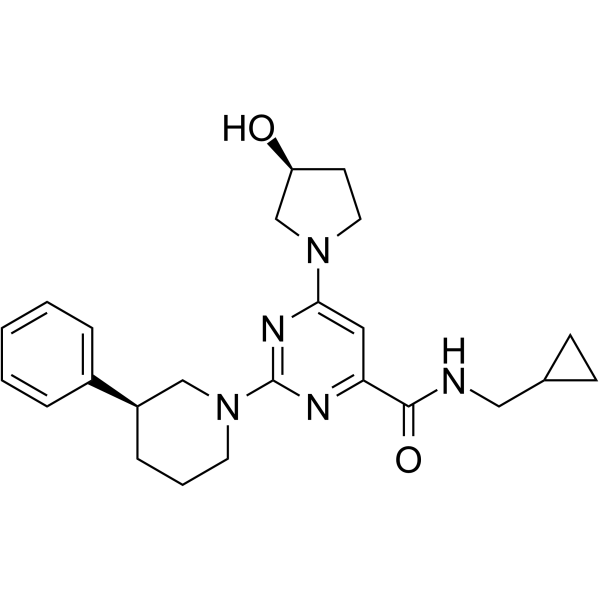
LEI-401 is a first-in-class, selective, and CNS-active NAPE-PLD (N-acylphosphatidylethanolamine phospholipase D) inhibitor, with an IC50 of 27 nM. LEI-401 modulates emotional behavior in mice .
loading...
    loading...
1
1 Cited Publications
Cat. No.: HY-Z0478
CAS No.: 5989-54-8
Synonyms: (S)-(-)-Limonene
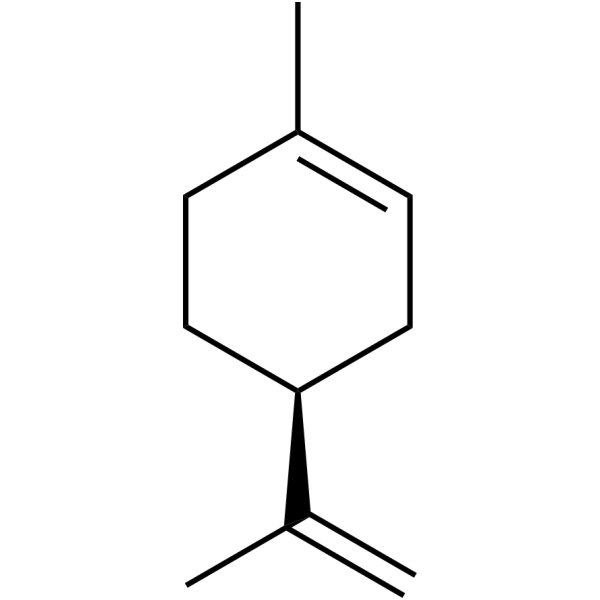
(-)-Limonene ((S)-(-)-Limonene) is orally active and can cause mild bronchoconstriction. (-)-Limonene alleviates cytosolic and mitochondrial oxidative stress by inhibiting the increase of calcium ions (Ca 2+) and Ca 2+/calmodulin-dependent protein kinase II (CaMKII). It also exerts anti-stress effects by inhibiting the activity of the hypothalamic-pituitary-adrenal (HPA) axis. Additionally, (-)-Limonene can be used as an antibacterial agent in aquaculture .
loading...
    loading...
1
1 Cited Publications
Cat. No.: HY-106373
CAS No.: 9002-60-2
Purity:  99.17%
Synonyms: ACTH; Adrenocorticotrophic hormone
Adrenocorticotropic hormone (ACTH; Adrenocorticotrophic hormone) is a polypeptide tropic hormone produced by the anterior pituitary gland. Adrenocorticotropic hormone stimulates cortisol secretion from the adrenal cortex via the hypothalamic-pituitary-adrenal (HPA) axis. Adrenocorticotropic hormone regulates cortisol and androgen production. Adrenocorticotropic hormone can promote the development of spermatogenesis. Adrenocorticotropic hormone can relieve acute inflammation in gout models by inhibiting the polarization of macrophages to M1 type, inhibiting ROS and proinflammatory factor production and protecting mitochondrial function. Adrenocorticotropic hormone can be used for the researches of inflammation, endocrinology, metabolic disease, such as gout and nephrotic syndrome .
loading...
    loading...
1
1 Cited Publications
Cat. No.: HY-132182
CAS No.: 383418-30-2
Purity:  99.4%
Research Areas:  

Neurological Disease Cancer

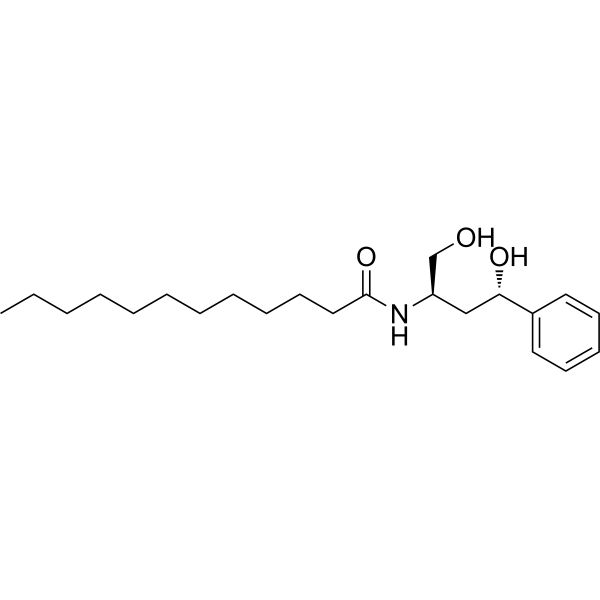
HPA-12 is a blood-brain barrier-permeable small-molecule inhibitor of ceramide transfer protein (CERT) with four stereoisomers (the (1R,3R)-stereoisomer exhibits the highest activity). HPA-12 blocks the transport of ceramide from the endoplasmic reticulum to the Golgi apparatus by binding to the START domain of CERT, leading to intracellular ceramide accumulation and inhibition of sphingomyelin (SM) synthesis. HPA-12 induces endoplasmic reticulum stress via the GRP78/ATF6/CHOP axis and activates mitochondrial autophagy, thereby inhibiting cell growth and inducing apoptosis. In in vivo experiments, HPA-12 significantly reduces the leukemia burden and splenomegaly in mouse models of acute myeloid leukemia (AML) and prolongs survival. HPA-12 is applicable for the research of lipid metabolism in acute myeloid leukemia and Alzheimer's disease .
loading...
    loading...
1
1 Cited Publications
Cat. No.: HY-P3641A
Target:  

GnRH Receptor

Kisspeptin 13 TFA is the TFA salt form of Kisspeptin 13 (HY-P3641). Kisspeptin-13 TFA inhibits glucose-induced insulin secretion with an IC50 of 1.2 nM. Kisspeptin 13 TFA activates the hypothalamic-pituitary-adrenal (HPA) axis, causes hyperthermia, motor behavior and anxiety in rats. Kisspeptin 13 TFA interacts with α2-adrenergic and 5-HT2 serotonin receptors, exhibits antidepressant efficacy. Kisspeptin 13 TFA is an activator for GPR54 and GnRH receptor, which enhances memory and can be used in Alzheimer's disease research .
loading...
    loading...
1
1 Cited Publications
Cat. No.: HY-106373A
Purity:  99.85%
Synonyms: ACTH TFA; Adrenocorticotrophic hormone TFA
Adrenocorticotropic hormone (ACTH; Adrenocorticotrophic hormone) TFA is a polypeptide tropic hormone produced by the anterior pituitary gland. Adrenocorticotropic hormone TFA stimulates cortisol secretion from the adrenal cortex via the hypothalamic-pituitary-adrenal (HPA) axis. Adrenocorticotropic hormone TFA regulates cortisol and androgen production. Adrenocorticotropic hormone TFA can promote the development of spermatogenesis. Adrenocorticotropic hormone TFA can relieve acute inflammation in gout models by inhibiting the polarization of macrophages to M1 type, inhibiting ROS and proinflammatory factor production and protecting mitochondrial function. Adrenocorticotropic hormone TFA can be used for the researches of inflammation, endocrinology, metabolic disease, such as gout and nephrotic syndrome .
loading...
    loading...
Cat. No.: HY-117820
CAS No.: 1642187-96-9
Purity:  98.43%
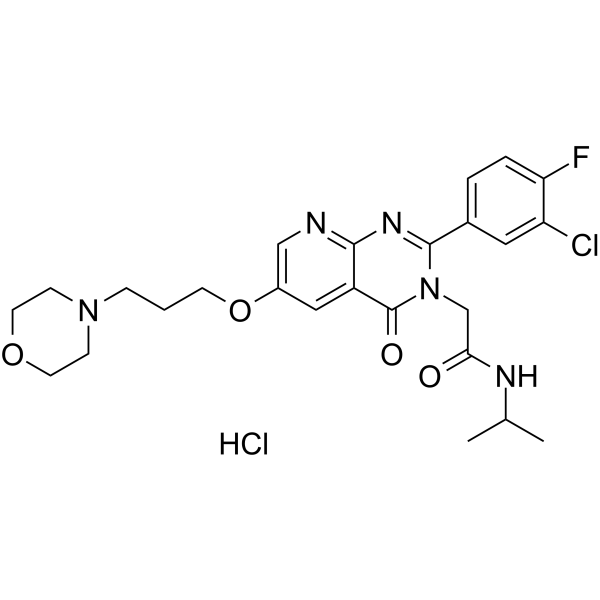
TASP0390325 is a high affinity and orally active arginine vasopressin receptor 1B (V1B receptor) antagonist with antidepressant and anxiolytic activities .
loading...
    loading...
Cat. No.: HY-P1245
CAS No.: 192387-39-6
Synonyms: Neuropeptide NPFF (human)
Target:  

CRFR

Research Areas:  

Others

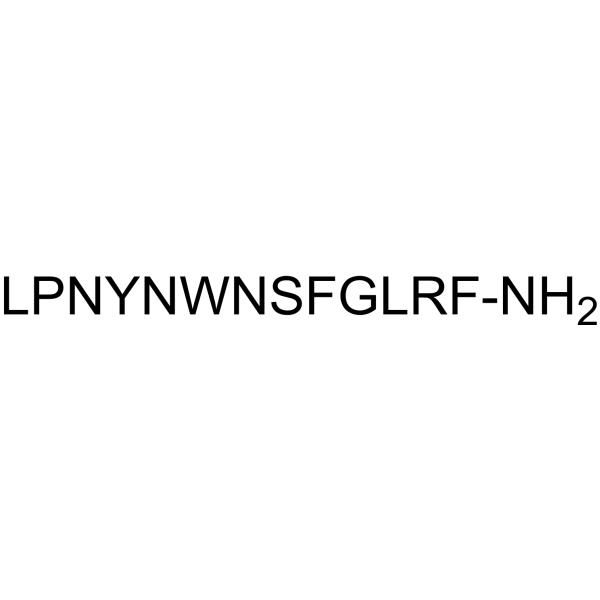
Neuropeptide SF human augments paraventricular corticotrophin-releasing hormone (CRH) release and increases adrenocorticotropic hormone (ACTH) and corticosterone levels in the plasma. Neuropeptide SF human play a physiologic role in the regulation of such circadian functions as the activity of motor centers and the HPA axis, through the release of CRH .
loading...
    loading...
Cat. No.: HY-P3069
CAS No.: 114882-65-4
Target:  

Neurokinin Receptor

Research Areas:  

Neurological Disease Endocrinology

γ-Neuropeptide (rabbit) can be isolated from rabbit intestine. γ-Neuropeptide is an endogenous neurokinin peptide that acts as a neurokinin 2 (NK2) receptor agonist. γ-Neuropeptide mediates hypothalamic-pituitary-adrenal (HPA) axis, as well as reproductive hormone release .
loading...
    loading...
Cat. No.: HY-117965
CAS No.: 1400902-13-7
Synonyms: CORT 118335
Miricorilant (CORT 118335) is a dual selective glucocorticoid (GR) modulator/mineralocorticoid (MR) antagonist. Miricorilant can be used for the research of hypothalamic-pituitary-adrenal (HPA) axis related disorders .
loading...
    loading...
Cat. No.: HY-P3539
CAS No.: 196109-31-6
Target:  

GCGR

Research Areas:  

Neurological Disease Endocrinology

Exendin-4 (3-39) is a peptide. Exendin-4 (3-39) is a truncated form of Exendin-4 (HY-13443) that lacks the first two amino acids. Exendin-4 is a potent Glucagon-like peptide-1 receptor (GLP-1r) agonist. Exendin-4 (3-39) and Exendin-4 can be used for the research of diabetic and hypothalamic-pituitary-adrenal (HPA) axis .
loading...
    loading...
Cat. No.: HY-P3641
CAS No.: 374675-18-0
Target:  

GnRH Receptor

Kisspeptin 13 inhibits glucose-induced insulin secretion with an IC50 of 1.2 nM. Kisspeptin 13 activates the hypothalamic-pituitary-adrenal (HPA) axis, causes hyperthermia, motor behavior and anxiety in rats. Kisspeptin 13 interacts with α2-adrenergic and 5-HT2 serotonin receptors, exhibits antidepressant efficacy. Kisspeptin 13 is an activator for GPR54 and GnRH receptor, which enhances memory and can be used in Alzheimer's disease research .
loading...
    loading...
Cat. No.: HY-P10289A
Synonyms: NPW30, rat acetate
Research Areas:  

Neurological Disease

Neuropeptide W-30 (rat) is an important stress mediator in the central nervous system that modulates the hypothalamus-pituitary-adrenal (HPA) axis and sympathetic outflow. Neuropeptide W-30 (rat) is an endogenous ligand for the two structurally related orphan G-protein-coupled receptors (GPCRs) GPR7 and GPR8. NPW-30 activates and binds to both GPR7 and GPR8 at similar effective doses .
loading...
    loading...
Cat. No.: HY-P10287
CAS No.: 383415-80-3
Synonyms: NPW30, human
Research Areas:  

Neurological Disease

Neuropeptide W-30 (human) is an important stress mediator in the central nervous system that modulates the hypothalamus-pituitary-adrenal (HPA) axis and sympathetic outflow. Neuropeptide W-30 (human) is an endogenous ligand for the two structurally related orphan G-protein-coupled receptors (GPCRs) GPR7 and GPR8. Neuropeptide W-30 (human) activates and binds to both GPR7 and GPR8 at similar effective doses .
loading...
    loading...
Cat. No.: HY-P1245A
CAS No.: 2924824-03-1
Synonyms: Neuropeptide NPFF (human) acetate
Target:  

CRFR

Research Areas:  

Others

Neuropeptide SF (human) acetate augments paraventricular corticotrophin-releasing hormone (CRH) release and increases adrenocorticotropic hormone (ACTH) and corticosterone levels in the plasma. Neuropeptide SF (human) acetate play a physiologic role in the regulation of such circadian functions as the activity of motor centers and the HPA axis, through the release of CRH .
loading...
    loading...
Cat. No.: HY-P10289
CAS No.: 383415-90-5
Synonyms: NPW30, rat
Research Areas:  

Neurological Disease

Neuropeptide W-30 (rat) is an important stress mediator in the central nervous system that modulates the hypothalamus-pituitary-adrenal (HPA) axis and sympathetic outflow. Neuropeptide W-30 (rat) is an endogenous ligand for the two structurally related orphan G-protein-coupled receptors (GPCRs) GPR7 and GPR8. NPW-30 activates and binds to both GPR7 and GPR8 at similar effective doses .
loading...
    loading...
Cat. No.: HY-118768
CAS No.: 302556-51-0
Target:  

Adrenergic Receptor

Research Areas:  

Neurological Disease

FMS586 free base is a selective neuropeptide Y Y5 receptor antagonist with oral activity. FMS586 can completely block the significant increase in adrenocorticotropic hormone (ACTH) and cortisol caused by the Y(5) selective agonist hPP. FMS586 also reversed the significant upregulation of adrenocorticotropic hormone (CRF) and antidiuretic hormone (AVP) mRNA expression induced by central injection of hPP. FMS586 provides the first evidence that selective stimulation of Y(5) receptors triggers activation of the HPA axis .
loading...
    loading...
  • 1

