15 Results for "

ICT

" in MedChemExpress (MCE) Product Catalog:
Products (15)

15 Results for "ICT" in MCE Product Catalog:

1
1 Cited Publications
Cat. No.: HY-138561C
Purity:  96.23%
Research Areas:  

Infection

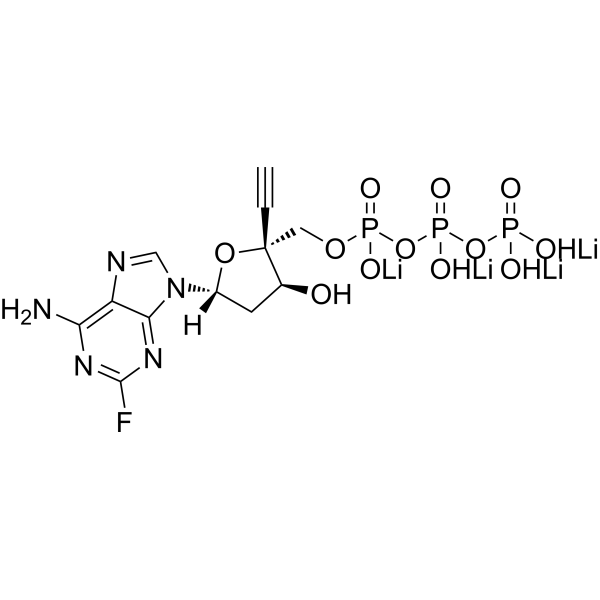
EFdA-TP tetralithium is a potent nucleoside reverse transcriptase (RT) inhibitor. EFdA-TP tetralithium inhibits RT-catalyzed DNA synthesis as an effective immediate or delayed chain terminator (ICT or DCT). EFdA-TP tetralithium inhibits HIV-1 RT with multiple mechanisms .
loading...
    loading...
Cat. No.: HY-152293
CAS No.: 1412453-70-3
Target:  

VEGFR ERK

Research Areas:  

Cancer

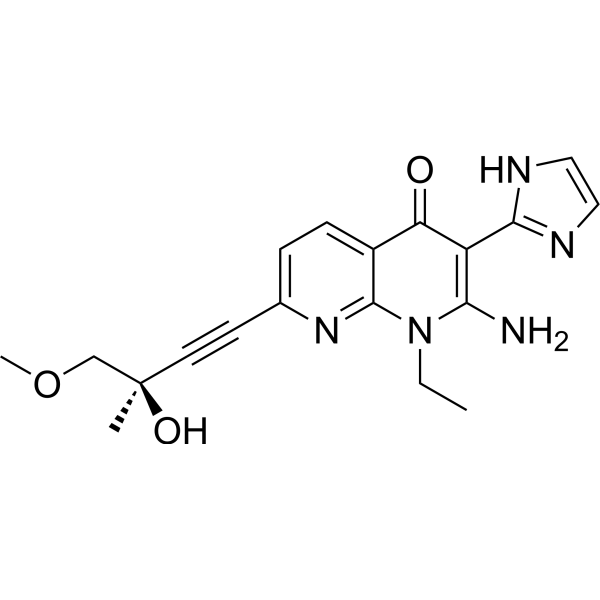
EVT801 is an orally active and selective inhibitor of VEGFR-3 (IC50=11 nM), which has antitumor effects. EVT801 inhibits not only VEGF-C-induced human endothelial cell proliferation, but also tumor (lymphatic) angiogenesis in tumor mouse models. EVT801 can reduce tumor hypoxia, immunosuppressive cytokines (CCL4, CCL5) and myeloid derived suppressor cells (MDSC) production. EVT801 has synergistic effect with immune checkpoint therapy (ICT), which improves ICT response rate and has better inhibitory effect on cancer mouse models . EVT801 is a click chemistry reagent, it contains an Alkyne group and can undergo copper-catalyzed azide-alkyne cycloaddition (CuAAc) with molecules containing Azide groups.
loading...
    loading...
Cat. No.: HY-138561
CAS No.: 950913-56-1
Research Areas:  

Infection

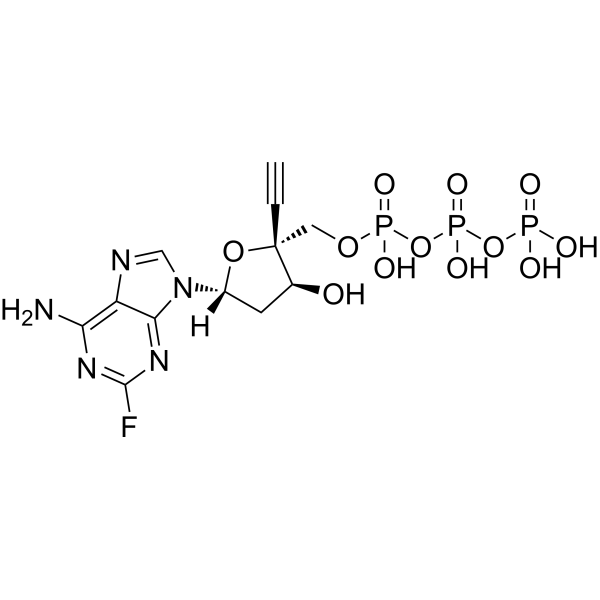
EFdA-TP is a potent nucleoside reverse transcriptase (RT) inhibitor. EFdA-TP inhibits RT-catalyzed DNA synthesis as an effective immediate or delayed chain terminator (ICT or DCT). EFdA-TP inhibits HIV-1 RT with multiple mechanisms .
loading...
    loading...
Cat. No.: HY-W024271
CAS No.: 63149-33-7
Synonyms: 9-Formyl-8-hydroxyjulolidine
8-Hydroxyjulolidine-9-carboxaldehyde (9-Formyl-8-hydroxyjulolidine) is a highly selective fluorescent probe for hydrogen sulfide (S 2−) and silicate (SiO3 2−). 8-Hydroxyjulolidine-9-carboxaldehyde operates via a mechanism of blocking intramolecular charge transfer (ICT), exhibiting significant fluorescence enhancement in the presence of weak acid ions. 8-Hydroxyjulolidine-9-carboxaldehyde is promising for research of fluorescence imaging of hydrogen sulfide within living cells .
loading...
    loading...
Cat. No.: HY-172930
CAS No.: 2991021-08-8
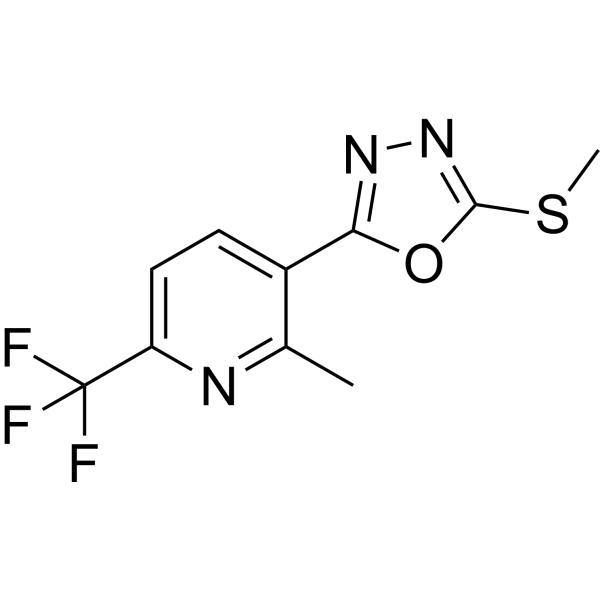
PVTX-405 is a selective and oral active IKZF2 molecular glue degrader with a DC50  of  0.7 nM and a Dmax of 91%. PVTX-405 enhances degradation efficiency, significantly reduces off-target degradation, and alleviates hERG inhibition with IC50 of 48 µM. PVTX-405 significantly inhibits the growth of MC38 tumors, with greater synergistic anti-cancer efficacy in combination with immune checkpoint therapies (ICTs) (anti-PD1 or anti-LAG3) in the MC38 mouse tumor xenograft model using Crbn 391V C57BL/6 mice .
loading...
    loading...
Cat. No.: HY-D2479
CAS No.: 2978635-30-0
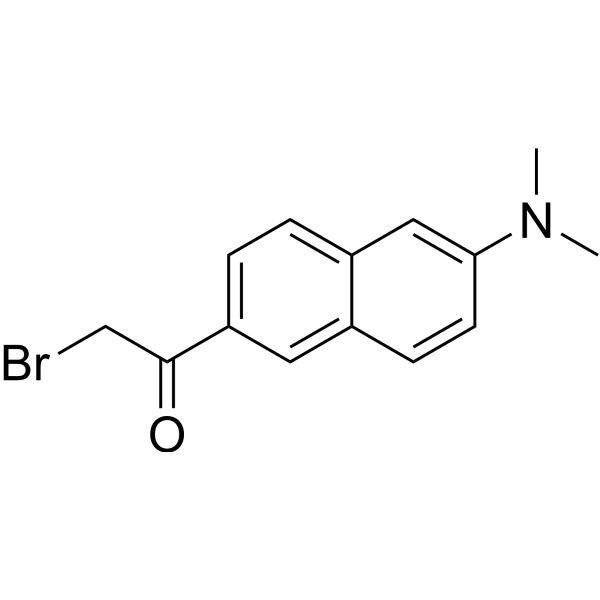
DMANI is an intramolecular charge transfer (ICT)-based mitochondria-targeted ratiometric fluorescent probe. DMANI can monitor mitochondrial peroxynitrite (ONOO ) in living cells .
loading...
    loading...
Cat. No.: HY-138561B
CAS No.: 2883783-00-2
Research Areas:  

Infection

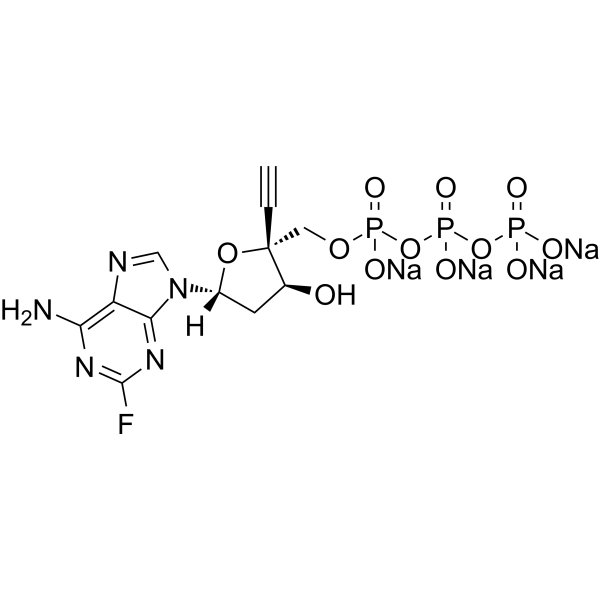
EFdA-TP tetrasodium is a potent nucleoside reverse transcriptase (RT) inhibitor. EFdA-TP tetrasodium inhibits RT-catalyzed DNA synthesis as an effective immediate or delayed chain terminator (ICT or DCT). EFdA-TP tetrasodium inhibits HIV-1 RT with multiple mechanisms . EFdA-TP (tetrasodium) is a click chemistry reagent, it contains an Alkyne group and can undergo copper-catalyzed azide-alkyne cycloaddition (CuAAc) with molecules containing Azide groups.
loading...
    loading...
Cat. No.: HY-161838
Target:  

ATM/ATR

Research Areas:  

Cancer

ICT10336 is a hypoxia-responsive prodrug of ATR inhibitor, AZD6738 (HY-19323). ICT10336 is hypoxia-activated and specifically releases AZD6738 only in hypoxic conditions in vitro. This can inhibit ATR activation (T1989 and S428 phosphorylation) and subsequently abrogate HIF1a-mediated adaptation of hypoxic cancers cells, thus selectively inducing cell death in 2D and 3D cancer models. ICT10336 is a metabolic substrate of CYPOR activity.
loading...
    loading...
Cat. No.: HY-129094
CAS No.: 215655-21-3
Target:  

CXCR

Research Areas:  

Cancer

ICT5040 is a small molecule CXCR4 antagonist (IC50=3.8 μM). ICT5040 inhibits CXCL12-mediated proliferation and migration, and suppresses CXCL12-induced intracellular calcium mobilisation in U87 glioma cells .
loading...
    loading...
Cat. No.: HY-138561A
Research Areas:  

Infection

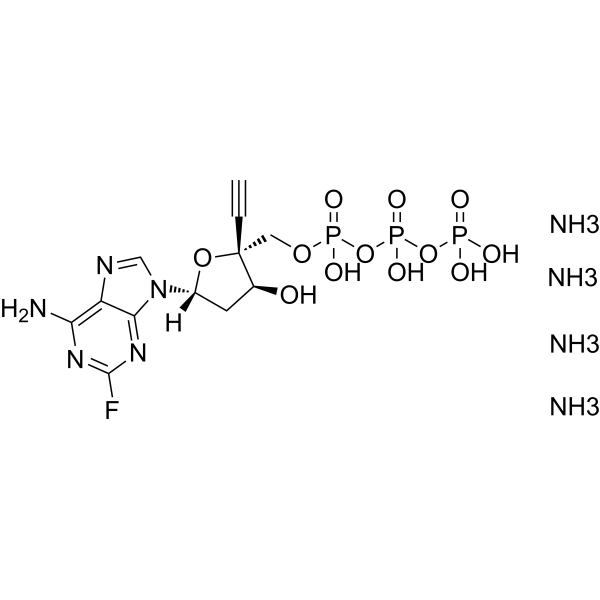
EFdA-TP tetraammonium is a potent nucleoside reverse transcriptase (RT) inhibitor. EFdA-TP tetraammonium inhibits RT-catalyzed DNA synthesis as an effective immediate or delayed chain terminator (ICT or DCT). EFdA-TP tetraammonium inhibits HIV-1 RT with multiple mechanisms . EFdA-TP (tetraammonium) is a click chemistry reagent, it contains an Alkyne group and can undergo copper-catalyzed azide-alkyne cycloaddition (CuAAc) with molecules containing Azide groups.
loading...
    loading...
Cat. No.: HY-D1417
CAS No.: 2247391-82-6
Target:  

Fluorescent Dye

Research Areas:  

Others

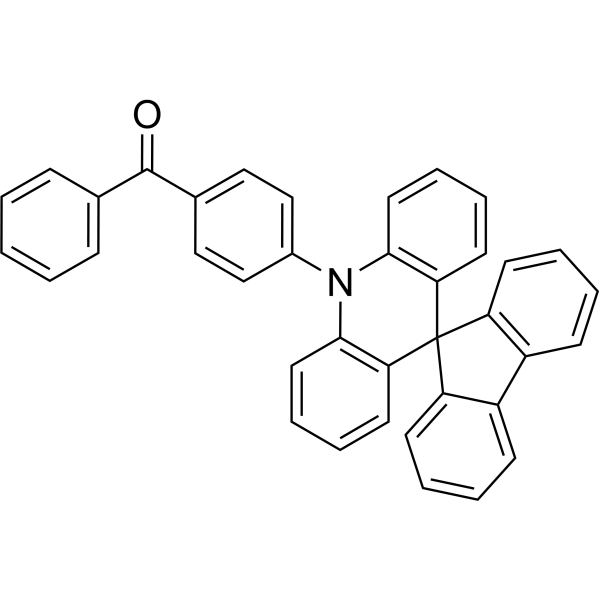
P-BP-SFAC is a fluorescence molecule. P-BP-SFAC exhibits an apparent absorption band with a peak at about 377 nm, indicative of a stronger ICT effect .
loading...
    loading...
Cat. No.: HY-D1259
CAS No.: 2414276-32-5
Synonyms: VDP-green (NEP)
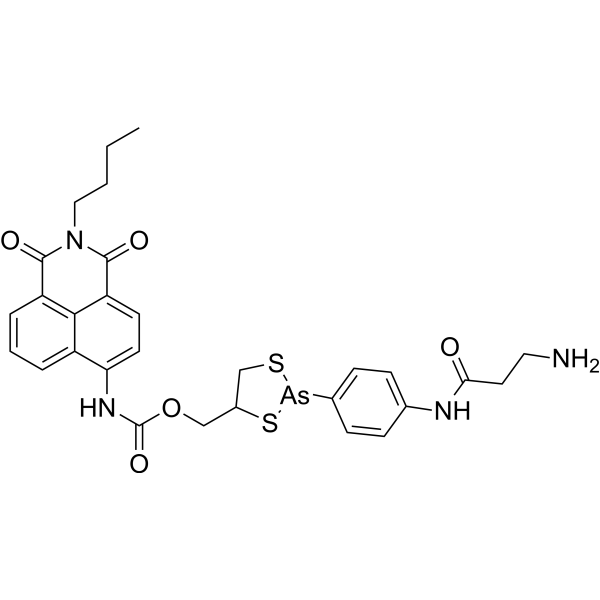
NEP (VDP-green (NEP)) is a turn-on fluorescent probe based on the intramolecular charge transfer (ICT) mechanism for sensing vicinal dithiol-containing proteins (VDPs). NEP exhibits high selectivity toward VDPs in live cells and in vivo and displays a strong green fluorescence signal (λexem=430/535 nm). NEP has the potential for parkinsonism .
loading...
    loading...
Cat. No.: HY-P88989
Synonyms: DS-1; DS1; ICT1; MRP-L58

Host:  

Mouse

Application:  

IHC-P

Reactivity:  

Human

loading...
    loading...
Cat. No.: HY-P88989A
Synonyms: DS-1; DS1; ICT1; MRP-L58

Host:  

Mouse

Application:  

IHC-P

Reactivity:  

Human

loading...
    loading...
Cat. No.: HY-D3224
CAS No.: 2413777-91-8
HCP is a two-photon fluorescent probe capable of crossing the blood-brain barrier, which is specifically designed for real-time detection of hypochlorous acid (HClO/ClO -) produced by myeloperoxidase (MPO). Chlorination of the quinoline skeleton of HCP generates HCP-Cl, which eliminates intramolecular charge transfer (ICT) quenching and thereby produces fluorescence. HCP is suitable for in vivo dynamic imaging of HClO in the brains of epileptic mice and high-throughput screening of antiepileptic drugs (HCP-Cl: Ex/Em = 800 nm/495 nm) .
loading...
    loading...
  • 1

