

28 Results for "

Lysosomal storage diseases

" in MedChemExpress (MCE) Product Catalog:
Products (28)

28 Results for "Lysosomal storage diseases" in MCE Product Catalog:

1
1 Cited Publications
Cat. No.: HY-141866
CAS No.: 2415225-30-6
Purity:  99.21%
Target:  

Ceramidase

Research Areas:  

Neurological Disease

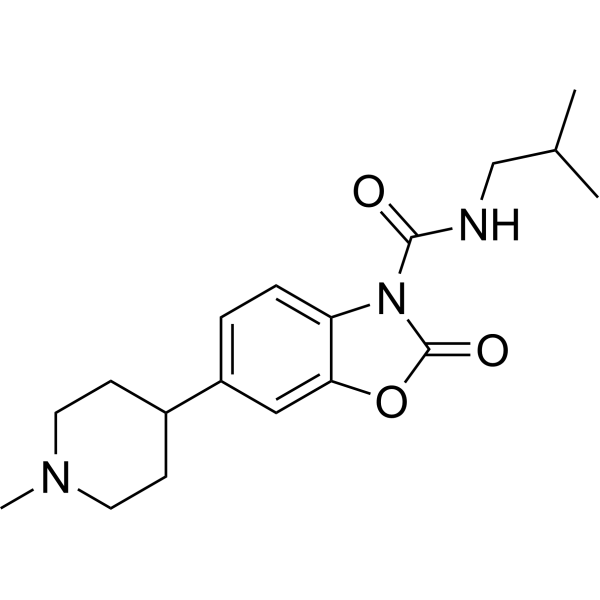
Acid Ceramidase-IN-1 is orally active and blood-brain barrier penetrant acid ceramidase (AC, ASAH-1) inhibitor (hAC IC50=0.166 μM). Acid Ceramidase-IN-1 reduces AC activity, accumulates ceramide species (Cer (d18:0/16:0), Cer (d18:1/16:0)), and decreases sphingosine levels. Acid Ceramidase-IN-1 can be used for the study of severe neurological lysosomal storage diseases (LSDs) such as Gaucher’s disease (GD) and Krabbe’s disease (KD) .
loading...
    loading...
Cat. No.: HY-147976
CAS No.: 2279945-76-3
Target:  

Glycosidase

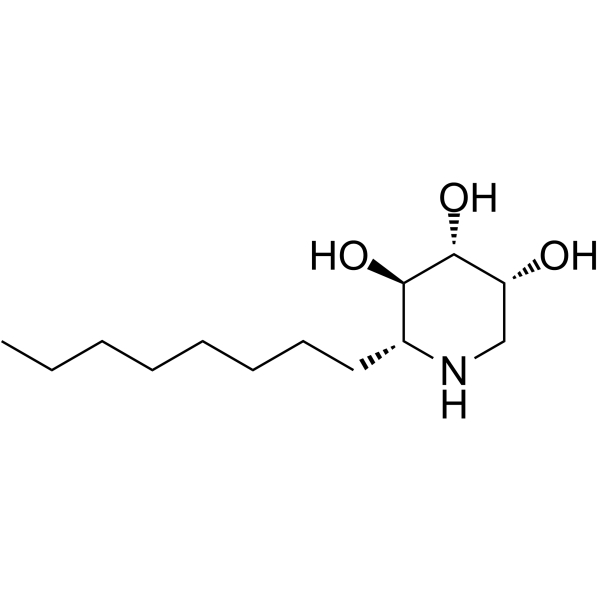
Glucocerebrosidase-IN-1 (compound 11a) is a potent and selective GCase (glucocerebrosidase) inhibitor, with an IC50 of 29.3 μM and a Ki of 18.5 μM. Glucocerebrosidase-IN-1 can be used for the research of Gaucher disease (GD) and Parkinson’s disease (PD) .
loading...
    loading...
Cat. No.: HY-153830
CAS No.: 4201-62-1
Synonyms: C16 Lactosylceramide (d18:1/16:0)
LacCer (d18:1/16:0) (C16 Lactosylceramide (d18:1/16:0)) is an endogenous bioactive sphingolipid that can form membrane microdomains with Lyn kinase and the αi subunits of inhibitory G protein-coupled receptors (GPCRs). The levels of LacCer (d18:1/16:0) are elevated in the plasma of insulin-resistant cattle. In a mouse model of Niemann-Pick type C1 disease (a neurodegenerative cholesterol-sphingolipid lysosomal storage disorder), the expression of LacCer (d18:1/16:0) is also upregulated. LacCer (d18:1/16:0) can be used in research on metabolic diseases and neurodegenerative diseases .
loading...
    loading...
Cat. No.: HY-E70183
Synonyms: EC:3.2.1.20; GAA
Lysosomal α-Glucosidase (EC:3.2.1.20) is a lysosomal α-Glucosidase that degrades glycogen into glucose and catalyzes the hydrolysis of α-1,4 and α-1,6 glycosidic linkages in glycogen, as well as that of natural and synthetic oligoglucosides. Deficiency of Lysosomal α-Glucosidase causes type II glycogen storage disease (Pompe disease), which is characterized by lysosomal glycogen accumulation in mammals and birds. Lysosomal α-Glucosidase can be used in research related to type II glycogen storage disease .
loading...
    loading...
Cat. No.: HY-151240
CAS No.: 85305-88-0
Purity:  98%
Target:  

Endogenous Metabolite

Research Areas:  

Neurological Disease

Galactosylceramide (GalC) is a galactosylceramide that has been implicated in many physiological and pathological phenomena. For example, important lysosomal storage disorders such as Gaucher disease (GD) and neurodegenerative diseases are characterized by GlcCer accumulation.
loading...
    loading...
Cat. No.: HY-12733
CAS No.: 1254318-44-9
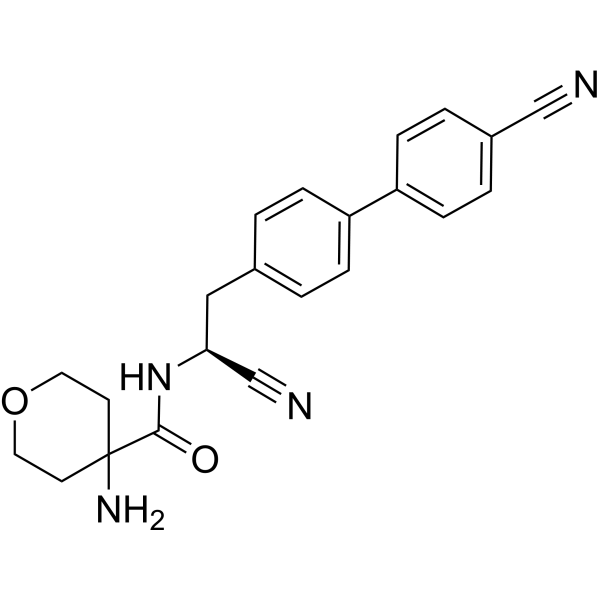
AZD5248 is an orally active, selective dipeptidyl peptidase 1 (cathepsin C) inhibitor, with IC50 values of 1 nM and 17 nM against human CatC, 44 nM against human DPP1, and 67 nM against rat DPP1. It exhibits low clearance and high bioavailability in animal models. AZD5248 forms an irreversible covalent bond with the catalytic Cys234 residue of CatC, exerts reversible inhibition via its nitrile moiety, blocks CatC-dependent amyloid formation, and reduces the activation levels of neutrophil serine proteases in bone marrow and blood. AZD5248 reacts with aortic elastin aldehydes to form stable 4-imidazolinones, induces ultrastructural changes in aortic tissue, and has an α-amino acid-based backbone. AZD5248 reduces the severity of acute pancreatitis in mouse models. AZD5248 can be used in research on chronic obstructive pulmonary disease, acute pancreatitis, neurodegenerative diseases, lysosomal storage disorders, acute lung injury, cystic fibrosis, and neutrophil-mediated inflammatory diseases .
loading...
    loading...
Cat. No.: HY-W056439
CAS No.: 224779-27-5
Target:  

Glycosidase

Research Areas:  

Neurological Disease

N-Boc-3-hydroxy-1,2,3,6-tetrahydropyridine can increase the activity of β-glucocerebrosidase by 20%. N-Boc-3-hydroxy-1,2,3,6-tetrahydropyridine can be used in the study of lysosomal storage diseases and other protein storage diseases .
loading...
    loading...
Cat. No.: HY-147976A
CAS No.: 2279945-77-4
Target:  

Glycosidase

Research Areas:  

Neurological Disease

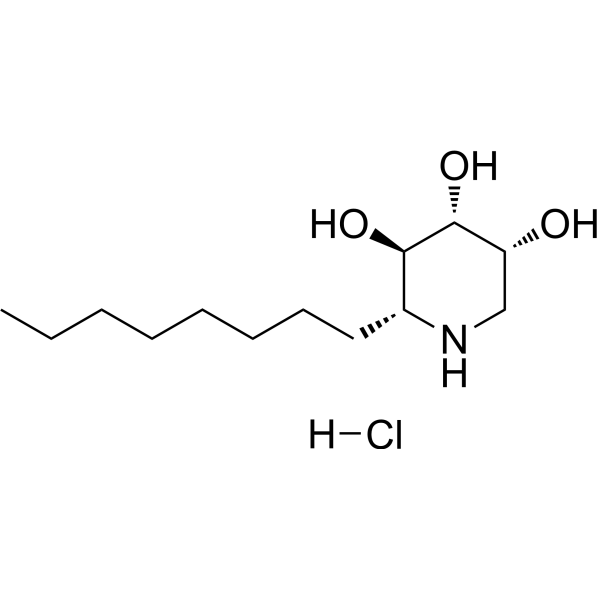
Glucocerebrosidase-IN-1 (compound 11a) hydrochloride is a potent and selective GCase (glucocerebrosidase) inhibitor, with an IC50 of 29.3 μM and a Ki of 18.5 μM. Glucocerebrosidase-IN-1 hydrochloride can be used for the research of Gaucher disease (GD) and Parkinson’s disease (PD) .
loading...
    loading...
Cat. No.: HY-145549
CAS No.: 121999-68-6
Synonyms: N-eicosanoyl-D-erythro-Sphingosylphosphorylcholine; SM(d18:1/20:0)
Target:  

Endogenous Metabolite

Research Areas:  

Endocrinology

C20 Sphingomyelin (d18:1/20:0) (N-eicosanoyl-D-erythro-Sphingosylphosphorylcholine; SM(d18:1/20:0)) is a naturally occurring sphingolipid. C20 Sphingomyelin (d18:1/20:0) levels are upregulated in the hippocampus of streptozotocin (HY-13753)-induced diabetic rats and in human plasma, positively correlating with insulin resistance in obese humans. C20 Sphingomyelin (d18:1/20:0) is also upregulated in the liver of a mouse model of Niemann-Pick C1 disease, a neurodegenerative cholesterol sphingolipid lysosomal storage disorder.
loading...
    loading...
Cat. No.: HY-153830S
CAS No.: 2097249-92-6
Synonyms: C16 Lactosylceramide (d18:1/16:0)-d3
LacCer (d18:1/16:0) (C16 Lactosylceramide (d18:1/16:0))-d3 is the deuterium labeled LacCer (d18:1/16:0) (HY-153830). LacCer (d18:1/16:0) is an endogenous bioactive sphingolipid that can form membrane microdomains with Lyn kinase and the αi subunits of inhibitory G protein-coupled receptors (GPCRs). LacCer (d18:1/16:0) are elevated in the plasma of insulin-resistant cattle. LacCer (d18:1/16:0) is also upregulated in a mouse model of Niemann-Pick type C1 disease (a neurodegenerative cholesterol-sphingolipid lysosomal storage disorder). LacCer (d18:1/16:0) can be used in research on metabolic diseases and neurodegenerative diseases .
loading...
    loading...
Cat. No.: HY-178202
CAS No.: 2734265-58-6
Target:  

Glycosidase

Research Areas:  

Metabolic Disease

5-C-phenethyl-DNJ is a selective α-glucosidase GAA inhibitor, with its Ki value for rhGAA being 0.81 μM. 5-C-phenethyl-DNJ exhibits extremely high selectivity for GANAB, GBA1, and GBA2. 5-C-phenethyl-DNJ can be used for the study of Pompe disease .
loading...
    loading...
Cat. No.: HY-151536
CAS No.: 2922973-15-5
Target:  

Fluorescent Dye

Research Areas:  

Neurological Disease

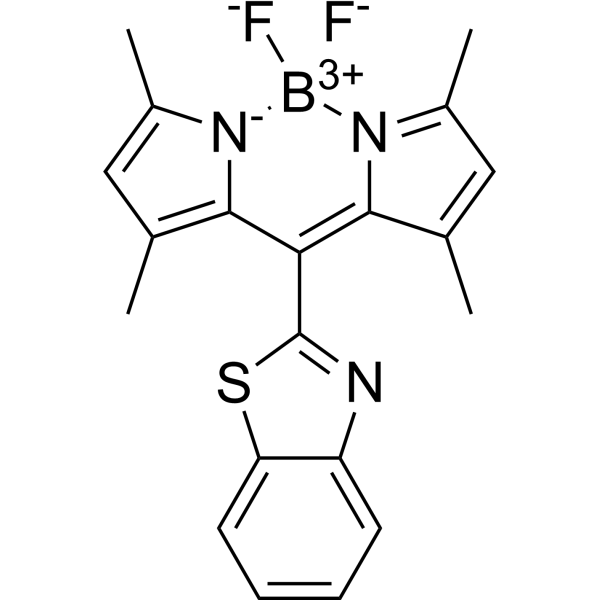
meso-Benzothiazole-BODIPY 505/515 is a boron dipyrromethenes (BODIPY) -based fluorescent probediseases, lysosomal storage diseases and neural degeneration diseases .
loading...
    loading...
Cat. No.: HY-108828
CAS No.: 420784-05-0
Synonyms: rhGAA
Target:  

Glycosidase

Research Areas:  

Metabolic Disease

Alglucosidase alfa (rhGAA) is a recombinant human acid α-glucosidase. Alglucosidase alfa is taken up by cells via the cation-independent mannose-6-phosphate receptor (CI-MPR) pathway and transported to lysosomes, where GAA degrades glycogen in the acidic lysosomal environment. Alglucosidase alfa is applicable to research related to lysosomal glycogen metabolism and glycogen storage diseases .
loading...
    loading...
Cat. No.: HY-156020
CAS No.: 851185-20-1
Target:  

Glycosidase

Research Areas:  

Metabolic Disease

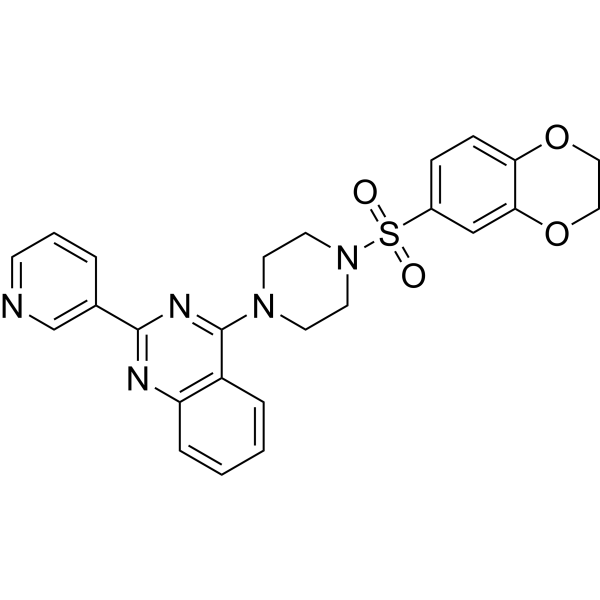
Glucocerebrosidase-IN-2 (compound 12) is a quinazoline analogue and an inhibitor of glucocerebrosidase (GC). Glucocerebrosidase-IN-2 has the potential to improve GC translocation to lysosomes in Gaucher disease patient-derived cells (mostly carrying the N370S mutation). Glucocerebrosidase-IN-2 inhibits the hydrolysis of 4-methylumbelliferone β-D-glucopyranoside (4MU) and fluorescent glycosylceramide (FlourGC) in N370S mutant tissues with an AC50 of 25.29 μM .
loading...
    loading...
Cat. No.: HY-186258
Target:  

Potassium Channel

Research Areas:  

Neurological Disease

TMEM175 agonist 4 (Compound 276) is a TMEM175 agonist. TMEM175 agonist 4 can be used for the research of neurodegenerative diseases and lysosomal storage diseases .
loading...
    loading...
Cat. No.: HY-186261
Target:  

Potassium Channel

Research Areas:  

Neurological Disease

TMEM175 agonist 7 is a TMEM175 agonist with an EC50 of 543 nM. TMEM175 agonist 7 is applicable to the research of neurodegenerative diseases and lysosomal storage disorders .
loading...
    loading...
Cat. No.: HY-186259
Target:  

Potassium Channel

Research Areas:  

Neurological Disease

TMEM175 agonist 5 (Compound 252) is a TMEM175 agonist with an EC50 of 421 nM in FLIPR cell assays. TMEM175 agonist 5 can be used for the research of neurodegenerative diseases and lysosomal storage disorders .
loading...
    loading...
Cat. No.: HY-156208
CAS No.: 574738-16-2
Synonyms: AdaGalCer(d18:1/2:0); Admantanyl galactosylceramide (d18:1/2:0); Admantanyl galCer(d18:1/2:0)
C2 Adamantanyl galactosylceramide (AdaGalCer) (d18:1/2:0) is a bioactive sphingolipid. C2 Adamantanyl galactosylceramide (d18:1/2:0) stimulates glucocerebrosidase activity in vitro. C2 Adamantanyl galactosylceramide (d18:1/2:0) inhibits microsomal LacCer and Gb3 synthase, and inhibits cell sulfatide synthesis. C2 Adamantanyl galactosylceramide (d18:1/2:0) reduces glucosylceramide (GlcCer) levels in normal and lysosomal storage disease (LSD) cells. C2 Adamantanyl galactosylceramide (d18:1/2:0) acts as a substrate for A4GALT and is able to lower Gb3 levels with an IC50 concentration of 40 μM in fabry disease cells .
loading...
    loading...
Cat. No.: HY-186254
CAS No.: 3129652-92-9
Target:  

Potassium Channel

Research Areas:  

Neurological Disease

TMEM175 agonist 2 is a TMEM175 agonist with an EC50 of 0.0446 μM in human FLIPR assays and an EC50 of 0.0453 μM in human TMEM175 EP assays. TMEM175 agonist 2 can be used in research related to Parkinson's disease, dementia with Lewy bodies, rapid eye movement sleep behavior disorder, amyotrophic lateral sclerosis, and lysosomal storage diseases .
loading...
    loading...
Cat. No.: HY-186257
CAS No.: 3129652-66-7
Target:  

Potassium Channel

Research Areas:  

Neurological Disease

TMEM175 agonist 3 (Compound 123) is a TMEM175 agonist, with an EC50 of 0.044 μM in human TMEM175 FLIPR assays and an EC50 of 0.073 μM in human TMEM175 EP assays. TMEM175 agonist 3 can be used in the research of Parkinson's disease, dementia with Lewy bodies, rapid eye movement sleep behavior disorder, amyotrophic lateral sclerosis, and lysosomal storage diseases .
loading...
    loading...

