15 Results for "

MYCN inhibitor

" in MedChemExpress (MCE) Product Catalog:
Products (15)

15 Results for "MYCN inhibitor" in MCE Product Catalog:

37
37 Publications Verification
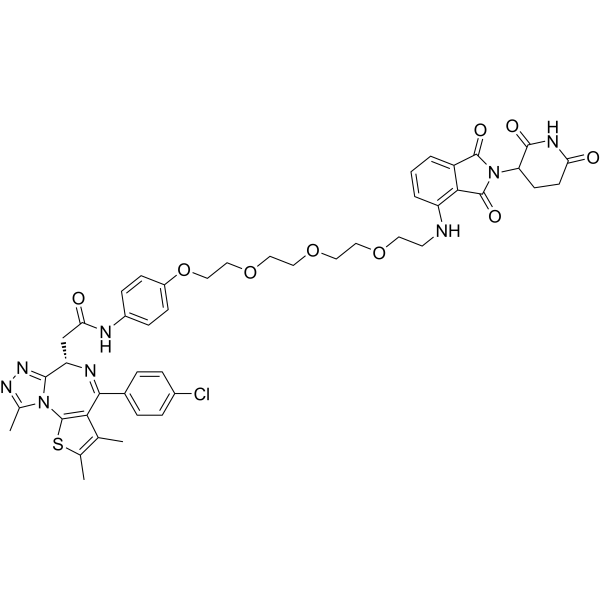
Cat. No.: HY-16954
CAS No.: 1818885-28-7
ARV-825 is a BET protein PROTAC degrader that recruits cereblon, and it targets BRD2, BRD3, and BRD4 for degradation via the ubiquitin-proteasome pathway. ARV-825 downregulates c-MYC, PLK1, MYCN, CDK4/6, JAK2, pSTAT3/5, PIM1, and Bcl-xL, upregulates p21 and p27, and modulates H3K27Ac-mediated transcription, the G2/M checkpoint, the Wnt/β-catenin pathway, and amino acid transport pathways. ARV-825 induces G1 phase cell cycle arrest, caspase 3/PARP-mediated apoptosis, DNA damage, and reactive oxygen species (ROS) production, reduces mitochondrial respiration, and simultaneously inhibits cell proliferation, clonogenic growth, and cell migration. ARV-825 is used in research on gastric cancer, leukemia, neuroblastoma, and cholangiocarcinoma .
loading...
    loading...
5
5 Cited Publications
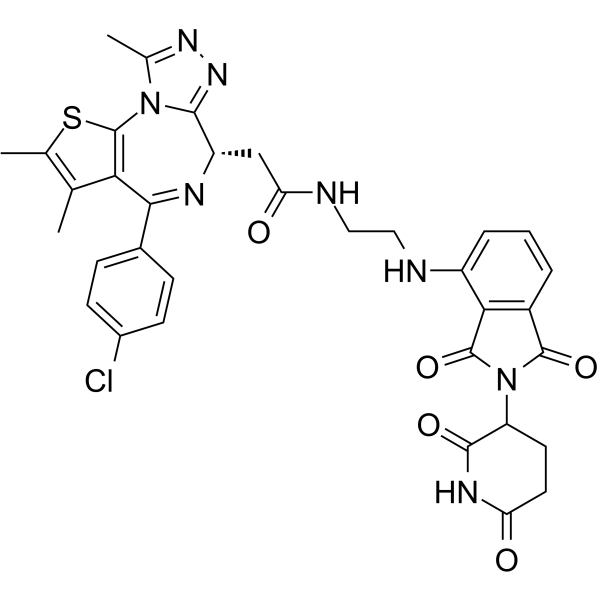
Cat. No.: HY-123844
CAS No.: 1883863-52-2
Purity:  99.94%
dBET57 is a potent and selective BRD4BD1 PROTAC degrader with a DC50 of approximately 500 nM. dBET57 forms a ternary complex with CRL4 CRBN and BRD4BD1, induces the ubiquitination and degradation of BRD4, and indirectly inhibits the transcription of MYCN, c-Myc and PD-L1, ultimately leading to cell cycle arrest and apoptosis. dBET57 can be used in related research on neuroblastoma, non-small cell lung cancer and colorectal cancer .
loading...
    loading...
2
2 Cited Publications
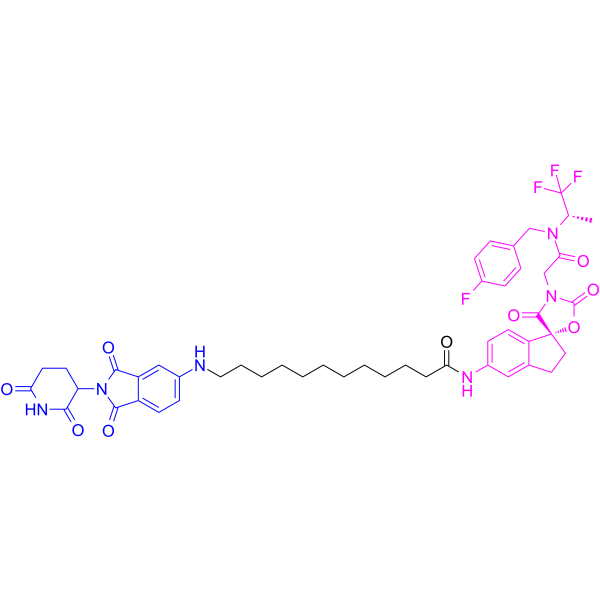
Cat. No.: HY-145765
CAS No.: 2417097-18-6
Purity:  98.24%
JQAD1 is a EP300 PROTAC degrader. JQAD1 selectively targets EP300 and induces its degradation via the CRBN-dependent proteasomal pathway. JQAD1 reduces the levels of H3K27ac and the expression of MYCN. JQAD1 induces apoptosis (apoptosis) and inhibits cancer cell growth. JQAD1 exerts anti-neuroblastoma effects in vivo in a CRBN-dependent manner. JQAD1 can be used for the research of neuroblastoma .
loading...
    loading...
2
2 Cited Publications
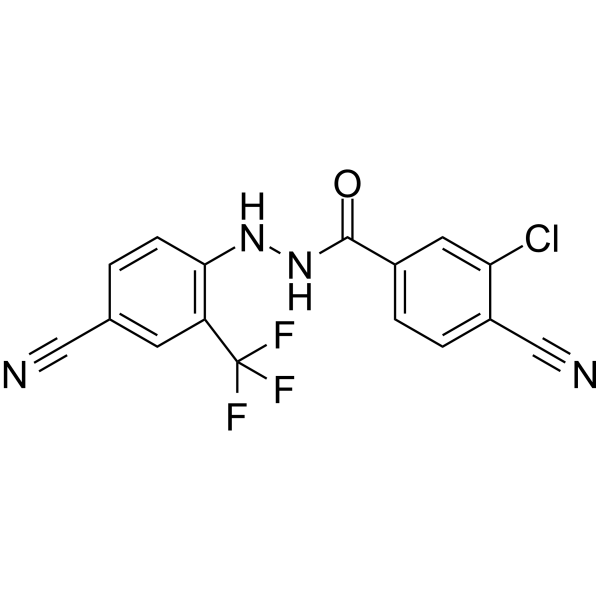
Cat. No.: HY-144878
CAS No.: 2361742-30-3
Purity:  99.93%
Target:  

c-Myc

Research Areas:  

Cancer

VPC-70619 is a potent N-Myc inhibitor. VPC-70619 blocks the binding of the N-Myc-Max heterocomplex to the DNA E-box and exhibits potent inhibitory activity against N-Myc-dependent cell lines. VPC-70619 can partially reverse paclitaxel (HY-B0015) resistance in cells by reducing MYCN expression. VPC-70619 can be used for cancer research (e.g., neuroblastoma and thyroid cancer) .
loading...
    loading...
1
1 Cited Publications
Cat. No.: HY-156443
CAS No.: 724737-08-0
Purity:  99.94%
Research Areas:  

Cancer

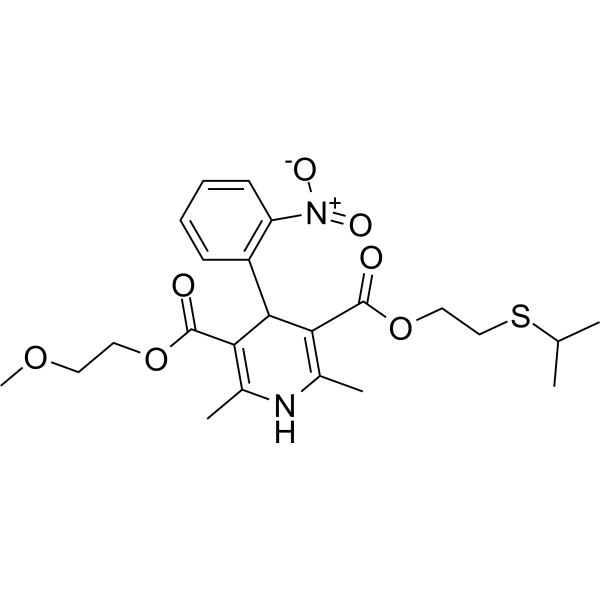
YG1702 is a potent ALDH18A1-specific inhibitor. YG1702 attenuates the growth of MYCN-amplified NB and down-regulates MYCN. YG1702 physically interacts with ALDH18A1 with a high affinity and might potentially affect its enzymatic activity .
loading...
    loading...
1
1 Cited Publications
Cat. No.: HY-124447
CAS No.: 304456-62-0
Purity:  ≥98.0%
Research Areas:  

Cancer

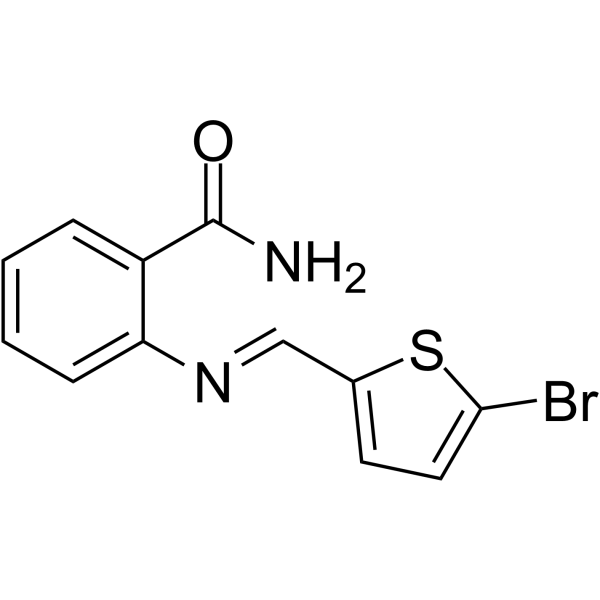
BTYNB is a structure-specific nucleic acid binder and IGF2BP1 inhibitor (with an IC50 of 5 μM against hBTYNB). BTYNB disrupts the IGF2BP1-RNA interaction and blocks its binding to oncogenic mRNAs such as c-Myc, MDM2, PD-L1. BTYNB completely blocks the INHBA-Smad2/3 pathway, disrupts the MYCN/IGF2BP1 loop, and thereby induces apoptosis and cell cycle arrest, effectively inhibiting the proliferation and survival of cancer cells. In addition, BTYNB acts as an immune activator and tumor microenvironment modulator, enhances T cell-mediated tumor killing, and produces significant synergistic effects with inhibitors of PD-1, BRD and BIRC5. BTYNB can be used in relevant research on various malignant tumors including ovarian cancer, neuroblastoma, leukemia and melanoma .
loading...
    loading...
1
1 Cited Publications
Cat. No.: HY-112273
CAS No.: 1639009-81-6
Purity:  98.78%
Target:  

Aurora Kinase

Research Areas:  

Cancer

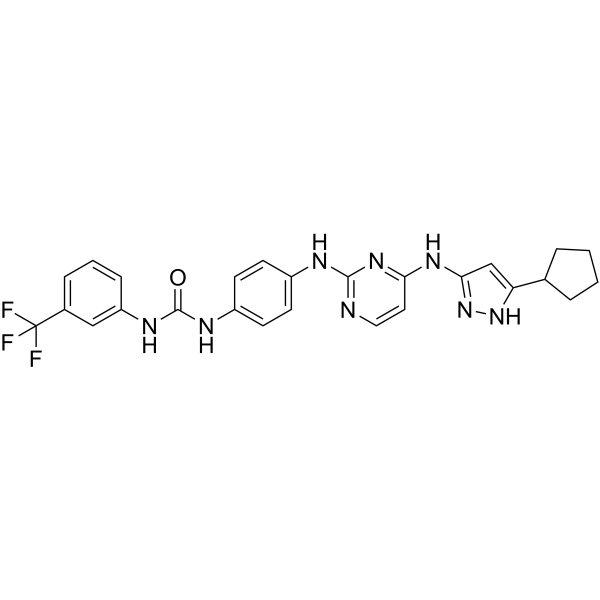
CD532 is a potent Aurora A kinase inhibitor with an IC50 of 45 nM. CD532 has the dual effect of blocking Aurora A kinase activity and driving degradation of MYCN. CD532 also can directly interact with AURKA and induces a global conformational shift. CD532 can be used for the research of cancer .
loading...
    loading...
1
1 Cited Publications
Cat. No.: HY-112273A
CAS No.: 2926498-81-7
Purity:  99.62%
Target:  

Aurora Kinase

Research Areas:  

Cancer

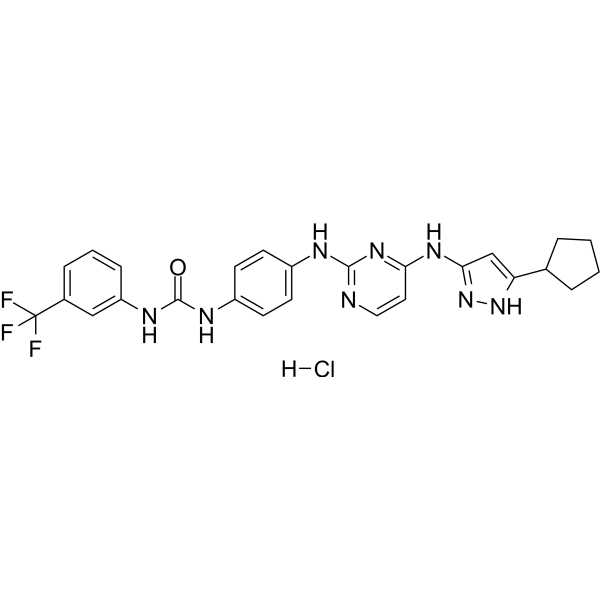
CD532 hydrochloride is a potent Aurora A kinase inhibitor with an IC50 of 45 nM. CD532 hydrochloride has the dual effect of blocking Aurora A kinase activity and driving degradation of MYCN. CD532 hydrochloride also can directly interact with AURKA and induces a global conformational shift. CD532 hydrochloride can be used for the research of cancer .
loading...
    loading...
Cat. No.: HY-168439
CAS No.: 2566733-45-5
HLB-0532259 is a Aurora-A/N-Myc PROTAC degrader, with a DC50 of 20.2 nM against Aurora-A in MCF-7 cells; its DC50 values against N-Myc are 179 nM in SK-N-BE (2) cells and 229 nM in Kelly cells, respectively. HLB-0532259 induces apoptosis (apoptosis) in MYCN-amplified neuroblastoma cells and inhibits tumor growth in mouse xenograft models. HLB-0532259 can be used for the research of neuroblastoma .
loading...
    loading...
Cat. No.: HY-181601
CAS No.: 895901-42-5
Synonyms: MI102
Target:  

Apoptosis

Research Areas:  

Cancer

NPD15261 (MI102) is a highly selective MYCN inhibitor. NPD15261 reduces the mRNA and protein levels of MYCN in liver cancer cells, inhibits cell proliferation and colony formation, and induces Apoptosis simultaneously. NPD15261 can be used in liver cancer research .
loading...
    loading...
Cat. No.: HY-187521
CAS No.: 102537-38-2
Target:  

c-Myc Topoisomerase

Research Areas:  

Cancer

MYCMI-7 hydrobromide is a potent and selective MYC/MYCN inhibitor, with a Kd of 4 μM for MYC and an IC50 of 10 μM for topoisomerase IIα (Topoisomerase IIα). MYCMI-7 hydrobromide binds directly to MYC, selectively inhibits the interactions of MYC:MAX and MYCN:MAX, reduces MYC-driven transcription levels, induces MYC/MYCN protein degradation, and blocks the binding of MYC to chromatin, thereby inducing tumor cell growth arrest, apoptosis and reducing cell viability, while only inducing G1 phase growth arrest in normal cells. MYCMI-7 hydrobromide can be used in research related to MYC-driven acute myeloid leukemia and breast cancer, MYCN-amplified neuroblastoma, glioblastoma, Burkitt's lymphoma, melanoma, colon cancer, osteosarcoma, cervical cancer and histiocytic lymphoma .
loading...
    loading...
Cat. No.: HY-187705
CAS No.: 305333-99-7
Research Areas:  

Neurological Disease Cancer

SE486-11 is an orally active USP5 inhibitor. SE486-11 increases free polyubiquitin chains and promotes the ubiquitination and degradation of MYCN. The combination of SE486-11 with SAHA (HY-10221) synergistically induces Apoptosis. SE486-11 can be used in research related to MYCN-driven neuroblastoma .
loading...
    loading...
Cat. No.: HY-181442
CAS No.: 313226-24-3
CK2-TN03 is an ATP-competitive casein kinase 2 (CK2) inhibitor, with an IC50 of 165 nM and a Ki of 20 nM. CK2-TN03 inhibits CK2-mediated survivin activation and reduces CK2-dependent phosphorylation levels of BRD4/MYCN and AKT1. CK2-TN03 exerts anti-neuroblastoma effects by inhibiting survivin, leading to mitotic catastrophe and apoptosis of cancer cells. CK2-TN03 can be used in studies related to neuroblastoma .
loading...
    loading...
Cat. No.: HY-186247
CAS No.: 885986-52-7
Target:  

c-Myc Apoptosis

Research Areas:  

Neurological Disease Cancer

N-Myc-IN-1 is a selective N-Myc inhibitor/degrader with a Kd value of 1.47 μM. N-Myc-IN-1 promotes phosphorylation of N-Myc at threonine-58, triggers N-Myc degradation via the ubiquitin-proteasome pathway, and suppresses the expression of N-Myc target genes. N-Myc-IN-1 reduces the viability of MYCN-dependent tumor cells and induces apoptosis. N-Myc-IN-1 can be used in the research of neuroblastoma .
loading...
    loading...
Cat. No.: HY-179375
CAS No.: 3065284-87-6
Target:  

CDK Aurora Kinase

Research Areas:  

Cancer

LCI133 is afirst-in-class,nanomolar-potent, selective multikinase inhibitor targeting CDK4/6/9 and AURKA/B (IC50 = 4.7/10.2/4.1 nM and 2.8/10.6 nM). LCI133 induces S/G2 cell-cycle arrest and robust apoptosis in MYCN-amplified neuroblastoma BE(2)-C cells. LCI133 demonstrates significant antitumor efficacy in a BE(2)-C neuroblastoma xenograft model .
loading...
    loading...
  • 1

