1. Search Result
Search Result
Results for "

Micrococcus luteus ATCC 10240

" in MedChemExpress (MCE) Product Catalog:

51

Inhibitors & Agonists

1

Biochemical Assay Reagents

7

Peptides

16

Natural
Products

1

Isotope-Labeled Compounds

Cat. No. Product Name Target Research Areas Chemical Structure
  • HY-132989

    Biochemical Assay Reagents Bacterial Cardiovascular Disease Infection Inflammation/Immunology
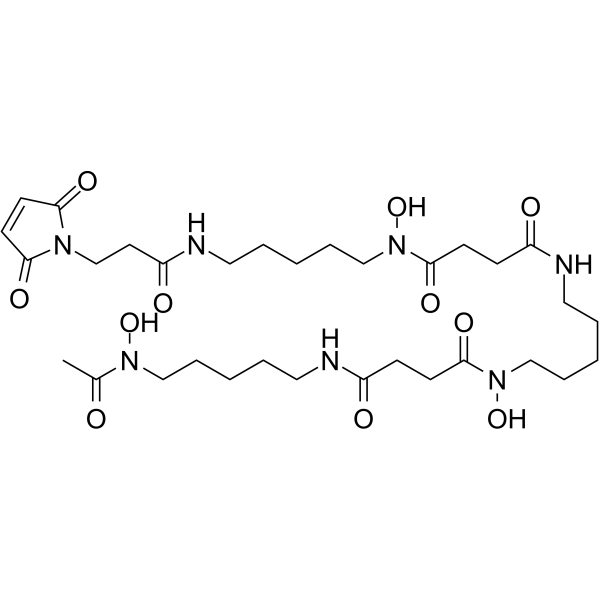
    Mal-Deferoxamine is a maleimide-functionalized trihydroxamate siderophore derivative that can be isolated from Streptomyces pilosus. Mal-Deferoxamine possesses highly specific Fe (III) chelating ability, and the stability of complexes formed between it and non-Fe (III) metal ions is significantly lower. Mal-Deferoxamine exhibits growth inhibitory effects against Gram-positive bacteria, but shows no obvious inhibitory activity against Gram-negative bacteria (MIC>50 μM). Mal-Deferoxamine is mainly suitable for scientific research in hematology and related fields .
    Mal-Deferoxamine
  • HY-E70306

    Endogenous Metabolite Parasite Infection
    Zymolyase, Arthrobacter luteus, is a zymolyase mainly found in Arthrobacter luteus. Enzyme, an enzyme with beta-1,3 glucanase activity, removes the electron-dense outer layer of the Plasmodium karinii cell wall, exposing an electron-lucent layer .
    Zymolyase, Arthrobacter luteus
  • HY-10581
    Gatifloxacin
    4 Publications Verification

    AM-1155; BMS-206584; PD135432

    Bacterial Topoisomerase Antibiotic Infection Neurological Disease Cancer
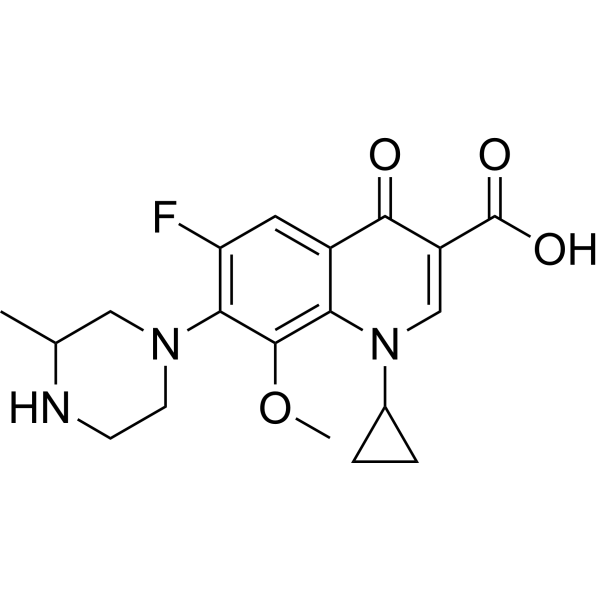
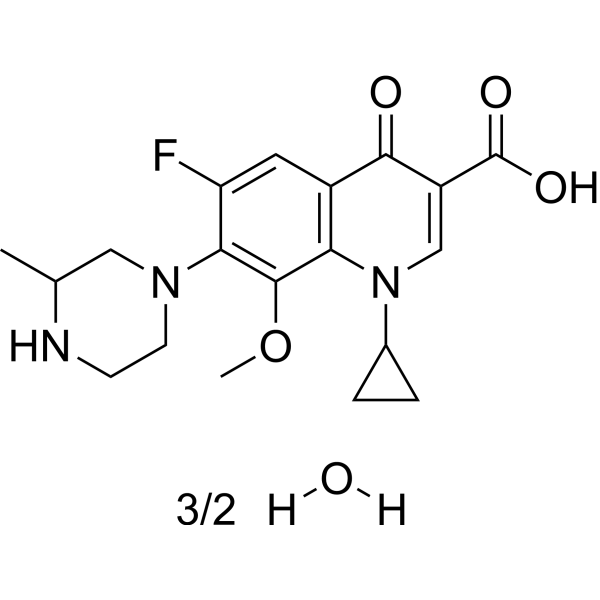
    Gatifloxacin (AM-1155; BMS-206584; PD135432) is a potent fluoroquinolone antibiotic that can cross the blood-brain barrier, with broad-spectrum antibacterial activity. Gatifloxacin inhibits bacterial type II topoisomerases (IC50=13.8 μg/ml for S. aureus topoisomerase IV) and E. coli DNA gyrase (IC50=0.109 μg/ml) . Gatifloxacin can be used to treat bacterial conjunctivitis in vivo.
    Gatifloxacin
  • HY-P2124

    Antibiotic Bacterial Infection
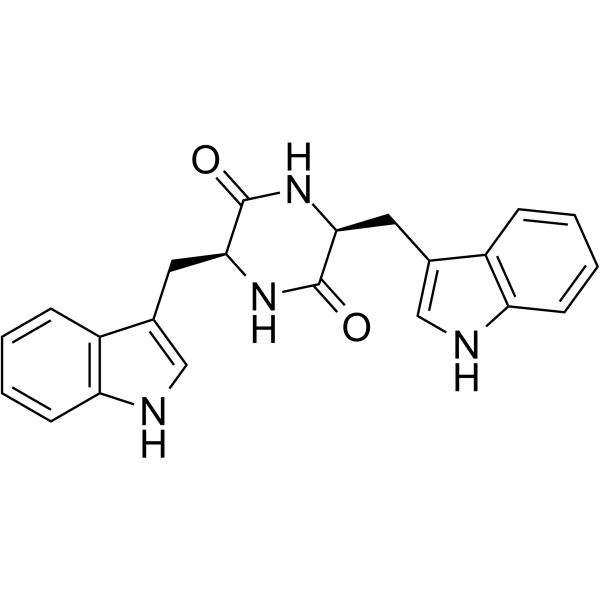
    Cyclo(L-Trp-L-Trp) is an antibiotic, and shows antimicrobial activity. Cyclo(L-Trp-L-Trp) can inhibit A. baumannii, as well as Candida albicans, Bacillus subtilis, Micrococcus luteus, Saccharomyces cerevisiae, Aspergillus niger, Staphylococcus aureus. Cyclo(L-Trp-L-Trp) can be used in microbial infection research .
    Cyclo(L-Trp-L-Trp)
  • HY-B2144H

    Chitosan HCl (80%-90% deacetylated)

    Bacterial Fungal Infection
    Chitosan hydrochloride 80%-90% deacetylated (Chitosan HCl 80%-90% deacetylated) is the deacetylated, hydrocholoride form of chitosan. Chitosan hydrochloride 80%-90% deacetylated is a polysaccharide obtained by deacetylating chitin, and exhibits antimicrobial activity against various bacteria and fungi. Chitosan hydrochloride 80%-90% deacetylated is utilized in agriculture, water treatment and pharmaceutical aspects .
    Chitosan hydrochloride (80%-90% deacetylated)
  • HY-10581A
    Gatifloxacin hydrochloride
    4 Publications Verification

    AM-1155 hydrochloride; BMS-206584 hydrochloride; PD135432 hydrochloride

    Bacterial Topoisomerase Antibiotic Infection
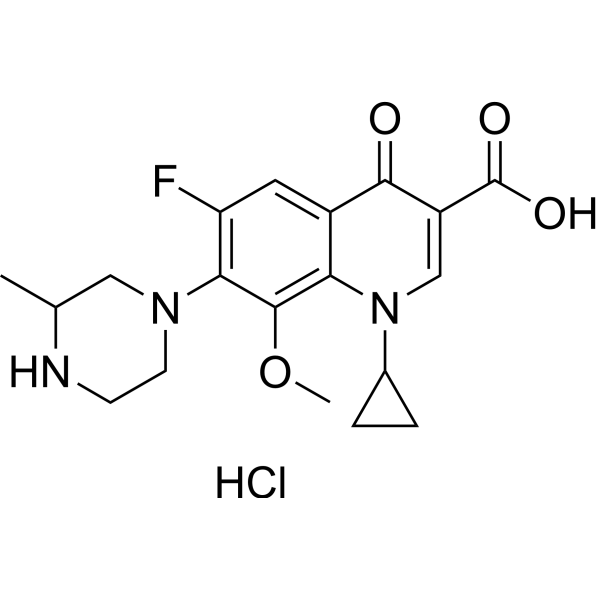
    Gatifloxacin hydrochloride (AM-1155; BMS-206584; PD135432) is a potent fluoroquinolone antibiotic with broad-spectrum antibacterial activity. Gatifloxacin hydrochloride inhibits bacterial type II topoisomerases (IC50=13.8 μg/ml for S. aureus topoisomerase IV) and E. coli DNA gyrase (IC50 = 0.109 μg/ml) . Gatifloxacin hydrochloride can be used to treat bacterial conjunctivitis in vivo.
    Gatifloxacin hydrochloride
  • HY-116010A

    Antibiotic Bacterial Infection
    Oleandomycin phosphate is a macrolide antibiotic structurally closely related to Erythromycin. Oleandomycin is similar to Erythromycin with antimicrobial activity. Oleandomycin inhibits protein synthesis by interference with translation of activated amino acids to nascent peptide chains on the ribosomes .
    Oleandomycin phosphate
  • HY-N7698

    Biochemical Assay Reagents Others
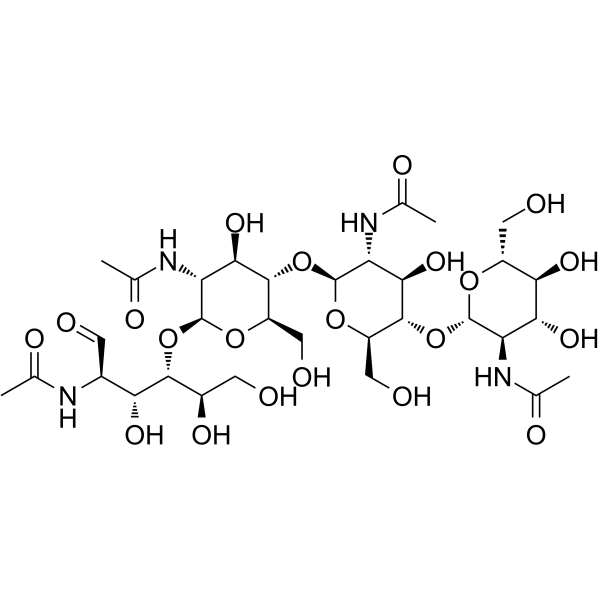
    Tetra-N-acetylchitotetraose is a linear chitosan oligosaccharide. Tetra-N-acetylchitotetraose is a component of the hpo-chitoo gosacchaπdes (LCOs) secreted from Rhizobia. Tetra-N-acetylchitotetraose is also a substrate for the Rhizobium leguminosarum nodulation protein NodB, a CO deacetylase .
    Tetra-N-acetylchitotetraose
  • HY-W018629

    Bacterial Drug Intermediate Infection
    Antibacterial agent 265 (Compound 2) is an antibacterial agent. Antibacterial agent 265 shows antibacterial activity against Staphylococcus Aureus, Micrococcus Luteus, Bacillus subtilis, gram-negative Escherichia coli, Pseudomonas aeruginosa and Flavobacterium devorans .
    Antibacterial agent 265
  • HY-N15184

    Pradimicin C

    Bacterial Fungal Infection
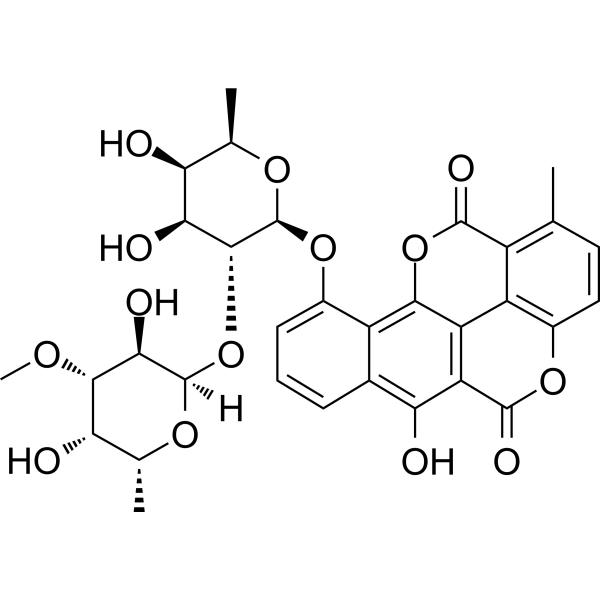
    Benanomicin B (Pradimicin C) is an antifungal antibiotic that also has antibacterial activity against two Gram-positive bacteria: Micrococcus luteus and Corynebacterium bovis .
    Benanomicin B
  • HY-N8337

    Bacterial Antibiotic Infection
    IT-143B is an antibiotic, that exhibits antibacterial activity against Micrococcus luteus with MIC of 6.25μg/mL. IT-143B inhibits growth of cancer cell KB with an IC50 of 1.1 ng/mL .
    IT-143B
  • HY-10581C

    AM-1155 sesquihydrate; BMS-206584 sesquihydrate; PD135432 sesquihydrate

    Bacterial Topoisomerase Antibiotic Infection Inflammation/Immunology
    Gatifloxacin sesquihydrate (AM-1155; BMS-206584; PD135432) is a potent fluoroquinolone antibiotic with broad-spectrum antibacterial activity. Gatifloxacin sesquihydrate inhibits bacterial type II topoisomerases (IC50=13.8 μg/ml for S. aureus topoisomerase IV) and E. coli DNA gyrase (IC50 = 0.109 μg/ml) . Gatifloxacin sesquihydrate can be used to treat bacterial conjunctivitis in vivo.
    Gatifloxacin sesquihydrate
  • HY-N13075

    Antibiotic Bacterial Infection
    Mycoplanecin A is a cyclic peptide antibiotic. Mycoplanecin A has strong anti-mycobacterial, luteus, and Hypococcus activity. Mycoplanecin A also has moderate anti-Xanthomonas oryzae activity. Mycoplanecin A also has antibacterial effect on some strains of Actinomycetes .
    Mycoplanecin A
  • HY-N7307

    Bacterial Infection
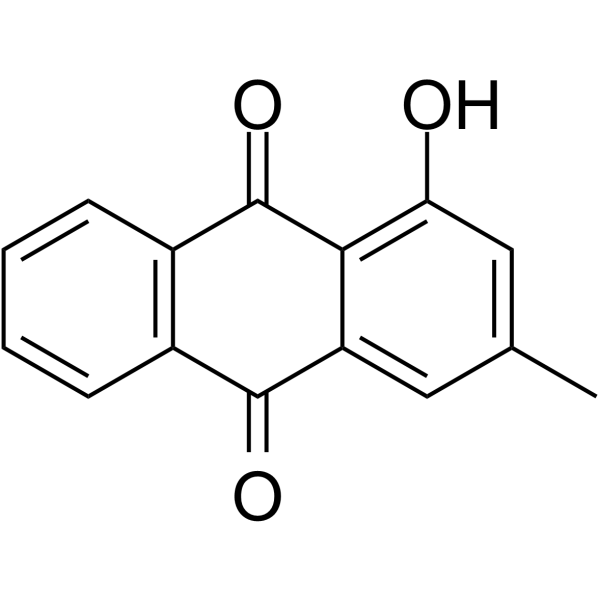
    Pachybasin is a major metabolite from culture broth of endophytic coelomyceteous AFKR-18 fungus. Pachybasin showes antimicrobial activities against E. coli, B. subtilis, M. luteus, S. cerevisiae, C. albicans, A. niger, and A. flavus, with MIC values of 64.0 μg/mL, and against S. aureus and F. oxysporum with MIC values of 32.0 and 16.0 μg/mL respectively .
    Pachybasin
  • HY-117657

    Topoisomerase Bacterial Inflammation/Immunology Cancer
    (-)-BO 2367, an antimicrobial quinolone, is a strong mammalian and bacterial topoisomerase II inhibitor. (-)-BO 2367 shows IC50 values with 3.8 μM, 0.5 μM, and 1 μM against the DNA relaxation activity of L1210 topoisomerase II and the supercoiling activities of Escherichia coli gyrase and Micrococcus luteus gyrase, respectively. (-)-BO 2367 is a potent antitumor agent .
    (-)-BO 2367
  • HY-N14921

    Bacterial Infection
    [R-(Z)]-4-Amino-3-chloro-2-pen-tenedioicacid is virtually limited to Micrococcus luteus .
    [R-(Z)]-4-Amino-3-chloro-2-pen-tenedioicacid
  • HY-121136A

    Antibiotic Bacterial Infection
    Chartreusin sodium is an antibiotic that is active against certain Gram-positive organisms and mycobacteria. Chartreusin is also active against the Micrococcus fiyogenes v. aureus phage .
    Chartreusin sodium
  • HY-121136

    Antibiotic Bacterial Infection
    Chartreusin is an antibiotic that is active against certain Gram-positive organisms and mycobacteria. Chartreusin is also active against the Micrococcus fiyogenes v. aureus phage .
    Chartreusin
  • HY-N8336

    Antibiotic Bacterial Fungal Infection Cancer
    IT-143A is an antibiotic, that exhibits antibacterial and antifungal activity against Micrococcus luteus and Aspergillus fumigatus with MIC of 6.25-25 μg/mL. IT-143A inhibits growth of cancer cell KB with an IC50 of 0.36 ng/mL .
    IT-143A
  • HY-161239A

    Antibiotic Infection Cancer
    IB-96212 (compound 5) is a member of oligomycin class which can be extracted ftom the marine Micromonospora sp. L-25-ES25-008 ref. IB-96212 is an antitumor antibiotic against P-388, it also exhibits antimicrobial activity against Micrococcus luteus .
    IB-96212
  • HY-129329

    Antibiotic Bacterial Infection
    Lankamycin, a macrolide antibiotic, shows moderate antimicrobial activity against several gram-positive bacteria, acting as a synergistic pair with carbocyclic antibiotic Lankacidin C (HY-121412) by binding to the ribosome exit tunnel .
    Lankamycin
  • HY-N14238

    Antibiotic Bacterial Infection Inflammation/Immunology Cancer
    Epoxyquinomicin B is an antibiotic that can be isolated from Amycolatopsis sp. Epoxyquinomicin B exhibits inhibitory activity against Micrococcus luteus, Bacillus subtilis, Pasteurella piscicida and Staphylococcus aureus with a MIC of 6.25-12.5 µg/mL. Epoxyquinomicin B exhibits cytotoxicity in cancer cell L1210 with IC50 of 16.3 µg/mL. Epoxyquinomicin B exhibits anti-inflammatory effects against collagen-induced arthritis .
    Epoxyquinomicin B
  • HY-N14237

    Antibiotic Bacterial Infection Inflammation/Immunology Cancer
    Epoxyquinomicin A is an antibiotic that can be isolated from Amycolatopsis sp. Epoxyquinomicin A exhibits inhibitory activity against Micrococcus luteus, Bacillus subtilis, Pasteurella piscicida and Staphylococcus aureus with a MIC of 3-12.5 µg/mL. Epoxyquinomicin A exhibits cytotoxicity in cancer cell L1210, B16 and S180 with IC50 of 2-8 µg/mL. Epoxyquinomicin A exhibits anti-inflammatory effects against collagen-induced arthritis .
    Epoxyquinomicin A
  • HY-N12400

    Bacterial Infection
    10-Methyldodec-2-en-4-olide is a antibacterial agent and can be isolated from Streptomyces. 10-Methyldodec-2-en-4-olide shows antibacterial activity against B. cinerea, the yeast S. cerevisiae, bacteria S. aureus, and M. luteus .
    10-Methyldodec-2-en-4-olide
  • HY-N19219

    Antibiotic Endogenous Metabolite Bacterial Infection Cancer
    Wailupemycin F is an Antibiotic and anticancer agent. Wailupemycin F is isolated from the marine-derived Streptomyces maritimus. Wailupemycin F exhibits antibacterial activity against Micrococcus luteus with a MIC of 1.1 μM. Wailupemycin F shows anticancer activity against myeloma. When used in combination with enterocin, Wailupemycin F exerts synergistic antibacterial activity against Micrococcus luteus, doubling its potency. Wailupemycin F can be used in studies related to Micrococcus luteus infection .
    Wailupemycin F
  • HY-W756467

    1-Cyclopropyl-6,7-difluoro-8-methoxy-4-oxo-1,4-dihydroquinoline-3-carboxylic Acid-13C,d3

    Isotope-Labeled Compounds Bacterial Drug Intermediate Infection
    Antibacterial agent 265- 13C,d3 (1-Cyclopropyl-6,7-difluoro-8-methoxy-4-oxo-1,4-dihydroquinoline-3-carboxylic Acid- 13C,d3) is the deuterium labeled and 13C-labeled Antibacterial agent 265 (HY-W018629). Antibacterial agent 265 (Compound 2) is an antibacterial agent. Antibacterial agent 265 shows antibacterial activity against Staphylococcus Aureus, Micrococcus Luteus, Bacillus subtilis, gram-negative Escherichia coli, Pseudomonas aeruginosa and Flavobacterium devorans .
    Antibacterial agent 265-13C,d3
  • HY-113795

    Antibiotic Bacterial Infection
    Aldgamycin E is a neutral macrolide antibiotic that can be derived from culture filtrates of Streptomyces lavendulae. Aldgamycin E has antibacterial activity .
    Aldgamycin E
  • HY-N11415

    Antibiotic Bacterial Infection
    Aurachin SS is a nature product that could be isolated from Streptomyces sp. NA04227. Aurachin SS is an antibiotic and has antibacterial activity .
    Aurachin SS
  • HY-125512

    Antibiotic Infection
    Saccharocarcin B is a macrocyclic lactone antibiotic that is active against the Gram-positive bacteria M. luteus and S. aureus as well as the Gram-negative bacteria C. trachomatis.
    Saccharocarcin B
  • HY-10581B

    AM-1155 mesylate; BMS-206584 mesylate; PD135432 mesylate

    Bacterial Topoisomerase Antibiotic Infection
    Gatifloxacin mesylate (AM-1155; BMS-206584; PD135432) is a potent fluoroquinolone antibiotic with broad-spectrum antibacterial activity. Gatifloxacin mesylate inhibits bacterial type II topoisomerases (IC50=13.8 μg/ml for S. aureus topoisomerase IV) and E. coli DNA gyrase (IC50 = 0.109 μg/ml) . Gatifloxacin mesylate can be used to treat bacterial conjunctivitis in vivo.
    Gatifloxacin mesylate
  • HY-P2124R

    Reference Standards Antibiotic Bacterial Infection
    L-Isoleucine (Standard) is the analytical standard of L-Isoleucine. This product is intended for research and analytical applications. L-Isoleucine is an orally active branched chain amino acid, which is the L-enantiomer of isoleucine. L-Isoleucine has a role as a Saccharomyces cerevisiae metabolite, an Escherichia coli metabolite, a plant metabolite, a human metabolite, an algal metabolite and a mouse metabolite. L-Isoleucine regulates the inflammatory response to protect against pathogens in vivo and in vitro .
    Cyclo(L-Trp-L-Trp) (Standard)
  • HY-P5574

    Antibiotic Bacterial Infection
    Aurein 3.1 is an antibiotic antimicrobial peptide. Aurein 2.6 is active against Gram-positive bacterial (MIC: 80, 50, 50, 50, 50 μM for M. luteus, S. aureus, S. epidermis, S. mutans, B. subtilis) .
    Aurein 3.1
  • HY-P5573

    Antibiotic Bacterial Infection
    Aurein 2.6 is an antibiotic antimicrobial peptide. Aurein 2.6 is active against Gram-positive bacterial (MIC: 25, 25, 30, 25, 30 μM for M. luteus, S. aureus, S. epidermis, S. mutans, B. subtilis) .
    Aurein 2.6
  • HY-N8296

    Bacterial Infection
    Saccharocarcin A is an antibiotic originally isolated from S. aerocolonigenes subsp. antibiotica. It is active against M. luteus, S. aureus, E. coli, P. aeruginosa, and C. albicans in a disc assay. Saccharocarcin A inhibits C. trachomatis infection by 88% without inducing cytotoxicity in McCoy cells when used at a concentration of 0.5 μg/mL.
    Saccharocarcin A
  • HY-129454

    Antibiotic TPU-0037-A

    Antibiotic Infection
    TPU-0037A is an antibiotic and a congener of lydicamycin. It inhibits the growth of Gram-positive bacteria, including methicillin-resistant S. aureus (MRSA), B. subtilis, and M. luteus (MICs=1.56-12.5 μg/mL), but not Gram-negative E. coli, P. mirabilis, P. vulgaris, or P. aeruginosa strains (MICs=>50 μg/mL).
    TPU-0037A
  • HY-N8295

    Kitasamycin A13

    Antibiotic Infection
    Leucomycin A13 is a macrolide antibiotic and a component of the leucomycin complex originally isolated from S. kitasatoensis. It is active against B. subtilis, S. aureus, M. luteus, and E. coli with MIC values of 0.16, 0.16, 0.08 and >10 μg/mL, respectively. It binds to ribosomes with an IC50 value of 1.2 μM in a radioligand binding assay.
    Leucomycin A13
  • HY-W781265

    L-755,805

    Endothelin Receptor Bacterial Infection
    BE 24566B is a polyketide fungal metabolite originally isolated from S. violaceusniger. It is active against B. subtilis, B. cereus, S. aureus, M. luteus, E. faecalis, and S. thermophilus (MICs=1.56, 1.56, 1.56, 1.56, 3.13, and 3.13 μg/mL, respectively). BE 24566B is an endothelin (ET) receptor antagonist (IC50s=11 and 3.9 μM for ETA and ETB receptors, respectively).
    BE 24566B
  • HY-122980

    (S)-Myxochelin A

    Lipoxygenase Infection
    Myxochelin A is a microbial metabolite that has been found in A. disciformis and has diverse biological activities. It is active against Gram-positive bacteria, including B. cereus, S. aureus, and M. luteus, but not Gram-negative bacteria or fungi in an agar diffusion assay when used at a concentration of 80 μg/disc. Myxochelin A inhibits 5-lipoxygenase (5-LO) activity with an IC50 value of 1.9 μM for the recombinant human enzyme. It is cytotoxic to 26-L5 colon cancer cells when used at a concentration of 3 μg/mL.
    Myxochelin A
  • HY-W587414

    Bacterial Antibiotic Infection
    Neospiramycin I is a macrolide antibiotic and a derivative of Spiramycin I (HY-N7141). Neospiramycin I is effective against the macrolide-sensitive KB210 strain of S. aureus, but ineffective against the macrolide-resistant KB224 strain, with minimum inhibitory concentrations (MIC) of 3.12 and greater than 100 µg/mL, respectively; it is also effective against B. cereus, B. subtilis, M. luteus, E. coli, and K. pneumoniae, with respective MIC values of 1.56, 3.12, 3.12, 0.2, 50, and 12.5 µg/mL. Neospiramycin I binds to the ribosomes of E. coli, with an inhibitory concentration 50 (IC50) of 1.2 µM. It protects mice from death in a type III S. pneumoniae infection model, with an effective dose 50 (ED50) of 399.8 mg/kg .
    Neospiramycin I
  • HY-10581AR

    AM-1155 hydrochloride (Standard); BMS-206584 hydrochloride (Standard); PD135432 hydrochloride (Standard)

    Reference Standards Bacterial Topoisomerase Antibiotic Infection
    Gatifloxacin (hydrochloride) (Standard) is the analytical standard of Gatifloxacin (hydrochloride). This product is intended for research and analytical applications. Gatifloxacin hydrochloride (AM-1155; BMS-206584; PD135432) is a potent fluoroquinolone antibiotic with broad-spectrum antibacterial activity. Gatifloxacin hydrochloride inhibits bacterial type II topoisomerases (IC50=13.8 μg/ml for S. aureus topoisomerase IV) and E. coli DNA gyrase (IC50 = 0.109 μg/ml)[1]. Gatifloxacin hydrochloride can be used to treat bacterial conjunctivitis in vivo.
    Gatifloxacin hydrochloride (Standard)
  • HY-10581R

    AM-1155 (Standard); BMS-206584 (Standard); PD135432 (Standard)

    Reference Standards Bacterial Topoisomerase Antibiotic Infection
    Gatifloxacin (Standard) is the analytical standard of Gatifloxacin. This product is intended for research and analytical applications. Gatifloxacin (AM-1155; BMS-206584; PD135432) is a potent fluoroquinolone antibiotic with broad-spectrum antibacterial activity. Gatifloxacin inhibits bacterial type II topoisomerases (IC50=13.8 μg/ml for S. aureus topoisomerase IV) and E. coli DNA gyrase (IC50=0.109 μg/ml) . Gatifloxacin can be used to treat bacterial conjunctivitis in vivo.
    Gatifloxacin (Standard)
  • HY-10581CR

    AM-1155 sesquihydrate (Standard); BMS-206584 sesquihydrate (Standard); PD135432 sesquihydrate (Standard)

    Reference Standards Bacterial Topoisomerase Antibiotic Infection Inflammation/Immunology
    Gatifloxacin (sesquihydrate) (Standard) is the analytical standard of Gatifloxacin (sesquihydrate). This product is intended for research and analytical applications. Gatifloxacin sesquihydrate (AM-1155; BMS-206584; PD135432) is a potent fluoroquinolone antibiotic with broad-spectrum antibacterial activity. Gatifloxacin sesquihydrate inhibits bacterial type II topoisomerases (IC50=13.8 μg/ml for S. aureus topoisomerase IV) and E. coli DNA gyrase (IC50 = 0.109 μg/ml) . Gatifloxacin sesquihydrate can be used to treat bacterial conjunctivitis?in vivo.
    Gatifloxacin sesquihydrate (Standard)
  • HY-126735

    Antibiotic Bacterial Infection
    Saquayamycin D is an antibiotic, which can be isolated from Streptomyces nodosus culture broth. Saquayamycin D exhibits antibacterial activity against various gram-positive bacteria with MIC of 12.5-50 μg/mL. Saquayamycin D inhibits the proliferation of Doxorubicin (HY-15142)-sensitive P388/S and Doxorubicin-resistant P388/ADR with IC50 of 0.15 and 0.15 μg/mL .
    Saquayamycin D
  • HY-P11180A

    Antibiotic Bacterial Infection
    Clavanin A acetate is a peptide Antibiotic and membrane permeabilizer. Clavanin A acetate permeabilizes cytoplasmic membranes and unilamellar lipid bilayers, and dissipates membrane potential. Clavanin A acetate inserts into phospholipid monolayers via hydrophobic interactions under physiologically relevant surface pressures. Clavanin A acetate exhibits antibacterial activity against Micrococcus flavus. Clavanin A acetate can be used in studies related to Micrococcus flavus infection .
    Clavanin A acetate
  • HY-P11180

    Antibiotic Bacterial Infection
    Clavanin A is a peptide Antibiotic and membrane permeabilizer. Clavanin A permeabilizes cytoplasmic membranes and unilamellar lipid bilayers, and dissipates membrane potential. Clavanin A inserts into phospholipid monolayers via hydrophobic interactions under physiologically relevant surface pressures. Clavanin A exhibits antibacterial activity against Micrococcus flavus. Clavanin A can be used in studies related to Micrococcus flavus infection .
    Clavanin A
  • HY-W142294

    N2-Acetyl-D-asparagine

    Amino Acid Derivatives Others
    Ac-D-Asn-OH (N2-Acetyl-D-asparagine) is the N2-acetylated derivative of D-Asparagine (HY-W010378). Ac-D-Asn-OH serves as an intermediate for peptide synthesis in relevant research .
    Ac-D-Asn-OH
  • HY-164999

    Endogenous Metabolite Cancer
    N,N'-Bis(2,3-Dihydroxybenzoyl)-O-L-seryl-L-serine is a enterochelin hydrolyzed product. N,N'-Bis(2,3-Dihydroxybenzoyl)-O-L-seryl-L-serine can inhibit the invasion of murine colon cancer cells 26-L5 with an IC50 of 2.7 μM, and has anti-tumor effect. In addition, N,N'-Bis(2,3-Dihydroxybenzoyl)-O-L-seryl-L-serine has no appreciable antimicrobial activities against Micrococcus luteus, Escherichia coli and Candida albicans .
    N,N'-Bis(2,3-Dihydroxybenzoyl)-O-L-seryl-L-serine
  • HY-P0307B

    Biochemical Assay Reagents Neurological Disease
    Penetratin-Cys is a cell-penetrating peptide derived from Antennapedia Peptide (HY-P0307) via C-terminal cysteine modification. Penetratin-Cys acts as a cytotoxin and reduces the viability of differentiated neuronal cells. Penetratin-Cys localizes to the perinuclear region and binds to the Golgi apparatus. Penetratin-Cys can be used in research related to neurological disorders .
    Penetratin-Cys
  • HY-122301

    Drug Derivative Inflammation/Immunology
    Sarcinaxanthin is a carotenoid present in various bacteria with antioxidant activity. Sarcinaxanthin scavenges singlet oxygen, thereby inhibiting oxidative degradation in the β-carotene/linoleic acid system. Sarcinaxanthin acts as a photoprotective agent against UVB radiation that induces erythema. Sarcinaxanthin can be applied in studies related to antioxidation and radiation resistance .
    Sarcinaxanthin
  • HY-119555

    Bacterial Infection
    Nifurpipone is an orally active broad-spectrum antimicrobial agent. Nifurpipone acts against Gram-positive and Gram-negative bacteria, and reduces bacterial loads in systemic, intramuscular and urinary tract infections in mouse models. Nifurpipone can be used in studies related to bacterial infections .
    Nifurpipone

Inquiry Online

Your information is safe with us. * Required Fields.

Salutation


Country or Region *

Applicant Name *


Organization Name *

Department *


Email Address *


Product Name *

Cat. No.


Requested quantity *

Phone Number *


Remarks

Inquiry Online

Inquiry Information

Product Name:
Cat. No.:
Quantity:
MCE Japan Authorized Agent: