7 Results for "

NIH3T3 mouse fibroblast cells

" in MedChemExpress (MCE) Product Catalog:
Products (7)

7 Results for "NIH3T3 mouse fibroblast cells" in MCE Product Catalog:

5
5 Cited Publications
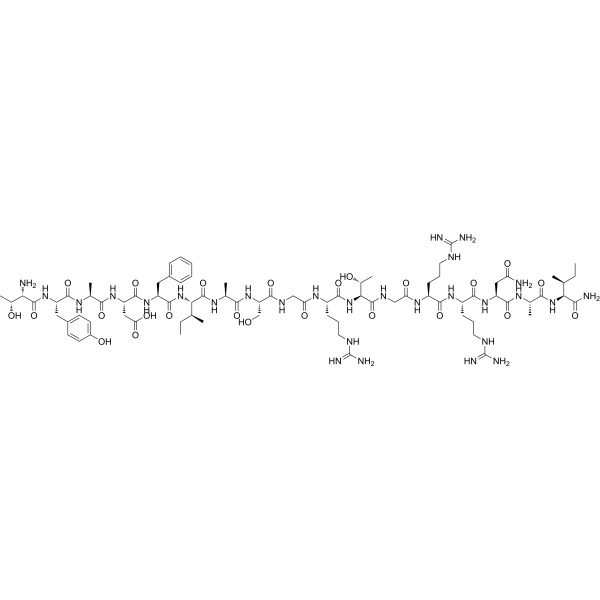
Cat. No.: HY-P1290
CAS No.: 121932-06-7
Synonyms: PKI-(6-22)-amide
Target:  

PKA

Research Areas:  

Neurological Disease

PKA Inhibitor Fragment (6-22) amide is a highly potent and specific competitive inhibitor of PKA, with Ki values of 1.7 nM and 1.6 nM against human and bovine PKA catalytic subunits, respectively. The IC50 of PKA Inhibitor Fragment (6-22) amide targeting bovine PKA is 8.6 nM. PKA Inhibitor Fragment (6-22) amide effectively abolishes PKA activity in mouse brain and spinal cord, and exerts in vivo efficacy via intracerebroventricular administration. PKA Inhibitor Fragment (6-22) amide significantly reverses low-dose morphine analgesic tolerance in mice and blocks photoaffinity labeling of cAMP-dependent protein kinase. PKA Inhibitor Fragment (6-22) amide can be applied to research in fields related to the mechanism of morphine analgesic tolerance and skin wound healing .
loading...
    loading...
1
1 Cited Publications
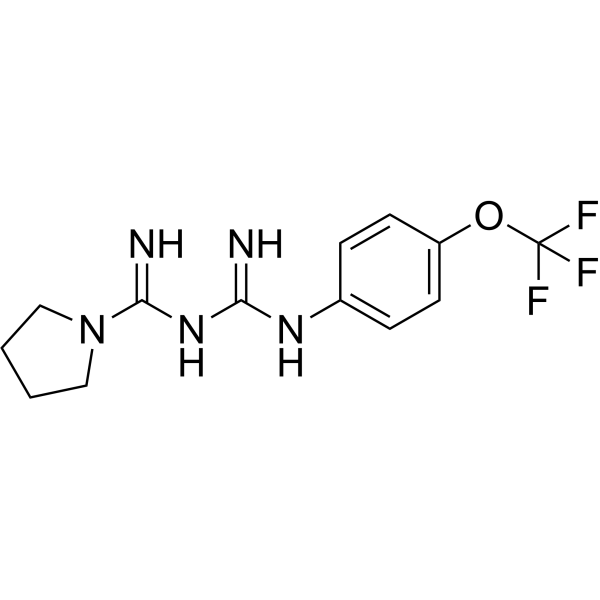
Cat. No.: HY-136093B
CAS No.: 1422365-93-2
Synonyms: IM156 free base; HL156A free base; HL271 free base
Lixumistat (IM156 free base) is a potent and orally active AMPK activator and OXPHOS inhibitor. Lixumistat strongly activates AMPK, while it lacks the systemic metabolic regulatory effects of classic metformin, such as hypoglycemic and weight-lowering activities. Lixumistat exhibits significant therapeutic effects on cognitive decline associated with brain aging and pulmonary fibrosis .
loading...
    loading...
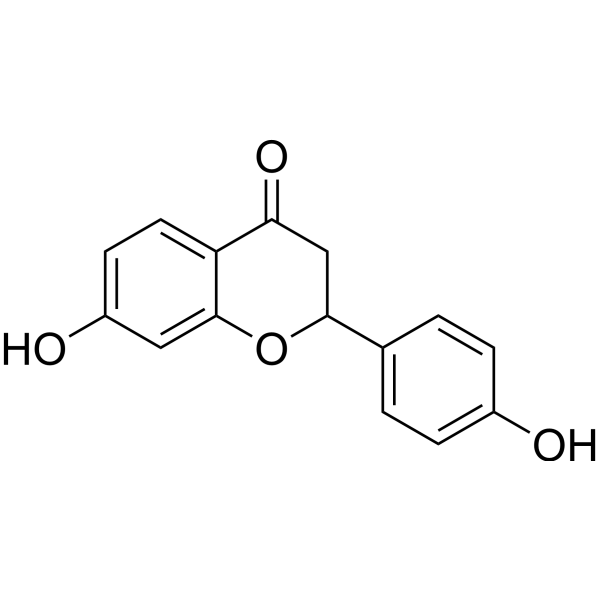
Cat. No.: HY-N0377A
CAS No.: 69097-97-8
Synonyms: (±)-4',7-Dihydroxyflavanone
(±)-Liquiritigenin ((±)-4',7-Dihydroxyflavanone) is a dihydroflavone flavonoid. (±)-Liquiritigenin is isolated from the aerial parts of Angelica keiskei. (±)-Liquiritigenin reduces LDH release in cells. (±)-Liquiritigenin exerts a cytoprotective effect against glucose oxidase-induced cellular oxidative stress. (±)-Liquiritigenin exhibits a tumor-promoting effect in liver cancer .
loading...
    loading...
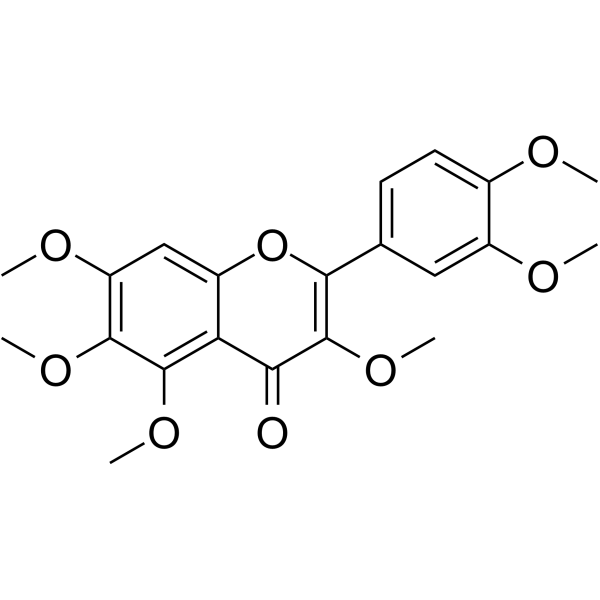
Cat. No.: HY-N4308
CAS No.: 1251-84-9
Synonyms: Hexa-O-methylquercetagetin; Quercetagetin hexamethyl ether; 3,5,6,7,3',4'-Hexamethoxyflavone
Hexamethylquercetagetin (Hexa-O-methylquercetagetin; Quercetagetin hexamethyl ether; 3,5,6,7,3',4'-Hexamethoxyflavone) is an orally active NF-κB inhibitor. Hexamethylquercetagetin inhibits NF-κB-derived luciferase activity, reduces phosphorylated p65 and IκBα, Cyclin D1, Bcl-2 and blocks TNFα-induced NF-κB activation. Hexamethylquercetagetin inhibits survival and proliferation of cervical carcinoma cells. Hexamethylquercetagetin suppresses tumor volume and weight in BALB/c nude mouse xenograft models of cervical carcinoma. Hexamethylquercetagetin can be used for the research of cancer, such as cervical carcinoma .
loading...
    loading...
Cat. No.: HY-N18093
CAS No.: 6093-67-0
5-Hydroxycoumarin is a monohydroxycoumarin compound that occurs in the stems of Alyxia lucida, a plant of the genus Alyxia (Apocynaceae) .
loading...
    loading...
Cat. No.: HY-187689
CAS No.: 1005056-10-9
Target:  

Arrestin

Research Areas:  

Cancer

RKN5755 is a β-arrestin1 inhibitor and a selective inhibitor of activated fibroblasts. RKN5755 binds to β-arrestin1 and interferes with the cofilin signaling pathway mediated by this protein to block its function. RKN5755 not only inhibits the enhanced migratory effect of fibroblasts co-cultured with cancer cells, but also prevents the inhibitory effect of EP3 agonists on the EP2 receptor-induced elevation of tetrodotoxin-resistant sodium currents in mouse dorsal root ganglion neurons. RKN5755 is widely used in research on related diseases such as cancer metastasis and pain .
loading...
    loading...
Cat. No.: HY-D3409
CAS No.: 1854026-50-8
Target:  

Fluorescent Dye

Research Areas:  

Others

Si-DMA is a far-red fluorescent singlet oxygen probe (Ex/Em = 640/690 nm). After reacting with singlet oxygen, Si-DMA forms an endoperoxide with a 17-fold fluorescence enhancement. Si-DMA localizes selectively to mitochondria with negligible auto-oxidation. Si-DMA can be used for high spatiotemporal resolution visualization and detection of mitochondrial singlet oxygen in living cells .
loading...
    loading...

