

1. Search Result
Search Result
Results for "

PD

" in MedChemExpress (MCE) Product Catalog:

1050

Inhibitors & Agonists

12

Screening Libraries

8

Fluorescent Dye

12

Biochemical Assay Reagents

66

Peptides

162

Inhibitory Antibodies

40

Natural
Products

93

Recombinant Proteins

27

Isotope-Labeled Compounds

43

Antibodies

8

Click Chemistry

11

Oligonucleotides

1

GMP Molecules

Targets Recommended:
Cat. No. Product Name Target Research Areas Chemical Structure
  • HY-10578
    PD 169316
    25+ Cited Publications

    p38 MAPK Autophagy Enterovirus Cancer
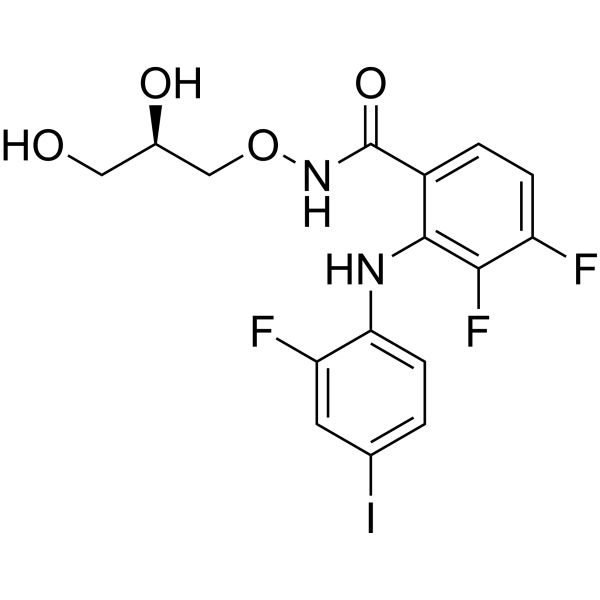
    PD 169316 is a potent, cell-permeable and selective p38 MAP kinase inhibitor, with IC50 of 89 nM. PD169316 selectively inhibits the kinase activity of the phosphorylated p38 without hindering upstream kinases to phosphorylate p38. PD169316 shows antiviral activity against Enterovirus71. PD169316 shows antiviral activity against Enterovirus71.
    PD 169316
  • HY-100434

    FGFR PDGFR EGFR Src TGF-β Receptor Cardiovascular Disease Cancer
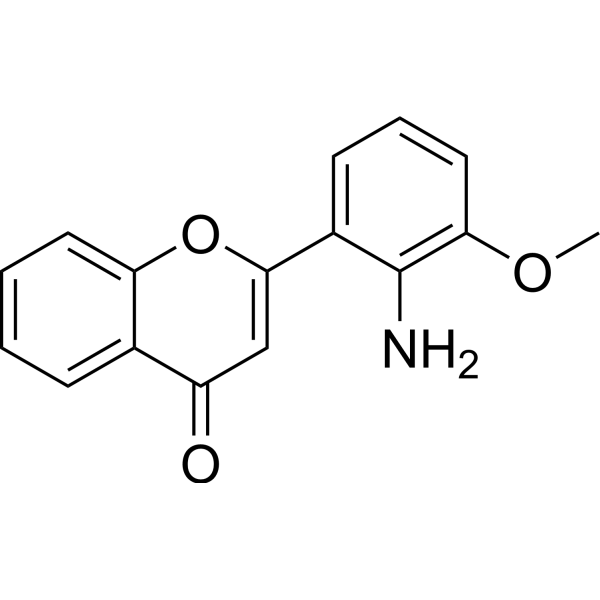
    PD-161570 is a potent and ATP-competitive human FGF-1 receptor inhibitor with an IC50 of 39.9 nM and a Ki of 42 nM. PD-161570 also inhibits the PDGFR, EGFR and c-Src tyrosine kinases with IC50 values of 310 nM, 240 nM, and 44 nM, respectively. PD-161570 inhibits PDGF-stimulated autophosphorylation and FGF-1 receptor phosphorylation with IC50s of 450 nM and 622 nM, respectively . PD-161570 is also a bone morphogenetic proteins (BMPs) and TGF-β signaling inhibitor .
    PD-161570
  • HY-144258

    PD-1/PD-L1 Inflammation/Immunology Cancer
    PD-1/PD-L1-IN-14 (compound 17) is a bifunctional inhibitor of PD-1/PD-L1 interactions, with an IC50 of 27.8 nM. PD-1/PD-L1-IN-14 (compound 17) inhibits PD-1/PD-L1 interactions and promotes dimerization, internalization, and degradation of PD-L1 .
    PD-1/PD-L1-IN-14
  • HY-132192
    PD-1/PD-L1-IN-9
    2 Publications Verification

    PD-1/PD-L1 Cancer
    PD-1/PD-L1-IN-9 is a potent and orally active inhibitor of PD-1/PD-L1 interaction, with an IC50 of 3.8 nM. PD-1/PD-L1-IN-9 can enhance the killing activity of tumor cells by immune cells. PD-1/PD-L1-IN-9 also exhibits significant in vivo antitumor activity in a CT26 mouse model .
    PD-1/PD-L1-IN-9
  • HY-108594

    Potassium Channel Metabolic Disease
    PD-118057 is a hERG channel activator without causing hERG blockade. PD-118057 activates hERG channel to suppress changes in membrane excitability .
    PD-118057
  • HY-153064

    PD-1/PD-L1-IN-30

    PD-1/PD-L1 Cancer
    MAX-10181 (PD-1/PD-L1-IN-30) is a PD-1/PD-L1 binding inhibitor, with an IC50 value of 0.018 μM. MAX-10181 can be used for research of cancers and other related diseases .
    MAX-10181
  • HY-145774

    PD-1/PD-L1 Cancer
    PD-1/PD-L1-IN-23 is a potent and orally active inhibitor of PD-1/PD-L1. PD-1/PD-L1-IN-23 is an ester proagent of L7. L7 is a benzo[c][1,2,5]oxadiazole derivative and biologically evaluated as inhibitors of PD-L1. PD-1/PD-L1-IN-23 displays significant antitumor effects in tumor models of syngeneic and PD-L1 humanized mice .
    PD-1/PD-L1-IN-23
  • HY-103048A

    PD-1/PD-L1 Cancer
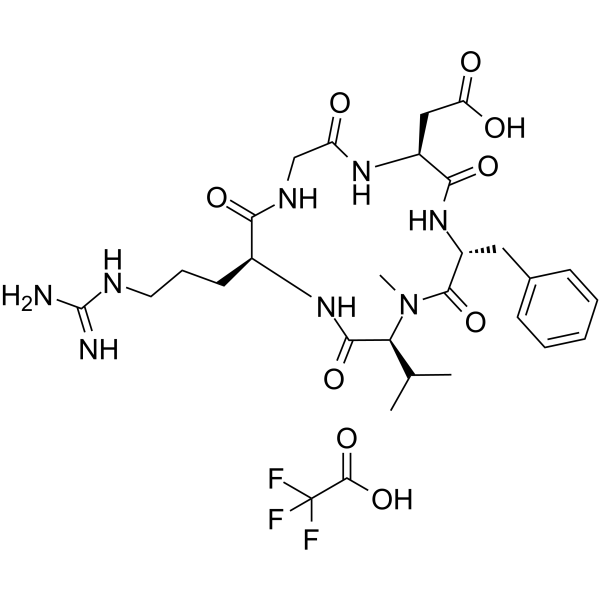
    PD-1/PD-L1-IN 3 TFA, a macrocyclic peptide, is a potent and selective inhibitor of the PD-1/PD-L1 and CD80/PD-L1 interactions extracted from patent WO2014151634A1, compound No.1. PD-1/PD-L1-IN 3 TFA interferes with PD-L1 binding to PD-1 and CD80 by binding to PD-L1, with IC50s of 5.60 nM and 7.04 nM, respectively. PD-1/PD-L1-IN 3 TFA can be used for the research of various diseases, including cancer and infectious diseases .
    PD-1/PD-L1-IN 3 TFA
  • HY-131347

    PD-1/PD-L1 Inflammation/Immunology Cancer
    PD-1/PD-L1-IN-NP19 is a PD-1/PD-L1 inhibitor, with an IC50 of 12.5 nM for human PD-1/PD-L1 interaction. PD-1/PD-L1-IN-NP19 could activate the immune microenvironment in tumor, which may contribute to its antitumor effects .
    PD-1/PD-L1-IN-NP19
  • HY-112345

    FGFR PDGFR EGFR Src Cancer
    PD-089828 is an ATP competitive inhibitor of FGFR-1, PDGFR-β and EGFR (IC50s=0.15, 1.76, and 5.47 µM, respectively) and a noncompetitive inhibitor of c-Src tyrosine kinase (IC50=0.18 µM). PD-089828 also inhibits MAPK with an IC50 of 7.1 µM. PD-089828 inhibits PDGF-, EGF- and bFGF-mediated tyrosine kinase receptor autophosphorylation in vitro. PD-089828 has a long-lasting cellular activity .
    PD-089828
  • HY-103407A

    Dopamine Receptor Neurological Disease Cancer
    PD 168568 dihydrochloride is a orally active and potent dopamine receptor D4 (DRD4) antagonist. PD 168568 dihydrochloride contains an isoindolinone and is selective for the D4 receptor versus D2 and D3, with Ki values of 8.8, 1842, and 2682 nM, respectively. PD 168568 dihydrochloride can be used for glioblastoma (GBM) research .
    PD 168568 dihydrochloride
  • HY-155959

    PD-1/PD-L1 Cancer
    PD-1/PD-L1-IN-33 (Compound N11) is a PD-1/PD-L1 inhibitor. PD-1/PD-L1-IN-33 inhibits PD-1 and PD-L1 interaction with an IC50: 6.3 nM. PD-1/PD-L1-IN-33 promotes T-cell proliferation, activation, and infiltration into tumor spheres. PD-1/PD-L1-IN-33 has immunomodulatory and anticancer activity .
    PD-1/PD-L1-IN-33
  • HY-152240

    PD-1/PD-L1 Cancer
    PD-1/PD-L1-IN-29 (S4-1) is a potent PD-1/PD-L1 inhibitor with an IC50 value of 6.1 nM. PD-1/PD-L1-IN-29 binds PD-L1 and disrupts PD-1/PD-L1 interactions, induces PD-L1 dimerization and internalization, improves its localization to the endoplasmic reticulum, and promotes PD-L1 entry into the endoplasmic reticulum. PD-1/PD-L1-IN-29 has anticancer activity .
    PD-1/PD-L1-IN-29
  • HY-132202

    PD-1/PD-L1 Apoptosis Cancer
    PD-1/PD-L1-IN-10 (compound B2) is an orally active PD-1/PD-L1 inhibitor (IC50 of 2.7 nM) with potent anticancer efficacy .
    PD-1/PD-L1-IN-10
  • HY-103048

    PD-1/PD-L1 Cancer
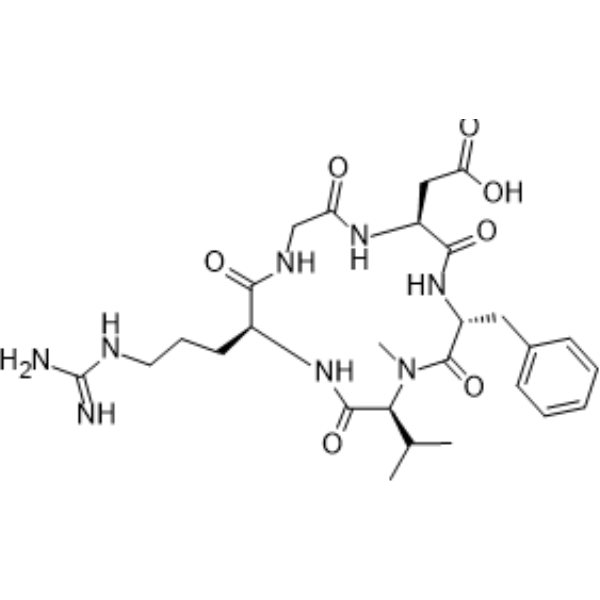
    PD-1/PD-L1-IN 3, a macrocyclic peptide, is a potent and selective inhibitor of the PD-1/PD-L1 and CD80/PD-L1 interactions extracted from patent WO2014151634A1, compound No.1. PD-1/PD-L1-IN 3 interferes with PD-L1 binding to PD-1 and CD80 by binding to PD-L1, with IC50s of 5.60 nM and 7.04 nM, respectively. PD-1/PD-L1-IN 3 can be used for the research of various diseases, including cancer and infectious diseases .
    PD-1/PD-L1-IN 3
  • HY-145772

    PD-1/PD-L1 Cancer
    PD-1/PD-L1-IN-21 (Example 22) is a small-molecule inhibitor of the PD-1/PD-L1 protein-protein interaction. PD-1/PD-L1-IN-21 blocks PD-1/PD-L1 with the IC50 of 4.99 μM. PD-1/PD-L1-IN-21 can be used for the research of cancers, infectious diseases and autoimmune diseases .
    PD-1/PD-L1-IN-21
  • HY-143305

    PD-1/PD-L1 Cancer
    PD-1/PD-L1-IN-25 (compound D2) is an inhibitor of PD-1/PD-L1 interaction with an IC50 value of 16.17 nM. PD-1/PD-L1-IN-25 activates the antitumor immunity of T cells efficiently in PBMCs. PD-1/PD-L1-IN-25 can be used for the research of cancer .
    PD-1/PD-L1-IN-25
  • HY-163041

    PD-1/PD-L1 Inflammation/Immunology Cancer
    PD-1/PD-L1-IN-36 (Compound 2k) is a PD-1/PD-L1 complex inhibitor (IC50: 15 nM). PD-1/PD-L1-IN-36 can be used for research of cancer immunotherapy .
    PD-1/PD-L1-IN-36
  • HY-P10217

    PD-1/PD-L1 Cancer
    PD-1/PD-L1-IN-42 (Compound B8.4) is an inhibitor of the interaction between PD-1 and PD-L1, with an EC50 of 0.1 μM. PD-1/PD-L1-IN-42 can be used for the research of cancer immunotherapy .
    PD-1/PD-L1-IN-42
  • HY-132192A
    PD-1/PD-L1-IN-9 hydrochloride
    2 Publications Verification

    PD-1/PD-L1 Cancer
    PD-1/PD-L1-IN-9 hydrochloride is a potent and orally active inhibitor of PD-1/PD-L1 interaction, with an IC50 of 3.8 nM. PD-1/PD-L1-IN-9 hydrochloride can enhance the killing activity of tumor cells by immune cells. PD-1/PD-L1-IN-9 hydrochloride also exhibits significant in vivo antitumor activity in a CT26 mouse model .
    PD-1/PD-L1-IN-9 hydrochloride
  • HY-148305

    PD-1/PD-L1 Cancer
    PD-1/PD-L1-IN-28 (compound 3) is an immune checkpoint inhibitor of PD-1/PD-L1 signaling pathway (IC50=0.744 µM). PD-1/PD-L1-IN-28 shows good research potential in tumor immunity .
    PD-1/PD-L1-IN-28
  • HY-145239

    PD-1/PD-L1 Cancer
    PD-1/PD-L1-IN-13 (Compound 43) is a potent immune checkpoint PD-1/PD-L1 inhibitor with an IC50 value of 10.2 nM. PD-1/PD-L1-IN-13 promots CD8 + T cell activation and delays the tumor growth in the Hepa1-6 syngeneic mouse model .
    PD-1/PD-L1-IN-13
  • HY-123744

    Endothelin Receptor Cardiovascular Disease Neurological Disease
    PD-156707 is an orally active, nonpeptide and selective Endothelin-A receptor antagonist. PD-156707 binds to human ET-A and ET-B receptors with Ki values of 0.17 nM and 133.8 nM, respectively. PD-156707 shows reversal of established chronic hypoxic pulmonary hypertension in rats. PD-156707 can be used for the study of diseases associated with abnormal ET-A receptor activation, particularly pulmonary hypertension, stroke, and heart failure .
    PD-156707
  • HY-105183

    Endothelin Receptor Others
    PD 145065 is a highly potent but non-selective endothelin receptor antagonist with an IC50 value of 4 nM for the ETA receptor for rabbit renal artery vascular smooth muscle cells .
    PD 145065
  • HY-144447

    PD-1/PD-L1 Cancer
    PD-1/PD-L1-IN-17 (Compound P20) is a potent inhibitor of PD-1/PD-L1 with an IC50 value of 26.8 nM. PD-1/PD-L1-IN-17 is a promising lead compound for the development of inhibitors of the PD-1/PD-L1 interaction. PD-1/PD-L1-IN-17 has the potential for the research of cancer diseases .
    PD-1/PD-L1-IN-17
  • HY-160585

    PD-1/PD-L1 Inflammation/Immunology Cancer
    PD-L1/PD-1-IN-1 (compound 8j) is a potent inhibitor of PD-L1/PD interaction, with IC50 < 1 nM. PD-L1/PD-1-IN-1 plays an important role in anti-tumor research .
    PD-L1/PD-1-IN-1
  • HY-179180

    PD-1/PD-L1 Cancer
    PD-1/PD-L1-IN-59 (Compound MZ51) is a PD-1/PD-L1 inhibitor with an IC50 of 183 nM. PD-1/PD-L1-IN-59 can be used for the study of triple-negative breast cancer (TNBC) .
    PD-1/PD-L1-IN-59
  • HY-144443

    PD-1/PD-L1 Cancer
    PD-1/PD-L1-IN-16 (Compound M23) is a potent inhibitor of PD-1/PD-L1 with an IC50 value of 53.2 nM. PD-1/PD-L1-IN-16 has the potential for the research of tumor immunoresearch .
    PD-1/PD-L1-IN-16
  • HY-162343

    PD-1/PD-L1 Inflammation/Immunology Cancer
    PD-1/ PD-L1-in-41 (Compound 5c) is a PD-L1 and PD-1 inhibitor with IC50 value of 10.2 nM .
    PD-1/PD-L1-IN-41
  • HY-105362

    Endothelin Receptor Cardiovascular Disease
    PD 155080 is a selective endothelin A receptor (ETA receptor) antagonist. PD 155080 reduces coronary resistance in the isolated rat heart model. PD 155080 improves myocardial systolic function and diastolic function in the ischemia/reperfusion model. PD 155080 can be used for the study of cardiovascular diseases .
    PD 155080
  • HY-P2204

    Neurotensin Receptor Neurological Disease Inflammation/Immunology
    PD-149163 is an NTR-1 agonist. PD-149163 reverses intestinal damage through its anti-inflammatory, antioxidant, and cell proliferation promoting properties. PD-149163 has antipsychotic effects. PD-149163 is commonly used in research on mental illness and intestinal injury .
    PD-149163
  • HY-105365

    Calcium Channel Neurological Disease
    PD 175069 is a potent and selective N-type calcium channel antagonist with an IC50 of 0.32 μM. PD 175069 is efficacious in an audiogenic seizure model using DBA/2 mice. PD 175069 can be used for research on neurological conditions such as neuropathic pain and stroke .
    PD 175069
  • HY-120455

    Renin Cardiovascular Disease Metabolic Disease
    PD 125967 is an oligopeptide renin inhibitor. PD 125967 can be used to low blood pressure .
    PD 125967
  • HY-130625

    PD-1/PD-L1 Inflammation/Immunology Cancer
    PD-1/PD-L1-IN 6 (compound A13) is a potent PD-1/PD-L1 interaction inhibitor, with an IC50 of 132.8 nM. PD-1/PD-L1-IN 6 exhibits outstanding immunoregulatory activity. PD-1/PD-L1-IN 6 significantly elevates interferon-γ secretion in a Hep3B/OS-8/hPD-L1 and CD3 T cell co-culture model, without significant toxic effect. PD-1/PD-L1-IN 6 restores the immune response in a T cell-tumor co-culture model .
    PD-1/PD-L1-IN 6
  • HY-145771

    PD-1/PD-L1 Cancer
    PD-1/PD-L1-IN-20 (Example 21) is a small-molecule inhibitor of the PD-1/PD-L1 protein-protein interaction. PD-1/PD-L1-IN-20 blocks PD-1/PD-L1 with the IC50 of 5.29 nM. PD-1/PD-L1-IN-20 can be used for the research of cancers, infectious diseases and autoimmune diseases .
    PD-1/PD-L1-IN-20
  • HY-145770

    PD-1/PD-L1 Cancer
    PD-1/PD-L1-IN-19 (Example 22) is a small-molecule inhibitor of the PD-1/PD-L1 protein-protein interaction. PD-1/PD-L1-IN-19 blocks PD-1/PD-L1 with the IC50 of 62.3 nM. PD-1/PD-L1-IN-19 can be used for the research of cancers, infectious diseases and autoimmune diseases .
    PD-1/PD-L1-IN-19
  • HY-157811

    Exosomes PD-1/PD-L1 Cancer
    PD-1/PD-L1-IN-40 (Compound EP16) is a PD-1/PD-L1 inhibitor. PD-1/PD-L1-IN-40 inhibits the generation of exosomal PD-L1 with IC50 = 0.108 μM. PD-1/PD-L1-IN-40 can serve as a leading compound for exosomal PD-L1 abrogation. PD-1/PD-L1-IN-40 can be used for the research of cancer .
    PD-1/PD-L1-IN-40
  • HY-129172A

    PD-1/PD-L1 Infection Inflammation/Immunology Cancer
    PD-1/PD-L1-IN 5 is a PD-1/PD-L1 protein/protein interaction inhibitor extracted from patent WO2017222976A1, compound Example 1, has an IC50 of ≤100 nM .
    PD-1/PD-L1-IN 5
  • HY-159892

    PD-1/PD-L1 IFNAR Interleukin Related PI3K Akt Cancer
    PD-1/PD-L1-IN-54 (Compound 6) is a moderately affinic PD-1/PD-L1 inhibitor (KD: PD-1, 55.8 μM; PD-L1, 46.4 μM; IC50: 88.6 μM). PD-1/PD-L1-IN-54 inhibits PD-1/PD-L1 interactions and shows anticancer activity by activating CD8 + T cells, upregulating PD-1 expression, and increasing secretion of IFN-γ and IL-2. PD-1/PD-L1-IN-54 inhibits cancer cell proliferation and promotes apoptosis. PD-1/PD-L1-IN-54 also regulates T cell immunity through the PI3K/Akt pathway correlated with PD-1/PD-L1 .
    PD-1/PD-L1-IN-54
  • HY-145773

    PD-1/PD-L1 Cancer
    PD-1/PD-L1-IN-22 (Example 2) is a small-molecule inhibitor of the PD-1/PD-L1 protein-protein interaction. PD-1/PD-L1-IN-22 blocks PD-1/PD-L1 with the IC50 of 0.732 μM. PD-1/PD-L1-IN-22 can be used for the research of cancers, infectious diseases and autoimmune diseases .
    PD-1/PD-L1-IN-22
  • HY-163844

    PD-1/PD-L1 Inflammation/Immunology Cancer
    PD-1/PD-L1-IN-49 (compound 1c) is a potent inhibitor of PD-1/PD-L1, with the IC50 of 77 nM. PD-1/PD-L1-IN-49 activates Jurkat T cells, reflecting successful blockade of the PD-1/PD-L1 immune checkpoint .
    PD-1/PD-L1-IN-49
  • HY-145768

    PD-1/PD-L1 Cancer
    PD-1/PD-L1-IN-18 (Compound L31) is a small-molecule inhibitor of the PD-1/PD-L1 protein-protein interaction. PD-1/PD-L1-IN-18 blocks PD-1/PD-L1 with the IC50 of 1.054 μM. Antitumor Activity .
    PD-1/PD-L1-IN-18
  • HY-168080

    PD-1/PD-L1 Inflammation/Immunology Cancer
    PD-1/PD-L1-IN-51 (Compound III-4) is a PD-1/PD-L1 inhibitor (IC50: 2.9 nM for hPD-L1). PD-1/PD-L1-IN-51 directly binds to PD-L1 to block the interaction between PD-1/PD-L1 and enhances IFN-γ release. PD-1/PD-L1-IN-51 has tumor inhibitory activity .
    PD-1/PD-L1-IN-51
  • HY-163534

    PD-1/PD-L1 Cancer
    PD-1/PD-L1-IN-43 (compound Z13) is a small-molecule inhibitors targeting the PD-1/PD-L1 interaction. PD-1/PD-L1-IN-43 exhibites potent in vivo antitumor efficacy against B16-F10 melanoma. PD-1/PD-L1-IN-43 inhibits tumor growth by blocking the interaction between PD-1 and PD-L1. PD-1/PD-L1-IN-43 can be used in anti-tumor studies .
    PD-1/PD-L1-IN-43
  • HY-N12537

    PD-1/PD-L1 Cancer
    PD-1/ PD-L1-in-38 is a PD-1/PD-L1 inhibitor, which can inhibit the proliferation of tumor cells, promote the secretion of INF-γ by CD8 + T cells, and inhibit the ability of PD-1/PD-L1 signal transduction. PD-1/PD-L1-IN-38 has antitumor activity .
    PD-1/PD-L1-IN-38
  • HY-163307

    PD-1/PD-L1 Cancer
    PD-1/PD-L1-IN-39 (X 14) is an orally active PD-1/PD-L1 inhibitor with a IC50 value of 15.73 nM. PD-1/ PD-L1-in-39 has a good binding affinity for human and mouse PD-L1, with KD values of 14.62 nM and 392 nM, respectively. PD-1/PD-L1-IN-39 has antitumor activity .
    PD-1/PD-L1-IN-39
  • HY-144649

    PD-1/PD-L1 Cancer
    PD-1/PD-L1-IN-24 is a highly potent PD-1/PD-L1 inhibitor with IC50 value of 1.57 nM. PD-1/PD-L1-IN-24 can restore T-cell function at the cellular level by significantly elevating the IFN-γ level. PD-1/PD-L1-IN-24 has low toxicity on the PBMCs .
    PD-1/PD-L1-IN-24
  • HY-146740

    PD-1/PD-L1 Cancer
    PD-1/PD-L1-IN-27 is a potent PD-1/PD-L1 inhibitor with an IC50 value of 134 nM. PD-1/PD-L1-IN-27 shows antitumor effects with low T cell cytotoxicity. PD-1/PD-L1-IN-27 has the ability to activate CD8 + T cells and reduces T cell exhaustion .
    PD-1/PD-L1-IN-27
  • HY-173464

    PD-1/PD-L1 Cancer
    PD-1/PD-L1-IN-55 (compound D6) is a potent PD-1/PD-L1 inhibitor with an IC50 of 4.8 nM. PD-1/PD-L1-IN-55 promotes IFN-γ secretion and reduces the proportion of PD-L1 late apoptosis .
    PD-1/PD-L1-IN-55
  • HY-129172

    PD-1/PD-L1 Infection Inflammation/Immunology Cancer
    PD-1/PD-L1-IN 5 TFA is a PD-1/PD-L1 protein/protein interaction inhibitor extracted from patent WO2017222976A1, compound Example 1, has an IC50 of ≤100 nM .
    PD-1/PD-L1-IN 5 TFA

Inquiry Online

Your information is safe with us. * Required Fields.

Salutation


Country or Region *

Applicant Name *


Organization Name *

Department *


Email Address *


Product Name *

Cat. No.


Requested quantity *

Phone Number *


Remarks

Inquiry Online

Inquiry Information

Product Name:
Cat. No.:
Quantity:
MCE Japan Authorized Agent:

