1. Search Result
Search Result
Results for "

PGE synthase

" in MedChemExpress (MCE) Product Catalog:

24

Inhibitors & Agonists

6

Natural
Products

1

Isotope-Labeled Compounds

Cat. No. Nombre del producto Target Áreas de investigación Chemical Structure
  • HY-B0084
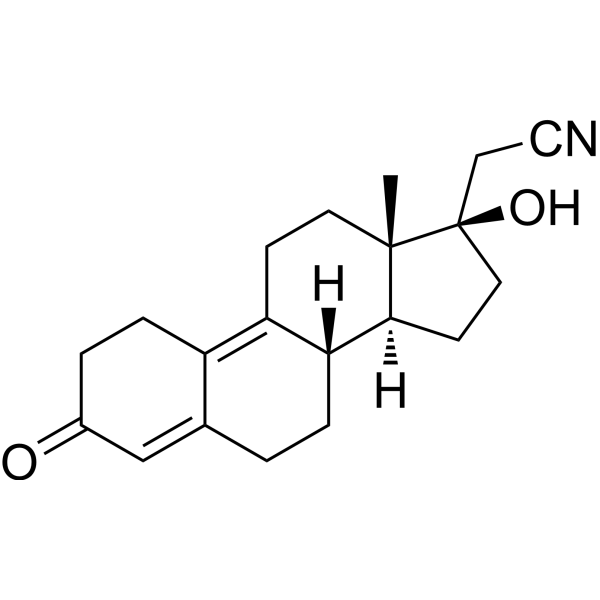
    Dienogest
    2 Publications Verification

    STS 557

    Progesterone Receptor Endocrinology
    Dienogest (STS-557) is an orally active and selective progesterone receptor agonist that effectively reduces the gene expression of COX-2, mPGES-1 and aromatase. Dienogest also inhibits the mRNA and protein expression of PGE2 synthase and the activation of NF-κB. Dienogest can be used in studies of endometriosis, menopause and menorrhagia .
    Dienogest
  • HY-N6966
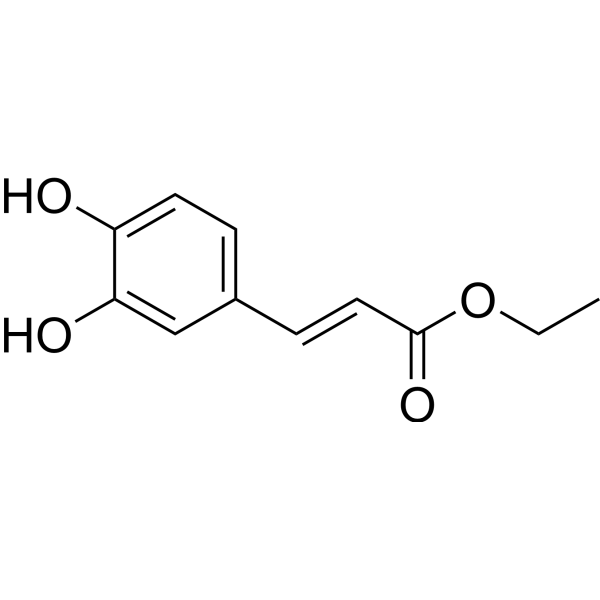
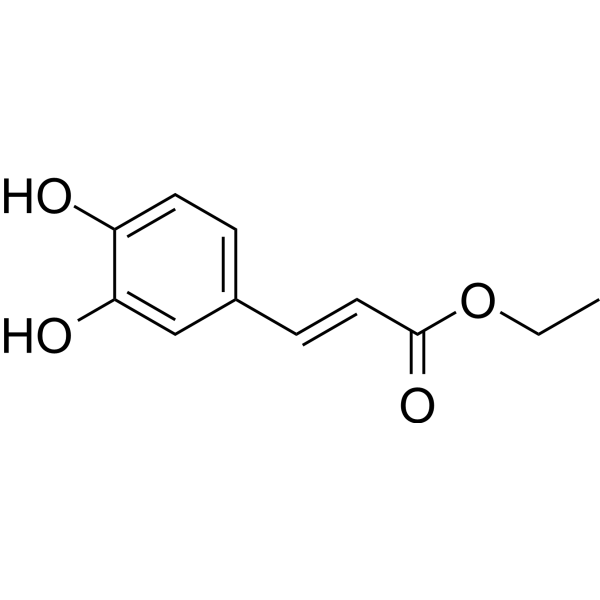
    Ethyl Caffeate
    2 Publications Verification

    NF-κB NO Synthase COX PGE synthase Inflammation/Immunology Cancer
    Ethyl Caffeate is a natural phenolic compound isolated from Bidens pilosa. Ethyl caffeate suppresses NF-κB activation and its downstream inflammatory mediators, inducible nitric oxide synthase (iNOS), cyclooxygenase-2 (COX-2), and prostaglandin E2 (PGE2) in vitro or in mouse skin .
    Ethyl Caffeate
  • HY-118119
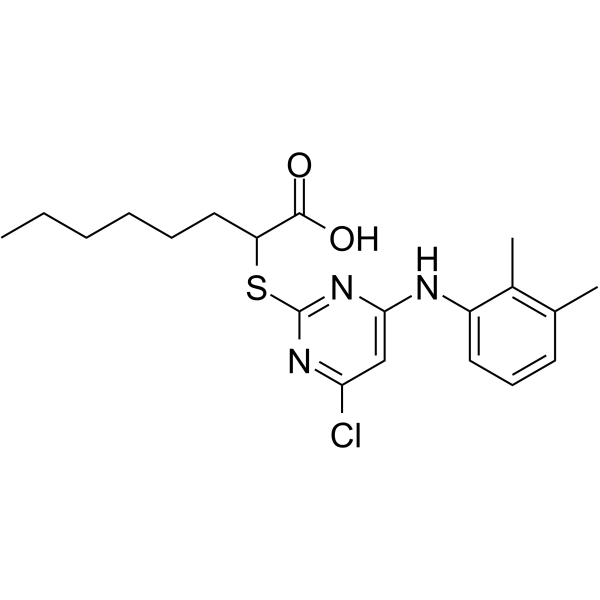
    CAY10526
    1 Publications Verification

    PGE synthase YB-1 Apoptosis JAK STAT TGF-β Receptor TGF-beta/Smad PI3K Akt Cancer
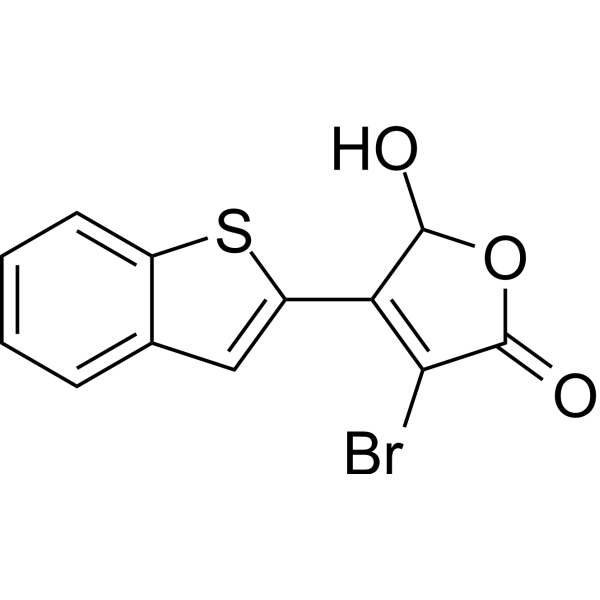
    CAY10526 is an inhibitor of Y-box binding protein 1 (YB-1) and microsomal prostaglandin E2 synthase 1 (mPGES1). CAY10526 inhibits the production of PGE2 by suppressing YB-1 and mPGES1. CAY10526 induces cell apoptosis (apoptosis) and inhibits the JAK/STAT, TGF-β/Smad3 and PI3K/AKT signaling pathways. CAY10526 can be used in research related to melanoma, prostate cancer, esophageal adenocarcinoma, T-cell lymphoma, etc .
    CAY10526
  • HY-108259

    PGE synthase Inflammation/Immunology
    HQL-79, a potent, selective and orally active human hematopoietic prostaglandin D synthase (H-PGDS) inhibitor, highly selectively inhibits the synthesis of PGD2, and acts as an anti-allergic agent, with a Kd of 0.8 μM and an IC50 of 6 μM. Shows no obvious effect on COX-1, COX-2, m-PGES, or L-PGDS .
    HQL-79
  • HY-105005

    AAD-2004

    Prostaglandin Receptor PGE synthase Reactive Oxygen Species (ROS) Apoptosis Neurological Disease Inflammation/Immunology
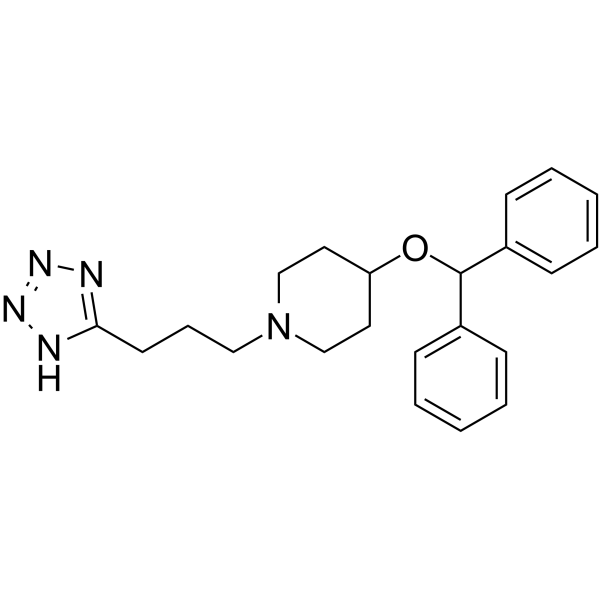
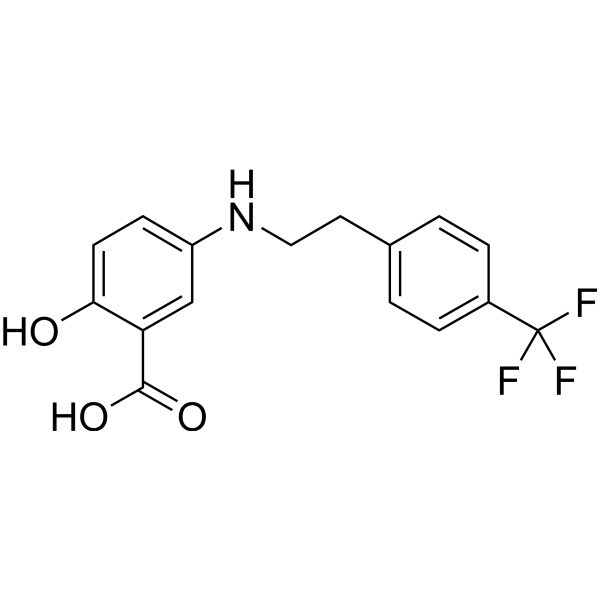
    Crisdesalazine (AAD-2004) is a microsomal prostaglandin E2 synthase-1 (mPGES-1) inhibitor. Crisdesalazine acts as a potent free radical scavenger that directly neutralizes reactive oxygen species (ROS) including hydrogen peroxide, exerting neuroprotective effects against apoptosis and axonal damage. Crisdesalazine inhibits PGE2 production, mediates inflammatory responses, and promotes the conversion of macrophages from the pro-inflammatory M1 phenotype to the anti-inflammatory M2 phenotype. Crisdesalazine is applicable to neuroprotection research in multiple sclerosis and spinal cord injury .
    Crisdesalazine
  • HY-19622

    PGE synthase Inflammation/Immunology
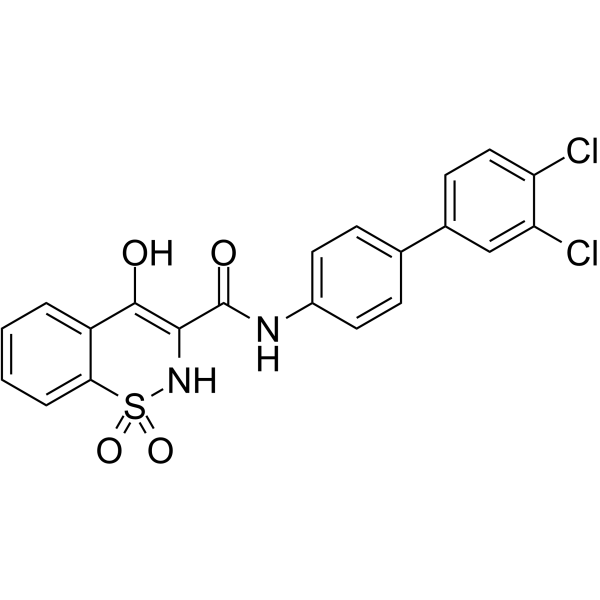
    PF-9184 is a potent and highly selective inhibitor of human microsomal prostaglandin E synthase-1 (mPGES-1), with an IC50 of 16.5 nM. PF-9184 inhibits IL-1β-induced PGE2 synthesis in vitro .
    PF-9184
  • HY-149202

    PGE synthase Neurological Disease Inflammation/Immunology
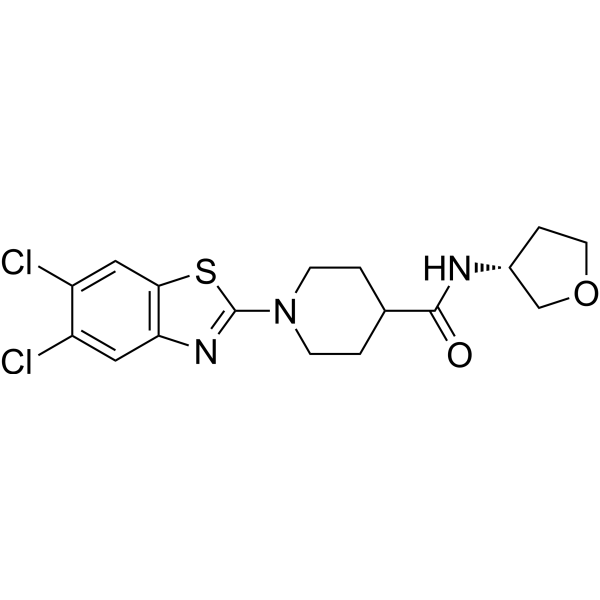
    UT-11 is a potent and blood-brain barrier-permeable microsomal prostaglandin E synthase-1 (mPGES-1) inhibitor with IC50s of 0.10 μM and 2.00 μM for inhibiting PGE2 production in human (SK-N-AS) and murine (BV2) cells, respectively .
    UT-11
  • HY-118282

    PGE synthase Endocrinology
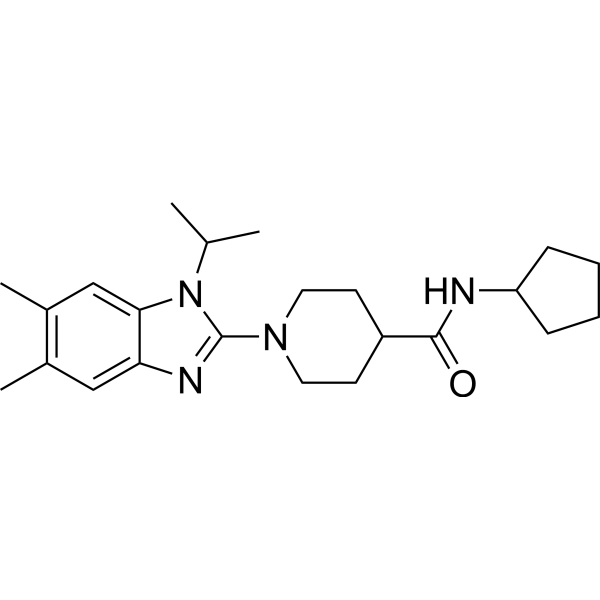
    mPGES-1-IN-2 (compound III) is a benzimidazole-based mPGES-1 inhibitor that also inhibits adipophysin PGD synthase (I-PGDS) (5 μM, IR=60 %). mPGES-1-IN-2 reduces PGE2 production and tends to reduce levels of other prostaglandins. mPGES-1-IN-2 effectively inhibits acute inflammation in an air sac model stimulated by Carrageenan (HY-125474) in mice .
    mPGES1-IN-7
  • HY-111140

    PGE synthase Lipoxygenase PPAR Inflammation/Immunology
    YS121 is a dual inhibitor of microsomal prostaglandin E2 synthase-1 (mPGES-1; IC50 = 3.4 μM) and 5-lipoxygenase (5-LOX; IC50 = 6.5 μM). YS121 exhibits direct, reversible, and specific binding to mPGES-1 (KD = 10-14 μM) . YS121 dose-dependently reduces PGE2 production with an EC50 of 12 μM in IL-1β-stimulated A549 cells . YS121 (compound 9) activates PPAR-α and -γ (EC50 = 1 and 3.6 μM, respectively) . YS121 exhibits anti-inflammatory efficiency in human whole blood as well as in vivo. YS121 can be used for pleurisy research .
    YS121
  • HY-N6966A

    Others Inflammation/Immunology
    Ethyl trans-caffeate is the trans form of Ethyl Caffeate (HY-N6966). Ethyl Caffeate is a natural phenolic compound isolated from Bidens pilosa. Ethyl caffeate suppresses NF-κB activation and its downstream inflammatory mediators, inducible nitric oxide synthase (iNOS), cyclooxygenase-2 (COX-2), and prostaglandin E2 (PGE2) in vitro or in mouse skin .
    Ethyl trans-caffeate
  • HY-B0084R

    STS 557 (Standard)

    Reference Standards Progesterone Receptor Endocrinology
    Dienogest (Standard) is the analytical standard of Dienogest. This product is intended for research and analytical applications. Dienogest (STS-557) is an orally active and selective progesterone receptor agonist that effectively reduces the gene expression of COX-2, mPGES-1 and aromatase. Dienogest also inhibits the mRNA and protein expression of PGE2 synthase and the activation of NF-κB. Dienogest can be used in studies of endometriosis, menopause and menorrhagia .
    Dienogest (Standard)
  • HY-178794

    PGE synthase Inflammation/Immunology
    AGU661 is a Microsomal prostaglandin E2 synthase 1 (mPGES-1) inhibitor with an IC50 of 0.22  nM. AGU661 lowers PGE2 formation in human pro-inflammatory M1 macrophages and activated monocytes without affecting other lipid mediator pathways. AGU661 has unfavorable physicochemical properties with poor metabolic stability and strong plasma protein binding tendencies. AGU661 into PLGA-based NPs significantly enhances its bioactivity. AGU661 can be used for inflammatory disorders research .
    AGU661
  • HY-N3535

    Prostaglandin Receptor Lipoxygenase Inflammation/Immunology
    Canniprene, an isoprenylated bibenzyl unique to Cannabis sativa, is a potent inhibitor of 5-lipoxygenase (5-LO) activity (IC50=0.4 μM) and cyclooxygenase/microsomal prostaglandin E2 synthase (PGE2; IC50=10 μM). Canniprene inhibits the production of inflammatory eicosanoids and affects the generation of prostaglandins .
    Canniprene
  • HY-165587

    Prostaglandin Receptor Cardiovascular Disease
    BM-573 is an orally active dual thromboxane A₂ (TXA₂) modulator with an IC50 of 1.3 nM. BM-573 possesses both thromboxane synthase (TxAS) inhibition and thromboxane receptor (TP) antagonistic effects. BM-573 can completely inhibit platelet aggregation induced by Arachidonic acid (HY-109590) or U-46619 (TXA₂ analogues). BM-573 completely blocks the generation of TXB₂ (the stable metabolite of TXA₂) in human platelets and does not inhibit cyclooxygenase (COX-1/COX-2), thus avoiding interference with other prostaglandin synthesis. BM-573 has an inhibitory effect on U-46619-induced contractions in rat gastric fundus smooth muscle (ED₅₀ = 4.2 μM), but has no effect on contractions caused by PGE₂, PGF₂α, or PGI₂. BM-573 can be used in the study of atherosclerosis, myocardial infarction, pulmonary hypertension and shock .
    BM-573
  • HY-130356

    PGE synthase Others
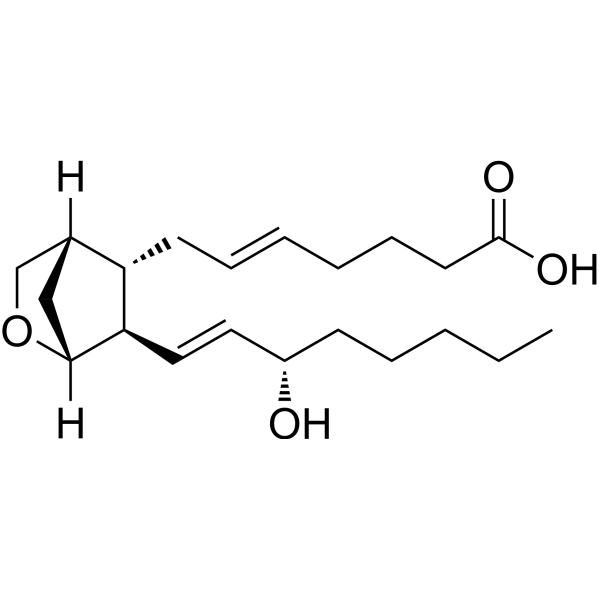
    5-trans U-46619 is a PGE synthase inhibitor. At a concentration of 10 μM, 5-trans U-46619 inhibits PGE synthase by <20% .
    5-trans U-46619
  • HY-N9891

    12-DHGD

    NO Synthase Interleukin Related Inflammation/Immunology
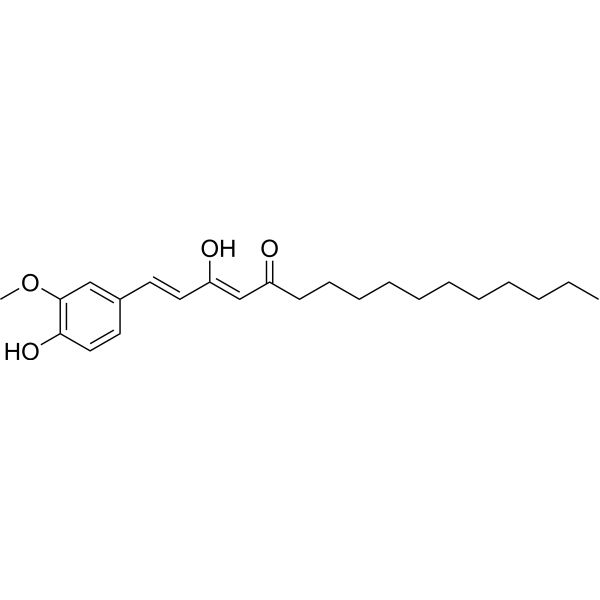
    12-Dehydrogingerdione is an inhibitor of NO Synthase. 12-Dehydrogingerdione signi?cantly inhibits LPS-stimulated production of NO, IL-6 and PGE2 in Raw 264.7 cells .
    12-Dehydrogingerdione
  • HY-131626

    1a,1b-Dihomo PGE2

    COX Metabolic Disease
    1a,1b-Dihomo Prostaglandin E2 (PGE2) is a rare polyunsaturated fatty acid first identified in extracts of sheep vesicular gland microsomes, known to contain COX, incubated with adrenic acid. 1a,1b-Dihomo PGE2 has also been identified in conditioned media of RAW 264.7 macrophages stimulated with endotoxin and arachidonic acid. This product is thought to be produced by elongation of AA to adrenic acid, which is then metabolized sequentially by COX and PGE synthase.
    1a,1b-Dihomo prostaglandin E2
  • HY-118765

    Prostaglandin Receptor Cardiovascular Disease
    Ro 23-3423 is a thromboxane synthase inhibitor with an IC50 value of 0.33 μM for human platelet microsomal thromboxane synthase. Ro 23-3423 increases plasma levels of PGF and PGE2 in a dose-dependent manner, accompanied by a decrease in mean systemic arterial pressure and systemic vascular resistance. Ro 23-3423 can be used in the study of general anesthesia .
    Ro 23-3423
  • HY-N6966R

    Reference Standards NF-κB NO Synthase COX PGE synthase Inflammation/Immunology Cancer
    Ethyl Caffeate is a natural phenolic compound isolated from Bidens pilosa. Ethyl caffeate suppresses NF-κB activation and its downstream inflammatory mediators, inducible nitric oxide synthase (iNOS), cyclooxygenase-2 (COX-2), and prostaglandin E2 (PGE2) in vitro or in mouse skin .
    Ethyl Caffeate (Standard)
  • HY-168766

    Prostaglandin Receptor COX Inflammation/Immunology
    O-Acetylsalicylhydroxamic acid is an acetylation inhibitor of prostaglandin H2 synthase that can suppress PGE2 synthesis in the body and block the cyclooxygenase activity of PGHS in vitro. O-Acetylsalicylhydroxamic acid requires the presence of the active site residue Ser-529 to act on human PGHS-1; the S529A mutant is resistant to the inactivation effects of this inhibitor .
    O-Acetylsalicylhydroxamic acid
  • HY-N8936

    Others Inflammation/Immunology
    Narchinol B (Compound 4) is a sesquiter penoid compound. Narchinol B has anti-inflammatory effects. Narchinol B works by inhibiting proinflammatory mediators, including prostaglandin E2 (PGE2), inducible nitric oxide synthase (iNOS), and cyclooxygenase-2 (COX-2) proteins, as well as proinflammatory cytokines, such as interleukin-1b, IL-6, and tumor necrosis factor-α (TNF-α). Narchinol B significantly inhibits LPS-induced overproduction of NO in BV2 cells (IC50=2.43 μM) .
    Narchinol B
  • HY-B0084S4

    STS 557-13C,15N,d4

    Isotope-Labeled Compounds Progesterone Receptor Endocrinology
    Dienogest-13C,15N,d4 (STS 557-13C,15N,d4) is the 13C, 15N and deuterium labeled isotope of Dienogest (HY-B0084). Dienogest (STS-557) is an orally active and selective progesterone receptor agonist that effectively reduces the gene expression of COX-2, mPGES-1 and aromatase. Dienogest also inhibits the mRNA and protein expression of PGE2 synthase and the activation of NF-κB. Dienogest can be used in studies of endometriosis, menopause and menorrhagia .
    Dienogest-13C,15N,d4
  • HY-182647

    PGE synthase Inflammation/Immunology
    LY3023703 is an orally active microsomal prostaglandin E synthase-1 (mPGES-1) inhibitor. LY3023703 inhibits the production of PGE2. LY3023703 is applicable to research related to inflammatory diseases and osteoarthritis pain .
    LY3023703
  • HY-108259R

    Reference Standards PGE synthase Inflammation/Immunology
    HQL-79 (Standard) is the analytical standard of HQL-79 (HY-108259). This product is intended for research and analytical applications. HQL-79, a potent, selective and orally active human hematopoietic prostaglandin D synthase (H-PGDS) inhibitor, highly selectively inhibits the synthesis of PGD2, and acts as an anti-allergic agent, with a Kd of 0.8 μM and an IC50 of 6 μM. Shows no obvious effect on COX-1, COX-2, m-PGES, or L-PGDS .
    HQL-79 (Standard)

Consulta en línea

Your information is safe with us. * Required Fields.

Saludo


Country or Region *

Nombre del solicitante *


Nombre de la Organizaciòn *

Department *


Direcciòn del E-mail *


Nombre del producto *

Cat. No.


Requested quantity *

Número de teléfono *


Observaciones

Consulta en línea

Inquiry Information

Nombre del producto:
Cat. No.:
Cantidad:
MCE Japan Authorized Agent:

