16 Results for "

PGE2 synthesis

" in MedChemExpress (MCE) Product Catalog:
Products (16)

16 Results for "PGE2 synthesis" in MCE Product Catalog:

50
50 Publications Verification
Cat. No.: HY-B1081A
CAS No.: 636-00-0
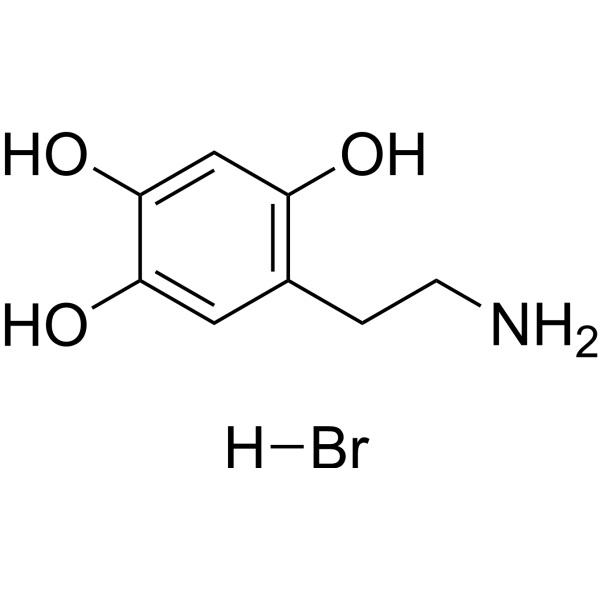
Synonyms: 6-Hydroxydopamine hydrobromide; 6-OHDA hydrobromide
Oxidopamine (6-OHDA) hydrobromide is an antagonist of the neurotransmitter dopamine. Oxidopamine hydrobromide is a widely used neurotoxin and selectively destroys dopaminergic neurons. Oxidopamine hydrobromide promotes COX-2 activation, leading to PGE2 synthesis and pro-inflammatory cytokine IL-1β secretion. Oxidopamine hydrobromide can be used for the research of Parkinson’s disease (PD), attention-deficit hyperactivity disorder (ADHD), and Lesch-Nyhan syndrome .
loading...
    loading...
50
50 Publications Verification
Cat. No.: HY-B1081
CAS No.: 28094-15-7
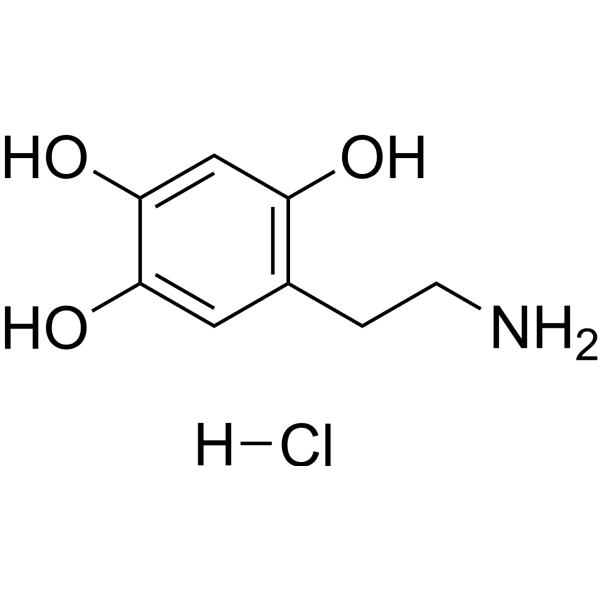
Synonyms: 6-Hydroxydopamine Hydrochloride
Oxidopamine (6-OHDA) hydrochloride is an antagonist of the neurotransmitter dopamine. Oxidopamine hydrochloride is a widely used neurotoxin and selectively destroys dopaminergic neurons. Oxidopamine hydrochloride promotes COX-2 activation, leading to PGE2 synthesis and pro-inflammatory cytokine IL-1β secretion. Oxidopamine hydrochloride can be used for the research of Parkinson’s disease (PD), attention-deficit hyperactivity disorder (ADHD), and Lesch-Nyhan syndrome .
loading...
    loading...
1
1 Cited Publications
Cat. No.: HY-B1398
CAS No.: 83-07-8
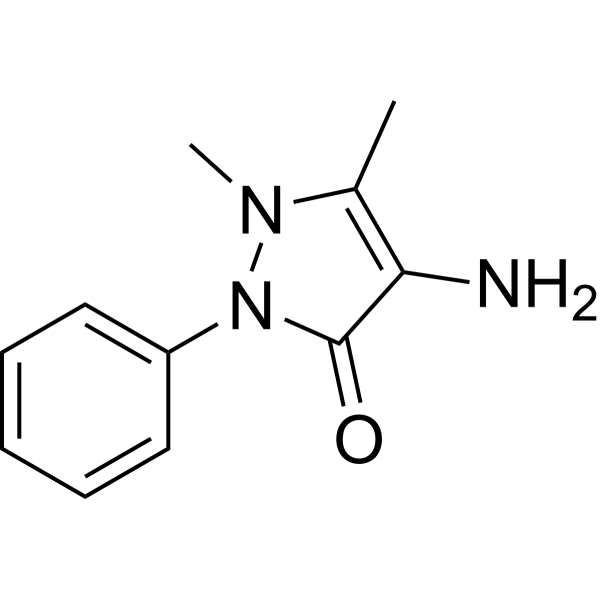
Synonyms: 4-Aminophenazone
Ampyrone (4-Aminophenazone; 4-Aminoantipyrine) is a reversible and low-damage optical clearing agent and non-selective COX inhibitor based on UV absorption properties. Ampyrone can improve the optical transmittance of mouse skin and other tissues. Ampyrone can induce tissue refractive index matching by enhancing UV absorption, reduce light scattering, and achieve tissue transparency in vivo. Ampyrone reduces the synthesis of prostaglandin PGE2, thereby exerting anti-inflammatory, analgesic and antipyretic effects. Ampyrone inhibits DNA damage, cell apoptosis and immune cell phagocytosis induced by Doxorubicin (HY-15142A) and Cisplatin (HY-17394), etc., and participates in the regulation of toxicity in tumor chemotherapy .
loading...
    loading...
Cat. No.: HY-177440
CAS No.: 958860-12-3
Research Areas:  

Metabolic Disease

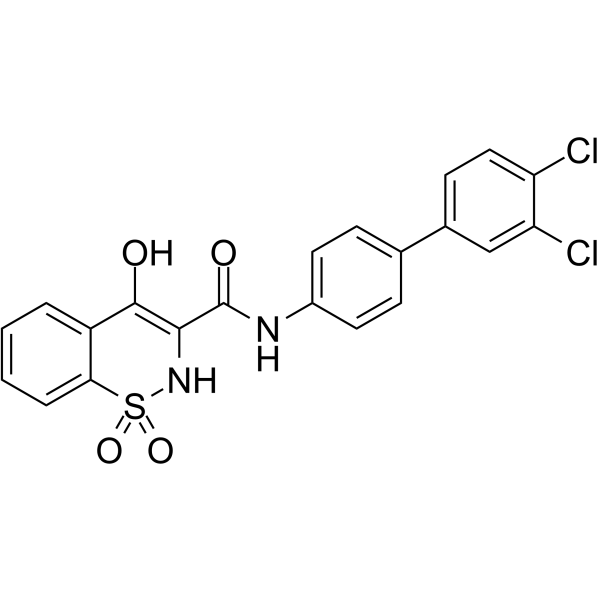
T26A is a highly selective prostaglandin transporter (PGT) inhibitor.T26A does not interact with the PGT homolog OATPc, blocks PGT-mediated PGE2 influx, and blocks PGE2 metabolism.T26A retains PGE2 in the extracellular compartment and reduces intracellular PGE2 metabolites.T26A elevates circulating endogenous PGE2 levels, reduces circulating endogenous PGE2 metabolite levels, and slows metabolism of exogenously injected PGE2 in Rattus norvegicus via intravenous injection.T26A does not affect PGE2 synthesis.T26A can be used for the research of PGT function in adult animals .
loading...
    loading...
Cat. No.: HY-19622
CAS No.: 1221971-47-6
Target:  

PGE synthase

Research Areas:  

Inflammation/Immunology

PF-9184 is a potent and highly selective inhibitor of human microsomal prostaglandin E synthase-1 (mPGES-1), with an IC50 of 16.5 nM. PF-9184 inhibits IL-1β-induced PGE2 synthesis in vitro .
loading...
    loading...
Cat. No.: HY-B1398R
CAS No.: 83-07-8
Synonyms: 4-Aminophenazone (Standard)
Ampyrone (4-Aminophenazone) (Standard) is the analytical standard of Ampyrone (HY-B1398). This product is intended for research and analytical applications. Ampyrone (4-Aminophenazone; 4-Aminoantipyrine) is a reversible and low-damage optical clearing agent and non-selective COX inhibitor based on UV absorption properties. Ampyrone can improve the optical transmittance of mouse skin and other tissues. Ampyrone can induce tissue refractive index matching by enhancing UV absorption, reduce light scattering, and achieve tissue transparency in vivo. Ampyrone reduces the synthesis of prostaglandin PGE2, thereby exerting anti-inflammatory, analgesic and antipyretic effects. Ampyrone inhibits DNA damage, cell apoptosis and immune cell phagocytosis induced by Doxorubicin (HY-15142A) and Cisplatin (HY-17394), etc., and participates in the regulation of toxicity in tumor chemotherapy .
loading...
    loading...
Cat. No.: HY-113461
CAS No.: 74872-89-2
Research Areas:  

Others

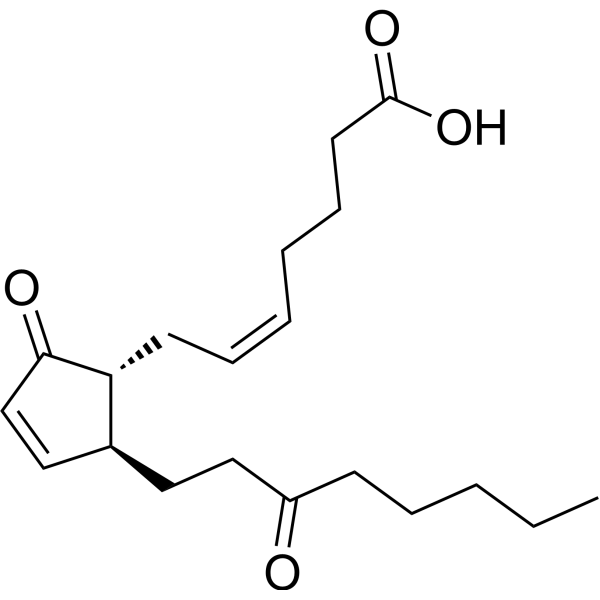
13,14-Dihydro-15-keto-prostaglandin A2 is a product of the non-enzymatic dehydration of 13,14-dihydro-15-keto PGE2. It is further broken down into bicyclo PGE2, which acts as a biomarker for PGE2 synthesis .
loading...
    loading...
Cat. No.: HY-168766
CAS No.: 199854-00-7
Research Areas:  

Inflammation/Immunology

O-Acetylsalicylhydroxamic acid is an acetylation inhibitor of prostaglandin H2 synthase that can suppress PGE2 synthesis in the body and block the cyclooxygenase activity of PGHS in vitro. O-Acetylsalicylhydroxamic acid requires the presence of the active site residue Ser-529 to act on human PGHS-1; the S529A mutant is resistant to the inactivation effects of this inhibitor .
loading...
    loading...
Cat. No.: HY-19646
CAS No.: 56355-17-0
Synonyms: 480156-S
Zoliprofen (480156-S), a new non-steroidal anti-inflammatory agent, has potent pain suppressing effect. Zoliprofen has strong antagonistic action against bradykinin, markedly inhibiting all bradykinin-induced edema and pain reactions. Zoliprofen weakly inhibits Arachidonic acid (HY-109590)-induced edema and pain reactions but also inhibits PGE2 synthesis of bovine vesicular gland microsomes .
loading...
    loading...
Cat. No.: HY-115866
CAS No.: 2756347-91-6
Purity:  98.80%
Target:  

COX

Research Areas:  

Cancer

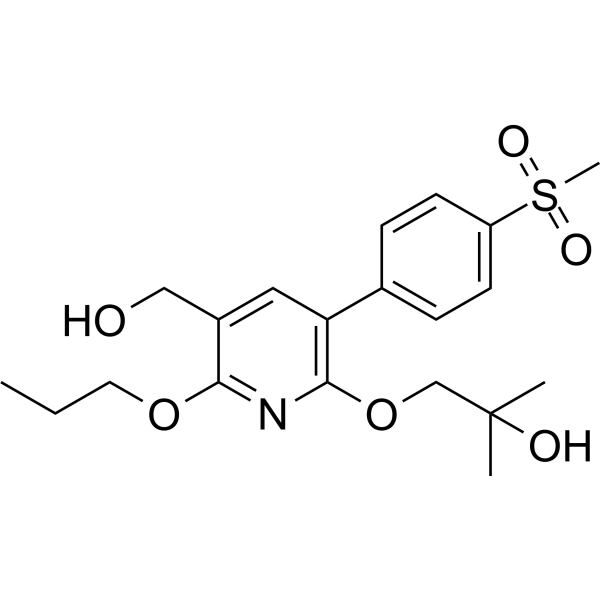
COX-2-IN-6 (compound 10) is an orally active, gut-restricted and selective cyclooxygenase-2 (COX-2) inhibitor for colorectal Chemoprevention of cancer. COX-2-IN-6 selectively targets COX-2 with an IC50 of 0.84 μM and a Ki of 69 nM. COX-2-IN-6 also inhibits COX-2-driven PGE2 synthesis with an IC50 of 0.60 μM .
loading...
    loading...
Cat. No.: HY-168382A
CAS No.: 98103-47-0
Research Areas:  

Others

5S(6R)-EET is the metabolite of Arachidonic acid (HY-109590). 5S(6R)-EET activates the synthesis of endogenous prostaglandin (PGE2), which inhibits the Na + absorption, increases the intracellular Ca 2+, and promotes the depolarization of transmembrane voltage. 5S(6R)-EET is more active than 5R(6S)-EET (HY-168382) .
loading...
    loading...
Cat. No.: HY-168382
CAS No.: 98103-46-9
Research Areas:  

Others

5R(6S)-EET is the metabolite of Arachidonic acid (HY-109590). 5R(6S)-EET activates the synthesis of endogenous prostaglandin (PGE2), which inhibits the Na + absorption, increases the intracellular Ca 2+, and promotes the depolarization of transmembrane voltage. 5R(6S)-EET exhibits stereoselectivity with less effectness than 5S(6R)-EET (HY-168382A) .
loading...
    loading...
Cat. No.: HY-B1398S
CAS No.: 1329792-51-9
Synonyms: 4-Aminoantipyrine-d3
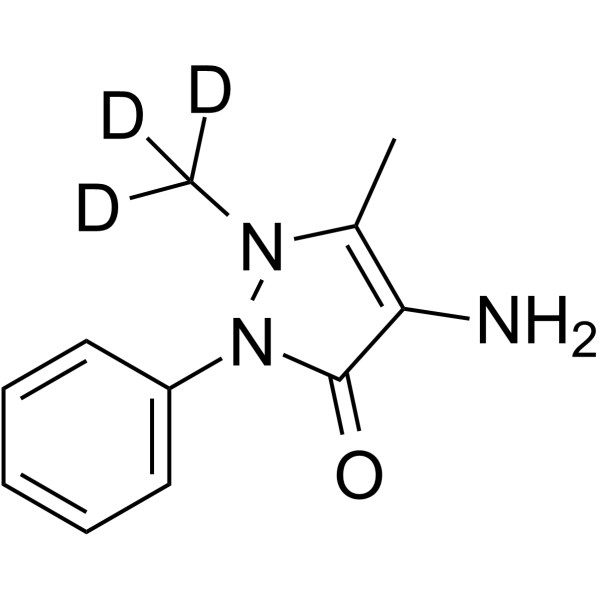
Ampyrone-d3 is the deuterium labeled Ampyrone (HY-B1398). Ampyrone (4-Aminophenazone; 4-Aminoantipyrine) is a reversible and low-damage optical clearing agent and non-selective COX inhibitor based on UV absorption properties. Ampyrone can improve the optical transmittance of mouse skin and other tissues. Ampyrone can induce tissue refractive index matching by enhancing UV absorption, reduce light scattering, and achieve tissue transparency in vivo. Ampyrone reduces the synthesis of prostaglandin PGE2, thereby exerting anti-inflammatory, analgesic and antipyretic effects. Ampyrone inhibits DNA damage, cell apoptosis and immune cell phagocytosis induced by Doxorubicin (HY-15142A) and Cisplatin (HY-17394), etc., and participates in the regulation of toxicity in tumor chemotherapy .
loading...
    loading...
Cat. No.: HY-187131
CAS No.: 869-06-7
Magnesium malate is an orally active organic acid-chelated magnesium complex. Magnesium malate promotes the release of prostaglandin E2 (PGE2) from macrophages, synergistically stimulates the synthesis/release of calcitonin gene-related peptide (CGRP) from dorsal root ganglion neurons, and upregulates the osteogenic transcription factor RUNX2 in osteoblasts via the Mg 2+-PGE2-CGRP axis, thereby promoting osteoblast proliferation. Magnesium malate can be incorporated into calcium phosphate bone cement as a modifying component to improve compressive strength, shorten setting time and enhance disintegration resistance. Magnesium malate increases serum magnesium levels. Magnesium malate can be used in studies related to bone defects and magnesium deficiency .
loading...
    loading...
Cat. No.: HY-B1081R
CAS No.: 28094-15-7
Synonyms: 6-Hydroxydopamine Hydrochloride (Standard)
Oxidopamine hydrochloride (Standard) is the analytical standard of Oxidopamine hydrochloride (HY-B1081). This product is intended for research and analytical applications. Oxidopamine (6-OHDA) hydrochloride is an antagonist of the neurotransmitter dopamine. Oxidopamine hydrochloride is a widely used neurotoxin and selectively destroys dopaminergic neurons. Oxidopamine hydrochloride promotes COX-2 activation, leading to PGE2 synthesis and pro-inflammatory cytoKine IL-1β secretion. Oxidopamine hydrochloride can be used for the research of ParKinson’s disease (PD), attention-deficit hyperactivity disorder (ADHD), and Lesch-Nyhan syndrome .
loading...
    loading...
Cat. No.: HY-B1081AR
CAS No.: 636-00-0
Synonyms: 6-Hydroxydopamine hydrobromide (Standard); 6-OHDA hydrobromide (Standard)
Oxidopamine hydrobromide (Standard) is the analytical standard of Oxidopamine hydrobromide (HY-B1081A). This product is intended for research and analytical applications. Oxidopamine (6-OHDA) hydrobromide is an antagonist of the neurotransmitter dopamine. Oxidopamine hydrobromide is a widely used neurotoxin and selectively destroys dopaminergic neurons. Oxidopamine hydrobromide promotes COX-2 activation, leading to PGE2 synthesis and pro-inflammatory cytoKine IL-1β secretion. Oxidopamine hydrobromide can be used for the research of ParKinson’s disease (PD), attention-deficit hyperactivity disorder (ADHD), and Lesch-Nyhan syndrome .
loading...
    loading...
  • 1

