1. Search Result
Search Result
Results for "

Polymers

" in MedChemExpress (MCE) Product Catalog:

1353

Inhibitors & Agonists

3

Screening Libraries

35

Fluorescent Dye

499

Biochemical Assay Reagents

27

Peptides

5

MCE Kits

7

Inhibitory Antibodies

115

Natural
Products

42

Isotope-Labeled Compounds

28

Click Chemistry

116

Oligonucleotides

7

GMP Molecules

Cat. No. Product Name Target Research Areas Chemical Structure
  • HY-Y0873
    PEG300
    Maximum Cited Publications
    178 Publications Verification

    Polyethylene glycol 300

    Environmental Pollutants Biochemical Assay Reagents Others
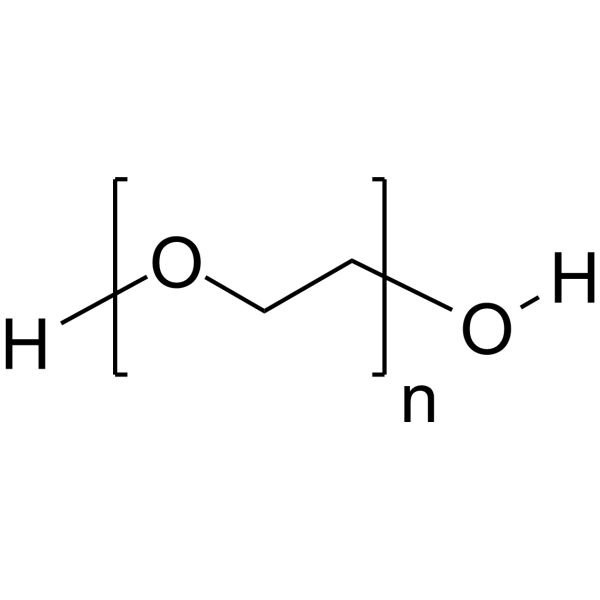
    PEG300 (Polyethylene glycol 300), a neutral polymer of molecular weight 300, is a water-soluble, low immunogenic and biocompatible polymer formed by repeating units of ethylene glycol .
    PEG300
  • HY-Y0873C

    Polyethylene glycol 3350

    Environmental Pollutants Biochemical Assay Reagents Others
    PEG3350 (Polyethylene glycol 3350) a neutral polymer of molecular weight 3350. PEG3350 used as an excellent solvent for a large number of substances.
    PEG3350
  • HY-W007432

    Biochemical Assay Reagents Others
    RuPhos is a Buchwald ligand. In aqueous Suzuki-Miyaura catalytic transfer polymerization, RuPhos forms inactive Pd (RuPhos)2 with palladium and inhibits diffusion to improve polymerization controllability. RuPhos additional addition in anhydrous Kumada polymerization exacerbates catalyst deactivation and chain transfer, significantly impairing polymerization control .
    RuPhos
  • HY-D1005A2

    PEG-PPG-PEG, 1900 (Average)

    Environmental Pollutants Biochemical Assay Reagents Others
    Poloxamer 105 L35 is block polymer of polyoxyethylene and polyoxypropylene with average molecular mass of 1900 Da. Poloxamer 105 L35 forms thermoreversible hydrogel, that is utilized in food additives, drug delivery carriers in cosmetics, pharmaceutical ingredients and tissue engineering .
    Poloxamer 105 (L35)
  • HY-W012723

    Biochemical Assay Reagents Others
    2-Hydroxyethyl methacrylate (HEMA) is a monomer used in the synthesis of various polymers, and the polymer PHEMA of 2-Hydroxyethyl methacrylate is widely used in the synthesis of dental composite materials .
    2-Hydroxyethyl methacrylate
  • HY-Y0850U4

    Polyvinyl alcohol (Mw 145000, 99+% hydrolyzed, ~3300 polymerization); Poly(Ethenol) (Mw 145000, 99+% hydrolyzed, ~3300 polymerization)

    Biochemical Assay Reagents Others
    PVA (Mw 145000, 99+% hydrolyzed, ~3300 polymerization) is a polyvinyl alcohol with molecular weight of 145000 with hydrolysis properties. PVA (Mw 145000, 99+% hydrolyzed, ~3300 polymerization) is obtained by polymerizing vinyl acetate followed by hydrolysis to remove acetate groups, yielding polyvinyl alcohol .
    PVA (Mw 145000, 99+% hydrolyzed, ~3300 polymerization)
  • HY-W089777

    GPTMS

    Biochemical Assay Reagents Others
    3-Glycidyloxypropyltrimethoxysilane (GPTMS) is a silicon source for the preparation of inorganic-organic hybrid polymers. 3-Glycidyloxypropyltrimethoxysilane can be used to prepare hard coatings of organic polymers, such as contact lens materials in the optical industry, as well as related materials in the fields of electronics, thin films, sensors, nanoimprinting, waveguides, and biology .
    3-Glycidyloxypropyltrimethoxysilane
  • HY-W013021

    Ligands for E3 Ligase Others
    Norbornene is a cycloolefin and building block for synthesis of porous organic polymeric materials via metathesis, addition, and CANAL polymerization. Norbornene can also be used as an E3 ligase ligand for the synthesis of PROTAC, such as PROTAC HyTTD Degrader-1 (HY-181895) .
    Norbornene
  • HY-W105423

    NHS-MA

    Biochemical Assay Reagents Others
    Methacrylic acid N-hydroxysuccinimide ester (NHS-MA) is a polymer that serves as a monomer to prepare degradable amphiphilic block copolymer microparticles via RAFT polymerization for low pH-triggered drug delivery. Methacrylic acid N-hydroxysuccinimide ester is used for the synthesis of nanogels .
    Methacrylic acid N-hydroxysuccinimide ester
  • HY-W013205

    Biochemical Assay Reagents Others
    Bis(4-nitrophenyl) phosphate is a catalyst for metal micelles and can catalyze the hydrolysis of (4-nitrophenyl) phosphate. Bis(4-nitrophenyl) phosphate is also an effective catalyst for ring-opening polymerization (ROP), which can achieve controlled polymerization of β-butyrolactone (β-BL) ring-opening and can be used to prepare diembedded polymers without quenching. segment copolymer .
    Bis(4-nitrophenyl) phosphate
  • HY-A0104K

    Hypromellose (Type II,Viscosity:3mPa.s); (Hydroxypropyl)methyl cellulose (Type II,Viscosity:3mPa.s); Celacol HPM 5000 (Type II,Viscosity:3mPa.s)

    Environmental Pollutants Biochemical Assay Reagents Others
    HPMC (Type II, Viscosity: 3 mPa.s) is a nonionic polymer prepared via synthetic modification of cellulose. As a hydrophilic matrix material, HPMC prolongs drug release through non-Fickian diffusion, which includes the diffusion of drugs in the hydrated matrix and the polymer relaxation process .
    HPMC (Type II,Viscosity:3mPa.s)
  • HY-W923198

    Methacryloyloxy fluorescein

    Fluorescent Dye Others
    Fluorescein O-methacrylate (Methacryloyloxy fluorescein) is a pH-responsive fluorescent monomeric dye. Fluorescein O-methacrylate exhibits pH-responsive fluorescence properties: its fluorescence is activated under alkaline conditions and quenched under neutral or acidic conditions; reversible switching of fluorescence is achievable by adjusting the pH of the solution. Fluorescein O-methacrylate can be used as a monomer for the synthesis of amphiphilic fluorescein polymers. These polymers can self-assemble into stable polymer nanoparticles with enhanced aqueous-phase fluorescence, and also enable the conjugation of nanoparticles with amine-containing biomolecules to support sensitive optical detection of biomarkers (Ex/Em = 490/520 nm) .
    Fluorescein O-methacrylate
  • HY-W440548

    Ethylene diacrylate

    Biochemical Assay Reagents Others
    Ethylene glycol diacrylate (Ethylene diacrylate) is a polymer precursor used to form covalently crosslinked hydrogels with a degree of polymerization of 13 .
    Ethylene glycol diacrylate
  • HY-139480

    Biochemical Assay Reagents Others
    Poly(ethylene glycol) dithiol (Mn 3400) is a polymer and can be used as a biomaterial to prepare hydrogels .
    Poly(ethylene glycol) dithiol (Mn 3400)
  • HY-N1915

    Endogenous Metabolite Metabolic Disease
    Cellohexaose is a glucose polymer with two or more glucose monomers produced from the breakdown of cellulose, consisting of a condensation of beta (1-4) linked D-glucose monomers .
    Cellohexaose
  • HY-W015553

    2-Ethenylnaphthalene; 2-Vinylnaphthalene

    Biochemical Assay Reagents Others
    2-Vinylnaphthalene (2-Ethenylnaphthalene; 2-Vinylnaphthalene) is an organic polymer. 2-Vinylnaphthalene is a kind of biological materials or organic compounds that are widely used in life science research .
    2-Vinylnaphthalene
  • HY-Y0850U2

    Polyvinyl alcohol (Mw 130000, 87-89% hydrolyzed, ~2700 polymerization); Poly(Ethenol) (Mw 130000, 87-89% hydrolyzed, ~2700 polymerization)

    Biochemical Assay Reagents Others
    PVA (Mw 130000, 87-89% hydrolyzed, ~2700 polymerization) (Polyvinyl alcohol (Mw 130000, 87-89% hydrolyzed, ~2700 polymerization); Poly(Ethenol) (Mw 130000, 87-89% hydrolyzed, ~2700 polymerization)) is a biodegradable of polymer. PVA (Mw 130000, 87-89% hydrolyzed, ~2700 polymerization) can be used to blend with various biopolymers and hydrophilic synthetic polymers to improve mechanical properties of films .
    PVA (Mw 130000, 87-89% hydrolyzed, ~2700 polymerization)
  • HY-Y0850U1

    Polyvinyl alcohol (Mw 61000, 98-99% hydrolyzed, ~1400 polymerization); Poly(Ethenol) (Mw 61000, 98-99% hydrolyzed, ~1400 polymerization)

    Biochemical Assay Reagents Others
    PVA (Mw 61000, 98-99% hydrolyzed, ~1400 polymerization) (Polyvinyl alcohol (Mw 61000, 98-99% hydrolyzed, ~1400 polymerization); Poly(Ethenol) (Mw 61000, 98-99% hydrolyzed, ~1400 polymerization)) is a biodegradable of polymer. PVA (Mw 61000, 98-99% hydrolyzed, ~1400 polymerization) can be used to produce bio-composite films .
    PVA (Mw 61000, 98-99% hydrolyzed, ~1400 polymerization)
  • HY-Y0850U7

    Polyvinyl alcohol (Mw 195000, 98-99% hydrolyzed, ~4300 polymerization); Poly(Ethenol) (Mw 195000, 98-99% hydrolyzed, ~4300 polymerization)

    Biochemical Assay Reagents Others
    PVA (Mw 195000, 98-99% hydrolyzed, ~4300 polymerization) is polyvinyl alcohol with a molecular weight of 195,000 and hydrolytic properties. PVA (Mw 195000, 98-99% hydrolyzed, ~4300 polymerization) is obtained by polymerizing vinyl acetate followed by hydrolysis to remove acetate groups, yielding polyvinyl alcohol .
    PVA (Mw 195000, 98-99% hydrolyzed, ~4300 polymerization)
  • HY-176499
    PLGA38000-PEG10000
    1 Publications Verification

    Biochemical Assay Reagents Others
    PLGA38000-PEG10000 is an amphiphilic polymer. Amphiphilic polymers can be used in drug delivery studies due to their ability to self-assemble into discrete aggregates .
    PLGA38000-PEG10000
  • HY-Y0850U

    Polyvinyl alcohol (Mw 31000, 87-89% hydrolyzed, ~630 polymerization); Poly(Ethenol) (Mw 31000, 87-89% hydrolyzed, ~630 polymerization)

    Biochemical Assay Reagents Others
    PVA (Mw 31000, 87-89% hydrolyzed, ~630 polymerization) (Polyvinyl alcohol (Mw 31000, 87-89% hydrolyzed, ~630 polymerization); Poly(Ethenol) (Mw 31000, 87-89% hydrolyzed, ~630 polymerization)) is a biocompatible, biodegradable, nontoxic and hydrophilic synthetic polymer. PVA (Mw 31000, 87-89% hydrolyzed, ~630 polymerization) can be used to produce bone tissue engineering scaffold [1]
    PVA (Mw 31000, 87-89% hydrolyzed, ~630 polymerization)
  • HY-Y0850U8

    Polyvinyl alcohol (Mw 47000, 98-99% hydrolyzed, ~1000 polymerization); Poly(Ethenol) (Mw 47000, 98-99% hydrolyzed, ~1000 polymerization)

    Biochemical Assay Reagents Others
    PVA (Mw 47000, 98-99% hydrolyzed, ~1000 polymerization) is a polyvinyl alcohol with molecular weight of 47000 with hydrolysis properties. Hydrolysis degree refers to the conversion rate of acetic acid group hydrolysis to hydroxyl group in the original polyvinyl acetate, PVA (Mw 47000, 98-99% hydrolyzed, ~1000 polymerization). In addition, polyvinyl alcohol is obtained from polymerization of vinyl acetate to remove acetic acid group by hydrolysis. Polyvinyl alcohol with different degrees of hydrolysis can be self-crosslinked to form frozen gels and used as biological excipients .
    PVA (Mw 47000, 98-99% hydrolyzed, ~1000 polymerization)
  • HY-D1005A7

    PEG-PPG-PEG, 2400 (Average)

    Biochemical Assay Reagents Others
    Poloxamer 125 L45 is block polymer of polyoxyethylene and polyoxypropylene with average molecular mass of 2400. Poloxamer 125 L45 forms thermoreversible hydrogel, that is utilized in food additives, drug delivery carriers in cosmetics, pharmaceutical ingredients and tissue engineering .
    Poloxamer 125 (L45)
  • HY-164077

    Biochemical Assay Reagents Others
    mPEG-PLGA is a mucus-penetrating polymer. mPEG-PLGA is a raw material to prepare nanomedicine .
    mPEG-PLGA
  • HY-147896

    Microtubule/Tubulin Cancer
    Tubulin polymerization-IN-29 (compound 6g) is a potent tubulin polymerization inhibitor. Tubulin polymerization-IN-29 exhibits potent antiproliferative activity. Tubulin polymerization-IN-29 can induce HeLa cells arrest in G2/M phase .
    Tubulin polymerization-IN-29
  • HY-W321446

    Fluorescent Dye Others
    Dansyl ethylenediamine is a fluorescent probe. Dansyl ethylenediamine can be used for synthesis of protein-imprinted polymers which is capable of specific transduction of protein binding events into fluorescent signal change .
    Dansyl ethylenediamine
  • HY-149016

    Microtubule/Tubulin Farnesyl Transferase Cancer
    Tubulin polymerization-IN-25 (compound 17f) is a dual inhibitor of tubulin polymerization and farnesyl transferase (FTase) with IC50s of 1.11 μM and 0.39 μM, respectively. Tubulin polymerization-IN-25 displays cytotoxicity and excellent antitumor activity .
    Tubulin polymerization-IN-25
  • HY-167006

    PLGA10000-PEG3000-Vinylsulfone

    Biochemical Assay Reagents Others
    PLGA10000-PEG3000-VS (PLGA10000-PEG3000-Vinylsulfone) is an amphiphilic polymer. Amphiphilic polymers can be used in drug delivery studies due to their ability to self-assemble into discrete aggregates .
    PLGA10000-PEG3000-VS
  • HY-143446

    Microtubule/Tubulin Cancer
    Tubulin polymerization-IN-7 (compound 5) is a potent inhibitor of tubulin polymerization. Tubulin polymerization-IN-7 has the potential for the research of cancer diseases .
    Tubulin polymerization-IN-7
  • HY-145868

    Microtubule/Tubulin Apoptosis Cancer
    Tubulin polymerization-IN-3 (compound 4c) is a potent tubulin polymerization inhibitor, with an IC50 of 3.84 µM. Tubulin polymerization-IN-3 can induce apoptosis in colon cancer cells .
    Tubulin polymerization-IN-3
  • HY-176201

    Microtubule/Tubulin Apoptosis Cancer
    Tubulin polymerization-IN-80 (Compound 32) is a potent tubulin polymerization inhibitor with antiproliferative activity. Tubulin polymerization-IN-80 disrupts microtubule formation and leads to cell cycle arrest and apoptosis. Tubulin polymerization-IN-80 is promising for research of cancers .
    Tubulin polymerization-IN-80
  • HY-146362

    Microtubule/Tubulin Apoptosis Cancer
    Tubulin polymerization-IN-17 (compound 23g) is a potent inhibitor of tubulin polymerization. Tubulin polymerization-IN-17 exhibits tubulin depolymerization and induced cell apoptosis and inhibits migration. Tubulin polymerization-IN-17 has the potential for the research of cancer diseases .
    Tubulin polymerization-IN-17
  • HY-146378

    Microtubule/Tubulin Cancer
    Tubulin polymerization-IN-20 (compound 11) is a potent inhibitor of tubulin polymerization. Tubulin polymerization-IN-20 has the potential for the research of breast cancers and chemoresistant colon cancers .
    Tubulin polymerization-IN-20
  • HY-146377

    Microtubule/Tubulin Cancer
    Tubulin polymerization-IN-19 (compound 4) is a potent inhibitor of tubulin polymerization. Tubulin polymerization-IN-20 has the potential for the research of breast cancers and chemoresistant colon cancers .
    Tubulin polymerization-IN-19
  • HY-146376

    Microtubule/Tubulin Cancer
    Tubulin polymerization-IN-18 (compound 8) is a potent inhibitor of tubulin polymerization. Tubulin polymerization-IN-18 has the potential for the research of breast cancers and chemoresistant colon cancers .
    Tubulin polymerization-IN-18
  • HY-146310

    Microtubule/Tubulin Cancer
    Tubulin polymerization-IN-15 (compound 4) is a potent inhibitor of tubulin polymerization. Tubulin polymerization-IN-15 has the potential for the research of cancer diseases .
    Tubulin polymerization-IN-15
  • HY-146211

    Microtubule/Tubulin Apoptosis Cancer
    Tubulin polymerization-IN-14 (Compound 20a) is a tubulin polymerization inhibitor with an IC50 of 3.15 μM. Tubulin polymerization-IN-14 shows potent anti-vascular and anticancer activities, induces cancer cell apoptosis .
    Tubulin polymerization-IN-14
  • HY-151982

    Microtubule/Tubulin Cardiovascular Disease Cancer
    Tubulin polymerization-IN-39 is a tubulin polymerization inhibitor (IC50: 4.9 μM). Tubulin polymerization-IN-39 occupies the colchicine-binding site. Tubulin polymerization-IN-39 inhibits cancer cell proliferation .
    Tubulin polymerization-IN-39
  • HY-162126

    Microtubule/Tubulin YAP Cancer
    Tubulin polymerization-IN-58 (Compound K18) is a tubulin polymerization inhibitor with an IC50 of 0.446 μM. Tubulin polymerization-IN-58 also induces the degradation of oncogenic protein YAP via the UPS pathway, thus can be used for cancer research .
    Tubulin polymerization-IN-58
  • HY-143447

    Microtubule/Tubulin Cancer
    Tubulin polymerization-IN-8 (compound IIc) is a potent inhibitor of tubulin polymerization. Tubulin polymerization-IN-8 concentration-dependently causes cell cycle arrest at the G2/M phase in HCT116 tumor cells, and displays a significant inhibition of tubulin polymerization with an IC50 value of 12.7 μM. Tubulin polymerization-IN-8 has the potential for the research of cancer diseases [ 1].
    Tubulin polymerization-IN-8
  • HY-156737

    Microtubule/Tubulin Cancer
    Tubulin polymerization-IN-49 (compound 12d) is a potent tubulin polymerization inhibitor. Tubulin polymerization-IN-49 bound to colchicine site on tubulin and inhibited tubulin polymerization. Tubulin polymerization-IN-49 induces cell cycle arrest at G2/M phase and apoptosis. Tubulin polymerization-IN-49 has anticancer active and prevents tumor generation, inhibits tumor proliferation and angiogenesis .
    Tubulin polymerization-IN-49
  • HY-146164

    Microtubule/Tubulin Metabolic Disease Cancer
    Tubulin polymerization-IN-21 (compound 9a) is a tubulin polymerization inhibitor. Tubulin polymerization-IN-21 exhibits anti-cancer activity through disrupting cellular integrity and affecting glucose metabolism .
    Tubulin polymerization-IN-21
  • HY-149363

    Microtubule/Tubulin Apoptosis Cancer
    Tubulin polymerization-IN-43 (compound 15h) is a tubulin polymerization inhibitor. Tubulin polymerization-IN-43 disrupts cellular microtubule networks by targeting the Colchicine (HY-16569) site, and promots cell cycle arrest of leukemia cells at G2/M phase and cell apoptosis, as well as inhibiting angiogenesis .
    Tubulin polymerization-IN-43
  • HY-147824

    Microtubule/Tubulin Apoptosis Cancer
    Tubulin polymerization-IN-22 is a tubulin polymerization inhibitor with an IC50 of 8.1 μM. Tubulin polymerization-IN-22 arrests cell cycle at G2/M phase and induces apoptosis .
    Tubulin polymerization-IN-22
  • HY-146311

    Microtubule/Tubulin Cancer
    Tubulin polymerization-IN-16 (compound 5g) is a potent inhibitor of tubulin polymerization. Tubulin polymerization-IN-16 shows most potent against cancer cells, with IC50 values of 0.084-0.221 μM. Tubulin polymerization-IN-16 potently disrupts microtubule/tubulin dynamics, induces cell cycle arrest at G2/M phase in SGC-7901 cells .
    Tubulin polymerization-IN-16
  • HY-127042

    6,7-Epoxy-LAT-A

    Arp2/3 Complex Others
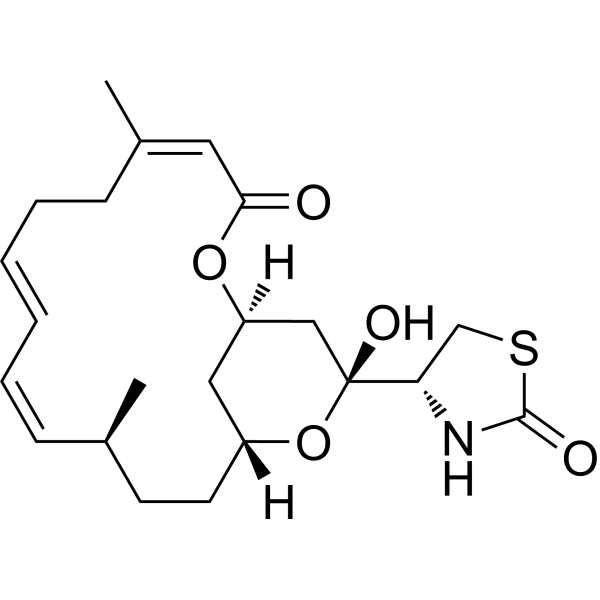
    6,7-Epoxy-latrunculin A can be isolated from the Red Sea sponge Negombata magnifica and is initially identified as an inhibitor of actin polymerization by its morphological effects .
    6,7-Epoxy-latrunculin A
  • HY-155314

    Microtubule/Tubulin Cancer
    Tubulin polymerization-IN-50 (compound 7n) is a inhibitor of tubulin polymerization, with the IC50 of 5.05 μM in SK-Mel-28 cells. Tubulin polymerization-IN-50 induces the cell cycle arrest in the G2/M phase .
    Tubulin polymerization-IN-50
  • HY-146863

    Microtubule/Tubulin Cancer
    Tubulin polymerization-IN-10 is a potent tubulin polymerization inhibitor with an IC50 of 4.25±0.75 μM. Tubulin polymerization-IN-10 has anti-tumor effects .
    Tubulin polymerization-IN-10
  • HY-155139

    Microtubule/Tubulin Apoptosis Cancer
    Tubulin polymerization-IN-45, a tubulin-targeting agent, is a tubulin polymerization inhibitor. Tubulin polymerization-IN-45 binds to the colchicine site of tubulin. Tubulin polymerization-IN-45 induces apoptotic cell death in hepatocellular cancer (HCC) cells .
    Tubulin polymerization-IN-45
  • HY-152088

    Microtubule/Tubulin Neurological Disease Inflammation/Immunology Cancer
    Neuroinflammatory-IN-3, a tubulin inhibitor, is an anti-neuroinflammatory agent. Neuroinflammatory-IN-3 is a potent antitumor agent that functions by the inhibition of tubulin polymerization[1] .
    Neuroinflammatory-IN-3

Inquiry Online

Your information is safe with us. * Required Fields.

Salutation


Country or Region *

Applicant Name *


Organization Name *

Department *


Email Address *


Product Name *

Cat. No.


Requested quantity *

Phone Number *


Remarks

Inquiry Online

Inquiry Information

Product Name:
Cat. No.:
Quantity:
MCE Japan Authorized Agent:

