17 Results for "

Stomach disease

" in MedChemExpress (MCE) Product Catalog:
Products (17)

17 Results for "Stomach disease" in MCE Product Catalog:

2
2 Cited Publications
Cat. No.: HY-B0900
CAS No.: 104-46-1
Synonyms: Anise camphor; p-Propenylanisole; Isoestragole
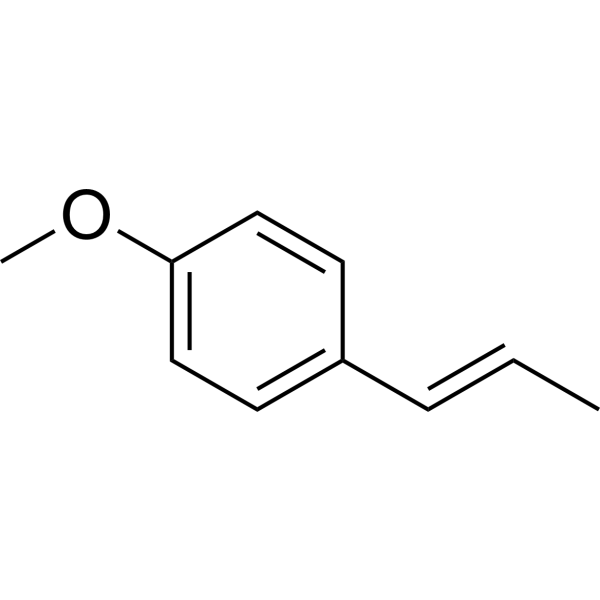
Anethole is a type of orally active aromatic compound that is widely found in nature and used as a flavoring agent. Anethole possesses anticancer, anti-inflammatory, antioxidant, antibacterial, antifungal, anesthetic, estrogenic, central nervous system depressant, hypnotic, insecticidal, and gastroprotective effects. Anethole can be used in the study of oxidative stress-related skin diseases and prostate cancer .
loading...
    loading...
2
2 Cited Publications
Cat. No.: HY-B0310
CAS No.: 76963-41-2
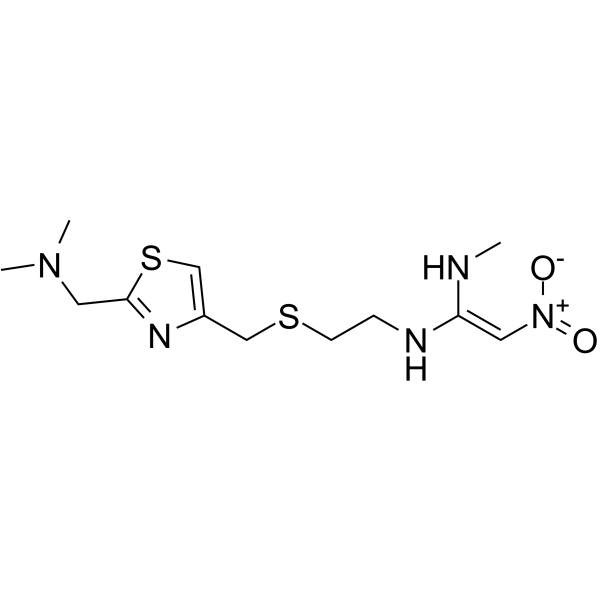
Nizatidine is a potent and orally active histamine H2 receptor antagonist, can be used for the research of stomach and intestines ulcers. Nizatidine works by decreasing the secretion of gastric acid the stomach makes and prevent ulcers from coming back after they have healed in animal models .
loading...
    loading...
2
2 Cited Publications
Cat. No.: HY-12017
CAS No.: 956905-27-4
Purity:  99.85%
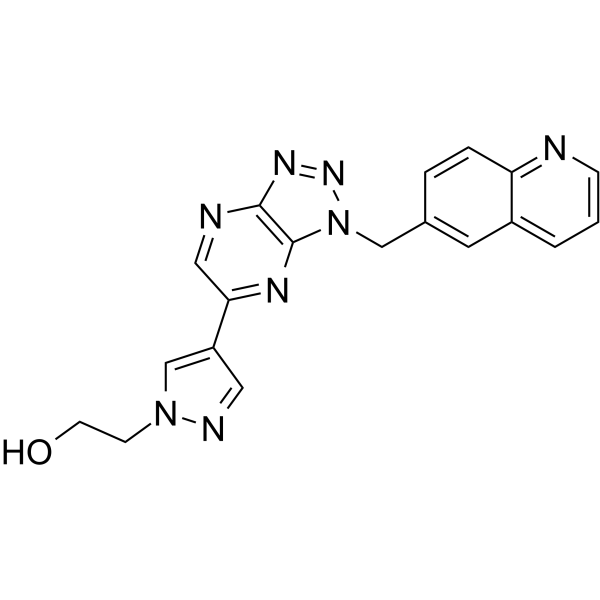
PF-04217903 is an orally active, highly selective ATP-competitive c-Met kinase inhibitor with a Ki value of 4.8 nM and a Kd value of 4.5 nM. PF-04217903 blocks c-Met and HGF signaling pathways, inhibits MET phosphorylation, and blocks downstream MAPK, PI3K/AKT and PLCγ1 pathways. PF-04217903 suppresses tumor proliferation, survival, migration, invasion, angiogenesis and metastasis, induces apoptosis, and enhances efferocytosis, Annexin A1 expression and resolution of inflammation. PF-04217903 retains activity against several c-Met mutants (M1131T, V1220I, H1094R). PF-04217903 increases the incidence of subarachnoid hemorrhage and reduces survival rate without altering aneurysm formation, and also prevents lymph node metastasis induced by VEGF inhibition. PF-04217903 is applicable to research related to tumors (pancreas, stomach, lung, brain, colon, breast, kidney, melanoma, etc.), intracranial aneurysms and inflammatory diseases (gouty arthritis, neutrophilic pleuritis) .
loading...
    loading...
2
2 Cited Publications
Cat. No.: HY-12017A
CAS No.: 956906-93-7
Purity:  99.82%
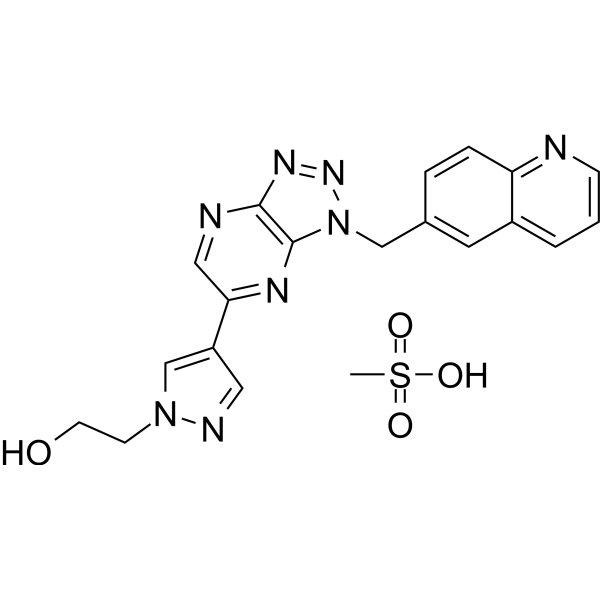
PF-04217903 mesylate is an orally active, highly selective ATP-competitive c-Met kinase inhibitor with a Ki value of 4.8 nM and a Kd value of 4.5 nM. PF-04217903 mesylate blocks c-Met and HGF signaling pathways, inhibits MET phosphorylation, and blocks downstream MAPK, PI3K/AKT and PLCγ1 pathways. PF-04217903 mesylate suppresses tumor proliferation, survival, migration, invasion, angiogenesis and metastasis, induces apoptosis, and enhances efferocytosis, Annexin A1 expression and resolution of inflammation. PF-04217903 mesylate retains activity against several c-Met mutants (M1131T, V1220I, H1094R). PF-04217903 mesylate increases the incidence of subarachnoid hemorrhage and reduces survival rate without altering aneurysm formation, and also prevents lymph node metastasis induced by VEGF inhibition. PF-04217903 mesylate is applicable to research related to tumors (pancreas, stomach, lung, brain, colon, breast, kidney, melanoma, etc.), intracranial aneurysms and inflammatory diseases (gouty arthritis, neutrophilic pleuritis) .
loading...
    loading...
1
1 Cited Publications
Cat. No.: HY-133813A
CAS No.: 72296-47-0
Purity:  ≥95.0%
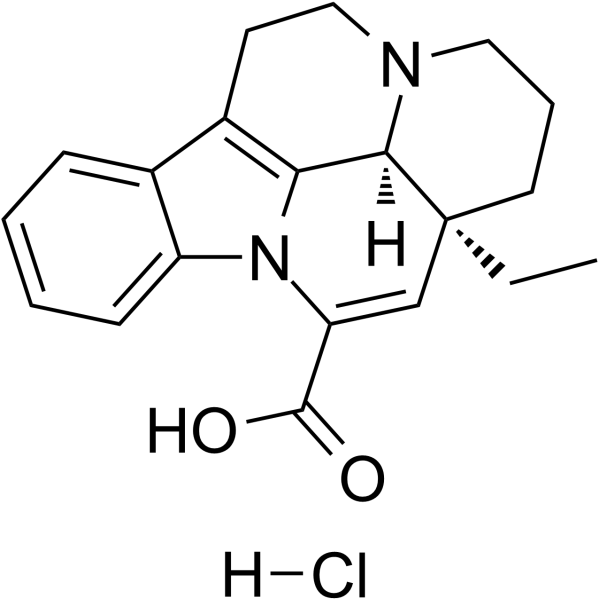
Apovincaminic acid hydrochloride salt is the major metabolite of Vinpocetine (HY-13295), with blood-brain barrier permeability and oral activity. Apovincaminic acid hydrochloride salt is detectable in the plasma of pregnant rabbits after oral administration of Vinpocetine. Apovincaminic acid hydrochloride salt is absorbable from all segments of the gastrointestinal tract of Norway rat, with the stomach as the primary absorption site, and is excreted via urine and feces. Apovincaminic acid hydrochloride salt is used in the research of cerebrovascular diseases .
loading...
    loading...
Cat. No.: HY-B0900R
CAS No.: 104-46-1
Synonyms: Anise camphor (Standard); p-Propenylanisole (Standard); Isoestragole (Standard)
Anethole (Standard) is the analytical standard of Anethole. This product is intended for research and analytical applications. Anethole is a type of orally active aromatic compound that is widely found in nature and used as a flavoring agent. Anethole possesses anticancer, anti-inflammatory, antioxidant, antibacterial, antifungal, anesthetic, estrogenic, central nervous system depressant, hypnotic, insecticidal, and gastroprotective effects. Anethole can be used in the study of oxidative stress-related skin diseases and prostate cancer .
loading...
    loading...
Cat. No.: HY-N12121
CAS No.: 88660-11-1
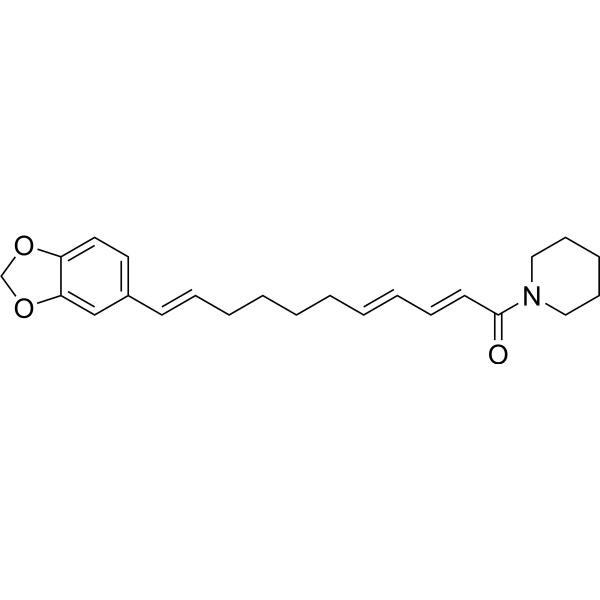
Piperundecalidine is an amide alkaloids that can be purified from Piper longum L. Piperundecalidine shows various biological properties, such as anti-inammatory, analgesic, anti-amoebic, anti-depressant, hepatoprotective,etc. .
loading...
    loading...
Cat. No.: HY-160979
CAS No.: 96153-56-9
Synonyms: DA-5047
Target:  

Histamine Receptor

Research Areas:  

Others Endocrinology

Bisfentidine is an H2 receptor antagonist, Bisfentidine can block the H2 receptor on the cells of the stomach wall, and reduce the secretion of stomach acid. Bisfentidine binds to cytochrome P-450 in liver microsomes and affects drug metabolism. Bisfentidine can be used in the study of metabolic processes of drugs, lipid peroxidation processes and peptic ulcers diseases .
loading...
    loading...
Cat. No.: HY-133813AR
CAS No.: 72296-47-0
Apovincaminic acid hydrochloride salt (Standard) is the analytical standard of Apovincaminic acid hydrochloride salt (HY-133813A). This product is intended for research and analytical applications. Apovincaminic acid hydrochloride salt is the major metabolite of Vinpocetine (HY-13295), with blood-brain barrier permeability and oral activity. Apovincaminic acid hydrochloride salt is detectable in the plasma of pregnant rabbits after oral administration of Vinpocetine. Apovincaminic acid hydrochloride salt is absorbable from all segments of the gastrointestinal tract of Norway rat, with the stomach as the primary absorption site, and is excreted via urine and feces. Apovincaminic acid hydrochloride salt is used in the research of cerebrovascular diseases .
loading...
    loading...
Cat. No.: HY-133813S
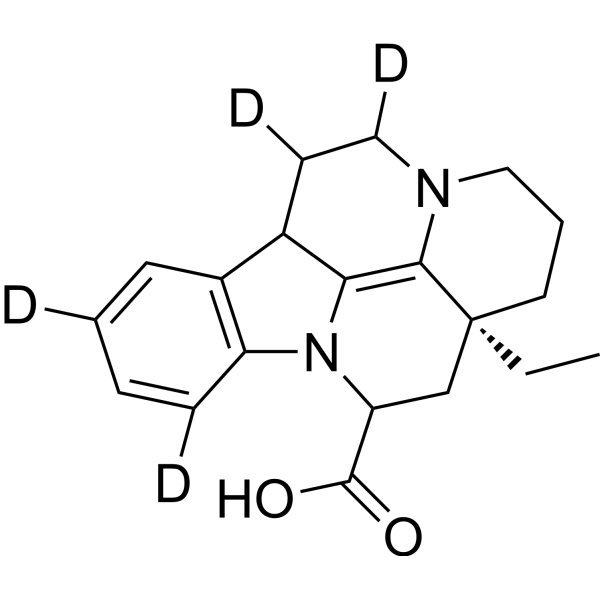
Apovincaminic acid-d4 is the deuterated-labeled Apovincaminic acid (HY-133813). Apovincaminic acid is the major metabolite of Vinpocetine (HY-13295), with blood-brain barrier permeability and oral activity. Apovincaminic acid is detectable in the plasma of pregnant rabbits after oral administration of Vinpocetine. Apovincaminic acid is absorbable from all segments of the gastrointestinal tract of Norway rat, with the stomach as the primary absorption site, and is excreted via urine and feces. Apovincaminic acid is used in the research of cerebrovascular diseases .
loading...
    loading...
Cat. No.: HY-B0310R
CAS No.: 76963-41-2
Nizatidine (Standard) is the analytical standard of Nizatidine. This product is intended for research and analytical applications. Nizatidine is a potent and orally active histamine H2 receptor antagonist, can be used for the research of stomach and intestines ulcers. Nizatidine works by decreasing the secretion of gastric acid the stomach makes and prevent ulcers from coming back after they have healed in animal models .
loading...
    loading...
Cat. No.: HY-12017B
CAS No.: 1159490-85-3
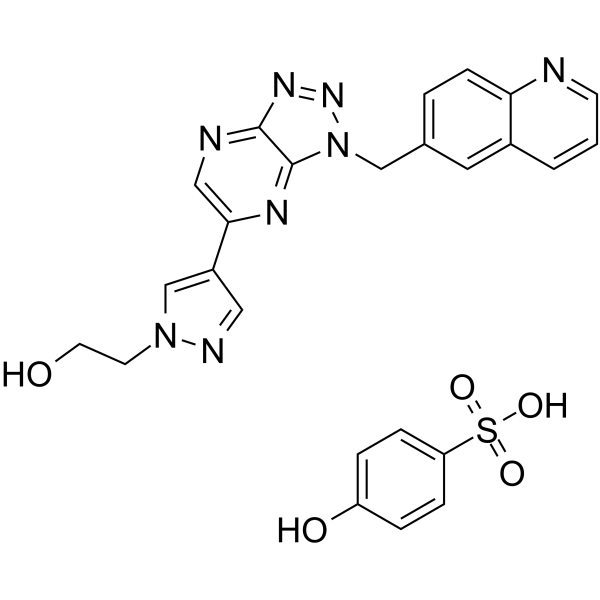
PF-04217903 phenolsulfonate is an orally active, highly selective ATP-competitive c-Met kinase inhibitor with a Ki value of 4.8 nM and a Kd value of 4.5 nM. PF-04217903 phenolsulfonate blocks c-Met and HGF signaling pathways, inhibits MET phosphorylation, and blocks downstream MAPK, PI3K/AKT and PLCγ1 pathways. PF-04217903 phenolsulfonate suppresses tumor proliferation, survival, migration, invasion, angiogenesis and metastasis, induces apoptosis, and enhances efferocytosis, Annexin A1 expression and resolution of inflammation. PF-04217903 phenolsulfonate retains activity against several c-Met mutants (M1131T, V1220I, H1094R). PF-04217903 phenolsulfonate increases the incidence of subarachnoid hemorrhage and reduces survival rate without altering aneurysm formation, and also prevents lymph node metastasis induced by VEGF inhibition. PF-04217903 phenolsulfonate is applicable to research related to tumors (pancreas, stomach, lung, brain, colon, breast, kidney, melanoma, etc.), intracranial aneurysms and inflammatory diseases (gouty arthritis, neutrophilic pleuritis) .
loading...
    loading...
Cat. No.: HY-N19985
Synonyms: Aquilaria agallocha stem extract
Category:  

Extract

Target:  

Others

Aquilariae lignum resinatum extract (Aquilaria agallocha stem extract) is an extract of agarwood (Aquilariae Lignum Resinatum) and is widely used in research on diseases such as vomiting, stomach pain, and gastrointestinal dysfunction.
loading...
    loading...
Cat. No.: HY-133813
CAS No.: 27773-65-5
Apovincaminic acid is the major metabolite of Vinpocetine (HY-13295), with blood-brain barrier permeability and oral activity. Apovincaminic acid is detectable in the plasma of pregnant rabbits after oral administration of Vinpocetine. Apovincaminic acid is absorbable from all segments of the gastrointestinal tract of Norway rat, with the stomach as the primary absorption site, and is excreted via urine and feces. Apovincaminic acid is used in the research of cerebrovascular diseases .
loading...
    loading...
Cat. No.: HY-N18117A
CAS No.: 1429747-10-3
23-Hydroxyohchininolide is a limonoid found in the leaves of Melia azedarach L.. 23-Hydroxyohchininolide inhibits LPS (HY-D1056)-induced NO production and exerts cytotoxic activity against human leukemia and stomach cancer cells. 23-Hydroxyohchininolide inhibits TPA (HY-18739)-induced Epstein-Barr virus early antigen activation. 23-Hydroxyohchininolide can be used for the research of cancer, infection and inflammatory disease .
loading...
    loading...
Cat. No.: HY-L224
2,478 compounds

Diarrhea is a disease symptom, and the pathophysiologic basis of diarrhea is a disturbance in intestinal water and electrolyte balance, which may be due to increased secretion of osmotically active electrolytes (secretory diarrhea) or increased intake of osmotically active substances (osmotic diarrhea). Food poisoning, pathogenic bacterial infections, and intestinal-related diseases can all contribute to the development of diarrhea. Traditional Chinese Medicine (TCM) considers diarrhea to be a symptom of an imbalance in the body's systems, particularly related to the functions of the spleen and stomach. Spleen qi deficiency, dampness-heat, liver and spleen disharmony are closely related to diarrhea. Many types of Chinese herbs regulate the function of diarrhea, such as: Dysosmae Verspiellis Rhixoma Et Radix, Ginkgo Semen, Forsythiae Fructus, and Campsis Flos.

MCE can provide 2,478 active monomers that can be obtained from TCM herbs with diarrhea-regulating functions, which can be applied to drug development and disease mechanism research.

Cat. No.: HY-12017C
CAS No.: 1159490-83-1
PF-04217903 phosphate is an orally active, highly selective ATP-competitive c-Met kinase inhibitor with a Ki value of 4.8 nM and a Kd value of 4.5 nM. PF-04217903 phosphate blocks c-Met and HGF signaling pathways, inhibits MET phosphorylation, and blocks downstream MAPK, PI3K/AKT and PLCγ1 pathways. PF-04217903 phosphate suppresses tumor proliferation, survival, migration, invasion, angiogenesis and metastasis, induces apoptosis, and enhances efferocytosis, Annexin A1 expression and resolution of inflammation. PF-04217903 phosphate retains activity against several c-Met mutants (M1131T, V1220I, H1094R). PF-04217903 phosphate increases the incidence of subarachnoid hemorrhage and reduces survival rate without altering aneurysm formation, and also prevents lymph node metastasis induced by VEGF inhibition. PF-04217903 phosphate is applicable to research related to tumors (pancreas, stomach, lung, brain, colon, breast, kidney, melanoma, etc.), intracranial aneurysms and inflammatory diseases (gouty arthritis, neutrophilic pleuritis) .
loading...
    loading...
  • 1

