
1. Search Result
Search Result
Results for "

Structure design

" in MedChemExpress (MCE) Product Catalog:

27

Inhibitors & Agonists

21

Screening Libraries

2

Fluorescent Dye

2

Peptides

1

MCE Kits

1

Inhibitory Antibodies

1

Isotope-Labeled Compounds

1

Click Chemistry

1

Oligonucleotides

Cat. No. Product Name Target Research Areas Chemical Structure
  • HY-126247

    Ras Cancer
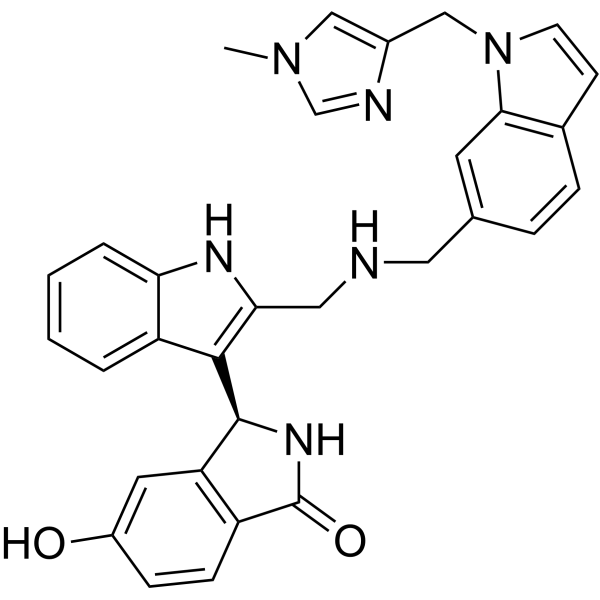
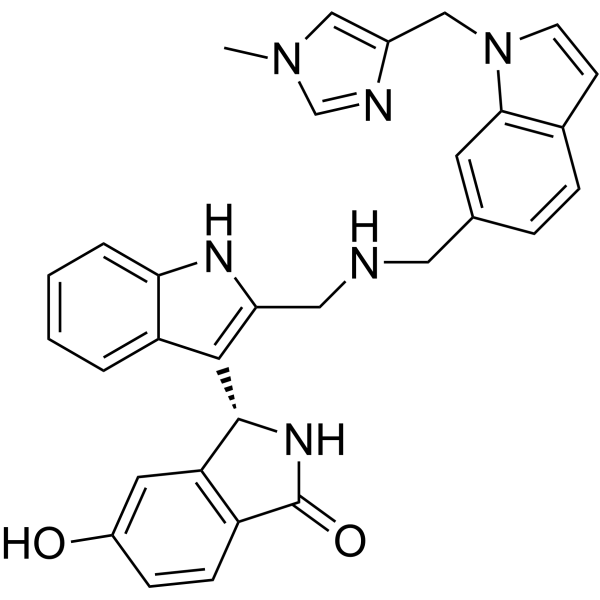
    BI-2852 is a KRAS inhibitor for the switch I/II pocket (SI/II-pocket) by structure-based agent design with nanomolar affinity. BI-2852 is mechanistically distinct from covalent KRASG12C inhibitor (binds to switch II pocket) and binds ten-fold more strongly to active KRASG12D versus KRASwt (740 nM vs 7.5 μM). BI-2852 blocks GEF, GAP, and effector interactions with KRAS, leading to inhibition of downstream signaling and an antiproliferative effect in KRAS mutant cells.
    BI-2852
  • HY-Y0135

    Drug Intermediate Cancer
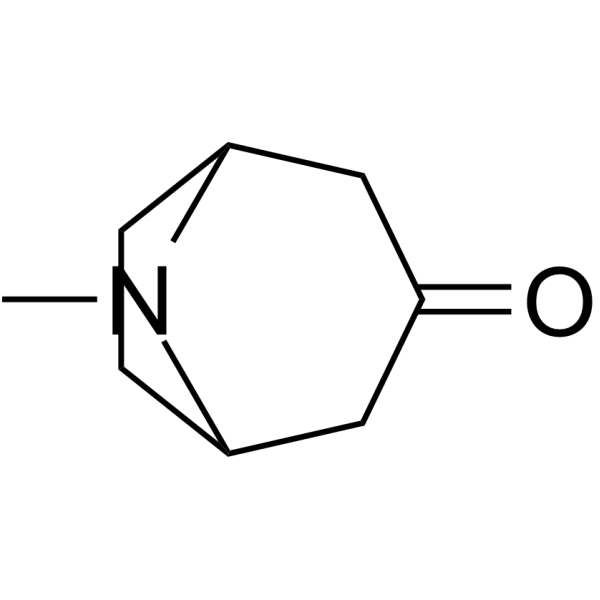
    Tropinone is an organic synthesis intermediate and a skeleton for constructing derivatives containing thiazole rings and other structures. Tropinone derivatives have anticancer activities such as inducing tumor cell apoptosis and inhibiting tyrosinase activity, and can be used in research such as anticancer drug development and tyrosinase inhibitor design .
    Tropinone
  • HY-177554

    Biochemical Assay Reagents Cancer
    KB05yne is a site-selective, alkyne-functionalized electrophilic "probe" fragment probe designed for covalent ligand discovery, with preferential reactivity toward specific cysteine residues in proteins. KB05yne strongly labels wild-type target proteins (e.g., CDKN2AIP, HPCAL1) but does not label their cysteine-to-alanine mutants, confirming site-specific cysteine reactivity. KB05yne can be used for the discovery and optimization of site-specific covalent ligands, and is applicable to proteins with diverse structures and functions, especially in studies targeting cysteine residues in cancer-related or difficult-to-purify proteins .
    KB05yne
  • HY-122607

    Mitochondrial Metabolism TSPO Inflammation/Immunology Cancer
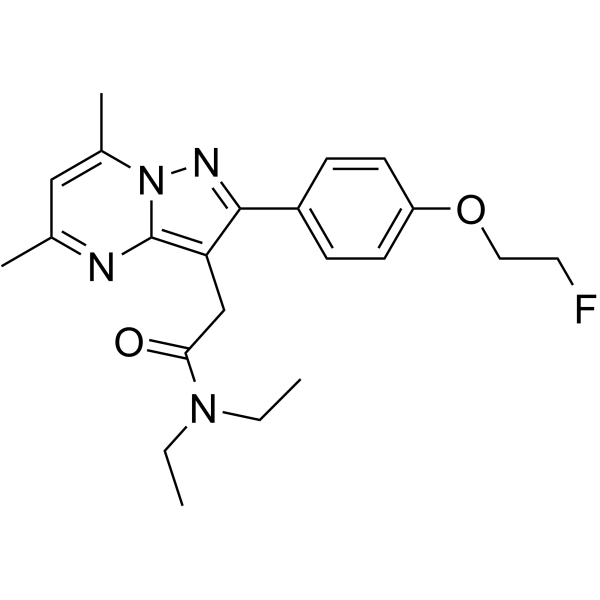
    DPA-714 is a high affinity translocator protein (TSPO) ligand (Ki=7 nM), which is designed with a fluorine atom in its structure, allowing labelling with fluorine -18 and in vivo imaging using positron emission tomography. 18FDPA-714 successfully evaluates for the specific imaging of inflammation in various models of neuroinflammation and in a brain tumor model .
    DPA-714
  • HY-P10551

    Transmembrane Glycoprotein NF-κB TNF Receptor Cardiovascular Disease
    ApoA-I mimetic peptide 5A is a synthetic peptide molecule designed based on the structure and function of naturally occurring apolipoprotein A-I (Apo A-I). ApoA-I mimetic peptide 5A can promote the efflux of cholesterol from cells and help reduce the accumulation of cholesterol in cells. ApoA-I mimetic peptide 5A also shows anti-inflammatory activity and can reduce inflammatory markers in blood and tissues. ApoA-I mimetic peptide 5A can be used in the study of cardiovascular diseases .
    ApoA-I mimetic peptide 5A
  • HY-W106411

    Dithio-bis-maleimidoethane

    Biochemical Assay Reagents Others
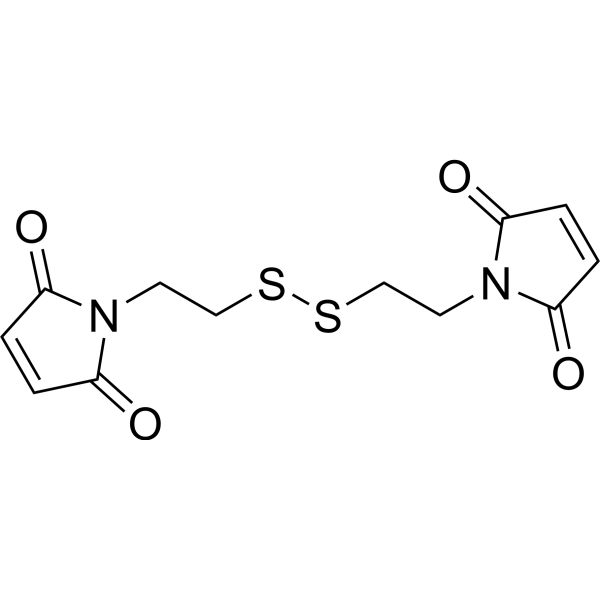
    DTME (dithio-bis-maleimidoethane) is a homobifunctional, maleimide crosslinker specifically designed for conjugation between sulfhydryl groups (-SH). DTME, whose molecular structure consists of two maleimide groups connected by an ethylene disulfide bridge, can specifically react with thiol - containing molecules (such as cysteine residues) to form stable covalent bonds. DTME allows crosslinks that can be cleaved with reducing agents such as DTT (HY-15917). DTME is commonly utilized to explore and characterize protein structure, particularly oligomerization, or protein interactions .
    DTME
  • HY-148230

    Interleukin Related HIF/HIF Prolyl-Hydroxylase Autophagy Others
    TFEB Decoy ODN sodium is a synthetic oligonucleotide with a hairpin ring structure, which were designed to inhibit Transcription factor EB (TFEB). TFEB decoy ODN inhibited fibrosis and autophagy in a UUO mouse model. The TFEB decoy ODNs also showed anti-inflammatory effects.
    TFEB Decoy ODN sodium
  • HY-117380

    Neurokinin Receptor Neurological Disease
    SB 235375 is a potent and selective antagonist of the human neurokinin-3 (hNK-3) receptor designed by optimizing the structure of 2-phenyl-4-quinolinecarboxylic acid amide. SB 235375 displays high affinity for the hNK-3 receptor, with significantly higher binding affinities than hNK-2 and hNK-1 receptors. In vitro studies demonstrated its ability to block NK-3 receptor-mediated contraction and calcium mobilization, while in vivo, SB 223412 demonstrated oral and intravenous activity against NK-3 receptor-driven responses in animal models .
    SB 235375
  • HY-126247B

    Drug Derivative Ras Cancer
    (R)-BI-2852 is the isomer of BI-2852 (HY-126247), and can be used as an experimental control. BI-2852 is a KRAS inhibitor for the switch I/II pocket (SI/II-pocket) by structure-based agent design with nanomolar affinity. BI-2852 is mechanistically distinct from covalent KRASG12C inhibitor (binds to switch II pocket) and binds ten-fold more strongly to active KRASG12D versus KRASwt (740 nM vs 7.5 μM). BI-2852 blocks GEF, GAP, and effector interactions with KRAS, leading to inhibition of downstream signaling and an antiproliferative effect in KRAS mutant cells.
    (R)-BI-2852
  • HY-179384

    ACSL Family PROTACs Ferroptosis Glutathione Peroxidase Transferrin Receptor Reactive Oxygen Species (ROS) Cancer
    PROTAC FSP1 degrader 1 is a highly efficient and selective PROTAC degrader targeting FSP1. PROTAC FSP1 degrader 1 significantly induces the accumulation of intracellular lipid peroxides. PROTAC FSP1 degrader 1 exhibits synergistic induction of ferroptosis with GPX4 inhibitors. PROTAC FSP1 degrader 1 can induce ROS production. PROTAC FSP1 degrader 1 upregulates the mRNA expression of ferroptosis-related proteins (GPX4, FTH1, ACSL4, TfR1, FSP1). PROTAC FSP1 degrader 1 can be used for the study of triple-negative breast cancer .
    PROTAC FSP1 degrader 1
  • HY-162633

    Deubiquitinase Cancer
    USP1-IN-9 (Compound 1m) is reversible and noncompetitive ubiquitin-specific proteases (USP1) inhibitors with an IC50 of 8.8 nM, which is designed and synthesized to pyrido[2,3-d]pyrimidin-7(8H)-one derivative based on the disclosed structure of ML323(HY-17543) and KSQ-4279(HY-145471). USP1-IN-9 displays excellent USP1/UAF inhibition and exhibits strong antiproliferation effect in breast cancer cells. USP1-IN-9 can generate enhanced cell killing with PARP inhibitor olaparib(HY-10162) in olaparib-resistant MDA-MB-436/OP cells, which is promising for research in the field of cancer .
    USP1-IN-9
  • HY-151738

    ADC Linker Others
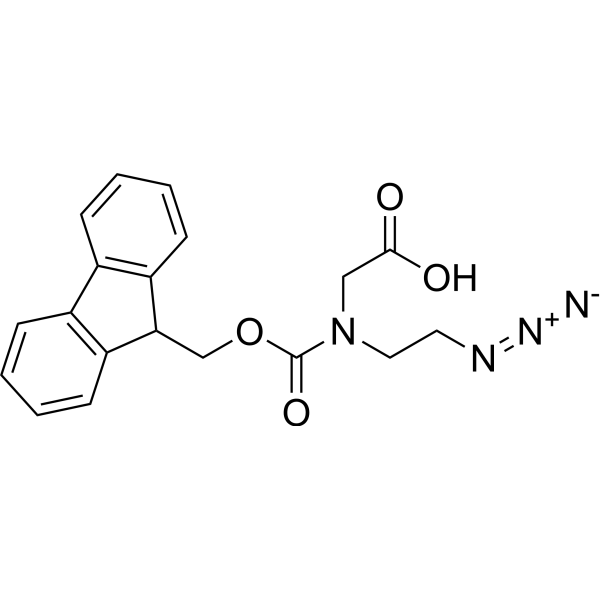
    Fmoc-Aeg(N3)-OH is a click chemistry reagent containing an Azide. Alkylating the Nitrogen of an amide bond results in peptoid structures, which leads to conformational restrains, like N-methylation and allows backbone derivatisation. Altering cytotoxicity, bacterial cell selectivity and receptor pharmacology through formation of peptoid derivatives have been published for Cilengitide, Piscidin 1, and MC3, MC4 and MC5 receptor agonist. This building block enables design of macrocycles through intermolecular crosslinking or backbone stabilization through intermolecular ring-closure. This compound is a potential building block for the construction of (customized) peptide nucleic acids (PNAs) and for peptoid synthesis . Fmoc-Aeg(N3)-OH is a click chemistry reagent, it contains an Azide group and can undergo copper-catalyzed azide-alkyne cycloaddition reaction (CuAAc) with molecules containing Alkyne groups. It can also undergo strain-promoted alkyne-azide cycloaddition (SPAAC) reactions with molecules containing DBCO or BCN groups.
    Fmoc-Aeg(N3)-OH
  • HY-158025

    DNA/RNA Synthesis Cancer
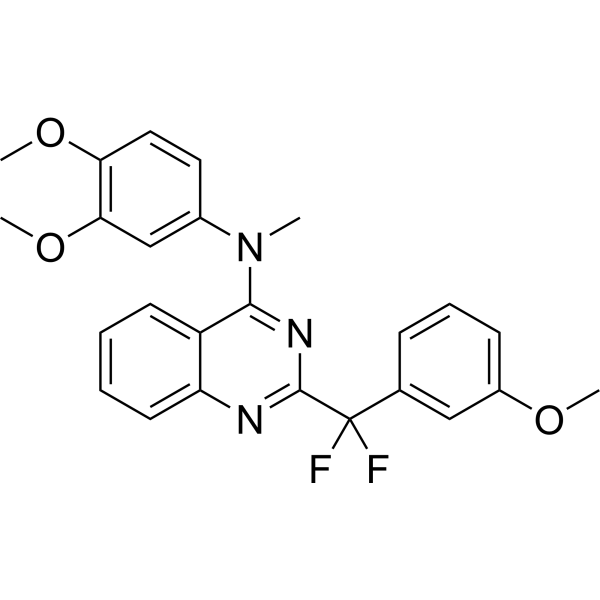
    Anticancer agent 198 (compound 18b) is a potent anticancer agent and potential WRN protein inhibitor. Anticancer agent 198 was significantly toxic to K562 cells and WRN-overexpressing PC3 cells .
    Anticancer agent 198
  • HY-163008

    Biochemical Assay Reagents Inflammation/Immunology
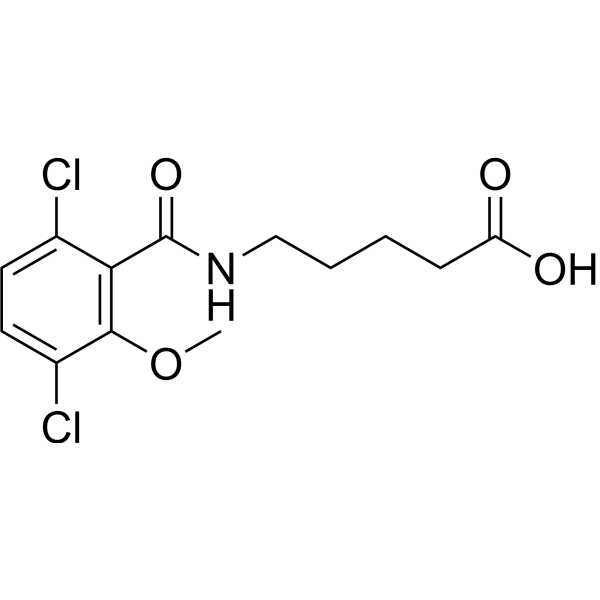
    Dicamba-5-aminopentanoic acid (DCc) is an immunizing and heterologous hapten, designed using the carboxylic acid group of dicamba to introduce a spacer arm for a better exposure of the herbicide's structure .
    Dicamba-5-aminopentanoic acid
  • HY-W125014

    Drug Intermediate
    Octahydrocyclopenta[c]pyrrole is a multifunctional organic compound with significant biological activity and compound development potential. Octahydrocyclopenta[c]pyrrole has shown good application prospects in the fields of anti-inflammatory, anti-tumor and neuroprotection. The unique structure-activity relationship of Octahydrocyclopenta[c]pyrrole provides new ideas for the design of new drugs.
    Octahydrocyclopenta[c]pyrrole
  • HY-P2138

    HIV Protease Others
    U-85548E is an HIV protease inhibitor with nanomolar affinity for HIV-1 aspartic protease. By studying its structure-activity relationship, a potent nanomolar inhibitor with inhibitory effects on both HIV-1 and HIV-2 proteases was designed, and its binding mode was studied by X-ray crystallography and molecular modeling.
    U-85548E
  • HY-W800769

    Fluorescent Dye Others
    BP Fluor 532 Azide Plus is a fluroescent agent with a terminal azide group. The fluroescent compound has a max absorption at 532 nm and emission at 554 nm. The BP Fluor 532 Azide Plus was designed with a copper-chelating system within its structure, enabling the formation of strong, active copper complexes that act as both reactant and catalyst in CuAAC reactions.
    BP Fluor 532 azide plus
  • HY-161505

    Transthyretin (TTR) Others
    Transthyretin-IN-3 (compound 6) is a designed benzofuran analogue. Transthyretin-IN-3 selectively binds to plasma transthyretin (TTR) to inhibit Amyloid aggregation (IC50=5.0±0.2 μM). Transthyretin-IN-3 can bind to TTR's thyroxine binding site specifically by carrying chlorine substituents at specific locations in its structure. This binding can prevent TTR tetramers from dissociating into unstable monomers .
    Transthyretin-IN-3
  • HY-116264

    Ser/Thr Protease Cancer
    CatB-IN-1 is an enzyme inhibitor with significant inhibitory activity against tumor invasion. CatB-IN-1 may reduce the invasiveness of tumor cells by regulating intracellular protein metabolism. CatB-IN-1 demonstrates effective anti-invasive ability in cell models and can significantly reduce the invasive ability of MCF-10A neoT cells. The structure-activity relationship study of CatB-IN-1 shows that its design can target multiple functions of cat hepsin B .
    CatB-IN-1
  • HY-122607R

    Mitochondrial Metabolism Inflammation/Immunology Cancer
    DPA-714 (Standard) is the analytical standard of DPA-714. This product is intended for research and analytical applications. DPA-714 is a high affinity translocator protein (TSPO) ligand (Ki=7 nM), which is designed with a fluorine atom in its structure, allowing labelling with fluorine -18 and in vivo imaging using positron emission tomography. 18FDPA-714 successfully evaluates for the specific imaging of inflammation in various models of neuroinflammation and in a brain tumor model .
    DPA-714 (Standard)
  • HY-W251143

    Biochemical Assay Reagents
    N,N′-Bis(2,5-di-tert-butylphenyl)-3,4,9,10-perylenedicarboximide is an organic semiconductor material with excellent electron transport activity. N,N′-Bis(2,5-di-tert-butylphenyl)-3,4,9,10-perylenedicarboximide is widely used in organic field effect transistors (OFETs) and organic photovoltaic (OPV) devices due to its high carrier mobility. The chemical structure design of N,N′-Bis(2,5-di-tert-butylphenyl)-3,4,9,10-perylenedicarboximide enables it to perform well in light absorption and photoelectric conversion, thereby improving the efficiency of organic photoelectric devices.
    N,N′-Bis(2,5-di-tert-butylphenyl)-3,4,9,10-perylenedicarboximide
  • HY-P991741

    CMV Infection
    Anti-HCMV gB Antibody (SM5-1) is an efficient neutralizing human monoclonal antibody that targets the human cytomegalovirus (HCMV) glycoprotein B (gB). Anti-HCMV gB Antibody (SM5-1) neutralizes HCMV by blocking the conformational changes of gB and interfering with its binding to the gH/gL complex. Anti-HCMV gB Antibody (SM5-1) can broadly neutralize different virus strains and inhibit the infection of various cell types (such as fibroblasts, epithelial cells, and dendritic cells). Anti-HCMV gB Antibody (SM5-1) can be used in HCMV vaccine research .
    Anti-HCMV gB Antibody (SM5-1)
  • HY-181455

    Drug Derivative Others
    rel-FTY720 phenoxy-biotin hydrochloride is a chemical probe designed based on the structure of Fingolimod (HY-12005), which incorporates a phenoxy group capable of specific click chemistry reactions and is conjugated with a biotin tag .
    rel-FTY720 phenoxy-biotin hydrochloride
  • HY-129947

    Endogenous Metabolite Neurological Disease
    (-)-Carveol is a natural unsaturated monocyclic monoterpene alcohol with the activity of regulating neural excitability. (-)-Carveol can activate or inhibit neural excitability by changing its chemical structure, which has potential significance for the design of targeted compounds. (-)-Carveol can also be used as a fragrance in cosmetics and a flavor additive in the food industry .
    (-)-Carveol
  • HY-W800768

    Fluorescent Dye Others
    BP Fluor 350 Azide Plus is a fluroescent agent with a terminal azide group. The fluroescent compound has a max absorption at 340 nm and emission at 440 nm. BP Fluor 350 Azide Plus is designed with a copper-chelating system within its structure, enabling the formation of strong, active copper complexes that act as both reactant and catalyst in CuAAC reactions.
    BP Fluor 350 Azide Plus
  • HY-122607S

    Isotope-Labeled Compounds Mitochondrial Metabolism TSPO Inflammation/Immunology Cancer
    DPA-714-d10 is the deuterium labeled DPA-714 (HY-122607). DPA-714 is a high affinity translocator protein (TSPO) ligand (Ki=7 nM), which is designed with a fluorine atom in its structure, allowing labelling with fluorine -18 and in vivo imaging using positron emission tomography. 18FDPA-714 successfully evaluates for the specific imaging of inflammation in various models of neuroinflammation and in a brain tumor model.
    DPA-714-d10
  • HY-D3007

    Fluorescent Dye Others
    LD-CK is a fluorescent probe based on a coumarin-chromone structure, specifically designed to visualize lipid droplet polarity changes and endowed with multimodal imaging capability. LD-CK contains a high-performance lipophilic coumarin moiety, which enables it to specifically target lipid droplets upon cellular entry while minimizing background fluorescence to the greatest extent. LD-CK has an excitation wavelength (Ex) of 488 nm and an emission wavelength (Em) of 540 nm (in low-polarity environments such as toluene) or 640 nm (in high-polarity environments such as glycerol), with its emission peak undergoing a redshift as solvent polarity increases .
    LD-CK

Inquiry Online

Your information is safe with us. * Required Fields.

Salutation


Country or Region *

Applicant Name *


Organization Name *

Department *


Email Address *


Product Name *

Cat. No.


Requested quantity *

Phone Number *


Remarks

Inquiry Online

Inquiry Information

Product Name:
Cat. No.:
Quantity:
MCE Japan Authorized Agent:

