
21 Results for "

TCR signaling

" in MedChemExpress (MCE) Product Catalog:
Products (21)

21 Results for "TCR signaling" in MCE Product Catalog:

4
4 Cited Publications
Cat. No.: HY-P99129

Research Areas:  

Inflammation/Immunology

Anti-Mouse CD8a Antibody (53-6.7) is an anti-mouse CD8a IgG2a antibody inhibitor derived from host Rat. Anti-Mouse CD8a Antibody (53-6.7) binds to CD8αβ stabilizes a conformation with a higher affinity for interaction with MHC class I. Anti-Mouse CD8a Antibody (53-6.7) induces the phosphorylation and activation of TCR proximal signaling pathway components Lck and ZAP70 in polyclonal memory T cells. Anti-Mouse CD8a Antibody (53-6.7) depletes CD8+ T cells and neutralizes cytokine in mice .
loading...
    loading...
3
3 Cited Publications
Cat. No.: HY-107390
CAS No.: 1370544-73-2
Purity:  99.29%
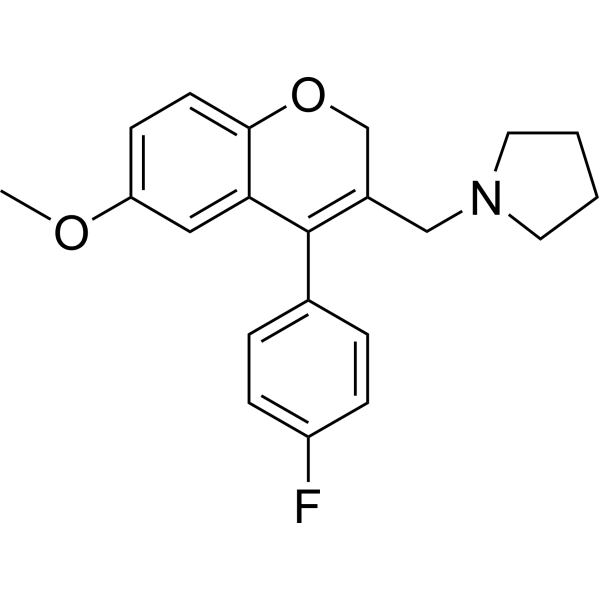
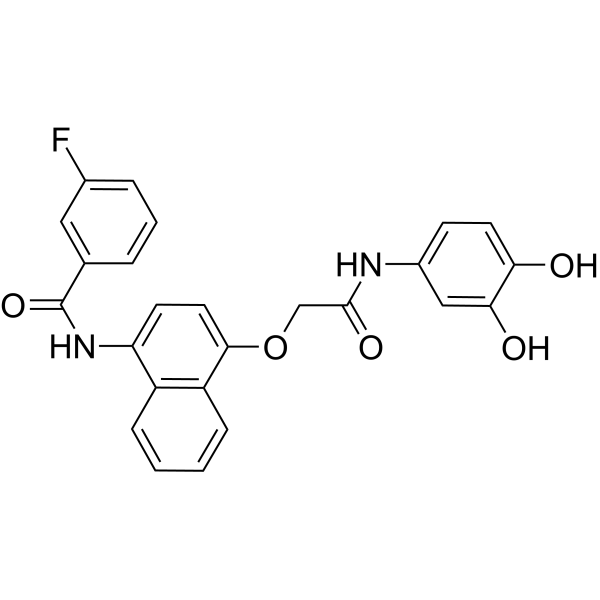
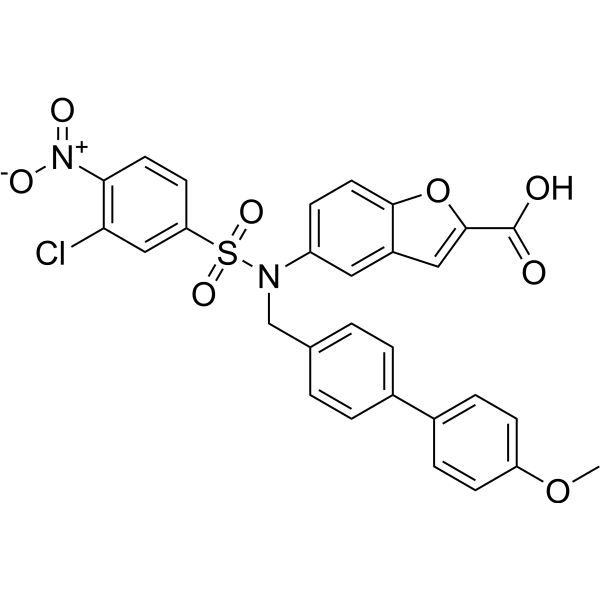
AX-024 is an orally available, first-in-class inhibitor of the TCR-Nck interaction that selectively inhibits TCR-triggered T cell activation with an IC50 ~1 nM. AX-024 modulates cell signaling by targeting SH3 domains. AX-024 has low-acute toxicity and high potency and selectivity, and strongly inhibit the production of IL-6, TNF-α, IFN-γ, IL-10 and IL-17A.
loading...
    loading...
3
3 Cited Publications
Cat. No.: HY-107390A
CAS No.: 1704801-24-0
Purity:  99.75%
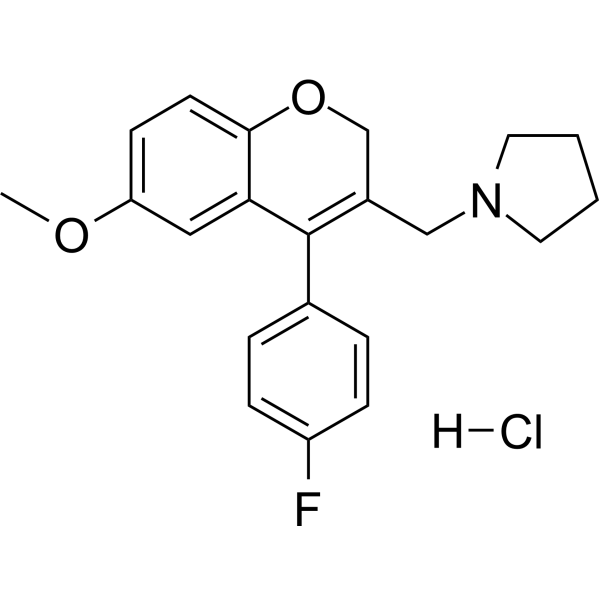
AX-024 hydrochloride is an orally available, first-in-class inhibitor of the TCR-Nck interaction that selectively inhibits TCR-triggered T cell activation with an IC50 ~1 nM. AX-024 hydrochloride modulates cell signaling by targeting SH3 domains. AX-024 hydrochloride has low-acute toxicity and high potency and selectivity, and strongly inhibit the production of IL-6, TNF-α, IFN-γ, IL-10 and IL-17A.
loading...
    loading...
1
1 Cited Publications
Cat. No.: HY-136339
CAS No.: 2368841-84-1
Purity:  99.66%
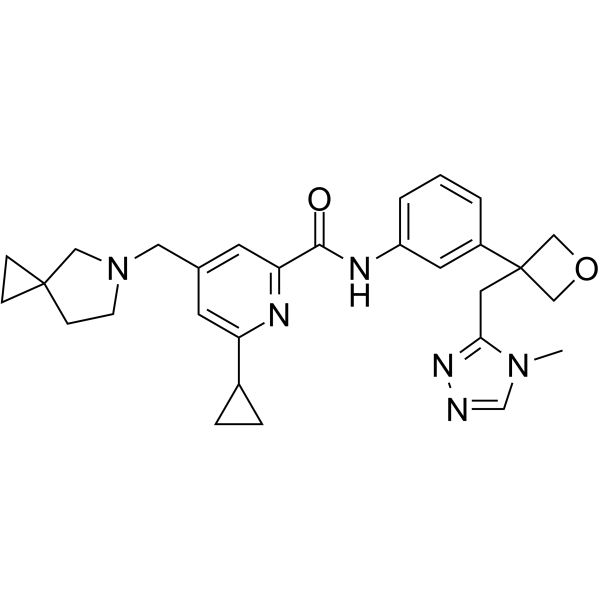
Cbl-b-IN-1 (Example 519) is an inhibitor of Cbl-b, with an IC50 of less than 100 nM. Cbl-b-IN-1 can promote the secretion of cytokines such as IL-2, IFN-γ, and TNF-α, facilitate T cell activation, and enhance the TCR signaling pathway. Cbl-b-IN-1 can be used in research on immunomodulation .
loading...
    loading...
1
1 Cited Publications
Cat. No.: HY-153916
CAS No.: 2032123-28-5
Purity:  99.13%
Synonyms: T417
TCRS-417 (T417) is a small-molecular inhibitor for PBX1. TCRS-417 can directly block PBX1-binding to DNA (IC50 = 6.58 μM), and affects PBX1 transcription. TCRS-417 is able to hammer out the stemness traits of Carboplatin (HY-17393)-resistant (CR) cells to revert to a differentiated status through tacking PBX1 signaling cascade. TCRS-417 significantly suppresses self-renewal and proliferation of cancer cells expressing high levels of PBX1. TCRS-417 can decrease the mRNA levels of FOXM1, NEK2, and E2F2 in cancer cell lines. TCRS-417 is selectively toxic against chr1q-amp myeloma and solid tumor cells .
loading...
    loading...
Cat. No.: HY-P99266
CAS No.: 652153-01-0
Synonyms: Anti-Human CD4 Recombinant Antibody
Zanolimumab (Anti-Human CD4 Recombinant Antibody) is a fully human monoclonal antibody targets CD4. Zanolimumab effectively inhibits T-cell receptor (TCR) signal transduction. Zanolimumab can be used for the research of heumatoid arthritis, psoriasis, melanoma, cutaneous and peripheral T-cell lymphoma .
loading...
    loading...
Cat. No.: HY-163372
CAS No.: 3034182-97-0
Target:  

PROTACs MAP4K

Research Areas:  

Cancer

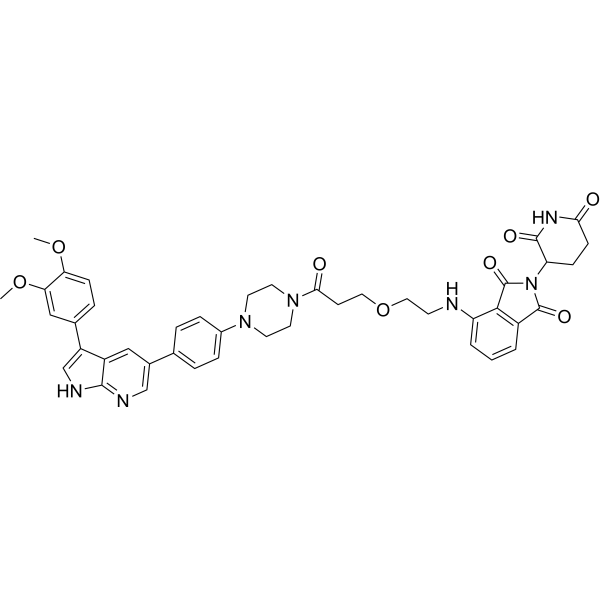
PROTAC HPK1 Degrader-1 (compound B1) is a PROTAC degrader that recruits cereblon to induce HPK1 degradation, with a DC50 of 1.8 nM. PROTAC HPK1 Degrader-1 inhibits HPK1 kinase activity, with an IC50 of 140.5 nM. PROTAC HPK1 Degrader-1 suppresses the phosphorylation of SLP76 protein, with an IC50 of 496.1 nM. PROTAC HPK1 Degrader-1 can be used to investigate non-kinase-dependent signaling of HPK1 in the TCR pathway and cancer-related research .
loading...
    loading...
Cat. No.: HY-144012A
CAS No.: 474922-84-4
Synonyms: 16:0 PEG350 PE; 1,2-Dipalmitoyl-sn-glycero-3-phosphoethanolamine-N-[methoxy(polyethylene glycol)-350] ammonium
Research Areas:  

Inflammation/Immunology

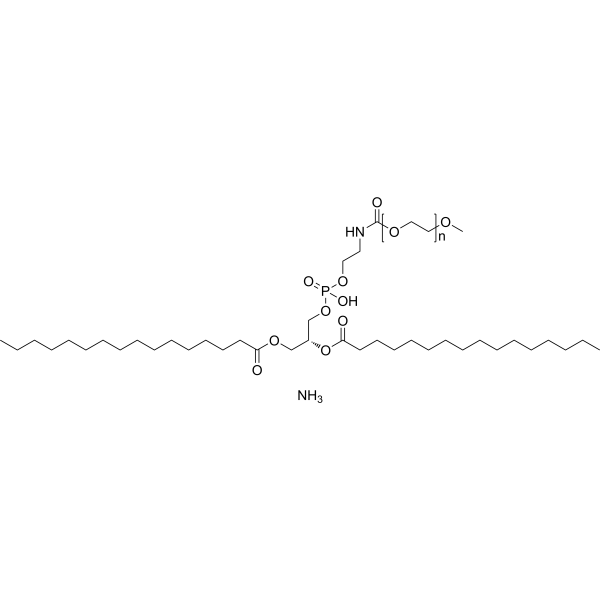
DPPE-PEG350 (16:0 PEG350 PE) is a CD1d lipid antagonist. DPPE-PEG350 blocks alpha-GalCer-dependent ERK tyrosine kinase phosphorylation in cells. DPPE-PEG350 inhibits cellular IL-4 and IFN-gamma production following alpha-GalCer stimulation. DPPE-PEG350 selectively antagonizes iNKT without affecting MHC class II-dependent OVA-specific Th2 responses. DPPE-PEG350 reduces MCP-1 and VCAM-1 protein expression and necrotic core formation in atherosclerotic lesions. DPPE-PEG350 can be used for research on asthma and atherosclerosis .
loading...
    loading...
Cat. No.: HY-174903
CAS No.: 2616666-32-9
Target:  

Itk

Research Areas:  

Inflammation/Immunology

ITK-IN-6 is a highly potent and selective ITK inhibitor (Kd = 387 nM). ITK-IN-6 directly binds to the ITK kinase domain. ITK-IN-6 blocks the release of pro-inflammatory cytokines and the activation and differentiation of Th2 and Th17 cells. ITK-IN-6 improves asthma progression by reducing inflammatory cell infiltration, mucus and IgE production. ITK-IN-6 significantly inhibits airway inflammation and is used in asthma research .
loading...
    loading...
Cat. No.: HY-155847
CAS No.: 3052262-64-0
Purity:  99.80%
Target:  

Phosphatase PD-1/PD-L1

Research Areas:  

Inflammation/Immunology Cancer

LYP-IN-3 is a selective, orally active and reversible lymphoid-tyrosine phosphatase (LYP) inhibitor (IC50 = 2.55 μM, Ki = 0.93 μM). D34 exhibits high selectivity of PTP1B, PTPN12, PTPN5 and SSH2. LYP-IN-3 regulates the T-cell receptor (TCR) signaling by specifically inhibiting LYP. LYP-IN-3 does not significantly inhibit MC38 cell viability; its anti-tumor effect stems from immune regulation. LYP-IN-3 can significantly upregulate PD-L1 or PD-1 expression in different immune cells. LYP-IN-3 facilitates T-cell infiltration and enhances T-cell functions. LYP-IN-3 synergizes with PD-L1 blockade can significantly improve colorectal tumor regression. LYP-IN-3 can be used for the study of colorectal cancer .
loading...
    loading...
Cat. No.: HY-155848
Purity:  98.09%
Target:  

Phosphatase

Research Areas:  

Cancer

LYP-IN-4 (compound D14) is a reversible and selective inhibitor of lymphotyrosine phosphatase (LYP) (Ki=1.34 μM, IC50=3.52μM). LYP-IN-4 inhibits LYP to regulate TCR signaling, up-regulates PD-1/PD-L1 expression, and enhance anti-tumor immunity. LYP-IN-4 activates T cells and inhibits M2 macrophage polarization, inhibits tumor growth in MC38 isogenic mouse models.
loading...
    loading...
Cat. No.: HY-160151
Research Areas:  

Cancer

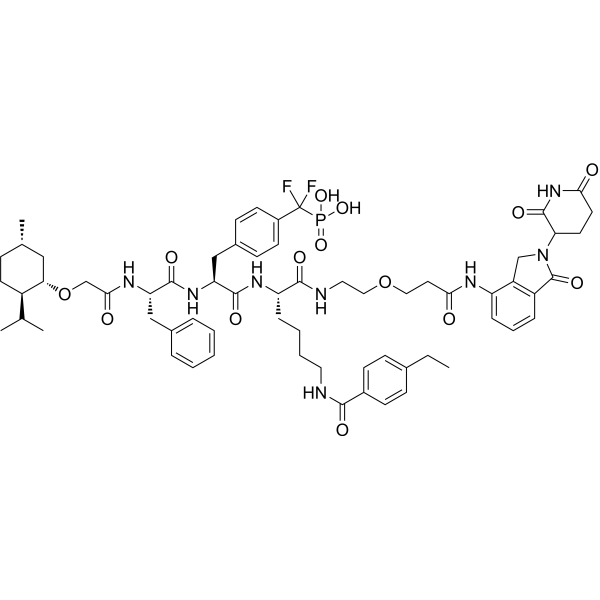
TP1L is a potent and selective T-cell protein tyrosine phosphatase (TC-PTP) PROTAC degrader, with a DC50 value of 35.8 nM. TP1L elevates the phosphorylation level of TC-PTP substrates including pSTAT1 and pJAK1. TP1L selectively enhances IFN-γ signaling and increases MHC-I expression. TP1L activates TCR signaling through increases phosphorylation of LCK. TP1L enhances CAR-T cell mediated tumor killing efficacy through activation of the CAR-T cells. TP1L can be used for the study of cancer. (Pink: TC-PTP ligand: (HY-138964), Blue: E3 ligase CRBN Ligand (HY-A0003), Black: Linker: (HY-140002)) .
loading...
    loading...
Cat. No.: HY-E70833
Target:  

Itk

Research Areas:  

Cancer

ITK is the Tec family tyrosine kinase that has been implicated in T cell receptor (TCR) signaling. ITK Recombinant Human Active Protein Kinase is a recombinant ITK protein that can be used to study ITK-related functions .
loading...
    loading...
Cat. No.: HY-149773S
CAS No.: 3032624-35-1
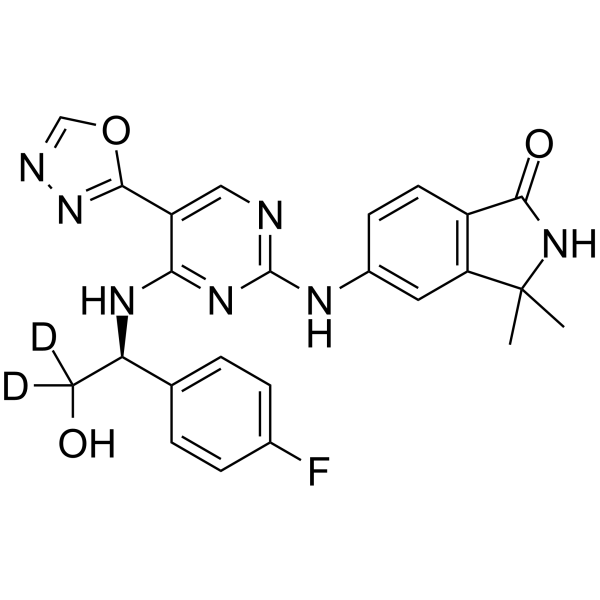
HPK1-IN-40 (compound 49) is a potent and selective HPK1 inhibitor with an IC50 of 0.9 nM. HPK1-IN-40 reinvigorates T-cell receptor (TCR) signaling, promoting T-cell function and cytokine production in T cells while having anti-cancer activity .
loading...
    loading...
Cat. No.: HY-182238
CAS No.: 3095423-83-6
Research Areas:  

Cancer

HPK1-IN-69 is an orally active HPK1 inhibitor with an IC50 of 1.7 nM. HPK1-IN-69 inhibits the HPK1-mediated TCR signaling pathway, reduces the phosphorylation level of SLP76, and promotes the release of IL-2. HPK1-IN-69 exhibits in vivo anti-tumor activity in mouse models. HPK1-IN-69 can be used for the research of colorectal cancer and MC38 syngeneic tumors .
loading...
    loading...
Cat. No.: HY-107390AR
CAS No.: 1704801-24-0
AX-024 hydrochloride (Standard) is the analytical standard of AX-024 (hydrochloride) (HY-107390A). This product is intended for research and analytical applications. AX-024 hydrochloride is an orally available, first-in-class inhibitor of the TCR-Nck interaction that selectively inhibits TCR-triggered T cell activation with an IC50 ~1 nM. AX-024 hydrochloride modulates cell signaling by targeting SH3 domains. AX-024 hydrochloride has low-acute toxicity and high potency and selectivity, and strongly inhibit the production of IL-6, TNF-α, IFN-γ, IL-10 and IL-17A.
loading...
    loading...
Cat. No.: HY-P991820

Target:  

Phosphatase

Research Areas:  

Inflammation/Immunology

Anti-Mouse CD45 Antibody (I3/2.3) reacts with the mouse CD45. CD45 plays a key role in T-cell receptor (TCR) and B-cell receptor (BCR) signal transduction. Recommend Isotype Controls: Rat IgG2b kappa, Isotype Control (HY-P990682) .
loading...
    loading...
Cat. No.: HY-165526
CAS No.: 362508-67-6
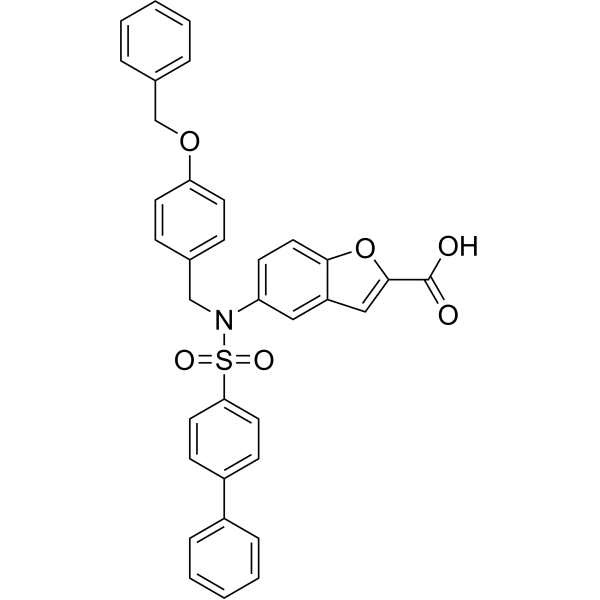
S101 is an inhibitor of SLP-76 and AhR. By inhibiting SLP-76 phosphorylation, S101 blocks the TCR signaling pathway and prevents AhR nuclear translocation, thereby selectively suppressing the proliferation of activated T cells, inducing their apoptosis, and reducing TNF-α levels. S101 can be used in studies of graft rejection, psoriasis, and superantigen-induced toxic shock .
loading...
    loading...
Cat. No.: HY-133488
CAS No.: 1402703-50-7
Research Areas:  

Inflammation/Immunology Cancer

ST1072 is an inhibitor of CerS4 and CerS6. ST1072 preferentially inhibits CerS6 over CerS4, and reduces the production of C16 ceramide. ST1072 impairs TCR-mediated N-RAS activation, ERK signaling pathway, and the colocalization of CD3/PKCθ. ST1072 decreases the production of IFN-γ as well as the migration of donor cells to target organs. ST1072 regulates immune cell populations and the expression of co-stimulatory molecules. ST1072 can be used in research related to colon cancer, cervical cancer, graft-versus-host disease, and hematologic malignancies .
loading...
    loading...
Cat. No.: HY-P992061

Target:  

CD3 Calcium Channel

Research Areas:  

Inflammation/Immunology

Anti-Mouse CD3E Antibody (500A2) is an antibody targeting mouse CD3ε, which specifically binds to the region on CD3ε adjacent to the T cell receptor binding site. Anti-Mouse CD3E Antibody (500A2) triggers functional signal transduction in immature T cells and activates naive T cells. When cross-linked, Anti-Mouse CD3E Antibody (500A2) induces a rapid, robust and transient increase in cytoplasmic calcium concentration, acting as a potent calcium flux inducer. Anti-Mouse CD3E Antibody (500A2) is suitable for multiple experimental techniques such as flow cytometry, immunoprecipitation and EMARS reactions. It can be used to detect CD3E expression on thymocytes, mature T lymphocytes and NK-T cells from different mouse strains, or to identify membrane cluster components of the TCR complex, and shows no cross-reactivity with rat leukocytes .
loading...
    loading...

