1. Search Result
Search Result
Pathways Recommended: MAPK/ERK Pathway
Results for "

Toll-like receptor pathways

" in MedChemExpress (MCE) Product Catalog:

19

Inhibitors & Agonists

3

Peptides

1

Natural
Products

2

Isotope-Labeled Compounds

Targets Recommended:
Cat. No. Product Name Target Research Areas Chemical Structure
  • HY-106950

    Diphosphofructose; Esafosfan; FDP

    Toll-like Receptor (TLR) COX Cardiovascular Disease Neurological Disease Metabolic Disease
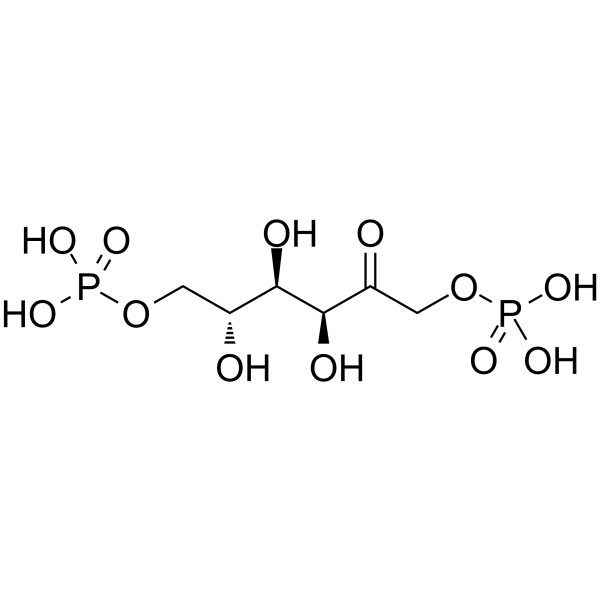
    Fosfructose is an orally active cyclooxygenase-2 inhibitor and Toll-like receptor 4 modulator. Fosfructose reduces the expression of cyclooxygenase-2, thereby decreasing prostaglandin production. By inhibiting the Toll-like receptor 4 signaling pathway, Fosfructose downregulates LPS-induced adhesion molecule expression. Fosfructose is applicable to research related to ischemic stroke, epilepsy, sepsis, myocardial injury, osteoporosis, and ultraviolet B-induced skin damage .
    Fosfructose
  • HY-P2036A
    FSL-1 TFA
    4 Publications Verification

    Toll-like Receptor (TLR) MMP HSV Antibiotic Infection
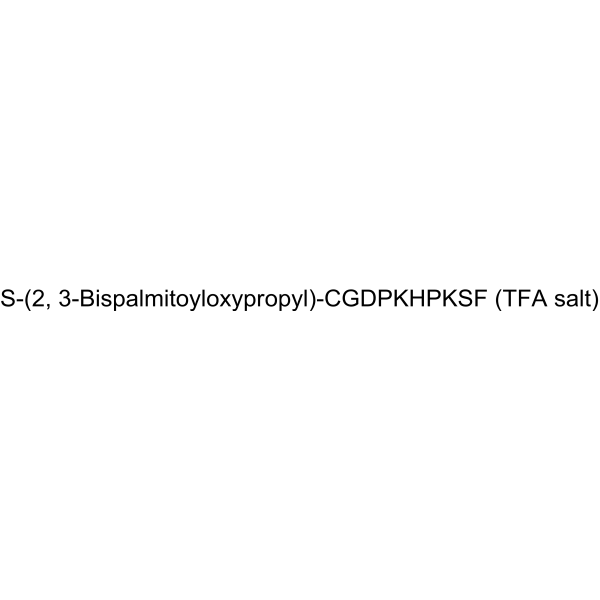
    FSL-1 TFA, a bacterial-derived toll-like receptor 2/6 (TLR2/6) agonist, enhances resistance to experimental HSV-2 infection . FSL-1 TFA induces MMP-9 production through TLR2 and NF-κB/AP-1 signaling pathways in monocytic THP-1 cells .
    FSL-1 TFA
  • HY-B0380A

    Opioid Receptor Toll-like Receptor (TLR) Calcium Channel Potassium Channel IRAK ERK JNK NF-κB Akt Apoptosis Neurological Disease Metabolic Disease Inflammation/Immunology Cancer
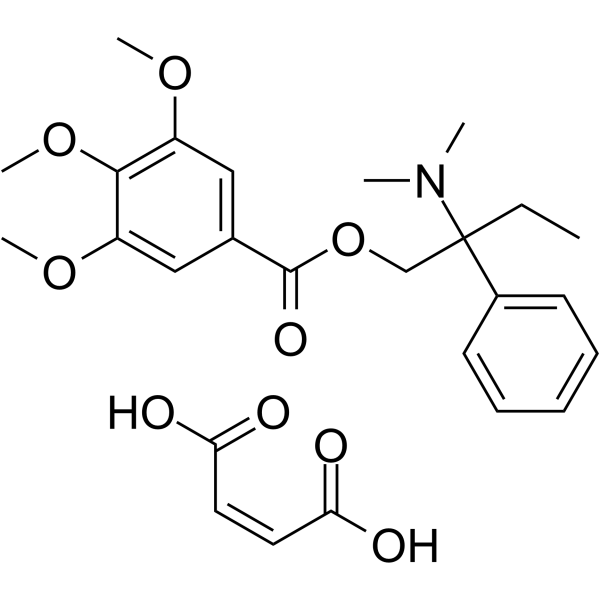
    Trimebutine maleate is a multi-target inhibitor and opioid receptor agonist with antimuscarinic activity. Trimebutine maleate inhibits L-type Ca 2+ channels and large-conductance calcium-activated potassium channels (BKCa channels), thereby inhibiting extracellular calcium influx and potassium ion efflux. Trimebutine maleate also targets Toll-like receptors, inhibits Toll-like receptor 2/4/7/8/9 signals, and inhibits LPS-induced IRAK1 activation, as well as ERK1/2, JNK and NF-κB activation, thereby exerting anti-inflammatory effects. Trimebutine maleate also induces tumor cell apoptosis by inhibiting the AKT/ERK pathway. Trimebutine maleate also inhibits excessive contraction of smooth muscle and can be used in the study of gastrointestinal disorders such as irritable bowel syndrome (IBS) .
    Trimebutine maleate
  • HY-B0380

    Opioid Receptor Toll-like Receptor (TLR) Calcium Channel Potassium Channel IRAK ERK JNK NF-κB Akt Apoptosis Neurological Disease Metabolic Disease Inflammation/Immunology Cancer
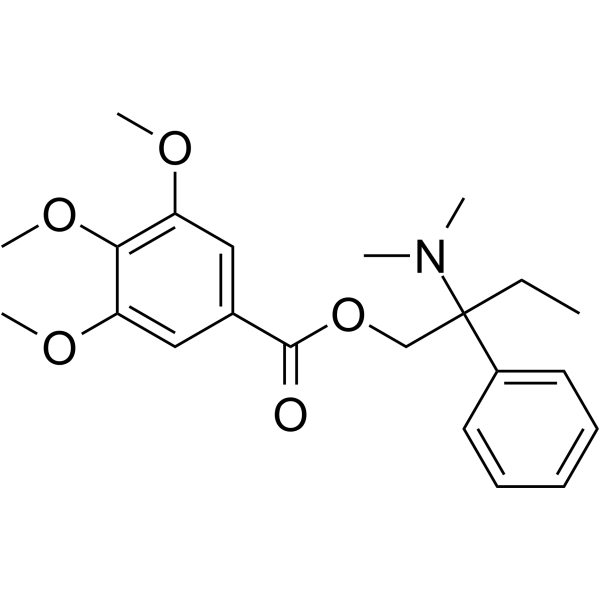
    Trimebutine is a multi-target inhibitor and opioid receptor agonist with antimuscarinic activity. Trimebutine inhibits L-type Ca 2+ channels and large-conductance calcium-activated potassium channels (BKCa channels), thereby inhibiting extracellular calcium influx and potassium ion efflux. Trimebutine also targets Toll-like receptors, inhibits Toll-like receptor 2/4/7/8/9 signals, and inhibits LPS-induced IRAK1 activation, as well as ERK1/2, JNK and NF-κB activation, thereby exerting anti-inflammatory effects. Trimebutine also induces tumor cell apoptosis by inhibiting the AKT/ERK pathway. Trimebutine also inhibits excessive contraction of smooth muscle and can be used in the study of gastrointestinal disorders such as irritable bowel syndrome (IBS) .
    Trimebutine
  • HY-P10227

    ONL-1204

    Fatty Acid Synthase (FASN) Apoptosis Interleukin Related Toll-like Receptor (TLR) NOD-like Receptor (NLR) Caspase Neurological Disease
    Xelafaslatide (ONL-1204) is a Fas receptor antagonist. Xelafaslatide blocks the Fas receptor signaling pathway and inhibits downstream apoptosis and inflammatory pathways. Xelafaslatide suppresses neuroinflammation and microglial activation in glaucoma models, protects retinal ganglion cells and prevents axonal degeneration. Xelafaslatide is applicable to relevant research on glaucoma .
    Xelafaslatide
  • HY-176192

    Toll-like Receptor (TLR) NF-κB p38 MAPK ERK IKK TNF Receptor Interleukin Related Inflammation/Immunology
    SMU-14a is a selective Toll-like receptor 3 (TLR3) inhibitor wirh an IC50 of 0.18 μM. SMU-14a reduces phosphorylation of p65, ERK, and TBK1 via NF-κB, MAPK, and IRF3 signaling pathways. SMU-14a inhibits IL-6 secretion in mouse peritoneal macrophages, downregulates TNF-α in human peripheral blood monocytes and decreases serum alanine aminotransferase (ALT) and aspartate aminotransferase (AST) levels. SMU-14a can be used for the research of acute hepatitis .
    SMU-14a
  • HY-W130878

    Complement System Toll-like Receptor (TLR) NF-κB Inflammation/Immunology
    4-Octylphenol is a hormone disruptor that has gender-specific effects on male reproductive cells, significantly reducing the mitotic index and the number of spermatogonia. 4-Octylphenol can cause inflammatory damage to fish gills by activating the complement system through the C3a/C3aR axis and the C5a/C5aR1 axis, this leads to complement activation and causes immune suppression due to the imbalance between Th1/Th2 cells and regulatory T cells (Treg)/Th17 cells, as well as inflammatory damage via the Toll-like receptor 7 (Toll-like Receptor (TLR))/IκBα/NF-κB pathway .
    4-Octylphenol
  • HY-144497

    PD-1/PD-L1 Toll-like Receptor (TLR) Drug-Linker Conjugates for ADC Infection Cancer
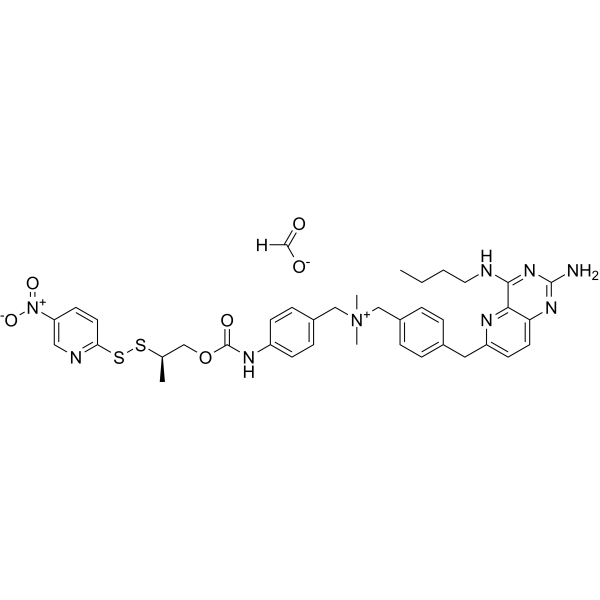
    HE-S2 is an antibody-drug conjugate triggering a potent antitumor immune response. HE-S2 acts by blocking the PD-1/PD-L1 interaction and activating the Toll-like receptor 7/8 (TLR7/8) signaling pathway. HE-S2 has remarkable antitumor activity .
    HE-S2
  • HY-P2848A

    Toll-like Receptor (TLR) Infection Metabolic Disease
    Cholesterol oxidase, Rhodococcus sp. is a key enzyme in the cholesterol degradation process. It catalyzes the isomerization and oxidation of cholesterol mediated by the coenzyme FAD. Research indicates that cholesterol oxidase plays a crucial role in the pathogenicity of Mycobacterium tuberculosis by modulating the host macrophage immune response through inhibition of the Toll-like receptor 2 (TLR2) signaling pathway, thereby enhancing the survival of Mycobacterium tuberculosis. Cholesterol oxidase, from Rhodococcus sp., shows potential for research in the field of tuberculosis .
    Cholesterol oxidase, rhodococcus sp
  • HY-B0380S1

    Isotope-Labeled Compounds Opioid Receptor Toll-like Receptor (TLR) Calcium Channel Potassium Channel IRAK ERK JNK NF-κB Akt Apoptosis Neurological Disease Metabolic Disease Inflammation/Immunology Cancer
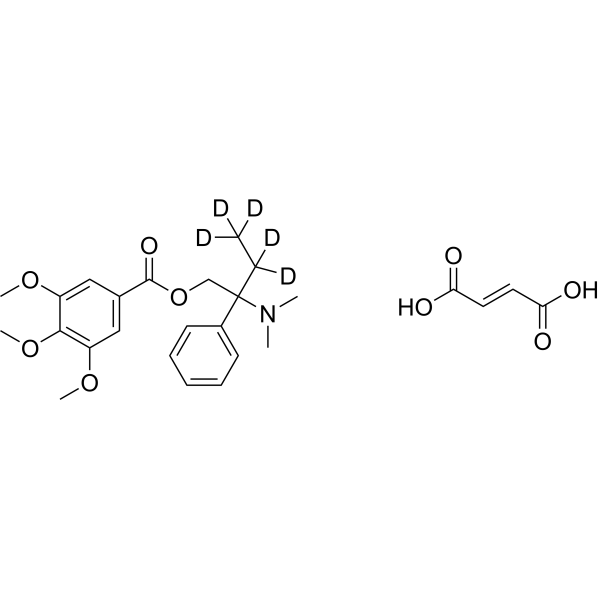
    Trimebutine-d5 fumarate is deuterium labeled Trimebutine fumarate. Trimebutine fumarate is a multi-target inhibitor and opioid receptor agonist with antimuscarinic activity. Trimebutine fumarate inhibits L-type Ca 2+ channels and large-conductance calcium-activated potassium channels (BKCa channels), thereby inhibiting extracellular calcium influx and potassium ion efflux. Trimebutine fumarate also targets Toll-like receptors, inhibits Toll-like receptor 2/4/7/8/9 signals, and inhibits LPS-induced IRAK1 activation, as well as ERK1/2, JNK and NF-κB activation, thereby exerting anti-inflammatory effects. Trimebutine fumarate also induces tumor cell apoptosis by inhibiting the AKT/ERK pathway. Trimebutine fumarate also inhibits excessive contraction of smooth muscle and can be used in the study of gastrointestinal disorders such as irritable bowel syndrome (IBS) .
    Trimebutine-d5 fumarate
  • HY-B0380AR

    Reference Standards Opioid Receptor Apoptosis Potassium Channel NF-κB Akt IRAK JNK Toll-like Receptor (TLR) ERK Calcium Channel Neurological Disease Metabolic Disease Inflammation/Immunology Cancer
    Trimebutine maleate (Standard) is the analytical standard of Trimebutine maleate (HY-B0380A). This product is intended for research and analytical applications. Trimebutine maleate is a multi-target inhibitor and opioid receptor agonist with antimuscarinic activity. Trimebutine maleate inhibits L-type Ca 2+ channels and large-conductance calcium-activated potassium channels (BKCa channels), thereby inhibiting extracellular calcium influx and potassium ion efflux. Trimebutine maleate also targets Toll-like receptors, inhibits Toll-like receptor 2/4/7/8/9 signals, and inhibits LPS-induced IRAK1 activation, as well as ERK1/2, JNK and NF-κB activation, thereby exerting anti-inflammatory effects. Trimebutine maleate also induces tumor cell apoptosis by inhibiting the AKT/ERK pathway. Trimebutine maleate also inhibits excessive contraction of smooth muscle and can be used in the study of gastrointestinal disorders such as irritable bowel syndrome (IBS) .
    Trimebutine maleate (Standard)
  • HY-E70731

    IRAK Inflammation/Immunology
    The IRAK4 protein is a serine/threonine protein kinase that is critical for initiating the innate immune response through the Toll-like receptor (TLR) and IL-1R signaling pathways. After TLR is activated, it rapidly forms the Myddosome with IRAK2. IRAK4 aa104-460 Recombinant Human Active Protein Kinase is a recombinant IRAK4 aa104-460 protein that can be used to study IRAK4 aa104-460-related functions .
    IRAK4 aa104-460 Recombinant Human Active Protein Kinase
  • HY-P11093

    Antibiotic Bacterial Fungal Apoptosis Reactive Oxygen Species (ROS) TNF Receptor NO Synthase Interleukin Related NF-κB Toll-like Receptor (TLR) Infection Inflammation/Immunology
    Papiliocin is a potent peptide antibiotic with both anti-inflammatory and antibacterial activities. Papiliocin is primarily active against Gram-negative bacteria. Papiliocin exhibits strong anti-inflammatory activity against cell, exerting its anti-inflammatory activity by inhibiting the production of NO and the secretion of TNF-α and MIP-2. Papiliocin participates in the innate defense response mechanism by inhibiting the Toll-like receptor pathway and NF-κB. Papiliocin induces apoptosis in fungal cells and increases the total level of intracellular ROS. Papiliocin acts as an effective antiseptic peptide in sepsis models. Papiliocin is useful in anti-inflammatory and antibacterial research .
    Papiliocin
  • HY-179209

    Toll-like Receptor (TLR) Inflammation/Immunology
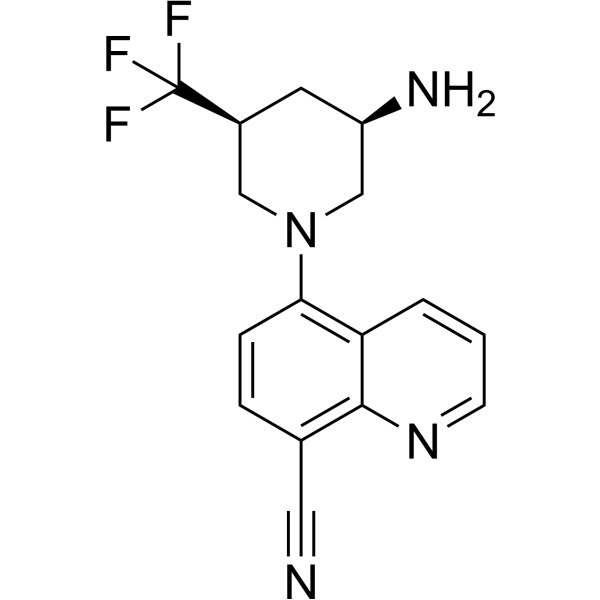
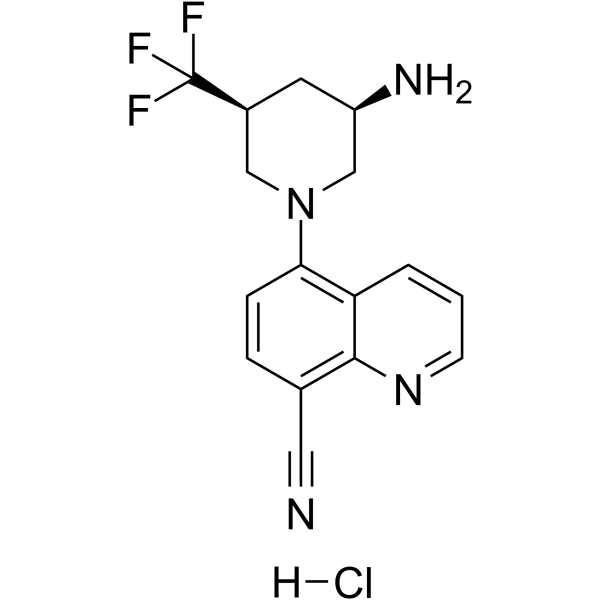
    TLR9-IN-2 (Compound 20) is a selective inhibitor of Toll-like receptor 9 (TLR9) with IC50 values for TLR9, TLR7, and TLR8 of 25, 1400, and > 50,000 nM respectively. TLR9-IN-2 can be used for the study of fibrosis, autoimmune and inflammatory diseases .
    TLR9-IN-2
  • HY-B0380S2

    Isotope-Labeled Compounds Opioid Receptor Toll-like Receptor (TLR) Calcium Channel Potassium Channel IRAK ERK JNK NF-κB Akt Apoptosis Neurological Disease Metabolic Disease Inflammation/Immunology Cancer
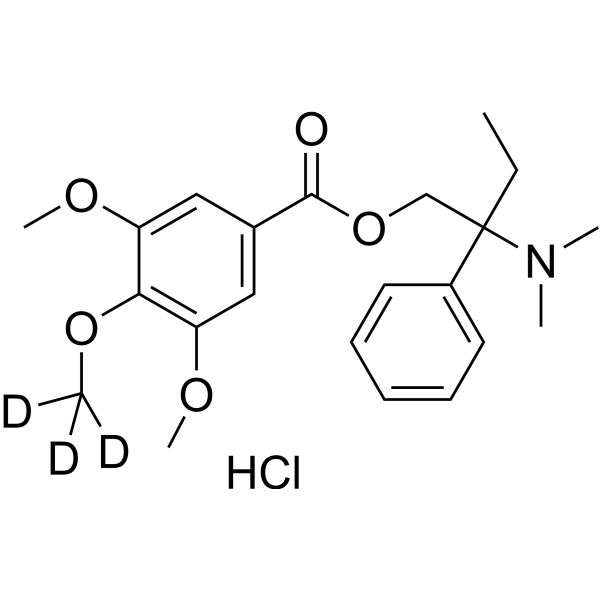
    Trimebutine-d3 hydrochloride is deuterium labeled Trimebutine hydrochloride. Trimebutine hydrochloride is a multi-target inhibitor and opioid receptor agonist with antimuscarinic activity. Trimebutine hydrochloride inhibits L-type Ca 2+ channels and large-conductance calcium-activated potassium channels (BKCa channels), thereby inhibiting extracellular calcium influx and potassium ion efflux. Trimebutine hydrochloride also targets Toll-like receptors, inhibits Toll-like receptor 2/4/7/8/9 signals, and inhibits LPS-induced IRAK1 activation, as well as ERK1/2, JNK and NF-κB activation, thereby exerting anti-inflammatory effects. Trimebutine hydrochloride also induces tumor cell apoptosis by inhibiting the AKT/ERK pathway. Trimebutine hydrochloride also inhibits excessive contraction of smooth muscle and can be used in the study of gastrointestinal disorders such as irritable bowel syndrome (IBS) .
    Trimebutine-d3 hydrochloride
  • HY-B0380R

    Opioid Receptor Toll-like Receptor (TLR) Calcium Channel Potassium Channel IRAK ERK JNK NF-κB Akt Apoptosis Reference Standards Neurological Disease Metabolic Disease Inflammation/Immunology Cancer
    Trimebutine (Standard) is the analytical standard of Trimebutine (HY-B0380). This product is intended for research and analytical applications. Trimebutine is a multi-target inhibitor and opioid receptor agonist with antimuscarinic activity. Trimebutine inhibits L-type Ca 2+ channels and large-conductance calcium-activated potassium channels (BKCa channels), thereby inhibiting extracellular calcium influx and potassium ion efflux. Trimebutine also targets Toll-like receptors, inhibits Toll-like receptor 2/4/7/8/9 signals, and inhibits LPS-induced IRAK1 activation, as well as ERK1/2, JNK and NF-κB activation, thereby exerting anti-inflammatory effects. Trimebutine also induces tumor cell apoptosis by inhibiting the AKT/ERK pathway. Trimebutine also inhibits excessive contraction of smooth muscle and can be used in the study of gastrointestinal disorders such as irritable bowel syndrome (IBS) .
    Trimebutine (Standard)
  • HY-183008

    Parasite TNF Receptor Interleukin Related NF-κB Toll-like Receptor (TLR) Infection Inflammation/Immunology
    BSF2 is a anti-Leishmania agent. BSF2 modulates gene expression linked to ubiquitination, chromatin remodeling, and peroxisomal membrane transport pathways in Leishmania braziliensis. BSF2 downregulates TNF, IL-17, NF-κB, and Toll-like receptor pathways in Leishmania-infected macrophages. BSF2 exerts leishmanicidal activity against intracellular Leishmania braziliensis amastigotes. BSF2 can be used for the research of american tegumentary leishmaniasis .
    BSF2
  • HY-157961

    Toll-like Receptor (TLR) Inflammation/Immunology
    E-5531 is an endotoxin antagonist. E-5531 quickly becomes inactive after binding with HDL. E-5531 can block the Toll like receptor 4 (TLR4) signaling pathway. E-5531 can be used for the study of endotoxemia and septic shock .
    E-5531
  • HY-181796

    Toll-like Receptor (TLR) Interleukin Related Inflammation/Immunology
    TLR7 antagonist-1 (Compound 44#) is an orally active, selective TLR7 antagonist with an IC50 value of 0.3 nM against TLR7. TLR7 antagonist-1 selectively binds to TLR7, inhibits its activation, and downregulates the c-Rel signaling pathway. TLR7 antagonist-1 downregulates the mRNA levels of proinflammatory cytokines IL-1β, IL-6, and TNF-α. TLR7 antagonist-1 alleviates Imiquimod (HY-B0180)-induced psoriasis-like skin lesions. TLR7 antagonist-1 is applicable to research related to psoriasis .
    TLR7 antagonist-1

Inquiry Online

Your information is safe with us. * Required Fields.

Salutation


Country or Region *

Applicant Name *


Organization Name *

Department *


Email Address *


Product Name *

Cat. No.


Requested quantity *

Phone Number *


Remarks

Inquiry Online

Inquiry Information

Product Name:
Cat. No.:
Quantity:
MCE Japan Authorized Agent:

