17 Results for "

Vibrio cholerae

" in MedChemExpress (MCE) Product Catalog:
Products (17)

17 Results for "Vibrio cholerae" in MCE Product Catalog:

7
7 Publications Verification
Cat. No.: HY-P1934
CAS No.: 14705-60-3
Synonyms: Cyclo(phenylalanylprolyl); A-64863
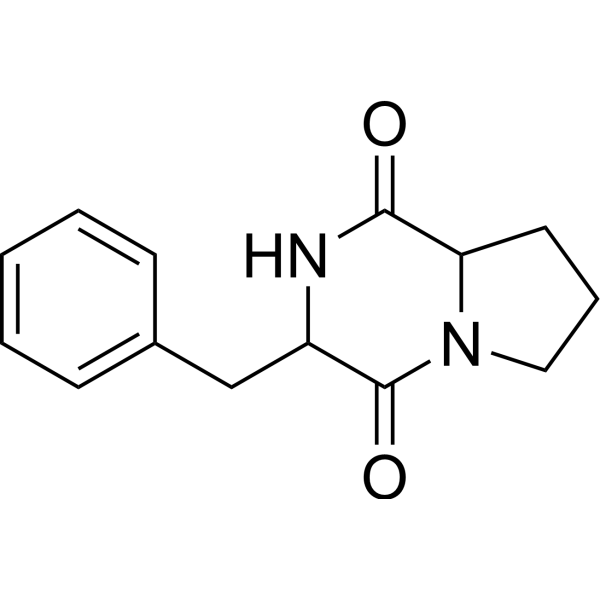
Cyclo(Phe-Pro) (Cyclo(phenylalanylprolyl)) is a quorum-sensing molecule of Vibrio vulnificus that specifically interacts with RIG-I, inhibiting RIG-I polyubiquitination, suppressing IRF-3 activation, and reducing type I interferon production. Cyclo(Phe-Pro) enhances susceptibility to HCV and influenza virus and also alleviates plant aluminum toxicity stress. The mechanism of Cyclo(Phe-Pro) involves the regulation of host immune signaling pathways, bacterial virulence gene expression, and plant antioxidant systems, making it a promising candidate for research in viral infections, bacterial virulence regulation, and agricultural stress resistance .
loading...
    loading...
5
5 Cited Publications
Cat. No.: HY-D1191
CAS No.: 2225748-05-8
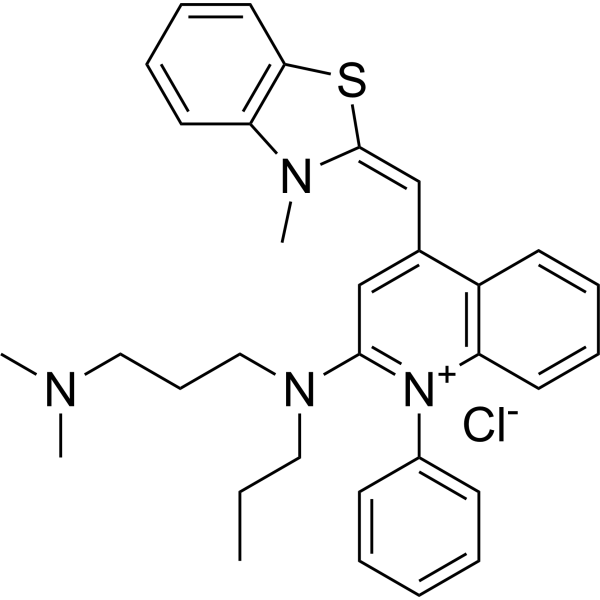
SYBR Green I chloride is a highly sensitive fluorescent nucleic acid dye that binds specifically to the minor groove of double-stranded DNA or intercalates between base pairs. SYBR Green I chloride exhibits weak fluorescence in the unbound state but emits bright fluorescence upon binding, and it preferentially binds to large-fragment DNA and DNA with high G+C content. SYBR Green I chloride is suitable for real-time PCR technology; its fluorescence intensity correlates with the amount and size of amplification products, enabling accurate quantification of gene expression and discrimination of amplicons via melting curve analysis without additional post-processing. SYBR Green I chloride is widely used in preclinical in vitro nucleic acid detection .
loading...
    loading...
1
1 Cited Publications
Cat. No.: HY-135783
CAS No.: 1314801-63-2
Purity:  99.94%
AT 1001 is an orally effective α3β4 nicotinic acetylcholine receptor (α3β4 nAChR) antagonist with a Ki value of 2.64 nM. AT 1001 reversibly blocks Epibatidine (HY-101078)-induced inward currents in HEK cells transfected with α3β4 nAChR. AT 1001 dose-dependently blocks nicotine self-administration behavior in rats, alleviates gluten-induced gastrointestinal symptoms, blocks tight junction toxin-induced immune responses, and reduces the incidence of type 1 diabetes in rats. AT 1001 can be used in the research of nicotine addiction and celiac disease .
loading...
    loading...
Cat. No.: HY-N7151
CAS No.: 108354-13-8
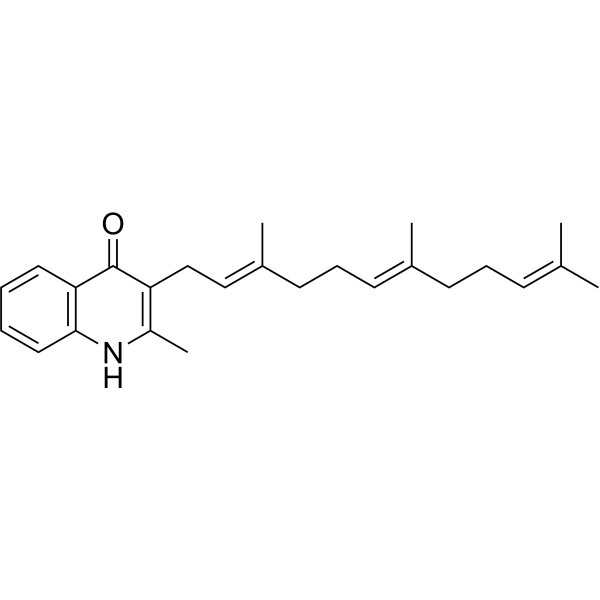
Aurachin D is an antibiotic and selective cytochrome bd oxidase inhibitor. Aurachin D exhibits inhibitory effects against Gram-positive bacteria and a small number of fungi, with an IC50 value of 0.1 μM against Escherichia coli and an IC50 value ranging from 0.13 to 33 μM against Mycobacterium tuberculosis. Aurachin D binds to and inhibits cytochrome bd oxidase, thereby blocking the electron transfer process, disrupting the respiratory chain and energy metabolism of pathogens. Aurachin D can be used in research related to leishmaniasis, malaria, Chagas disease, African trypanosomiasis, and tuberculosis [2] .
loading...
    loading...
Cat. No.: HY-D2381
AF 488 maleimide is a thiol-reactive dye used to label SH groups of proteins, which can attach the AF 488 fluorophore to cysteine residue-containing proteins and peptides as well as other thiolated molecules. AF 488 maleimide enables real-time visualization of dynamic pilus extension and retraction in live bacterial cells via epifluorescence microscopy (Ex/Em = 470/520 nm) .
loading...
    loading...
Cat. No.: HY-145376
CAS No.: 1004296-82-5
Purity:  99.32%
Synonyms: CAI-1
Target:  

Bacterial

Research Areas:  

Others

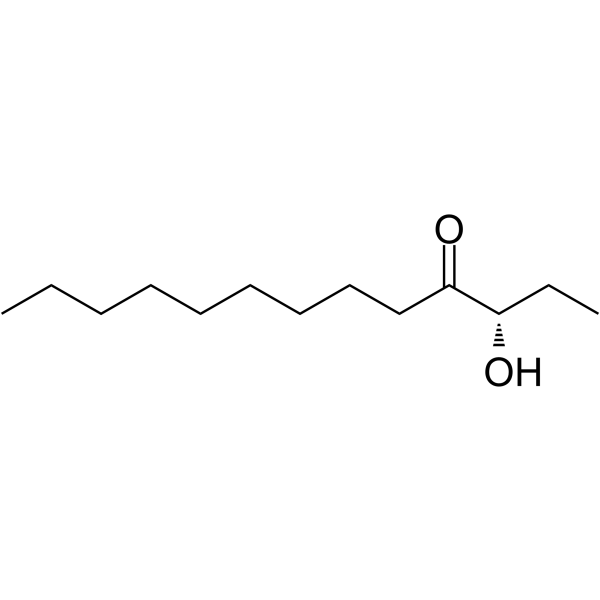
Cholera autoinducer 1 is Vibrio cholerae autoinducer (S)-3-hydroxytridecan-4-one. Cholera autoinducer 1 influences chemotaxis in C. elegans .
loading...
    loading...
Cat. No.: HY-115846
CAS No.: 2650208-98-1
Target:  

Bacterial

Research Areas:  

Infection

ML370 is an antibacterial agent. ML370 exerts antibacterial activity by inhibiting the activity of Vibrio cholerae LuxO kinase. ML370 can be used in the research of infectious diseases such as cholera .
loading...
    loading...
Cat. No.: HY-P2988H
Target:  

Sialyltransferase

Research Areas:  

Infection

Neuraminidase,Vibrio cholerae (EC 3.2.1.18) is a glycoside hydrolase enzyme that cleave the glycosidic linkages of neuraminic acids.
loading...
    loading...
Cat. No.: HY-123504
CAS No.: 894856-92-9
Target:  

Bacterial

Research Areas:  

Infection

ML344 is an agonist of Vibrio cholerae CqsS, a transmembrane receptor .
loading...
    loading...
Cat. No.: HY-115845
CAS No.: 851094-56-9
Research Areas:  

Infection

ML366 is an inhibitor of Vibrio cholerae Quorum Sensing, exhibiting activity by targeting the LuxO response regulator.
loading...
    loading...
Cat. No.: HY-N14433
CAS No.: 484-89-9
Fumigatin has anti-Gram-positive bacteria, negative bacteria (weak) and vibrio cholerae activities .
loading...
    loading...
Cat. No.: HY-N19291
CAS No.: 31348-80-8
Synonyms: D-Perosamine
Target:  

Drug Derivative

Perosamine is a dideoxysugar that can be isolated from the O-antigens of Gram-negative bacteria, including Vibrio cholerae O1 and Escherichia coli O157:H7 .
loading...
    loading...
Cat. No.: HY-N7151R
CAS No.: 108354-13-8
Aurachin D (Standard) is the analytical standard of Aurachin D (HY-N7151). This product is intended for research and analytical applications. Aurachin D is an antibiotic and selective cytochrome bd oxidase inhibitor. Aurachin D exhibits inhibitory effects against Gram-positive bacteria and a small number of fungi, with an IC50 value of 0.1 μM against Escherichia coli and an IC50 value ranging from 0.13 to 33 μM against Mycobacterium tuberculosis. Aurachin D binds to and inhibits cytochrome bd oxidase, thereby blocking the electron transfer process, disrupting the respiratory chain and energy metabolism of pathogens. Aurachin D can be used in research related to leishmaniasis, malaria, Chagas disease, African trypanosomiasis, and tuberculosis [2] .
loading...
    loading...
Cat. No.: HY-P704223
Purity:  ≥ 95%, as determined by reducing SDS-PAGE.
Synonyms: VC_1456; toxB; ctxB; Choleragenoid; Cholera enterotoxin gamma chain; Cholera enterotoxin B chain; Cholera enterotoxin subunit B
Species:  
Virus
Source:  
HEK293
loading...
    loading...
Cat. No.: HY-B2180
CAS No.: 2893-78-9
Research Areas:  

Infection

Dichloroisocyanurate sodium is a synthetic organochlorine compound belonging to triazine derivatives, and is commonly used as a disinfectant and biocide. Dichloroisocyanurate sodium can release hypochlorous acid to inactivate waterborne bacteria, viruses, helminths and protozoa, and can act as a hypochlorous acid reservoir to provide sustained biocidal protection .
loading...
    loading...
Cat. No.: HY-183878
CAS No.: 71431-46-4
Target:  

Bacterial

Research Areas:  

Infection Metabolic Disease

Zincov is an orally active hydroxamic acid derivative and bacterial metalloproteinase inhibitor. Zincov blocks chloride ion binding by binding to the active site of thermolysin, thereby inhibiting the hydrolysis and blood coagulation reactions catalyzed by this enzyme. Meanwhile, Zincov attenuates cytotoxicity, prevents protein degradation and ZO-1 rearrangement without affecting the functions of other common proteases. Zincov exhibits blood glucose-regulating and antioxidant activities; it reduces blood glucose levels and increases liver dry weight in diabetic rats, but elevates blood glucose levels in normal rats. Zincov is widely used in studies related to cholera and diabetes .
loading...
    loading...
Cat. No.: HY-N13274
CAS No.: 3625-52-3
Synonyms: Lacceroic acid
Dotriacontanoic acid (Lacceroic acid) is a fatty acid found in Limnophila polystachya Benth. Dotriacontanoic acid exhibits anti-bacterial activity against multiple gram-negative bacteria .
loading...
    loading...
  • 1

