
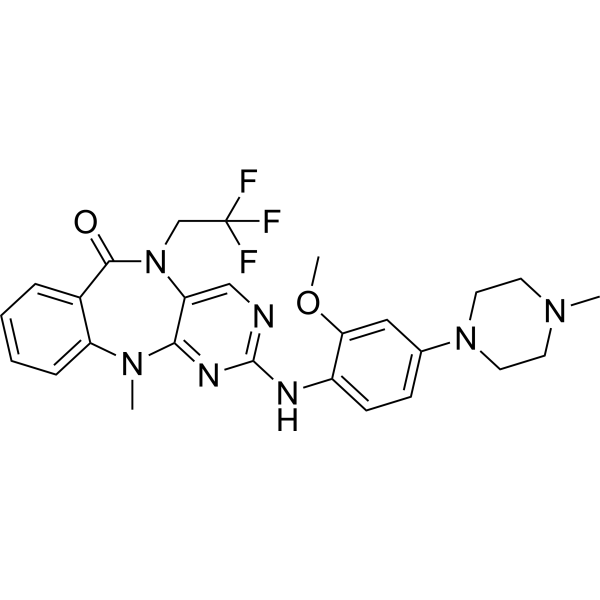
1. Search Result
Search Result
Results for "

adenocarcinomas

" in MedChemExpress (MCE) Product Catalog:

442

Inhibitors & Agonists

1

Screening Libraries

5

Fluorescent Dyes

10

Biochemical Assay Reagents

18

Peptides

1

MCE Kits

38

Inhibitory Antibodies

83

Natural
Products

7

Isotope-Labeled Compounds

3

Click Chemistry

5

Oligonucleotides

1

GMP Molecules

Cat. No. Product Name Target Research Areas Chemical Structure
  • HY-145928
    Divarasib
    5+ Cited Publications

    GDC-6036

    Ras Cancer
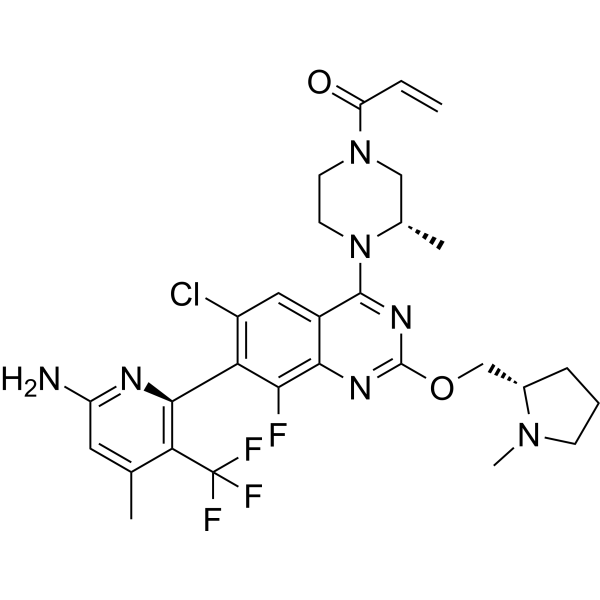
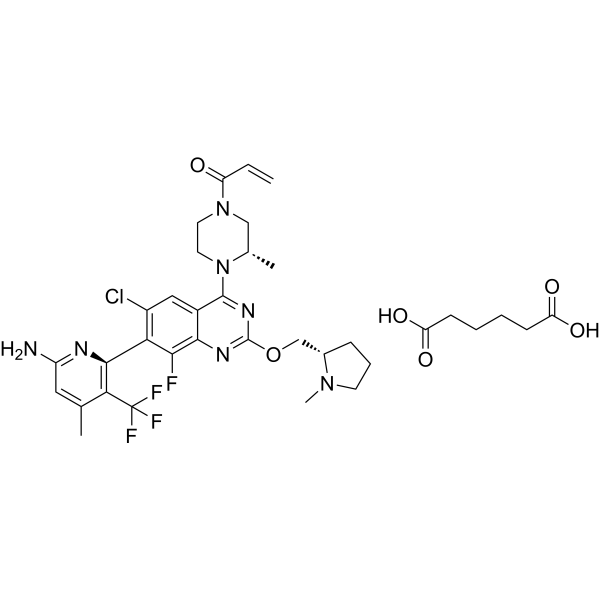
    Divarasib (GDC-6036) is an orally active, selective KRAS G12C inhibitor with an IC50 of <0.01 μM. Divarasib covalently binds Cys12 in GDP-bound KRAS G12C, occupies the switch II pocket, blocks GTP binding and SOS-mediated reactivation, and inhibits oncogenic KRAS signaling. Divarasib induces tumor shrinkage and robust tumor growth inhibition in KRAS G12C-positive models and cancer cells. Divarasib can be used for the research of non-small cell lung cancer, colorectal adenocarcinoma, pancreatic ductal adenocarcinoma, and other KRAS G12C-mutated solid tumors .
    Divarasib
  • HY-101194
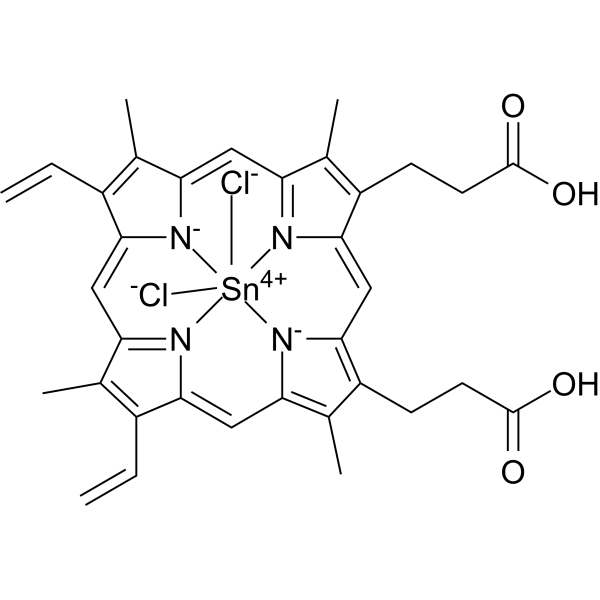
    Tin protoporphyrin IX dichloride
    15+ Cited Publications

    Tin-protoporphyrin IX; Sn-Protoporphyrin; SnPPIX

    Reactive Oxygen Species (ROS) Cancer
    Tin protoporphyrin IX dichloride (SnPPIX) is a potent Heme oxygenase-1 (HO-1) inhibitor. Tin protoporphyrin IX dichloride sensitizes pancreatic ductal adenocarcinoma (PDAC) tumors to chemotherapy in mice model .
    Tin protoporphyrin IX dichloride
  • HY-148808

    RXC007

    ROCK Cancer
    Zelasudil (RXC007) is an orally active, highly selective small molecule Rho-associated coiled-coil containing protein kinase 2 (ROCK2) inhibitor with anti-fibrotic efficacy. Zelasudil elicits positive immunomodulatory effects in metastatic pancreatic tumors with increase of CD8+ and CD4+ T cell infiltrate into the tumor cortex and reduction in immunosuppressive FOXP3+ regulatory T cells at the tumor border. Zelasudil is promising for research of pancreatic ductal adenocarcinoma .
    Zelasudil
  • HY-W1128879

    SKPer1

    Molecular Glues E1/E2/E3 Enzyme Cancer
    XMU-MP-8 (SKPer1) is a potent molecular glue degrader that targets the oncoprotein SKP2. XMU-MP-8 simultaneously binds to the F-box domain of SKP2 (Kd ≈ 36 μM) and the N-terminal TPR domain of the E3 ligase STUB1 (Kd ≈ 2.5 μM), forming a stable SKP2-SKPer1-STUB1 ternary complex (Kd ≈ 8.9 nM) that induces SKP2 ubiquitination and proteasomal degradation. XMU-MP-8 selectively eliminates SKP2-expressing cancer cells. XMU-MP-8 exhibits substantial tumour suppression with good safety profiles in vivo. XMU-MP-8 can be used for cancer research, such as non-small cell lung adenocarcinoma (NSCLC) and prostatic adenocarcinoma .
    XMU-MP-8
  • HY-P10944

    NNS309

    FAP Inflammation/Immunology Cancer
    Unlabeled FXX489 (NNS309) is a fibroblast activation protein (FAP)-targeting ligand. Unlabeled FXX489 can be labeled with 68Ga and 177Lu and shows anticancer effects. Unlabeled FXX489 can be used for the study of pancreatic ductal adenocarcinoma (PDAC), non-small cell lung cancer (NSCLC), breast cancer (BC), and colorectal cancer (CRC) .
    Unlabeled FXX489
  • HY-P99350
    Gresonitamab
    1 Publications Verification

    AMG 910; Anti-Human CD3xClaudin18 2

    CD3 Cancer
    Gresonitamab (AMG 910) is a half-life extended (HLE) bispecific T-cell engager (BiTE) antibody targets CD3-positive T cells and CLDN18.2-expressing tumor cells. Gresonitamab can be used for the research of adenocarcinoma .
    Gresonitamab
  • HY-P99351

    Anti-MMP9 Reference Antibody (andecaliximab)

    MMP Cancer
    Andecaliximab is a recombinant chimeric IgG4 monoclonal antibody (mAb) targets matrix metalloproteinase 9 (MMP9). Andecaliximab shows the antifibrotic efficacy in idiopathic pulmonary fibrosis mouse models. Andecaliximab can be used for the research of gastric adenocarcinoma and idiopathic pulmonary fibrosis (IPF) .
    Andecaliximab
  • HY-122723
    GOT1 inhibitor-1
    2 Publications Verification

    Reactive Oxygen Species (ROS) Cancer
    GOT1 inhibitor-1 (compound 2c), a tryptamine-based derivative, acts as a novel, potent and non-covalent inhibitor of glutamate oxaloacetate transaminase 1 (GOT1) with an IC50 of 8.2 uM. GOT1 plays an important role in energy metabolism and Reactive Oxygen Species (ROS) balance. GOT1 inhibitor-1 can be used for the research of pancreatic ductal adenocarcinoma (PDAC) .
    GOT1 inhibitor-1
  • HY-P99379

    CAN04; Anti-IL-1RAP/IL-1R3 Reference Antibody (nidanilimab)

    Interleukin Related Cancer
    Nidanilimab (CAN04) is a fully humanized monoclonal anti-IL1RAP antibody with a Kd value of 1.10 pM. Nidanilimab blocks IL1α and IL1β signaling and stimulates the immune system to destroy tumour cells. Nidanilimab can be used in research of non-small lung cancer (NSCLC) and pancreatic ductal adenocarcinoma (PDAC) .
    Nidanilimab (Nadunolimab)
  • HY-137301

    Drug Metabolite Cancer
    Mycophenolic acid glucuronide is a metabolite of the immunosuppressant mycophenolic acid (MPA). Mycophenolic acid glucuronide shows anti-tumor activity and can be used in adenocarcinoma research .
    Mycophenolic acid glucuronide
  • HY-113352

    Endogenous Metabolite PARP Cancer
    7-Methylguanine is an orally active and competitive PARP-1 inhibitor with a Ki value of 61 μM. 7-Methylguanine is a metabolite of nucleic acids. 7-Methylguanine has anticancer activity against uterine sarcoma and colon adenocarcinoma. 7-Methylguanine is used as a probe for protein-DNA interactions .
    7-Methylguanine
  • HY-P99237

    MMUC 1206A

    Mucin Cancer
    Sofituzumab (MMUC 1206A) is an anti-MUC16 antibody with a Kd of 0.3-0.9 nM. Sofituzumab can bind multiple adjacent antibody molecules to the repeat sequences of the same MUC16 molecule. Sofituzumab exhibits no anti-tumor activity in the HPAC pancreatic adenocarcinoma xenograft model .
    Sofituzumab
  • HY-Y0030

    3-hydroxypyridine-2-carboxylic acid

    Biochemical Assay Reagents Drug Intermediate Infection Cancer
    3-Hydroxypicolinic acid is a heterocyclic carboxylic acid ligand and cytotoxin, with a MIC90 of >25 μg/mL against Mycobacterium tuberculosis H37Rv. 3-Hydroxypicolinic acid inhibits the growth of cancer cells and normal fibroblasts. 3-Hydroxypicolinic acid is applicable to research related to chronic myeloid leukemia, human lung adenocarcinoma, and tuberculosis .
    3-Hydroxypicolinic acid
  • HY-148819A

    ADC Payload Topoisomerase Cancer
    NH2-bicyclopentane-7-MAD-MDCPT hydrochloride (Formula I) is a topoisomerase I (TOP1) inhibitor. NH2-bicyclopentane-7-MAD-MDCPT hydrochloride is applicable to the synthesis of the ADC ABBV-969. NH2-bicyclopentane-7-MAD-MDCPT hydrochloride is used in research on lung adenocarcinoma and melanoma .
    NH2-bicyclo[1.1.1]pentane-7-MAD-MDCPT hydrochloride
  • HY-D2363

    Radionuclide-Drug Conjugates (RDCs) FAP Prolyl Endopeptidase (PREP) Cancer
    DOTA.SA.FAPi TFA is a selective FAP inhibitor with an IC50 value of 0.9 nM against FAP. DOTA.SA.FAPi TFA forms stable complexes with 68Ga and serves as a PET radiotracer for preclinical imaging of FAP-expressing tumors. DOTA.SA.FAPi TFA can be used in the research of colorectal adenocarcinoma and various other cancers .
    DOTA.SA.FAPi TFA
  • HY-126779

    Fungal Cancer
    Stictic acid is a secondary metabolite that can be isolated from the lichen Lobaria pulmonaria (L.) Hoffm. Stictic acid inhibits growth of human colon adenocarcinoma HT-29 cells (IC50: 29.29 μg/mL) .
    Stictic acid
  • HY-144439

    Mitochondrial Metabolism Cardiovascular Disease Cancer
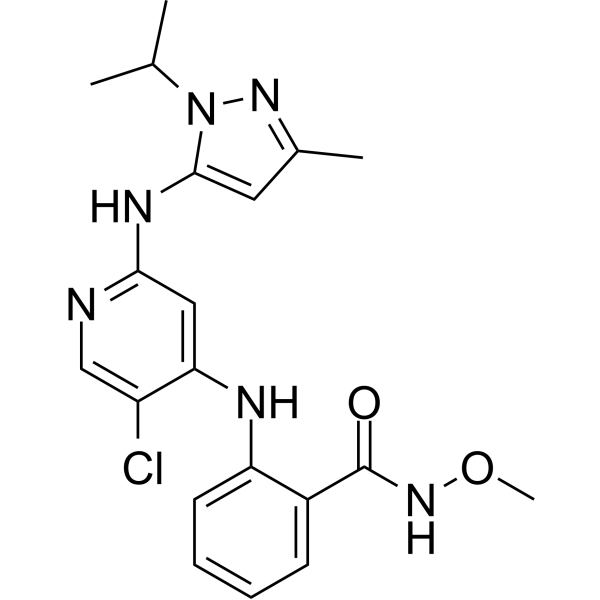
    HTS07545 is a potent sulfide:quinone oxidoreductase (SQOR) inhibitor with an IC50 of 30 nM. HTS07545 reduces the decomposition rate of hydrogen sulfide (H2S). HTS07545 can be used in the research of heart failure and pancreatic ductal adenocarcinoma.
    HTS07545
  • HY-P99941

    INCMGA-00012; MGA-012

    PD-1/PD-L1 Cancer
    Retifanlimab is an anti-programmed cell death protein 1 (anti-PD-1) monoclonal antibody (mAb). Retifanlimab can be used for the research of gastroesophageal adenocarcinoma (GEA) .
    Retifanlimab
  • HY-P99884

    PF-06801591

    PD-1/PD-L1 Inflammation/Immunology Cancer
    Sasanlimab is a humanized IgG4 isotype anti-PD-1 antibody. Sasanlimab blocks PD-1 interaction with PD-L1/PD-L2, reverses PD-1-mediated inhibitory T-cell signaling, augments T-cell proliferation and cytokine production. Sasanlimab inhibits colon adenocarcinoma tumor growth, and accelerates graft-versus-host disease incidence via enhanced T-cell activity. Sasanlimab can be used for the research of cancer, such as bladder cancer and colon adenocarcinoma .
    Sasanlimab
  • HY-156991

    NODA-GA-NHS ester

    EGFR Radionuclide-Drug Conjugates (RDCs) Cancer
    NODAGA-NHS (NODA-GA-NHS ester) is the activated ester form of the NODAGA chelator. NODAGA-NHS conjugates with Trastuzumab (HY-P9907) to form NODAGA-Trastuzumab, a conjugate that can chelate 64Cu for the preparation of radiotracers. NODAGA-NHS covalently binds to the amino group of lactosamine derivatives to form radiotracer precursors. [ 64Cu]NODAGA-trastuzumab enables PET imaging of tumors expressing HER2. NODAGA-NHS is used in studies of HER2-positive breast cancer and ovarian adenocarcinoma .
    NODAGA-NHS
  • HY-114356

    c-Met/HGFR Cancer
    BPI-9016M is a potent, orally active, and selective dual c-Met and AXL tyrosine kinases inhibitor. BPI-9016M suppresses tumor cell growth, migration and invasion of lung adenocarcinoma .
    BPI-9016M
  • HY-156027

    Sirtuin HDAC Akt mTOR Ribosomal S6 Kinase (RSK) ERK Neurological Disease Inflammation/Immunology Endocrinology Cancer
    SIRT6-IN-3 (compound 8a) is a selective inhibitor of SIRT6 (IC50=7.49 μM). SIRT6-IN-3 inhibits pancreatic ductal adenocarcinoma (PDAC) cells proliferation and induces apoptosis. SIRT6-IN-3 increases the sensitivity of cancer cells to gemcitabine (HY-17026) via blocking the DNA damage repair pathway. SIRT6-IN-3 is used in pancreatic cancer research .
    SIRT6-IN-3
  • HY-178521

    Cadherin Cancer
    BAS00602705 is an E-cadherin inhibitor. BAS00602705 exerts its function by blocking the trans-interactions of E-cadherin molecules within junctional complexes, without permanently altering E-cadherin expression levels. BAS00602705 significantly impairs invadopodia formation in pancreatic cancer cells. BAS00602705 can be used for the study of anti-invasive therapeutic strategies in cancers characterized by dysregulated E-cadherin-mediated invadopodia activity, such as pancreatic ductal adenocarcinoma (PDAC) .
    BAS00602705
  • HY-147328

    Apoptosis Cancer
    LCS3 is a reversible and uncompetitive glutathione disulfide reductase (GSR) and thioredoxin reductase 1 (TXNRD1) inhibitor (IC50=3.3 µM and 3.8 µM, respectively). LCS3 shows anti-tumor activity, and induces apoptosis. LCS3 can be used in lung adenocarcinoma (LUAD) research .
    LCS3
  • HY-151523

    Ras Cancer
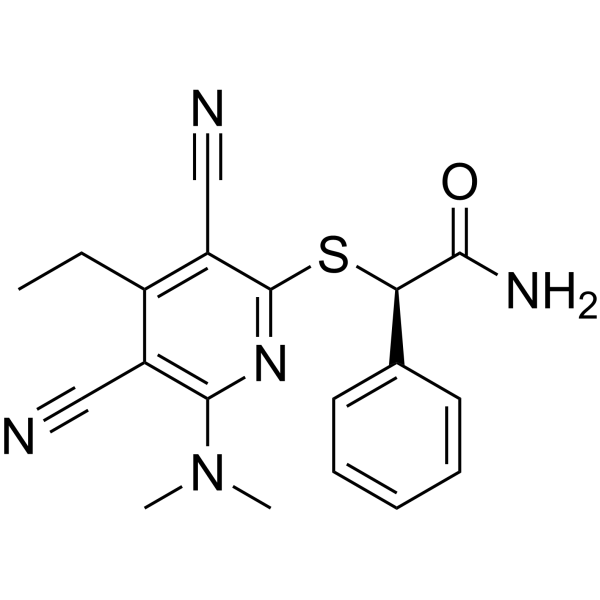
    KRas G12R inhibitor 1 is a covalent inhibitor targeting the common oncogenic mutant KRas G12R with selectivity for the mutant arginine. KRas G12R inhibitor 1 possesses an α,β-diketoamide and exploits strong nucleophilicity of the mutant cysteine and irreversibly binds in the Switch II region of KRas. KRas G12R inhibitor 1 can be researched for K-Ras (G12R)-driven cancer such as pancreatic ductal adenocarcinoma (PDAC) .
    KRas G12R inhibitor 1
  • HY-17663

    PARP STAT STING IFNAR Cancer
    KMR-206 is a PARP7 inhibitor with an IC50 of 13.7 nM. KMR-206 relieves AHR-mediated transcriptional repression and enhances CYP1A1 expression in the presence of TCDD. KMR-206 induces the STING-dependent IFN-β signaling pathway and increases the levels of STAT1, pSTAT1 and nuclear PARP7 in cancer cells. KMR-206 reduces the viability of lung adenocarcinoma cells, enhances radiation-induced immunogenic signals, and induces the production of immunogenic signals in glioblastoma cancer stem cells. KMR-206 destabilizes FRA1 to increase IRF1 levels and promotes the IRF3-CBP/p300 interaction. KMR-206 can be used in studies related to lung adenocarcinoma and glioblastoma .
    KMR-206
  • HY-159768A

    Radionuclide-Drug Conjugates (RDCs) FAP Neurological Disease Cancer
    DOTAGA.Glu.(FAPi) 2 is a FAPI homodimer in which a central glutamic acid (Glu) linker connects FAPI and a chelator. Radiolabeled with gallium- 68, lutetium- 177 or terbium- 161, DOTAGA.Glu.(FAPi) 2 is applicable to FAP-positive cancer PET imaging studies. DOTAGA.Glu.(FAPi) 2 is suitable for research related to prostate adenocarcinoma and recurrent glioblastoma multiforme .
    DOTAGA.Glu.(FAPi)2
  • HY-P991214

    EMD 273066; huKS-IL2

    Interleukin Related Cancer
    Tucotuzumab celmoleukin (EMD 273066) is an immunocytokine. Tucotuzumab celmoleukin consists of the following components: an IgG1 monoclonal antibody targeting human EpCAM antigen, and two molecules of IL2. Tucotuzumab celmoleukin binds to EpCAM. Tucotuzumab celmoleukin exerts anti-tumor effects on colon adenocarcinoma in synergy with radiofrequency ablation. Tucotuzumab celmoleukin can be used in research related to colon adenocarcinoma and colon cancer .
    Tucotuzumab celmoleukin
  • HY-176813

    LAG-3 Cancer
    LAG-3 Hit II is a LAG-3 inhibitor with a KD of 4.32  μM. LAG-3 Hit II can be used for cancers like ovarian cancer, colon adenocarcinoma and melanoma research .
    LAG-3 Hit II
  • HY-147027

    PARP Caspase Apoptosis Neurological Disease Inflammation/Immunology Cancer
    PARP-1-IN-2 (compound 11g) is a potent PARP1 inhibitor, with an IC50 of 149 nM, and ADME prediction indicates it has high blood-brain barrier permeability. PARP1-IN-2 shows significantly potent anti-proliferative activity against Human lung adenocarcinoma epithelial cell line A549. PARP1-IN-2 can induce A549 cells apoptosis .
    PARP-1-IN-2
  • HY-161767

    Molecular Glues Oxidative Phosphorylation Ras Cancer
    JWJ-01-306 is a CRBN-recruiting ZBTB11 Molecular Glues degrader. JWJ-01-306 degrades ZBTB11 and reprograms cellular metabolism, thereby reducing the level of Oxidative Phosphorylation and the activity of the tricarboxylic acid cycle. JWJ-01-306 enhances the response of organoids to K-Ras inhibition. JWJ-01-306 inhibits the proliferation of pancreatic ductal adenocarcinoma cells and melanoma cells. JWJ-01-306 can be used in studies related to pancreatic ductal adenocarcinoma and melanoma .
    JWJ-01-306
  • HY-N8420

    Fungal Infection Cancer
    Thalifoline is an isoquinoline alkaloid. Thalifoline exerts cytotoxic effects on cancer cells. Thalifoline inhibits the growth of Fusarium oxysporum f. sp. lycopersici. Thalifoline can be used in research related to lung adenocarcinoma, colon cancer, oral epidermoid carcinoma, and fungal infections .
    Thalifoline
  • HY-106588

    SKI 2053R

    DNA Alkylator/Crosslinker Cancer
    Heptaplatin (SKI 2053R) is a platinum derivative with anticancer activity against various cancer cell lines, including cisplatin-resistant tumor cell lines. SKI-2053R is active in the research of gastric adenocarcinoma and has favorable toxicity profiles .
    Heptaplatin
  • HY-161346A

    PROTACs Epigenetic Reader Domain Cancer
    (Rac)-EBET-1055 is the racemate of EBET-1055 (HY-161346). EBET-1055 is a bromodomain and extra-terminal (BET) PROTAC degrader. EBET-1055 effectively inhibits the growth of pancreatic ductal adenocarcinoma (PDAC). EBET-1055 also simultaneously modulates cancer-associated fibroblast (CAF) activity, upregulating all reporter gene activities in organoid co-cultures .
    (Rac)-EBET-1055
  • HY-161346

    PROTACs Epigenetic Reader Domain Cancer
    EBET-1055 is a bromodomain and extra-terminal (BET) PROTAC degrader. EBET-1055 effectively inhibits the growth of pancreatic ductal adenocarcinoma (PDAC). EBET-1055 also simultaneously modulates cancer-associated fibroblast (CAF) activity, upregulating all reporter gene activities in organoid co-cultures . Pink: BET ligand (HY-161387); Blue: CRBN ligase ligand (HY-14658); Black: linker
    EBET-1055
  • HY-140339

    Biochemical Assay Reagents Others Cancer
    ANB-NOS is a heterobifunctional crosslinker with lipophilic, uncharged properties suitable for intracellular conjugation. ANB-NOS contains an amine-reactive Nhydroxysuccinimide (NHS) ester and a photoactivatable nitrophenyl azide. ANB-NOS can be used for the research of fibrosarcoma and mammary adenocarcinoma .
    ANB-NOS
  • HY-100513

    DNA/RNA Synthesis Apoptosis Antibiotic Cancer
    (±)-Dehydroaltenusin, an antibiotic, is a selective eukaryotic DNA polymerase α (pol α) inhibitor with an IC50 of 0.68 μM. (±)-Dehydroaltenusin can be isolated from fungus Alternaria tenuis. (±)-Dehydroaltenusin competitively inhibits the DNA template primer (Ki: 0.23 μM) and non-competitively suppresses the 2'-deoxyribonucleoside 5'-triphosphate substrate (Ki: 0.18 μM). (±)-Dehydroaltenusin induces the cancer cell S-phase cycle arrest and apoptosis. (±)-Dehydroaltenusin can be used for cancers like human adenocarcinoma research .
    (±)-Dehydroaltenusin
  • HY-138793
    2-(2,6-Dioxopiperidin-3-yl)phthalimidine
    1 Publications Verification

    EM-12

    TNF Receptor Ligands for E3 Ligase Cancer
    2-(2,6-Dioxopiperidin-3-yl)phthalimidine (EM-12), a teratogenic Thalidomide analogue, is more active than Thalidomide and is much more stable for hydrolysis. 2-(2,6-Dioxopiperidin-3-yl)phthalimidine enhances 1,2-dimethylhydrazine-induction of rat colon adenocarcinomas .
    2-(2,6-Dioxopiperidin-3-yl)phthalimidine
  • HY-N11128

    Kinesin Cancer
    Solidagonic acid is an acidic bitter principle that can be found in the root and rhizomes of Solidago altissima L. Solidagonic acid binds HSET/KIFC1, restores growth in HSET-overproducing fission yeast cells and reverts mitotic spindles from monopolar to bipolar morphology. Solidagonic acid can be used for the research of breast adenocarcinoma .
    Solidagonic acid
  • HY-16676

    4-epi-Docetaxel; 7-Epidocetaxel; 7-Epitaxotere

    Drug Metabolite Cytochrome P450 Cancer
    7-Epi-docetaxel (4-epi-Docetaxel; 7-Epidocetaxel; 7-Epitaxotere) is the major C7 epimeric impurity/in vivo metabolite of Docetaxel (HY-B0011). 7-Epi-docetaxel acts as a potent allosteric activator of rhCYP1B1. 7-Epi-docetaxel exhibits certain cell line-specific anti-migratory activity . 7-Epi-docetaxel can be used in research related to melanoma and lung adenocarcinoma .
    7-Epi-docetaxel
  • HY-105314

    Others Cancer
    LY-33169 is an antitumor agent. LY-33169 had selective cytotoxicity against Colon Adenocarcinoma-38, Human Colon-116, Human Prostate LNCaP, and Human Breast WSU-Br-1 cells .
    LY-33169
  • HY-179909

    MEK CDK Cancer
    MEK-IN-9 (Compound 4-82) is a MEK inhibitor. MEK-IN-9 induces p15 and p27 protein. MEK-IN-9 can be used in the research of renal adenocarcinoma and colorectal cancer .
    MEK-IN-9
  • HY-118091A

    LY300502

    5 alpha Reductase Cancer
    Bexlosteride (LY300502) is a benzoquinolinone human type I 5α-reductase inhibitor. Bexlosteride shows metabolic inhibitory, antiproliferative, and antisecretory effects in LNCaP human prostatic adenocarcinoma cell cultures. Bexlosteride can be used for the research of prostatic cancer .
    Bexlosteride
  • HY-147838

    NAMPT Cancer
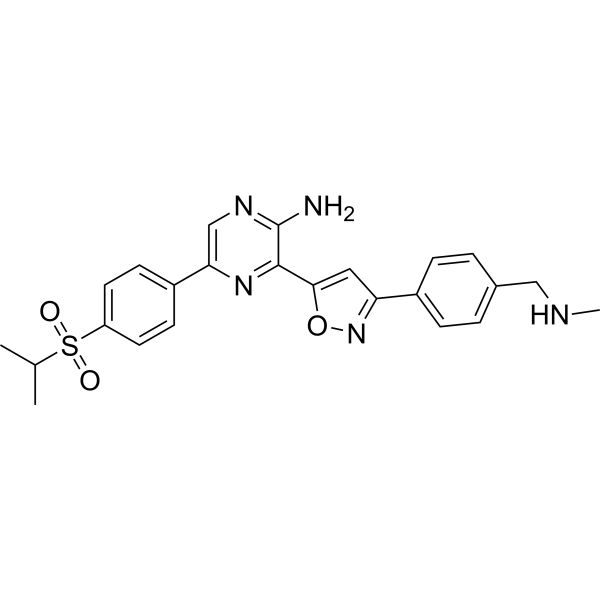
    Nampt-IN-9 (Compound 8) is a potent NAMPT inhibitor with anticancer activities. Nampt-IN-9 can be used for pancreatic ductal adenocarcinoma research .
    Nampt-IN-9
  • HY-129564

    Antibiotic Cancer
    Acetomycin is an antibiotic. Acetomycin inhibits the growth of CT-8 human colon adenocarcinoma cells (IC50: 1.5 μg/mL) and L1210 murine leukemia cells (IC50: 2.2 μg/mL). Acetomycin can be isolated from actinomycete WP-2661 .
    Acetomycin
  • HY-155222

    Epigenetic Reader Domain HDAC Cancer
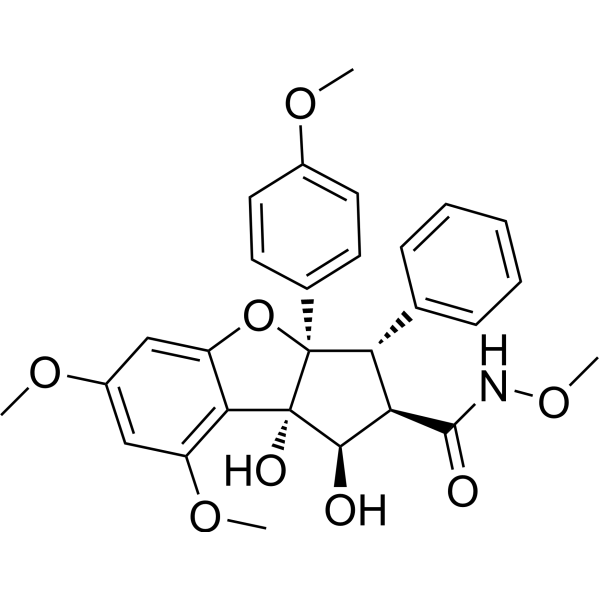
    TW9 is a potent dual inhibitor simultaneously targeting BET and HDAC proteins with KDs of 0.069 μM, 0.231 μM for BRD4(1), BRD4(2), and an IC50 of 0.29 μM for HDAC1, respectively. TW9 is a newly generated adduct of the BET inhibitor (+)-JQ1 (HY-13030) and class I HDAC inhibitor CI994 (HY-50934). TW9 shows high potency in suppressing tumor growth in pancreatic ductal adenocarcinoma (PDAC). TW9 improves the efficacy of the chemotherapeutic agent Gemcitabine (HY-17026) .
    TW9
  • HY-176814

    LAG-3 Cancer
    LAG-3-IN-1 (Compound 11) is a LAG-3 inhibitor with a KD of 0.41  μM. LAG-3-IN-1 disrupts the LAG-3/MHCII interaction, enhances IFN-γ secretion and promotes tumor cell killing in cocultures of PBMCs and cancer cells. LAG-3-IN-1 can be used for cancers like ovarian cancer, colon adenocarcinoma and melanoma research .
    LAG-3-IN-1
  • HY-162721

    Biochemical Assay Reagents Cancer
    Anticancer agent 242 (7) possesses anticancer activity in A2780 (IC50 = 0.24 μM, ovarian adenocarcinoma), A2780cis (IC50 = 0.45 μM, resistant derivative of A2780), CCD18Co (IC50 = 0.59 μM, non-malignant human fibroblasts), A549 (IC50 = 0.32 μM, lung carcinoma), HT29 (IC50 = 0.26 μM, colorectal adenocarcinoma), and MCF7 (IC50 = 0.55 μM, breast adenocarcinoma) .
    Anticancer agent 242
  • HY-169113

    Histone Methyltransferase Cancer
    EPZ032597 is a selective and noncompetitive SMYD2 inhibitor with an IC50 value of 16 nM. EPZ032597 is promising for research of pancreatic ductal adenocarcinoma .
    EPZ032597
  • HY-125354

    Caspase Cancer
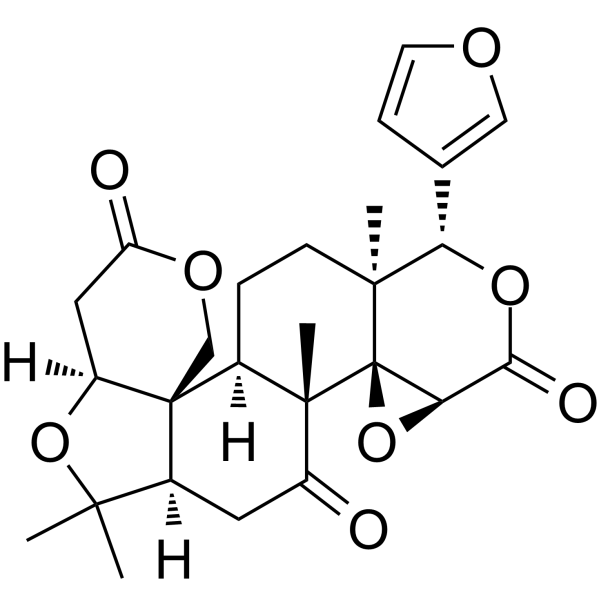
    Limonin glucoside can be isolated from seeds of Citrus reticulata. Limonin glucoside induces activation of caspase-3. Limonin glucoside inhibits the proliferation of human colon adenocarcinoma (SW480) cells (IC50: 37.39 μM) .
    Limonin glucoside

Inquiry Online

Your information is safe with us. * Required Fields.

Salutation


Country or Region *

Applicant Name *


Organization Name *

Department *


Email Address *


Product Name *

Cat. No.


Requested quantity *

Phone Number *


Remarks

Inquiry Online

Inquiry Information

Product Name:
Cat. No.:
Quantity:
MCE Japan Authorized Agent:

