22 Results for "

aggregation-induced emission (AIE)

" in MedChemExpress (MCE) Product Catalog:
Products (22)

22 Results for "aggregation-induced emission (AIE)" in MCE Product Catalog:

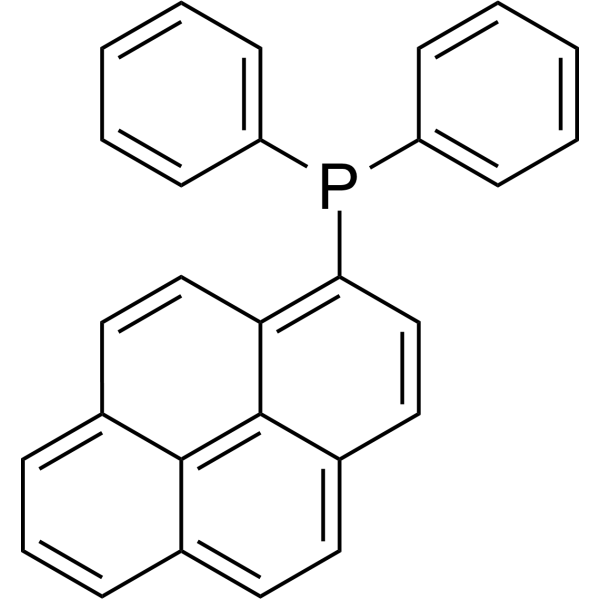
Cat. No.: HY-118159
CAS No.: 110231-30-6
Purity:  99.68%
Synonyms: DPPP
Diphenyl-1-pyrenylphosphine (DPPP) is a functional organic molecule with both fluorescent properties and metal coordination ability, which is commonly used in materials and coordination chemistry research. Upon exposure to ultraviolet light, Diphenyl-1-pyrenylphosphine undergoes photoinduced phosphorus atom oxidation to form O-DPPP, triggering a transition from aggregation-induced emission (AIE) to aggregation-caused quenching (ACQ). Diphenyl-1-pyrenylphosphine reacts stoichiometrically with lipid hydroperoxides to produce fluorescent diphenyl-1-pyrenylphosphine oxide. Diphenyl-1-pyrenylphosphine can insert into cell membranes to monitor lipid peroxidation processes in living cells .
loading...
    loading...
Cat. No.: HY-152073
CAS No.: 2924598-24-1
Purity:  98.76%
Target:  

Fluorescent Dye

Research Areas:  

Others

BETA-1 is the first twisted intramolecular charge transfer (TICT)-aggregation-induced emission (AIE) integration molecule. BETA-1 emits cyan fluorescence in lipid droplets (LDs) and red fluorescence in mitochondria. BETA-1 can be used for the simultaneous and dual-color imaging of LDs and mitochondria in vivo and in vitro .
loading...
    loading...
Cat. No.: HY-D1456
CAS No.: 2621957-88-6
TEPC466 is a novel TEPP-46-based aggregation-induced emission (AIE) probe. TEPC466 shows a high degree of selectivity and sensitivity for the detection of PKM2 protein via the AIE effect. EPC466 can be used for the detection of PKM2. TEPC466 is successfully applied in imaging the PKM2 protein in colorectal cancer cells with low toxicity. TEPC466 is a useful tool for cancer diagnosis and research .
loading...
    loading...
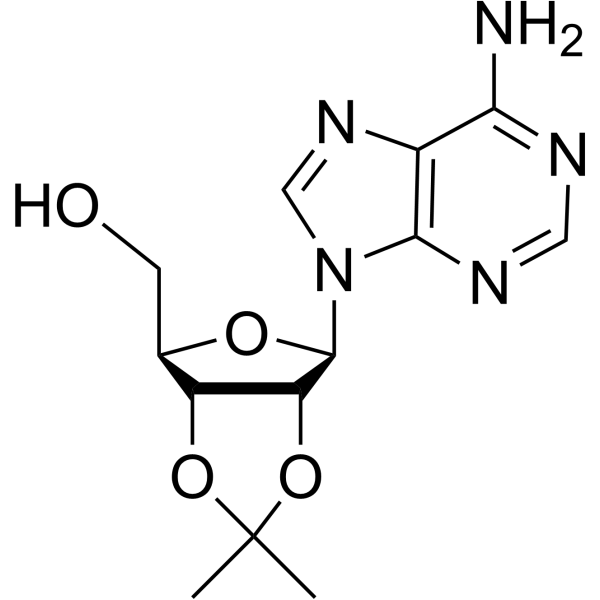
Cat. No.: HY-W008048
CAS No.: 362-75-4
Research Areas:  

Others

2',3'-O-Isopropylideneadenosine is a nucleoside compound and also a Golgi-targeting moiety. 2',3'-O-Isopropylideneadenosine constitutes a furanose ribose group that undergoes cyclization at the O (2') and O (3') atoms. As a component of the fluorescent probe TPE-Ade, 2',3'-O-Isopropylideneadenosine enables specific Golgi localization for fluorescence imaging. 2',3'-O-Isopropylideneadenosine participates in the synthesis of aggregation-induced emission (AIE) fluorescent probes .
loading...
    loading...
Cat. No.: HY-W856375A
CAS No.: 2046513-40-8
BSPOTPE is the mixture of (E)-BSPOTPE (HY-W856375) and (Z)-BSPOTPE. BSPOTPE binds Human serum albumin (HSA) (HY-P1956), exhibits aggregation-induced emission (AIE) phenomenon. BSPOTPE shows selectivity for albumin (such as HSA and BSA), but has no obvious fluorescence response to other proteins and DNA. BSPOTPE can be used as fluorescent probe for HSA .
loading...
    loading...
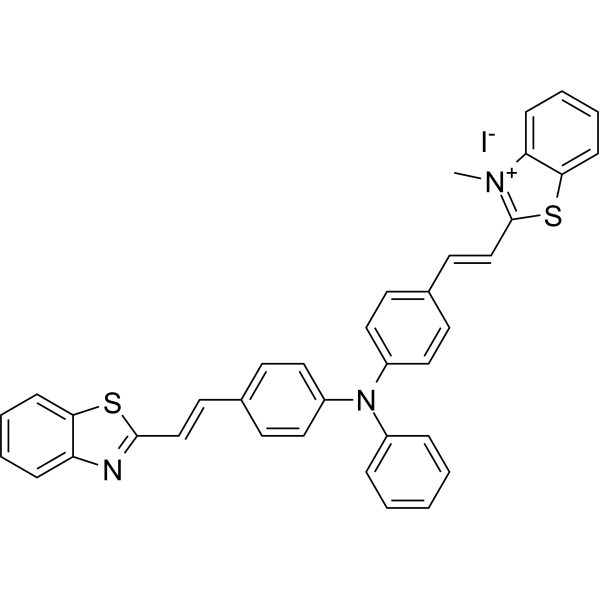
Cat. No.: HY-D1504
CAS No.: 110992-55-7
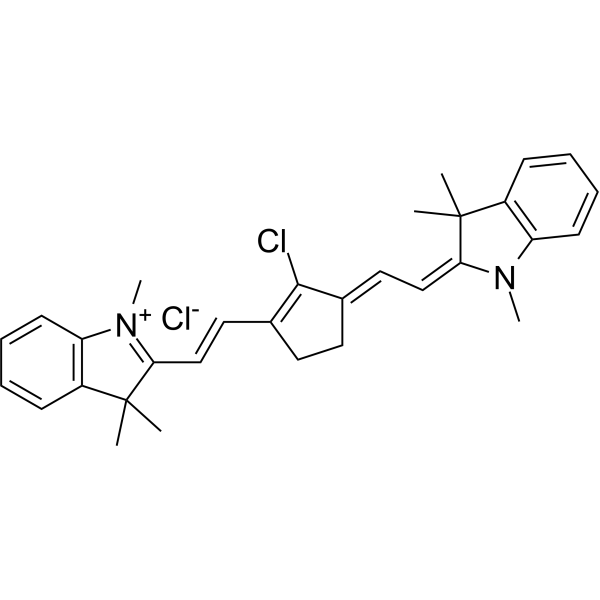
IR-797 chloride is a near-infrared (NIR) dye. IR 797 has absorption maxima near 700 nm. IR-797 shows some aggregation-induced-emission (AIE) properties. IR-797 shows shows cytotoxic .
loading...
    loading...
Cat. No.: HY-D2268
CAS No.: 2316820-94-5
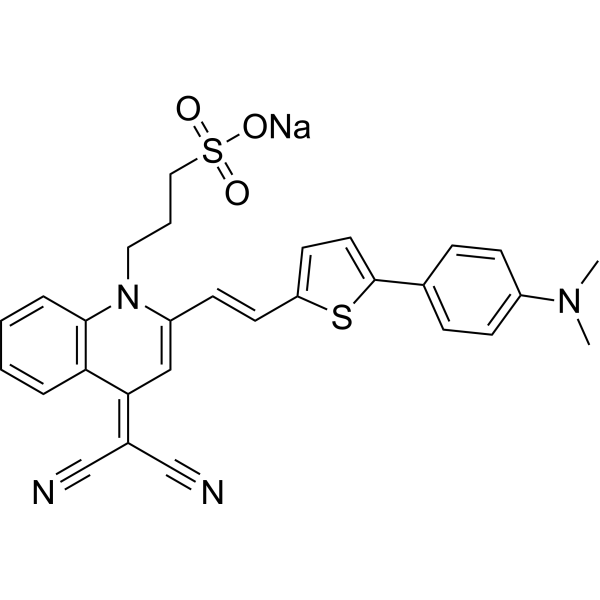
QM-FN-SO3 is a BBB-penetrable near-infrared (NIR) aggregation-induced emission (AIE)-active probe for Aβ plaques. QM-FN-SO3 can be used for in vivo detection of Aβ plaques. QM-FN-SO3 has ultra-high S/N ratio, binding affinity, and high-performance NIR emission .
loading...
    loading...
Cat. No.: HY-151468
CAS No.: 2810130-33-5
Target:  

Fluorescent Dye

Research Areas:  

Others

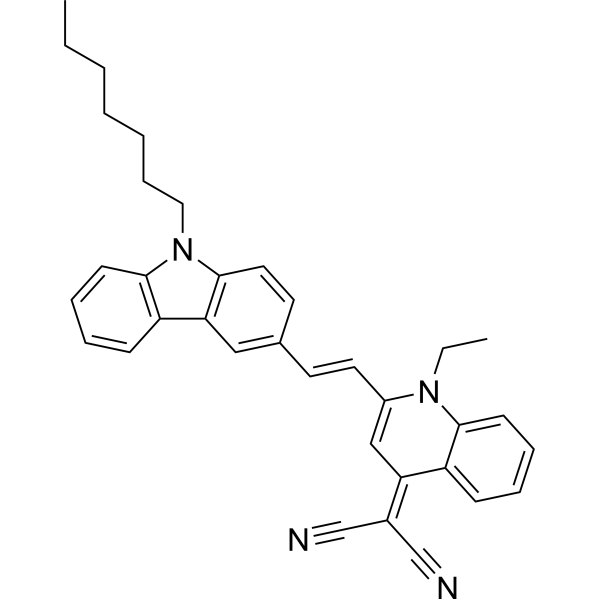
AIECbz-LD-C7 is an aggregation-induced emission (AIE) probe based on the conjugation of quinoline-malononitrile (QM) and carbazole. AIECbz-LD-C7 has excellent LD-specificity. AIECbz-LD-C7 can be used for tracking the dynamic changes of LDs and studying the association between LDs and lysosome/endoplasmic reticulum (ER) .
loading...
    loading...
Cat. No.: HY-W856375
CAS No.: 953792-48-8
(E)-BSPOTPE is the E configuration of BSPOTPE (HY-W856375A). BSPOTPE binds Human serum albumin (HSA) (HY-P1956), exhibits aggregation-induced emission (AIE) phenomenon. BSPOTPE shows selectivity for albumin (such as HSA and BSA), but has no obvious fluorescence response to other proteins and DNA. BSPOTPE can be used as fluorescent probe for HSA .
loading...
    loading...
Cat. No.: HY-151536
CAS No.: 2922973-15-5
Target:  

Fluorescent Dye

Research Areas:  

Neurological Disease

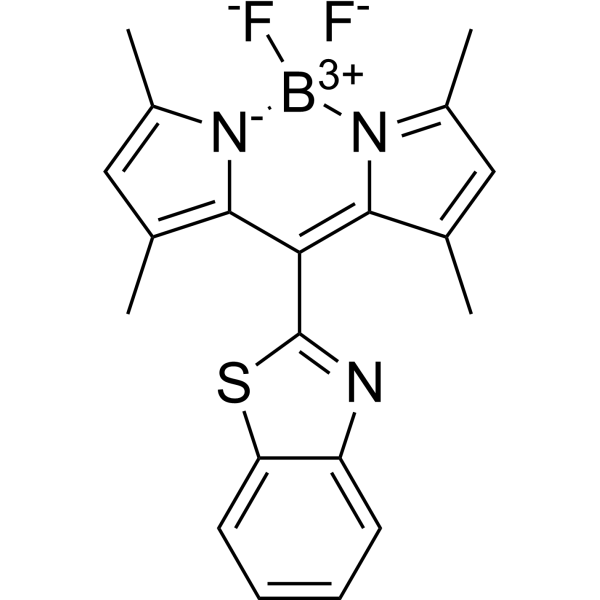
meso-Benzothiazole-BODIPY 505/515 is a boron dipyrromethenes (BODIPY) -based fluorescent probeaggregation-induced emission (AIE) properties. meso-Benzothiazole-BODIPY 505/515 can monitor cellular viscosity changes and autophagy. meso-Benzothiazole-BODIPY 505/515 can be used for the research of Alzheimer’s diseases, lysosomal storage diseases and neural degeneration diseases .
loading...
    loading...
Cat. No.: HY-D2268A
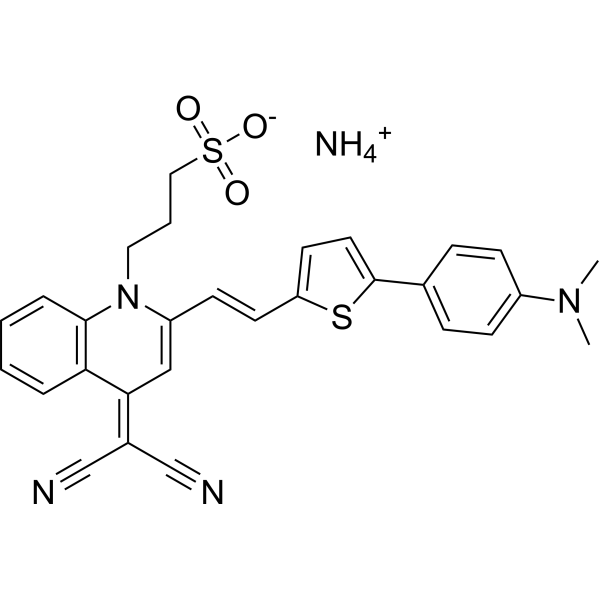
QM-FN-SO3 ammonium is a BBB-penetrable near-infrared (NIR) aggregation-induced emission (AIE)-active probe for Aβ plaques. QM-FN-SO3 ammonium can be used for in vivo detection of Aβ plaques. QM-FN-SO3 ammonium has ultra-high S/N ratio, binding affinity, and high-performance NIR emission .
loading...
    loading...
Cat. No.: HY-D2639
CAS No.: 3032077-04-3
TPE-PY is a fluorescent dye targeting mitochondria, which has cationic and lipophilic characteristics, enabling specific targeting of mitochondria. TPE-PY functions through the aggregation-induced emission (AIE) mechanism. TPE-PY mechanism of action is based on the restriction of intramolecular rotation (RIR), which enhances fluorescence in the aggregated state. TPE-PY is mainly used in the field of biological imaging, especially for the specific staining of mitochondria in living cells, facilitating the observation of the location, morphology, and quantity of mitochondria .
loading...
    loading...
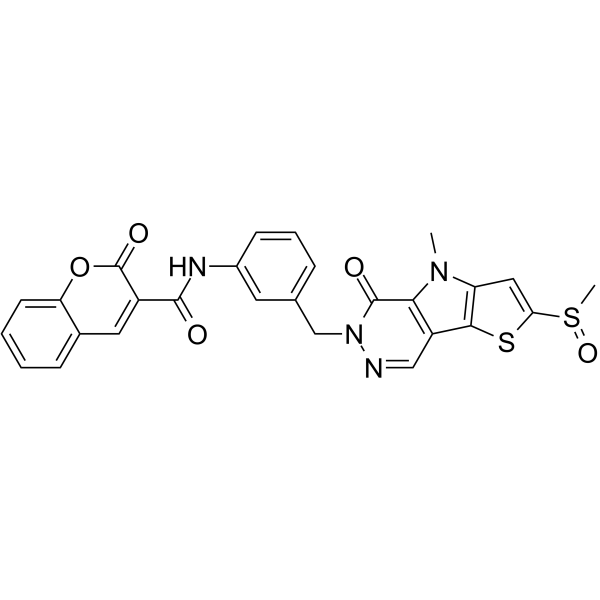
Cat. No.: HY-144314
CAS No.: 2906869-08-5
Research Areas:  

Cancer

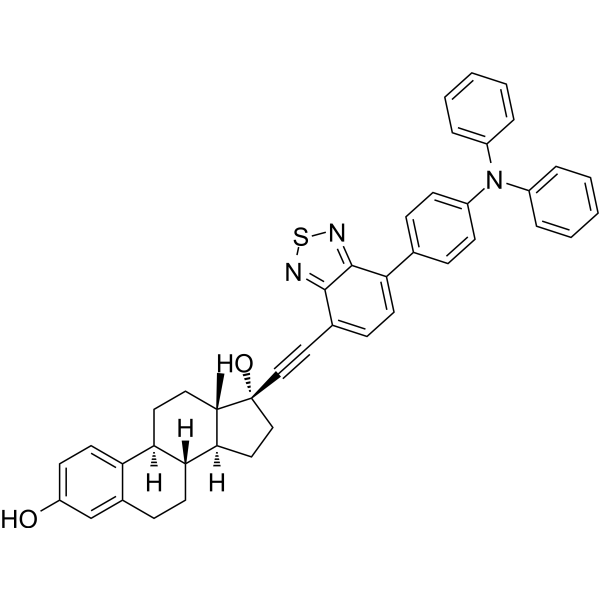
PSDalpha is a photoactivatable PS-Degron targeting estrogen receptor α (ERα/ESR1), with a Ki of 72.8 nM for ERα. PSDalpha consists of an ERα-targeting estradiol moiety conjugated via an alkyne bond to triphenylamine-benzothiadiazole (TB), an aggregation-induced emission (AIE) photosensitizer. Upon visible light irradiation, PSDalpha generates singlet oxygen ( 1O2) and induces controllable ERα degradation. PSDalpha also induces G1 phase arrest and apoptosis. PSDalpha can be used in studies related to ERα-positive breast cancer and light-controlled targeted protein degradation .
loading...
    loading...
Cat. No.: HY-W008048S
2',3'-O-Isopropylideneadenosine- 13C5 is the 13C-labeled 2',3'-O-Isopropylideneadenosine (HY-W008048). 2',3'-O-Isopropylideneadenosine is a nucleoside compound and also a Golgi-targeting moiety. 2',3'-O-Isopropylideneadenosine constitutes a furanose ribose group that undergoes cyclization at the O (2') and O (3') atoms. As a component of the fluorescent probe TPE-Ade, 2',3'-O-Isopropylideneadenosine enables specific Golgi localization for fluorescence imaging. 2',3'-O-Isopropylideneadenosine participates in the synthesis of aggregation-induced emission (AIE) fluorescent probes .
loading...
    loading...
Cat. No.: HY-183797
CAS No.: 3094774-72-5
Antitumor agent-218 is an aggregation-induced emission (AIE)-based photosensitizer. Antitumor agent-218 selectively accumulates in the endoplasmic reticulum, and generates ROS within the endoplasmic reticulum upon irradiation to induce necroptosis of tumor cells. Antitumor agent-218 can be used in cancer-related research .
loading...
    loading...
Cat. No.: HY-D3164
CAS No.: 1380316-56-2
Target:  

Fluorescent Dye

Research Areas:  

Others

TPE-Cy is a fluorescent probe with both aggregation-induced emission (AIE) property and pH-dependent luminescent behavior. TPE-Cy exhibits significant luminescent differences under different acidic and alkaline conditions: it shows moderate to strong red emission with linear variation with pH in acidic environments and within the pH range of 5-7, weak or even no emission within the pH range of 7-10, and switches to blue emission under alkaline conditions. TPE-Cy possesses excellent cell permeability and biocompatibility, enabling accurate ratiometric pH sensing and imaging monitoring in living cells via confocal microscopy, ratiometric analysis and flow cytometry .
loading...
    loading...
Cat. No.: HY-D3067
Target:  

Fluorescent Dye

Research Areas:  

Metabolic Disease Cancer

ASSI-Leu is a novel AIE fluorescent probe based on an asymmetric tetraaryl imidazole skeleton, which can be used for ratiometric imaging detection of endogenous leucine aminopeptidase. ASSI-Leu contains an L-leucine-based recognition group that blocks the excited-state intramolecular proton transfer (ESIPT) in its 2-(2'-hydroxyphenyl) benzothiazole (HBT) skeleton, thereby generating an enol-form emission signal at Ex/Em = 365/417 nm. ASSI-Leu undergoes cleavage of the L-leucine group mediated by LAP to form ASSI-OH, which further activates aggregation-induced emission (AIE) and ESIPT, generating a keto-form emission signal at Ex/Em = 365/554 nm and producing a ratiometric fluorescent signal. ASSI-Leu enables real-time tracking of LAP in cancer cells and zebrafish models .\n
loading...
    loading...
Cat. No.: HY-D3099
CAS No.: 3078752-74-3
Target:  

Fluorescent Dye

Research Areas:  

Others

CSMPP is a ratiometric lysosomal pH fluorescent probe with aggregation-induced emission (AIE) properties, which is used for real-time quantitative detection of lysosomal pH changes in living cells and in vivo. CSMPP has a cyanodistyrene backbone, and contains N-methylpiperazine and pyridine groups (pH-responsive); protonation of the pyridine group significantly enhances intramolecular charge transfer (ICT), leading to green fluorescence emission (Ex/Em = 405/503 nm) under neutral/basic conditions and red fluorescence emission (Ex/Em = 405/615 nm) under acidic conditions. CSMPP exhibits high selectivity, reversibility, good biocompatibility and excellent photostability .
loading...
    loading...
Cat. No.: HY-P11934
Research Areas:  

Others

TPE-GGH is a water-soluble aggregation-induced emission (AIE)-active fluorescent probe composed of tetraphenylethylene (TPE)-modified tripeptide (Gly-Gly-His-NH2). TPE-GGH detects Cu 2+ with high selectivity and sensitivity, with a limit of detection of 28.5 nM. TPE-GGH exhibits low toxicity and favorable membrane permeability, and can be used for Cu 2+ imaging in living cells (LLC) and zebrafish, as well as for Cu 2+ detection in environmental water samples and semi-quantitative analysis via portable test strips/smartphone RGB technology .
loading...
    loading...
Cat. No.: HY-D3069
CAS No.: 2892545-08-1
Research Areas:  

Neurological Disease

DNTPH is a near-infrared (NIR) aggregation-induced emission (AIE) fluorescent probe used for imaging β-amyloid (Aβ) aggregates. Designed by balancing hydrophobic and hydrophilic groups, DNTPH achieves selective binding to Aβ42 fibrils and generates a near-infrared fluorescent signal with high signal-to-noise ratio. Upon binding to Aβ42 fibrils, DNTPH exhibits enhanced fluorescence, while also inhibiting Aβ42 fibril formation, promoting fibril depolymerization, attenuating Aβ-induced neurotoxicity, and improving cognitive function in Alzheimer's disease (AD) mice. DNTPH can be used in Alzheimer's disease research .
loading...
    loading...

