

1. Search Result
Search Result
Results for "

amyloid deposition

" in MedChemExpress (MCE) Product Catalog:

17

Inhibitors & Agonists

4

Peptides

3

Natural
Products

1

Oligonucleotides

Targets Recommended:
Cat. No. Product Name Target Research Areas Chemical Structure
  • HY-113283

    Amyloid-β Natriuretic Peptide Receptor (NPR) α-synuclein Transthyretin (TTR) Claudin Neurological Disease Metabolic Disease Cancer
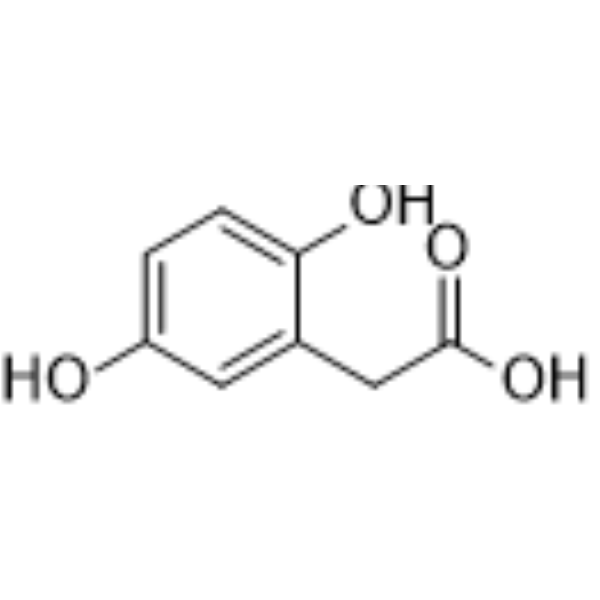
    Homogentisic acid is an orally active, blood-brain barrier-permeable amyloidogenic compound that functions as both an amyloid component and a pigment precursor. Accumulation of homogentisic acid downregulates tight junction proteins (such as claudin-5, occludin, ZO-1) and impairs blood-brain barrier integrity. Homogentisic acid and its oxidation product benzoquinone acetic acid not only induce the aggregation and fibrosis of multiple proteins (such as 1-42, α-synuclein, SAA, Transthyretin (TTR), atrial natriuretic peptide), but also trigger oxidative stress, damage to the Wnt/β-catenin pathway, and neurotoxicity, leading to ochronosis pigment deposition and synaptic dysfunction. At specific concentrations, homogentisic acid exerts no cytotoxicity or genotoxicity on human peripheral blood lymphocytes, and even counteracts the genotoxicity induced by Irinotecan (HY-16562). Homogentisic acid serves as an important tool molecule for investigating the mechanisms of diseases including ochronosis, secondary amyloidosis, Alzheimer's disease, and colorectal cancer .
    Homogentisic acid
  • HY-112974

    GSK-2998728; ISIS-420915

    Transthyretin (TTR) Cardiovascular Disease Neurological Disease
    Inotersen (GSK-2998728; ISIS-420915) is a 2'-O-methoxyethyl-modified antisense oligonucleotide and transthyretin (TTR) inhibitor with low genotoxicity. Inotersen triggers RNase H1-mediated degradation by binding to TTR mRNA, thereby effectively reducing the production of both mutant and wild-type transthyretin in the liver. Inotersen significantly reduces amyloid fiber deposition, yet specific toxicities such as inflammation or tumors are observed at high doses in some animal models. Inotersen is used in studies of hereditary transthyretin amyloidosis and the associated polyneuropathy and cardiomyopathy .
    Inotersen
  • HY-N1570

    Salt-inducible Kinase (SIK) KLF Amyloid-β Cardiovascular Disease Neurological Disease Metabolic Disease Inflammation/Immunology Endocrinology
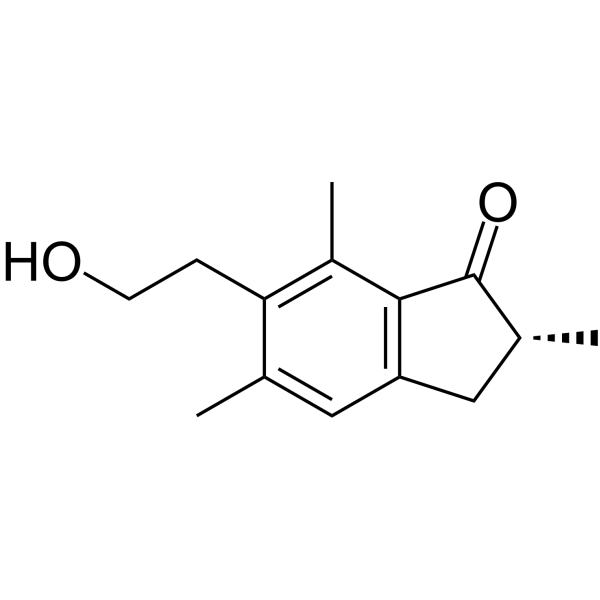
    Pterosin B is an orally active indanone. Pterosin B can be obtained from Pteridium aquilinum. Pterosin B is a Sik3 signaling inhibitor. Pterosin B inhibits Klf5 expression and reduces β-amyloid deposition. Pterosin B prevents chondrocyte hypertrophy and osteoarthritis in mice. Pterosin B inhibits cardiomyocyte hypertrophy, improves cognitive impairment, and lowers blood glucose. Pterosin B can be used in research on arthritis, Alzheimer's disease, pathological cardiac hypertrophy and diabetes .
    Pterosin B
  • HY-13769A
    TPT-260 Dihydrochloride
    2 Publications Verification

    NSC55712; TPU-260 Dihydrochloride

    Drug Derivative Amyloid-β Beta-secretase Cardiovascular Disease Neurological Disease Inflammation/Immunology
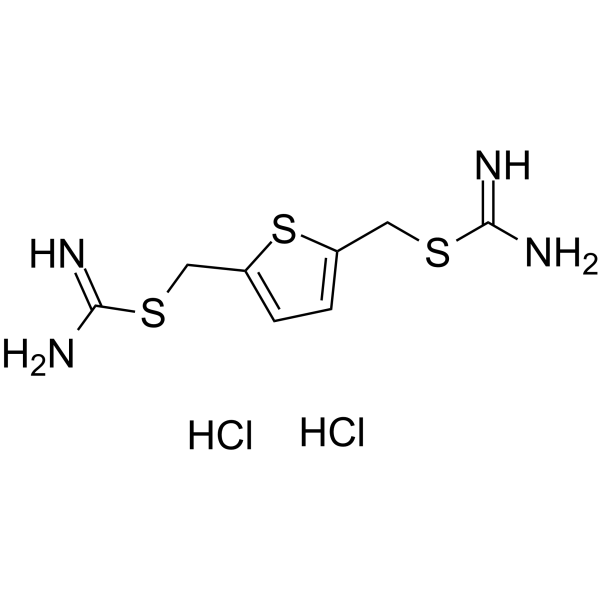
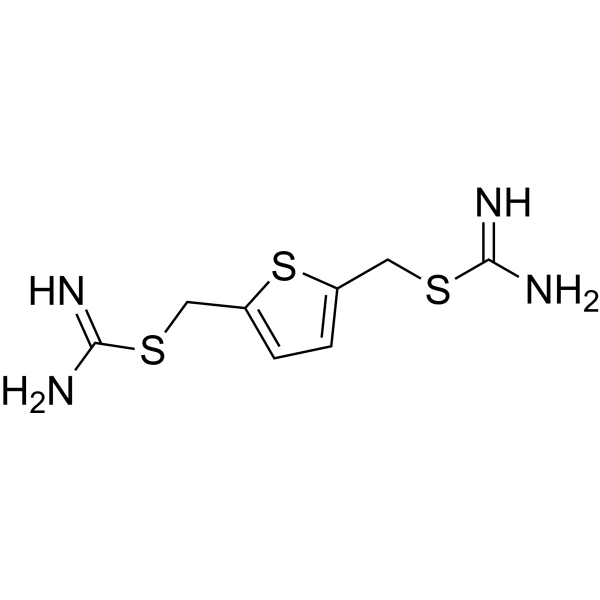
    TPT-260 Dihydrochloride (NSC55712), a thiophene thiourea derivative, is a retromer complex stabilizer against thermal denaturation (Kd = ~5 µM). TPT-260 Dihydrochloride increases the levels of retromer proteins, shifts amyloid-precursor protein (APP) away from the endosome, and decreases the pathogenic processing of APP. TPT-260 Dihydrochloride inhibits TLR4 upregulation, IKKβ phosphorylation, NF-κB p65 nuclear translocation, and NLRP3 inflammasome formation. TPT-260 Dihydrochloride improves retromer-mediated cargo trafficking, reduces brain infarct area, and decreases amyloid plaque deposition. TPT-260 Dihydrochloride exhibits minimal cytotoxicity to primary microglia at tested concentrations. TPT-260 Dihydrochloride can be used for the research of inflammatory bowel disease, ischemic stroke and Alzheimer's disease .
    TPT-260 Dihydrochloride
  • HY-128849

    Amyloid-β Inflammation/Immunology
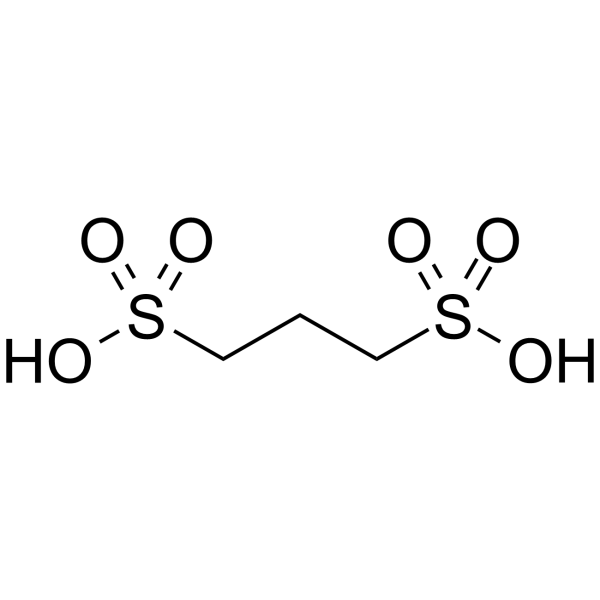
    Eprodisate (70% in water) is an amyloid inhibitor that interferes with the interaction between amyloidogenic proteins and glycosaminoglycans, thereby inhibiting the aggregation of amyloid fibrils and the deposition of fibrils in tissues. Eprodisate (70% in water) slows the progression of renal disease associated with AA amyloidosis and may be useful for other types of amyloidosis .
    Eprodisate (70% in water)
  • HY-171348

    Amyloid-β γ-secretase Neurological Disease
    Amyloid-β-IN-2 (Compound EX.112) is a selective γ-secretase inhibitor. Amyloid-β-IN-2 inhibits Aβ42 secretion in H4 cells with an EC50 value of 226 nM. Amyloid-β-IN-2 is promising for research of Alzheimer's disease (AD) and other diseases related to Aβ deposition .
    Amyloid-β-IN-2
  • HY-171349

    γ-secretase Amyloid-β Neurological Disease
    Amyloid-β-IN-3 (EX.113) is a selective γ-secretase inhibitor. Amyloid-β-IN-3 inhibits Aβ42 secretion in H4 cells with an EC50 value of 148 nM. Amyloid-β-IN-3 regulates the γ-secretase catalytic activity to decrease Aβ42 production, thereby alleviating neurotoxicity caused by Aβ deposition. Amyloid-β-IN-3 is promising for research of Alzheimer's disease (AD) .
    Amyloid-β-IN-3
  • HY-P1787

    Amyloid-β Neurological Disease
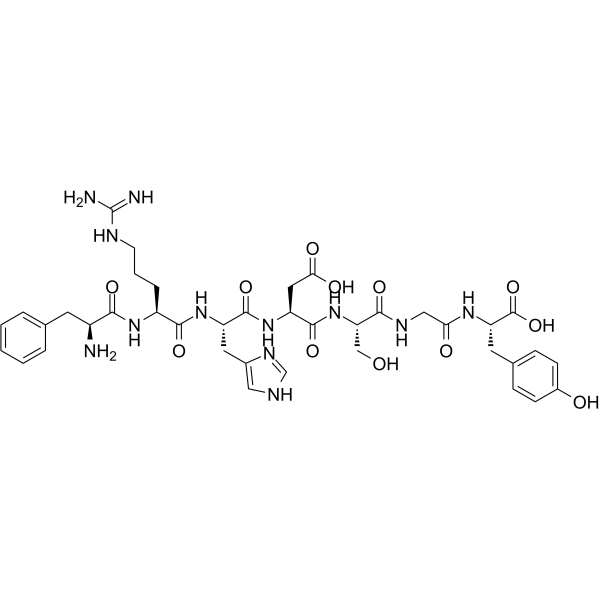
    β-Amyloid (4-10) is an epitope for the polyclonal anti-Aβ(1-42) antibody, reduces amyloid deposition in a transgenic Alzheimer disease mouse model .
    β-Amyloid (4-10)
  • HY-19092

    mAChR Neurological Disease
    YM-796 dihydroxybutanedioate is a selective muscarinic M1 receptor agonist. YM-796 dihydroxybutanedioate can improve cognitive impairment and reduce amyloid plaque deposition. YM-796 dihydroxybutanedioate can be used in the research of cognitive impairment diseases such as Alzheimer's disease .
    YM-796 dihydroxybutanedioate
  • HY-W841438

    Amyloid-β Tau Protein Neurological Disease
    Lithium orotate is an orally active lithium supplement with reduced binding that can bypass amyloid sequestration in AD mice models. Lithium orotate can prevent Aβ plaque deposition and phospho-tau accumulation and reverse AD pathology, neuroinflammatory changes and memory loss in AD mice models and ageing wild-type mice. Lithium orotate can be used for the research of alcoholism and Alzheimer’s disease .
    Lithium orotate
  • HY-P10487

    Amyloid-β Neurological Disease
    APP669-711 is a peptide segment from amino acid 669 to amino acid 711 of amyloid precursor protein (APP). APP669-711 can be used to diagnose the amyloid deposition in the brain, and is a biomarker for Alzheimer's disease (AD) research .
    APP669-711
  • HY-P11226

    Amyloid-β CaMK Apoptosis Neurological Disease
    TI-16 is a peptide that targets β-amyloid (Aβ) protein. TI-16 can cross the blood-brain barrier. TI-16 can increase the concentration of intracellular free CaM, thereby restoring calcium ion homeostasis and reducing Aβ toxicity. TI-16 can reduce the deposition of Aβ in the brain, improve neuronal pathology, inhibit cell apoptosis, and improve cognitive function in mice. TI-16 is commonly used in the study of Alzheimer's disease .
    TI-16
  • HY-13769

    TPU260

    Drug Derivative Beta-secretase Amyloid-β Cardiovascular Disease Neurological Disease Inflammation/Immunology
    TPT-260 (TPU260), a thiophene thiourea derivative, is a retromer complex stabilizer against thermal denaturation (Kd = ~5 µM). TPT-260 increases the levels of retromer proteins, shifts amyloid-precursor protein (APP) away from the endosome, and decreases the pathogenic processing of APP. TPT-260 inhibits TLR4 upregulation, IKKβ phosphorylation, NF-κB p65 nuclear translocation, and NLRP3 inflammasome formation. TPT-260 improves retromer-mediated cargo trafficking, reduces brain infarct area, and decreases amyloid plaque deposition. TPT-260 exhibits minimal cytotoxicity to primary microglia at tested concentrations. TPT-260 can be used for the research of inflammatory bowel disease, ischemic stroke and Alzheimer's disease .
    TPT-260
  • HY-N1570R

    Reference Standards Salt-inducible Kinase (SIK) KLF Amyloid-β Cardiovascular Disease Neurological Disease Metabolic Disease Inflammation/Immunology Endocrinology
    Pterosin B (Standard) is the analytical standard of Pterosin B (HY-N1570). This product is intended for research and analytical applications. Pterosin B is an indanone. Pterosin B can be obtained from Pteridium aquilinum. Pterosin B is a Sik3 signaling inhibitor. Pterosin B inhibits Klf5 expression and reduces β-amyloid deposition. Pterosin B prevents chondrocyte hypertrophy and osteoarthritis in mice. Pterosin B inhibits cardiomyocyte hypertrophy, improves cognitive impairment, and lowers blood glucose. Pterosin B can be used in research on arthritis, Alzheimer's disease, pathological cardiac hypertrophy and diabetes .
    Pterosin B (Standard)
  • HY-18112

    Beta-secretase Neurological Disease
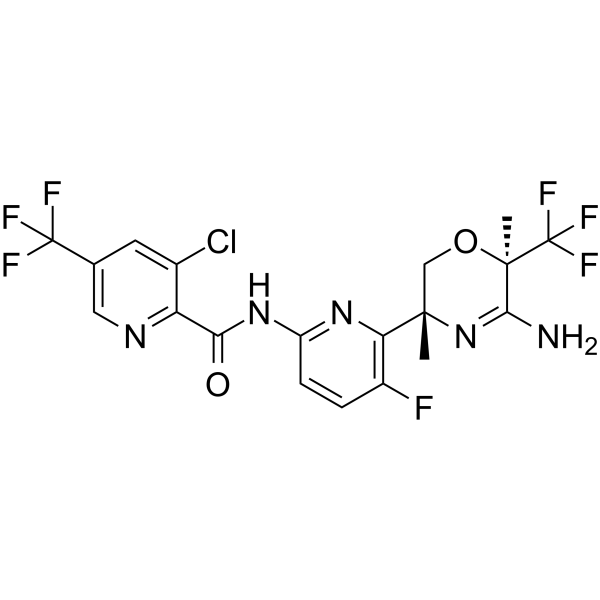
    AZ-4217 is an inhibitor for β-site amyloid precursor protein cleavage enzyme 1 (BACE1), with IC50 of 160 pM in human SH-SY5Y cells. AZ-4217 reduces amyloid deposition in Tg2576 mouse models, and is used for Alzheimer’s Disease research .
    AZ-4217
  • HY-136480

    Amyloid-β Neurological Disease
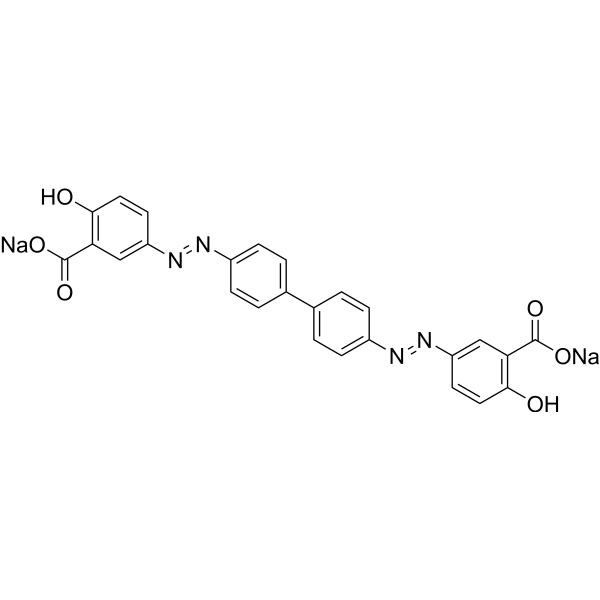
    Chrysamine G, a carboxylic acid analogue of Congo Red, can be used as a probe of amyloid deposition in Alzheimer's disease. Chrysamine G also can inhibit Aβ-induced toxicity in PC12 cells .
    Chrysamine G
  • HY-P5370

    Amyloid-β Others
    Scrambled β-amyloid (1-40) is a biological active peptide. (Aβ (1-40) together with Aβ (1-42) are two major C-terminal variants of the Aβ protein constituting the majority of Aβs. These undergo post-secretory aggregation and deposition in the Alzheimer’s disease brain. This peptide is the scrambled sequence of Abeta 1-40 HY-P0265)
    Scrambled β-amyloid (1-40)

Inquiry Online

Your information is safe with us. * Required Fields.

Salutation


Country or Region *

Applicant Name *


Organization Name *

Department *


Email Address *


Product Name *

Cat. No.


Requested quantity *

Phone Number *


Remarks

Inquiry Online

Inquiry Information

Product Name:
Cat. No.:
Quantity:
MCE Japan Authorized Agent:

